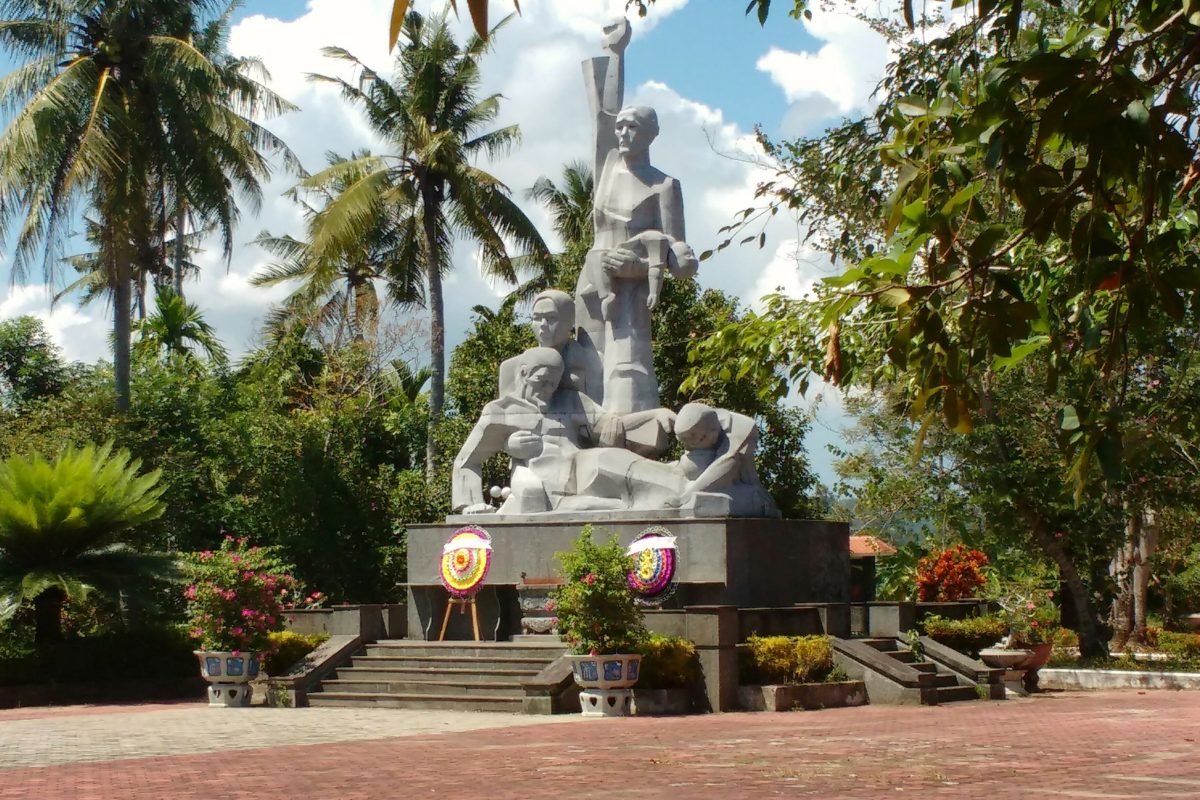
On 16 March 1968, the US Army’s Charlie Company murdered hundreds of unarmed civilians in a planned attack on the Vietnamese village of My Lai. Homes were burned, wells poisoned, and villagers tortured. US soldiers carved the words “C Company” into some villagers’ chests. Even US government figures admit that over 20 women and girls—including 12-year-olds—were raped by US soldiers, including gang rape and sexual torture. Estimations of the death toll vary between 347 and over 500.
The My Lai Massacre came a few weeks after the Tet Offensive demonstrated that the US was losing the US-American War (as the “Vietnam War” should really be called). The night before the My Lai attack, Captain Ernest Medina said it would be: “A time for us to get even. A time for us to settle the score. A time for revenge—when we can get even for our fallen comrades.” When a soldier asked Medina if they should kill women and children, Medina replied: “kill everything that moves.”
The media reported a victory against Viet Cong troops. Colonel Oran Henderson, the brigade commander, falsely stated that “no civilians were gathered together and shot by US soldiers.” It was only 18 months later, following letters from former soldier Ronald L. Ridenhour, that some media outlets, including Time, Life, and Newsweek, published photographs by army photographer Ronald L. Haeberle and a critical report by Seymour Hersh.
Some soldiers were forced to stand trial. All were acquitted except Lieutenant William Calley, who was sentenced to life imprisonment with hard labour. Three days later, President Richard Nixon intervened and ordered Calley’s release under house arrest. The revelations of My Lai increased the unpopularity of the Vietnam War among both the US population and soldiers themselves. However, the war dragged on until US troops were forced out of Saigon in 1975.
The My Lai Massacre was ordered from above and subsequently covered up. It was official US Army policy. As historian Nick Turse concluded, My Lai and other atrocities were “not aberrations but operations.” This pattern continues with US military interventions today. As the US government stumbles into another “War of Choice”, we can expect more My Lais unless we stop them.