On June 2, 1975, approximately 100 sex workers occupied the Church of Saint-Nizier, in the centre of Lyon, France’s second largest city. Under the banner “Our children do not want to see our mothers go to jail”, they were protesting against police repression, for the re-opening of hotels where they worked, and calling for an investigation into multiple sex workers’ murders. They held the strike in the church for eight days, which quickly brought attention to their cause within public discourse, highlighting police brutality and inhumane working conditions—with sex workers in other French cities joining in. Since then, this day has been celebrated as International Sex Workers’ Day.
The situation had been brewing for some time: in 1972, a corruption scandal involving local police, politicians, and hotel owners—often run by former sex workers who took a cut from the sex workers practising there—came to light. Before, managers colluded with the police for their protection in exchange for bribes. This made for a very good working situation; sex workers were free to choose hours, payments were set up well, and the hygiene standards were generally good.
However, the corruption scandal broke this arrangement, and hotels were closed. With former protectionary establishments disappearing, sex workers were forced to solicit on the street. The police cracked down on sex work in an attempt to bolster their anti-corruption facade. Long custody sessions and night pursuits followed. A demonstration consisting of only 30 demonstrators, in August 1972, proved a failure; the local press derided them for their illegitimacy and made fun of the “spectacle”. By 1975, the crackdown had reached new highs—the police turned a blind eye to three murdered sex workers, and many of them received tax notices amounting to tens of thousands of francs. Further, an old law criminalising “soliciting” had been reactivated. This time, however, the sex workers mobilised with the support of other local organisations, and their direct action prompted a much-needed conversation in France and abroad.
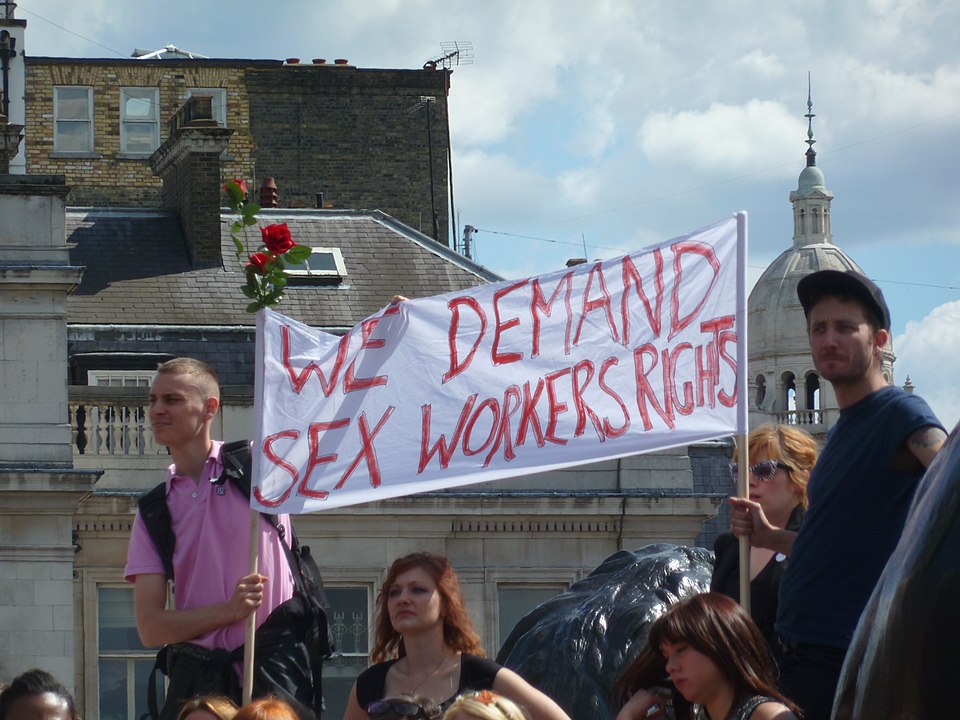
The societal moral panic in any discussion around sex work is not limited to France, and it is no surprise that even today, Germany wants to police it through their feigned moral lens. With the ProstituiertenSchutzGesetz (ProstSchG), adopted in 2016 under the garb of combatting human trafficking, sex workers are obliged to register with the state. It involves a mandatory sexual health screening by a social worker—not a doctor or nurse—often resulting in hazardous misinformation on the use of protective drugs like PrEP. There is fear over the centralised government database coming into the hands of the AfD, echoing Nazi times. The interaction of marginalised and migrant sex workers with state bureaucracy—often racist and sexist by itself—creates a nightmarish situation. Fines are high and sex workers are increasingly vulnerable to raids, as safe spaces are compromised by registration requirements. In some regions, there’s a mandatory fee for registration. At the same time, in recent years, the “Nordic model” has enjoyed popular institutional mandate within the EU. This approach—opposed by many sex workers’ organisations as well as Human Rights Watch—tries to abolish sex work by criminalising the purchase of sex, increasing violence towards sex workers and further stripping them of their rights.
The 1975 occupation did not result in any law reform—with the police clearing out the church after eight days, refusing to engage with sex workers’ demands—but this action is seen as the catalyst for the contemporary sex workers’ rights movement in Europe. While conditions for sex work haven’t improved much since, that day has served as a moment for commemorating sex workers and their struggles, and building awareness and demands, once again a reminder of the power of collective action. The protesters from 1975 were aware of this power, and battled through the many years of repression before. They penned a song during their occupation, which went something like this:
When we occupy the churches,
you are scandalised,
religious bigots!
You who threatened us with hell,
we have come to eat at your table,
at Saint Nizier.