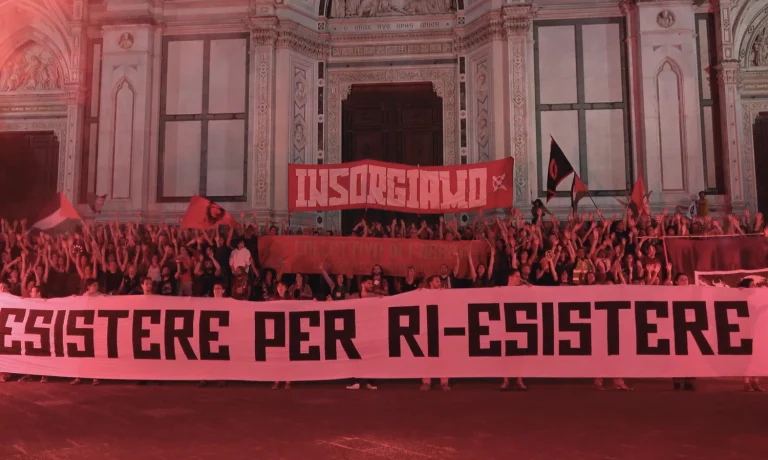
There is a political phrase that every Romanian will encounter in school. It refers to Alexandru Ioan Cuza, who in 1859 was elected prince of both Moldavia and Wallachia, a de facto union that was the first step in the formation of the modern Romanian state. Cuza went on to enact radical liberal reforms against the interests of the boyars. An increasingly isolated enlightened autocrat, Cuza was ousted in 1866 by Conservatives and Liberals working together. To this day, this is known as the “monstrous coalition.”
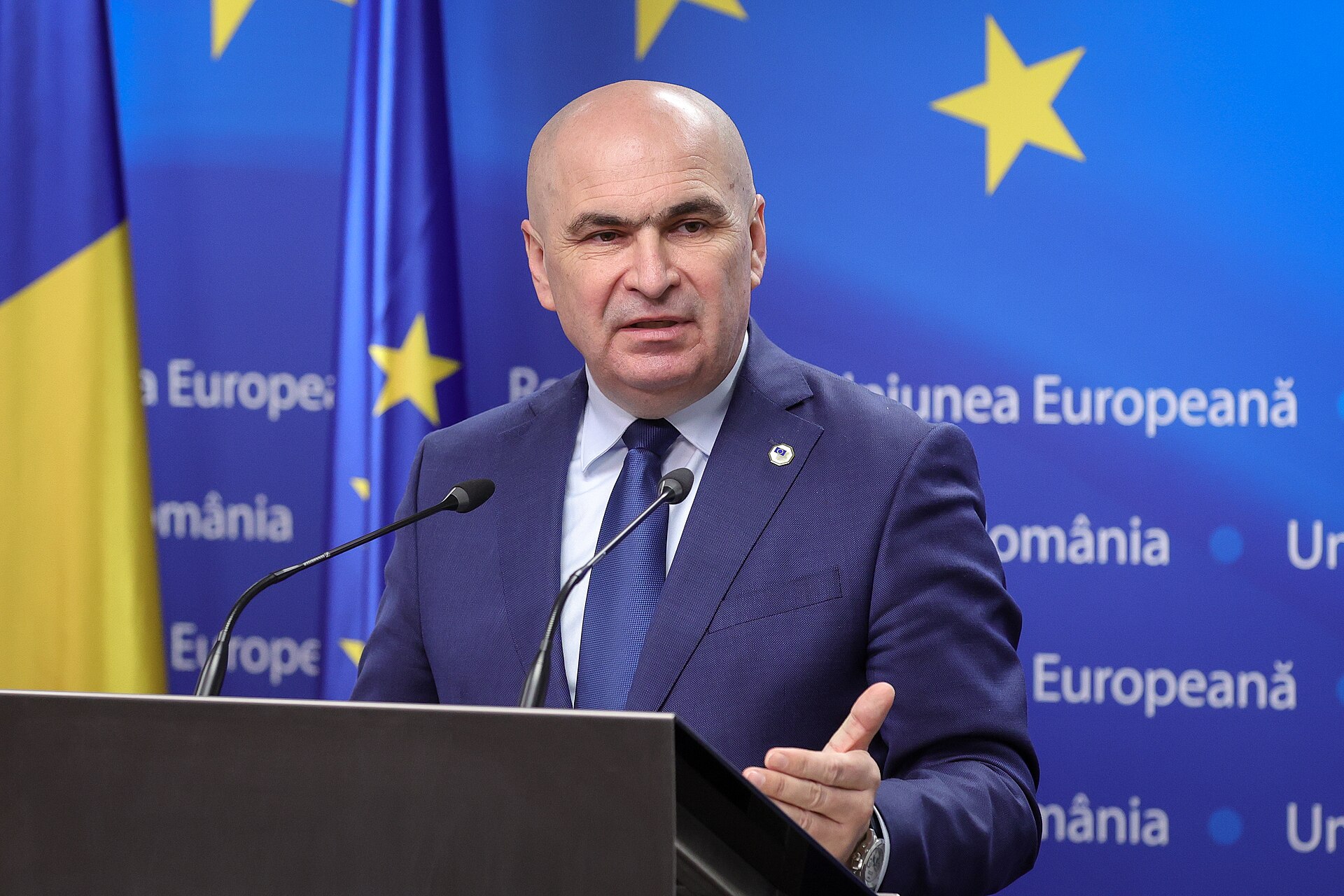
First the history, now the farce. On the anniversary of Cuza’s election, Ilie Bolojan, Romania’s Prime Minister, drew a parallel between his time and 1859. Now, as then, Romania requires modernizing reforms pushed through by strong men with the clarity of purpose to go against the grain of society. A few months later, Bolojan met his own monstrous coalition.
The Social Democratic Party (PSD) broke off from the government led by Bolojan’s National Liberal Party (PNL) and allied with the far-right Alliance for the Union of Romanians (AUR). PSD and AUR proposed a vote of no-confidence, which passed on May 5 with 281 parliamentary votes, well over the 233 it needed. Bolojan now only heads a caretaker government, and a new cabinet has to be formed in June.
Some commentators have gone as far as to call this a coup. But Bolojan is not Cuza. The latter introduced free compulsory education to the Romanian states and redistributed land from the boyars and monasteries to the peasants. Bolojan’s progress consists of austerity and cuts, a vision that begins and ends with the budget deficit. And this enabled a coalition more monstrous than a liberal-conservative alliance. PSD’s willingness to work with AUR is one of the worst trespasses of the cordon sanitaire against the far right in Europe, one that prefigures a grim future.
The Straight Man
Bolojan came to power as a problem-solver. The problem was straightforward: Romania’s budget deficit. At the beginning of his tenure, the deficit was 9.3% of the country’s GDP, the highest in the EU. Bolojan’s administration brought it down to 7.9%, and the deficit was forecasted to reach 6.2% by the end of the year. Still high, but manageable.
Much hangs in the balance when it comes to budget deficits in the EU, especially for the Union’s less powerful economies. The threat of a downgrade of Romania’s credit rating, scaring off investors, looms large over capitalists’ heads. The Romanian dream of joining the OECD shatters against accusations of fiscal irresponsibility. EU funding, such as the Security Action for Europe (SAFE) or Romania’s recovery and resilience plan (PNRR), is conditioned on reaching fiscal balance, among other legislative reforms.
In Romania, these mechanisms have become promises of progress and necessary reform, invoked constantly to the point of the absurd. In a recent address meant to calm Romanians, President Nicușor Dan rambled off acronyms like magic words: “There is agreement on major policies: OECD, SAFE, PNRR. There is agreement on Romania’s fiscal trajectory.”
But the President and the caretaker Prime Minister lose sight of, or simply don’t care about, a simple fact: as one commentator put it, country ratings are abstract concerns for the average Romanian. More tangible than a letter grade assigned by economists at Moody’s is how Romania’s fiscal trajectory is changing daily life. And on this front, Bolojan’s administration has been a disaster.
After a series of political crises in which Romania twice came close to a far-right president, Dan and Bolojan took office as liberal saviors. A former teacher-activist and independent mayor of Bucharest, Dan soon lost his shine, playing close to both the far right and PSD. Bolojan, on the other hand, took his role seriously. As prefect of a Transylvanian county, he gained a reputation as a ruthlessly efficient administrator who was not afraid to cut funding, fire superfluous employees, and fight against corrupt interests. Exactly the tight ship that the national government needed.
The Prime Minister quickly got to work. Going against Dan’s explicit electoral promise, he raised the VAT. He eliminated the caps on energy prices. He shrunk the coverage of public health insurance. He increased teachers’ workloads and reduced or eliminated state employees’ bonuses, while their base salaries were frozen. Pensions were also frozen, and the threshold over which retired Romanians have to pay for health insurance was lowered. And he constantly threatened to fire tens of thousands of state employees.
Romania’s deficit decreased, and the country avoided a credit rating downgrade. At the cost, however, of the highest inflation in the EU and of a decrease in consumption and in purchasing power. This is a country with one of the highest poverty rates in the Union and marked by historic inequality and major regional disparities. It is no wonder, then, that Romanians are more pessimistic than the EU average about their personal and national economic security and that they went out on the streets to protest against austerity, to little effect. According to Bolojan, he is in power “to do what he has to, not what is popular.”
His reforms, however, also proved unpopular among his own partners in government. The grand coalition of PSD and PNL was always marked by tensions, which reached the tipping point with the government’s plans to list shares from several state companies on the financial markets. Another plan to make quick cash, increase efficiency, and make the numbers look better, while ignoring longer-term solutions.
Privatization has never been a silver bullet for postsocialist economies. On the contrary, it made industrial production and employment subject to the whims of shareholders and market forces. One example is the Mangalia shipyard. Owned by Daewoo, the shipyard was sold by the Korean company due to indebtedness. The Romanian state bought back a controlling share of 51%, with 49% going to the Dutch firm Damen. But Damen directed foreign contracts to shipyards where it was the majority owner, leaving Mangalia to go bankrupt. Now the shipyard will possibly be taken over by Rheinmetall for military production.
Militarization is one sector that is thriving in Romania, at the expense of social spending. Not that the bar is high. Despite liberal cries of waste, inefficiency, and overspending, Romania’s social state has actually been dismantled over the last decades. Social spending is among the lowest in Europe, and the impact of Romanian social transfers is particularly inefficient for reducing poverty. The Romanian administration is, admittedly, a mess, but it also has the lowest level of public-sector staffing in the EU, relative to both the country’s total workforce and to the population.
So if it is not so much a problem of spending, why is there a deficit? Romania’s most pressing problem is tax collection. Romania has the largest gap in VAT collection in the EU. Bringing this to the EU average would save more than twice as much as Bolojan’s austerity measures—not to mention corporate tax collection.
Right before the vote of no-confidence, the Minister of Finance announced a much-promised reform of the National Agency for Fiscal Administration (ANAF). However, the plan is not to increase collection, but to cut in the name of efficiency: around half of local ANAF offices are slated to be closed.
This is a clear example of Bolojan’s approach to the Romanian economy. His ambition is not to improve and fix, to increase the overall welfare, but to catch the freeloaders, the corrupt, the lazy. In his own controversial phrasing, he claimed to have spied the rats in the pantry, and he is out to get them. Without the rats, Romania will become a lean, clean Western capitalist machine.
The Monsters
The rat comparisons and the privatizations were the breaking point for the social democrats and the far right. They accused Bolojan of using dehumanizing, Nazi-like language and selling away the country. PSD and AUR came together to stop the disastrous effects of Bolojan’s economic plans. Or so they claim.
The alliance between the two parties is more likely than it appears at first. Virtually all of Romania’s mainstream parties lean toward conservatism and nationalism, and PSD is no exception. One of its most important leaders, Lia Olguța Vasilescu, was a founding member of the Greater Romania Party, the last far-right party to reach prominence before AUR, and the party is strongly conservative on social issues. Economically, it supports some redistributive policies and increases in social spending, but does not hesitate to pull the rug from under the vulnerable to bolster its own crony capitalist network.
The alliance between PSD and AUR makes sense not only ideologically, but economically as well. While PNL and the neoliberal USR party are affiliated with transnational, mobile capital, both AUR and PSD represent the interests of national capital. That is not to say that they are disconnected from international circuits. On the day of the vote of no confidence, AUR leader George Simion was observed texting with a representative of an international mining corporation. The privatization of mining state companies had been one of the key points of the controversy surrounding the government’s plan.
This was, then, the ideal scenario for PSD and AUR to finally come together. The threat against state companies was an encroachment on PSD’s traditional source of institutional leverage and financial benefits. For AUR, it represented a clear chance to reassert their economic nationalism, as against EU-imposed regulations and conditions. A stronger national economy that takes care of Romanians is the future that this alliance sees after the Bolojan government.
The shape of the next government is messy and uncertain. But the economic suffering imposed by the Bolojan government means that the combined appeal of the Social Democrats and the far-right stands a chance of becoming the basis of a stable coalition. For now, PSD leader Sorin Grindeanu has excluded the possibility of governing together with AUR. Simion, in turn, waffles about AUR taking the reins of government, as the party thrives in opposition. But he is less final about a coalition with PSD: “Never say never.”
At the end of the day, Simion is right. Although Romania does not have a far-right president, in part due to a Constitutional Court decision that seriously undermined democracy, AUR is undeniably a major player in Romanian politics. For them, everything is on the table. Victoria Stoiciu, the only PSD member of Parliament who was publicly against the collaboration with AUR, points out that mainstream parties seem not to have internalised how close AUR is to power.
PNL and Dan continue their austerity programs, further immiserating and alienating AUR’s voting base. PSD either considers that it can use and control the far-right, a dangerous gamble, or is simply moving toward the economic nationalism and nativist redistributism that AUR claims to support. The far-right is adept at naming people’s legitimate grievances, but seeks to aggravate and mobilize them, not to solve them. For social democracy to play on that terrain is a disaster that ends in fascism.
The Lesson?
What happened in Romania is bound to happen again. Like Romanian liberals who learned nothing, it is evident that mainstream parties throughout Europe try to continue their fiscal trajectories. With AfD always rising in the polls, Friedrich Merz attacks German health insurance, labor regulations, and social protections. Keir Starmer’s austerity budget led to historic wins for Reform in local elections.
The alternative seems to be to try to play the game of the far-right, from anti-migration politics to loosening green regulations. Hungary, for instance, finally ousted Viktor Orbán, but might fall back into the far-right trap if it continues appealing to nationalist values and policies. In the European Parliament, both the center-right and the social democrats voted together with the far right in the recent past.
But the PSD-AUR vote of no confidence is a new, different type of blow against the cordon sanitaire supposed to keep the far-right parties at a distance. It is an example of going beyond voting together to actively work with the far right in order to plan an impactful political move. This means not only normalization, but an open willingness to legitimize and cede political ground. This willingness is not an isolated, Eastern European aberration. The Party of European Socialists, of which PSD is part, lent their full support to PSD’s choice.
If there are any lessons to be taken from Romania, besides a daunting awareness of the seemingly inevitable decay into fascism, these are two: to reject the geopolitical framing and to understand the limits of social-democratic parties. In this case, as always, the fight against the far right has been framed as a clash of European or Western values against Russian influence. But European civilization is a right-wing project, built on exploitation, racism, and geopolitical divides. Parties like AUR rightfully claim to mark a return to the core of Europeanness, and are embedded in networks across the EU. Solving internal social problems and ditching austerity will do much more toward mitigating their rise than seeing Russian hybrid wars everywhere. Vague appeals to the importance of a European orientation have no power and only serve to aggravate those who feel like the losers of Europeanization.
PSD ultimately chose to ally itself with AUR because of its investments in a specific type of Romanian capitalism, one that was under attack. Both parties had something to preserve and to gain against Bolojan’s austerity program. The coalition was monstrous not because it was against nature, but because it revealed the deep common structure that both the social democrats and the far right share. It also showed that, at least in Romania, there is as yet no true alternative to austerity that does not lead to something worse. Austerity ran wild under Bolojan, and then it was stopped by the only ones with the power to stop it. In both cases, however, there were monstrous results that were and will be felt by those most vulnerable.