During the last fifteen years, the European Bank for Reconstruction and Development (EBRD) has made the following investments in the Kyrgyz Republic for the development of the capital city’s public transport.
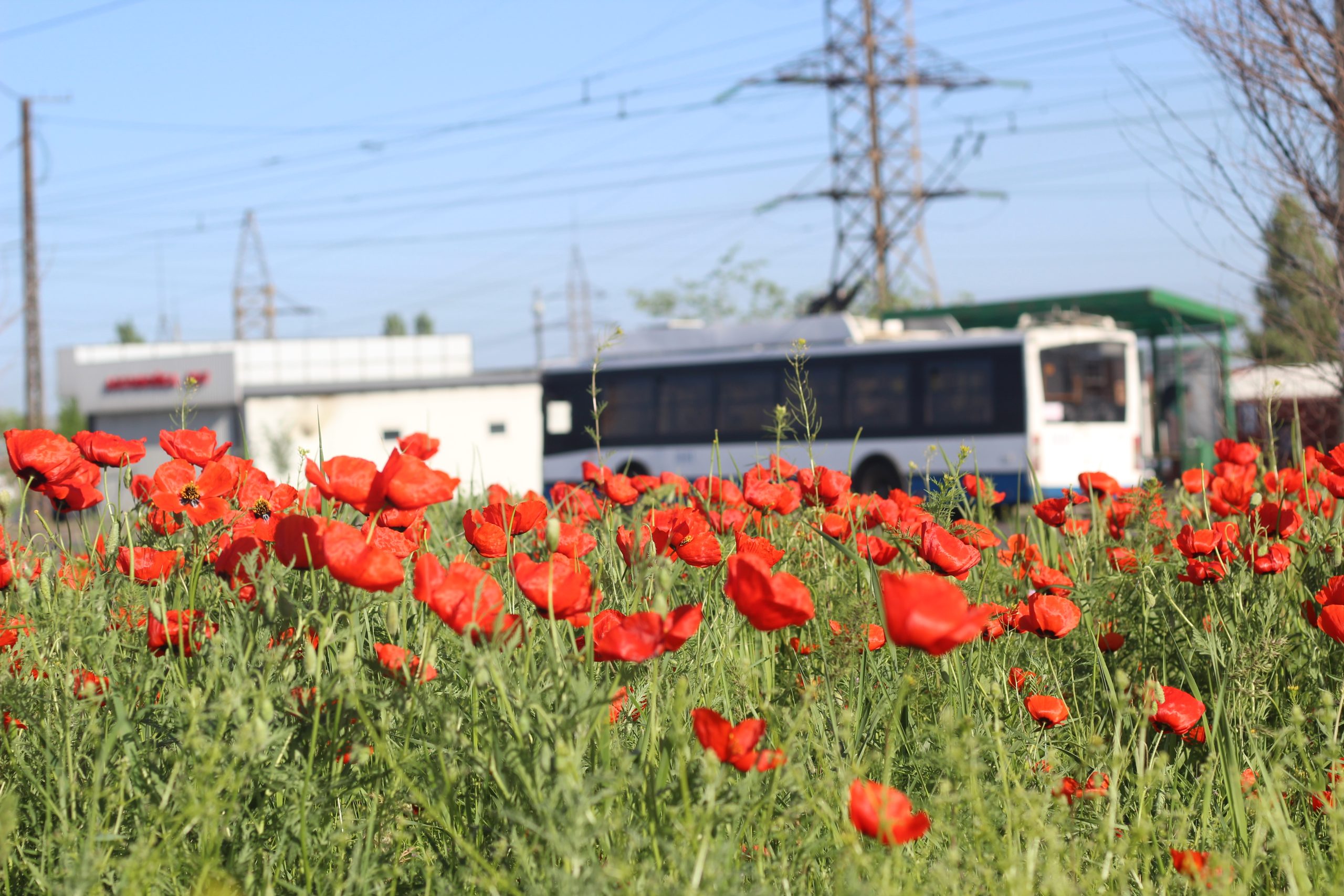
The European and German taxpayers co-funded 131 electric trolleybuses in Bishkek through EBRD grants and loans — and by November 2024, every single one was scrapped, replaced by Gazprom-fuelled CNG buses and e-buses funded by the Asian Development Bank, leaving 600 workers jobless and one million people breathing with one of the world’s worst air.
No impact assessment and no worker retrenchment plan were shown, that goes in contradiction with the EBRD’s own Environmental and Social Policy. This is not a local problem: it is your climate money, wasted.
Please write to the EBRD, Asian Development Bank, and your government now.
Template letters
To EBRD
(copies send to ipam@ebrd.com, president@ebrd.com, cso@ebrd.com)
Subject: Accountability for Bishkek Public Transport Projects #41492 and #47624
Dear the EBRD Management and the Independent Project Accountability Mechanism,
I am writing as a European citizen and taxpayer whose contributions fund the EBRD. I am deeply concerned that 131 trolleybuses purchased with EBRD loans and grants in Bishkek, Kyrgyzstan, were taken out of service by November 2024 without any environmental and social impact assessment, in apparent breach of Article 39 of the EBRD Environmental and Social Policy. I ask that the EBRD:
(1) publish a full accountability report on how shareholder grant funds under Projects #41492 and #47624 were used and what steps were taken when material changes occurred;
(2) conduct and publish a retroactive E&S assessment of the health, labour, and inclusion impacts of the trolleybus dismantlement;
(3) require the City of Bishkek to present a plan to restore zero-emission public transport; and
(4) clarify whether a Retrenchment Plan was requested for the approximately 600 workers who lost their livelihoods.
(5) identify who will be responsible for e-wastes if trolleybuses will be converted to e-buses and how it will be disposal? Who will be responsible for the safety of its usage, what are the time limits for conversion, and what E&S assessment was done?
To ADB Senior Management
(send to president@adb.org (President, Masato Kanda)
with copies to:
vpf@adb.org (Vice President, Finance)
ngoc@adb.org (NGO and Civil Society Center)
safeguards@adb.org (Safeguards Division)
Central and West Asia Department: reach via ADB Kyrgyzstan Resident Mission, adbkrm@adb.org
Subject: Urgent demand to eradicate project mistakes — Urban Transport Electrification Project (UTEP), Loan 4149-KGZ, Kyrgyz Republic
Dear ADB President and Senior Management,
I am writing as a European citizen and taxpayer to demand urgent corrective action on the ADB-financed Urban Transport Electrification Project (UTEP, USD 50.65 million) in Bishkek, Kyrgyzstan, which has produced the opposite of its stated climate and social objectives.
The project was designed to add 120 electric buses to complement Bishkek’s existing zero-emission trolleybus fleet of 183 vehicles — delivering approximately 300 zero-emission vehicles on city streets. Instead, UTEP implementation enabled the complete replacement of the electric trolleybuses funded mostly by the EBRD ($23.5 million), resulting in a net loss of around 200 zero-emission vehicles, the introduction of CNG buses running on Gazprom gas, worsening air quality in one of the world’s most polluted capitals, the dismissal of around 600 workers without any transition plan or meaningful compensation, and the removal of accessible low-floor transport for more than 10,000 residents with disabilities.
ADB’s own Country Director acknowledged in writing (letter from Joonho Hwang, 3 April 2025) that the ADB e-buses should extend the electric transport system, but no replace trolleybuses — yet no enforcement action has been taken for over a year.
Loan covenants have been ignored. Project monitoring data has been withheld from the public in breach of ADB’s Access to Information Policy. Civil society complainants — women human rights defenders — have faced unlawful arrests and state pressure for raising these concerns.
This is not a project implementation shortfall. It is a systemic failure of the ADB Project Team, safeguards, and governance standards that directly contradicts ADB’s Country Partnership Strategy 2023–2027 and Kyrgyzstan’s Paris Agreement NDC Measure 1.9 on sustainable transport fleet expansion.
I demand that ADB Senior Management immediately:
(1) enforce existing loan covenants and require the Bishkek City Hall to present a concrete plan to restore a functioning zero-emission public transport network integrating both e-buses and trolleybuses, as originally planned;
(2) initiate a full environmental, social, and governance safeguard assessment of UTEP outcomes, including a working group with civil society participation;
(3) ensure meaningful compensation and retraining for all dismissed trolleybus workers;
(4) review all withheld project monitoring data and how it relates to the goal of the project; and
The mistakes of this project can and must be corrected. ADB’s climate credibility depends on it.
To German Government / BMZ
(send to poststelle@bmz.bund.de and your Bundestag representative)
Subject: Demand for accountability — EBRD and ADB investments in Bishkek public transport and German obligations as shareholder
Dear Federal Minister for Economic Cooperation and Development / Dear Member of the Bundestag,
I am writing as a German citizen and taxpayer to demand that the Federal Government take immediate action regarding a serious failure of accountability in two multilateral development bank investments that Germany co-finances.
Between 2011 and 2018, the EBRD approved over $23 million to purchase 131 electric trolleybuses in Bishkek, Kyrgyzstan. Half of the project was a loan, hulf is grant from the EBRD Shareholder Special Fund. By November 2024, the entire trolleybus network was removed from service, around 600 workers lost their income, and Bishkek’s air quality deteriorated further.
The Asian Development Bank, in which Germany also holds shareholding rights, financed the Urban Transport Electrification Project to increase the number of electric vehicles, but in the end the city replaced trolleybuses by electric buses. No environmental or social impact assessment was conducted by either bank.
The EBRD’s own Environmental and Social Policy, Article 39, explicitly requires such assessment when material changes occur to funded projects. This obligation was not met.
As a shareholder in both the EBRD and the ADB, Germany has direct institutional mechanisms to act:
At the EBRD, Germany holds a seat on the Board of Governors and elects a Director to the Board of Directors. The Board of Directors has oversight authority over management decisions and can request that the President report on compliance failures. Germany can formally request that the Board of Directors instruct EBRD management to
(1) initiate a compliance review under the Environmental and Social Policy for Projects #41492 and #47624;
(2) publish a full accountability report on the use of Shareholder Special Fund grant money; and (3) ensure the Independent Project Accountability Mechanism processes the existing civil society complaint with full transparency and within the responsibilities for the continued harm.
At the ADB, Germany participates in the Board of Governors and can raise concerns directly through its Governor and Alternate Governor. Germany can formally request that ADB Senior Management provide a written explanation of the environmental and social due diligence conducted for the Bishkek bus project, and whether coordination with EBRD took place to protect existing climate assets — as required under the MDB joint climate commitments that both banks have signed.
Beyond individual projects, I ask the Federal Government to use these cases as the basis for a broader policy push: to make asset-protection clauses, mandatory inter-bank coordination on overlapping investments, and binding retrenchment obligations standard requirements in all EBRD and ADB climate finance operations. Germany’s 2030 international climate finance commitments carry a responsibility not only to disburse funds but to ensure they deliver lasting, accountable results for the communities meant to benefit.
Climate finance is not a transfer payment. It is a policy instrument with legal standards and measurable obligations. What happened in Bishkek — where public money meant to clean the air has instead made it worse — must have consequences and must not be repeated. I ask you to act.