For many, it’s a common experience to have approached Politics through the medium of words first. Debating the topics that interest you, maybe researching them to understand them better. This is important, but consciousness alone doesn’t create change. Knowing things doesn’t change things. Actions change things, and behind effective actions there are effective organizations. In this article, we will explore the idea that to build effective political organizations, you need a set of adaptable skills that can be cultivated independently of the topics, the communities, or the aspects of society you want to change.
The idea that political change happens as a consequence of the power developed by specific organizations is called “Organizational Materialism”. This perspective puts into focus the importance of individuals in contributing to the process of building more effective organizations, which in turn will have a higher capacity to shape society in the desired direction. It puts a lot of stress on radical agency, that is, the ability to intervene in systems that will inertially continue on their path, and steer them towards what we want.
In this frame, articulating what we want, individually and collectively, is as important as developing the ability to make it happen. Nonetheless, the vast majority of political discourse, in public as much as in political niches, focuses on the former. We see an endless stream of content about the pros and cons of different forms of Universal Basic Income, or moralizing commentary about the behavior of a given politician. Many of us might have experienced the bubble in which this is the entire facet of political change, but it’s not. When organizations are discussed, it’s done from an ideological and abstract perspective, as if specific organizational forms were intrinsically better or worse.
We can do better: democracy requires every one of us to be empowered to participate in building organizations in our surroundings, and not just to be educated about the phenomena affecting our lives. There are proven frameworks, methods, and disciplines that people have used over the years to build strong interpersonal networks and effective organizations. Instead of focusing on a single aspect of organizing, we should learn and practice them as part of an integrated, systematic approach.
Now, what should we learn to build effective organizations? The set of skills required to cater to every aspect of an organization is vast, but we can try to break it down in a way that makes sense.
Organizational design
The first and more intellectual is organizational design: all the skills required to shape, with intent and direction, the system in which participants will operate. I like to follow a system of 9 elements to think about all these aspects, each one matching pretty much a profession or discipline that is concerned with studying or designing them effectively.
These are:
- Mission: what change we want to create.
- Governance: how decisions are taken by groups and individuals.
- Strategy: the system of rules, insights, and principles to help participants make coherent decisions
- Processes: how things are done in practice.
- Tools: physical or digital instruments, spaces, practices to support the execution of a process.
- Identity: what others believe about us and what we believe about ourselves.
- Rituals: activities to reinforce the organization’s identity, unity, and continuity.
While each one of these aspects could take decades to master, a good organizer should be comfortable with tying these elements together and intervening when something is not functioning properly.
In my practice, the work of Anthony Stafford Beer is paramount: Designing Freedom is his most accessible read, but all the work done on the Viable System model (VSM) and in general after developing Project CyberSyn in Allende’s Chile gives us a frame to build adaptive organizations embodying democratic values.
At a higher level, a good book to build a holistic foundation is “Neither Vertical Nor Horizontal” by Rodrigo Nunes.
Relational skills
An organization is primarily the relationships between the people involved, and fostering them is necessary to have a functioning organization. Therefore, the second set of skills is relational: creating momentum, offering emotional care, speaking with charisma, resolving conflicts, mediating between different interests, code-translation across different groups, and, more simply, the ability to make a space more welcoming and enjoyable.
An organization built on shared opinions will break down at the first disagreement. An organization built on solid relationships will last. Too often we see that organizations are unable to recover from unresolved conflict. A democratic and pluralistic organization requires the ability to resolve disagreements and collaborate across differences of opinion. While some beliefs are irreconcilable and no mediation can be found, the vast majority of leftist infighting looks perfectly preventable once you put at the center the humans and their relationships, rather than the ideas and the words.
Starhawk’s “The Empowerment Manual” is a good starting point to learn how to handle group dynamics, and the classic “No Shortcuts” by Jane McAlevey to absorb the basics of structure-based organizing.
Personal growth
The third set of skills is more elusive, but makes the difference in the long run. Every organizer is pitted in a battle of a collective will with scarce resources against an ever-decaying status quo. Organizing is an act of radical alteration of the present, and the present fights back at every attempt. If you’re not strong enough, you get crushed: burnout, stress, conflicts, depression, you name it. None of this is inevitable: sharpening ourselves, our will, our network of support, and our mutual trust is possible and needed. This is even more true now that we live through increased repression, worsening economic conditions, shifting power structures, and general unpredictability.
Organizing that wears you down is irresponsible organizing: you become a liability and bring down pieces of the organization once you give up. Our own well-being is a political imperative, because the future can’t be built on sand. Effective organizing makes the organizers stronger and more whole than when they began. Be skeptical of who normalizes burnout and strain on political grounds: they fabricate martyrs, not organizers.
On these topics, different authors and practices might be more or less relatable depending on your individual journey of life and your degree of openness towards the mystical practices. My personal favorite is Bataille, if you want a classic. Some like to read Bell Hooks or Federico Campagna in this light. I believe, though, that books can lead you on your path just so much: direct experience and taking action to change your environment are where the real work happens.
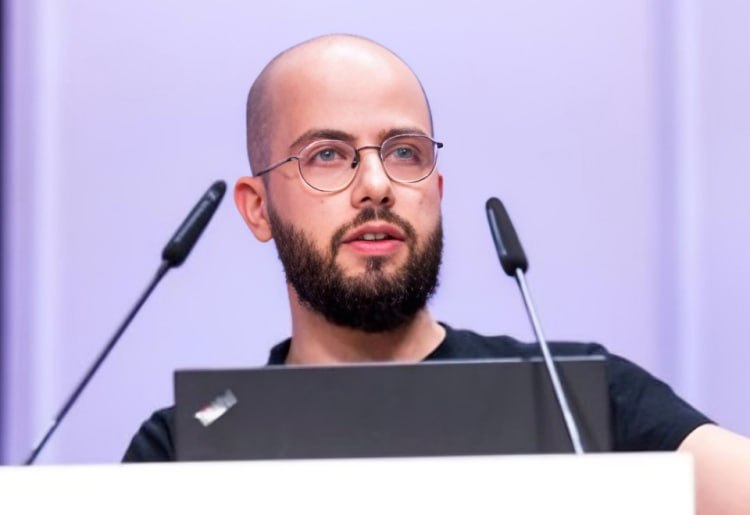
If what we presented here resonates with you, The Left Berlin and Reincantamento are hosting a course to empower new and seasoned political organizers with the basics of organization building. I’m Simone Robutti, and together with Miho Soon, I will guide you through the 9 modules composing Architectures of Change. These include some of the concepts presented in this article, but also many more, such as political ecosystems, strategy, facilitation, or theory of power.
To learn more and to sign up, visit our website: architecturesofchange.xyz/