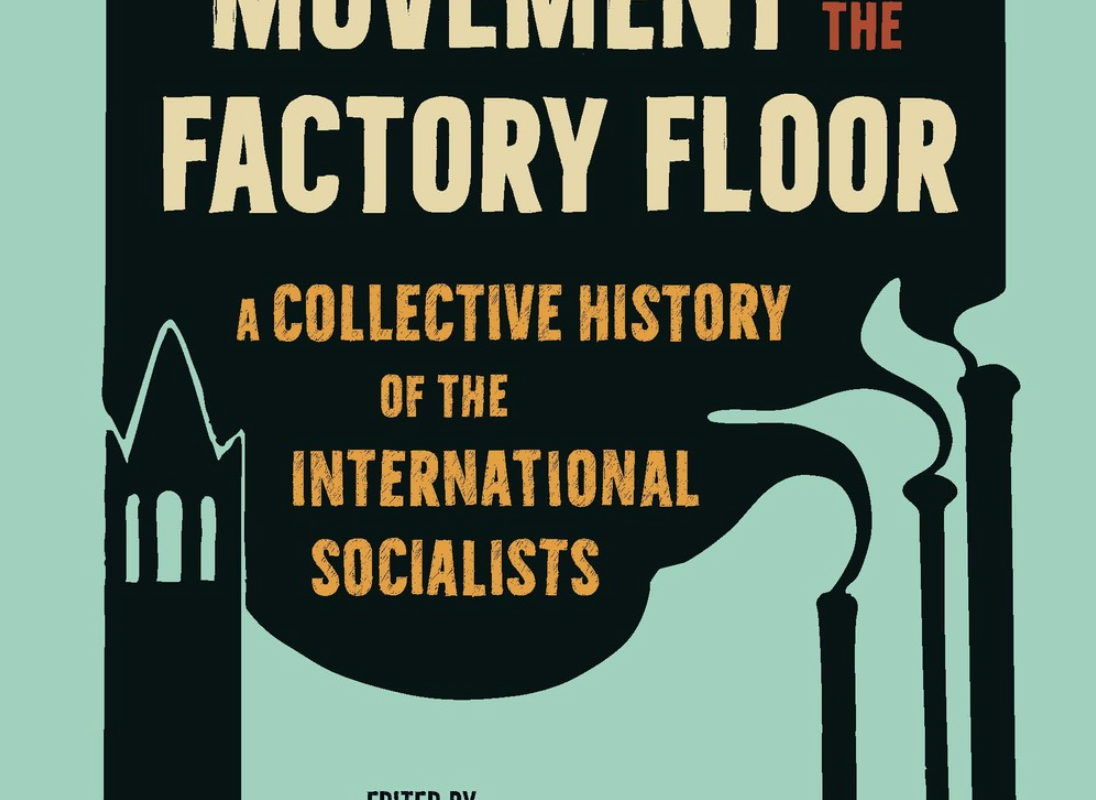
From the Free Speech Movement to the Factory Floor: A Collective History of the International Socialists, edited by Andrew Stone Higgins, is a love letter to revolutionary patience, to principled militancy, and to a tradition of socialism that refused both bureaucratic tyranny and liberal accommodation. It is also something rarer: a collective memoir that does not lapse into nostalgia, but instead insists on relevance. Through testimony, reflection, and political self-criticism, the book reconstructs the world of the Independent Socialist Clubs and the International Socialists as a living laboratory of “socialism from below,” a current that shaped far more of the American left than its modest numbers would suggest.
The volume’s emotional core is commitment. Again and again, readers encounter organizers who believed that ideas mattered only insofar as they were tested in struggle: on campus, in factories, in unions, in high schools, in feminist collectives, and in anti-racist campaigns. This was a socialism that rejected shortcuts. No saviors, no enlightened elites, no substitution of armed spectacle for mass organizing. Power had to be built patiently, democratically, collectively.
Higgins’s introduction alone is worth the book. It situates the International Socialists (IS) within the lineage of anti-Stalinist Marxism, tracing roots through Hal Draper, Anne Draper, and Stan Weir, veterans of the Workers Party and Independent Socialist League who preserved revolutionary democracy through McCarthyism’s long night. Higgins shows how the IS fused Old Left rigor with New Left insurgency, rejecting both Cold War liberalism and authoritarian communism. The result was a distinctive political culture: intellectually demanding, fiercely democratic, strategically serious, and oriented toward the multiracial working class. He also names weaknesses without flinching: slow early expansion, cultural barriers to working-class recruitment, and limits in building durable multiracial leadership. The tone is neither defensive nor dismissive. It is honest, and that honesty strengthens the project.
The first chapter, Mike Parker’s “The Student Movement and Beyond,” grounds the story in the radicalizing currents of the early 1960s. His journey from the Student Peace Union into revolutionary socialism captures how antiwar activism, civil rights struggle, and class analysis converged for a generation. Parker makes clear that socialism did not arrive as a doctrine but as a lived realization: that war, racism, and exploitation shared systemic roots.
Thomas Harrison’s remembrance of the Berkeley Independent Socialist Club brings the Free Speech Movement to life as more than a spontaneous eruption. It becomes a strategically contested terrain where disciplined organizers helped shape a mass uprising without dominating it. Marilyn Morehead’s chapter on organizing with the Black Panthers deepens this theme, showing how the IS built a rare, principled Black-white alliance rooted in mutual respect rather than romanticization. These pages quietly demolish the myth that the white left of the era could only oscillate between paternalism and performative militancy.
Nelson Lichtenstein’s “Making History in Berkeley” widens the lens, locating the IS within broader transformations of campus radicalism, while David McCullough’s “To the Working Class” signals the crucial turn away from student exceptionalism. The revolution, the IS insisted, would not be made by radicalized undergraduates alone but also by organized workers.
Lois Weiner’s chapter on building the Third Camp at UC Berkeley clarifies what made the IS politically distinctive: rejection of both US imperialism and authoritarian “socialist” states. In an era intoxicated with romanticized revolutions abroad, this was an unpopular but principled stance. Kim Moody’s account of the Independent Socialist Clubs on the East Coast and Gabe Gabrielsky’s narrative of building from the bottom up in New Jersey, New York, and DC show the painstaking labor of constructing an organization from scratch.
Nancy Holmstrom’s “ISC/IS, from the Margins” and Sam Friedman’s reflections on being revolutionary across cities capture the emotional and political costs of sustained organizing. These chapters remind readers that movement-building is not glamorous. It is exhausting, conflict-ridden, and often lonely.
Joel Geier’s “My Life with the IS” functions as both memoir and strategic meditation, tracing decades of activism shaped by discipline and collective learning. David Finkel’s reflections on the period from 1969 to 1986 chart the turn toward industrial organizing and the brutal encounter with deindustrialization and neoliberal rollback.
The middle of the book is where the IS’s heart beats loudest: the factory floor. Dan La Botz’s account as a socialist in the Teamsters union, Wendy Thompson’s feminist organizing at Chevy Gear and Axle, Mark Levitan’s plunge into industrial labor, and Candace Cohn’s experience as a steelworker collectively form a powerful narrative of rank-and-file insurgency. These chapters embody the rank-and-file strategy not as abstract theory but as lived risk. People uprooted their lives, took dangerous jobs, endured repression, and stayed because they believed workers could transform society themselves.
Gay Semel’s chapter on creating a paper for working people highlights the importance the IS placed on communication and political education. Movement newspapers were not propaganda sheets but forums for debate, strategy, and collective voice.
The later chapters expand the story’s social breadth. Anne Mackie’s “Breaking into Brown” and Barbara Winslow’s account of revolutionary feminism on both sides of the Atlantic show how deeply the IS engaged with women’s liberation as integral to class struggle, rather than as a side issue. Sheila Jordan’s journey into the organized revolutionary left continues this theme of politicization through lived injustice.
Michael Z. Letwin and Larry Bradshaw’s chapters on high school radicalism are among the book’s quiet revelations. They show how the IS invested in youth not as mascots but as organizers, cultivating political seriousness early. Kim Anno, Arnita Dobbins, Tonya English, and Kyle Hopkins then bring the Red Tide youth organization fully into view: multiracial, working-class, anti-racist, rooted in communities rather than campuses. Their stories of organizing against racism, police repression, and injustice in the Midwest pulse with urgency and creativity.
Together, the chapters form a mosaic of a political tradition that believed movements could be built, not merely awaited.
What emerges is the IS as a school of revolutionary practice. Members studied history not for reverence but for lessons. They debated fiercely but acted collectively. They rejected the fantasy of instant rupture in favor of sustained organizing. And they insisted that democracy was not a future reward but a present method.
The book is rightly celebratory. The IS helped seed Labor Notes, Teamsters for a Democratic Union, and traditions of rank-and-file unionism that still shape US labor struggles today. Long after the organization itself dissolved, its political DNA survived in shop-floor insurgencies, reform caucuses, and democratic socialist currents.
Yet the weaknesses matter, and the volume does not hide them. The early failure to engage the influential Students for a Democratic Society (SDS) systematically limited the IS’s reach at the height of the student movement. Its intense intellectual culture could alienate working-class recruits. Despite principled anti-racism and real breakthroughs like the Panthers alliance and Red Tide, building lasting multiracial leadership remained uneven. And the industrial strategy, while courageous and often effective locally, could not overcome the structural tsunami of deindustrialization and neoliberal counteroffensives.
These are not indictments. They are historical problems future organizers must confront with new tools.
One area future scholarship might deepen is the emotional economy of long-term organizing: burnout, internal conflict, and the personal toll of militant lives. Another is comparative analysis with other left currents of the period, especially those that chose armed struggle or electoral accommodation, to more sharply illuminate what the IS gained and lost through its strategic choices.
Still, the book’s central lesson stands tall: revolutionary politics is not performance. It is infrastructure.
For today’s American left, which sometimes drowns alternately in social media activism and electoral obsession, the IS legacy offers a bracing correction. It reminds us that movements are built through patient workplace organizing, political education, durable institutions, and alliances rooted in shared struggle rather than symbolic unity. It also warns against romantic shortcuts, be it insurrectionary fantasies or faith in reformist saviors.
The IS understood something still radical in US politics: that socialism must be democratic to its core, internationalist in outlook, anti-racist in practice, feminist in substance, and rooted in the working class as a living, diverse force.
This book is not a blueprint. Conditions have changed. But it is a treasure chest of experience, strategy, and courage.
For a new generation seeking to rebuild a fighting left amid precarity, climate crisis, resurgent authoritarianism, and hollowed-out labor institutions, From the Free Speech Movement to the Factory Floor offers something priceless: proof that disciplined, principled, mass-oriented socialism once flourished in the belly of American capitalism, and can again.
The task now is not to replicate the IS, but to study it seriously, absorb its lessons, correct its limits, and carry forward its best tradition: a socialism built by ordinary people, for ordinary people, in extraordinary struggle.
If dedication alone could make a revolution, as Higgins writes, the IS would have won long ago. But dedication paired with strategy, democracy, and rooted organizing can still change history. This book helps show how.