The Left Berlin News & Comment

This is the archive template

News from Berlin and Germany, 13 August 2025

Weekly news round-up from Berlin and Germany


13/08/2025

NEWS FROM BERLIN

Police will continue intervening against the “From the River to the Sea” slogan

The Berlin police will continue intervening whenever the pro-Palestinian slogan “From the River to the Sea, Palestine will be free” is shouted, despite contrary rulings. If the public prosecutor’s office believes the slogan is criminal, the police must record personal details so that a legal assessment of the situation is possible later. However, considering the rulings by Berlin courts rejected the criminality of the slogan, which questions Israel’s right to exist, there is uncertainty among the police. Given the large number of demonstrations in the capital in the context of the Middle East conflict, security is important for the emergency services, affirmed the spokesperson Anja Dierschke. Source: BZ

Berlin plans job rules for former senators

The Berlin Senate wants to introduce rules regarding conflicts of interest for former senators transitioning to new professional activities. Until now, former senators in Berlin have been allowed to take on almost any new position—even with former negotiating partners. A law changing this is to be passed before the next House of Representatives election, in September 2026. Under the new rules, senators who have left office will have to notify the Senate of any employment outside the public service within the following 24 months. “According to the draft bill, employment can generally be prohibited for twelve months, or a maximum of 24 months, during this period,” Senate Speaker Christine Richter said. Source: rbb

The Green Party accuses Berlin Senate of using Tempelhof housing debate as a distraction

According to the Senate, the battle over Tempelhofer Feld is back. Not for Werner Graf, head of the Greens in Berlin’s parliament. He calls the discussion “nothing but a distraction” from the CDU-SPD coalition’s failure to deliver on actual housing projects. “Berlin doesn’t have a land problem, it has an implementation problem,” Graf told the German Press Agency. He mentioned for instance delays at the Schumacherquartier (Tegel), Molkenmarkt (Mitte) and Güterbahnhof (Köpenick). “If CDU and SPD focused on getting those built, we’d achieve a lot more than wasting time and money debating Tempelhofer Feld.” Source: theberliner

NEWS FROM GERMANY

Die Linke leader believes raising the age is possible

Die Linke leader Ines Schwerdtner can imagine a slightly higher retirement age: “If it’s a moderate increase, we can talk about it.” However, she emphasized that “we don’t need a retirement age of 70.” An increase in the pension level could be financed “by everyone simply contributing to the pension, including freelancers, self-employed individuals, and members of parliament.” In addition, the contribution assessment ceiling must be raised. “A fairer pension system” is necessary, emphasized the Die Linke leader. Economics Minister Katherina Reiche recently called for a longer working life. The SPD, the Greens, and Die Linke criticized Reiche’s proposal. Source: n-tv

Merz plans Europe’s strongest army

Germany is implementing the most profound change in its security policy since the end of the Cold War. For instance, around 5,000 soldiers are to be permanently stationed in Lithuania by 2027. The measure is part of a realignment of the Bundeswehr, which, according to Chancellor Friedrich Merz (CDU), is to be developed into “the strongest conventional army in Europe.” As The Economist reports, the brigade in Lithuania is the most visible symbol of the security policy shift initially initiated in 2022 by Merz’s predecessor, Olaf Scholz (SPD). According to the Stockholm International Peace Research Institute, Germany already has the fourth-highest defense budget in the world. Source: BZ

Approval of the Federal Government falls

Approximately 100 days after Chancellor Friedrich Merz (CDU) took office, the federal government is in a worse position than ever. According to the ARD’s “Deutschlandtrend” survey, the CDU and SPD coalition has reached a new low in public approval ratings. The assessment shows that 29% of respondents are currently satisfied with the government’s work. This is the worst result since the federal government took office in early May. Chancellor Merz is also losing significant trust: the Infratest dimap survey found that only 32% are currently satisfied with his work. Conflicts such as the dispute over the electricity tax and the failed judicial election might be behind such outcomes. Source: BZ

Open letter from the scientific community to end cooperation with Israel

An open letter, with the signatures of over 300 respected German scientists from universities and research institutions in the country and abroad, declares their refusal to cooperate “with the Israeli state and with Israeli institutions involved in illegal occupation, apartheid, genocide, and other violations of international law.” They note that they “are following the example of the Uppsala Declaration written by colleagues in Sweden.” Not a single German media outlet has reported on the document. Itidal, committed to checking facts, publishes the full content of the open letter. Source: itidal
News from Berlin and Germany, 6th August 2025

Weekly news round-up from Berlin and Germany


06/08/2025

NEWS FROM BERLIN

Yasemin A. acquitted for “From the river to the sea”

“From the river to the sea, Palestine will be free” echoes across Turmstraße in front of the Tiergarten court in Berlin on 30 July. A handful of people are forcibly removed from the rally as they chant it. The group is there because the activist Yasemin A. has just been acquitted in several cases of committing a criminal offense by uttering the phrase. The judge finds her guilty on three counts: for resisting law enforcement officers, defamation of two police officers, and physical assault on a police officer – she had thrown an umbrella at the uniformed, helmeted officer as he intervened in a demonstration. Source: nd-aktuell

Schwuz files for bankruptcy

Germany’s oldest queer club, Schwuz in Neukölln, has filed for bankruptcy. “The financial situation is even more serious than expected,” announced its management. It continued: “We tried to counteract this: by changing structures and programs, and by painfully laying off employees.” Like many Berlin clubs, Schwuz has been in a deep crisis for a long time. The opposition in the Berlin Senate demands from the city government to stop leaving cultural venues in the lurch. Klaus Lederer (Left Party), former Senator for Culture, asked to the current city´s coalition: “What else actually has to happen before the Senate and the coalition finally understand that Berlin’s queer subculture is in serious danger?”. Source: taz

Hamburg accuses Berlin of sabotaging deportations

A heated dispute has erupted between Berlin and Hamburg over the issue of church asylum. Hamburg’s Mayor, Peter Tschentscher (SPD), accused Berliner authorities of sabotaging the deportation of several Afghans in an unusually harsh letter to his counterpart, Kai Wegner (CDU). Specifically, the case concerns four Afghan refugees from Hamburg whom the city’s authorities wanted to deport to Sweden. The men, converted from Islam to Christianity, subsequently sought refuge in a free church in Steglitz and received church asylum there. In Sweden, they face deportation to Afghanistan. Source: taz

NEWS FROM GERMANY

Murder of Algerian woman in Germany prompts protests

The murder of Rahma Ayad, a 26-year-old Algerian nursing trainee, has triggered a wave of anger and protest among Algerians in Germany and beyond. Community members and her family are calling for her killing to be recognised as a racially motivated hate crime, following reports that she had been repeatedly harassed for wearing the hijab and for her Arab background. According to a report by Al-Araby TV channel, Rahma’s mother confirmed that she felt unsafe due to his behaviour, which included verbal abuse linked to her wearing the hijab and being of Arab origin. Source: New Arab

SPD is apparently preparing to recognize Palestine

Several European states have announced their intention to recognize a Palestinian state, and the SPD is apparently working internally on a paper proposing to do the same. The Social Democrats’ foreign policy spokesperson, Adis Ahmetovic, told the magazine Focus: “As the SPD, we decided at the recent federal party conference that recognition does not have to be the end of a process toward a two-state solution.” Foreign policy expert Ralf Stegner (SPD) also told “Die Zeit” that everyone “must act together in Europe on this issue, otherwise Israel will never change its policy.” Source: Berliner Zeitung

Gaza: German celebrities send an open letter to Merz

More than 200 actors, musicians, and media professionals are urging Chancellor Friedrich Merz to halt arms deliveries to Israel. Specifically, they are asking him for three things regarding Israel’s war in Gaza: a halt to all German arms exports to Israel; support for the suspension of the EU Association Agreement with Israel; and a demand for an immediate ceasefire and unhindered access for humanitarian aid. Sofar, there has been no response from the Chancellery. The action was organized by the campaign group Avaaz in collaboration with filmmaker Laura Fischer. Source: dw

A Nazi Party

Around 80 German neo-Nazis celebrated the last solstice in the Czech Republic, singing Hitler Youth songs and invoking the “Germanic people,” as investigated by “Taz”. Among the participants are also German local politicians with ties to the AfD such as Markus W., a former member of the now-defunct youth organization “Junge Alternative”; Robert Thieme, who ran for the Zittau city council as an independent candidate for the AfD in 2024; and Thomas Christgen, elected to the Niesky city council via the AfD list, but remained non-partisan and non-affiliated there. When asked, all three denied the allegations. Source: taz

News from Berlin and Germany, 30th July 2025

Weekly news round-up from Berlin and Germany


30/07/2025

NEWS FROM BERLIN

TikTok content moderators strike in Berlin: “We trained your AI—now pay us!”

Workers at TikTok’s Berlin headquarters went on strike on 23 July, in order to protest the company’s refusal to negotiate conditions of an announced mass firing of 150 content moderators. The layoffs come as part of the social media platform’s plan to shutter its Trust and Safety Department and shift critical moderation work to AI and external providers. Workers rallied under the banner: “We trained your machines—pay us what we deserve!” The union demands severance payments equal to three years’ salary per employee and a 12-month extension of the notice period. Source: uniglobalunion

Two-thirds of trans people in Berlin report experiences of violence

Trans people are disproportionately affected by discrimination, exclusion, and violence. This is the result of a study conducted by Camino on behalf of the Berlin Senate. According to the study, two-thirds of the trans people surveyed reported having been affected by transphobic violence within the past five years. Almost half said they had experienced assaults in the year prior to the survey. The study also shows that transphobic violence most often occurs in public spaces—on streets, squares, or on public transportation. The study also sees the need for action in the healthcare sector, comprising training and continuing education. Source: rbb

CSD: “Never silent again”

“It’s the most important Pride in decades.” That was the message at the opening of the 47th Christopher Street Day (CSD) in Berlin on Saturday, 26 July. The motto of this year’s CSD was “Never silent again,” referring to the rising number of anti-queer attacks, and it is a “strong reminder that queer rights are not a given,” as said by the Senator for Diversity and Social Affairs, Cansel Kiziltepe (SPD). CSD lacked support this year, especially from the Bundestag administration. 40 young neo-Nazis attempted to disturb the CSD event, but failed. Source: taz

Berlin Senate expects increase in number of homeless people in the coming years

The Berlin Senate expects the number of homeless people to increase by almost 60% by the end of the decade—to more than 85,600, according to a response published by the Senate Social Administration to an inquiry from the Green Party faction in the House of Representatives. The report shows that more than 53,600 people were accommodated by the districts in January of 2025. Three years ago, the figure was just under 26,000 people. A so-called demand forecast from early March anticipates a further increase. According to this, more than 55,400 people are expected to need accommodation in Berlin’s districts by the end of the current year. Source: rbb

Berlin accused of handing out German passports too easily

For years, prospective German citizens in Berlin found themselves at a loss. Naturalisation appointments were nearly impossible to secure, with a huge backlog of cases. However, the Berlin’s State Office for Naturalisation (LEA) began processing applications at scale in 2023. Now, the federal Interior Minister Alexander Dobrindt (CDU) accuses Berlin of handing out passports on the cheap and inflating naturalisation targets because of the digitalized process. In 2024, LEA processed 21,802 cases, and, in the first half of 2025, another 20,000 were already completed. Source: theberliner

NEWS FROM GERMANY

SPD wants to fine German landlords for overcharging rent

Germany’s Federal Justice Minister Stefanie Hubig (SPD) stated that her party will establish an expert commission to evaluate how the rent brake can be strengthened to better protect tenants. The idea of fining landlords who overcharge rent has already been written into the CDU/CSU-SPD’s coalition agreement. The government also plans to regulate rents for furnished apartments for the first time and establish advice centres for people living in shared housing (WGs). The expert commission will be composed of justice experts, academics, representatives from tenant and landlord associations, as well as the German Association of Cities. The group will present its findings by December 31, 2026. Source: iamexpat

Refugee Council condemns deportation of Yazidi family to Iraq

A Yazidi family from Lychen was deported to Iraq despite a court ruling against their obligation to leave the country. Now authorities are arguing about the information they had at the time of the deportation and defending their actions. In view of the genocide of Iraqi Yazidis in 2014, the rejection of the asylum application is considered inexplicable, as pointed out by Kirstin Neumann from the Council of Refugees. “The mere fact that the family are Kurdish Yazidis from northern Iraq should not have led to this rejection. After all, Germany has recognized the genocide of the Yazidis as such and also said that we have a special responsibility there.” Source: rbb

Reiche calls for Germans to work “more and longer”

Federal Minister of the Economy Katherina Reiche (CDU) is calling on citizens to work more and longer. “It cannot work in the long run that we only work two-thirds of our adult lives and spend one-third in retirement,” the CDU politician told the Frankfurter Allgemeine Zeitung. “Demographic change and rising life expectancy make it inevitable: working life must be extended.” Reiche also called for an end to “incentives for early retirement” and for more “incentives to work longer.” Criticism of these statements came from the CDU’s social wing as well as the Social Association of Germany (SoVD), among others. Source: n-tv

Red Flag: Berlin cops beat up Queers for Palestine

In his weekly column, Nathaniel Flakin reports from Internationalist Queer Pride


28/07/2025

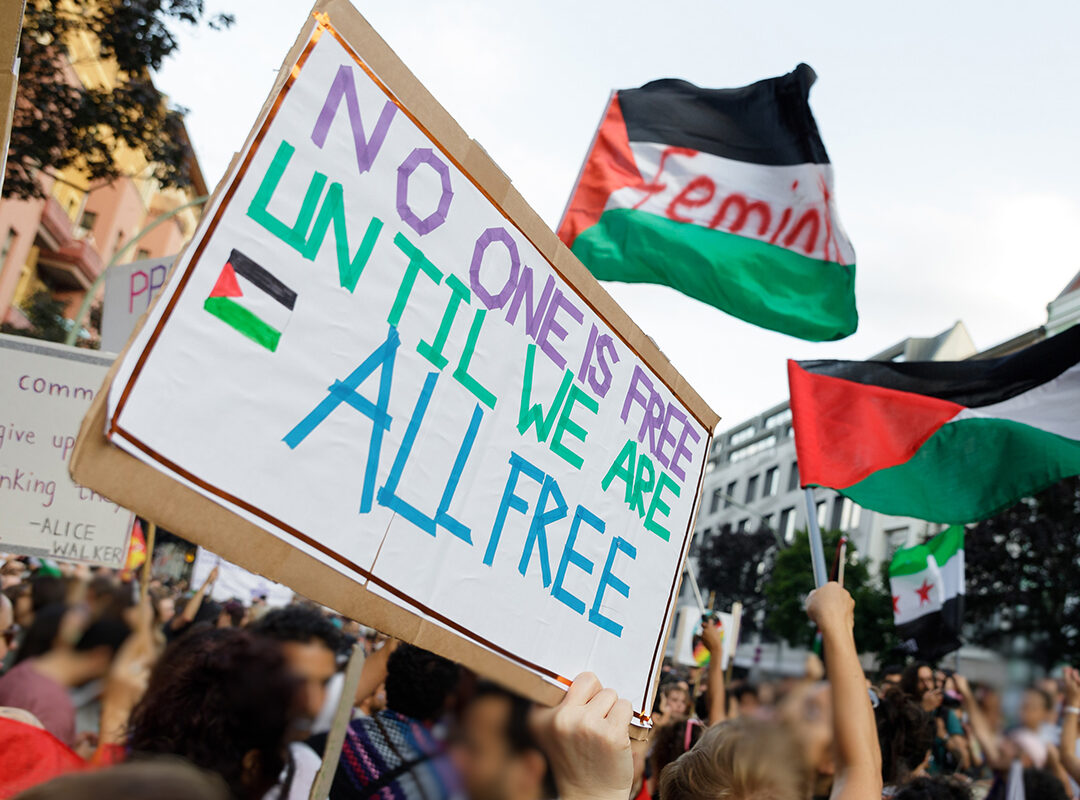
Hands in a crowd hold up Palestinian flags and a sign saying "No one is free until we are all free."

On Saturday, Berlin police detained a queer person for wearing a white t-shirt with a pink triangle. That symbol was forced on gay men in the concentration camps—wouldn’t German cops remember?—and has since come to stand for remembrance and resistance. Yet under an increasingly authoritarian government, a pink triangle might be a banned marker of a terrorist organization.

People at an anticapitalist pride demonstration got punched, shoved, and arrested by heavily armed cops. In previous years, police seemed hesitant to create images of such unhinged violence in a city that officially supports gay rights. But as democratic freedoms have been squashed in the name of suppressing Palestine solidarity, Berlin police have come to understand they can do whatever they want without fearing criticism from politicians, media, or judges.

This festival of queerphobic violence took place just a few kilometers down the road from the city’s main pride demonstration. 

CSD

Berlin’s right-wing mayor Kai Wegner went to Christopher Street Day (CSD), as the Pride demonstration here has been called since it was launched in 1979, to say that the rainbow flag “belongs in the center of our society.” This was a rebuke to Friedrich Merz and Julia Klöckner, Wegner’s colleagues in the CDU, for refusing to raise the rainbow flag at the Bundestag.

Hundreds of thousands of people danced at CSD alongside floats from Vattenfall, Siemens, Commerzbank, and Mercedes-Benz, companies which often only find their voices to champion queer liberation every July. The CDU—the party that deports queer refugees, voted against marriage equality, and prevented the rehabilitation of all gay men convicted under Germany’s notorious paragraph 175—had its own float, as did the far-right media company Axel Springer.

Wegner marched behind a banner that said “Homos Jews Women,” which might sound strange, giving Wegner’s long-standing connections to far-right antisemites. Yet East Pride Berlin is not a Jewish group—it appears to be older white men who support Israel’s far-right government and attacked the Dyke March for speaking out against genocide. Wegner is just another example of antisemites who love Israel.

For decades now, CSD has been a space for reactionary and queerphobic institutions to drape themselves in rainbow flags, yet only if it helps the bottom line. This year, some corporations pulled back in the face of Trump’s anti-woke offensive.

In 2016, CSD gave a stage to the Israeli ambassador, while Palestinian and Israeli queer who protested against him were beaten. Far from being a safe haven for queers, Israel carried out the deadliest attack on queer people in history when it bombed Evin prison in Teheran, murdering 100 trans people.

IQP

A couple of hours later, well over ten thousand people gathered for anticapitalist pride demonstration and chanted “Fuck pinkwashing!” Internationalist Queer Pride, organized by immigrants from all over the world, was taking place for the fifth time. Anticapitalist alternatives to Berlin’s CSD date all the way back to 1998, but certain German leftists always had a problem with Palestine solidarity. IQP was born when the organizers of a “radical” German pride demonstration called the cops to kick out Queers for Palestine—as a result it has always been primarily in English.

This year, IQP’s floats, organized by Black, Asian, and Latino immigrants, moved slowly from Südstern via Hermannplatz toward Kottbusser Tor, through the immigrant neighborhoods where Berlin’s Palestinian diaspora is concentrated. German media would have us believe these communities were particularly homophobic—but older Palestinians showed full solidarity for younger queers. Heavily armed police attacked demonstrators again and again, dissolving the demonstration at 8pm just before it reached Kotti, nowhere near its destination at Oranienplatz.

Tagesspiegel published a headline about right-wing extremists threatening CSD, in reference to a counter-demonstration of 30-50 Nazis. Ironically, the image chosen for the article shows a black-uniformed cop in front of a rainbow flag. Thus, this fervently pro-government newspaper unintentionally revealed the truth: Berlin cops, well known for their right-wing views, committed more queerphobic violence on Sunday than everyone else in the city in an entire year.

Red-Pink

While CSD was a celebration of the privileges that have been granted to wealthy white gay cis-men, IQP was a powerful display of solidarity among oppressed people. Sex workers, disabled activists, and Jewish Queers for Palestine chanted together, “None of us are free until all of us are free.”

A Red-Pink Bloc at the front, organized by revolutionary socialist groups including Klasse Gegen Klasse, drew the connection between class struggle and queer liberation. Anika, a trans electrician at a public hospital, recalled the example of Madygraf, a printshop where workers went on strike to defend a trans colleague—and ended up occupying their workplace. As Anika put it, it’s not advocacy for queer rights that divides the working class. “Queerphobia divides us,” she called out, “and strikes unite us!”

Nathaniel Flakin’s anticapitalist guide book Revolutionary Berlin is the first book to include Internationalist Queer Pride.Red Flag is a weekly opinion column on Berlin politics that Nathaniel has been writing since 2020. After moving through different homes, it now appears at The Left Berlin.

Red Flag: Karl-Marx-Straße is done—and still a huge traffic jam

In his weekly column, Nathaniel Flakin explains why car supremacy must end


23/07/2025

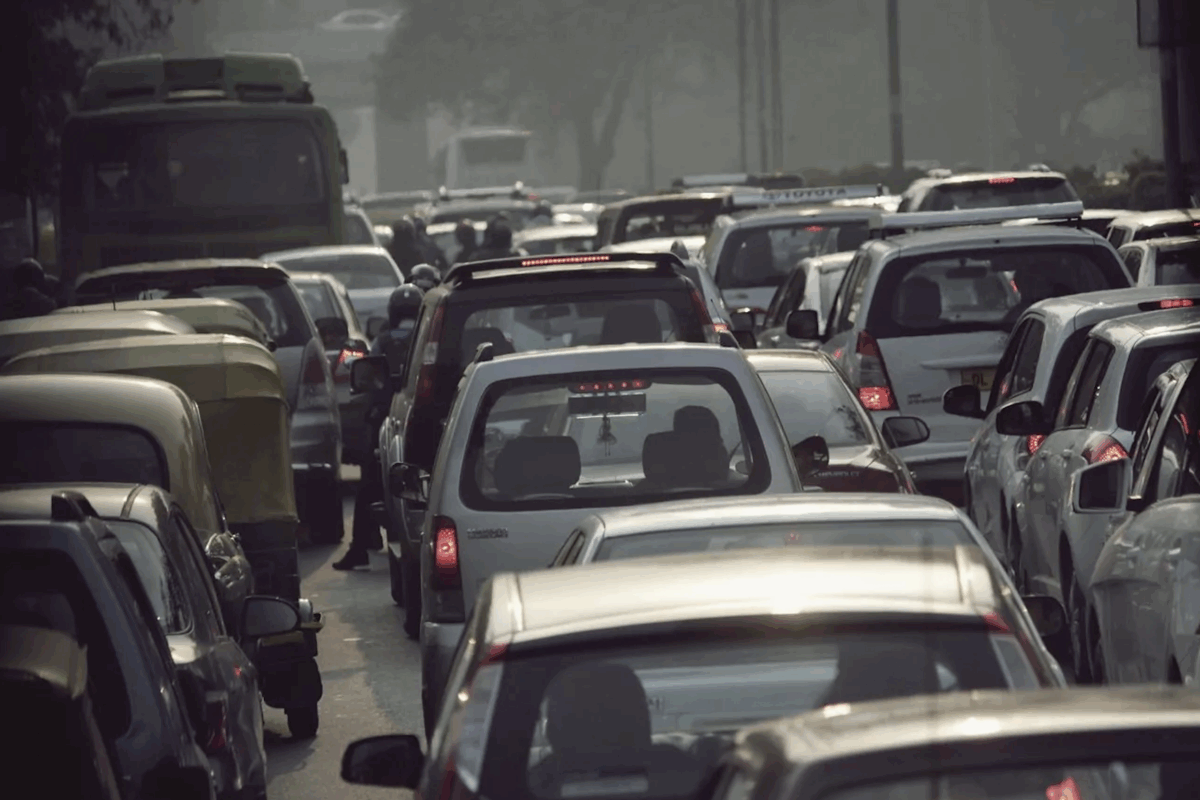
View from behind a sea of cars, as if viewer was also stuck in a car in traffic.

After 15 years of construction work, Karl-Marx-Straße in Neukölln is finally open again. Is this a good time for a joke about Berlin’s notoriously incompetent government? No, since this is a political decision: infrastructure is falling apart because the German ruling class wants to spend trillions on weapons.

I go down KMS several times per day. Even as a proud car hater, I assumed the chronic traffic jams would clear up. But absolutely nothing has changed: during rush hours, autos stand still, spewing out poisonous fumes and blocking ambulances. It turns out what blocks cars is not construction sites—it’s other cars.

This is why adding new lanes doesn’t improve traffic flow: Investment in car infrastructure just puts more cars on the streets. As an old German saying puts it: “If you sew streets, you reap traffic.”

Investments

A new segment of the inner-city highway A100 is set to open this year—three kilometers of road for €700 million. The Senate wants to extend it further into Friedrichshain, which will cost over €1 billion.

Last weekend, a segment of the S-Bahn around Schöneweide shut down because there were no workers for the signal box. The U-Bahn line U1 hasn’t been running for two weeks due to a lack of drivers.

Every euro invested in roads is one missing for public transport. Paradoxically, money for subways, trams, and buses is what gets people out of cars—and thus prevents traffic jams.

Car supremacy

I’ve written that car culture seems like an addiction: users claim to love it, even when it clearly makes them miserable. Another way I’ve been thinking about this is “car supremacy.” German traffic rules go back to a Nazi law from 1935, which defined motorized vehicles as the Übermenschen of the streets.

Today, German drivers still enjoy enormous privileges. If you want space to keep a car, for example, the city will provide it to you for free (or at most €10 per year). If you need that space for anything else, including living, you’re on your own.

This kind of extreme privilege can make people feel like any proposed change is an attack. Take white South Africans, who make up 7 percent of the population but control 70 percent of farmland. As soon as anyone talks about reducing inequality, they shout “white genocide.” As the saying goes, “when you’re accustomed to privilege, equality feels like oppression.”

The same thing is happening with drivers. They kill about 50 people per year in Berlin—yet any measure to stop this constant mass murder feels like an attack on their human rights.

On the remodeled Karl-Marx-Straße, drivers complain that the unprotected bike lanes now take too much space. Most of the limited space, however, is taken up by parking spaces, so huge metal boxes can stand unused for 23.5 hours per day. Meanwhile people are forced to squeeze past each other on narrow sidewalks.

Referendum

Sometime next year, Berliners should be able to vote on a referendum to make the inner-city car-free. I don’t think this has even a tiny-chance of passing. Thanks to the Greater Berlin Act of 1920, countless villages are included inside the city borders. Our odious, provincial mayor comes from the distant town of Kladow, for example. Many suburbanites insist they need cars—and I wouldn’t want to decide for them, as I live in a completely different place. Unfortunately, millions of them are allowed to vote on transport policy for the actual city.

Nonetheless, this referendum will get people thinking. People inside the S-Bahn-Ring are far less likely to own a car than people out in the boondocks. Why do we dedicate so much space to a means of transportation most people don’t use? Why should cars rule the road, even as they are blocking trash pickup and regularly killing kids?

Berlin’s constitutional court just declared that there is no fundamental right to a car. As a communist, I am a democrat—I believe in the equality of all people. I despise apartheid for the same reason I despise cars. KMS, with its myriad cultures, could be beautiful—if only we could get rid of the cars. 

Red Flag is a weekly column on Berlin politics that Nathaniel Flakin has been writing since 2020. After moving through different homes, it now appears at The Left Berlin.