

- This event has passed.
Walking Tour: Sachsenhausen Concentration Camp Memorial
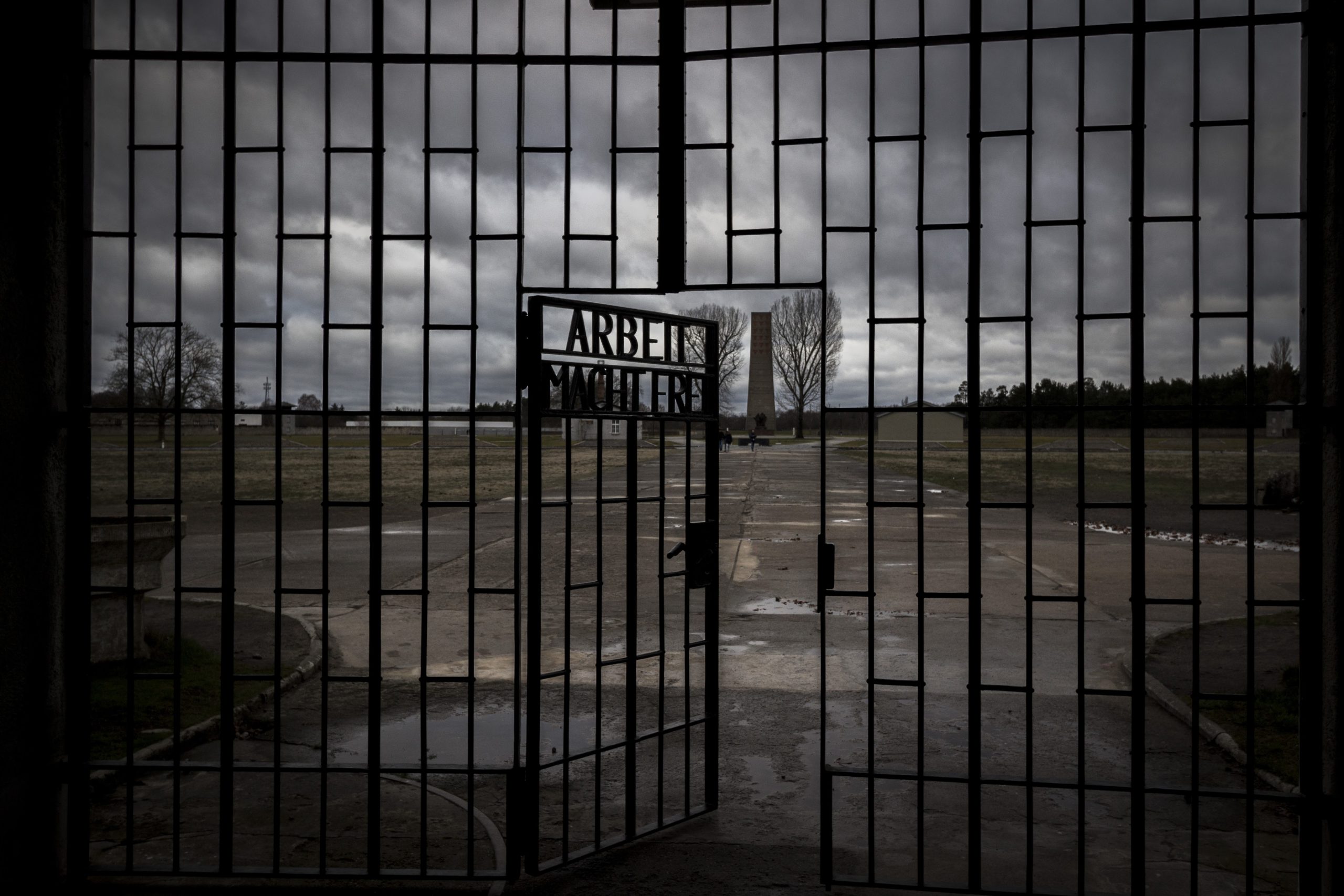
We have reluctantly had to postpone this tour because of unnaturally hot expected weather (39°). The tour will now take place on Sunday, September 6th. If you registered for the June 28th tour, or would like to come this time, please (re-)register by pressing the Going button at the bottom of this page.
Nazism did not emerge out of thin air. It was not a historical “accident,” nor the product of a uniquely evil rupture disconnected from the rest of European history. This guided visit to the Sachsenhausen Concentration Camp Memorial approaches Nazism through the longer histories of colonialism, imperialism, scientific racism, social Darwinism, eugenics, and racial capitalism that shaped the modern world long before 1933.
Together, we will examine how European colonial violence laid ideological and institutional foundations that later reappeared inside Europe itself. We will discuss the origins of concentration camps in colonial contexts such as Spanish-ruled Cuba and British South Africa, not to relativize Nazi crimes, but to understand concentration camps as part of a broader history of imperial state violence. We will also reflect on genocide as a political category, on why some genocides are memorialized while others are erased from dominant historical consciousness, and on the role that racism played and continues to play in shaping who is considered fully human, disposable, or worthy of remembrance.
The visit will move through the historical context of World War I, the Treaty of Versailles, the economic and political crises of the 1920s, and the rise and fall of the Nazis. At the memorial itself, we will focus on the camp as a site initially designed to imprison and eliminate political opposition, especially communists, socialists, trade unionists, and other left-wing dissidents, before later becoming a center of forced labor, terror, and systematic murder. We will also discuss how different political regimes, including the Nazi state, the GDR, and the contemporary Federal Republic of Germany, have each shaped the memorialization of the camp according to their own political priorities and narratives.
Our guide holds a Bachelor’s degree in Political Science and a Master’s degree in Social Sciences from Humboldt University of Berlin. His areas of specialization are the history of racism, colonialism, genocide, and political violence. For the past four years, he has worked as a freelance guide at the Sachsenhausen Concentration Camp Memorial and at other historical sites across Berlin.
Participation is free but we would welcome a donation (suggested amount: €20-€30) to Fundación Resistencia Antirracista for their work helping victims of the earthquake in Colombia who have been abandoned by the state. Give the money to us at the tour. No-one will be turned away from the tour because they don’t have the money.
Please note also that the Camp expects €3 from participants of guided tours. This money goes towards the Camp’s upkeep. As the tour takes several hours, you may want to take food and water with you. The current weather forecast says that it will not be too hot.
Important information:
- The visit lasts approximately 5 hours in total, including travel time from Berlin and back.
- Participants must purchase Berlin ABC train tickets in advance for both directions.
- The bus connection between Oranienburg station and the memorial can be unreliable, which may make participation difficult for people with limited mobility.
- Since there is no substantial break during the visit, bringing water and a snack is strongly recommended.
- Due to memorial regulations, the maximum group size is limited to 30 participants. To be sure of a place, please register from this page. If you do register and find that you cannot come, please let us know to allow other people to take part.