
Could you introduce yourselves?
Ruthie Weissmann: My name is Ruthie, I was an editor at The Berliner and now I’m a founding editor at HEIST.
Peter Matthews: I’m Peter Matthews, I’m also a founding editor at HEIST.
What is the story behind founding HEIST?
PM: Both Ruthie and I were editors at The Berliner for many years and had for a long time wanted to start something of our own, for a few different reasons. We thought that there were conversations happening in the English-speaking world that weren’t really being reflected in its media, for one. And then more explicitly because for a few years we had felt a kind of censorship coming down on the sort of stories we were allowed to report. So at the beginning of this year we decided that enough was enough and that we would break free and put together this new project.
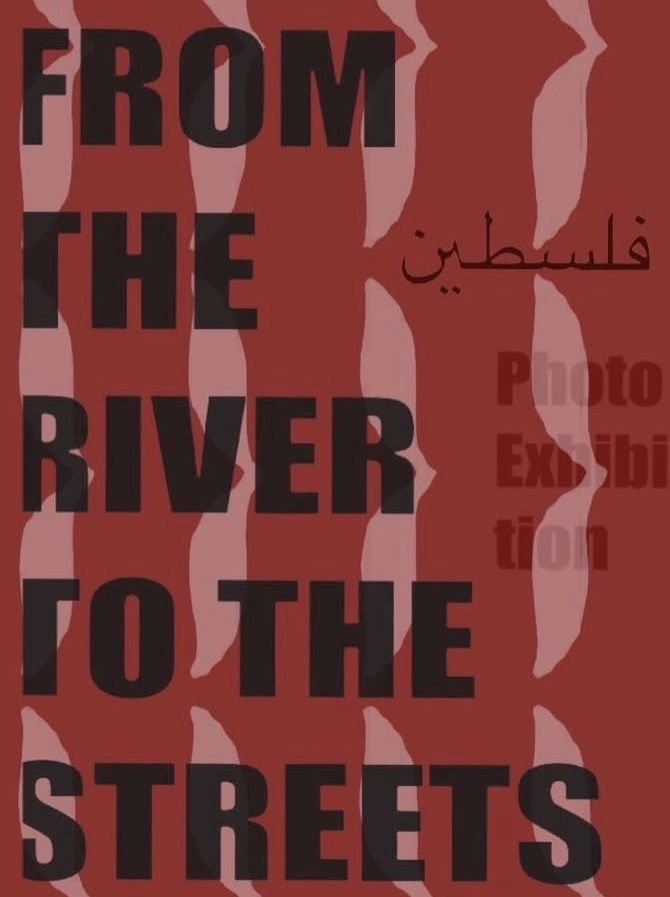
Did the scandal about the Nova Festival exhibition ads in The Berliner have anything to do with it?
RW: It didn’t have anything directly to do with our desire to found HEIST. But it definitely was a final straw for how we had been feeling and a moment when we realized that this was not going to materially get any better without changing something.
PM: That was the last straw, as Ruthie said, but we had been feeling censorship for more than a year at The Berliner. There had been an explicit order: don’t write about Palestine. That applied in one area of the magazine, specifically the daily news reporting. And then it seemed to spread more and more across the different areas, to culture, to interviews, to books you could review, to editors’ columns, to almost everywhere. It spread more and more, with the justification behind this being that they wanted to be neutral on the issue of Israel-Palestine.
RW: And just generally politically neutral.
PM: And generally apolitical, I would say. Impossible to do and be. And so when the Nova Festival ads were taken out, we saw that as a clear breach of this supposed neutrality that they had been maintaining for a long time. We were very upset about it. The freelance staff all went on strike over it. We were very sympathetic, and that ultimately led us to leave our jobs and start HEIST.
From your perspectives as journalists, how has the issue of Palestine affected the media landscape in Berlin since October 7?
RW: If you are familiar with the German news, you know that there are certain things they don’t cover. The ways that they write are already coming from what I would consider a biased place. I think there are a lot of people who don’t feel spoken to by that angle, which is coming from ownership a lot of the time. I have friends who work in German media who are frustrated by the tone of the outlets that they work for, and that’s part of why we wanted to make this thing. What independent media means and what worker ownership means is that this outlet is going to reflect the views of the people who work on it, and not just the views of rich people who happen to own media platforms.
PM: We don’t want journalism just to be the mouthpiece for the money behind it. I was talking to someone yesterday who was saying that German media on the whole often see their role as to reinforce the state line, even in investigative reporting. For example, you do a big investigation into Russian meddling or something. Of course there is Russian meddling and it should be investigated. But a lot of the ways that journalism is organized here is to agree with the state narrative and reinforce its theories and projects, rather than think a bit about the ways that our own system might be meddled, tampered with and distorted.
So it’s not only a matter of censorship, but also of funding, of who owns the press. The fact that HEIST is worker-owned is very important to you. Could you say more about what that means in practice? How do you function as a worker-owned outlet?
PM: Very simply, there are four of us in the team and we’re all owners of the thing. Our goal is to be overwhelmingly subscriber-funded and support the project by and large like that. But we also drafted our articles of association when we founded the business to say that any donations we get are completely separate from the editorial line.
RW: If people come on as larger donors, or investors, or shareholders, or just anyone who comes into the business, they have a legal duty to support the independent mission of the media. Their aim cannot be only to extract profit. This protects us from bad-faith investment.
PM: Not to mention that whenever we bring on staff, we want to make sure that they have a stake in the project.
Let’s talk more about the project’s mission. On your website, you speak about the duty of the media to serve the community. A natural worry that one might have is that HEIST is an English-language magazine. What kind of Berliner community do you have in mind? Do you feel like HEIST represents and addresses a particular type of migrant?
PM: I think that we just want to speak to everybody who doesn’t have German as their first language. Now, that isn’t to say that Germans don’t read the magazine either. At The Berliner, I think, the largest audience was in fact Germans reading English. What we really have seen in the last years is that there are just different conversations happening in this city in English than there are happening in German. Perhaps it’s because of ownership and media consensus and so on. We want to be reflective of those conversations and make sure that there is a place where you can find all of that.
At the same time, we are keen to commission people from all different types of backgrounds and represent those experiences too. We ran a piece recently from Hebh Jamal, a Palestinian-American writer, about how that community was affected by October 7th, or from Ben Miller about the AfD weaponising LGBT identity for its own ends. We definitely want to make sure that there is a broad consensus of different types of communities and people having a platform on our site.
RW: That’s something that we’re always having to think about and wanting to think about. Especially as we’re starting out, we want to make sure that we are reflective of the conversations happening in as many Berlin communities as possible, and not just in our own communities. It’s an ongoing challenge, which is fun.
Do you see HEIST as having a political line?
PM: We don’t see politics as something that’s separate from culture or from the city. We definitely come out in reaction to the idea that was famously expressed by Wim Wenders at the Berlinale, in an embarrassing speech where he said that art has nothing to do with politics, it’s the opposite of politics. We are the opposite of that. We see the two things as completely in dialogue. We want to look at politics in the ways that it affects culture and the ways that it interacts with the city. We have our own politics, but it’s not like we adhere to a specific line, or we follow a party, or we’re a mouthpiece for a position.
RW: We would never write something and come out and say, “this person has bad politics.” Unless maybe someone’s writing an opinion column. It’s more about which stories we choose to cover and the evidence that we choose to include, which maybe German media wouldn’t choose. And about who we’re willing to give a voice to.
Another statement on your website refers to the “struggle” for the “future of the city.” What role do you see yourselves, and independent media in general, as having in shaping the future of Berlin?
RW: It’s a bit of an abstract concept, I guess. We want more people to be given information that allows them to think about how they live in Berlinand what’s really going on here. A lot of the time when people resonate with a story, it’s because it’s something that they’ve already been thinking about but kind of didn’t know the context or didn’t have the data or evidence to really talk about it from an informed place. So I see our role as being able to give context and narrative to stuff that people may already be thinking or worrying about. Hopefully, over time, this pushes the direction of the city toward more people being engaged and figuring out how they want to actively interact with the issues going on here rather than worrying about them in the background.
PM: Not just in Berlin, but in lots of different cities across the world, you can see that the problem of a bought-up media and a completely privileged and interested media class has meant that people are going more to work on their own models. There’s Hell Gate in New York, Defector, Equator in London, which are explicitly positioned in reaction to the fact that the mainstream narrative is so broken. As everything gets bought up and closed off, the space emerges for people to find worker-owned, authentic outlets that are able to say things as they really see them rather than relying on those old structures. And I think that that does make a difference in the future of the city, if you have a place for those kinds of projects.
What do you think are the chances that worker-owned, small outlets have of surviving? The Berliner started as independent and local until it was bought out. What is your plan to survive without giving in to the same pressures?
PM: Well, Exberliner made it 20 years before it was bought out. It was a great shame that it was sold off, but, when we worked there, we saw how things could be done better, not just from an editorial stance, but in various ways. We were hands-on building a lot of the structures that made it grow and expand. But we weren’t able to access some things, like speaking directly to subscribers, or using new media in different ways and building different channels. I think that we really want to try and develop as many ways as possible to ensure that this platform exists for the future. Obviously, we really need support for that, but we are hoping to be in it for the long haul.
What can readers expect from HEIST in the near future?
RW: We’ve been doing daily news, so you can get a good news hit every day from us. Then we have a newsletter once a week that has one big, really strong story from the city, and usually it expands on something that’s going on right now or gives a wider perspective. We’re going to be ramping up food and culture content pretty soon, and shortly after that there will be a weekly podcast.
Broadly, they can expect perspective and on-the-ground reporting, which I think isn’t offered enough in English media here. They can expect writing from people who are going out into the city, talking to people and bringing that back.
PM: We’ve been paying attention quite closely to Berlin for a long time, and there are lots of areas that we have on our list to investigate and explore. We have stories that we’re interested in doing and writers that we’re looking forward to commissioning. There’s a lot coming up that we’re really eager to share with everyone.
RW: Also we’re just hoping to have some fun with it. To bring people both serious, political stories, but also just some silly stuff and some fun stuff, things that are going unnoticed in the city.
How can people support you?
PM: Definitely sign up for our newsletter. Come and put in your email, it doesn’t cost anything. If you want to donate, that’s great, we welcome reader support.
RW: And tell us what you want to hear. Tell us what stories you want covered, what conversations you’re hearing in the city. Anything that you’re not seeing in other media, you can write to us at hello@heistberlin.com.