“…on behalf of the helpless Indian masses, we want to emphasize the lesson often repeated by history, that it is easy to kill individuals but you cannot kill the ideas.”
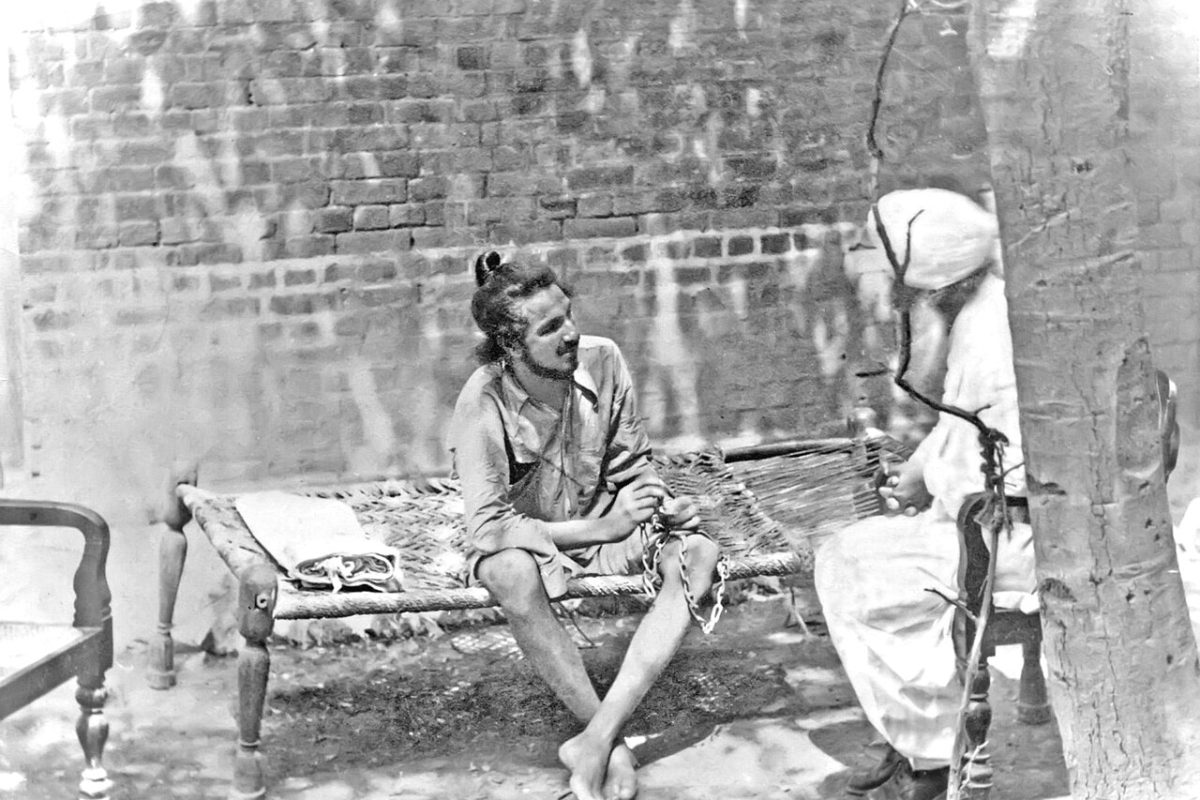
On 23 March 1931, the death penalty was meted out rapidly to the south Asian revolutionaries Bhagat Singh, Rajguru and Sukhdev Thapar of the Hindustan Socialist Republican Association (HSRA) by the British following the judgement passed coincidentally on October 7, 1930 for the murder of a British police officer in 1928. They were all 23 years old.
Reemerging from hiding, Bhagat Singh–arguably the most famous revolutionary of his time–and another fellow member Batukeshwar Dutt gave themselves up to the police following a strategic public action in the Lahore Assembly in 1929. They set off two low-intensity bombs in an empty area of the assembly in session and threw flyers intended to attract public attention to their cause. Their arrest and Singh’s eventual execution were among the final blows to the revolutionary cause in British India, leaving the hegemonical Indian National Congress and the Muslim League to fight it out till independence in 1947.
HSRA, like many revolutionary youth organisations of its time, was founded in diametric opposition to Gandhian non-violence following the debacle of the Gandhi-led Non-Cooperation movement (1919-1922). A violent incident in Chauri Chaura led Gandhi to call off the successful popular mobilisation against the British which he intended to be “non-violent”. Bhagat Singh, who closely followed the developments in Russia and espoused anarchist and communist ideas, had several family members involved in the anti-imperialist struggle. Singh dived head first into the revolutionary movement, which was spreading across the north of India and Bengal. HSRA was involved in the Kakori conspiracy to steal arms from a British train and in the bombing of the Viceroy Lord Irwin’s train. Responding to Gandhi’s “Cult of the Bomb”, HSRA wrote a brilliant piece called the “Philosophy of the Bomb”, stressing on violence as the answer to imperialist oppression. HSRA members were young poets, scientists and university students across different faiths.
In a peaceful protest in October-November 1928, the radical Congress leader Lala Lajpat Rai was killed following a lathi (baton) charge in front of Bhagat Singh. As a prominent member of HSRA at the time, Singh conspired to kill James Scott, the superintendent who called for the lathi charge. In December 1928 he acted, along with Rajguru, Sukhdev and Chandrasekhar Azad but mistakenly killed a young police officer John Saunders instead, forcing them into hiding. As HSRA members were picked off one by one, Singh knew his time was near, and decided to exploit the power of the court to publicise their cause. The Lahore Assembly bombing was thus carried out, inspired by the French Auguste Valliant. Bhagat Singh defended himself in court, the published proceedings in newspapers made him a household name in India. He was initially given a life sentence in connection with the bombing.
While in prison, Bhagat Singh witnessed discrimination between Indian and other European prisoners, and demanded to be treated as a political prisoner which meant better access to food and reading material. Thus began a 116-day hunger strike along with fellow revolutionaries, that also included the death of Jatin Das on day 63. British force-feeding and Congress lobbying did not deter him and his comrades. By this time, the British managed to tie up the ends regarding Saunders’ murder and sentenced the trio including him to death by hanging. The British were afraid that their eventual murder would set off nationwide clashes, and secretly killed them on March 23, 1931.
It is said that the three went to the gallows laughing, singing “Inquilab Zindabad” (Long live the revolution). The site where their bodies were disposed of in Husseiniwala ironically stands on a heavily fenced border area between India and Pakistan. Bhagat Singh remains a popular figure in the subcontinent, co-opted by all parts of the political spectrum.
Bhagat Singh famously read Clara Zetkin’s reminiscences of Lenin as the police came to take him to the gallows. For his last wish, he wished he could finish that book. He was an excellent writer and his writings are all over the internet. The reader is advised to start here.
Inquilab Zindabad!