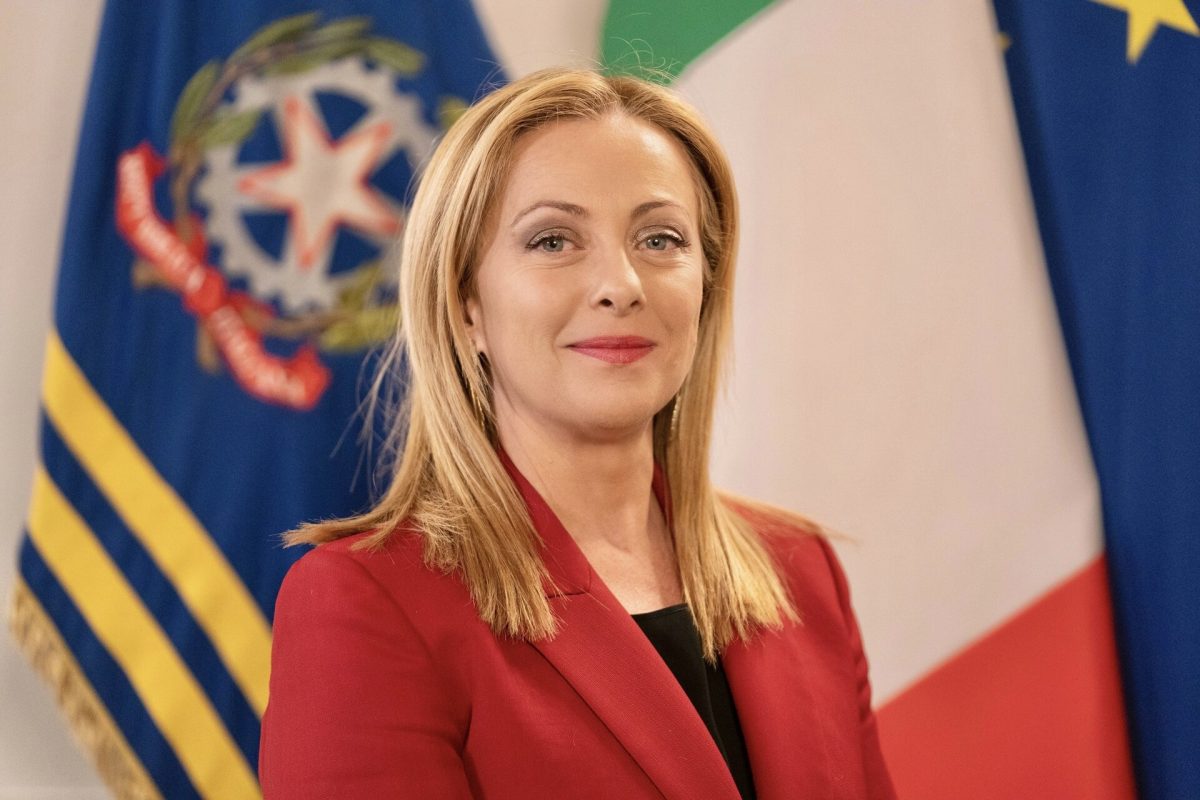
“If the ‘no’ wins, we will have rapists and paedophiles on the loose.” This was one of several absurd warnings from Italian president Giorgia Meloni about a potential victory for the ‘no’ side in the justice referendum held in Italy on March 22nd and 23rd. The Prime Minister and her party’s aggressive propaganda campaign has been mostly based on claims that the Italian judiciary is a mafia-like system with communist tendencies, with judges and prosecutors basing their decisions on a spirit of personal vendetta against right-wing politicians. The core of the referendum was highly technical; it intended to separate the career paths of judges and prosecutors — who currently share the same entrance exams and training programs — while adding a second prosecutors’ governing body to the existing one, as well as a higher court responsible for discipline consisting of 15 members, three of whom would be appointed by the President of the Republic, while the others would be selected by lot, though it is not yet clear through which exact mechanisms. Italian voters, however, especially among younger generations, understood that the stated goals of the referendum were merely a smokescreen for a different objective: weakening the judiciary’s power by submitting it to the executive.
Italy’s right-wing parties share a long-standing tradition of friction and outright hatred toward the judiciary, largely because judges have repeatedly attempted to thwart some of their members’ criminal activities. A striking example of this phenomenon is the case of Silvio Berlusconi, who faced a staggering 36 legal proceedings over the course of nearly four decades, up until 12 June 2023, the day of his death. Berlusconi consistently claimed to be a victim of left-wing magistrates, whom he called “red robes,” mounting a relentless smear campaign against them and convincing a portion of the public that they constituted a corrupt caste whose sole objective was to harm him. Meloni has slavishly followed this trend, with courts repeatedly ruling against or challenging her government’s policies, primarily regarding matters of immigration and public infrastructure projects (namely the so-called “Ponte sullo Stretto”, a bridge that would connect Sicily and Calabria).
Since its inauguration, Meloni’s government had appeared to be particularly stable, almost unshakable — something rather exceptional in the history of Italy’s most recent governments. However, the results of this referendum call into question the myth of Meloni’s supposed invincibility. This development is even more relevant considering that it represents a setback for Meloni’s other planned electoral reform, which would have transformed Italy’s form of government into a presidential system, further reinforcing the authoritarian directions that Meloni would like her government — and future ones — to take. In an effort to turn things around and restore credibility, Meloni is purging troublesome figures from her government, with a series of resignations that have already occurred and others that will most certainly follow. Nevertheless, Italian public’s recent discontent with her governments is becoming increasingly evident, also due to her critical adhesion to Trump’s grotesque economic and geopolitical initiatives, including the war in Iran, which will undoubtedly cause Italy’s already stagnating, if not declining, economy, to further deteriorate.
Meloni’s defeat at this referendum is restoring the strength of opposition parties, who see her government’s incipient cracks as a sign that they will be able to defeat her in the next election. Elly Schlein, leader of the opposition Democratic Party (PD), said: “We will beat [Meloni] in the next general election, I’m sure of that. I think that from today’s vote, from this extraordinary democratic participation, an unexpected participation in some ways, a clear political message is being sent to Meloni and this government, who must now listen to the country and its real priorities.”
Provided that Meloni loses the next elections, and that the Italian electoral system remains as it is — that is, a mixed-member majoritarian system — the most likely scenario will be a coalition consisting of Schlein’s party, Movimento Cinque Stelle [Five Star Movement] (M5S) and Alleanza Verdi e Sinistra [Greens and Left Alliance] (AVS). As far as the Democratic Party is concerned, one could say that its failure to deliver actual solutions to the long-standing burdens that have plagued Italy for decades — economic stagnation, high youth unemployment, North-South inequalities, unfair taxation — is one of the main reasons behind the Italian electorate’s shift to the right. As of today, the PD is a party completely devoid of political and programmatic initiatives, as well as any kind of ideological direction.
The M5S was instead founded in 2009 as an anti-establishment movement that rejected traditional “left” and “right” labels and presented itself as an alternative to the Italian political caste. The party’s program combines leftist elements — welfare, environmentalism, redistribution — with traditionally right-wing ones such as Euroscepticism, tough-on-crime stances.The party is now led by Giuseppe Conte, who served as Prime Minister from 2018 to 2021. During his time in office, Conte introduced some significant policies such as a basic income scheme and labor measures aimed at reducing job insecurity. In the 2022 election campaign, the party also focused strongly on the introduction of a statutory minimum wage, which still does not exist in Italy. However, the M5S experienced a sharp decline in electoral support, losing around four-fifths of its vote between 2018 and 2024, although recent polling suggests some signs of recovery. This decline was primarily due to difficulties in adjusting its own institutionalization process to match its original identity of a radical movement controlled by activists.
AVS, on the other hand, was launched on 2 July 2022 as a federation of two parties: Italian Left and Green Europe. Its electoral platform for the 2024 European elections — where it got 6,62 % of votes — emphasized issues such as peace in Ukraine, the green transition, and the rejection of austerity policies. While AVS as such has never governed, it is worth noting that Italian Left has previously been part of centre-left governing coalitions alongside the PD.
There is also the so-called extra-parliamentary left, whose most recognizable party is Potere al Popolo [Power to the People]. One might hope for broader coalitions in this area, such as Unione Popolare [People’s Union], which was formed ahead of the 2022 general election. That coalition — bringing together Potere al Popolo, Rifondazione Comunista, DemA, Manifesta, and Paese Reale, along with independent activists from social movements — received about 1.4% of the vote. This limited result was likely due in part to the very short time available to organize (around two weeks after gathering the necessary signatures to run). However, Unione Popolare dissolved in 2024, and at present there do not seem to be strong national-level alternatives. At the local level, however, there are still active experiences. Looking at key issues — such as Palestine, environmental protection, and social rights — there is clear dialogue and convergence among movements, associations, and individual activists. What Italy is currently almost completely missing is a unifying political force capable of representing these struggles effectively at the institutional level.