NEWS FROM BERLIN
“Vulcan Group” distances itself from “Vulcan Group”
The question of responsibility for the days-long blackout in Berlin has become increasingly confusing. Following a second letter of confession from the alleged “Vulkangruppe”, another letter from an allegedly original “Vulkan” group has now appeared on the left-wing online platform Indymedia, distancing itself from the action in Lichterfelde. The letter is purportedly from the group that, in 2011, conducted an arson attack in Berlin on a cable shaft at Ostkreuz. Now, according to the letter, the targets were “Bundeswehr missions, German participation in war and arms side world.” Source: taz
Spranger wants to invest more money in disaster control
Following the suspected left-wing extremist arson attack on the power supply in Berlin, Interior Senator Iris Spranger (SPD) has warned against further similar acts, adding that “That doesn’t mean they won’t try again.” Among other things, Spranger wants intervention rights in disaster control so that she can make the districts purchase disaster control beacons. The senator would like to see an exemption clause in the Data Protection Act so that critical infrastructure can be better protected. She is also calling on the federal government to do more, being already in talks with the Federal Minister of the Interior on this matter. Source: rbb
Senate resolution on the Housing Security Act
The draft resolution from the Senate Department for Urban Development, Construction and Housing envisages the Housing Security Act as an “omnibus bill.” Some of the measures include an approval requirement for temporary rentals in social preservation areas and a package to secure existing housing. There are significant gaps, however, such as the lack of social housing quota. Temporary rentals in areas other than within the social preservation ones also are set to remain allowed. Nevertheless, the Berlin Tenants’ Association considers the legal strengthening of the trustee model to be positive. Source: berliner mieterverein
Massive farmers’ protests on motorways in Brandenburg and Berlin
The Brandenburg Farmers’ Association and the farmers’ movement “Land schafft Verbindung MV” launched their protest against the EU-Mercosur free trade agreement last week. Drivers had to face massive traffic disruptions on the evening of January 7. According to the Autobahn GmbH’s warning, agricultural vehicles temporarily blocked slip roads on the A10, A11, A14, A19, A20 and A24 motorways. The farmers are opposed to the free trade agreement because they fear disproportionate competition from cheap imports from South America. The agreement has been in negotiations since 1999. Source: bz
NEWS FROM GERMANY
Parliament votes against new elections in Brandenburg
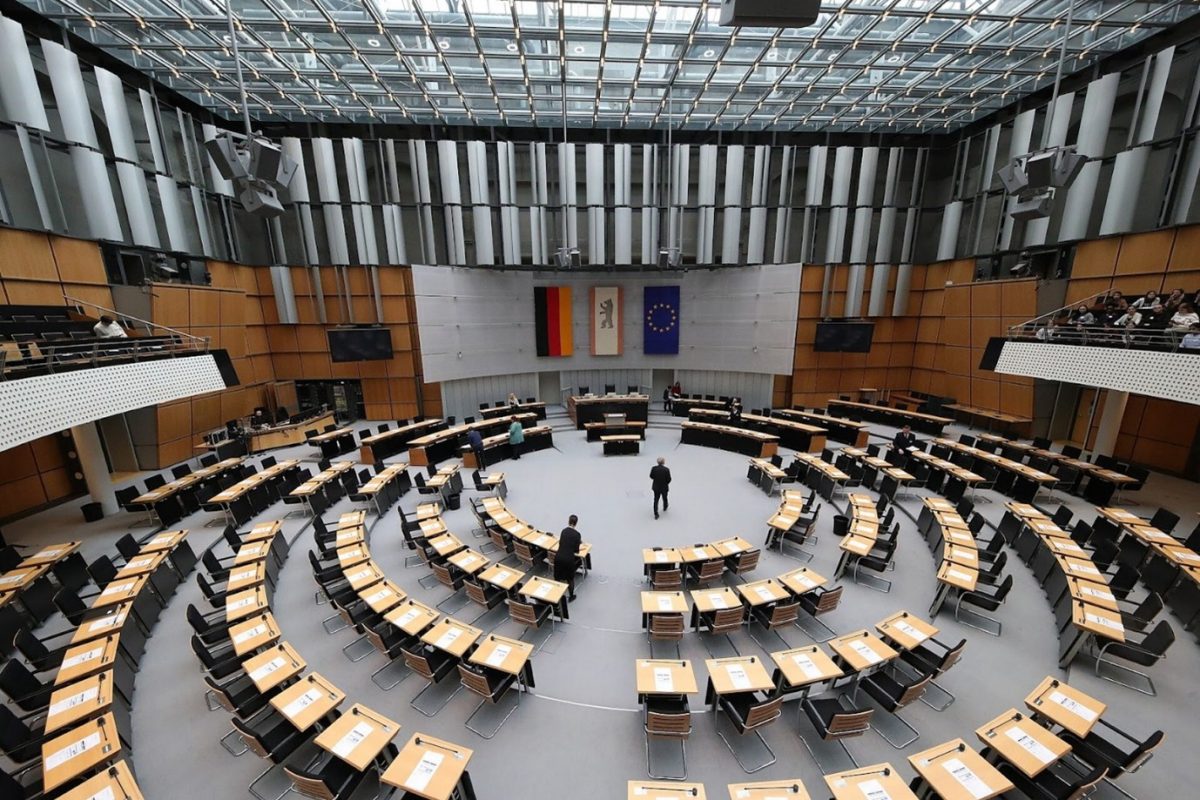
The Alternative für Deutschland (AfD) motion to dissolve the parliament in Brandenburg failed in the Potsdam state parliament. Thirty-six members voted in favour of the motion, while 47 voted against it. This meant that the necessary two-thirds majority of 59 votes was not achieved. Previously, the AfD had failed in the state parliament with its motion to dismiss Vice-President of Parliament Jouleen Gruhn (independent, formerly BSW). Brandenburg’s Minister President Dietmar Woidke (SPD) said he felt vindicated in his decision to break up the coalition, and he intends to go on working with a minority government for the time being. Source: rbb
Germany continues to deny asylum to Russians
Germany is offering less and less protection to Russian conscientious objectors. In the second half of 2025, only 1.07% of asylum applications were approved, according to lawyer and activist Artrom Klyga. In a Telegram post, he refers to figures that were published back in December but have since been ignored. Since the start of the war until October 2025, 6,747 Russian men have applied for asylum in Germany, 353 of whom have been approved, reported the pan-European television station Euronews. Klyga continues: “There are cases of people who were tortured in the war and made it to Germany via other countries—and were still rejected.” Source: nd
One in five people are considering emigrating from Germany
One in five people in Germany are thinking about leaving the country. This is shown by a representative study conducted by the German Centre for Integration and Migration Research (DeZIM), for which almost 3,000 people were surveyed over a period of one year. People with family ties to Turkey, the Middle East and North Africa were most likely (39%) to say they were considering emigrating. According to the DeZIM, experiences of discrimination also play a role: 18% of immigrants and 24% of their descendants stated that they were considering emigrating for this reason. The study shows that 2% of the respondents have concrete plans to emigrate within a year. Source: dw