On July 7, 2025 Immigration and Customs Enforcement (ICE) agents and the border patrol—commonly referred to as the la Migra within the Latina/o/x communities—descended upon McArthur Park, a well-known public space in Los Angeles, drawing widespread attention in the media and amongst politicians. McArthur Park is located in the Westlake district of Los Angeles where there is a significant concentration of Salvadoran and Guatemalan residents—known as the West Coast’s ‘Ellis Island’. For many Central Americans who were affected by U.S.-shaped wars, Westlake came to be their first arrival point in the United States. According to the last U.S. census report, 52% of Westlake’s population is foreign-born, which includes individuals who are not U.S. citizens by birth. The largest share of foreign born residents are from Guatemala, Mexico, and El Salvador.
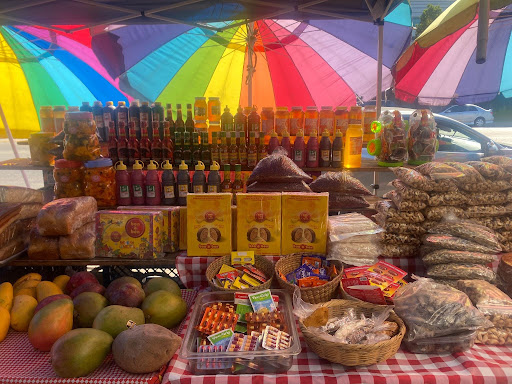
Along Alvarado Street, surrounding MacArthur Park, street vendors sell a range of items from food to clothes to household goods. According to an LA-based publication, LA Taco, these vendors are mainly older adults and single mothers whose main source of income is selling along this stretch. Thus, the spectacle created by ICE and the U.S. Military in MacArthur Park in early July 2025, and subsequent arrests, should be understood as racial profiling and harassment of brown immigrants and people who are most exposed, vulnerable, and exploitable, such as street vendors, resident migrants, and consumers who frequented this part of Los Angeles.
During February and March 2026, as part of a research project, I spent significant time in this area and its surrounding vicinity. I sought to better understand the impact of ICE raids specifically on street vendors, gathering individual accounts due to a severe lack of personalized and nuanced testaments in news reports. Furthermore, the international media tends to paint a passive image of survivors of ICE raids and their family. This essay aims to show their vulnerabilities, as well as their agentic ways of being.
Although ICE raids have declined in the last months, according to the LA Times, ICE, in budget documents, says it plans to remove 1 million people this fiscal year and next, compared with roughly 442,000 last year. Thus, the decline in the raids must not be understood entirely in positive terms. ICE agents’ persistent racial violence and abductions of working-class brown communities need urgent attention. Street vendors trying to earn a living suffer ICE crackdowns, financial costs, family separations, mistreatment in detention centres, and deportations; the most vulnerable are direly affected. Furthermore, the abduction of working class migrants should not be understood merely as a local phenomena. As acknowledged by People’s Dispatch: the ‘ICE-ization’ of immigration policy refers to the externalization of borders, prolonged detention, and criminalization of undocumented individuals, which in turn has resulted in complaints with international bodies.
In the German context for example, in the last decade, several reforms to German migration have been imposed in order to facilitate deportations. The grounds for detention have been broadened and additional types of detention, including detention during the asylum procedure, detention in the return border procedure, and detention during checks at external borders are being implemented. In this regard, the Left must engage not only with ICE as an institution, but with the broader “ICE-ization” of immigration policy—an expansion of enforcement logics where the state system produces necropolitical conditions for marginalized migrants in various parts of the world, where some lives are considered worthy of living while others are simply rendered disposable.
A Brief History of Street Vendors in Los Angeles
Informal street food vending in Los Angeles began in the mid-1980s. In a LA Times editorial, the executive director of the Central American Refugee Center (CARECEN) and the coordinator of the street vending legalization campaign for Coalition for Humane Immigrant Rights of Los Angeles (CHIRLA) pointed out that it started with the immigration of people into the U.S. from Mexico, Guatemala, and El Salvador. Latina/o/x immigrants in many instances brought with them traditions of vending from their countries of origin. From that decade on, there was an increase in vending. Some of the reasons were the economic recession of 1982 in Mexico and elsewhere in Latin America, as well as the passage of the 1986 Immigration Reform and Control Act (IRC A), which penalized employers for hiring undocumented workers. Following resistance and campaigns by the vendors and their networks, California Gov. Jerry Brown signed Senate Bill 946 (SB 946) in 2018, decriminalizing street vending in California. However, the Los Angeles City Council created restricted zones that prohibited street vending. Street vending was prohibited in the tourist districts of Hollywood Bowl, Los Angeles Coliseum, Convention Center/L.A. Live, Dodger Stadium, Hollywood Walk of Fame, El Pueblo De Los Angeles Historical Monument, Universal Studios, and Universal City Walk. Nevertheless, in February 2024, street vending was completely legalized when the Los Angeles City Council unanimously voted to eliminate restricted street vending zones. According to recent estimates, street vending is said to be a $504 million industry in Los Angeles with 80% of the street vendors constituting women.
Street Vendors and ICE in Los Angeles
Street vendors in Los Angeles came under attack by ICE agents in the summer of 2025 when Donald Trump’s U.S. immigration officers began to incur immigration sweeps in Los Angeles. The immigration raids were paused for about two months in the summer of 2025, but after the supreme court reversed a temporary restraining order that banned the Trump administration from stopping people solely based on their race, language, or the type of employment held across the city, the raids increased. Several street vendors have been arrested and detained since June 2025.
In one Los Angeles neighbourhood—around 6th and Union—approximately 10 to 15 Guatemalan women between the ages of 30 and 45, along with a few men, sold breakfast, coffee, and takeaway lunches on the sidewalk to construction workers between 5 and 9AM. The street vendors animated the sidewalks in the early morning, creating a rich and pleasant sensory atmosphere. Many of the women wore colorful, hand-embroidered traditional aprons as they worked, and their tables—lined with pots of food and drinks—were covered in plastic tablecloths with colorful floral patterns. Music drifted from one corner of the sidewalk, and the aromas of freshly prepared stews, black beans, and coffee filled the air. As they served breakfast or packed take-away lunches, the women often paused to exchange a few friendly words with their mostly male customers.
In the summer of 2025, ICE abducted three of the women from this particular area while the others fled leaving their carts behind. As part of a self-designed ethnographic research project, and as an ardent solidarity supporter of LA street vendors, I decided to have conversations with them on the street during my visit to Los Angeles. Initially, some of the street vendors were understandably reticent, but upon frequent visits, many of them opened up to me. However, there were others who wanted their stories publicized. A 40-year-old woman, who had been living in Los Angeles for ten years and is a mother of six, paid $1,800 for a one-bedroom apartment, and earned a living selling taquitos, coffee, avena, and sodas, described her escape in a vivid manner. She told me: “When ICE came, I ran and ran and ran until I managed to get out of sight. My legs hurt for a week because I’m not used to running. After ICE came, I didn’t leave the house for a month, and I lost an entire month’s earnings.“ Given that ICE tactics routinely include early-morning raids without warrants, food vendors who sell breakfast and lunches to construction workers were not surprisingly targeted.
Similarly, in another part of Los Angeles, known as the El Salvador corridor where several migrants from El Salvador sell traditional foods such as pupusas along with health products and other items, ICE conducted raids over two days in November 2025. As one Salvadoran woman in her 50s who sold pupusas, earns roughly $100 to $150, and pays some rent for the space from which she sells told me: “I was not arrested, but I witnessed ICE grab six people. Usually they come early in the morning. I observed several people running and leaving their stuff.” She pointed across the street and said: “They took away the woman who used to sell there. In total ICE took ten of the street vendors, only one of whom was released.”
In other parts of Los Angeles, street vendors reported seeing masked men in unmarked vans—whom they suspected were from ICE—but said that these men did not bother them, rather they just patrolled the area and made their presence felt. Nevertheless, the majority of the street vendors I spoke with conducted their business in precarious conditions and recognized they were vulnerable to ICE raids. Furthermore, they stated that their earnings had substantially decreased by 50 to 60% since ICE began to arrest migrants. Customers, fearing ICE, chose to stay at home. Similarly, during the height of the raids and abductions, several of the vendors stated that they stayed at home and lost income. However, others were supported by community organizations who raised money and ‘bought out’ the vendors for some days, matching their lost income. The street vendors believed that they were being treated unjustly: they were simply working and had not committed any crime. As one Honduran male street vendor selling lighters in the vicinity of MacArthur Park stated indignantly: “You could penalize me if I make a mistake, but you cannot penalize me if I am here to earn my living because this is my right.” He further stated that the mood of the street vendors can be described as follows: “We are scared, we are sad, we are in pain because our freedom has been seized from us.”
Despite the precarious conditions, the vendors continued selling and remained highly visible in parts of Los Angeles. Karandikar et al point out that it is important to recognize that it is ultimately women and their children who bear the brunt of these raids in the form of: family separation, displacement, caregiving burdens, legal precarity, violations of bodily autonomy, and economic instability. Nevertheless, they were forced to sell because they needed to survive and support their families.
Adelanto Detention Center
Following ICE abductions, street vendors were held in detention centers until they either agreed to ‘voluntary’ deportations or secured release on bond, which could potentially cost thousands of dollars. For example, a street vendor Emma De Paz of Guatemalan origin, who had been in Los Angeles for 25 years, reported to the LA Times and described her experience at Adelanto Detention Center, which is located about 90 miles northeast of the city. She reported losing weight and being fed meals that included expired beans or ham. She further stated that she was denied access to her medication at the detention center.
Similarly, in the neighborhood of Los Angeles where I had spent considerable time speaking with food vendors—and where several women had experienced ICE raids—one daughter told me that those detained were taken to the same detention center where they faced harsh and distressing conditions. The daughter contacted an immigration lawyer, raised about $10,000, and the women were released on bond. She told me she had been studying to become a nurse and, fortunately, was on summer break when her mother was arrested, giving her the time to help secure her release. She initially sought support from CARECEN, an organization that provides low-cost legal services to immigrants, but discovered that they lacked the capacity to take on her case. After considerable effort, she found a lawyer who agreed to assist her. She also had to gather reference letters on her mother’s behalf and present them to the judge. She explained that each case was unique. Individuals who could demonstrate that they had dependents—such as young children or a child with a disability—were generally more likely to be granted release. However, for individuals unable to demonstrate that they had dependents, securing release became much more difficult.
Under President Trump’s “Big Beautiful Bill,” the administration tripled the detention capacity of ICE, and it became the most heavily funded domestic enforcement agency. Its annual budget has risen to $11.3 billion, exceeding that of the FBI. The legislation also allocates $45 billion to expand detention facilities, $29 billion for operational costs, and provides funding to recruit 10,000 additional agents. A total of 46 people have died while in their custody or detention facilities since the start of the second Trump administration in January 2025.
A report produced by the Disability Rights Commission (DRC) in June 2025 revealed deeply troubling issues in detention centres including: (1) inadequate access to medical treatment, such as life-saving medication and wound care, and exposure to widespread respiratory illnesses; (2) inadequate access to food and water, including extreme delays in meal distribution, provision of food that results in significant health issues, and a shortage of drinking water; (3) inadequate access to clean clothes, with many remaining in soiled clothing for long periods of time; and (4) minimal opportunities to contact family. Further intensifying these issues, many of the people interviewed had never experienced incarceration and felt overwhelmed and terrified by their confinement in a locked, jail-like facility.
According to CAIR LA, on 8 September 2025, the U.S. Supreme Court voted 6–3 to lift restrictions placed by a judge on immigration enforcement, effectively permitting ICE agents to ‘intensify racially profiling, detaining, and interrogating Latina/o/x and immigrant communities.’ The Supreme Court’s decision granted the Trump administration’s request to suspend a previous order from a lower federal court that barred immigration officers from stopping and targeting individuals for questioning about their immigration status based solely on broad factors—such as their perceived ethnicity, speaking Spanish or speaking English with an accent, being present in specific locations such as a car wash, or the type of work they do.
Individuals targeted for detention by ICE agents have black or brown skin. People who ‘look undocumented’ and work on the streets to eke out a living are the most vulnerable to raids, arrests, prolonged detention, and even deportations. Masked men from ICE have wrongfully detained many who are either U.S. citizens or who have a legal right to be here. Thus, the raids and kidnappings of street vendors must be understood within the framework of institutional racism and systemic racial violence.