As has been the case for years, the Patagonian region faces its annual wildfire emergency. With each passing year, the toll becomes heavier. Entire provinces and regions are scorched by flames, families left without homes or land, animals burned along the roads, and the unquenchable shadow of real estate and mining speculation looms over the region. Undoubtedly, a significant portion of the responsibility can be attributed to climate change, but it is not the only factor at play. In this article, I will shed light on an issue that unites the two most pressing problems of the ultraliberalism touted by Milei: privatization and wild liberalization—practices intrinsically linked to environmental devastation. Specifically: what do we mean by “real estate and mining speculation”? What are the government’s responsibilities?
When we talk about real estate and mining speculation, we refer to the measures the government intends to adopt to facilitate the entry of foreign capital by sacrificing the rich natural heritage preserved in these lands. In the government’s political agenda for 2026, the intention to repeal two crucial pieces of legislation regarding these matters is enshrined: the Ley de la Tierra (Land Law, 26.737) and the Ley del Fuego (Fire Law, 26.815). These laws are presented, in the final document drafted by the Consejo de Mayo, as obstacles to foreign investment. It is the Chief of Cabinet, Gabriel Adorni, who states it clearly in an official communiqué: “The prohibition on changing the productive activity of the land for 30 or 60 years after a fire will be eliminated,” concluding that the current measure “directly undermines production.”
To delve into more detail, the first law sets a 15% cap on the total rural land that can be purchased by foreign agents. With the repeal of this law, this limit is removed, paving the way for unrestricted land sales and rampant real estate speculation. As for the second law, Articles 22 bis and 22 quarter are targeted. The first refers to native or planted forest areas and protected natural zones. It establishes a 60-year period, starting from the extinction of the fire, during which no change in land use or subdivision into smaller plots is allowed. Meanwhile, Article 22 quarter, sets a 30-year limit for all other areas of high ecological vulnerability. This means that no new economic activities (such as construction, cultivation, or industrial projects) can take place in these lands, to avoid further harm to biodiversity and natural resources. The joint repeal of both laws brings disastrous consequences, opening the door to land sales, real estate speculation, and environmental devastation by foreign interests.
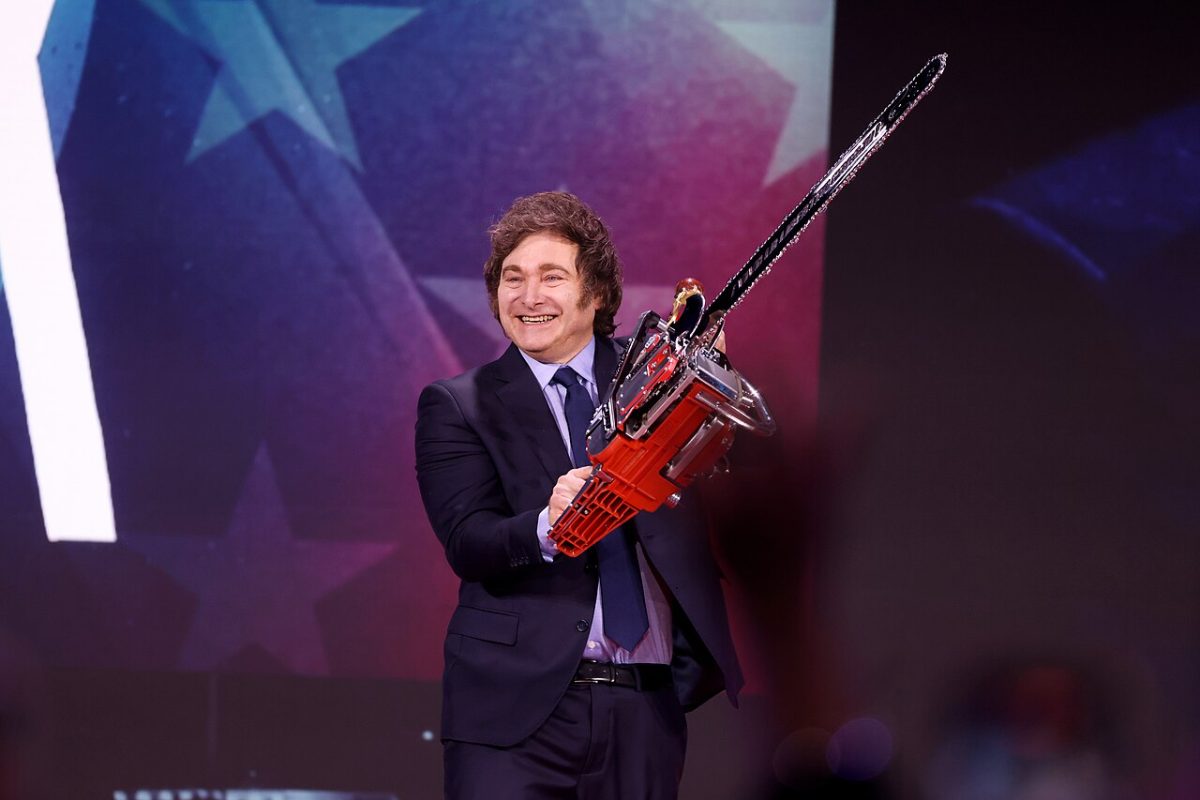
The people on the front lines fighting the fires are labeled heroes by the government. Milei posts on X his solemn thanks: “I want to send a special thank you to all the brigadistas, firefighters, and each of the volunteers,” concluding that there is “nothing more heroic than risking your life to save that of others.” Similarly, Chief of Cabinet Gabriel Adorni, also on X: “I want to especially thank the firefighters and all those who risk their lives to save those of Argentinians.” These words, when compared to the measures taken by the government over the years, highlight the full hypocrisy that characterizes Milei’s management. The heroes the president speaks of are the very same ones whose salaries have been cut by more than 50% since December 2023. Today, a firefighter in Argentina struggles to make ends meet, with salaries that do not even reach 500 euros annually and working conditions that are precarious, on the verge of unsustainable. But the cuts haven’t only affected the salaries of those fighting the fires; in 2026, according to data provided by organizations such as FARN, the government plans to cut the budgethttps://farn.org.ar/documentos/ for the National Fire Management Service (SNMF) by 71.6% compared to the previous year (2025). Therefore, aside from the purely political propaganda posts praising the heroism of firefighters, the issue doesn’t seem to be a priority for the government. It’s no surprise that Milei is also one of the most vocal climate change deniers, another key figure in this theater of horrors.
The government’s line is once again clear: Sell, cut, deny. All of this at the expense of one of the richest natural heritages in the world, considered expendable by the very people who claim to love these lands. Once again, ultraliberalism reveals its enormous destructive force. Even more so when intertwined with the consequences of climate change. Patagonia, however, is not only an enormous natural treasure. With its glaciers, lakes, and rivers, it represents the largest freshwater reserve in the Americas, and one of the largest in the world. Preserving it is the responsibility of all humankind. Selling it to the highest bidder is a crime against humanity.