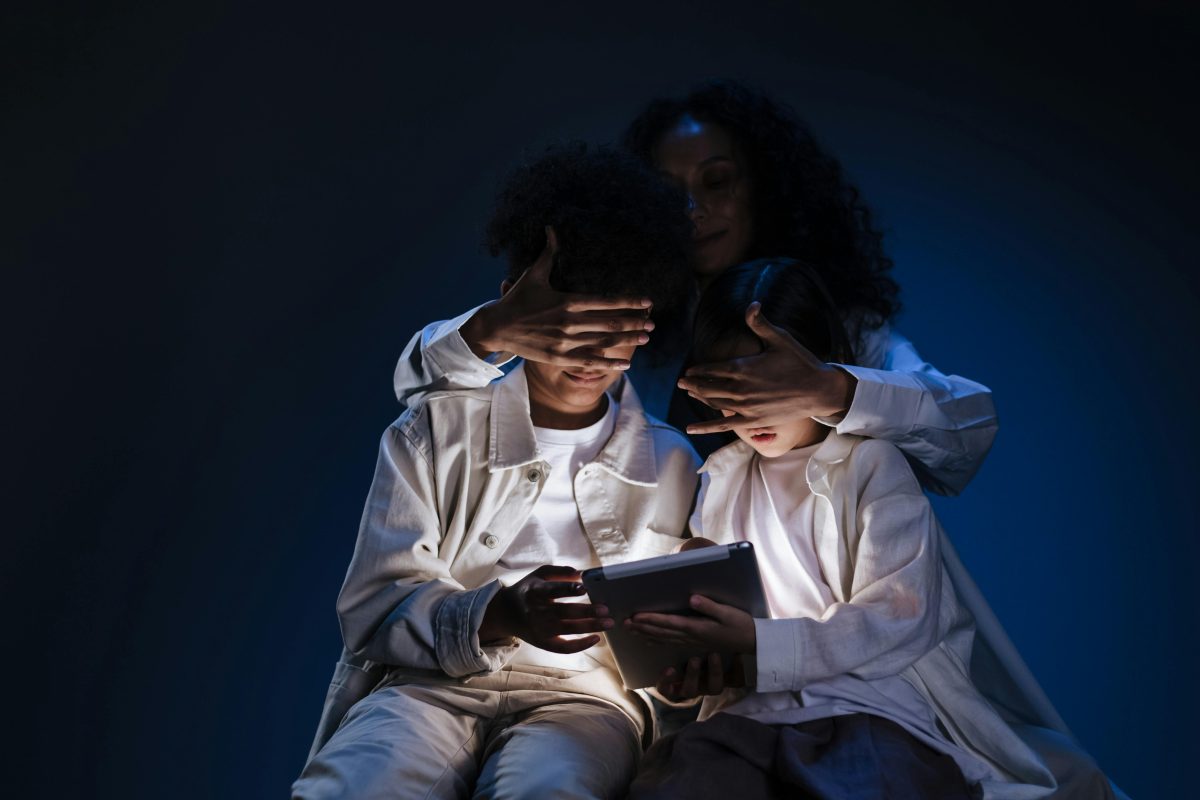
Disregarding the diverse needs of children and teenagers, the Australian government legislated in November 2024 that all people under the age of 16 would be restricted from accessing social media platforms, such as TikTok, Snapchat, Instagram, Facebook and Youtube.
Despite advice coming from within Australia and organisations like Amnesty International that a total ban on social media for under-16s may be detrimental for teenagers, many countries in Europe and globally are now also taking similar steps and initiating social media bans for minors.
Germany’s conservative government passed a motion on February 21st to restrict access to social media platforms for users under the age of 14, and France’s leaders intend to have teenagers off social media by September 2026. Other European countries taking similar approaches include Spain, Norway, Greece, Denmark, Italy, and the Netherlands. MPs in the UK have recently rejected a proposed social media ban, but it is not off the cards completely. The European parliament has proposed ‘a harmonised EU digital minimum age of 16’ for access to social media platforms. India and Malaysia have also expressed plans to restrict children and teenagers from social media.
Australia was not the first country, however, to tighten social media regulation for young people. Already in 2025, the Cyberspace Administration of China (CAC) introduced ‘minor mode’, which operates, not as a blanket ban, but as a system of tiered age restrictions based on the developmental stage of the child. For example, toddlers should only have access to audio-based content, whereas 12–16-year olds can access curated news, entertainment and education materials, including break reminders and time limits.
China’s approach to regulation, in contrast to Australia’s, appears to be more in line with Amnesty International’s recommendation that ‘Rather than banning children and young people from social media’ there should be ‘strict regulation on platforms to better protect children’s privacy, right to peaceful assembly, right to health and freedom of expression’.
So why are countries like India, Germany, France and so on, despite widespread contrary advice, now going full steam ahead with replicating an Australia-style social media ban, rather than China’s regulated social media usage? And what does such a ban even look like in comparison to the already-in-place, but ineffective, age restriction of 13 years?
In Australia, under the law that came into effect in December 2025, the onus is now on social media platforms themselves, rather than on parents or children, to take “reasonable steps” to ensure that no users under the age of 16 can access their platforms. The law, however, does not stipulate what these steps should be. As such, platforms are implementing various age-verification methods in order to comply with the law. Meta, for example, is using selfie-based age recognition; TikTok is using existing account data to estimate age; and Snapchat and Youtube rely on user-declared data such as bank- or government-verified ID.
There are a number of issues arising from the aforementioned age-verification methods. Inaccuracy, firstly, is a problem already encountered with the facial-recognition and user-data age assessment tools. Secondly, a potential breach of privacy and online rights occurs when users are required to declare age information using official IDs.
While the Australian law prohibits the data that is collected for the purpose of verifying age to be used for any other reason, Tom Sulston from Digital Rights Watch Australia warns that data could easily be leaked onto the internet due to internet security flaws. Sulston also worries that being regularly asked for an ID can lead to the ‘proliferation of our private data’ and ‘inures us to the sense of always entering our ID’. Similarly, Dr. Stephan Dreyer from the Leibniz Institute for Media Research in Hamburg warns: ‘Age verification at scale requires either comprehensive control infrastructure or probabilistic profiling, with both approaches showing deep intrusions into the rights of all users.’
As I think many of us would agree, social media indeed poses serious dangers and challenges to all users, not just children. I, too, am suffocated by regret following an hour of doomscrolling; and my ability to concentrate seems to worsen day by day. The effect on one’s ability to think and concentrate is not the only recognised harm. Others include: exposure to adversarial speech, harassment, hate speech and doxing (which involves sharing a user’s personal information to encourage threats), as well as exposure to disinformation and misleading media such as deepfakes. That’s not a childhood I would like for my nieces or nephews, or any child or teenager.
However, there are also a number of benefits of social media use that a total ban ignores. For some groups of young people, such as those living with disabilities or chronic illness, social media can provide important peer support that enhances wellbeing and connection.
Amanda Lennestaal, a mother of three based in Sydney, Australia, has observed from her own experience that ‘for kids with disabilities, those online spaces are actually some of the most accessible social environments, where you don’t have the physical, sensory or even at times communication barriers.’ Since the ban took effect in Australia, her kids have lost an important place for social connection.
Moreover, if social media constitutes their primary form of communication, children who have emigrated to a new country with their family may also experience a sense of disconnection from their friends and family in their home country
In 2024, a mental health hotline in the UK conducted a survey with its adolescent users about what they needed to cope with crises. The number one response? More opportunities for social connection. While not every child may rely on social media for social connection, it is clear that some do. Taking away an opportunity for this connection ignores the multiplicity of needs of children and may place vulnerable children more at risk than before the ban.
Despite the benefits of social media for some young people, 66.98% of adults agree that to protect young people from online harms, people under the age of 16 years should not be allowed to have accounts on social media platforms, according to a survey conducted in Australia in December 2024. This result likely arises from people’s exasperation over the failure of governments to actively minimise digital harm and also from the moral panic surrounding social media use for children.
Societal panic about what is morally good or bad for children is not a recent phenomenon. New forms of media in particular are often seen as part of the moral corruption of youth: responsible for inciting violence, crime, sexual promiscuity, and disrespect for social conventions. Political actors like to exploit moral panics to prove to society how much they really care about young people. This case is no different.
Last year, the series Adolescence hit the UK with a ‘wake up call’ about the dangers of online spaces—namely, the ‘manosphere’. The series centred around the question of why 13-year-old Jamie would murder his female classmate. The UK’s prime minister, Keir Starmer, swiftly took advantage of the moral panic that followed the film, insisting that violence against girls is a ‘growing problem’ and we must do something to ‘tackle it’.
In addition, the moral panic about social media partially stems from Jonathan Haidt’s bestselling book The Anxious Generation. Haidt’s book has been described as ‘an urgent warning about the effect of digital tech on young mind’s’ and argues that smartphones are responsible for the huge decline in the mental health of young people, citing the increased anxiety, depression and suicide since 2010.
We should be cautious when reading popular science books that lean into moral panic. Researchers at the University of Würzburg highlight a number of issues with The Anxious Generation. Haidt’s book, they argue, describes a situation that is specific to the USA and cannot be easily transferred to other contexts. Moreover, the researchers contend that other factors, such as the COVID-19 pandemic, the economic situation, climate change, and crumbling healthcare systems may also impact a person’s mental wellbeing. It is disingenuous to place the sole blame of mental illness on social media use.
According to research conducted by Rob Cover, Joel Humphries, Ingrid Richardson and Dan Harris, moral panic is typically based upon technological determinism, which suggests that ‘society, identities, culture, and individual practices are shaped by the use of and exposure to technologies, often in a way that perceives them as external to culture and the cause of sociocultural change—such as being seen as the cause of increased rates of poor mental health.’ This often leads to the restriction-based approach that is being implemented across the world at the moment in relation to social media.
European leaders have demonstrated the tactical reaction of the political class to moral panic by claiming that the social media ban would be a way of ‘protecting’ young people from the harmful effects of social media. German Chancellor Friedrich Merz, for example, allegedly wants to prevent ‘personality defects and problems in the social behaviour of young people’ and his deputy Lars Klingbeil claimed: ‘Protecting young people from the flood of hatred and violence on social media is a top priority.’
If you believed that capitalist governments cared about the welfare of children, you might be more inclined to believe that the proposed social media bans are being implemented to protect children; but after years of watching countries like Germany, Australia, the UK, India, and France support, fund and/or supply weapons to Israel as it carries out a genocide in Gaza and doing nothing as Israel directly targets children, you would be forgiven for believing otherwise.
What then, if not to protect children, is the purpose of banning social media for young people? In Australia’s context, Eddy Jokovich and David Lewis write that the social media ban shows the government’s desire to appease powerful media conglomerates, particularly News Corporation, and to gain better control over the news and media that young people have access to.
A quantitative analysis conducted by The Intercept of the coverage of Gaza by the New York Times and other mainstream newspapers shows that these newspapers heavily favour Israel. For instance, the word ‘massacre’ was used to describe the killing of Israelis versus Palestinians 60 to 1. Legacy media may not be making Western kids anxious and depressed, but by dehumanizing Palestinians, it generates consent for genocide.
Meanwhile, social media has become a place where mainstream discourse can be challenged. Kareen Haddad argues that social media has been invaluable in reaching audiences in regards to the Palestinian liberation struggle and education about the genocide occurring. Haddad claims: ‘When the media we consume comes straight from the people being impacted, and not through channels which weaponise ‘objectivity’ to spread a certain agenda, it becomes much clearer to whom we owe our allyship’. This is dangerous to Western hegemony.
Are capitalist governments afraid that young people will learn about the horrors their countries are funding and committing? Or that young people will feel empathy for the people the West has worked so hard to demonise? Are the ruling classes trying to prevent more adolescents like Greta Thunberg—who at age 15 in 2018 used social media to reach out to and interact with supporters and activists—from using social media as a tool to mobilise other teenagers and question the power structures that will determine their future?
It could be argued that teenagers, once they turn 16, can still engage in political activities online. But until that age, children and teenagers will have scant access to media that is not state or billionaire approved. We often hear about the danger of disinformation online, but what about the bias from legacy media corporations? In Germany, this has dire consequences relating to the reinstatement of Wehrplicht (compulsory military service)—children must be informed from an early age about a duty that could see them sent off to die at war. It is well documented that German youth were a particular target of Nazi propaganda. We must not abandon children and teenagers to be propagandized by state or corporate-owned media.
Lenin once said: ‘Give me four years to teach the children, and the seed I have sown will never be uprooted.’ While we cannot rely on billionaire-owned social media platforms to inform our children, the platforms still offer some opportunity of sharing real human stories that challenge capitalist structures. We need to build and maintain alternatives to the current platforms, and strive for a path forward where we turn towards each other for strength and education.