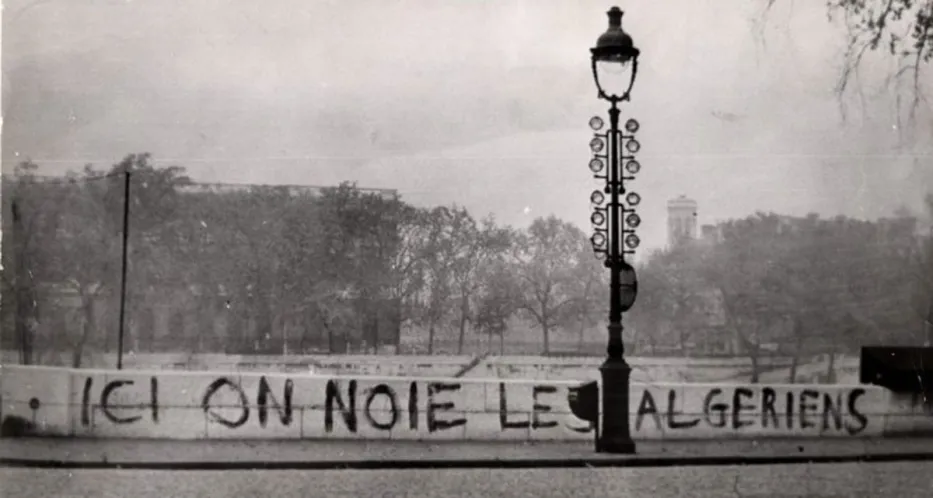
On October 17th 1961, hundreds of Algerian demonstrators were murdered by Paris police, most of them thrown into the river Seine. The peaceful demonstration, organised by the FLN (National Liberation Front), was against the ongoing French occupation of Algeria (which would liberate itself six months later), and the racist curfew imposed since 5 October on “Algerian Muslim workers”, “French Muslims”, and “French Muslims of Algeria.” Anyone who left their home between 8:30pm and 5:30am faced arrest.
The 30,000 demonstrators were almost exclusively of North African origin and the French Left was largely absent. Just 5 years earlier, the Socialist Party had demanded special powers in parliament for more repression in Algeria. They were supported by the Communist Party, which was hoping for an electoral deal with the Socialists. The FLN called on its members to set up their own separate trade union. When press and politicians ignored the Paris massacre, or praised the police, the victims were left isolated.
The massacre was a continuation of previous repression by Paris police chief Maurice Papon. In 1959, an internment camp for Algerians was set up in the Parisian suburb of Vincennes. Dead Algerian bodies were found in the Seine from September 1961 – weeks before the demonstration. It was not until 1997 that Papon – who would become France’s budget minister – was convicted for crimes against humanity for his role in deporting 1,600 Jews under the Vichy régime, which happily collaborated with Hitler.
French police massacring Algerian demonstrators was nothing new. On the same day as the Paris massacre, there were demonstrations throughout Algeria which were attacked by the occupying French army using live ammunition. What was new was that this level of repression was being used on the French mainland. Many demonstrators were deported or “went missing”. There were some small demonstrations to support them, mainly by students, but none attracted more than 1,000 people.
Simone de Beauvoir, one of the white Leftists who actively supported the protestors reported: “Corpses were found hanging in the Bois de Boulogne, and others, disfigured and mutilated, in the Seine… Ten thousand Algerians had been herded into the Vel’ d’Hiv’ [stadium], like the Jews in Drancy once before. Again I loathed it all – this country, myself, the whole world.” As French police once more violently beat protestors, the experiences of 1961 show the need for unity in the face of state violence and media lies.