April 1974 marks the end of Portugal’s 42-year fascist dictatorship. On that day, after months of clandestine organising since September 1973, the Armed Forces Movement (Movimento das Forças Armadas, MFA) launched a military coup that overthrew the Estado Novo (“New State”) regime.
Many of the military involved had grown disillusioned with the colonial wars in Guinea-Bissau, Angola and Mozambique, which they saw as unjust and unwinnable. In previous years, the country’s isolated position grew as the regime’s military spending rose in response to the independence movements in the “ultramarine territories”. Internally, many people were either resisting despite the repression, or fleeing the country to France and the United States.
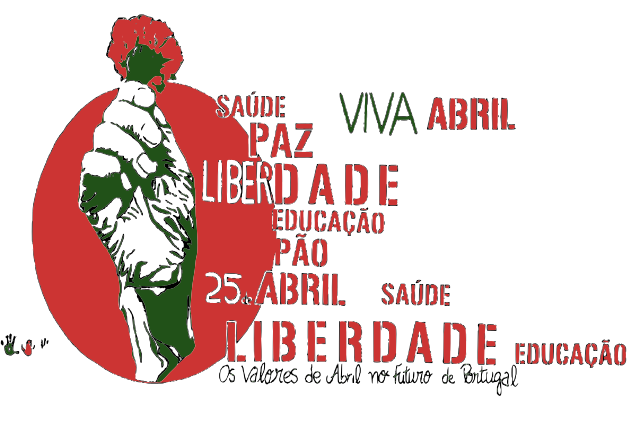
On 25 April, within hours, the MFA seized control of the national radio broadcaster and of key military centres across the country, forcing Prime Minister Marcelo Caetano (successor to António de Oliveira Salazar) to surrender. Despite the MFA’s warnings to stay home, the people took to the streets in support of the coup, and, in a whimsical act, flowers were distributed amongst the soldiers’ gun barrels – baptising it as the Carnation Revolution.
The regime’s political police, PIDE, infamous for imprisonment, torture, and killings of dissidents, was dismantled shortly after. However, the revolution was not a day; but rather a process that lasted 19 months: 25 April kickstarted PREC – Ongoing Revolutionary Process, a period of intense political transformation, marked by popular mobilisation through strikes and demonstrations, the occupation and takeover of workplaces by the workers for weeks or sometimes months, especially in the southern and central parts of Portugal; initiatives for popular education, and the nationalisation of banking and other sectors. After months of political tension between the liberal and leftist-communist forces, the revolutionary wave came to an end in November 1975, with a right-wing, liberal, US-backed counter-coup.
25 April is both a history of resistance and of working class consciousness; As Sérgio Godinho sang in 1974 – and the Portuguese people, to this day: “There is only true freedom when there is peace, bread, housing, health, education; there is only true freedom when what the people produce belongs to the people”. Read more here.