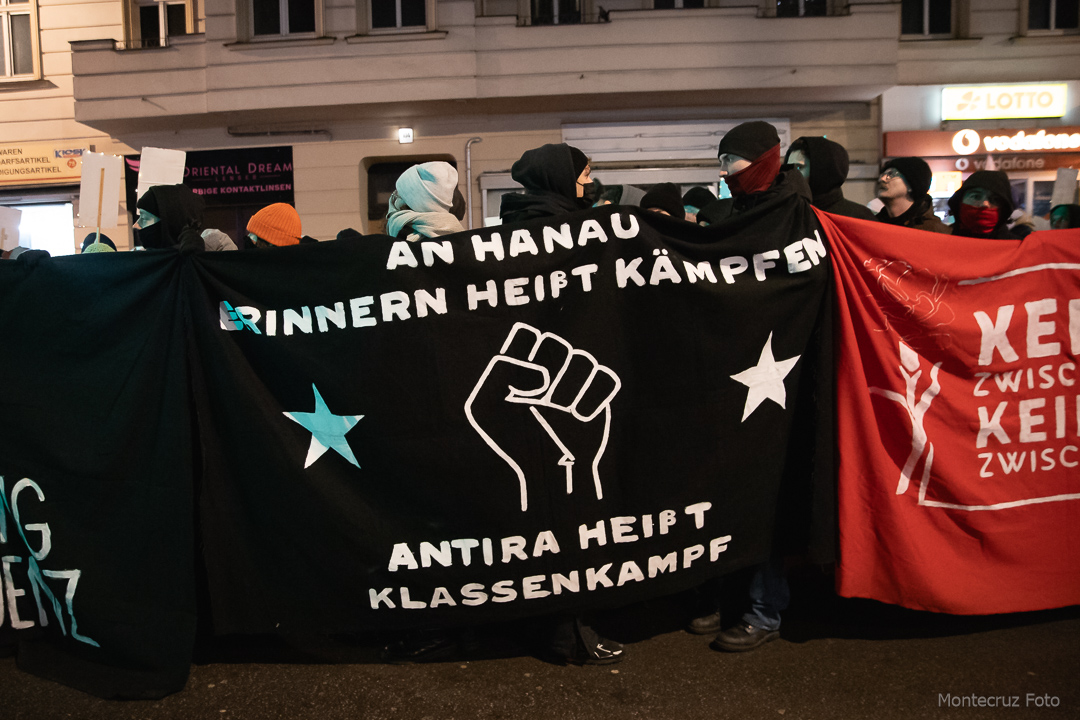
Antifascism and anti-fascist journalism have deep-rooted histories in Germany. Over just the past few decades, there has been extensive knowledge and analysis concerning neo-Nazi movements and their history, yet only a small fraction of this work is translated out of German. Left-wing English-language groups often lack the wealth of understanding that is taken for granted by their German-speaking counterparts. Fundamental topics, such as the racist murder of 9 people in Hanau, which occurred exactly six years ago from the week this article is being published, are frequently known only in the most general terms.
This series of articles aims to help bridge the gap in knowledge or, at the very least, provide a basic introduction for English-speaking activists who may struggle to access German-language discourses for various reasons. In doing so, we also seek to offer greater insight into themes that are often misunderstood within the English-speaking left in Berlin, such as the dynamics between East and West Germany and the role of migrant-led anti-fascist organizing.
Engaging in this project, essentially translating several decades of activism and knowledge production into a short series of articles, inevitably means leaving out much important information. The list of stories which could have been included here is long enough to be an article itself. In selecting what to include, we purposefully highlighted specific stories — whether of specific events, people or groups — rather than attempting to summarize the extensive information on far-right violence or resistance against it. Our hope is that these focused stories will serve as an entry point for readers, helping them to navigate the broader historical context, and select for themselves what they would like to explore further.
As co-editors of this series, we have been lucky to have the support of various parts of The Left Berlin, including the editorial team and the social media team. Several members even contributed their own articles. We would like to thank them all. We would especially like to thank all the comrades who put their trust in us and agreed to be interviewed, sharing their knowledge and experiences.
Article 1
Article 2
Article 3
Protecting Fascists: Neo-Nazis in Germany’s military and police
Article 4
Article 5
Antifascism in Berlin: struggles, structures and repression, an interview with Antifa Nord Ost
Article 6
Article 7