The crisis engulfing Your Party has moved beyond the level of internal disagreement. What is now unfolding is the effective collapse of a political project that once appeared to carry the hopes of a recomposed left. We can see this with the resignation of the entire interim Scottish executive committee, coming after the wholesale expulsion of organised socialists from the party. That collapse represents a deeper political failure, and one whose consequences are sharpened by the big picture of British politics. At a time when the Far Right is gaining ground, becoming more confident on the streets and more embedded in political discourse, the disintegration of even a partial left alternative is a blow.
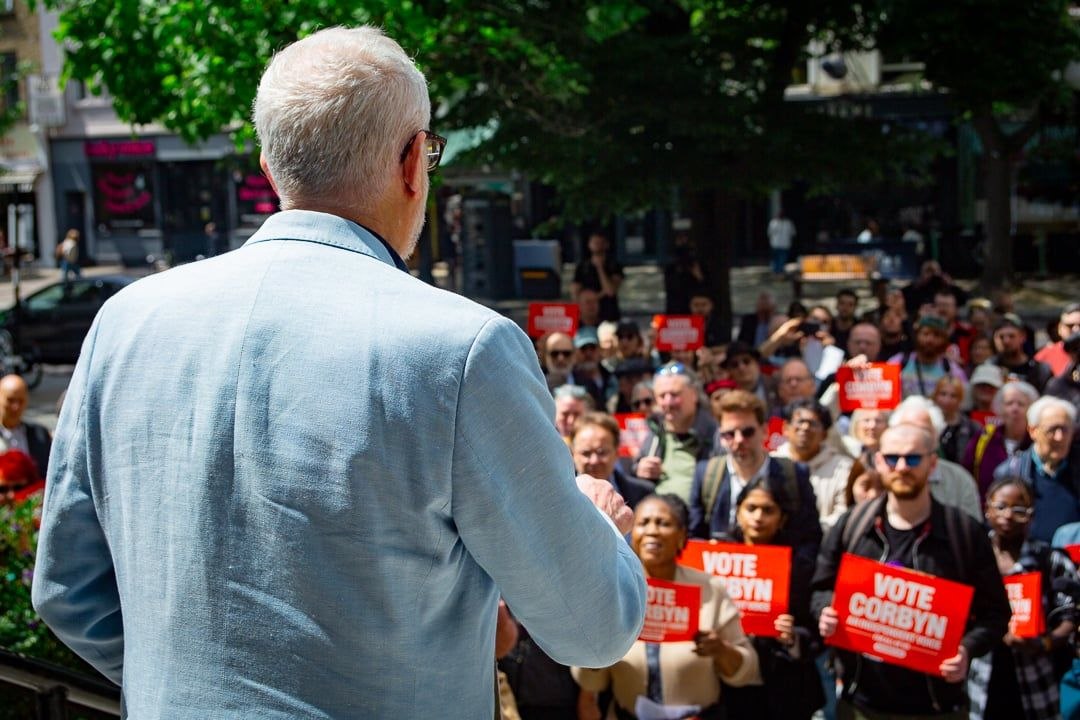
When Jeremy Corbyn and Zarah Sultana launched Your Party, the conditions appeared favourable. The Labour Party under Keir Starmer had completed its turn away from even limited reformism, leaving a political vacuum to its left. At the same time, the residue of the Corbyn movement still existed in the form of politicised activists, trade union militants and campaigners shaped by years of struggle. There were, and still remain, massive movements against racism and imperialism. There was a real appetite for an organisation that could link parliamentary presence with movements on the ground, providing a political voice. In fact 800,000 people expressed an interest in the new formation.
But from the beginning, the project was shaped less by a clear strategic break from Labour and more by hesitation at the top. Corbyn’s approach was marked by a reluctance to decisively enter the fray and launch the organisation. That hesitation created space for a layer within the organisation—a tight-knit clique oriented toward “respectability” and control—to assert itself. Their perspective was not to build something qualitatively different, but to reconstruct a version of Labour in miniature: a controlled, top-down electoral machine, wary of independent socialist organisation and suspicious of rank-and-file initiative.
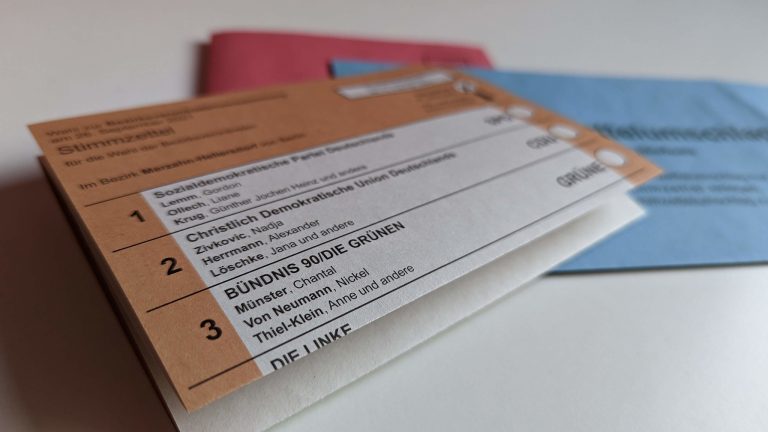
Observers in Germany will recognise elements of this dynamic from the long-running tensions inside Die Linke, where leadership manoeuvres have often substituted for political clarity. In both cases, the absence of a decisive break with old organisational habits has fed instability rather than cohesion.
The recent move by the Your Party leadership to ban dual membership with other socialist organisations represents a decisive moment in this trajectory. It is entirely consistent with the outlook of those who sought to shape the party as a Labour Party Mark 2.
This has taken place in the context of intensifying internal conflict. Disputes over leadership authority, organisational control and the basic functioning of the party have increasingly dominated its internal life. What should have been spaces for political discussion and strategic orientation have instead become arenas of procedural struggle. Activists who entered the organisation with the intention of engaging in outward-facing political work have found themselves drawn into internal disputes. The energy that might have been directed toward organising in workplaces, communities and movements has been dissipated in factional battles. Despite this, many activists formed proto branches looking outwards and to forthcoming local elections—few of these were recognised by the central leadership.
These conflicts are not accidental. They flow from the attempt to impose a controlled, quasi-parliamentary model onto a membership that expected something more open and movement-oriented. The party has reproduced many of Labour’s worst features in compressed form.
The effective collapse of Your Party leaves a significant vacuum on the left. The social conditions that produced interest in the project have however not disappeared. Anger at inequality, frustration with mainstream politics and a desire for radical change remain widespread. But without a coherent political form through which these sentiments can be organised, they exist in a fragmented and unstable state. The contrast with Germany is instructive. Despite its problems, and there are many, Die Linke still provides a national political reference point for parts of the left, whereas in Britain fragmentation now runs deeper.
This vacuum is not politically neutral. In the current context, it creates space for the Far Right to advance. Across Britain, far-right forces have been testing their strength with increasing confidence. Street mobilisations have become more frequent, networks more coordinated and narratives more sharply defined. While this differs in form from the electoral rise of Alternative für Deutschland (AfD), the underlying dynamic is comparable. In both cases, disillusionment with mainstream politics is being reorganised along reactionary lines.
The timing of Your Party’s collapse therefore gives it a tragic character. It is not that the project was never capable of attracting support. It clearly was. But its leadership failed to consolidate that support into a durable and politically coherent organisation. Instead, hesitation at the top and control from within combined to hollow it out.
This collapse highlights the centrality of democracy in socialist organisation, not as an abstract principle but as a practical necessity. An organisation that excludes organised socialists undermines its own capacity to develop, debate and act. Most importantly, it demonstrates the need for a firm orientation toward struggle. Without roots in real movements, organisations become inward-looking and brittle, prone to fragmentation under pressure.
It would be mistaken, however, to conclude that the underlying forces that gave rise to the project have dissipated. Activists continue to organise in workplaces, to mobilise against racism and to build campaigns in their communities. These activities are not dependent on any single party structure. They reflect deeper social processes and a continuing willingness to resist. Similar questions are being posed across Europe about how such activity can be connected to political organisation without being subordinated to it.
The question that now emerges is how these dispersed forms of activity can find political expression. The answer will not come from simply reconstructing the same organisational model under a different name. It will require a more grounded approach, one that connects political organisation directly to ongoing struggles and that builds from those foundations outward.
Your Party, as a project capable of shaping events, is finished, but the conditions that produced it remain, and in some respects have intensified.
In a period marked by crisis, instability and the advance of reactionary forces, the absence of a coherent, left alternative is not simply a disappointment. It is a problem with real consequences.
The need for a socialist alternative has not diminished. If anything, it has become more urgent.