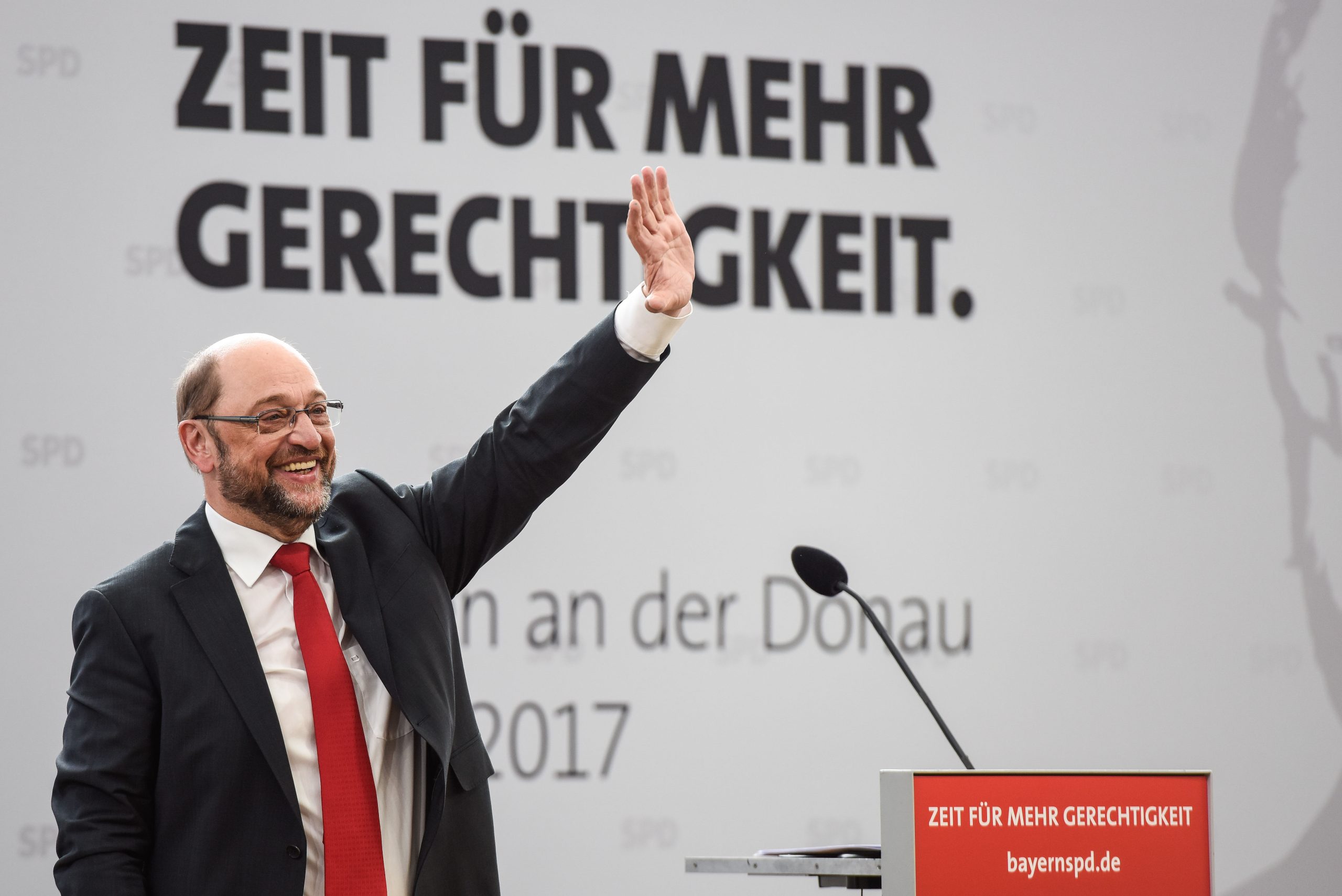
The German term “Gerechtigkeit” translates roughly to fairness, justice, or equity. It’s become a catchword in German political discourse, resurfaced by the SPD during the 2017 federal elections, late in the hour of neoliberalism’s longue durée during the 2017 federal elections (proving that as usual, and for good or bad, Germany is 10 years behind America, where social justice rhetoric exploded in the wake of the Great Recession).
Now everyone is clamoring for more of it. The market radical Freie Demokraten (FDP) hold up the banner of “chance fairness” and decry welfare recipients as harming equity by taking away from those who actually work. A group of young CDU MPs almost torpedoed their own party’s social security reforms last winter, claiming that it wasn’t fair or just to force young people to pay disproportionate amounts to shore up the retirement of millions of pensioners.
As inequality skyrockets, precarity becomes the norm, and as Germany’s export-oriented economic model fails, fairness and equity are no longer rhetorical questions. The debate over the meaning of Gerechtigkeit becomes a material battleground for various groups vying for a smaller and smaller pie. Germany, stuck in its uniquely punitive version of austerity since at least 2005, refuses to expand that definition of fairness and justice through direct support and stimulus. Which means that debates on this topic can only move in one direction: towards a debate about who pays for what and is most deserving. In short, what should be a shared responsibility gets twisted into a cold individual accounting and moralistic framing.
This cold framing turns rights and guarantees into conditionals based on individual behavior and contribution. This is nothing new for Germany’s social system, which integrates its non-universal healthcare system directly into your job and capacity to work. For some, the system is not restrictive enough, though.
Like Carla Neuhaus, for example, editor for Die Zeit’s economic section. In an article from 24 March titled, “Stop rewarding the stay-at-home wife marriage!” she argues that getting “free” health insurance from your working married partner when you’re unemployed is a privilege that sets the wrong incentives. Neuhaus asserts that such benefits are almost always claimed by women. Families should be able to decide who takes care of the kids, but not at the cost of the community. That’s why it’s right for moms to have to pay 225 euros a month if they’d prefer to not work and take over childcare. The fee will give women the opportunity to work, even if part-time, since it eliminates a cliff where women earn less due to the monetary benefit.
In most states in Germany, childcare is only free at age 3 and many municipalities set fees based on income. Reports estimate that there are over 300,000 spots lacking in public childcare facilities; better earners avail themselves of higher-quality private centers to avoid long waiting lists. For public facilities in Köln, for example, families pay up to 341 euros a month, lunch fees not included. Berlin is the only state with free childcare. Across Germany, waiting times of over a year are common and many give up despite a legal right to a childcare spot.
A part-time worker earning minimum wage in Germany takes home roughly 850 euros a month. Subtract childcare and lunch fees and that number can drop to around 600 euros a month. For married women who would rather stay at home and look after the kids themselves, they will now be charged 225 a month.
What an opportunity indeed. Low-earning German women who hope to benefit from this fairness initiative can now spend months trying to secure a childcare spot, pay for the entitlement, and then restructure their entire lives. We can’t have those stay-at-home moms getting something they don’t deserve, after all.
Neuhaus’s argument assumes there is something waiting for these women on the other side—a labor market that rewards participation, wages that grow, a society that lifts those who work hard. That Germany has not existed for two decades. For sociologist Oliver Nachtwey, Germany’s “Elevator Society” of guaranteed mobility is now a “Downward Escalator” where individuals struggle to maintain their current living standards rather than ever improve them.
The current debate is also a categorical error: we are arguing over who deserves what is happening entirely within one pie, while the other pie sits untouched. You see, the ultrarich in this country are doing extraordinarily well. 3,900 people with assets over 100 million euros own about 25 percent of Germany’s total wealth. Middle-class families pay a tax rate of around 43 percent while billionaires sit at 26 percent. The one pie is salary, the other is investments and profit. Different pies, different rates.
To the commentariat and all mainstream political parties, minus Die Linke, this other pie doesn’t even exist. The ethics of responsibility, thrift, and individual contribution obscure the systemic failings that Germany’s deeply unjust and unequal system has produced. This is a country that pocketed decades of trade surpluses and funneled it up to the top—to villas on Sylt, bonuses for executives, and dividends for shareholders. Despite all that, the supposed hole in the budget to pay for infrastructure and increasing healthcare costs and defense spending needs to be filled by stay-at-home moms, disabled people, and welfare cuts.
At least the average German is sensing something rotten is happening. 81 percent of Germans believe that wealth is unfairly distributed in this country, and 64 percent want the re-introduction of a wealth tax. The lukewarm SPD response is to target “Spitzenverdiener” (top earners); again, for mainstream politicians, the second pie does not exist. And they say lefties are removed from reality.
Germany’s crumbling bridges and inequality are most definitely matters of Gerechtigkeit. They’re also a matter of uneven contribution to this society. But the problem isn’t salaried employees in any sense: it’s the rich abdicating their social responsibility and doing what the rich do—extract short-term gain and externalize the costs. Twenty years of austerity and accumulation at the top have left the bottom desiccated and worn out. Squeezing the dregs of this society will not work. Everyone’s talking about Gerechtigkeit, but the term has been dragged through the mud and hollowed out to cover for a state that can no longer fulfill promises of a dignified and prosperous life; its ruling class has blocked every avenue of shared responsibility, wealth, and renewal. At this point, I’m done with my shitty pie. I want one pie and I want all of it. That starts with taking from the rich—first with taxation and then expropriation.