Thanks for talking to us, Richard. Can you just start by introducing yourself?
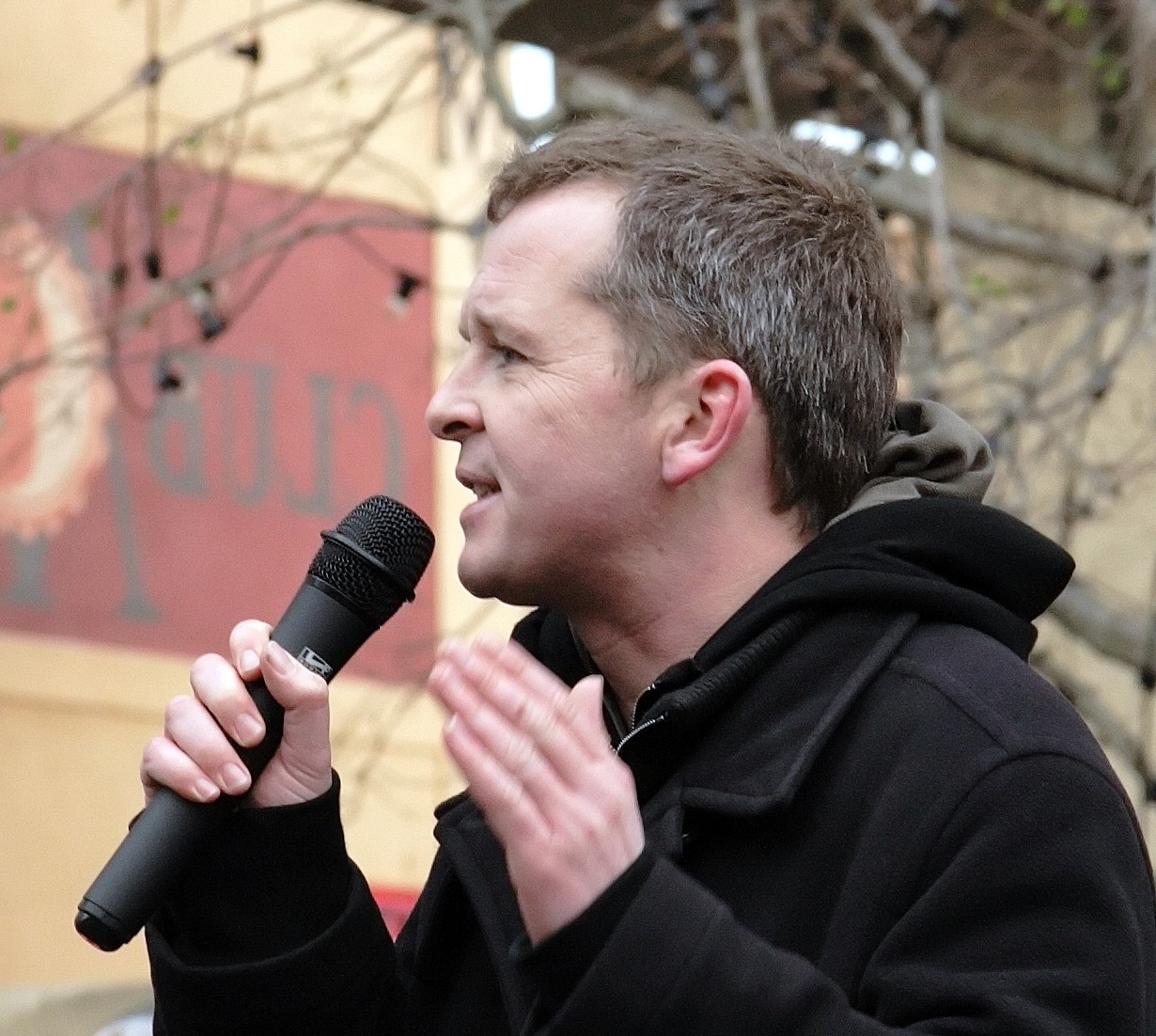
My name is Richard Boyd-Barrett, and I’m a member of the Irish Parliament for People Before Profit. I’m also a member of the Socialist Workers Network, which is part of People Before Profit.
And this week, you’re going to be in Germany.
Yes, I’ve initiated a cross-party delegation visit to Germany, which now includes members of Sinn Féin, the Labour Party, the Social Democrats, and one of the government parties, Fine Gael. We have members of parliament, an MEP, and a senator in this delegation.
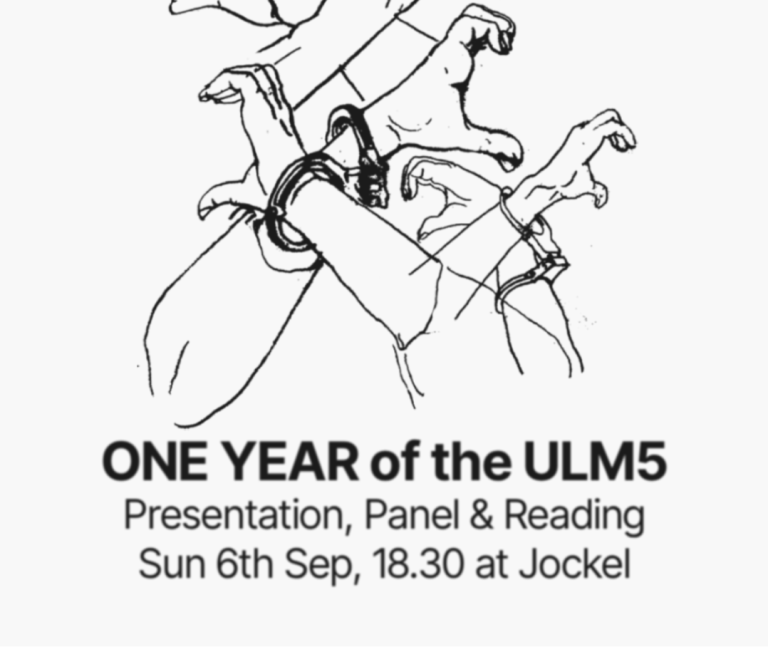
We are going to observe the trial of the Ulm5, which includes an Irish citizen, Daniel Tatlow-Devally. They are five Palestine activists who broke into an Elbit Systems factory in Germany because of Elbit’s involvement in producing a huge amount of the weapons for Israel in the genocidal assault against the people of Gaza.
Since they were arrested, they’ve been held in very severe conditions of custody. In Daniel’s case, they’ve been in effective solitary confinement in a high security prison in Ulm since August of last year. We have grave concerns about the fairness of the entire process and the manner in which they’re being detained.
They’ve been prosecuted under legislation normally reserved for organized crime or for terrorism and we’re very concerned they’re not getting a fair trial. We want to go and observe the trial for ourselves, so we can bear witness to what we are being told by family members and the legal representatives.
What can you tell us about the way they’re being treated?
When Daniel was first incarcerated, they weren’t even allowed to hug or directly touch visiting family members. A few of us went to meet the German ambassador in Ireland, complaining about this and that did change. But nonetheless, we understand that the conditions are pretty appalling.
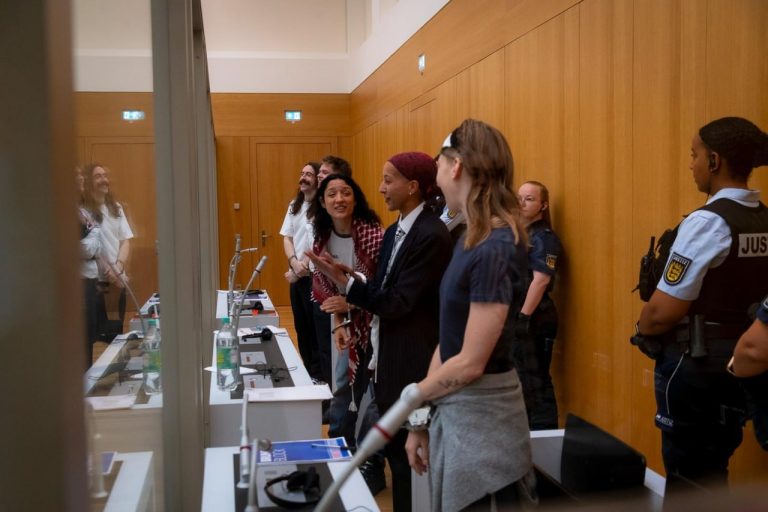
In court, the defendants are being separated from the rest of the court through a glass barrier, which means they’re not able to communicate properly with their defence team. One would imagine that a very basic element of having a fair trial is being able to confer with your lawyers.
The Ulm5 have to talk to their defence team through microphones while they’re simultaneously trying to listen to a translation. This seriously prejudices their ability to follow the court proceedings and to properly instruct their defence team, and the judge is dismissing out of hand all motions which the defense team are putting to make the trial fairer.
It appears that rather than being innocent until proven guilty, the Ulm5 are presumed to be guilty until they prove themselves innocent.
As you say, Daniel is an Irish citizen. How well is the case known in Ireland?
I’ve raised it several times in parliament and obviously it has been raised at some of the big pro-Palestine demonstrations. Since the genocidal assault of October 2023 began, there’s been a strong pro-Palestinian movement in this country, so a lot of activists are aware of the case.
Daniel and their family are from my constituency, so we’ve obviously highlighted it there, and we’ve received some publicity when we raised it in the parliament. Daniel’s father was also interviewed on national television about it.
I think there’s a reasonably widespread awareness of the case, but the government has not done much about it so far.
You say that the delegation includes someone from Fine Gael, which is part of the ruling coalition. Does that mean the government is split, or have you just got a maverick?
I think it’s probably because of pressure from the constituency. The Fine Gael TD who’s come is from my constituency, and the family have probably put some pressure on him. Just the fact that he is from my constituency, where there is a very strong pro-Palestinian sentiment means that electoral pressure may be operating. I invited all the TDs from my area, regardless of their party.
The Fine Gael representative is also a barrister and may have some professional interest in this. I’d like to be less cynical and hope that he actually wants to see a fair trial.
What are you trying to achieve with this visit? Are you just gathering information, or do you expect it will change things?
We are absolutely hoping to change things. By being first hand witnesses, we want to go back and put pressure on our own government to speak out more forcefully on behalf of Daniel and the Ulm5.
Whether or not you agree with them, and I do agree with them, they clearly represented no physical threat to anybody and were motivated by a desire to stop a genocide. They believed they were acting in line with the obligations that every state, including Germany and Ireland, have under the Genocide Convention. States which sign the convention are obliged to do everything in their power to deter a genocide.
It is entirely reasonable to disrupt the flow of arms to Israel while they’re engaged in what any reasonable person might say constitutes a possible genocide. We hope to get our government to state publicly that they should not be treated as dangerous criminals.
We also hope that it might have some impact on the German authorities if parliamentary representatives from Ireland go there. At the very least, we’re hoping that it will prompt the Irish government to send observers to witness the trial.
And you are in touch with some German politicians. How’s that going?
We’ve been in touch with some MPs from Die Linke, and they’ve been very sympathetic. Some of them have been observing parts of the trial, at least, and are giving us some advice. We will probably meet some of those people while we’re in Stuttgart for the trial.
We’re delighted with the support and assistance we’ve received from at least some in Die Linke, and from some activists in Germany.
What can activists in Germany do to help what you’re doing?
That’s one of the things we’re trying to fully understand. Here in Ireland, the vast majority of people are horrified by Israel’s genocidal assault. The Irish government was forced by public pressure, to finally join the South African case at the ICJ against Israel for committing genocide.
So it’s a little hard to understand just how hostile the German authorities seem to be against a group of pro-Palestine activists. It’s hard to understand the severity of the treatment that they’re receiving.
People in Ireland were the victims of colonialism and empire and apartheid and dehumanization that led to the great famine of the 1840s. There’s an instinctive awareness among huge numbers of people in Ireland about the parallels between what’s happening to the Palestinians now and what happened to the people in Ireland.
I’m certainly aware from looking at bits of media and social media, that there have been significant protests in Germany, but I also note that there seems to be a pretty brutal attitude by the German authorities to pro-Palestinian activists.
We want to understand that and to make links with people in Germany who are advocating on behalf of the Palestinian people and against complicity with this genocidal and apartheid horror.
To briefly address your questions, all the polls say that the number of Germans in sympathy with the Palestinians is the same level as other countries. What is different is people on the streets. We did have one big demonstration last September, and then six days later the ceasefire happened. I think the German government is able to act with impunity, not because it’s popular, but because we don’t have the same visible protests against it.
I’m also aware of the historical context of the Nazi Holocaust. But to my mind, revulsion and horror at the Nazi Holocaust directed against the Jewish and other people is a reason to oppose the apartheid system and the genocidal sort of dehumanization and mass murder of Palestinians. So I’m delighted to hear of solidarity with the Palestinian people.
Could you say what you’re going to be doing in the next couple of days?
We’re going to visit Daniel in Ulm prison. I understand that we won’t be allowed to talk about the case, so we’re not quite sure what we’re going to talk about. Books, maybe the weather, but the conditions under which we are allowed to even converse with Daniel are severely constricted.
Having visited Daniel in prison, we’re going to meet with some of the family members, and some of those activists and legal people who are supporting Daniel and the Ulm5, to fully understand the details of what’s happening to them and what we can do.
We will then witness the trial for ourselves and be first hand witnesses, seeing whether the accounts we’re being given of how unfair it is are true. We want to convey a message to any German media or press that want to talk to us, and to carry that message back to the Irish parliament and to the Irish public.
You should have plenty to report
I think so. I’ve already raised it several times in the Irish Parliament, and I’m pretty angry and annoyed that the Irish government haven’t done more. There’s widespread public support for the plight of the Palestinian people and what they’re suffering, and the Irish government have been hypocrites.
They’re considered in much of Europe as being very pro-Palestinian because they have rhetorically condemned what Israel is doing, and joined the South African case over the genocide. But they haven’t imposed the sort of sanctions on Israel that the people on the street have been demanding. And true to form, when it comes to the unfair treatment of the Ulm5, they haven’t done much.
The Irish government is speaking out of both sides of their mouths. On the one hand, they’re trying to tell a public that it is horrified at what’s happening to the Palestinians, that they’re pro-Palestine. But because they also want to maintain a cozy relationship with the leaders of the European Union countries, they’re not actually doing anything about it, like imposing sanctions.
We want to challenge that hypocrisy and force them to match their words with deeds when it comes to sanctions against Israel, but also to show solidarity with those who are protesting over Israel’s murderous actions.
How much do you think you can change as an individual politician?
Our ability to have any impact whatsoever on the government is entirely dependent on the strength of the movement. The reason I’m in the Irish Parliament is because we were part of a mass movement against water privatisation, and other big social movements, including anti-war and pro-Palestine movements over the years.
People before Profit and many of the other left forces in the Irish Parliament are there because of mass movements, and insofar as we can ever affect change, it’s because of the strength of movements on the streets. That’s the real power.
Having a platform in parliament can help us build and organize those movements, and give them confidence. We get resources in parliament, which we can put at the disposal of the movements outside. But we’re very, very clear that the strength to bring change is not in the parliament. We can be the trumpeters, but the cavalry are the people on the streets.
Is there anything you’ve not said that you’d like to say?
The clampdown on civil liberties, and the big push towards more arms spending and militarism all across Europe, is the price we’re going to pay. We’re going to see war and militarism and the sort of horror we’ve seen in Gaza repeated potentially on a bigger scale.
We’ve seen that already with Iran and Lebanon, but this can spread unless we stop it now. I’m horrified at the murderous, criminal, genocidal horror the system has shown itself capable of in Gaza, but I’m also hopeful that hundreds of millions of people across the world have seen this and are mobilizing against it.
The world is at a crossroads. We can either look towards a future of genocide, militarism and war, with the far right as cheerleaders for this horror, or we can look towards a future of solidarity and international cooperation for a better world. That’s the choice, so we’d better get building that alternative movement for a better world.
So it’s not the time to stop demonstrating
It most certainly is not, and I do. It’s never been more important for people to demonstrate and mobilise. We need to explain that it’s going to cost people not just in terms of militarism and war. The billions and trillions now that are being spent globally on war and weapons to kill people is money that should be going into health and housing and education and dealing with the cost of living crisis.
These sickening priorities that we see on display with what’s happened in Gaza are also going to cost ordinary working people in their pockets, in their day-to-day lives. It’s in everybody’s interest to stand up against this genocidal warmongering impulse that we’ve seen played out in Gaza, but which threatens to engulf much wider areas of the world.