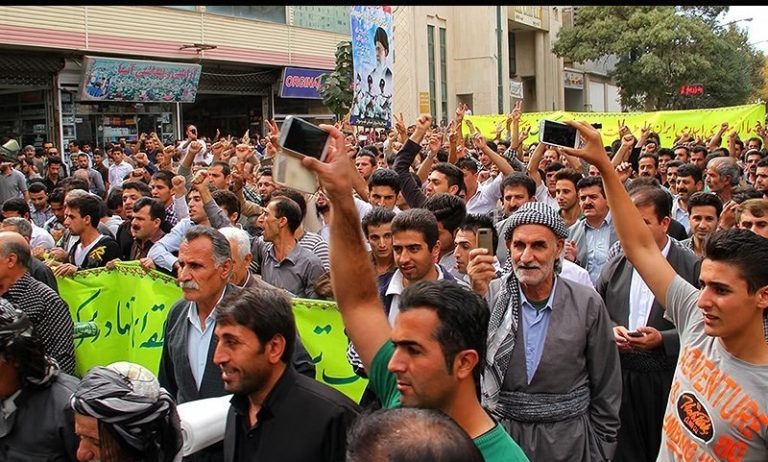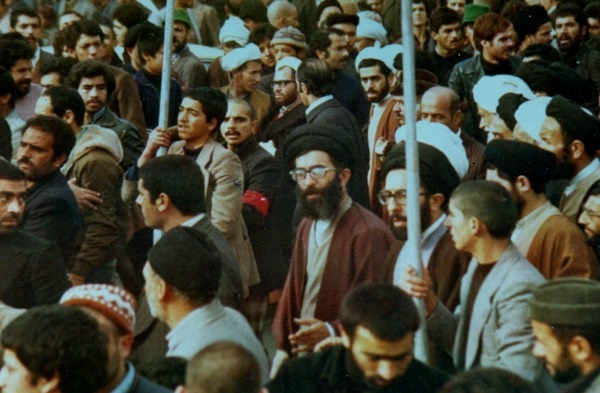
The Mojahedin-e-Khalq, an “Islamo-Marxist” group, likewise had no connection to the working class, but rather to the urban petty bourgeoisie—above all students and intellectuals. All of these parties and organizations—with the exception of the Kurdish organizations—more or less supported the popular referendum of March 1979, in which the future of the country was decided. Yet there was only one option on the ballot: Yes or No to the “Islamic Republic.”
Instead of boycotting this referendum, these left forces directly or indirectly supported the rise of the mullahs. The latter did not hesitate, first to drive the Mojahedin into exile, then to gradually murder all leftists—a process that culminated in the mass executions of 1988, when tens of thousands of leftists were killed.
The counterrevolution was complete, the shorahs were abolished, and a new capitalist regime had placed itself at the head of society under the cloak of “anti-imperialism” and “Islam.” Yet it should have been the workers—who had driven out the imperialists and their puppet—who led the anti-imperialist struggle, but that would have required a socialist mass party with the correct strategy.
The monarchists were driven from their offices and almost completely replaced by the new regime. This regime immediately nationalized key industries such as the oil industry, but not on behalf of the workers, rather in the interests of domestic capital. It established the so-called „bonyads“, religious semi-state foundations that exist for the purpose of “welfare,” but in reality function as powerful conglomerates controlling large sectors of production. They are not democratically controlled and are subordinate to the Supreme Leader.
One of the largest bonyads is the „Bonyad-e Mostazafan“, the „Foundation of the Oppressed,” which was founded immediately after Ruhollah Khomeini came to power. Khomeini’s central promise was to improve the life of the “little man,” to expand the economic, political, and cultural participation of ordinary people.
After initially promising cooperation with the United States and other imperialist powers (see his letters to Jimmy Carter), the new regime under Khomeini sent a clear signal to the United States through the occupation of the embassy. Anti-Americanism, anti-Zionism, and the struggle against Islamophobia (a term popularized by Khomeini) and racism, became central ideological pillars of the regime. These are also goals associated with the left, but the regime used them above all for its own ideological purposes.
Control over oil—the historic point of conflict in Iran that had led to the CIA/MI6 coup against Mohammad Mosaddegh in 1953—was now finally in Iran’s own hands, or more precisely, in the hands of the new Iranian bourgeoisie. A counterrevolution had taken place in which the former petty bourgeoisie and the clergy elevated themselves to power and prevented the working class from taking political power, even though it was through their struggles that the Shah had been overthrown.
That the regime and its “Axis of Resistance” have not offered any principled resistance to imperialism can be seen not only in the maintenance of capitalist exploitation at home, but also in their political strategy abroad. The regime could have opened a second front against Israel—which is committing a genocide against the Palestinians—when its ally, Hezbollah, fought against Israel after the October 7th. The regime also temporarily reduced its financial support for Hamas because they refused to support Bashar al-Assad’s regime during the Syrian civil war. Historically, as part of the „Iran Contra Affair“ the regime received weapons by the US in return for American support of the Contras in Nicaragua who tried to overthrow the Sandinistas.
Another important aspect remains the fact that rather than investing in Cuba and other anti-imperialist countries, the Iranian bourgeoisie invests in properties in the US, Canada and the UK. One may therefore ask how effective an “anti-imperialism” can be when it relies not on mobilizing working people against the capitalist order, but on violence and bribery to enforce political rule—ultimately enriching a minority at the expense of the majority whose labour sustains it.
Iran also remains deeply divided along ethnic lines. It is the regime itself that foments this racism against ethnic minorities in order to maintain a divided and weakened population that cannot resist it.
The present-day economic structure of Iran is highly complex. Reduced to its essentials, the following can be said: the Revolutionary Guards, which exist alongside the military as the armed and ideological arm of the regime, control 50% of oil exports and dominate roughly 40–70% of the economy.
Industrial workers in key sectors (oil, mining, agricultural business) sometimes have to wait months for their wages to be paid, and these wages are in some cases withheld entirely. This affects especially temporary and contract workers, whom the regime deliberately employs in strategic industries such as oil in order to weaken the unity and fighting capacity of the working class.
The working class has no right to form independent trade unions, although semi-legal militant unions exist alongside the state-controlled ones. Over the last nine years, there have repeatedly been major strike waves linking economic and political demands.
In 2017–2018, unionized workers from the sugarcane factory „Haft Tappeh“ and other unions went on strike for months because their wages had not been paid for months—sometimes for half a year. They demanded the nationalization of the company and workers’ control over that state and over production through councils—a clear reference to the council experience of the working class in 1979/80. They linked their economic demands for payment and higher wages, and for better working conditions, with the political demand for the overthrow of the Islamic Republic.
This triggered a broader protest wave joined by other sections of society (students, pensioners, and others). Opposition to the state-imposed compulsory headscarf was also one of the central demands. Symbols of state power such as mosques, banks, and police stations were attacked.
The next strike wave followed in 2019. Workers took to the streets, in some cases armed, against excessively high gasoline prices. Within one week—known as “Bloody Aban”—the regime officially shot dead 1,500 people.
In 2020, thousands of oil workers went on strike again after a colleague died from heat exposure. Workers in the South Pars field initiated the movement, followed by workers in Mashhad and Isfahan.
At the beginning of 2022, workers again went on strike against miserable living conditions. Their anger exploded when the government removed subsidies on food imports, and the protests spread to wider layers of society following the murder of the Kurdish woman Jina Amini for her “improperly” worn headscarf.
For the first time, all sections of society came together for months in the streets, striking and demonstrating, demanding—as in previous strike and protest waves—the end of the Islamic Republic. During the “Jin Jiyan Azadi” movement, the population demanded the abolition of the morality police, an end to the compulsory hijab, an end to executions, and the release of political prisoners.
They also demanded general democratic rights and political participation, as well as an end to economic misery. They also demanded in part the expropriation of government property and its return to public ownership.
As a result of imperialist sanctions policy, and especially after the worsening of conditions following Donald Trump’s unilateral withdrawal from the JCPOA, the situation of the working class had deteriorated considerably. Not only that: the petty bourgeoisie has also been increasingly proletarianized. It is therefore no coincidence that class struggle in Iran has intensified since then.
Yet not everyone has been equally affected by the sanctions policy, since the Revolutionary Guard were able to enrich themselves through the creation of a black market.
Tasks in War
The war is undermining precisely the class struggles of recent years. On the one hand, this takes the form of attacks on production sites and the destruction of workers and other means of production. On the other, the right wing is gaining strength.
During the mass uprising at the beginning of 2026, monarchist voices were far more prominent inside Iran than they had been previously. Their hegemony abroad had certainly been consciously falsified beyond its real weight by foreign broadcasters such as BBC Persia, Manoto TV, and Iran International. An independent evaluation of the slogans in January showed that “only” 17% of the slogans were pro-monarchy.
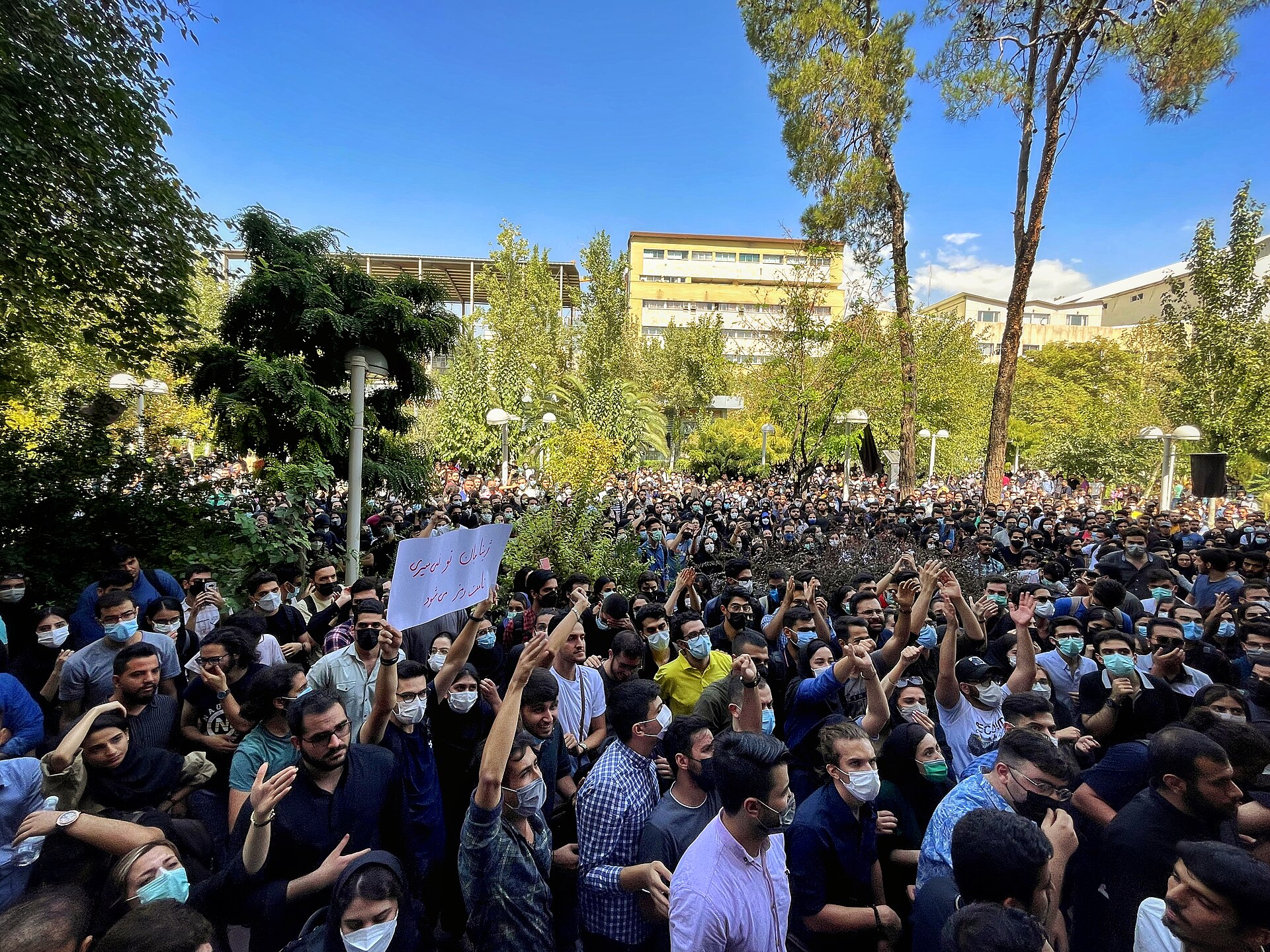
Yet even during the February student protests of this year, which clearly positioned themselves against both the regime and the monarchy, students were threatened and blackmailed by monarchists. In some cases, monarchists reportedly threatened to expose students’ identities to the regime unless they complied with their demands. The deliberate Israeli support for monarchists over recent years has borne fruit.
But as during the 12-day war, many people in Iran are experiencing the cruel reality of regime change from above. At present, left-wing dissidents abroad are missing no opportunity to expose the monarchists and win back political ground. Iranian society, which consists to a great extent of young people, is following very closely how Iranians abroad position themselves.
Alongside this danger of pro-imperialism and hopes placed in a regime change brought about by the United States and Israel, there also exists internally the danger of nationalism and chauvinism. The “martyrdom” of Ali Khamenei is likely to have energized the regime’s own base, especially given the significance that Iran was attacked by its arch-enemy Israel—the great “Shaytan” (the United States) and the small “Shaytan” (Israel), with whom ideological and material war has existed since the founding of the Islamic Republic.
Above all, however, the attacks by the United States and Israel on the country’s infrastructure, on the material basis of existence for millions of people, as well as the internet blackout and selective access to information (regime media on the one hand and in part monarchist media on the other—both forms of nationalism), are likely to intensify this development.
That this is already having fatal consequences for workers can be seen in the fact that wages are once again not being paid, checkpoints are being erected, political prisoners are being executed, and Kurdish dissidents are being attacked (including party headquarters of Kurdish organizations).
All the demands such as the expropriation or overthrow of the regime, the rights of women, the right of self-determination for ethnic minorities, and the rights to freedom of expression and assembly are now being pushed into the background.
The task in the international struggle of the working classes is to oppose this imperialist war on Iran everywhere. In Germany, the United States, France, Great Britain, and other countries that form part of the NATO bloc under US domination, workers must take to the streets against this war in their own interests.