In Germany, the so-called “Autumn of Reforms” has led to cuts in healthcare, education, and social services, alongside broader attacks on working-class conditions. This goes hand in hand with the militarization and increasing authoritarianism of society as a whole.
The attacks by capitalists on the working class in the imperialist centers are currently still focused primarily on increasing relative surplus value. This means that, while the working day remains the same length, surplus value is increased by lowering the costs of reproducing labour power—that is, the money workers need in order to live. This can be done directly through real wage cuts, for example through inflation, or by privatizing the costs of healthcare, education, and so forth and shifting them onto the worker.
But attacks that increase absolute surplus value are also looming, through extending the length of the working day or total lifetime spent working—for example by raising the retirement age.
Racism and nationalism are important ideological instruments for enforcing these capitalist interests, because they weaken the unity and fighting power of the working class. Anti-Muslim racism, which was spread much more sharply both legally and ideologically after September 11 attacks, is an important lever for dividing the working class and isolating the Palestine solidarity movement, which is predominantly shaped by migrants.
Our task here in the imperialist center, but also in Arab countries such as Egypt, Jordan and others that stand under American hegemony, is to build a broad anti-imperialist movement against the war and against these attacks on our class. We must fight for the defeat of the United States and Israel, as well as of our own ruling classes who are their accomplices, through strikes at military bases, ports, airports, arms factories, and so on.
We must oppose social-chauvinist positions such as those we also saw regarding Palestine in reformist parties like Die Linke. We reject not only bombs, but also imperialist sanctions and “diplomatic pressure” on Iran. For socialists, the question of whether Iran is a dictatorship or a democracy is irrelevant when it comes to taking a position toward their own imperialist ruling class (cf. Trotsky’s remarks on Ethiopia, for example in “On Dictators and the Heights of Oslo“). In (semi-)colonial countries, the political form of the ruling class generally takes that of a police state (cf. „The Nationalized Industry and Workers’ Management“ by Trotsky), because these are weaker capitalists who stand lower in the capitalist food chain and must compete with the far more powerful class of capitalists—the imperialists.
This leads to the super-exploitation of the working class, which can only be implemented through restricting workers’ rights to strike, freedom of expression, and so forth. Thus, the question of “democracy” versus “dictatorship” does not stand outside the global political economy.
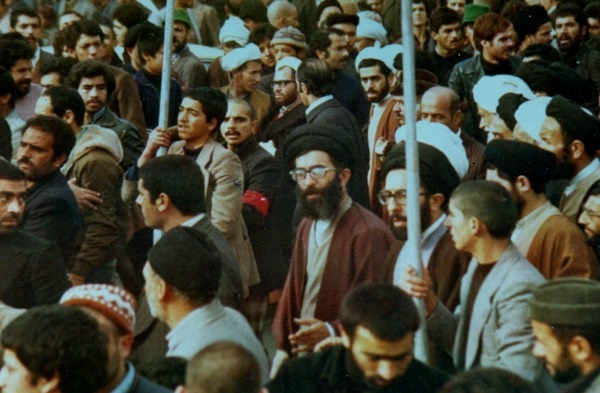
In Iran, the national bourgeoisie achieved a relative autonomy from Western imperialism after 1979, although this has been partly undermined by dependence on Chinese capital. But since the United States remains the strongest imperialist power (though in decline), and is now trying—as in Venezuela, Cuba, Palestine, Lebanon, Syria, and elsewhere—to secure its share of the imperialist spoils, socialists cannot be neutral on the question of an imperialist attack on a semi-colonial state such as Iran.
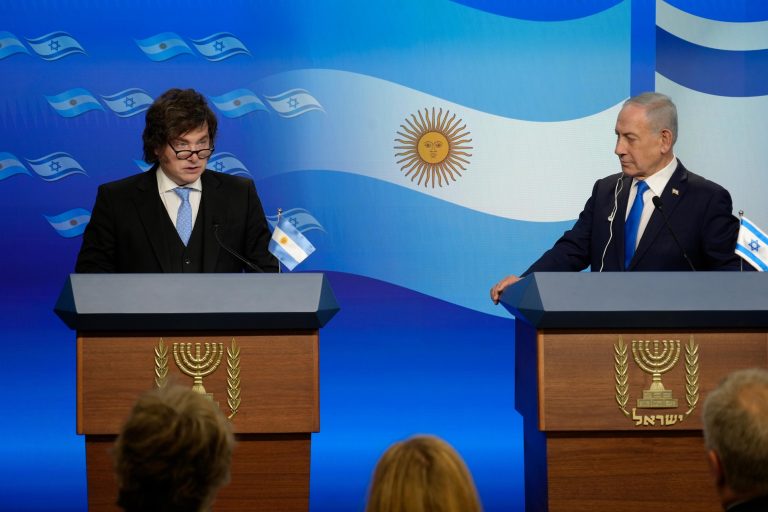
The victory of US imperialism in Iran would bring no benefit to the Iranian working class, nor to the working class worldwide. We are currently seeing how right-wing, pro-imperialist rulers in Chile or Argentina are attacking the right to strike and implementing the extension of the working day. In Jordan where a majority of the population is of Palestinian origin, it is now increasingly forbidden to show the Palestinian flag in public.
Perspectives in Iran
What perspective does the Iranian working class have? The Iranian working class must maintain its independent class position and avoid repeating the mistakes of the Stalinist Popular Front of 1979. In the present situation, this means neither aligning itself politically with the Islamic Republic nor ignoring the need for national defence. At present, that defence is in the hands of the regime.
The strategic goal must be for the working class itself to take national defence into its own hands. Wherever possible, the government must be compelled to provide adequate protection for the population: shelters and bunkers, free medical care, food, and housing. It must also protect those workers whose labour is necessary to prevent society from collapsing entirely.
Wherever possible, workers in factories should organize strikes in order to take control of production. This may weaken resistance to imperialism in the short term. But this is precisely the difference between a campist or Stalinist position and a Marxist one.
While socialists defend national independence from imperialism because national oppression is an obstacle to the international class struggle, we must not give such movements a “red coating,” as Lenin warned in his „Critical Remarks on the National Question“. Therefore the workers’ struggle is not separate from that of the national liberation struggle whose leadership must be taken up by workers whenever possible.
The limited national independence that the Iranian bourgeoisie secured in 1979 has remained under constant pressure from US imperialism through sanctions and military attacks. The answer of the Iranian working class cannot be to defend the bourgeois state. It must seek to take control of production itself and collectivize it, so that it is subordinate neither to imperialism nor to the Islamic Republic. Ultimately, it must use its resources to advance socialism throughout the region and beyond.
Through workers’ councils, factory committees, and strike committees, workers should seek to establish control over their workplaces, particularly in key sectors such as oil and arms production. This applies in wartime as well, wherever conditions allow. Workers should also seek to arm themselves. There have already been isolated instances during the current war in which IRGC or Basij bases were attacked and weapons were acquired by individuals and groups not aligned with the regime.
The crucial question, however, is under whose political leadership this process will develop. At present, that question remains unresolved.
The workers’ movement must fight for the restoration of internet access, which is essential for communication and coordination, as well as for basic democratic rights such as freedom of assembly.
During the war, people in many places have organized themselves to protect production sites, bridges, and other vital infrastructure. Yet most of these gatherings have been clearly dominated by the regime and its supporters, who have used the conditions of war to intensify repression against any opposition.
Unlike in Palestine, where strong workers’ organisation is not possible under occupation, Iran has a strong independent workers’ movement. Even though the fundamental contradiction in Iran as a non-imperialist country remains that with the far more powerful imperialist countries, the self-preserving strategy of the “Axis of Resistance” has failed to provide better living conditions for the masses and a proper defence against imperialism – be it in Iran, in Lebanon or in Gaza.
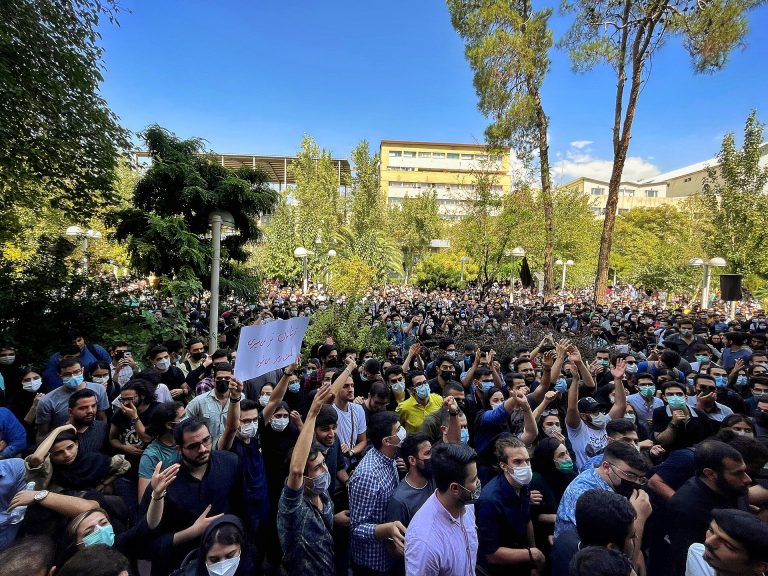
While the regime may have defeated the USA, Iran’s economy was already completely devastated before the war, and now major production facilities are destroyed. The Iranian ruling class has never been as unpopular than now—especially after the bloody massacre in January 2026.
These realities cannot be ignored: without a lifeline from one or another imperialist power (such as China), — support that would inevitably create new dependencies and relations of exploitation — the regime would be in an extremely precarious position. The bourgeoisie is therefore not the best defender of the nation. The working class is. Its task is to fight for the dictatorship of the proletariat by mobilizing working people internationally.
The Kurdish national question
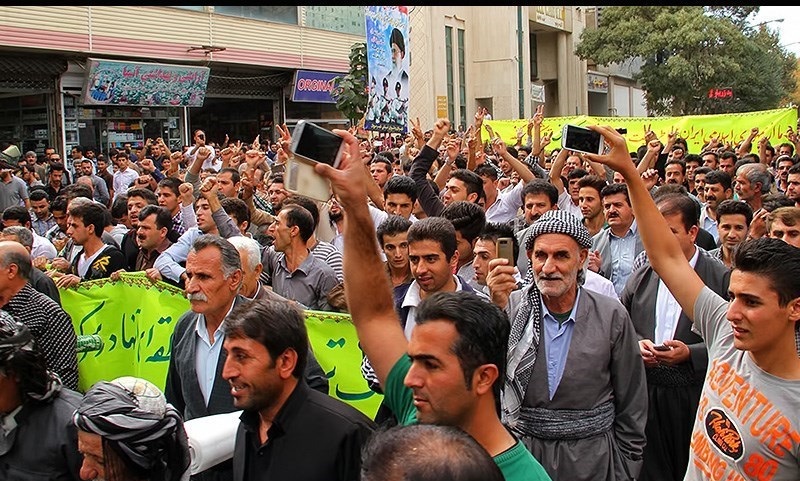
A special role is played by Kurdish groups and organizations. Kurds are an oppressed people not only in Syria, Iraq, and Turkey, but also in Iran. The Islamic Republic, like the regimes that preceded it, has brutally repressed and persecuted the Kurdish population. During the current war, Kurdish areas and party headquarters have been bombed by both the Iranian state and the US and Israel. Kurds also make up a disproportionate share of Iran’s political prisoners.
It would therefore be wrong to portray Kurdish organizations as merely exploiting the weakness of the regime. The Kurdish people’s right to national self-determination applies just as much during the war as after it. Kurdish forces in Iran have repeatedly fought for self-rule, under both the Shah and earlier regimes. They were also among the only political forces to call for a boycott of the 1979 referendum establishing the Islamic Republic.
Because of their long history of oppression and resistance, Kurdish forces are, unlike many other political groups in Iran, relatively well organized and armed. For example, they were able to call a general strike in Rojhelat on January 8th, 2026.
If Kurdish forces are now armed by an imperialist power such as the United States or Israel, the question for Marxists is not simply whether they should accept those weapons, but under what political conditions and with what consequences for their political independence.
If the Iranian working class, or workers elsewhere, were in a position to supply arms to the Kurds, it should do so—as has happened on a limited scale in Rojava. The political question that comes with arms deliveries from imperialist powers is that of dependency and subordination of one’s own strategy to that of imperialism.
In today’s world, imperialism has already divided the globe among itself; therefore, every struggle for national self-determination inevitably comes into conflict with imperialism. This could also be seen in Rojava, which was forced to host US military bases and acted as a temporary ally of US imperialism in its struggle over Syria.
In the revolutionary situation that developed in Syria, Kurdish forces refrained from expanding the revolution and instead reached an agreement with Assad, receiving territorial control in exchange for peace. After Assad’s fall and the rise of HTS, they had, from the perspective of US-imperialism, served their purpose and were subsequently abandoned.
The Kurdish right to national self-determination is therefore necessarily connected to the struggle against imperialism and the struggle for socialism. But as long as there is no party comparable to the Bolsheviks—one that integrates the national question into its programme guaranteeing the right to secession—popular fronts such as the newly formed Kurdish coalition of PJAK, Komala, PDKI, Khabat, and others will tend towards reformist illusions in the establishment of a separate bourgeois-capitalist state.
The workers’ movement in the rest of Iran must therefore show unconditional solidarity with the Kurds. The regime weakens the common struggle against imperialism by oppressing its own population, while imperialism exploits precisely these divisions through a policy of “divide and conquer.”
Workers must resist both forms of division in a multi-ethnic Iran by demanding an immediate end to the bombing and repression of Kurdistan and other oppressed peoples. The task of the Iranian working class is therefore to fight for Kurdish rights, including the right to secession and national self-emancipation.
Only through such a struggle can the section of the working class that benefits from Persian chauvinism be united with the section that suffers under it. This requires a socialist party capable of organizing the entire working class around a programme that recognizes the right of oppressed peoples to national self-determination while identifying imperialism as the main enemy of workers of every ethnicity.
National defence and the political question
Workers must seek, with all their strength, to take national defence into their own hands. A strategy for splitting the armed forces and arming the people would be necessary for this. But such a strategy is currently absent because the subjective factor is missing: there is no political vision or organized force capable of offering Iran an alternative to both the Islamic Republic and the pro-imperialist forces seeking to replace it.
This is in no small part the responsibility of the regime itself. As a counter-revolutionary force, it has systematically destroyed the possibility of an independent, genuinely anti-imperialist left-wing alternative.
The socialist position outside Iran is therefore:
USA and Israel out of West Asia!
Down with the imperialist attack on Iran and Lebanon!
Stop the genocide in Palestine!
For the right of the oppressed to armed resistance!
No political support for the Islamic Republic!
The socialist position inside Iran is therefore:
No to imperialist war!
USA and Israel out of West Asia!
Arm the people now!
Neither Shah nor Mullah!
Immediate ceasefire now!
Lift the internet shutdown!
Free medical care, shelter, food, and housing for all!
No to attacks on Kurdistan! Free Kurdistan!
For the right of all oppressed peoples to self-determination!
For a socialist federation in West Asia!