In 2001, during the protests against the G8 in Genoa, Italy, the police brutally repressed thousands of demonstrators and activists. Protests and clashes had not been unusual at previous summits, but never had they been as large or as violent as in Genoa. The anti-globalisation movement brought 300,000 people together and many became involved in fierce confrontations with the police. The Carabinieri used firearms against demonstrators and shot Carlo Giuliani dead. The courts acquitted the police officer who fired the gun ruling that he had fired into the air and that the bullet had struck Giuliani after ricocheting.
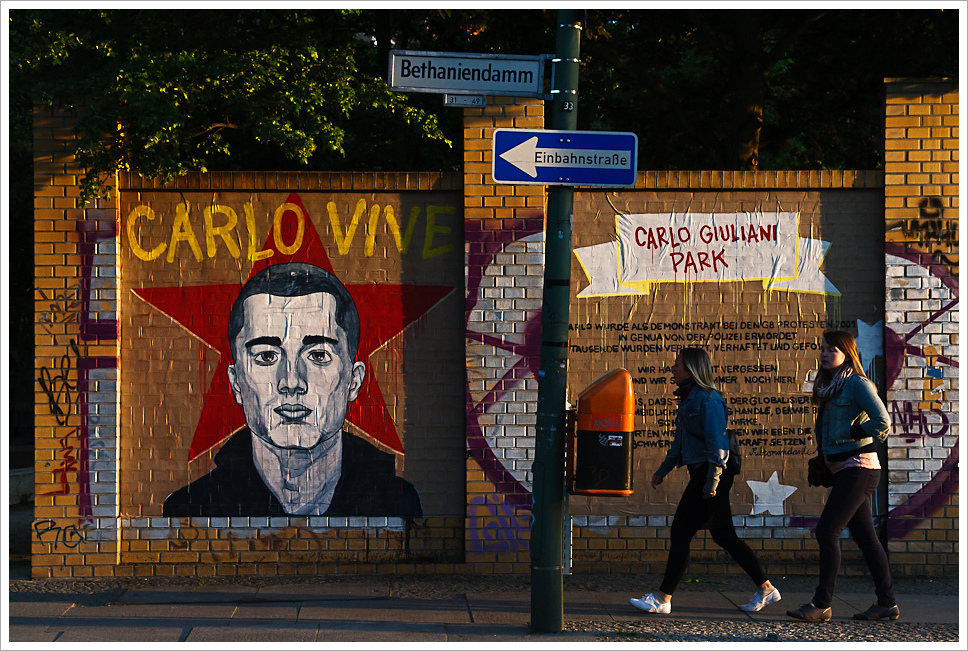
Since Genoa, summits have been held in more remote and smaller locations and Carlo Giuliani became a symbol for anti-globalisation activists.
This year marks 25th year since his death.
In the early years, Haidi, newly retired and no longer responsible for looking after children, had time to meet many people, take part in talks and debates, write articles, travel and even enter the Senate with the Rifondazione Comunista party. She has spent all these years searching for a direct and just response that has never come.
His sister, Elena, moved to another city for work and later became the mother of a little girl. Even so, she never stopped supporting her mother. Whenever she could, she took part in the young people’s committee, particularly in managing the carlogiuliani.it website.
Five years ago, Haidi had to put all her activities on hold, leaving Elena with a difficult task: keeping up with all her commitments, looking after the committee and caring for her parents, who were dealing with various health problems.
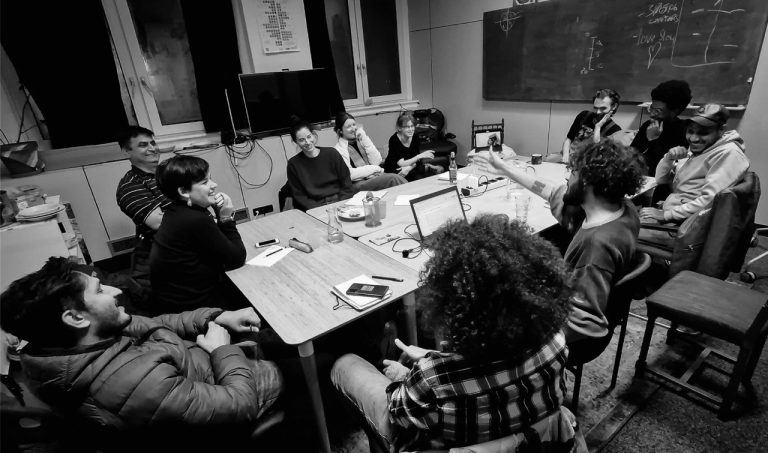
Meanwhile, the committee has grown. Today it is highly diverse in terms of age, personality, abilities and geographical backgrounds. That diversity is precisely its greatest strength.
We spoke to Giuliani’s mother, Haidi, and his sister, Elena, about the alter-globalisation movement, Genoa and the future.
How was the anniversary commemoration?
We did not want it to be merely an exercise in remembrance; it was intended as an act of denunciation and an invitation to reflect. It lasted for more than a month and turned Genoa into an open event: from small neighbourhood committees to the Palazzo Ducale, exhibitions, performances, book launches and gatherings brought together thousands of people from all over Italy and other European countries.
We concluded the events on 21 July with a silent torchlight march that reached the Pertini-Diaz School. Among the participants were not only journalists and witnesses, but also Mark Covell, one of the most seriously injured victims (during the brutal police crackdown on the Diaz School that) became known as the “Mexican butcher’s shop”.
The thematic forums were also particularly significant, as were the gathering organised by Genova Antifascista, the No Kings National Assembly and the event held in Piazza Alimonda with young people who had received scholarships. There, with deep emotion, we received a large shroud brought by an association from Friuli, bearing the names of 18,500 children killed by Israel. It was our denunciation of the genocide of the Palestinian people.
One hundred thousand people were expected and 300,000 turned up in Genoa in 2001. What did that movement represent? Did it seem unstoppable?
The 300,000 people who responded to the Genoa Social Forum’s call created a gathering unprecedented in the alter-globalisation movement. For years, the movement had been challenging the neoliberal model and warning about growing inequality, the financialisation of the economy and the crisis of representative democracy.
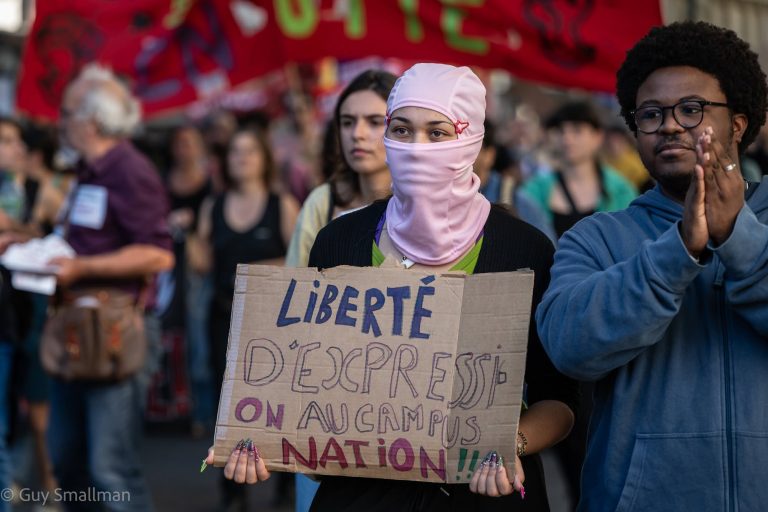
Many described those days as a “turning point”. It is certainly a subject that deserves deeper investigation, particularly for those working for the environment and democratic participation. It is no coincidence that so many young people who were children or not yet born in 2001 took part this year.
Where does Genoa fit into the history of the alter-globalisation movement?
Genoa was fully integrated into what was known as the “anti-globalisation movement”, sharing its demands, slogans and aims for transformation.
Following the mobilisations that blocked the WTO (World Trade Organization) summit in Seattle in 1999, the first World Social Forum was held in Porto Alegre. The forum helped drive the movement’s growth and we became aware of the urgent need to challenge a model of development that was leading us towards disaster and to join forces.
How did the Genoa Social Forum come about?
It emerged as a coordinating body for the thousand organisations and associations that were going to gather in Genoa around the G8.
A few months before Genoa, in March 2001, Naples hosted the OECD (Organisation for Economic Co-operation and Development) Global Forum, where the protests were also harshly repressed: thousands of people endured police charges for hours and dozens were arrested.
Genoa came a few months later as part of this sequence of events, but in a climate that had already been fueled by toxic media propaganda designed to generate maximum tension. Our young researcher Lisa Riccetti has written about this in the book Il linguaggio della tensione. La manipolazione mediatica del G8 di Genova. (The language of tension. Media manipulation of the Genoa G8.)
The killing went unpunished, there were indiscriminate charges against demonstrators, beatings in the streets, the massacre at the Diaz School and torture at Bolzaneto. What mark did those events leave?
[Security forces systematically subjected hundreds of demonstrators detained at the temporary detention centre in Bolzaneto to degrading treatment and abuses.]
The “events in Genoa”, as they are known in Italy, are still an open wound: a wound that is difficult to heal, not only for the city of Genoa but for everyone who considers fundamental rights to be essential.
They were dark days for democracy. A page of fascist brutality that Italian society would rather forget. Thanks to the work of the Comitato Piazza Carlo Giuliani, the collective memory is revived every year, recalling the true gravity of what happened: ‘a violation of human rights on a scale never before seen in contemporary Europe’, in the words of Amnesty International.
Judge Elena Doloiso, the investigating judge, closed the case against Mario Placanica, the Carabinieri officer who shot Carlo. How did that happen?
It was in 2003, when the trials concerning the Diaz School and Bolzaneto had yet to begin.
We submitted our own expert reports and legal arguments and tried to challenge the decision by every means possible, even taking the case to the European Court of Human Rights, which partially ruled in our favour. But the decision to close the case imposed an insurmountable burden. Quite simply, nobody wanted that trial to take place. Such a ruling is unacceptable.
In any case, we believe that justice is not something that can be achieved only in the courts. “Justice is people knowing,” the widow of the anarchist Giuseppe Pinelli once said. And that is precisely what we have tried to do over these 25 years: to provide rigorous information through meetings, debates, talks and books, such as the most recent one, Carlo A. Bachschmidt’s book Alimonda, for example.
What have we learnt from Genoa about violence and impunity?
The impunity guaranteed to the security forces remains in place and continues to produce new victims. While we were gathered in Piazza Alimonda to commemorate the events, the media were broadcasting images of the arrest and death by asphyxiation of Abderrahim Fakir, a 42-year-old man of Moroccan origin. Just as happened to George Floyd in June 2020, and as has happened to so many others before him, here in Italy too.
Was Genoa the major milestone that marked the end of the anti-globalisation cycle, or was it a turning point?
Genoa brought a turning point and a rupture, but it was not the end of the “movement of movements”. In the years that followed, the Social Forums continued to make their way forward (the one held in Florence in 2002 brought together one million people) as did mobilisations against the war in Iraq, while the movement re-emerged in new forms: Occupy Wall Street, the Arab Spring, the Indignados in Spain and, more recently, mobilisations in solidarity with the Palestinian people.
It also remains alive in local struggles. For example, in the defence of Albania’s Narta Lagoon and its ecosystem. There, for more than a month, a permanent camp has been maintained in defence of the flamingos.
Did the anti-war movement take up the baton, then?
Less than two months after Genoa, the attack on the Twin Towers took place. In its aftermath, tension and protests, as well as the possibilities for mobilisation, became centred around the anti-war movement.
For the media and a large part of public opinion, the confrontation between the West and the Islamic world became the main focus of the debate, pushing the conflict between neoliberal capitalism and movements for social justice into the background.
That process reached its peak in February 2003, with the largest global mobilisation ever organised: tens of millions of people took to the streets. Three million in Rome. The New York Times described the movement as the “world’s second superpower”, after the United States.
If only that had been the case. If only we had been able to stop the succession of wars that began after 11 September and have continued to this day…
War has now knocked on our door too and, in this context, the anti-war movement has taken on increasing importance. The No Kings Assembly held in Genoa this year is evidence of this: more than ever, it has become a key space for coming together and organising collective action.
It is still necessary to strengthen alternatives and to show that another world is not only possible but essential. What is the role of internationalism in the 21st century?
This was precisely the terms in which the No Kings Assembly addressed the issue.
In the months leading up to July, as the anniversary approached, numerous reflections appeared on various websites and in publications — I will just mention Osservatorio Repressione, Volere la Luna, Jacobin and Il Manifesto — and they revealed the prophetic nature of the movement. What we presented 25 years ago merely as a possibility has now become an unavoidable necessity. We are facing a catastrophe that is evident on every front.
That is why it is essential to recover the strength that characterised activism 25 years ago: going beyond simply expressing dissent and opposition and responding resolutely and through collective intelligence to the challenges we face from an internationalist perspective.
Twenty-five years later, what is the legacy of the proposals that emerged from the alternative Social Forums?
The message is very clear: the issues that drove 300,000 people onto the streets against the G8 in 2001 are not matters of the past; they have taken new forms and today affect civil society and institutions with even greater urgency. In short: the movement was right about everything.
What seemed utopian 25 years ago has re-emerged as a force for collective mobilisation: from defending public water to mobilisations in support of the Palestinian people. The idea of the Common Good and criticism of neoliberalism, the financialisation of the economy and the concentration of wealth remain entirely relevant. Likewise, an unequivocal “no” to war remains highly relevant, especially among younger generations, who are making their position very clearly and firmly felt.
“Without memory there is no future.” Why is it important to remember?
These are the words of Primo Levi, whom we have quoted and recalled countless times over the years. Levi was thinking of the Shoah, something all humanity must remember so that it does not happen again. Sadly, today we are witnessing the genocide of the Palestinian people, powerless to stop it.
We are convinced that preserving memory is a form of struggle: not a sugarcoated form of memory limited to mere remembrance, but a memory that denounces, provides rigorous information and invites critical reflection on what happened.
That is what we have tried to do through the Committee’s website and study grants. Among the winning works is Giulia Carati’s thesis, Sconvolgenti analogie (Disturbing analogies), which compares the cases of Francesco Lorusso in Bologna in 1977 and Carlo Giuliani, examining the judicial process, cover-ups and the absence of justice.
Has the truth about the events in Genoa come to light?
Not for a large part of public opinion. The narratives promoted by pro-government media — and not only by them — still shape perceptions.
But yes, for committed young men and women, for those who want to know and understand. And, above all, it is for them that we will continue working, to the best of our ability. Because they are our future.