Rioting is the voice of the unheard, and is completely inevitable once a spark of revolt arrives after months and years of austerity, extreme police violence and racism. Of course that doesn’t mean the job of anticapitalists is to make plans about what buildings to burn next week. We don’t want our young people to end up in prison for decades. The more organized and effective collective action becomes, the less chaos there will be. Union leaders need to build mass strikes quickly.
“Now that the focus is on all this violence, can you really recommend that school kids continue going to demonstrations?” asked a slimy journalist on France Info, the national 24 hour News Radio, of a young activist, the morning after Saturday’s day of action. Meanwhile, Prime Minister Sébastien Lecornu, whose public relations team had been up all night racking their brains, did little more than blame the unrest across France on the radical-left party France Insoumise (France Unbowed).
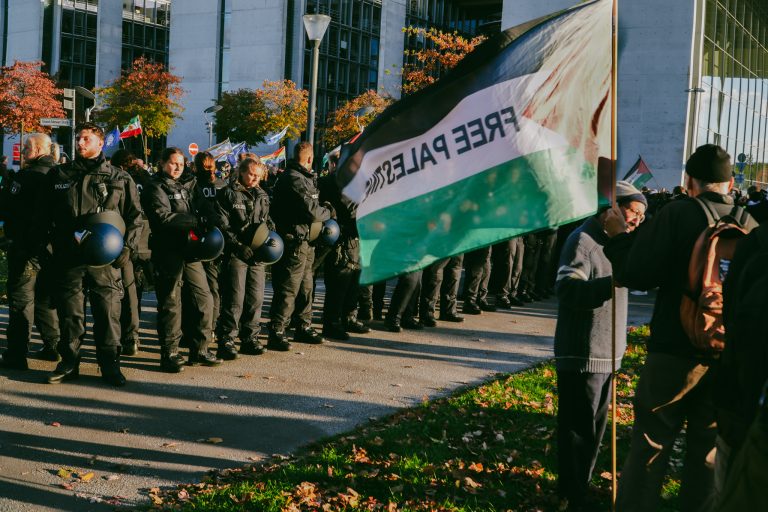
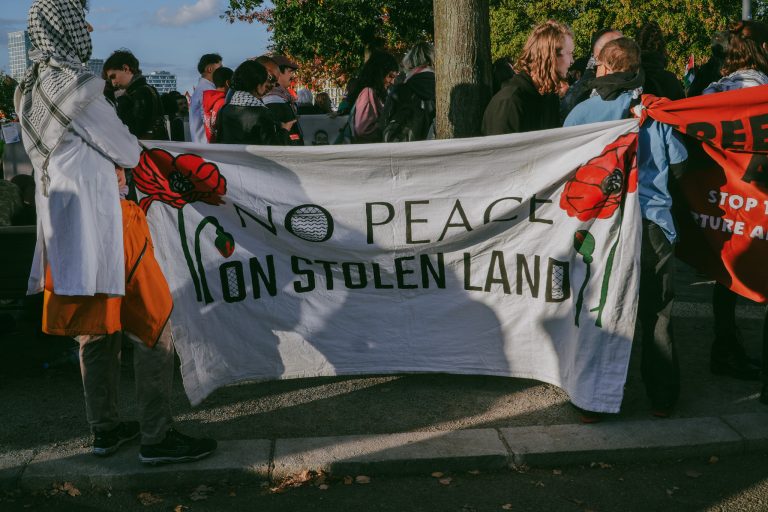
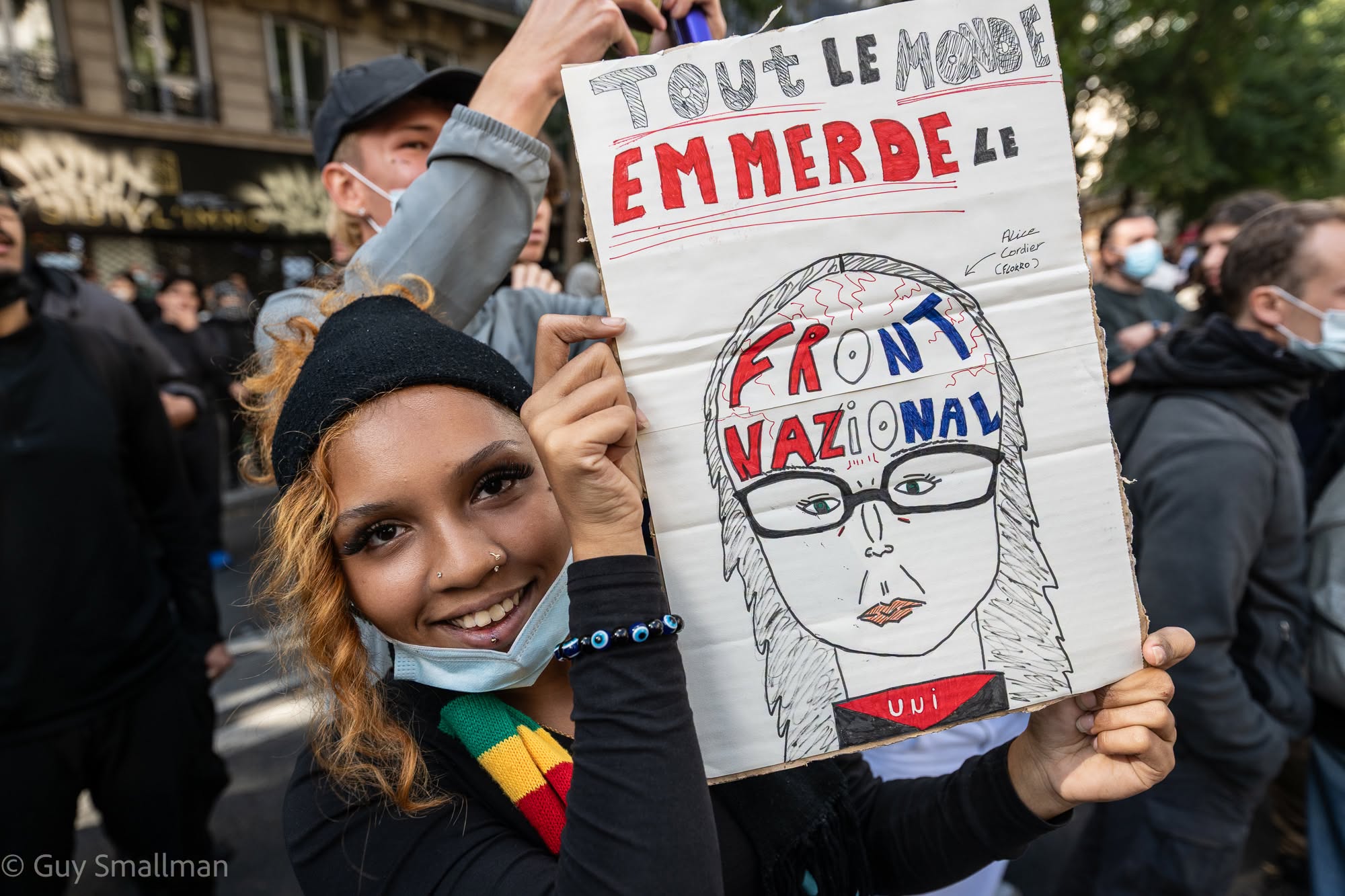
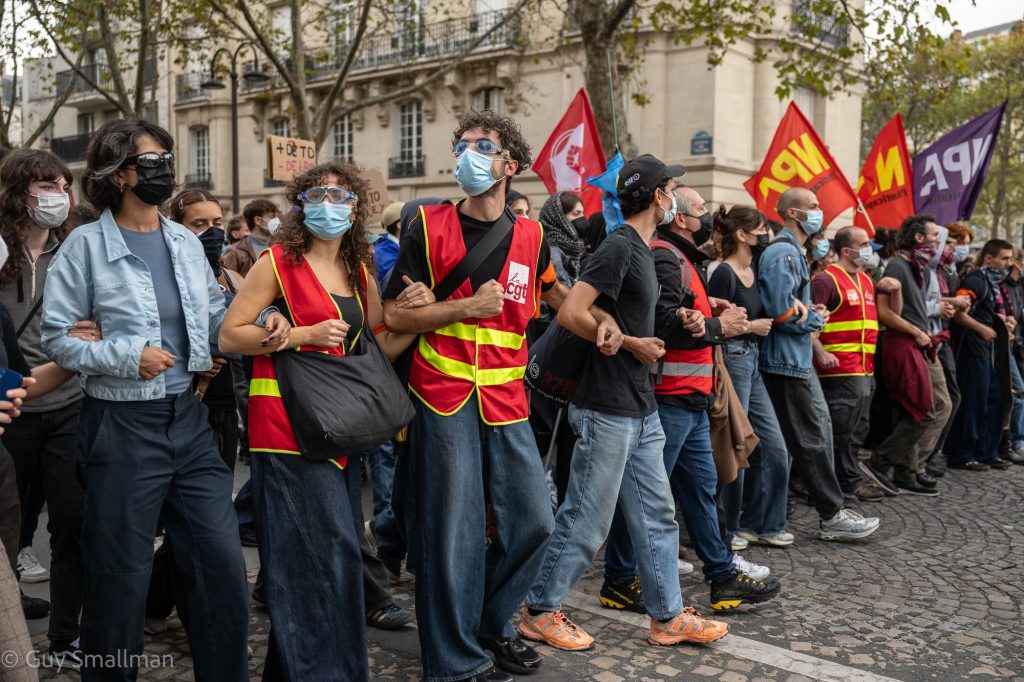
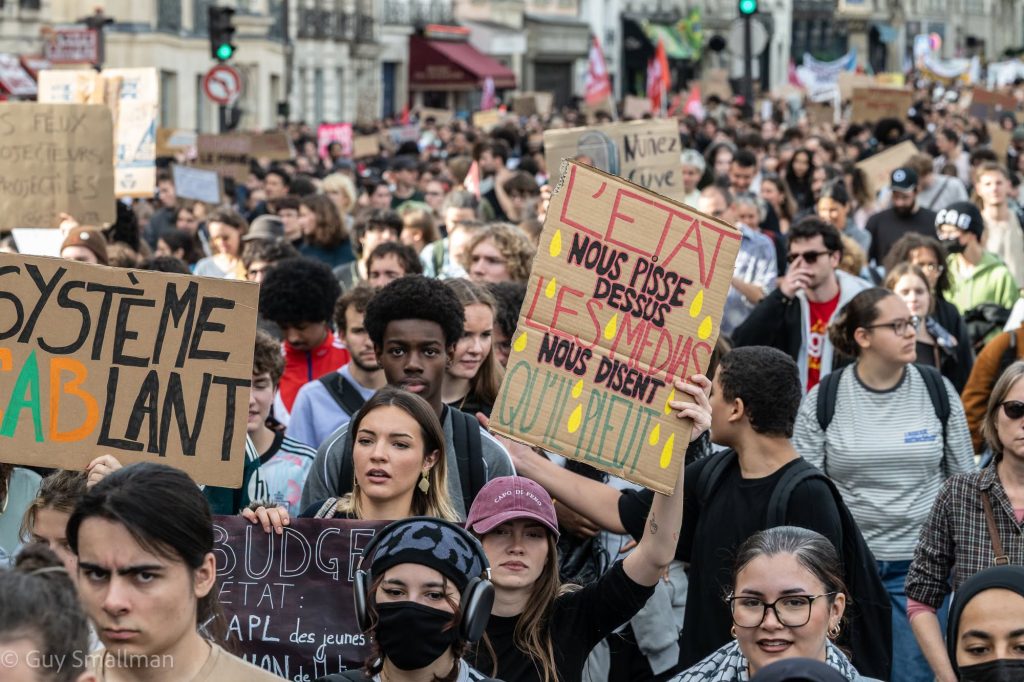
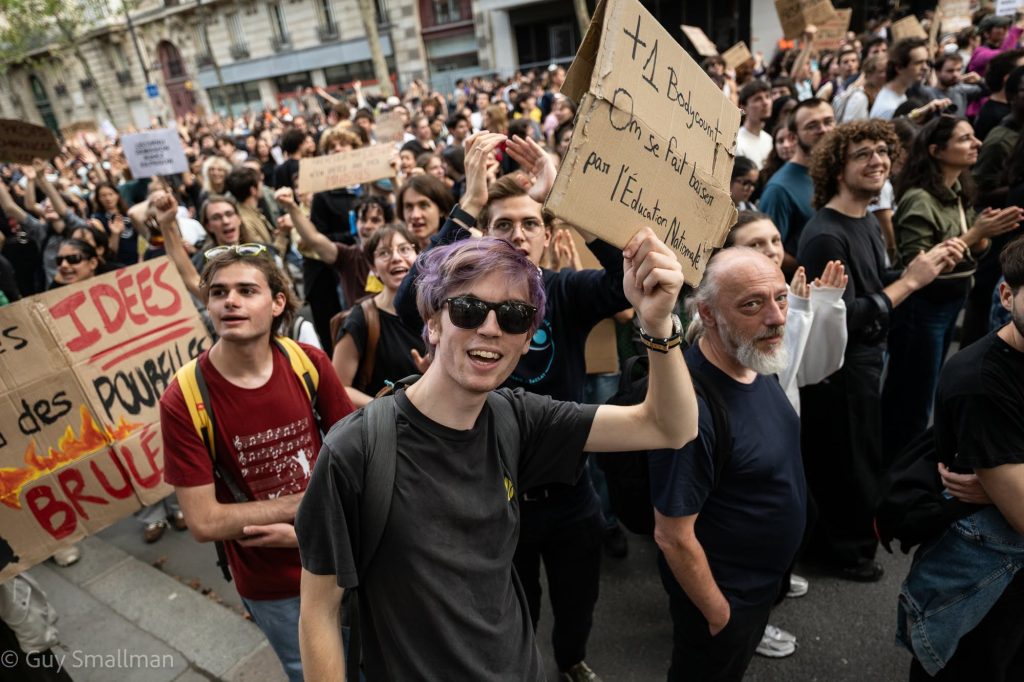
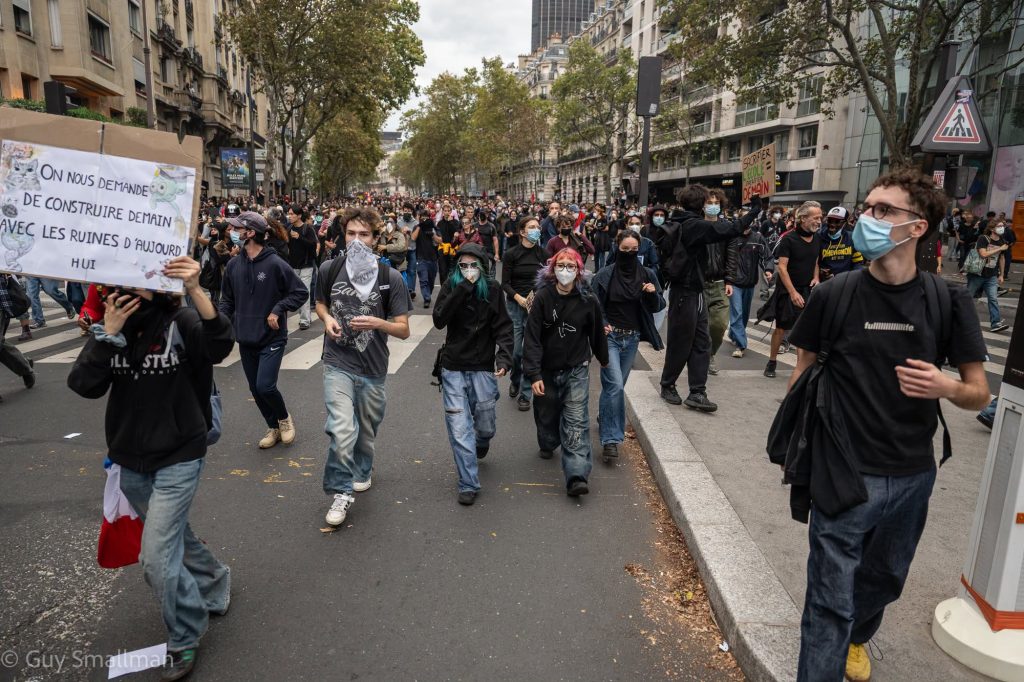
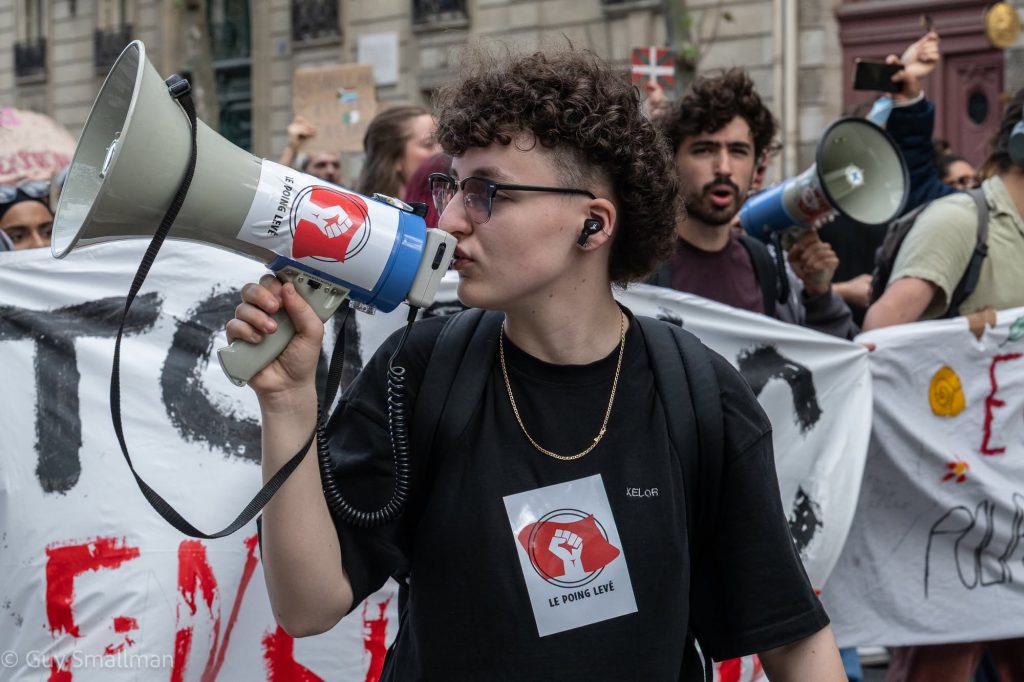
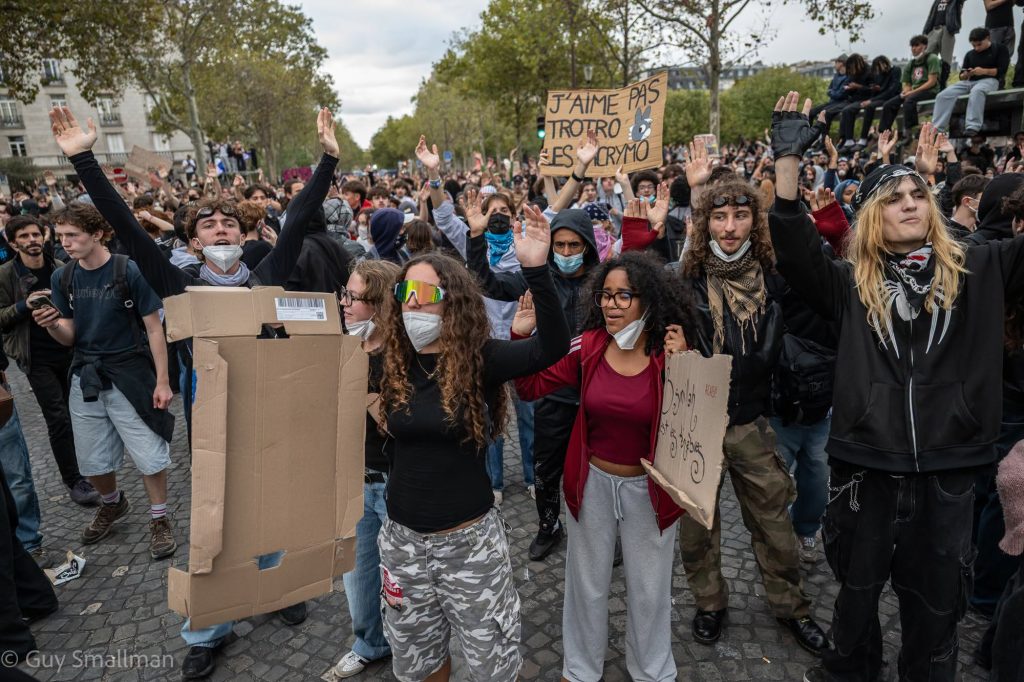
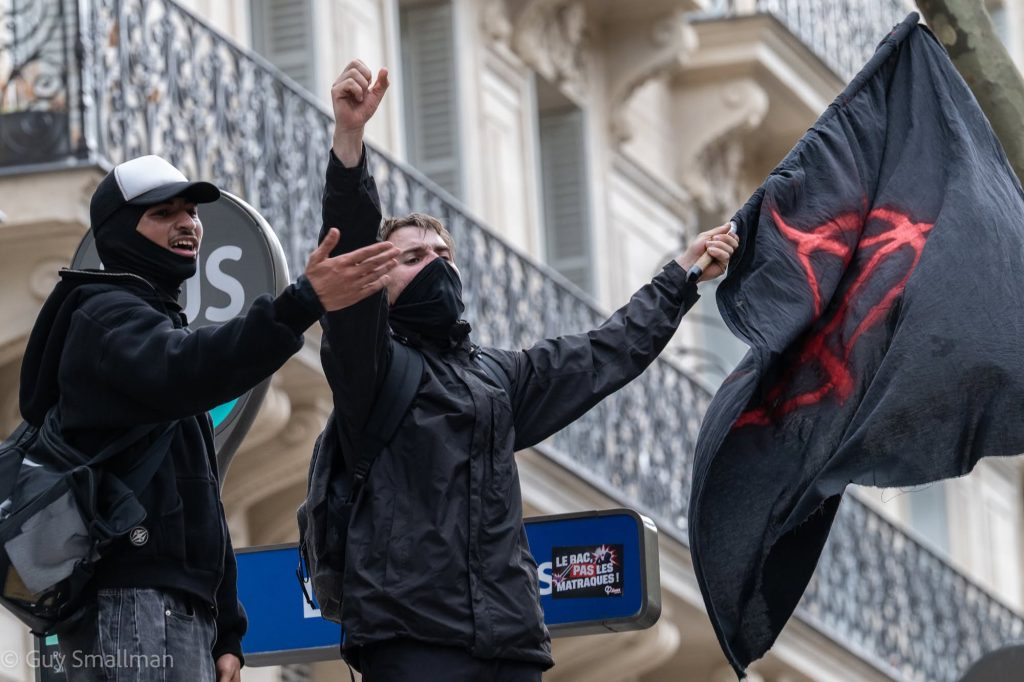
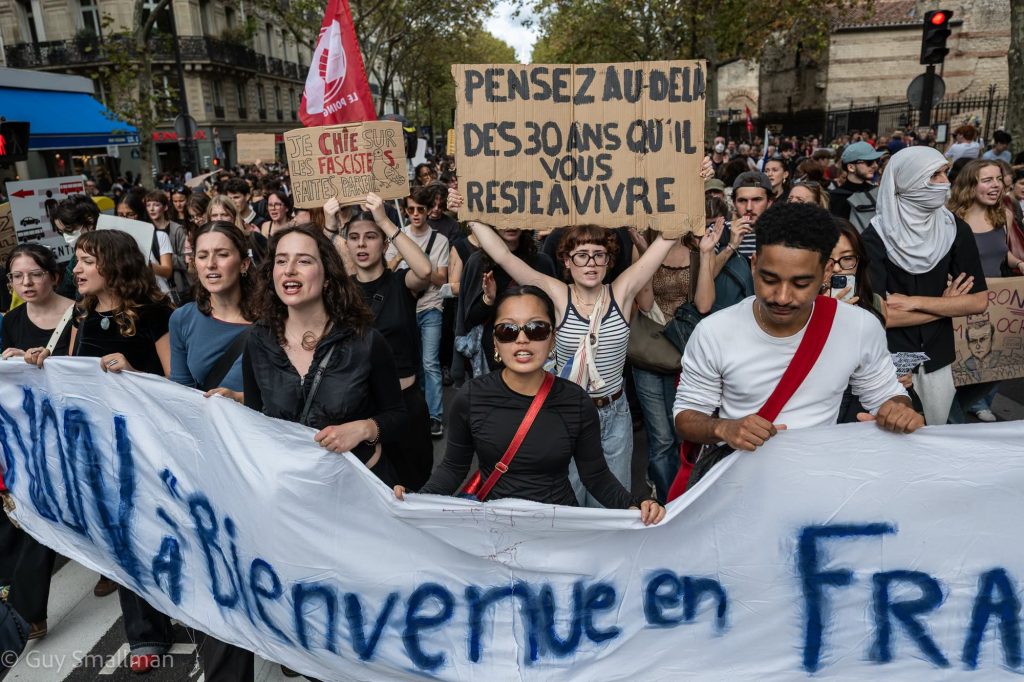
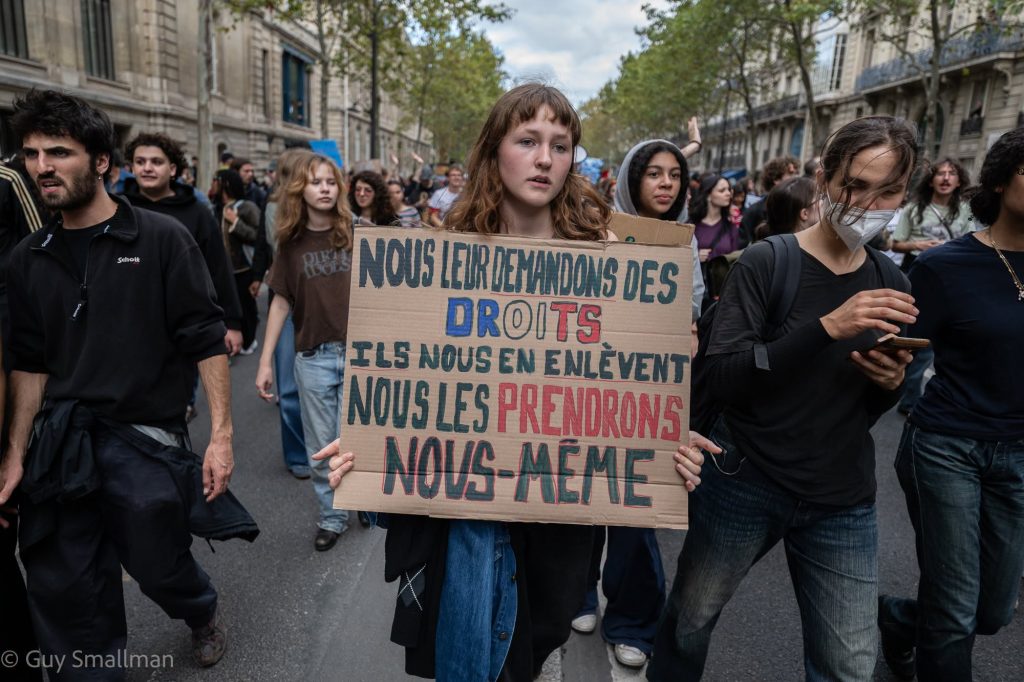
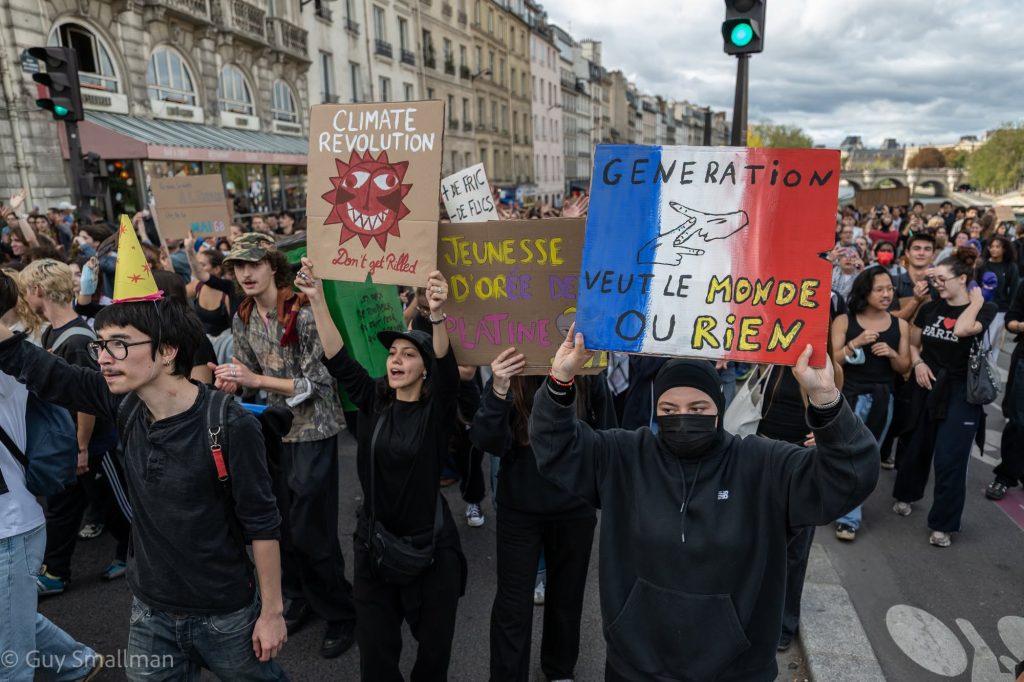
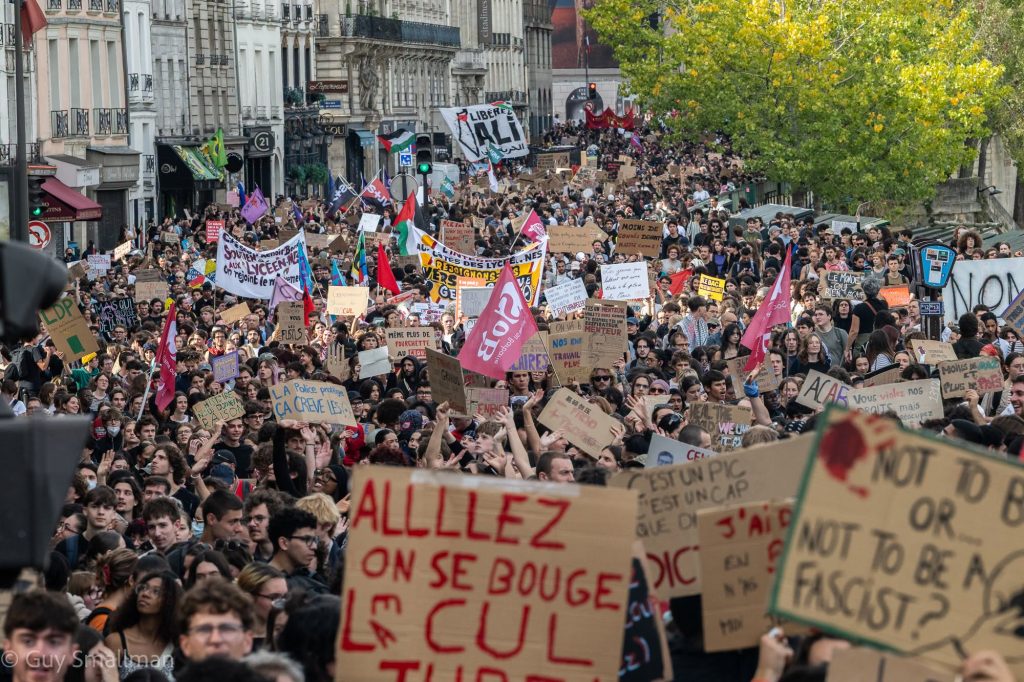
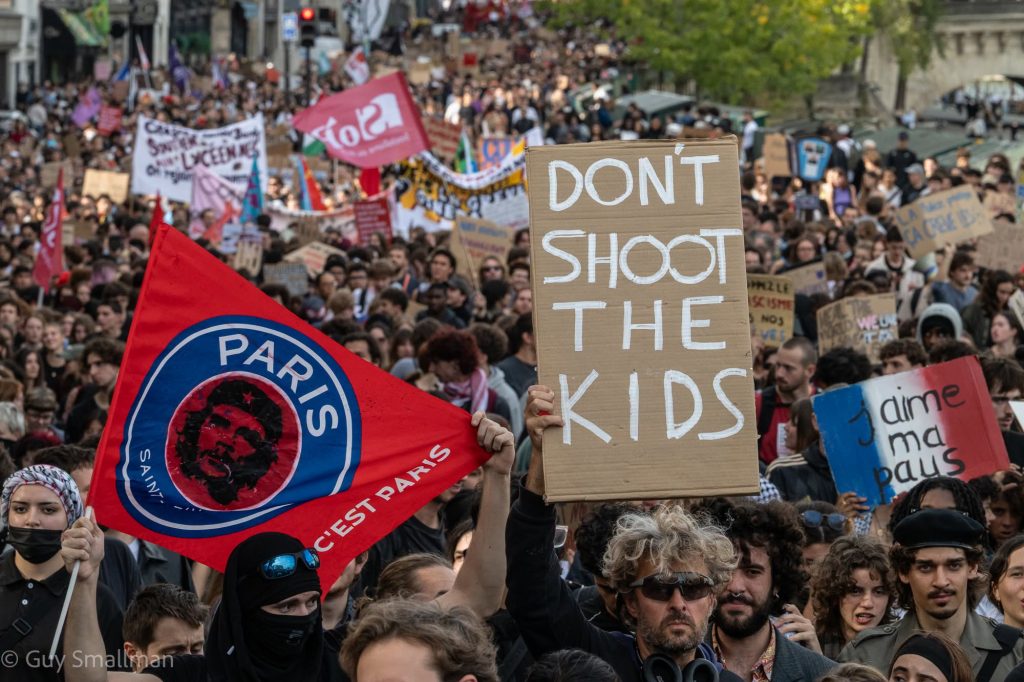
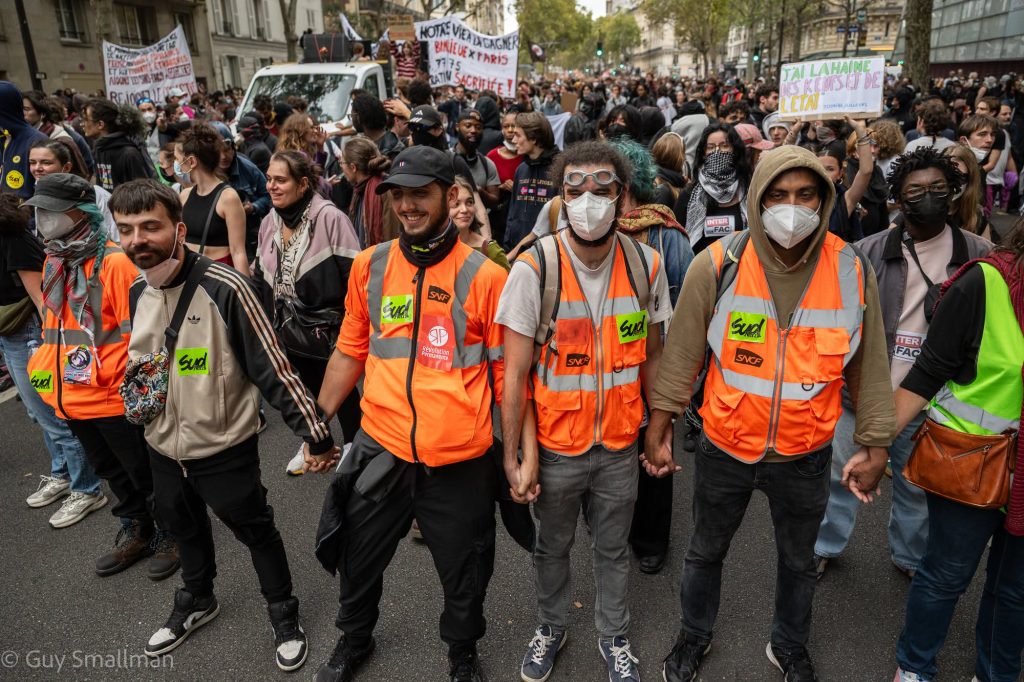
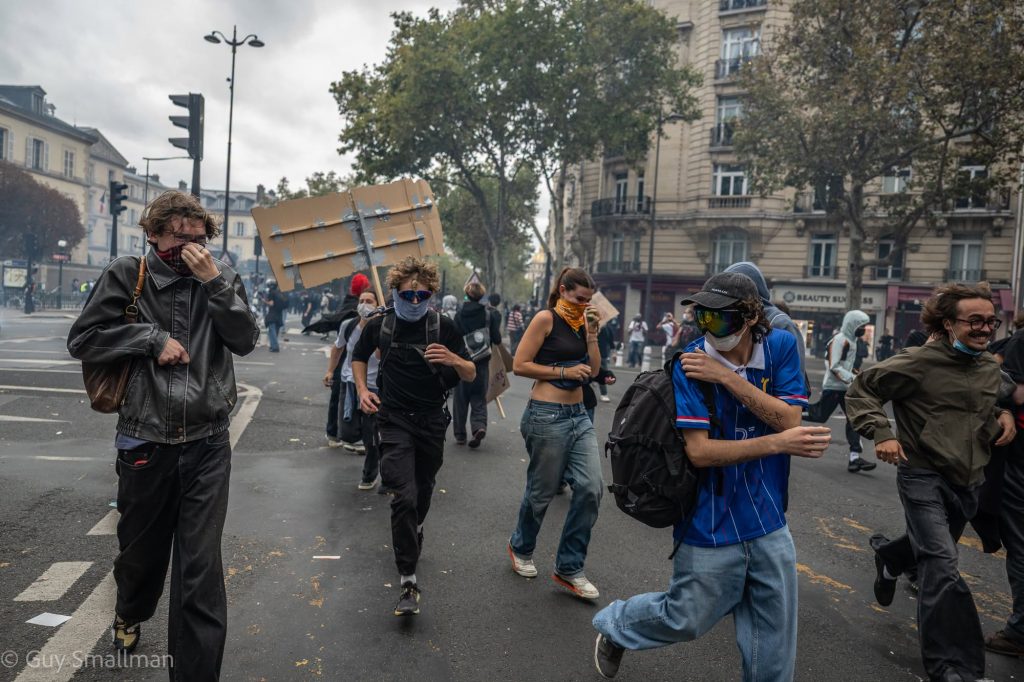
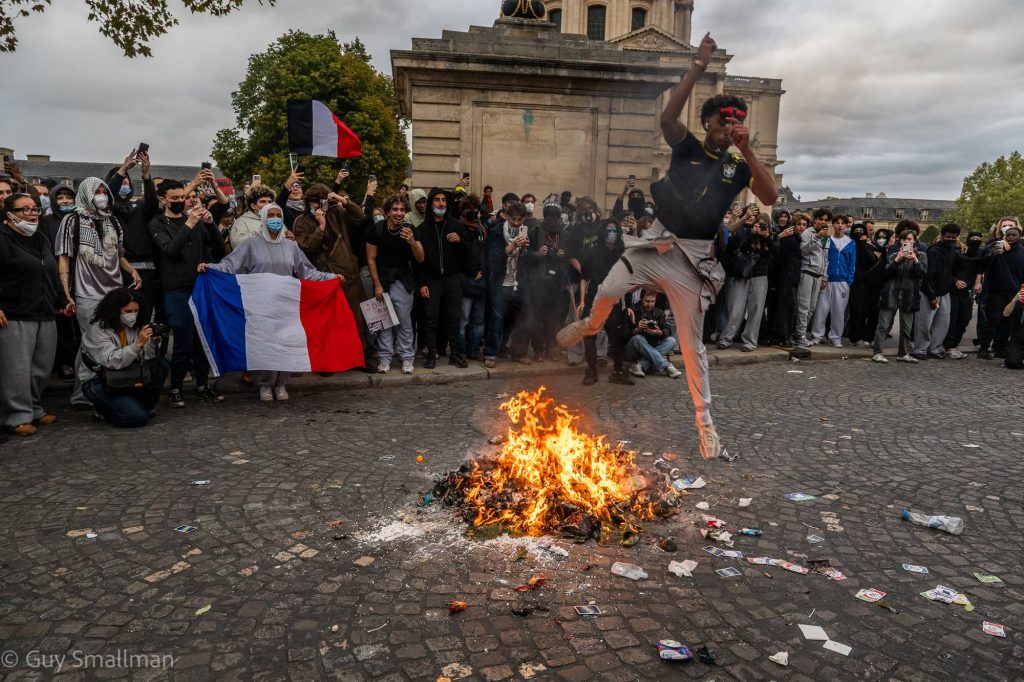
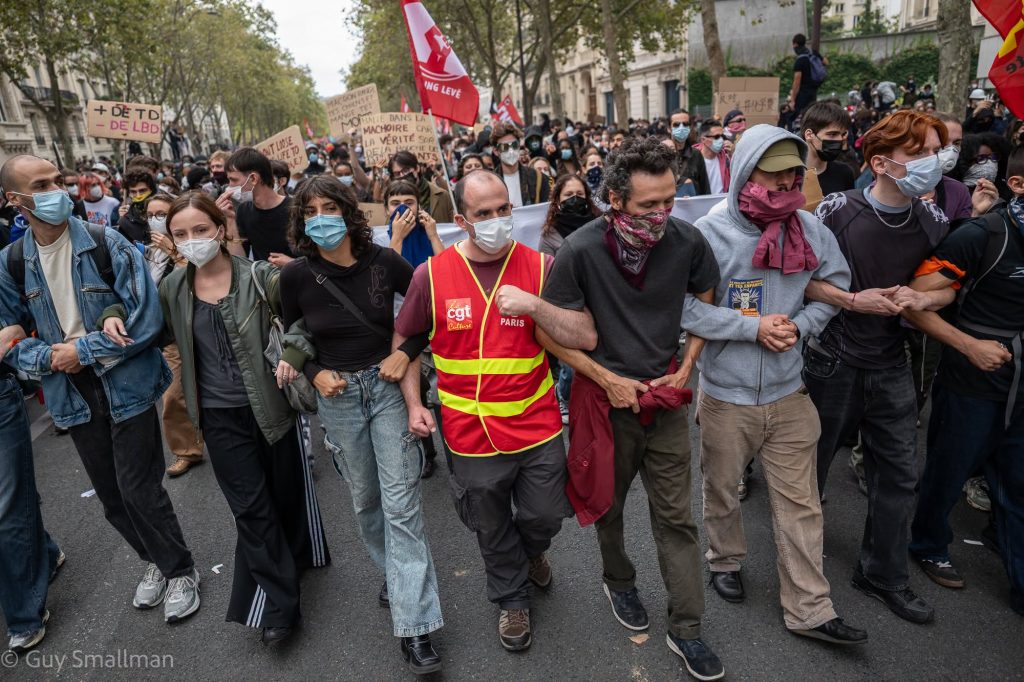
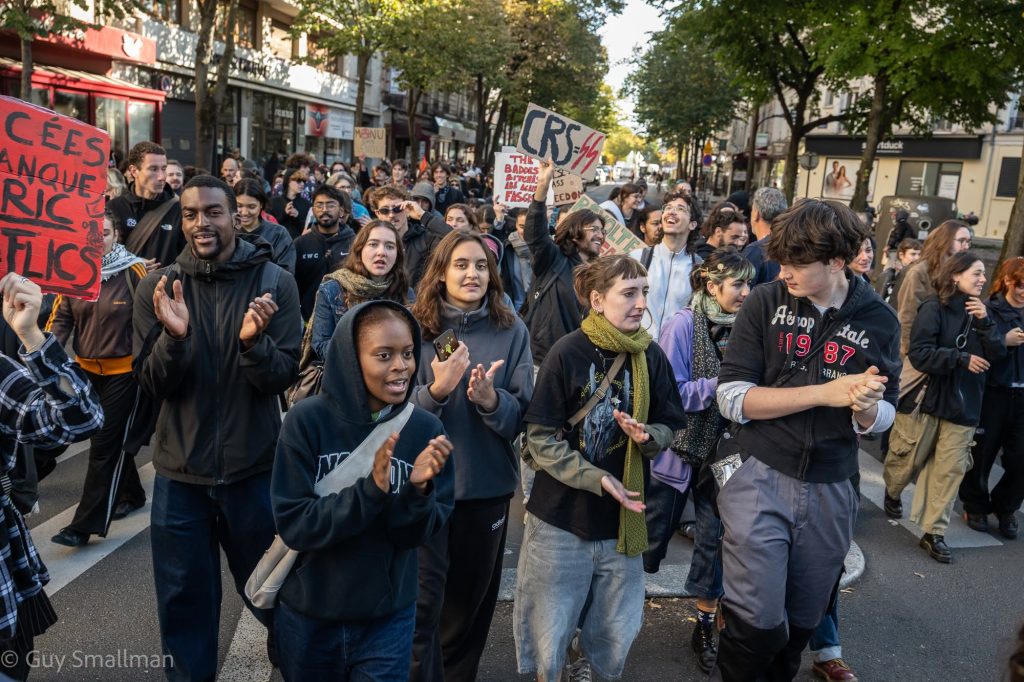
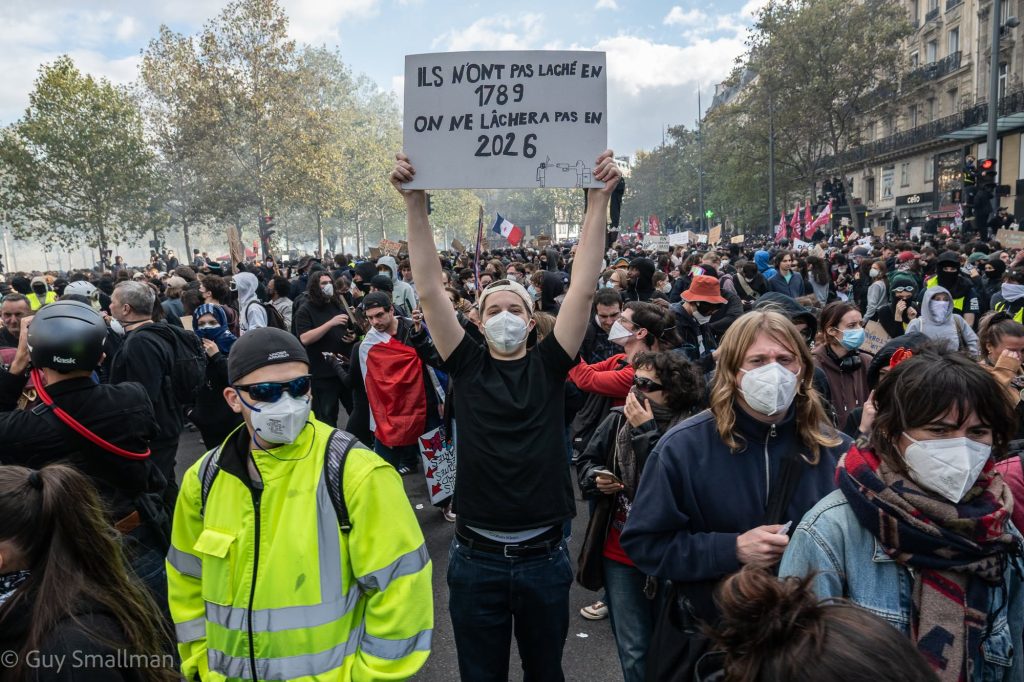
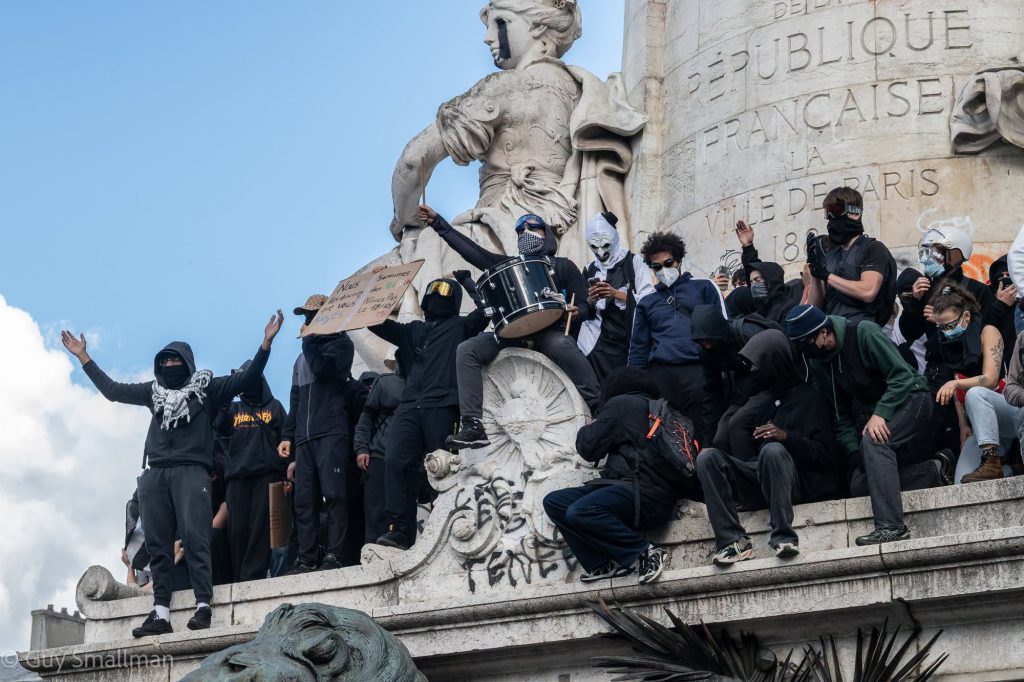
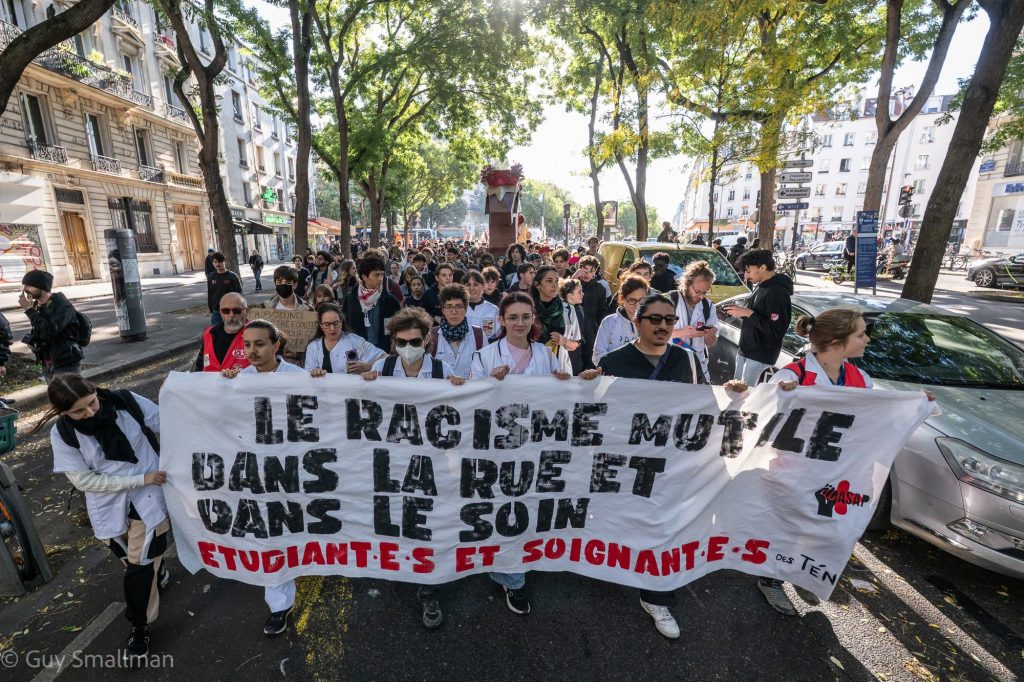
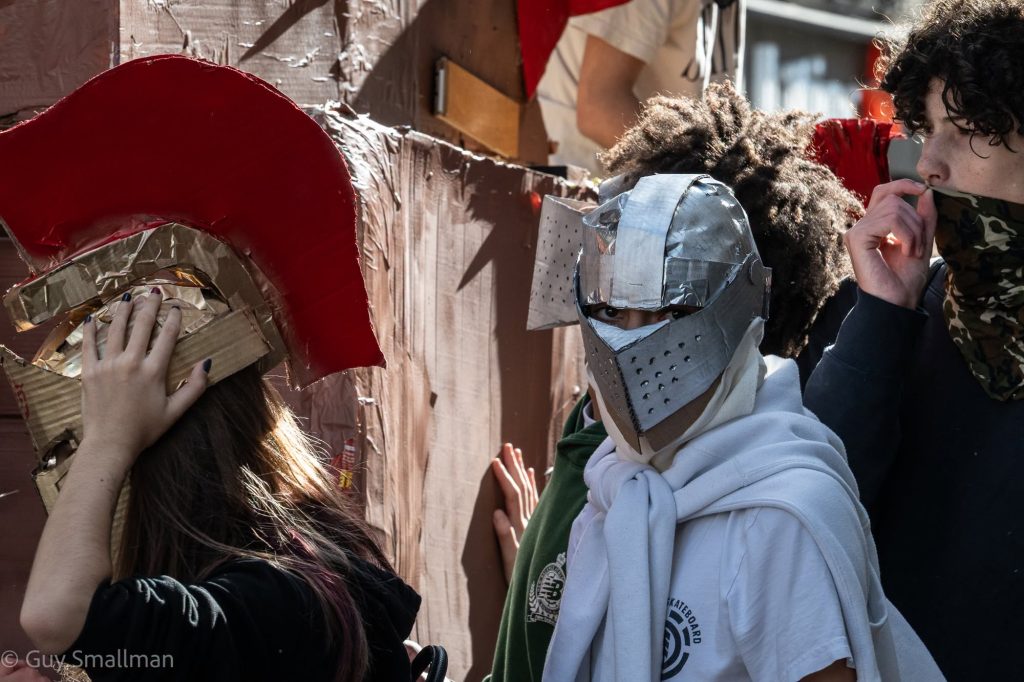
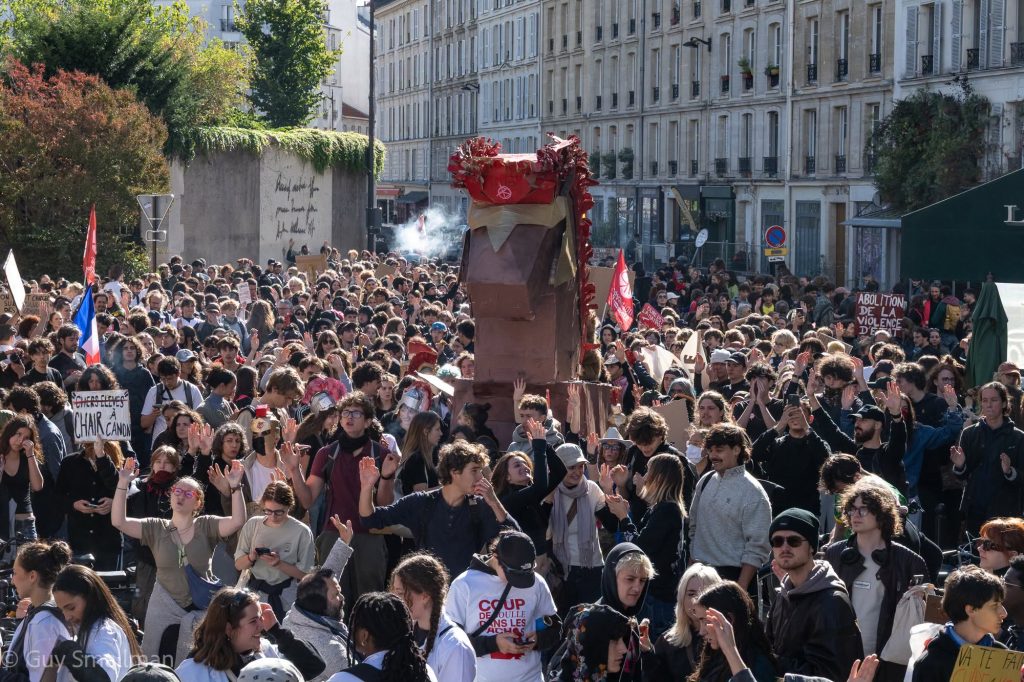
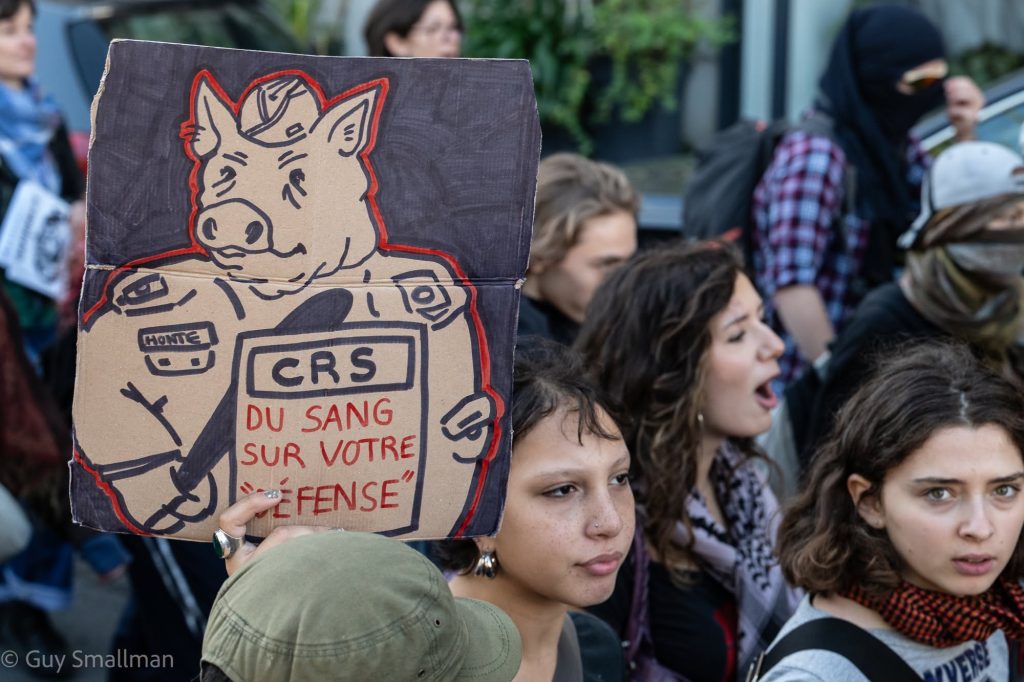
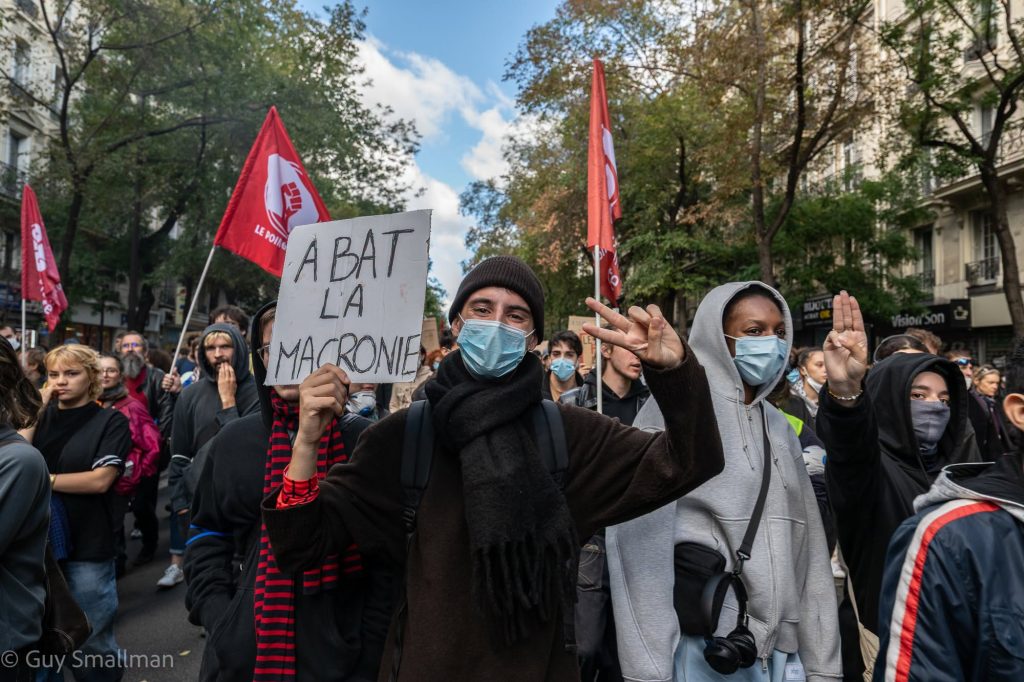
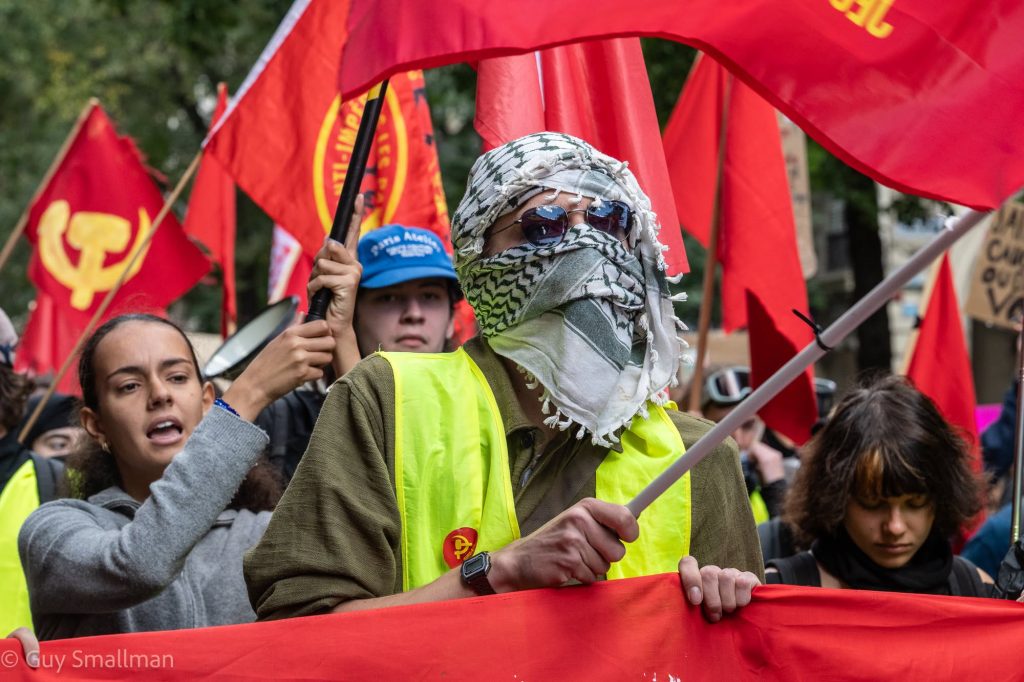
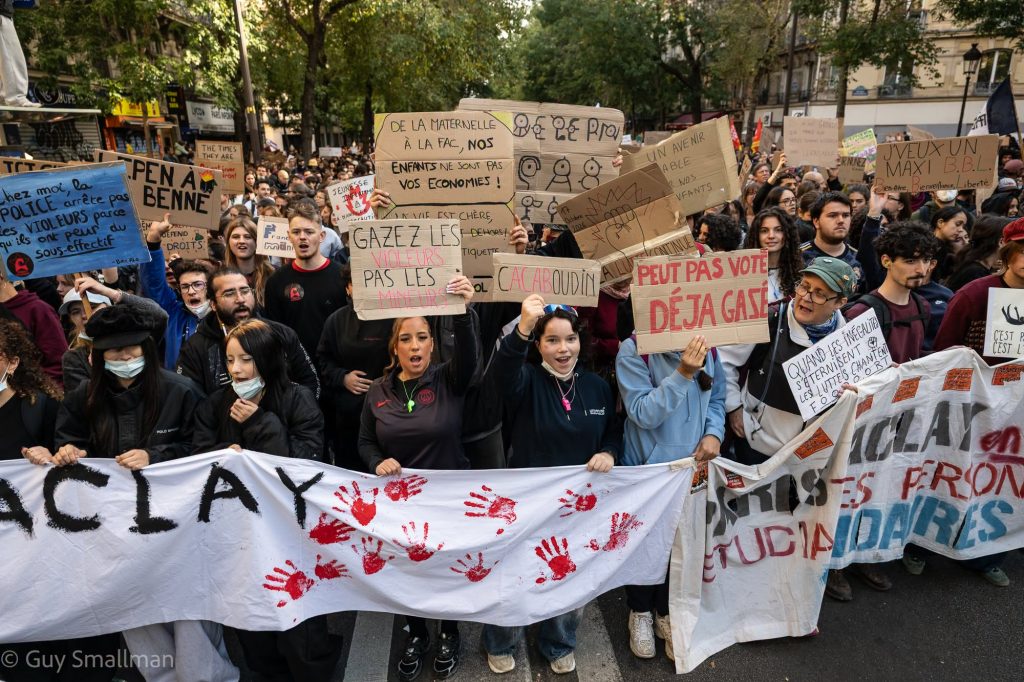
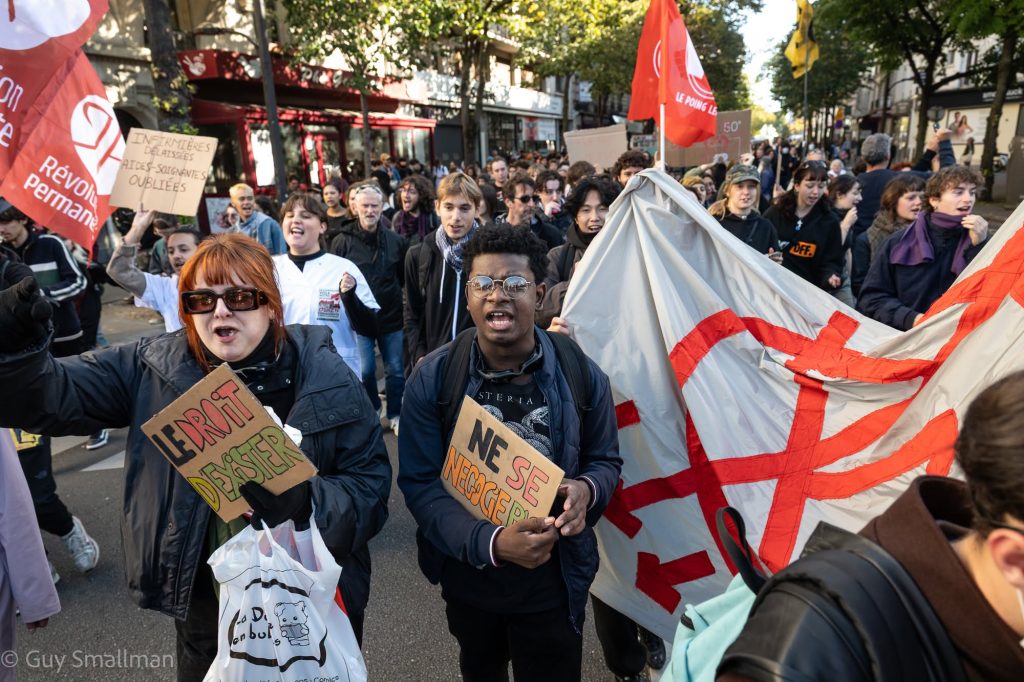
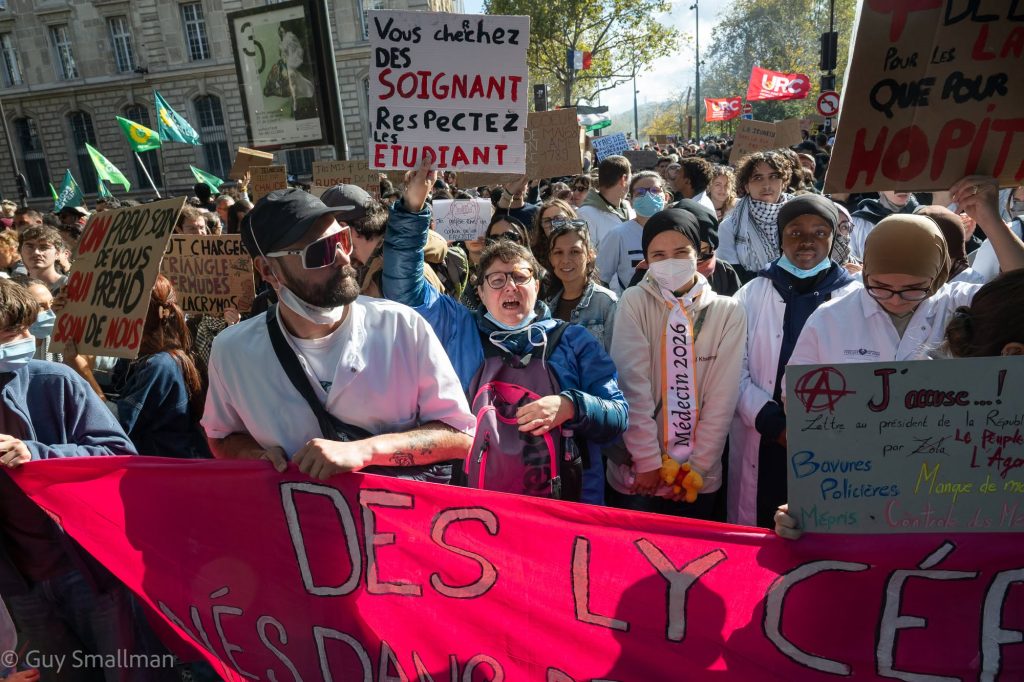
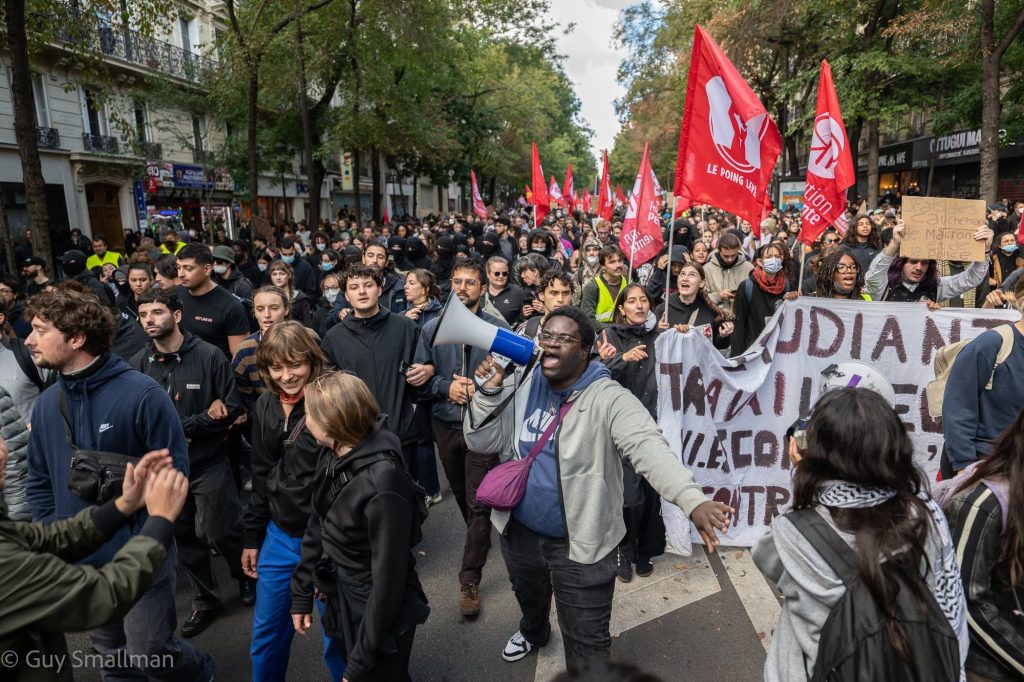
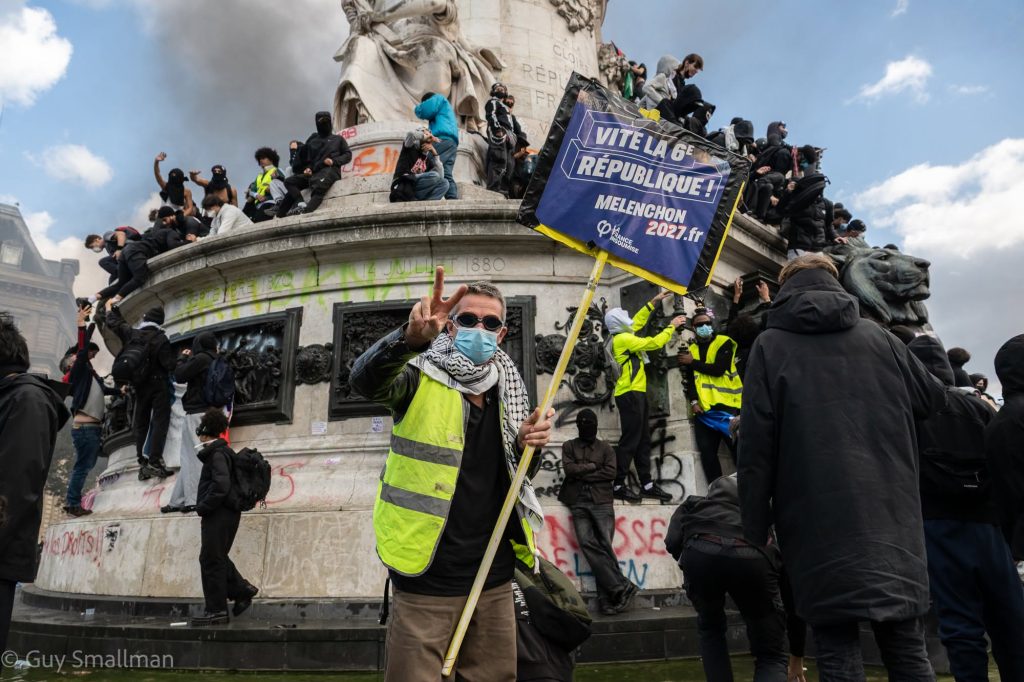
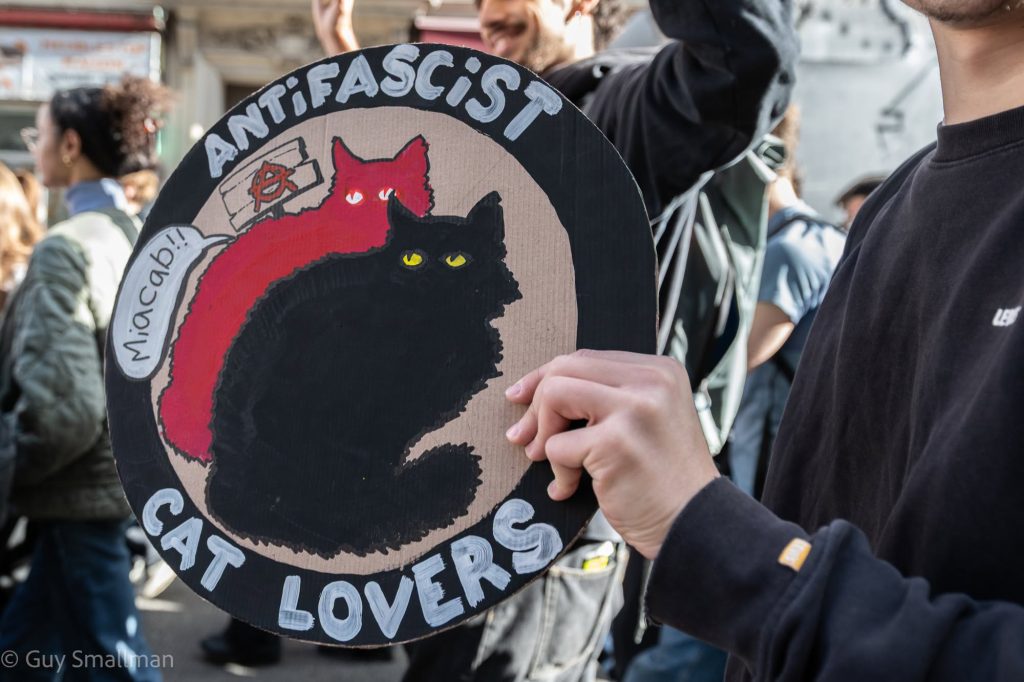
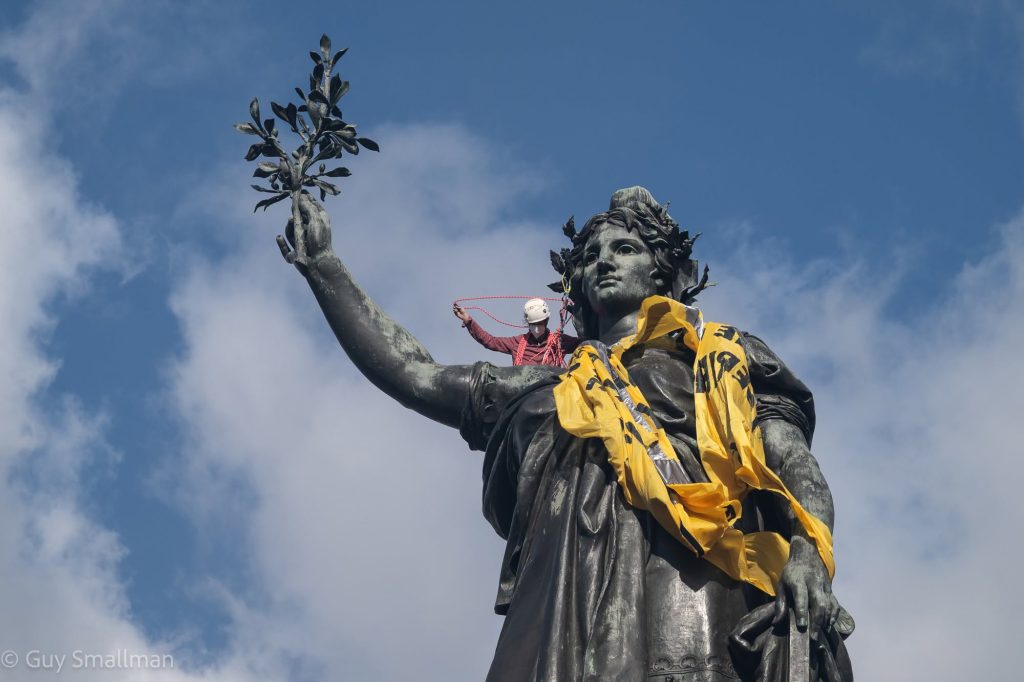
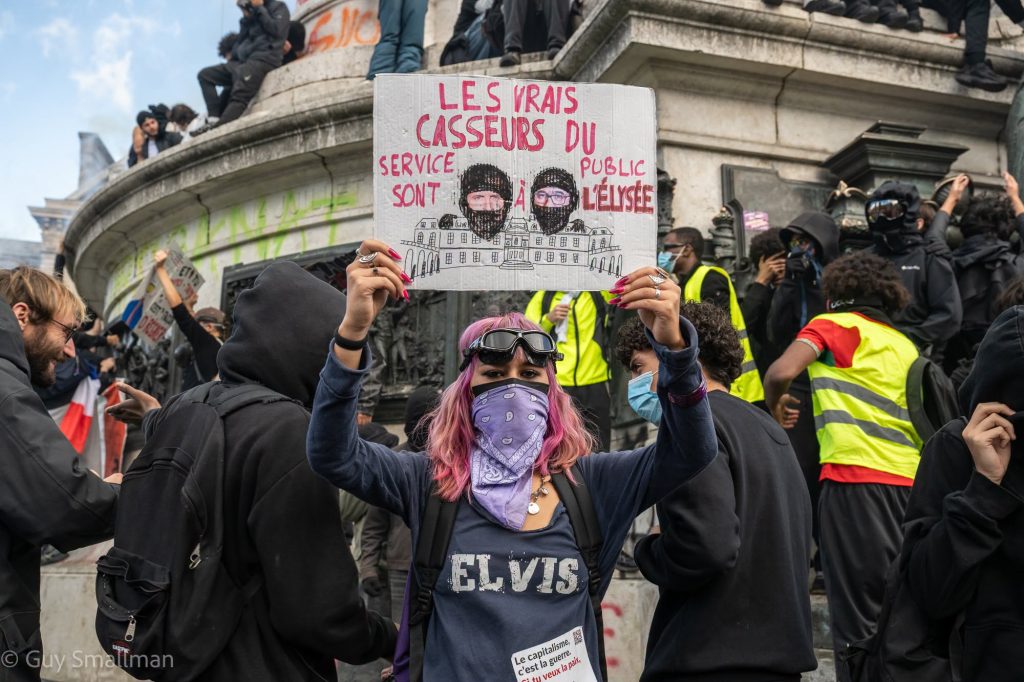
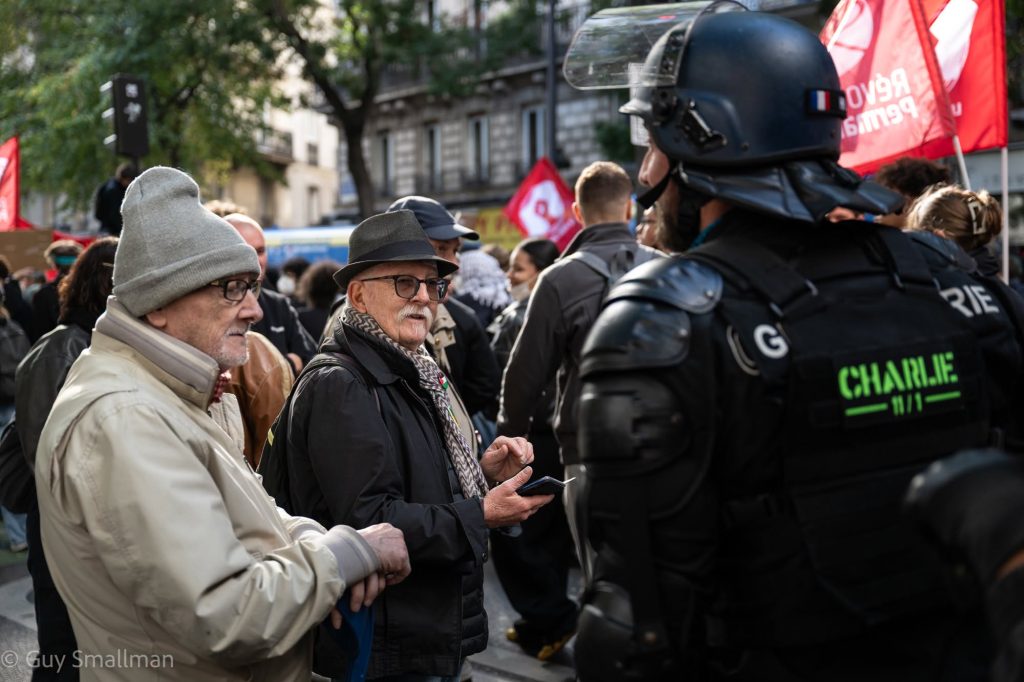
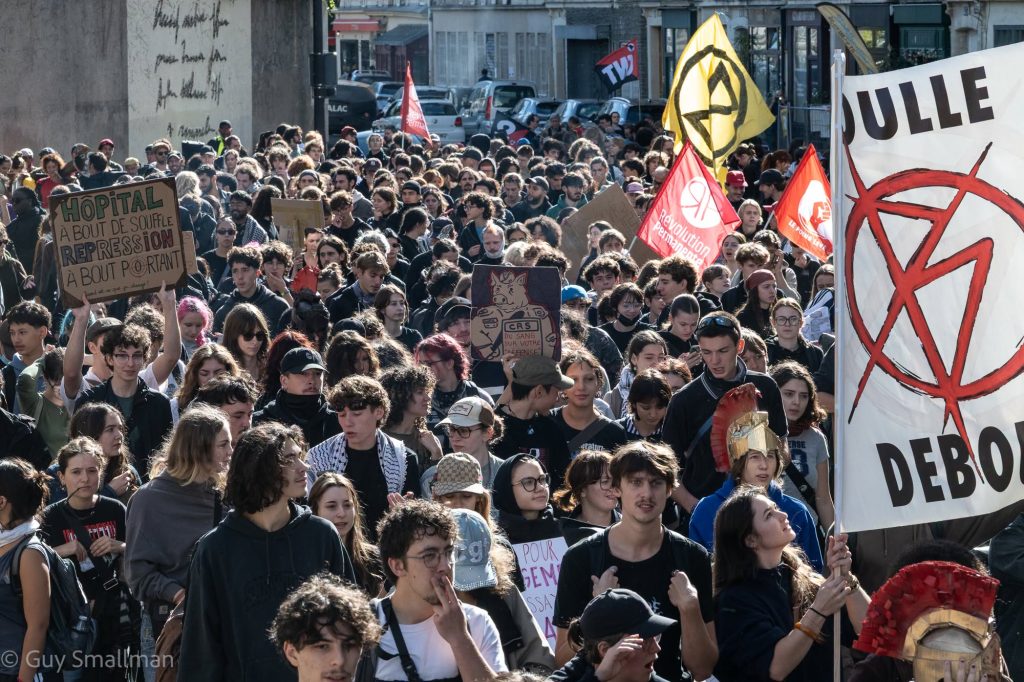
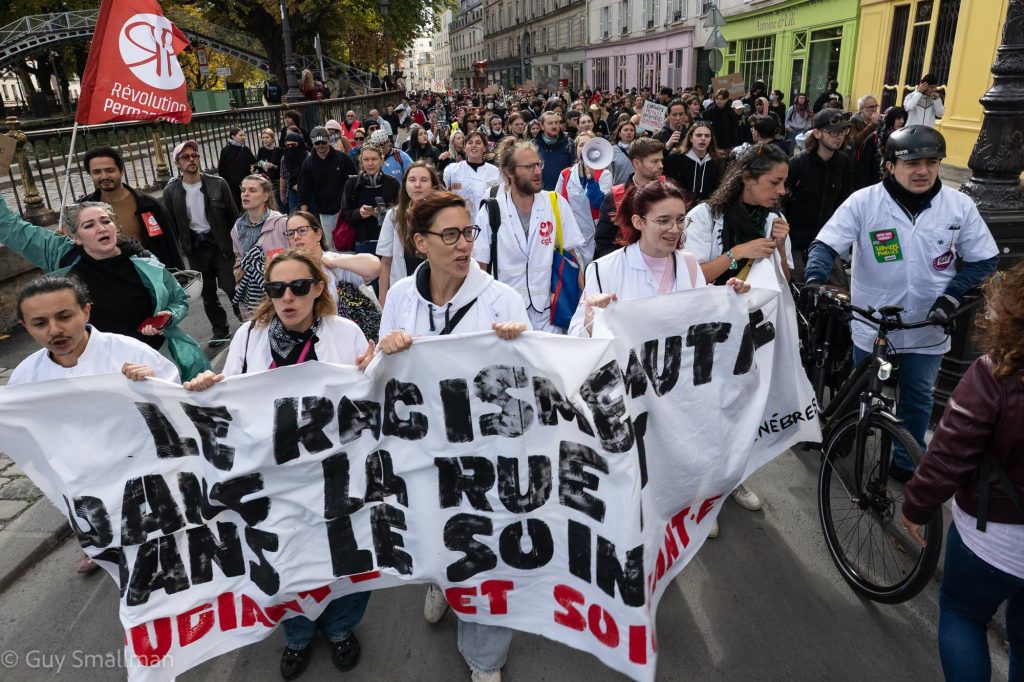
On Saturday 17 October, 800 000 people joined demonstrations in dozens of towns, which were characterized by an explosion of popular creativity and anger. Far more people turned up than the organizers had dared to hope, flooding the streets to support the high-school revolt, protest against impoverishment and the cost of living, and demand rapid change. Antifascist slogans were everywhere, as were Palestinian flags and placards in favour of voting for radical left Mélenchon in next May’s presidential election. Both the Marseillaise and the Internationale were sung.
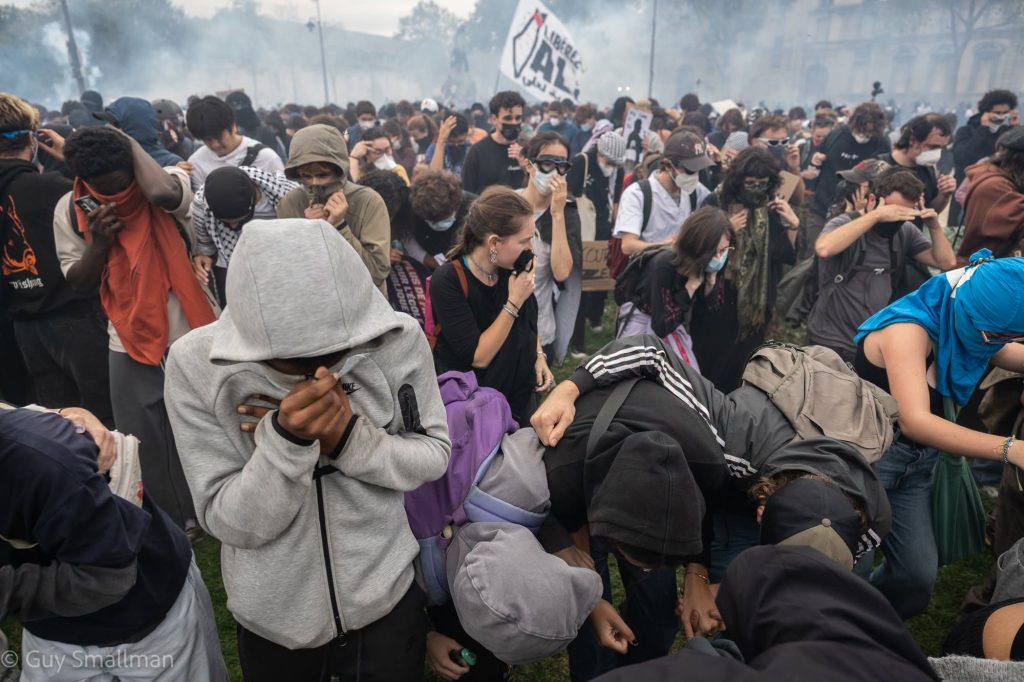
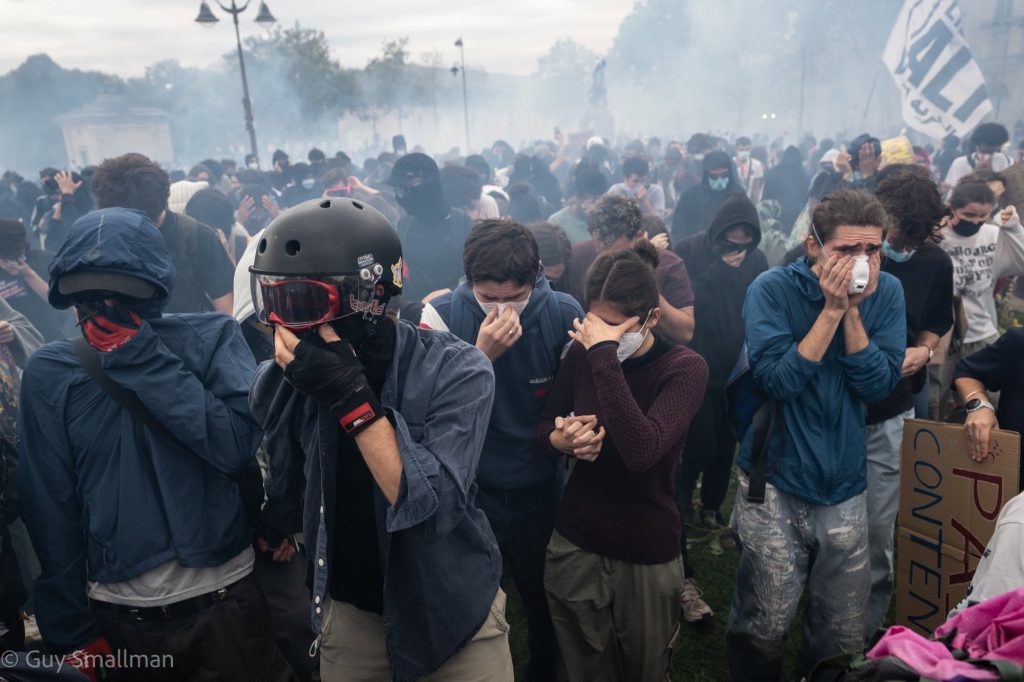
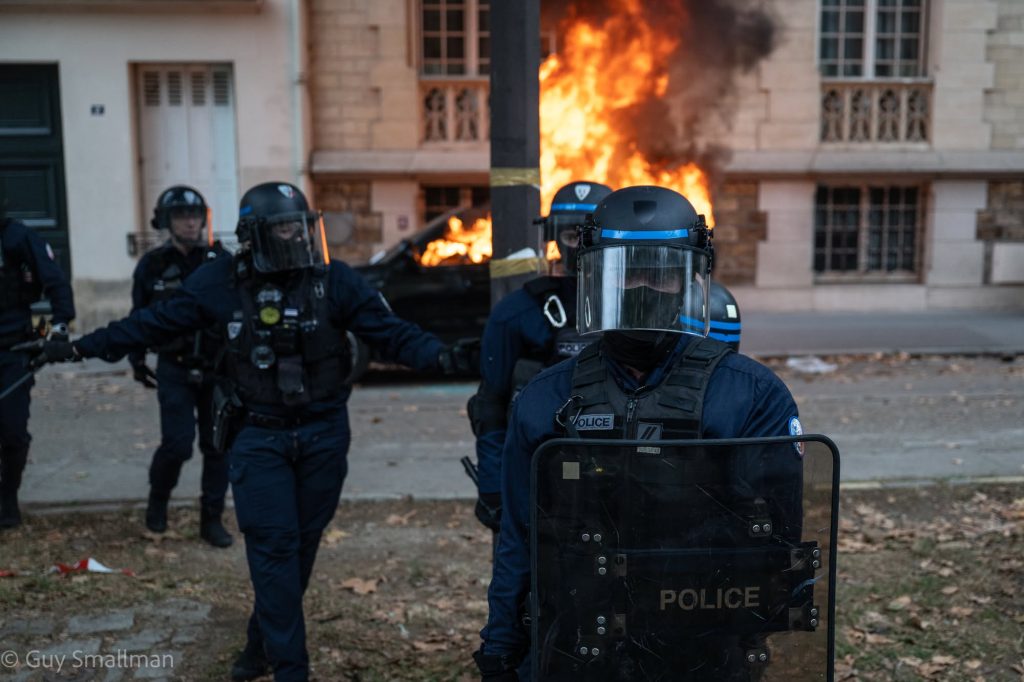
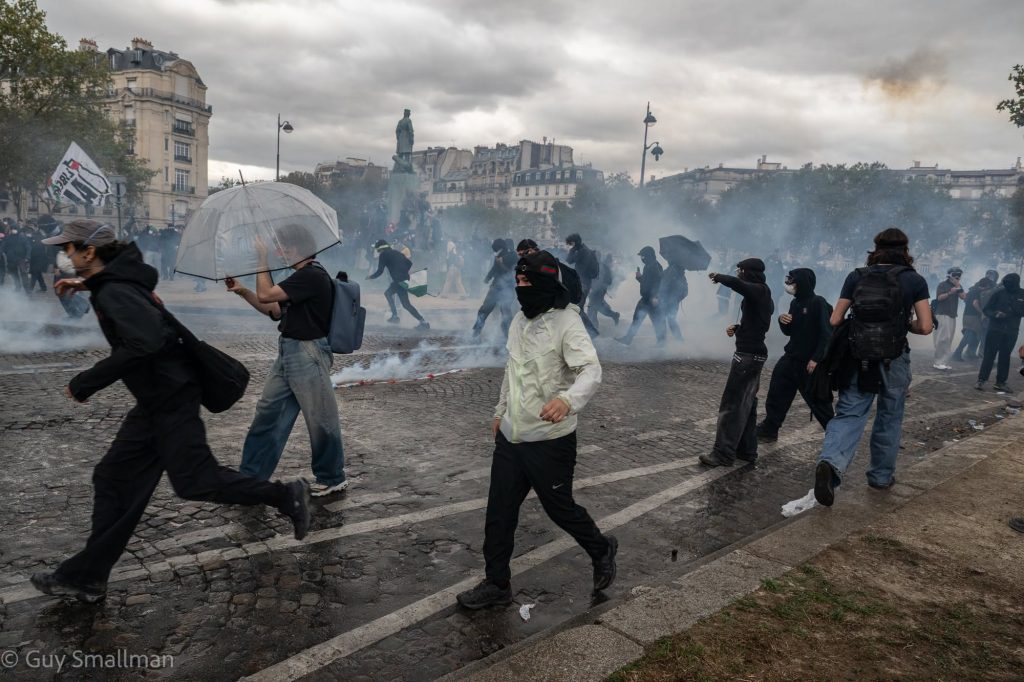
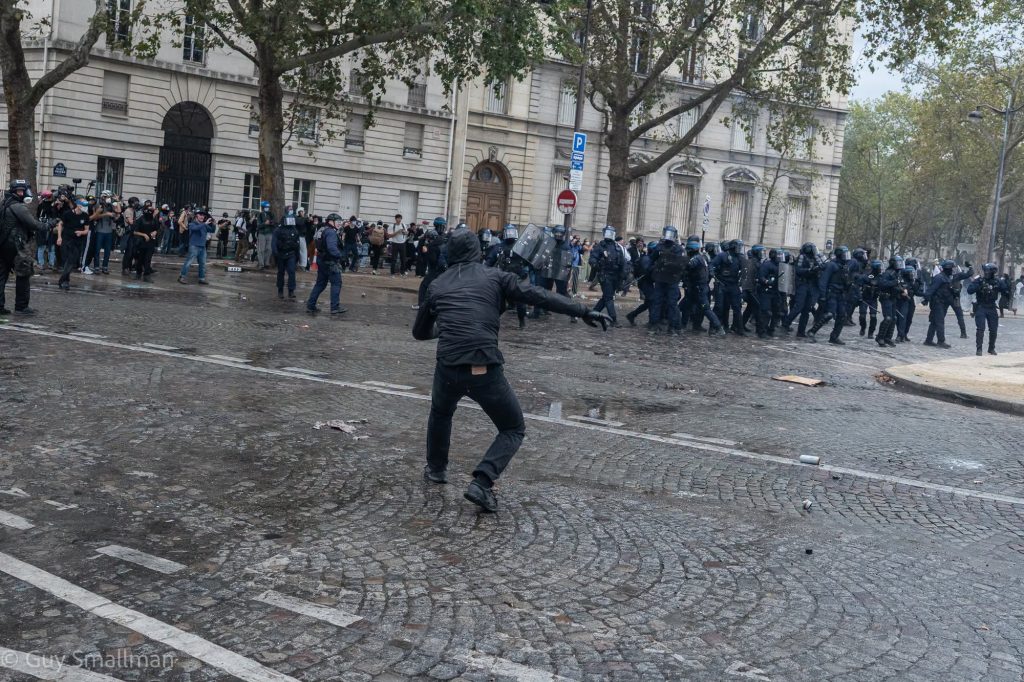
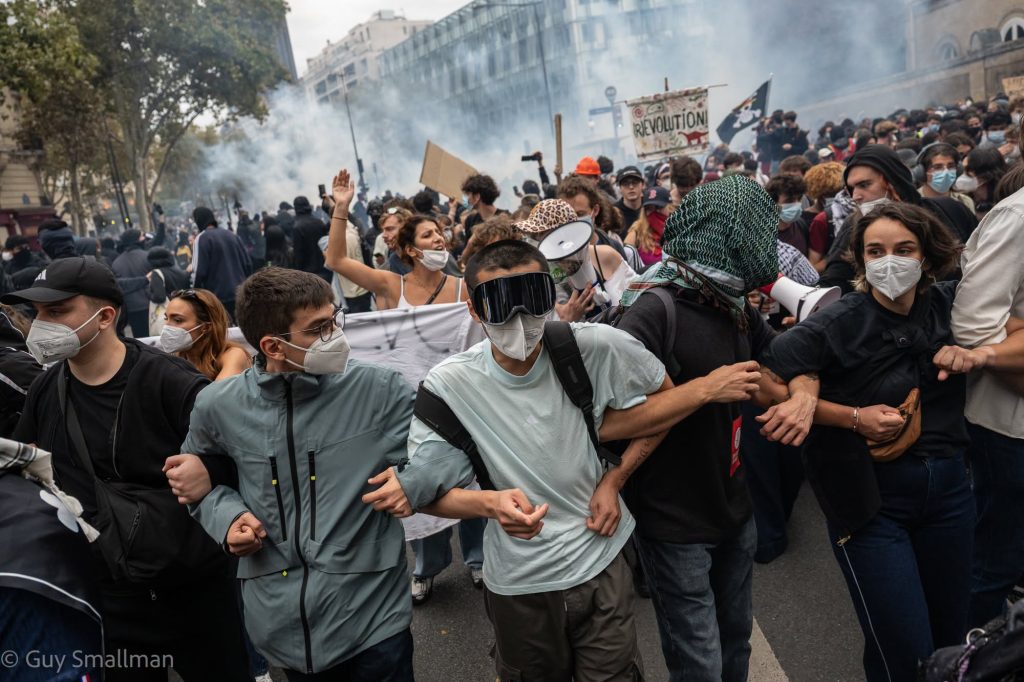
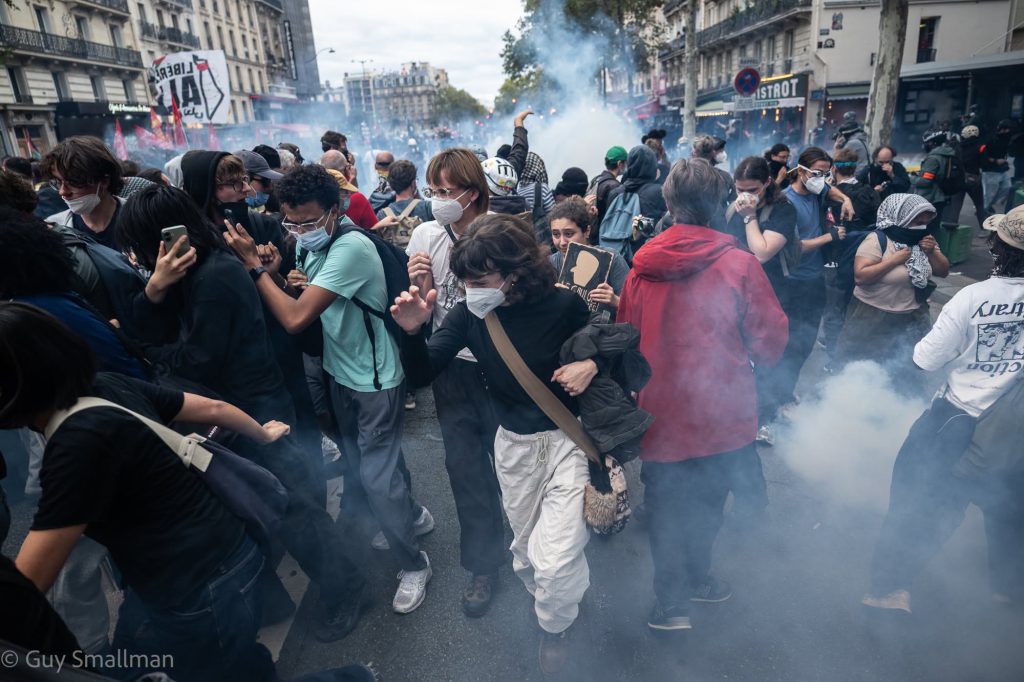
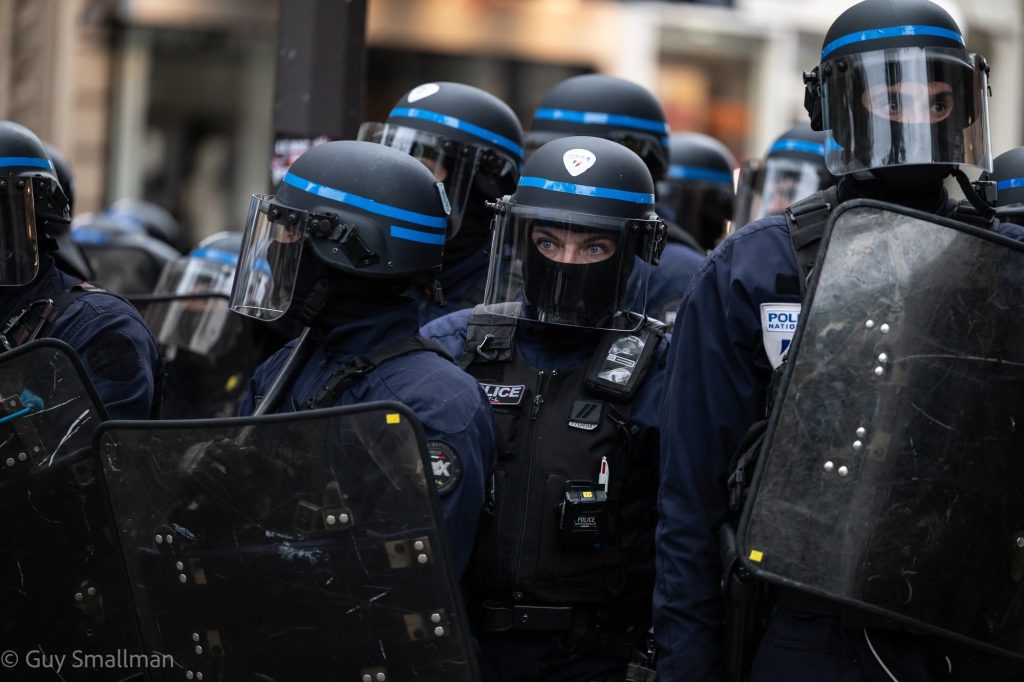
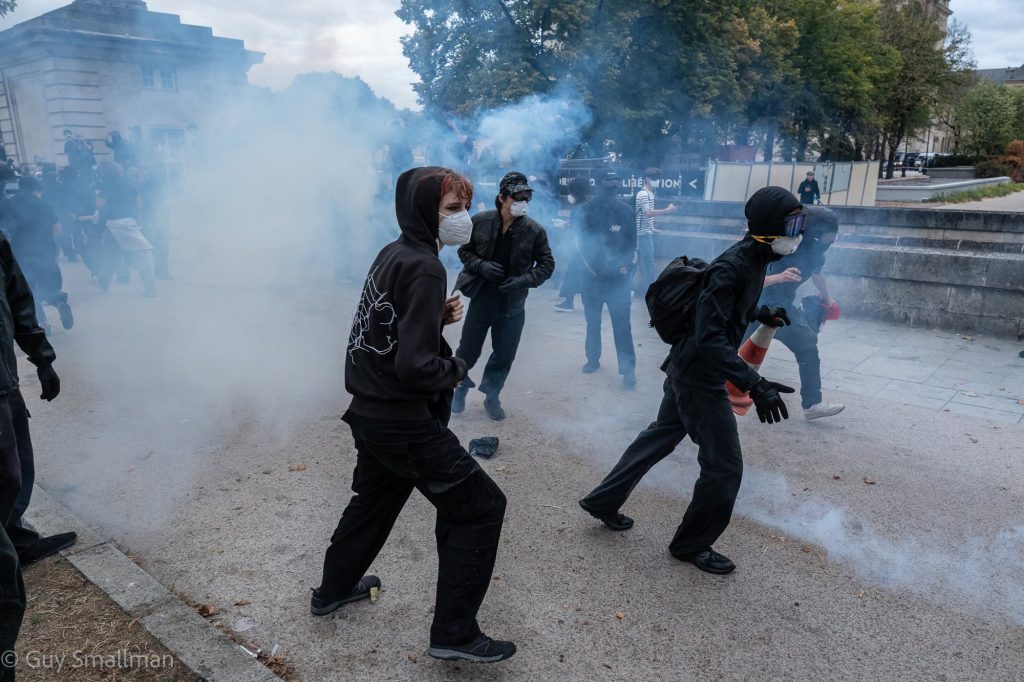
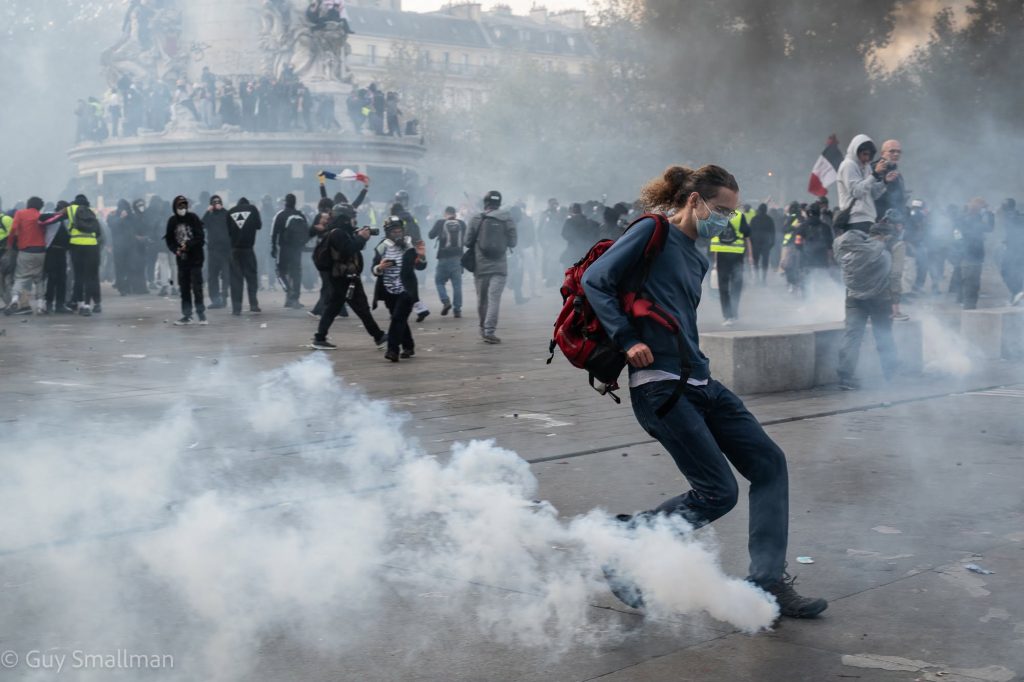
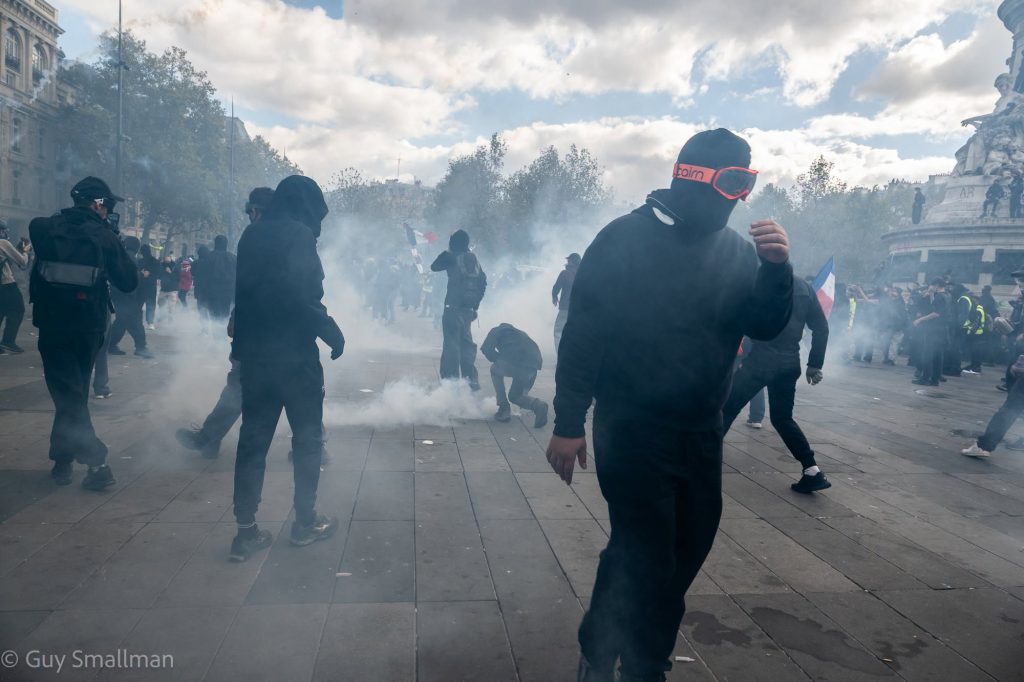
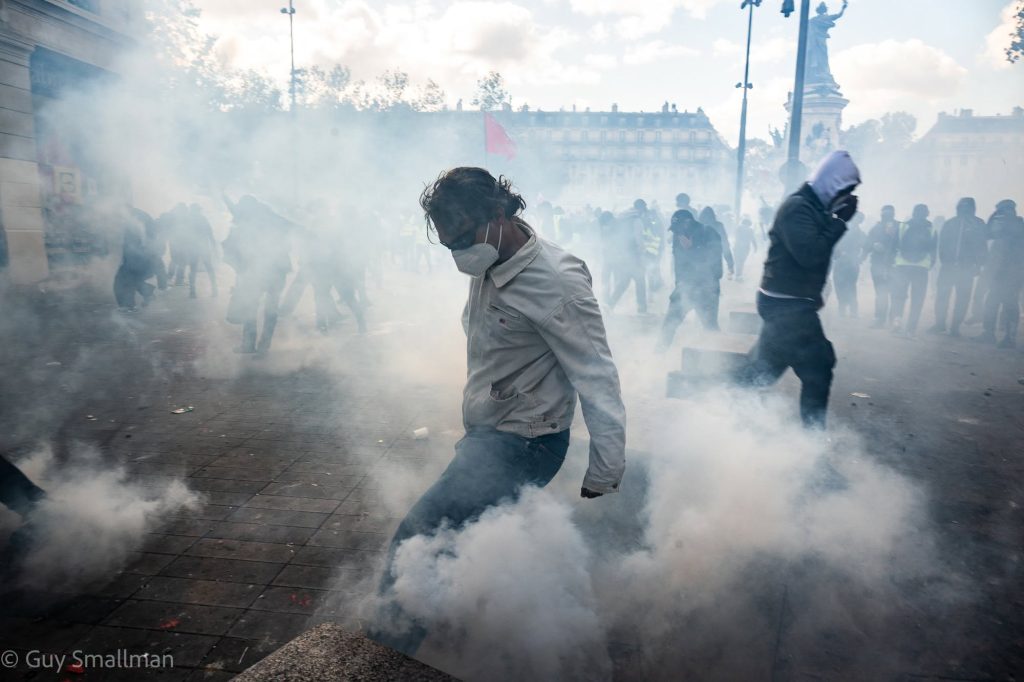
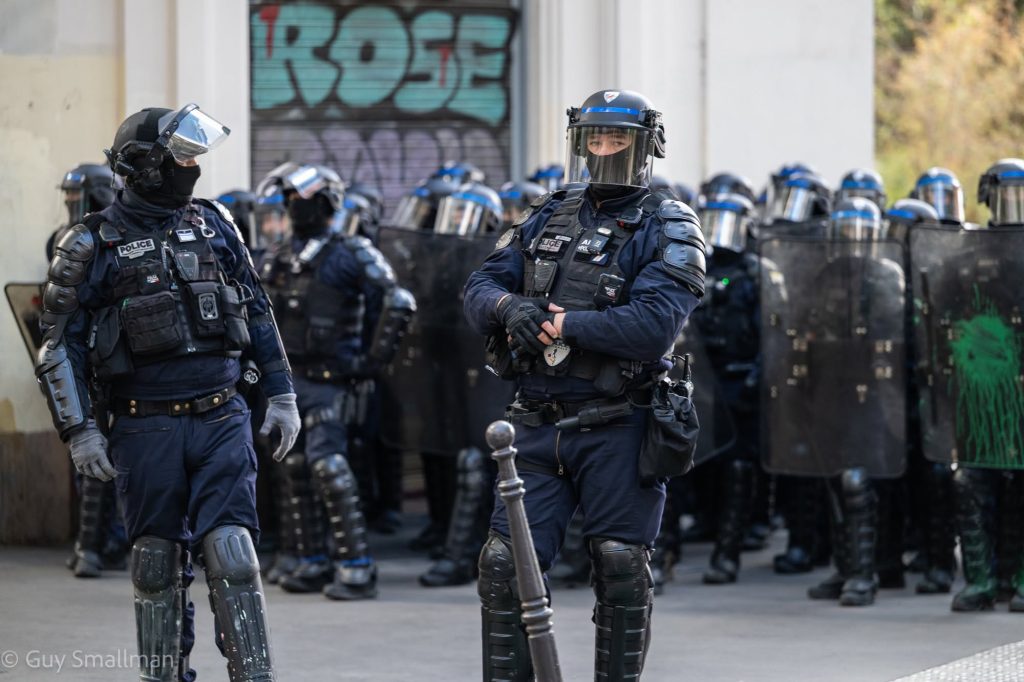
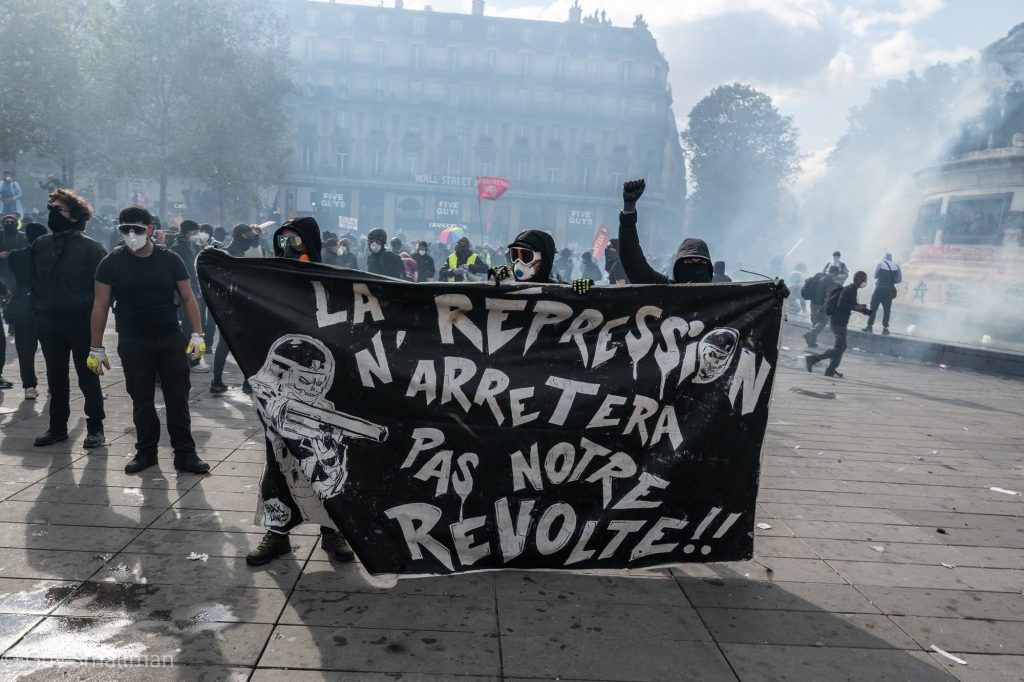
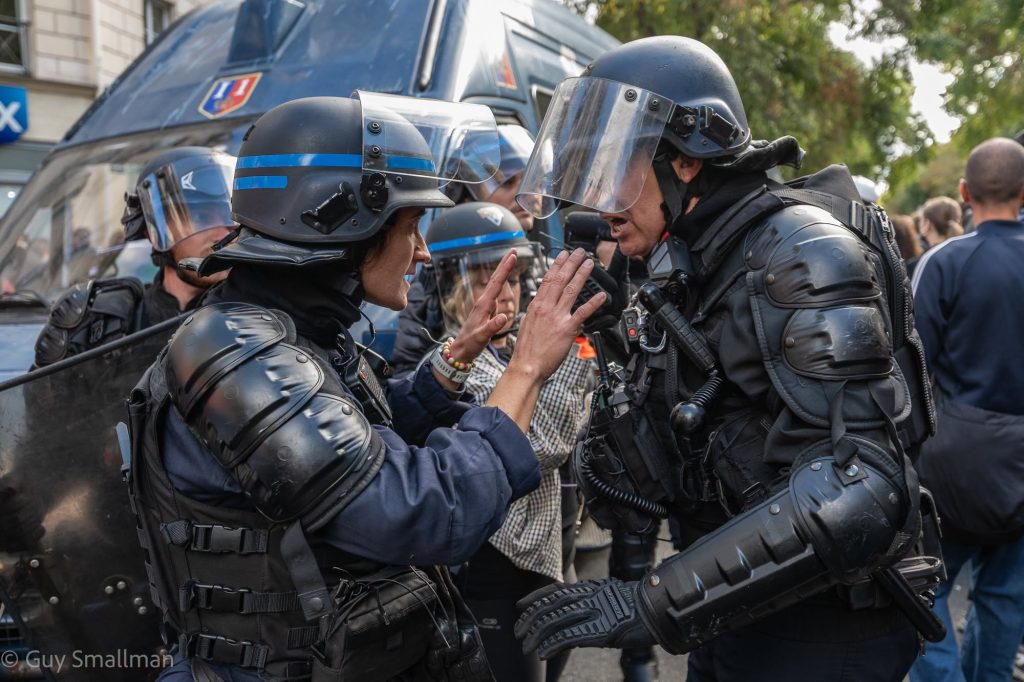
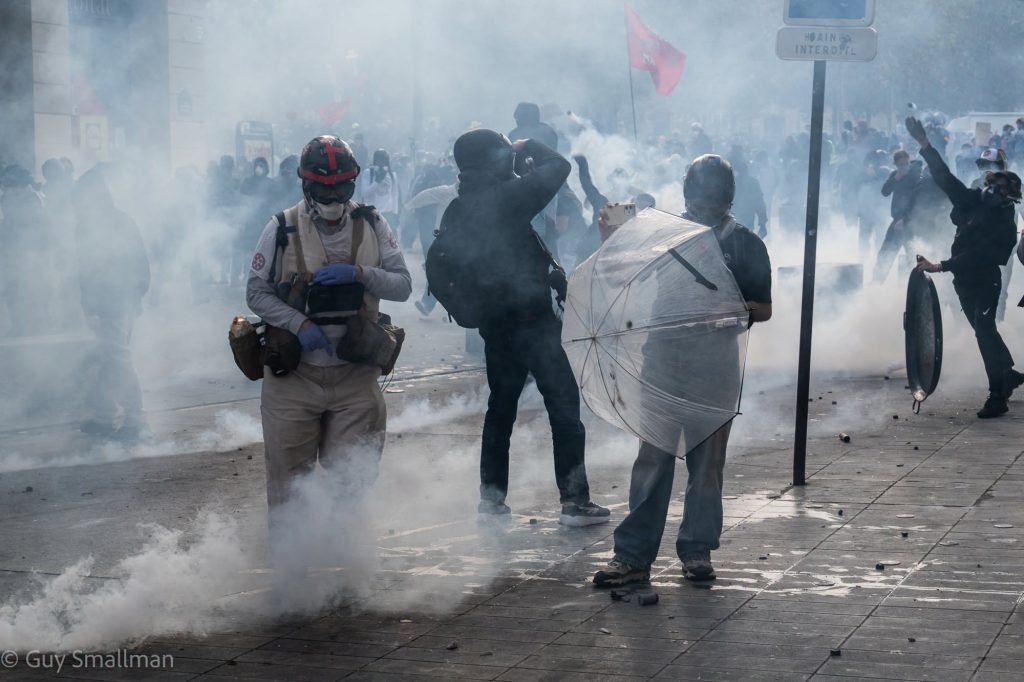
Where the police left the protests alone, nothing got smashed up. But the cops had their orders. They beat and injured thousands of protesters alongside a number of journalists and passers-by, in one more attempt to frighten the masses off the streets. In Mulhouse, in the East of France, a young woman lost an eye. In town after town, reports tell of completely unprovoked baton charges and tear gas attacks. In Paris, demonstrators were massively tear gassed at the starting point of the demo, as it was assembling. There are few things that make people want to riot more than being attacked while arriving at a rally.
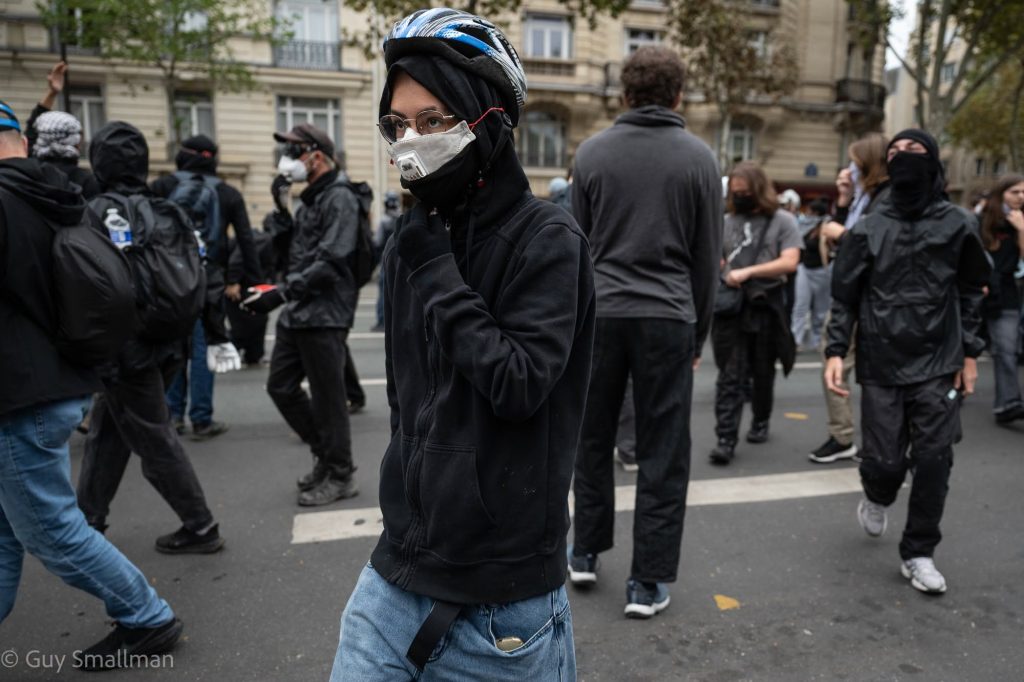
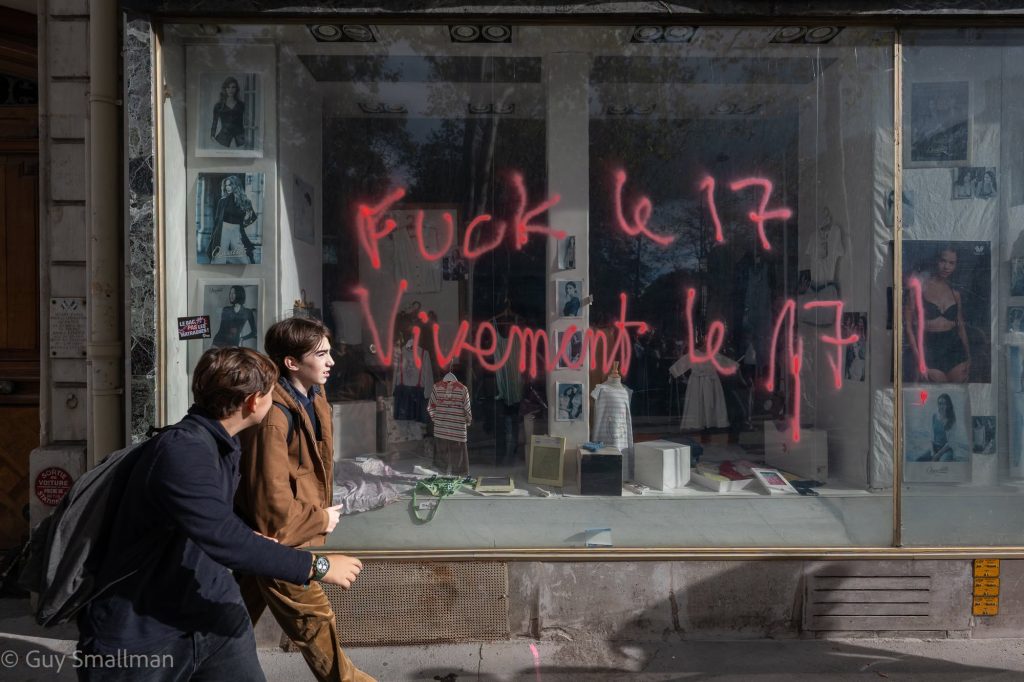
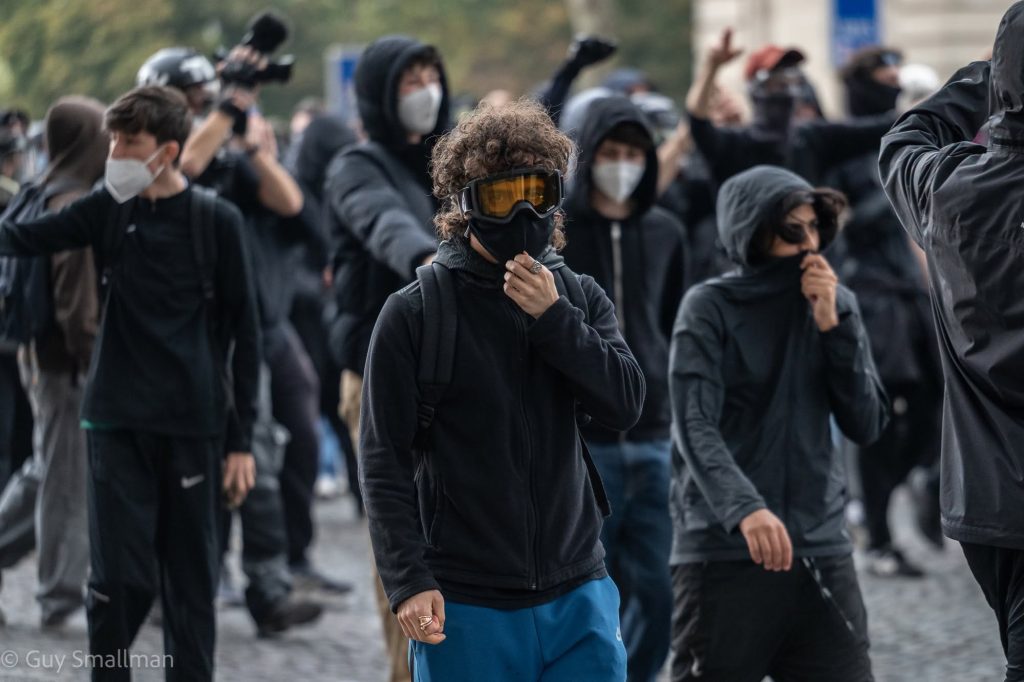
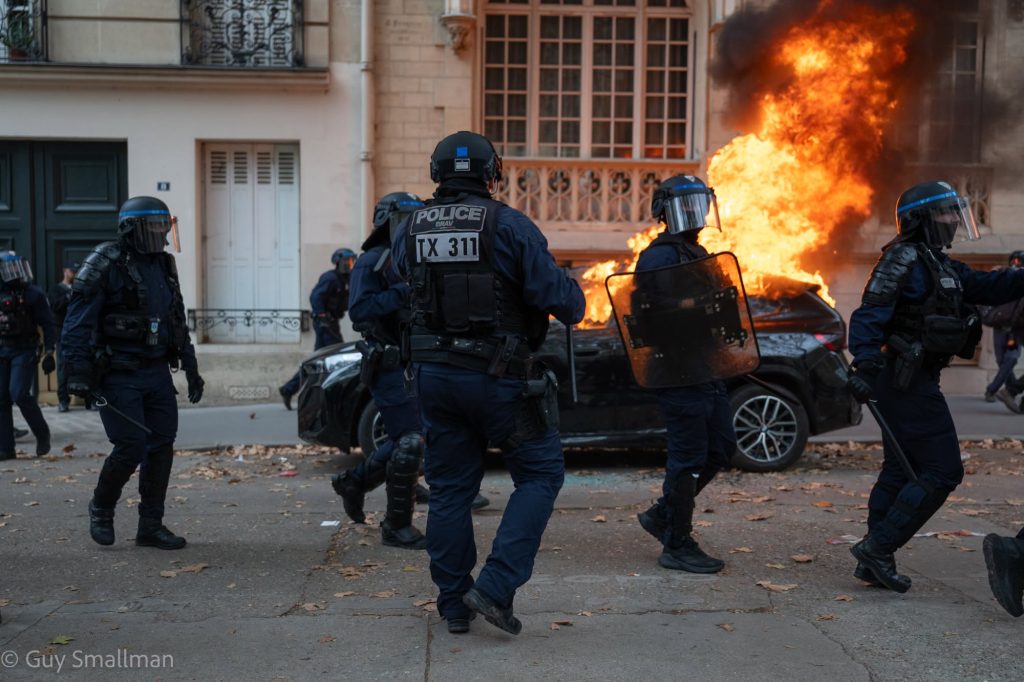
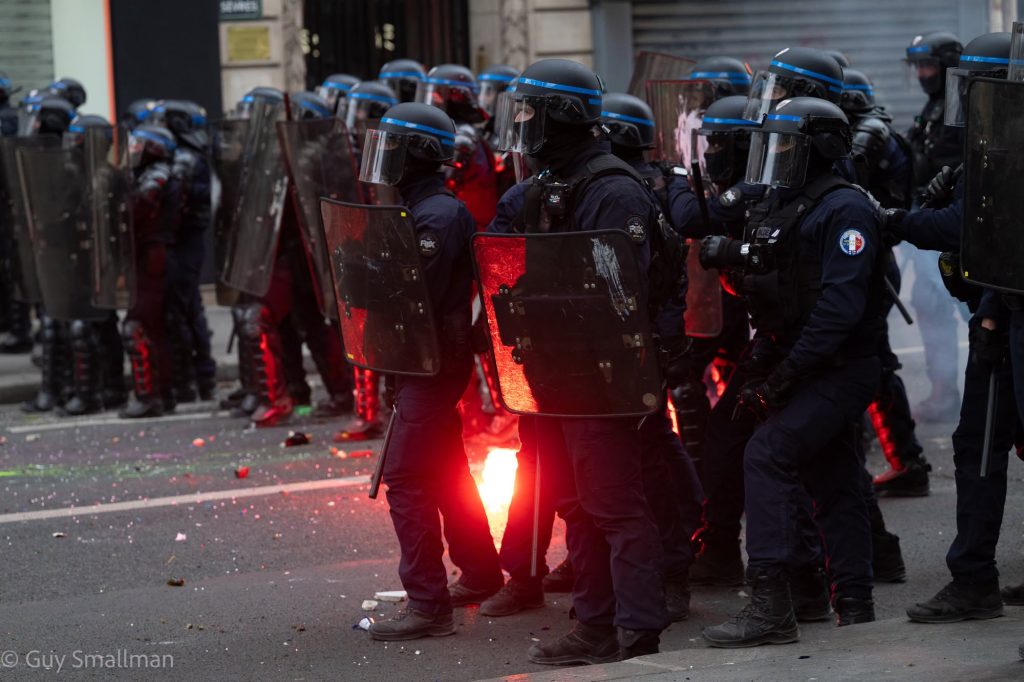
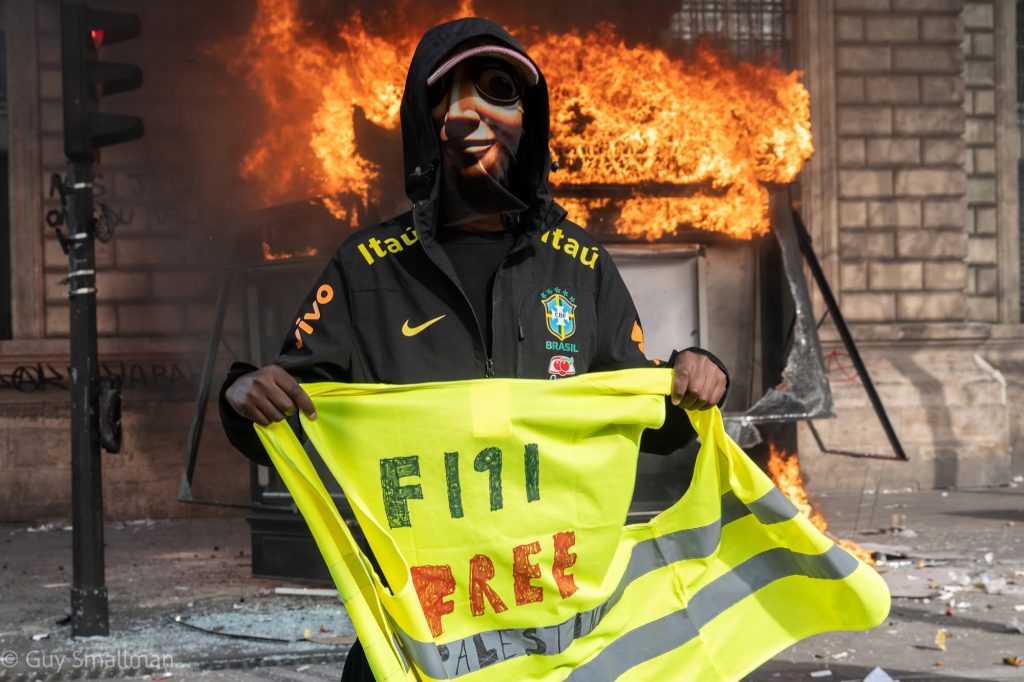
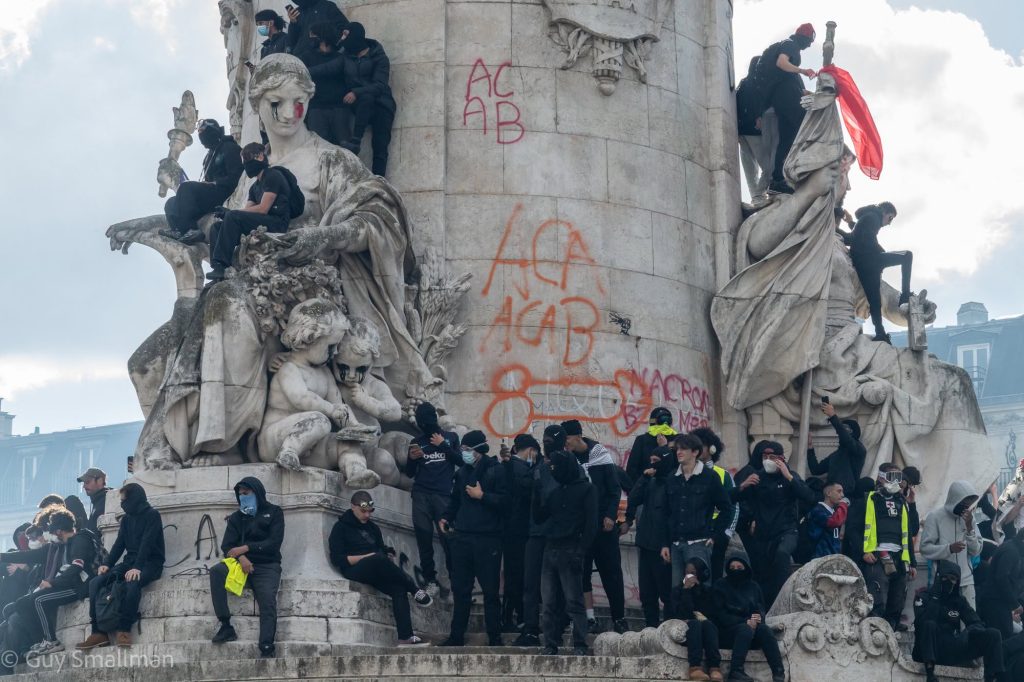
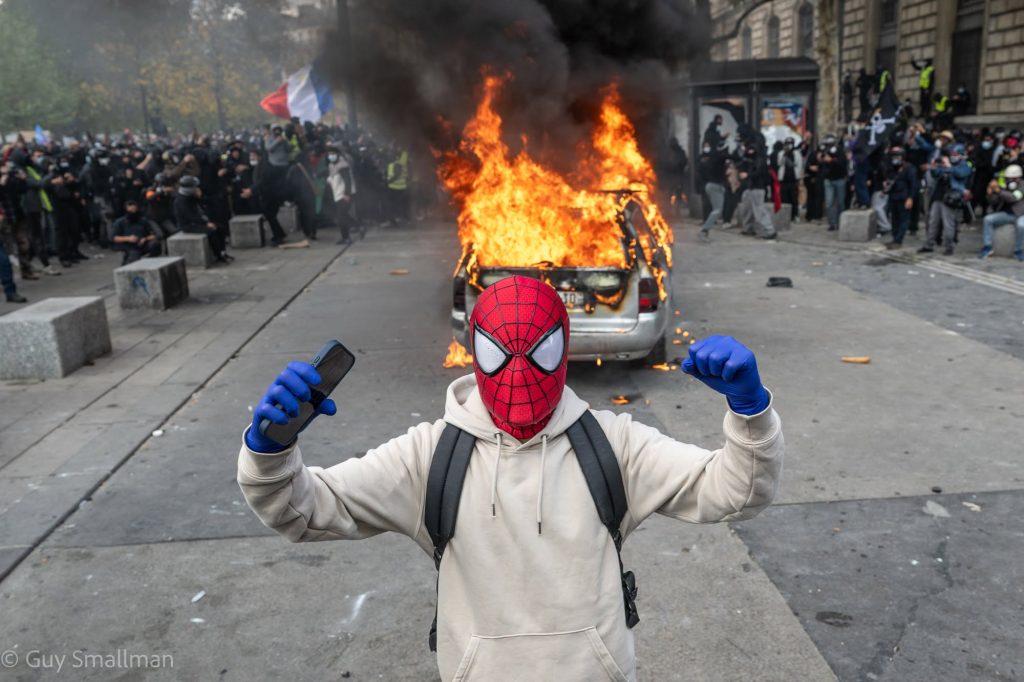
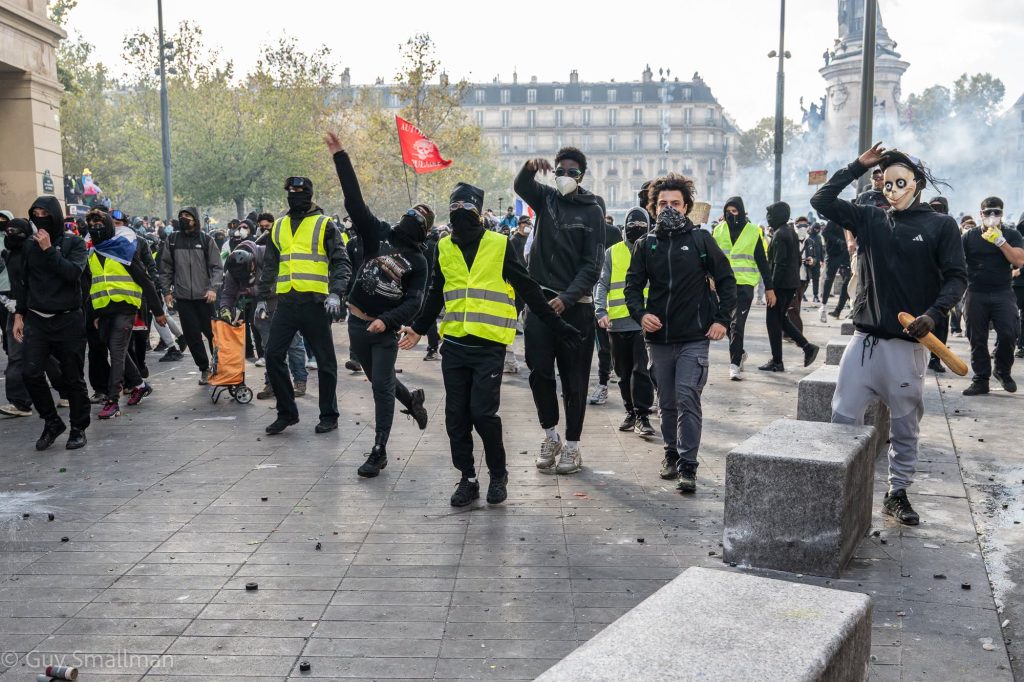
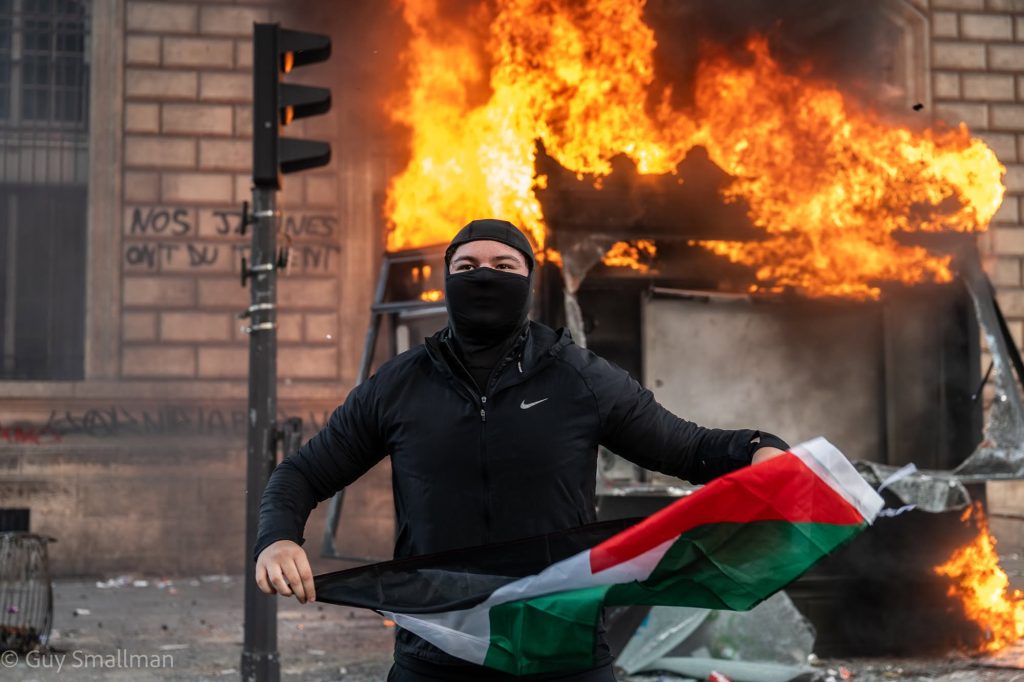
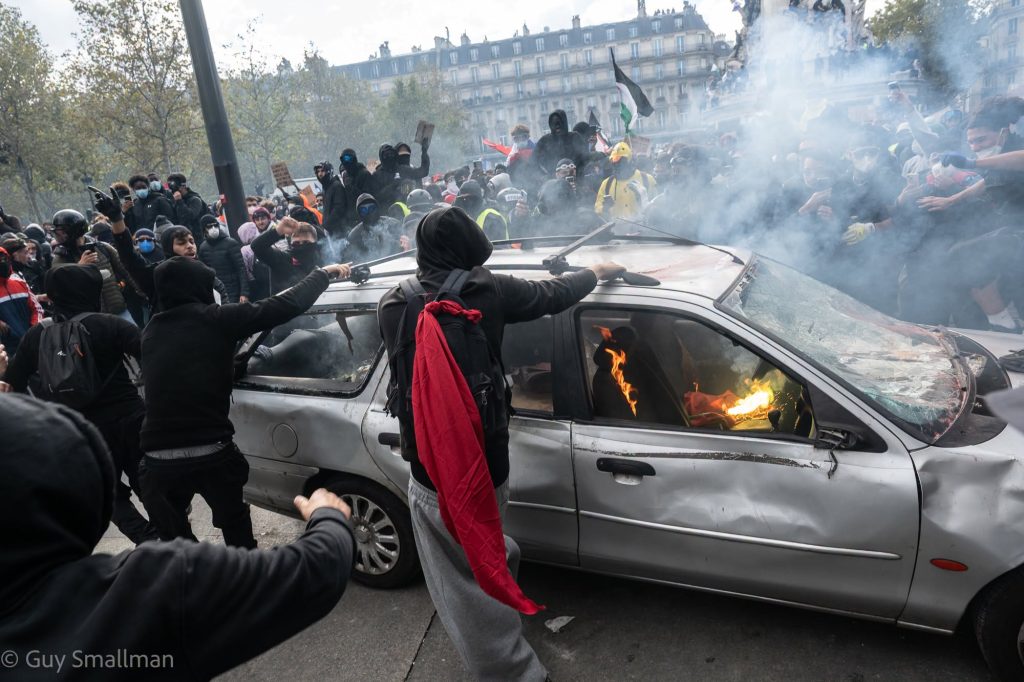
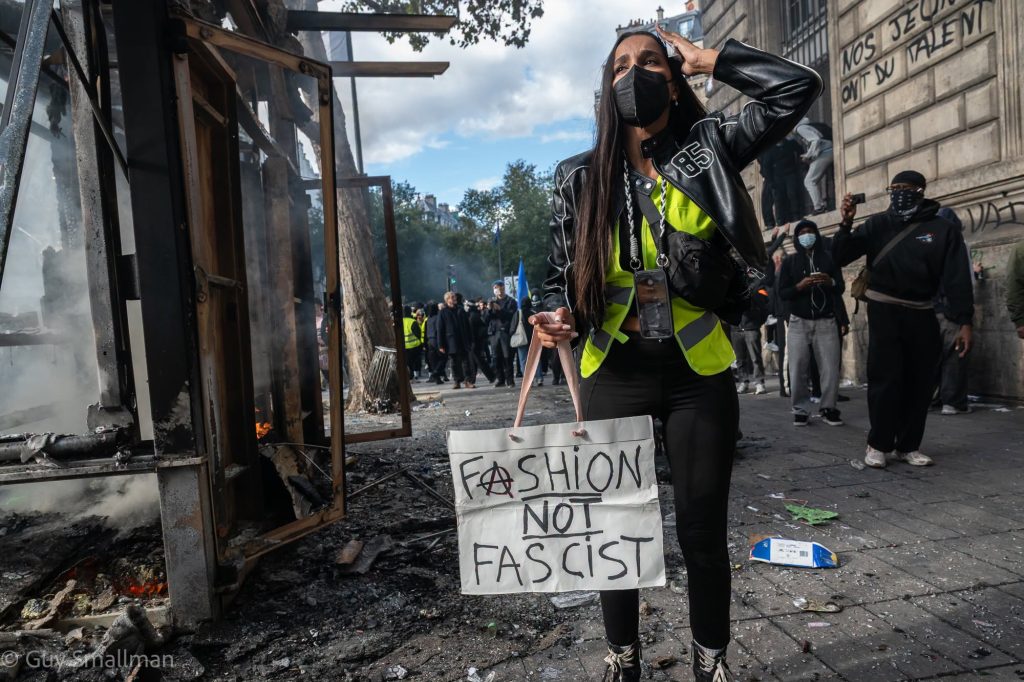
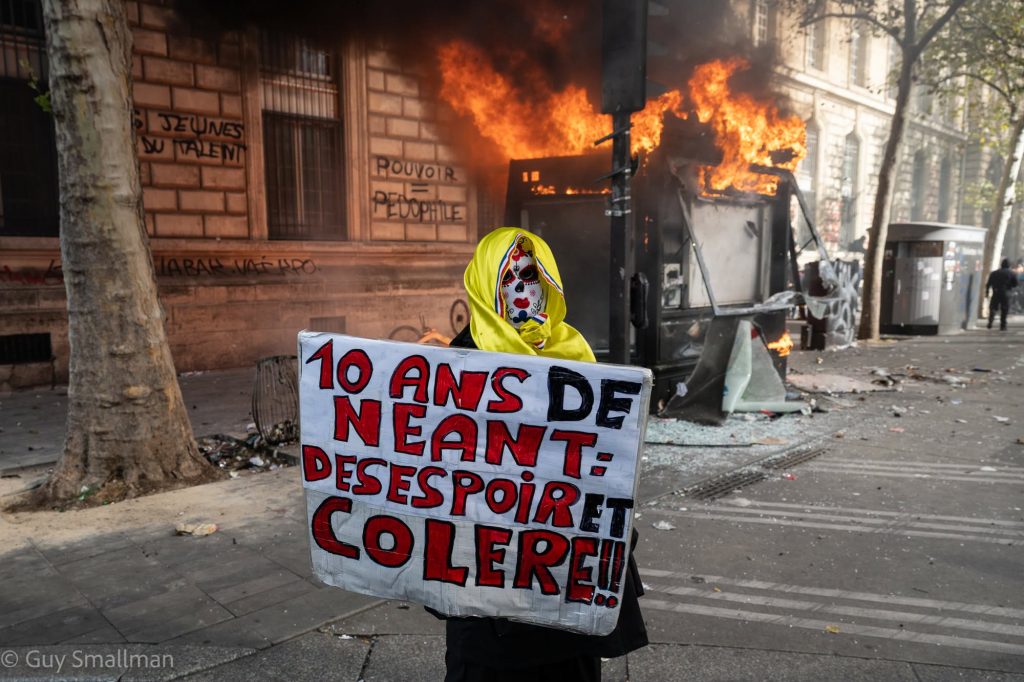
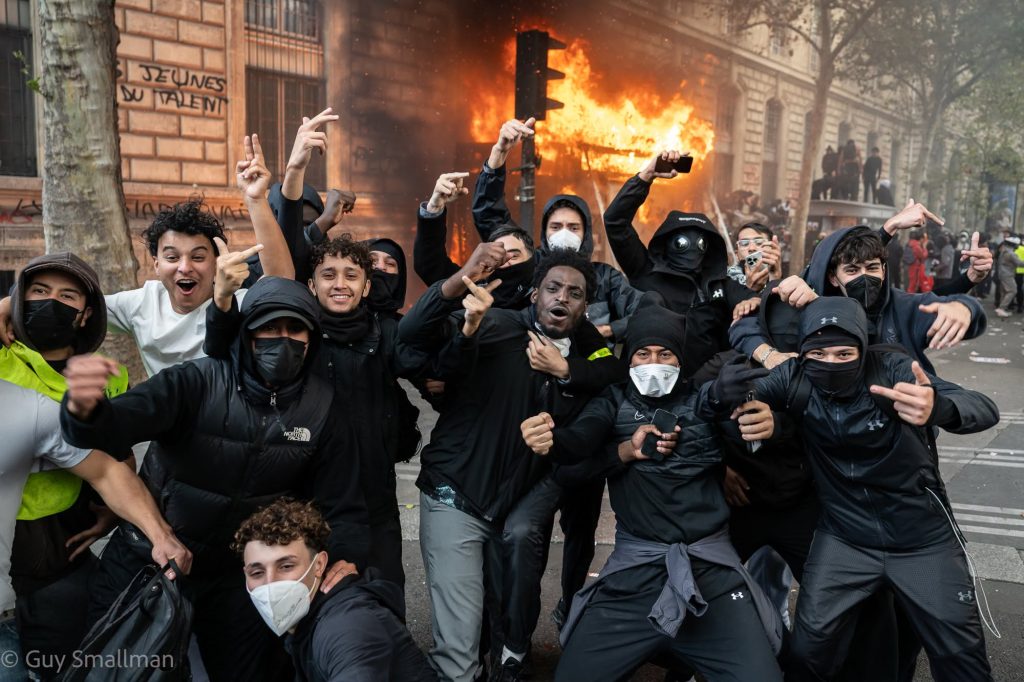
In response, several thousand rioted in a number of towns. The town hall in Limoges in the centre of France and a tourist office in Lyon were set afire. Bus shelters and wheelie bins were burned, and hundreds of shops were looted and wrecked across the country (50 shops in Bordeaux, for example). Many of these were luxury shops, but others were ordinary small businesses.
Such events are inevitable in a situation of simmering mass anger, to which Macron’s only significant response has been mass police violence. Hundreds of videos of the police thugs in action have circulated, including some of severe mutilation imposed deliberately. Is it any wonder that some fight back by smashing up places which make easier targets than the highly trained Robocops?
Others came to the demos so outraged at police violence and Macronite austerity that fighting back with paving stones felt right. More wanted to demonstrate at the Elysee Palace or the Hotel Matignon, whereas police authorities would only authorize protests several kilometres away.
We can add to the mix a certain number of police in disguise, agents provocateurs encouraging rioting. There is plenty of evidence that such tactics have been used in France, though it is generally impossible to prove their use in any particular case. Add, too, a bunch of opportunists hoping to rob pharmacies and computer shops. But an outburst of legitimate rage is the main explanation for Saturday’s rioting.
This obviously does not mean that organized radicals and revolutionaries should be making careful plans about which public buildings, or which cafés, pharmacies or phone shops to loot or burn next week. Denouncing the rioters is a complete waste of time, but the more organized effective action inspires people, the less chaos we will see.
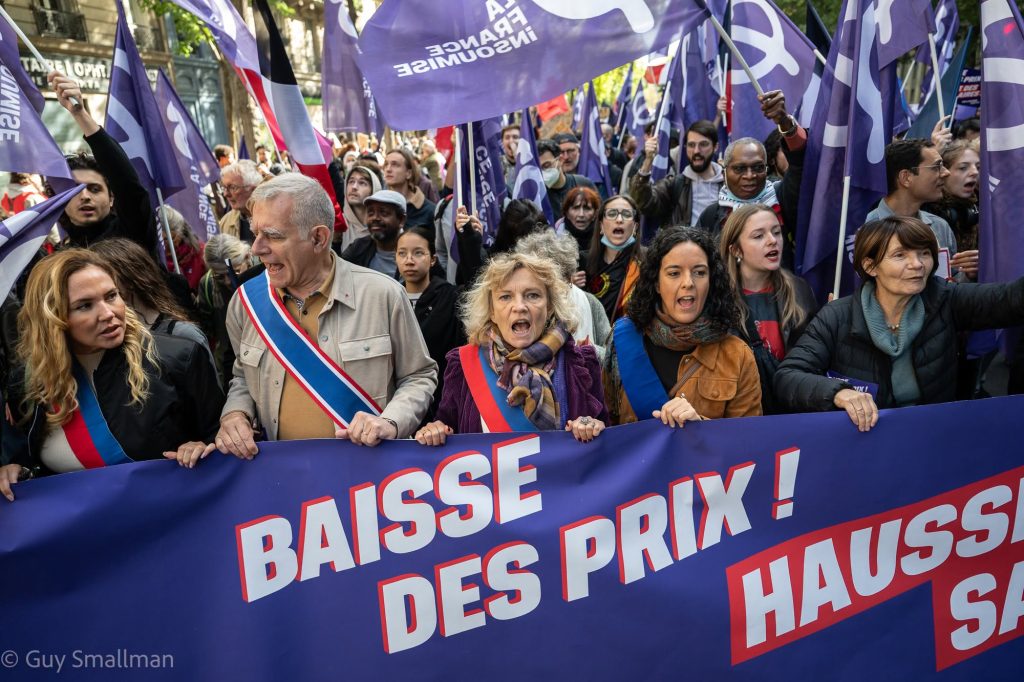
The most influential politician by far among the protestors is Jean-Luc Mélenchon, leader of the France Insoumise. In his statement after the day of action, Mélenchon insisted that it was President Macron and his ministers who were responsible for the horrific police violence and for the chaos in the streets. « Wherever there were no police [at the demonstrations] calm and joy were all around », he said.
He added that his organization did not believe rioting would help: « Whatever the responsibilities of the authorities, whatever their incompetence and their violence, we must refuse to take part in actions which do not have political meaning and which are contrary to our methods, » he insisted.
Green presidential candidate Marine Tondelier criticized the government for its announcement before the day of action that hardline policing would be the norm. Other left-wing spokespeople trotted out old clichés of denunciation. « A sort of madness has taken over France » lamented Gregory Doucet, Green mayor of Lyon.
The Powers-that-be are hoping to profit from the situation to damage the radical left France Insoumise. After Lecornu’s ravings mentioned above, hard right spokespeople demanded the organization should be banned. Interior Minister Laurent Nuñez blamed the disorder on « several thousand ultra-left individuals ». Ex minister Bruno Retailleau insisted « the only possible response is the implacable force of the state » and demanded that a state of emergency be declared.
At least one of his senior advisors, Jean-Baptiste Moreau, suggested that Macron should resign. Instead, the president commandeered prime time television Sunday evening to moan that, in the six months before the presidential elections, this was just not the right time for a social explosion. « All those who want to persuade you today that what is urgent is to be on the streets, to demonstrate, to create unrest have one single aim: they want to damage the republic and block the presidential debate, » he complained. « Nothing can explain, nothing can excuse » the rioting, Macron continued. He promised « action » to respond to people « worries » which he said he « understood ». The usual empty phrases. He has asked his prime minister to meet with political parties and union leaders, but without any suggestion of real concessions. Monday morning a crisis cabinet meeting was underway.
But what of our side? The biggest trade union confederation, the CGT declared in a press release « Because of its refusal to the demands of a peaceful mass movement, the government is politically responsible for the rise in violence observed today ».
The main trade union confederations called for mass strikes on 5 November two weeks ago, but have shown little urgency in encouraging the revolt. Much more is needed. The situation is such that a general strike is both possible and necessary. Yellow Vest organizations are demanding a general strike on 5th November. Union leaderships must be made to build such a strike.
All photos: Guy Smallman: www.guysmallman.com