
On paper, K. sounds just like the kind of play Berlin would need right now. The “Talmudic Vaudeville show inspired by Kafka’s The Trial,” with text and music in German, Yiddish, and Hebrew, just finished a run at Berliner Ensemble, Bertolt Brecht’s old theater in central Berlin.
I saw a performance on April 27 — the same day the anti-Zionist group Jüdische Stimme (Jewish Voice) won an injunction against Germany’s domestic secret service. The agency founded by Nazi war criminals had been referring to these Jewish leftists as “extremists.”
The irony makes it clear: there is a lot to be said about Jewish culture in Germany today.
The German bourgeoisie is made of numerous Nazi billionaires whose wealth can be traced back to the Holocaust. Today they don the mantle of philosemitism to support another genocide. They sell weapons to a colonial enclave in the Middle East, but swear their only goal is to “protect Jewish life.” If any Jews voice objection, the black-gloved fist of a German cop will keep them quiet — all in the name of “fighting antisemitism,” naturally.
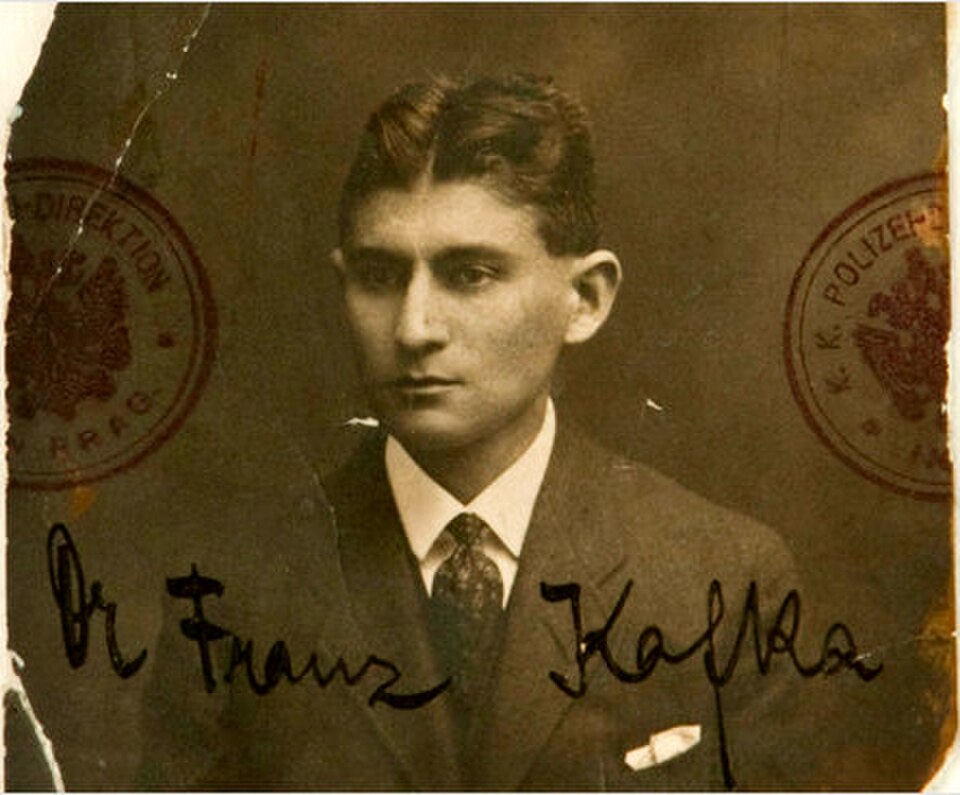
Accelerated by the genocide in Gaza, Jewish identity around the world is being torn down and rebuilt. A partial Zionist consensus that existed for a generation after 1967 is melting away — traditional anti-Zionist leftist ideologies of the Jewish Left are reemerging from its ashes. Surely Kafka, the great assimilated Jewish-German artist of the 20th century, could offer some material to think about such screaming contradictions.
Kafka’s relationship to Judaism and Zionism was ambivalent. “What do I have in common with Jews?” he wondered. “I hardly have anything in common with myself.” Yet he was fascinated by the competing Jewish revivals going on around him, studying Hebrew and attending Yiddish theater in Prague.
A modern staging of Kafka could try to reflect how today’s ideological tensions echo those of the author. But no. Despite a stunning performance by Kathrin Wehlisch as Joseph K., this is a standard version of The Trial, more than 100 years after the story’s publication. In vain one waits to see some nod to the world we live in. How about a right-wing German judge condemning a Jewish immigrant for antisemitism? Kafkaesque!
To create an air of originality, the standard play is interrupted by Yiddish pop songs of a century ago — beautiful but random. On top of this, the audience reads a short story and diary entries from Kafka as he lay dying in a sanatorium. There are Klezmer melodies and poems by Heinrich Heine. Kafka’s short story “The Penal Colony” is read in full, so that K. is executed twice for no apparent reason.
There are brief moments of creativity, such as when K.’s advocate thunders in Hebrew from inside a Hekhal: “Thou shall have no other advocates before me!” But these are few and far between. Coming in at over three hours, it’s an exhausting mishmash with nothing to say about anything.
An artist like Daniel Kahn might have done something profound with a Yiddish-language Kafka musical — but Kahn is too radical to get a big stage in Germany today. K. is Jewish culture as the German bourgeoisie wants it: dead, meaningless cosplay. German philosemitism is superficial: Any engagement with Jews (or those who present themselves as Jews to German audiences) is strictly subordinate to the country’s imperialist interests.
The German establishment regularly cancels Jewish artists — not just radical leftists, but even famous artists like Nan Goldin or even comedians like Nathan Fielder. Only the German bourgeoisie really knows what antisemitism is, after all. So this innocuous Kafka production is the only thing that gets past the censorship.