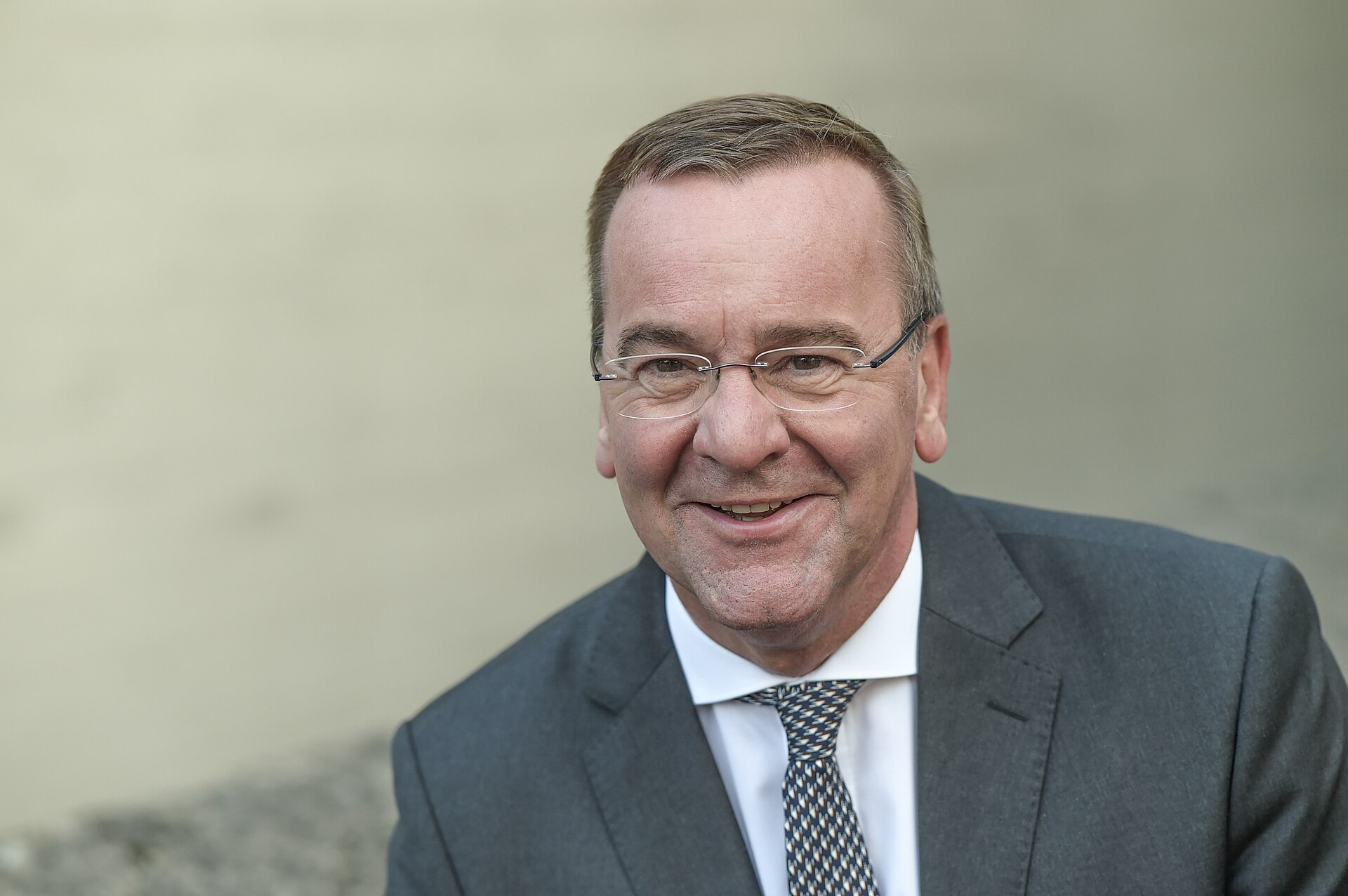
He’s often said to be Germany’s most loved politician, and was the only minister to serve under both Olaf Scholz (SPD) and Friedrich Merz (CDU). But who actually is Boris Pistorius, the man leading Germany’s military build-up? The Osnabrück native and career politician remains widely popular, even as his party the SPD crashes in one state election after another.
Although Pistorius has been pushing controversial reforms to the Bundeswehr, his popularity is only showing signs of wavering after three years in office. If anything stands out about the steady-handed Pistorius compared to the rest of the ruling coalition, it’s his ability to avoid controversy and scandal. Alongside Friedrich Merz’s notorious thoughtless outbursts, or Culture and Media minister Wolfram Weimer’s blatant conflict of interests, Pistorius’ best quality may be his appearance of trustworthiness and competence.
Born in 1960 to East German parents who had left the DDR for Osnabrück, he did his mandatory service in the Bundeswehr and law studies before beginning a string of administrative positions in 1991. He rose through various different jobs under his mentor and then Osnabrück mayor Hans-Jürgen Fip (SPD), until Pistorius eventually took over as mayor in 2006. He remained in this position until 2013, when he became minister of Interior and Sport for Niedersachsen [Lower-Saxony].
It was at this point of transition between jobs that Pistorius faced the main personal scandal of his career. Before leaving his job as mayor he gave out bonuses to his subordinates; which many considered a relatively common practice. He was charged with breach of trust, but the charges were thrown out in court when it was deemed Pistorius did not personally benefit.
Pistorius remained minister of sports and the interior for ten years between 2013 and 2023, overseeing the turbulent years of Germany’s so-called refugee crisis and the COVID pandemic. Pistorius was and remains on the conservative wing of the SPD. As internal minister, he stressed themes such as the so-called Klan-Kriminalität and Sicherheit, often calling for the SPD to not cede topics such as the fight against terrorism to the CDU.
At the same time, he maintained a liberal face regarding many of the policies of the federal CDU government under Angela Merkel. Like Merkel, he devoted much of his time to the topic of migration. He often called for Germany to take in more refugees than Merkel’s government was allowing, especially in key moments such as after the fire in the refugee camp of Moria. He balanced these critiques, however, with harsh policies such as pushing for supposed improvements to the deportation systems. These reforms, he argued, would make deportations both more efficient and humane.
Over the years, Pistorius also often engaged on the topic of Frontex. While never uncritical of the company, he also never withdrew support from it. In 2017 he had even suggested sending German soldiers to Greece and Türkiye to support Frontex’s work. While he harshly critiqued Frontex in March of 2021 for a scandal related to its use of pushbacks, three months later he formulated his response properly by suggesting Europe take more direct control over the company, as a form of Weiterentwicklung [further development].
It was in January of 2023, almost a year after Russia invaded Ukraine, that Pistorius was selected as Germany’s new defense minister. Coming into the role at a time when the Bundewehr is at the center of government policy and focus, long-time CDU politician Armin Laschet described him as Germany’s most powerful defense minister in years. Pistorius has used this power, as well as his popularity, to push remilitarisation among the German population, with limited success. A poll from the Bundeswehr itself reports an improving view of the Bundeswehr among Germans, with 68% of respondents supporting increased defence spending.
Yet overall, Pistorius has had mixed results in his hoped-for mobilisation of German youths into the Bundeswehr. Despite some shifts in opinion among the wider population, only 16% of Germans consider themselves “absolutely ready” to pick up weapons for their country, although 22% said they would “probably” do it. The same survey showed that 61% of 18-29 year olds were against the reinstatement of conscription. This weariness led the Bundeswehr to twist its statistics so blatantly that we get this quote from Deutsche Welle: “The ministry said that if you excluded people who responded with a 0 when asked to rank their interest in joining the military from 0 to 10, then the average figure given was a 5.”
Despite this weariness, recently released statistics show that the ranks of the Bundeswehr are slowly growing. The military has 2% more troops than it did this time last year, and a 26% increase in applications over the same period. Whether Pistorius’ policies are considered a success, depends on whether this increase continues to grow, or whether it was a one-time boost.
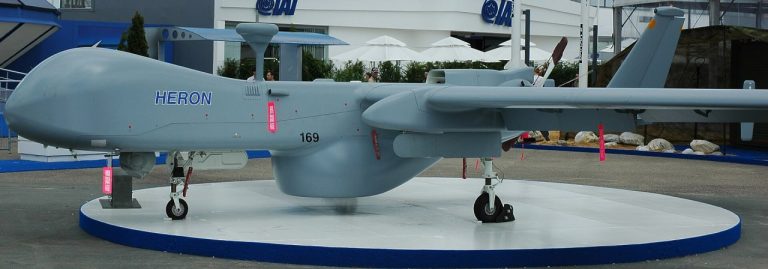
But if his advertising campaigns are having mixed results, he has found more success on the financial side. This year, the government gave the Bundeswehr the largest sum of money to date for infrastructure and weapons: 108 billion Euros. This money will come from the Sondervermögen approved by the government last year, as well as the regular budget, and among other things equip the Bundeswehr with Pistorius’ long-sought-after military drones.
If there is a sense of continuity visible between Pistorius’ calls for strengthening and centralised control over Frontex, and his strengthening of the military, there are also two overlapping distinctions. First, the Bundeswehr is already firmly under the control of the German state. Second, that control is not just centralised, it is also held firmly in his hands.
While his communication skills were enough to get by while he was dealing with EU-level politics as a Bundesland-level politician, now Pistorius has both the power and responsibility to see through his vision — at least in theory. In the military itself, occasional discontent has already begun to rise against his management style, despite his frequent posing in military uniform sticking out of a tank for the cameras. At the same time, students have begun taking to the streets against his political policies, organising in schools to undercut his efforts to make the Bundeswehr the strongest military in Europe. Who Boris Pistorius is can be answered easily enough, what he will achieve remains open.