In the past, film festivals were more than just screenings; they were also political events. Today, we are talking about different things when discussing cinema or participating in a festival. At the 2026 Berlinale, jury president Wim Wenders drew criticism after saying ‘we have to stay out of politics’ when asked about Israel’s genocide in Gaza. Two prize-winning Turkish films at this year’s Berlinale have also become flashpoints for political debates. İlker Çatak’s Yellow Letters and Emin Alper’s Salvation have entered ongoing discussions about the intensifying pressures of state repression, censorship, and nationalist politics shaping Germany’s and Türkiye’s cultural spheres.
The consequences of cutting political meaning out of festival spaces are now impossible to ignore. In 2024, Human Rights Watch announced it was closing its film festival after 35 years as part of a wider restructuring due to financial constraints. This was more than an institutional loss: it exposed the vulnerability of liberal human-rights culture under financial pressure. The 45th Istanbul Film Festival offers a similar case: the Nerdesin Aşkım? curated queer selection, previously excluded on technical grounds, with promises of reinstatement in 2026, was again absent from the program. Filmmakers and cultural workers described the omission as censorship and linked it to the broader climate of anti-LGBTQ+ repression in Türkiye.
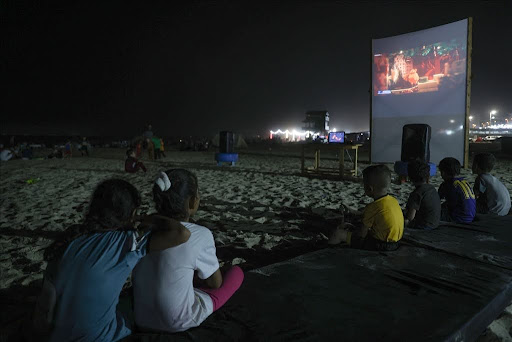
This should compel us to ask what role these spaces actually play. Film screenings can bring people together as active participants in communal spaces. This makes cinema a counter-hegemonic political engagement for social change, and a means to share ideas and build solidarity. Many such festivals still exist. However, with the rise of neoliberal culture, they increasingly work within an environment shaped by stakeholders, non-governmental organization (NGO) agendas, and broader market logics; therefore, they function not only as sites of resistance but also as part of the expanding service economy. In this sense, the main question is not whether movies can be political, but how places that support film culture are evolving today.
What makes a film festival radical?
The phrase ‘radical film festival’ seems contradictory, since mainstream festivals often present themselves as impartial spaces rather than political entities. This is the reason why festival culture often mixes political aspiration with competition for legitimacy. Filmmakers, funding bodies, NGOs, critics, journalists, scholars, and audiences all compete for legitimacy and appearance, even when they share similar ideological stances. Consequently, it is often unclear what ‘radical’ refers to, and who gets to define it. This feeling often leads to destructive, futile debates. When the stakes feel high and the boundaries are blurry, people tend to defend their own position or just try to prove themselves right rather than seek real solutions.
Instead of just saying that festivals are less radical, we could find out how digital technologies affect their operational capacity to support resistance. In the age of platform capitalism, the question is what happens when access to cinema depends on corporate infrastructures. Online platforms do not simply reproduce inequality; they also shape visibility, restrict circulation, and shape who sees what, where, and when. The central question, then, is this: how do the meanings of resistance and the value of film exhibition change when radical film cultures spread through festival circuits and digital technologies?
A grassroots or radical festival is defined less by branding, like a mainstream one, than by structure: collective organization, volunteer-led, precarious resources, and explicit political commitments. These festivals focus on films and activities that resist dominant ideas, give space to oppressed voices, and encourage people to discuss and come together by making it possible to create a proletarian public sphere. Their programming and organizational practice are shaped around anti-capitalist, anti-fascist, decolonial, feminist, queer, ecological, labor, or anti-war politics. At the same time, another perspective suggests that being radical in the festival circuit should be understood not only as a matter of thematic programming but also as a question of infrastructural organisation or the politics of space.
From Third Cinema to NGO liberalism
To understand the political shift mentioned at the beginning, it is necessary to recall that film festivals such as Cannes, Venice, and the Berlinale already functioned as soft-power arenas within Cold War politics. At the same time, they were shaped by anti-imperialist struggles, the liberation of oppressed nations and women, and student protests/labor strikes. It is also important to remember that the institution of the film festival was not born as an ‘impartial’ cultural experience: the Venice Film Festival, the world’s oldest, was founded in 1932 under Mussolini’s fascist regime as a tool of nationalist sentiment, alongside the broader festivals that came after. These were largely a product of Eurocentric, colonial assumptions about which cinema deserved legitimacy.
We should also remember the concept of the three types of cinema and of ‘cine‐acción’ (film event), which flourished in the manifesto of Third Cinema by Fernando Solanas and Octavio Getino. Rejecting Hollywood cinema (First Cinema) and European auteur cinema (Second Cinema), and instead promoting a militant cinema that supported anti-colonial, anti-capitalist, and anti-imperialist liberation movements, the Third Cinema was a true turning point in allowing spectators to become ‘actors’ in the political process. Attending a screening of militant cinema was a political act in itself, as it moved beyond borders to create new ways of anti-imperialist struggle.
The closure of the Human Rights Watch Film Festival and the removal of queer cinema from the Istanbul Film Festival are not singular events but the endpoint of a longer shift. This change can be seen as shifting from creating ‘manageable politics’ to ‘disappearance of politics’ in mainstream film festivals. At the same time, it would be too simple to suggest that truly radical work is now entirely excluded or in collapse. There are notable examples in the life of radical film culture that we need to focus on more: many festival programs showcase movies that take hard stances against the ruling class, promote social justice, or foster dynamic interactions that can result in real social change.
Platforms, access, and justifiable politics
Of course, this kind of organization comes with structural and financial costs that cannot be ignored, especially when moving into online media environments brings new costs and compromises. However, festival screenings are embedded in collective intellectual exercise, with people watching films together and often discussing them afterward. Yet such settings (especially when digital and theatrical practices coexisted) were often socially constrained, shaping access to film festivals by economic precarity and class distinctions. Digital technologies do not mean a simple victory of streaming over cinema; instead, they mean that new/hybrid forms of settlement will replace the decline of routine moviegoing. Film festivals, long understood as privileged sites of classical cinephilia, are being restructured by smartphones, apps, social media, and other forms of connected viewing.
Digital technologies have also generated so-called alternative media. The slippery term ‘alternative’ deserves suspicion as much as celebration. We should remember that ‘alternative’ often functions as a softened substitute for ‘radical’ within the broader media ecosystem. It softens the political face of genuine dissent, making it more acceptable to institutional gatekeepers, corporate interests, and liberal discourse without threatening the system. To call something ‘alternative,’ therefore, is to justify and separate activism from radicalism, perpetuating ruling-class market ideology by offering society a myth rather than real resistance to capitalism.
What remains possible?
In an era of escalating capitalist exploitation and colonial oppression, a rising imperialist warfare machine, and the rapid spread of fascist, nationalist, and alt-right ideas through online media, even watching a radical film, whether on a laptop or in a physical venue, can feel politically isolating. This contemporary media experience is not the same as traditional censorship; radical themes in movies can still be produced, screened, and watched. What has changed is how people engage with them and how they perceive them.
Pressures are real, but they don’t exhaust the openings for a radical struggle. Even though problems exist, isn’t it still too early to say that film festivals can no longer be spaces of resistance? Foreclosing all possibilities and directly humiliating the festival experience can never be an option for a true radical film culture.
The film festival ecosystem is best understood as contradictory rather than fixed: it contains both fragile spaces of solidarity and the pressures of ruling class power. Film festivals are neither completely assimilated nor fully autonomous events. They organize within contradictions that reveal broader transformations in global capitalism, film circulation, and media culture. Their political effectiveness depends on how programmers, filmmakers, and audiences deal with tensions. In an era of collapsing liberal morality and post-Covid precarity, film cultures endure as fragile yet necessary laboratories where cinema can still serve as a catalyst for collective resistance and change.