As the Left Party weighs its governing credibility against the autonomous sections of the left-political movement, an old Swedish political dilemma surfaces: How much should be sacrificed in the name of rationality before the ties to the public squares, the civic society, and solidarity movements begin to crackle?
Sweden’s parliamentary deadlock after the general elections in mid-September 2026 is rooted in a neoliberal turn made by the Social Democratic Party in the late 1980s, after the assassination of Prime Minister Olof Palme. The political momentum of privatization and “liberalization” schemes, continued by a right-wing government between 1991 and 1994. A right-wing pivot that, became cemented as a political status quo and “Ground Zero” until this day.
Despite Sweden’s cemented right-wing , all attempts to form a new government have failed. But no proposal includes Sweden’s sole parliamentary left-political option: Vänsterpartiet (Left Party). A party formed 1917 in the Communist tradition after a split within the Social Democratic Party.
***
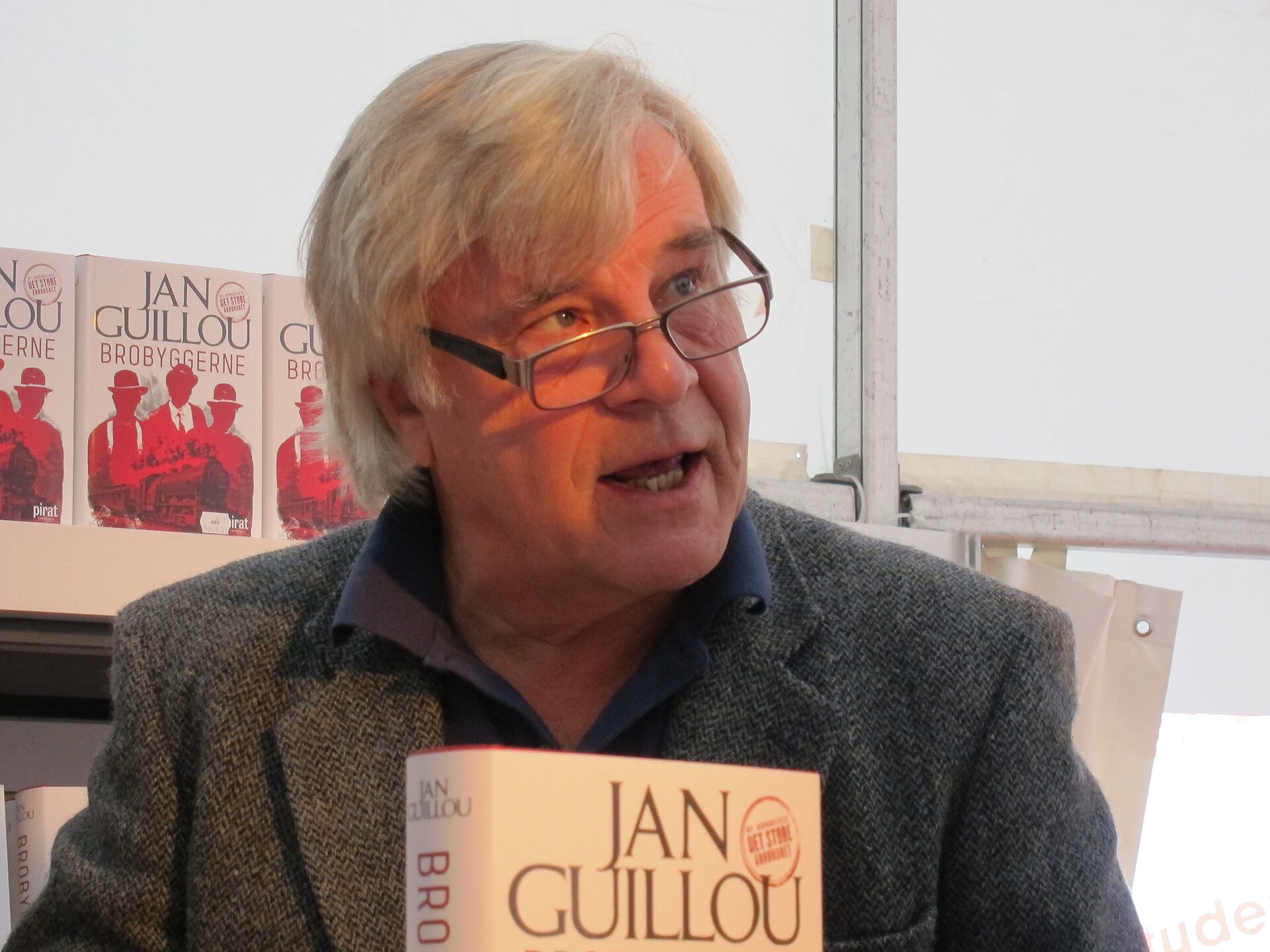
Vänsterpartiet advanced in the latest election, stealing voters from a declining social democratic movement . Despite the electoral success, Vänsterpartiet is criticized by the autonomous Swedish left for undermining ideology, purging grassroots members, and neglecting political credibility – for the sake of ministerial portfolios. Regardless of the next Swedish government, the politics, ideology, and culture of Vänsterpartiet as a representative for socialist policies will be debated. Jan Guillou when asked to explain his political engagement says: “…I’m no different from other sensible young people,If you take the ridiculed year 1968, the world actually looked like this… “In Vietnam, bombs were raining down on a poor farming population; in southern Africa, apartheid ruled in two states; Portugal waged three colonial wars—in Guinea-Bissau, Mozambique, and Angola; Spain was a fascist dictatorship where political opponents were actually garroted; Greece had just become a military dictatorship. Anyone who was not against this was possibly (later Swedish conservative prime minister) Carl Bildt, but the rest of us were furious.”
The fury, as explained by Guillou, was rooted not only in the world’s many injustices, but was also directed at the dominant Swedish Social Democrats, who, “to a large extent sided with the bombers.”
The “IB Affair”—a severe blow to the Social Democrats
In May 1973, Guillou and Peter Bratt exposed the previously strictly secret Swedish intelligence service “IB.” This had beyond consent of Parliament and public knowledge mapped and monitored members of the solidarity groups supporting the Vietnamese National Liberation Front (FNL) and infiltrated the Swedish Palestine movement
These revelations marked one of many disclosures about illegal and secret surveillance of political opinions targeting trade unions, communist associations, and parties. The Swedish public was outraged, politicians were called to account, and parliamentary inquiries were launched. Yet it was Guillou, Bratt, and their IB “insider” Håkan Isacson who found themselves arrested and, in January 1974, convicted of espionage—for journalism.
This political scandal in Sweden is mirrored in the same year, where Washington Post reporters Bob Woodward and Carl Bernstein exposed the Watergate scandal but were praised for their journalism. The IB affair disclosed a similar case of abuse of power, unlawful political registration, and wiretapping of dissenters. But where the USA Watergate revelations were proof of journalism’s function in a lawful society , in Sweden, the IB affair exampled how far the Social Democratic–coordinated and controlled apparatus of power would go to silence unwelcome critics.
The Social Democrats—a party with multiple agendas
The IB revelations confirmed that Sweden was not a neutral voice in the Cold War, but a close ally of NATO and intelligence services in the US, West Germany, the UK, and Israel. This “realpolitical” reality contradicted Olof Palme’s most symbolically charged actions, including condemning US warfare in Vietnam.
The Cold War narrative handed Sweden forms of political registration only formally prohibited until 1969. Authorities like IB and the Swedish Security Police (Säpo) acquired infiltrators and contacts, and mapped ‘subversives’. Entire groups or individual sympathizers were classified as “security risks,” even as their own government criticised colonial wars in Africa, apartheid rule, and the Vietnam war.
“The Swedish Social Democratic Party lost an entire generation of intellectual young people and made the mistake of branding every form of opposition as communist,” says Jan Guillou. “And there were quite a few of us who said, ‘If you have to be a communist to oppose the napalm bombing of farmers in Vietnam—then we’re communists.’”
Social Democracy’s “betrayal” of the Swedish left culminated in the espionage sentences against journalists Guillou and Ingvar Bratt. It raised an ideological and practical wall between the state-ruling party and the autonomous movements which were the principal architects of the Swedish welfare state. The rupture proved lasting: an entire generation gravitated away from the Social Democrats. The party’s rightward turn under finance minister Kjell-Olof Feldt in the 1980s extinguished, the hope that Social Democracy was a progressive left-wing alternative.
What the Vietnam War meant for an entire generation of politically engaged in the 1960s found its counterpart in 2003, when the United States illegally invaded Iraq. Mass demonstrations and demands for legal proceedings against policymakers followed. But Swedish Social Democracy remained on the sidelines. Prime minister Göran Persson’s Social Democraticy led government criticized the lack of a U.N. mandate but joined the NATO machinery to fight Iraqi and other armed groups to fragment and implode Iraq.
The “Mad Attack” as the Smoking Gun
Like the Gaza genocide , the Vietnam War began with an “act of madness.” On 8 July 1959, six guerrilla fighters of the Viet Minh members organized a united resistance front against the U.S.-backed government. They attacked a military compound in Biên Hòa, housing U.S. military advisers.”
They responded to the land policies and persecution carried out by the government of South Vietnamese leader Ngo Dinh Diem. But it was quickly repackaged by TIME Magazine as an atrocity committed by “communist terrorists”.
The political narrative was cemented aignoring the geopolitical context. It led to a rapid U.S. buildup of the South Vietnamese military and expanded the U.S. presence from 900 to 16,000 advisers in three years.
When the NLF (National Liberation Front) was officially formed in 1960 the Vietnamese resistance movement inherited this “act of madness,” as an example of allegedly indiscriminate communist violence.
In the same way, Hamas’s attack on 7 October 2023 was made into an origin scene for an entire war and for the collective guilt of an entire population. The tools used to turn a single act of violence into an origin story not only for a war but for whole populations have remained consistent across widely different conflicts and decades.
The Party Line … Or Else!
The Left Party’s official line is split: on the one hand, the party speaks openly of an ongoing genocide in Gaza, criticizes Israel, and wants to see a two-state solution. On the other, the party purges people who have gone further than the party line allows in their criticism of Israel and support for Hamas. These local activists and local political workers were either forced to leave assignments, expelled, or removed from electoral lists. Together, all these various party fringes form another political alternative that, on the one hand, speaks of genocide but, on the other, punishes those who actively work to turn resistance to it into realpolitik.
The logic behind this pattern is “rationality” Because a party aiming for ministerial posts in a Social Democratic–led government in 2026 cannot be accused of sympathy for terrorism or antisemitism . In realpolitical terms, then, every expulsion and distancing is carefully calculated forfuture governing credibility. But it has a high long-term price. Like Social Democracy in the 1970s, the Left Party in the 2020s risks being branded a political alternative that bargains its way to power at the expense of the oppressed.
The conflict therefore becomes not only moral but also strategic. A successfully negotiated cabinet post results only from yieldingto an occupying state’s use of violence against a trapped civilian population. And for the movement outside parliament —which the Left Party considers itself to represent—every expulsion and condemnation of “terror romanticism” becomes the bill for only short-term realpolitical gains.
The parallel with the 1970s is not complete.. These are different times in 2026 than in 1973, it should be stressed. If IB and Säpo operated under the radar, political registration now occurs in real time as collected data on individuals’ participation in demonstrations and their liked and published posts on social media. Meanwhilewhile the Swedish security apparatus continue to register social criticism with generous legislative changes at their backs.
From the 1960s Mining Fields to 2020s Gaza Demos?
Are the Palestine demonstrations in Norway the contemporary equivalent of the mining strikes in the Malm Fields in the 1960s that forced the state-owned mining company LKAB to implement progressive labor reforms. Different events, certainly, but with the same system-critical edge directed at the Swedish left that the demonstrators believed stood on their side.
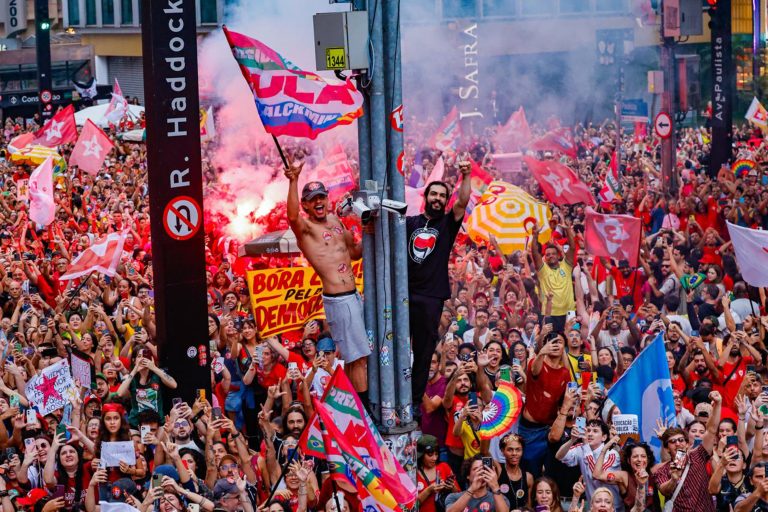
The ongoing political registration of individuals’ social media account likes appears to be institutional, whether it takes place in secret or with laws. It shapes a political establishment that decides which opinions are good and bad, and which organizations and movements are “dangerous”. And that is why everything becomes a choice for the entire Swedish left: as a voter, activist, and fellow human being. Should it choose rationality and follow the Left Party into government negotiations? Or, just as the left turned its back on Social Democracy after the IB affair, should it remain in the streets and squares and help loosen the knot between party and movement?
The generation that comes of age with the ongoing hell of Gaza will remember individual images, impressions, or testimonies as their predecessors saw children burning from napalm rain in Vietnam . Since Hamas’s October 2023 attack, 64,000 children have been killed or injured in Gaza. What does that number do to us? Is it even possible to take in? What is clear is that it is mobilizing millions of people around the world, in various forms.
People’s organized resistance to conflicts, colonial wars, dictatorships, and showers of napalm over civilians during the 1960s and 1970s taught an entire generation of Swedish intellectuals that political parties seeking real power ultimately see their most radical wing as a liability rather than an asset. Will today’s organized critics of the genocide in Gaza, the massive expansion of Sweden’s defense spending, and NATO-adapted social infrastructure draw the same lesson in the future? Perhaps they are already doing so at the ballot box in on 13 September 2026?
If so, the Left Party’s rational approach to realpolitical bargaining over ministerial posts seems to result in a historic ticket into the governmental chambers at the expense of long-term credibility. The very same movements and their heirs turned their backs on Social Democracy in the aftermath of the IB affair in the 1970s. The risk that the Left Party will lose another entire generation of politically engaged people is imminent. And perhaps that is where the true cost of rationality becomes visible,not in the compromise itself, but in the bonds severed along the way.