The criminal attack carried out by the United States against Venezuela, involving the kidnapping of President Nicolás Maduro, represents not only a flagrant violation of international law, but also a clear expression of Donald Trump’s new geopolitical strategy, recently outlined in his National Security Strategy. In decline, yes, but still an empire, the United States now seeks to disengage from costly conflicts with mixed outcomes across the globe (i.e., the Middle East, Asia, Ukraine) and instead secure what it considers its “natural” sphere of influence: its backyard, Latin America.
Venezuela is merely the spearhead of a broader strategy aimed at reasserting control over the entire continent and expelling China’s expanding commercial presence, which grew precisely while Washington focused its attention elsewhere. In countries where installing a puppet government through electoral means (such as Argentina, Chile, Ecuador, Paraguay, Bolivia, and El Salvador) proves impossible, the military option becomes the preferred path.
Since Hugo Chávez’s first election, Venezuela has positioned itself as the central antagonist of US imperialism in the region. As the holder of the world’s largest proven oil reserves, it becomes an automatic target whenever a government prioritizes sovereignty and regional integration. Unsurprisingly, Chávez survived multiple US-backed coup attempts, including the emblematic 2002 coup, when he was detained for 47 hours and restored to power through mass popular mobilization.
The kidnapping of Maduro constitutes the most severe blow ever dealt to the United Socialist Party of Venezuela (PSUV) governments and marks the first direct US military intervention in Latin America since the invasion of Panama in 1989. The international reaction was, predictably, accommodating. Within the region, only Mexico, Colombia, Brazil, Cuba, and Uruguay forcefully condemned the operation. Most other governments, already shaped by the contemporary right-wing wave, seized the moment to reaffirm their subservience to Washington.
European “Western democracies” also took the opportunity to reaffirm subservience. With the notable exception of Spain, the blatant alignment displayed by figures such as Ursula von der Leyen, Friedrich Merz, and Emmanuel Macron made one thing clear: European governments oppose military invasions only when they occur on European soil.
This response is consistent with Europe’s long-standing discomfort with the Chavismo experience. Even the European left has rarely looked favorably upon the Bolivarian process. While Chávez advanced structural reforms under the banner of “21st-century socialism”, European progressives hastily voiced abstract concerns about democracy and liberal institutions, labeling the process authoritarian—all while drawing inspiration from it.
The most significant innovation of the European left in this century has so far been the emergence of “party-movement” formations after the 2008 crisis, such as Syriza in Greece and Podemos in Spain. The latter, alongside France Insoumise, was deeply influenced by the work of Chantal Mouffe and Ernesto Laclau, two “post-Marxist” theorists who developed the strategy of “left-wing populism” in which political advances would emerge from a combined strategy of popular mobilization and class struggle within liberal democracy, pushing it to its limits without breaking with its democratic institutions. Mouffe and Laclau merely translated into European language the Latin American experiences that took place during the “pink tide.” After the fall of the Berlin Wall, the global left was left tactically disoriented; openly admitting inspiration from the Bolivarianism of Chávez or Evo Morales would have been unacceptable to a deeply ingrained colonial mindset.
I am not particularly fond of “21st-century socialism”. Its limitations and contradictions are evident. Yet credit must be given where it is due. The Bolivarian Revolution understood that sovereignty in Latin America is impossible without a robust military doctrine and sustained popular mobilization. It grasped a fundamental truth: even negotiations with imperial power require drawing Bolívar’s sword.
Now that the United States once again openly wields its “big stick”—even threatening to seize European territory through Greenland—it is time for the European left to express unequivocal support for the Bolivarian Revolution.
Criticism of Venezuela, particularly under Maduro, is legitimate. Authoritarian practices exist, electoral fraud allegations deserve scrutiny, and Maduro himself has contributed to regional instability, such as in the Essequibo dispute. But solidarity with Venezuela today is not about defending Maduro’s government; it is about defending Latin American self-determination. The current offensive seeks nothing less than continental control.
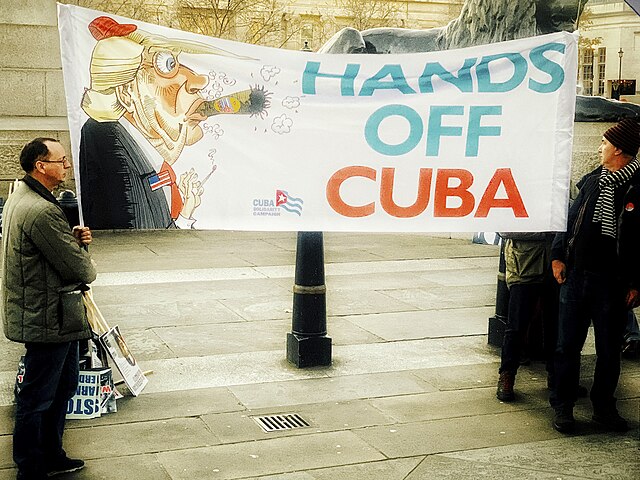
If an attack of this magnitude succeeds without meaningful international resistance, it will open a historic window for further interventions across the region. Trump’s updated Monroe Doctrine aims to reproduce a “War on Terror 2.0” in Latin America—replacing terrorists with “narco-terrorists”. The baseless accusation portraying Maduro as the leader of the so-called “Cartel de los Soles” exemplifies this logic, a claim from which even the US Department of Justice has now retreated. The next likely targets are Gustavo Petro’s Colombia and Claudia Sheinbaum’s Mexico, followed, with less geopolitical urgency, by Cuba, Marco Rubio’s perennial obsession.
Both Sheinbaum and Petro have already been associated with drug trafficking by US political discourse. The stated concern with combating narcotics is transparently disingenuous. If drug trafficking were truly the priority, Ecuador—governed by a Trump ally and the main transit route for narcotics into the US—would be the primary target. Moreover, Trump recently pardoned former Honduran president Juan Orlando Hernández, convicted of drug trafficking, in a move designed to influence domestic elections.
Still, the narco-terrorism narrative resonates domestically throughout the region, where urban crime remains a pressing concern. Promises of “bukelization” (modeled after Nayib Bukele’s security policies in El Salvador) continue to dominate right-wing rhetoric. In Brazil, a recent police operation in Rio de Janeiro, the deadliest in the country’s history, reinforced narratives of insecurity and state impotence. Far-right opposition figures have already proposed labeling criminal factions as narco-terrorists to justify calls for US military intervention.
Despite years of economic crisis, Venezuela may be the only country capable of offering even minimal resistance to US intervention. Petro is the first left-wing and openly anti-imperialist president to govern Colombia—long a de facto US protectorate with dozens of American military bases—under uniquely precarious conditions. Mexico, under Sheinbaum, faces the structural vulnerability of sharing a land border with the empire while remaining economically dependent on it.
Brazil, the region’s most significant actor economically, politically, and geographically, represents the final piece in securing control over South America. After an initial clash over tariffs—in which President Lula da Silva emerged strengthened as the only global leader to confront them until they were withdrawn—Trump shifted from overt support for Brazil’s opposition and the former president Jair Bolsonaro to a strategy of diplomatic neutralization. Whether this truce will last remains unclear. In any escalation, Washington relies on expanding military infrastructure in neighboring Argentina and Paraguay—while Brazil itself cannot rely on its armed forces, still haunted by the legacy of dictatorship and by the documented involvement of military sectors in Bolsonaro’s failed coup attempt in 2022.
For these reasons, a strategic military victory in Venezuela would create a dangerous window of opportunity. Yet it is premature to declare the Bolivarian Revolution defeated. The United States achieved a successful strike, but even a tactical victory remains uncertain.
If the goal was regime change, it has not (yet) been achieved. Trump sought a power vacuum to hand control to the opposition or force new elections. Instead, Vice President Delcy Rodríguez assumed an interim role while affirming Maduro’s continued presidency—a move designed to preserve PSUV’s cohesion and prevent political destabilization by conducting new elections in the absence of the president.
Speculation about betrayal followed the kidnapping, including allegations against the armed forces and Rodríguez herself. While such hypotheses cannot be dismissed outright, evidence now confirms that armed resistance occurred and that the US operation relied heavily on cyber warfare to disable Venezuelan defenses. Rodríguez’s long-standing loyalty to the Bolivarian project further weakens claims that Maduro was deliberately sacrificed, although some level of betrayal from third parties, even minor information leakage, must have happened in order for this type of operation to succeed.
With that in mind, Venezuela’s immediate future will depend on how Rodríguez and the PSUV leadership manage relations with the occupying power. The fact that the United States must effectively “assume control” exposes a long-standing fiction: the Venezuelan opposition lacks sufficient political legitimacy to govern. As Trump himself acknowledged and CIA assessments reportedly confirmed, the PSUV’s political strength was significantly underestimated, while María Corina Machado’s influence was vastly exaggerated. No viable governing alternative exists outside PSUV ranks.
Machado’s role is particularly tragicomic. As a far-right activist, she has long advocated military intervention and economic sanctions against her own country. Even before receiving her shameful Nobel Peace Prize (yet another reminder of Europe’s selective moralism), she promised an aggressive privatization agenda subordinated to foreign capital. Her enthusiasm for handing Venezuela’s natural wealth to the Global North was barely concealed. Today, discarded by Trump, she scrambles for relevance, even proposing to share the Nobel Prize with the US president. Her humiliating end is a reminder of the fate reserved for the submissive, bootlicker right-wing elites in the Global South: disposable instruments of imperial strategy.
Now, if PSUV refuses cooperation and no credible puppet alternative emerges, Washington faces limited options. A second strike and intensified psychological operations remain possible. Full-scale intervention, however, would require boots on the ground, a far more complex and costly endeavor—a cost perhaps too high for Trump’s administration to take when public opinion is not favorable during an electoral year.
Although Venezuela cannot match US firepower, several factors complicate a land invasion. Any ground operation would require Colombian authorization, unlikely under Petro. An amphibious invasion would be logistically demanding. Moreover, Venezuela’s military doctrine combines guerrilla warfare, prolonged popular resistance, and armed civilian militias.
Despite its many controversies and shortcomings, PSUV remains the largest left-wing party in Latin America, and its militias are far from symbolic. Their presence deters coups by raising the cost of civil war and poses serious challenges for occupying forces unfamiliar with the terrain and unable to distinguish combatants from civilians.
Predicting outcomes amid unfolding events is difficult. What is clear is that Venezuela stands at a critical juncture. Regime change has not occurred, but the level of force required to impose it will determine the country’s fate and the scale of its humanitarian crisis. Maduro’s political survival appears uncertain, but Venezuela can still be spared from becoming a new Libya. International solidarity is crucial.
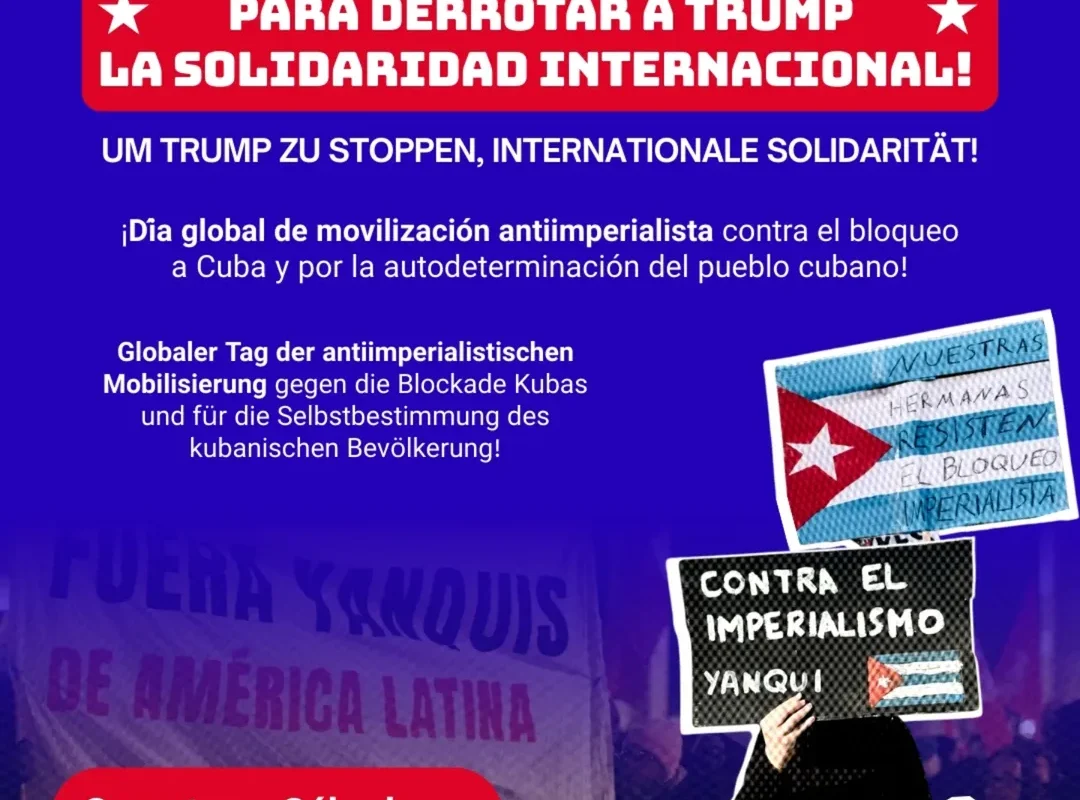
We are at a turning point. The invasion of Venezuela must be condemned unequivocally, before new victims are added to the list.