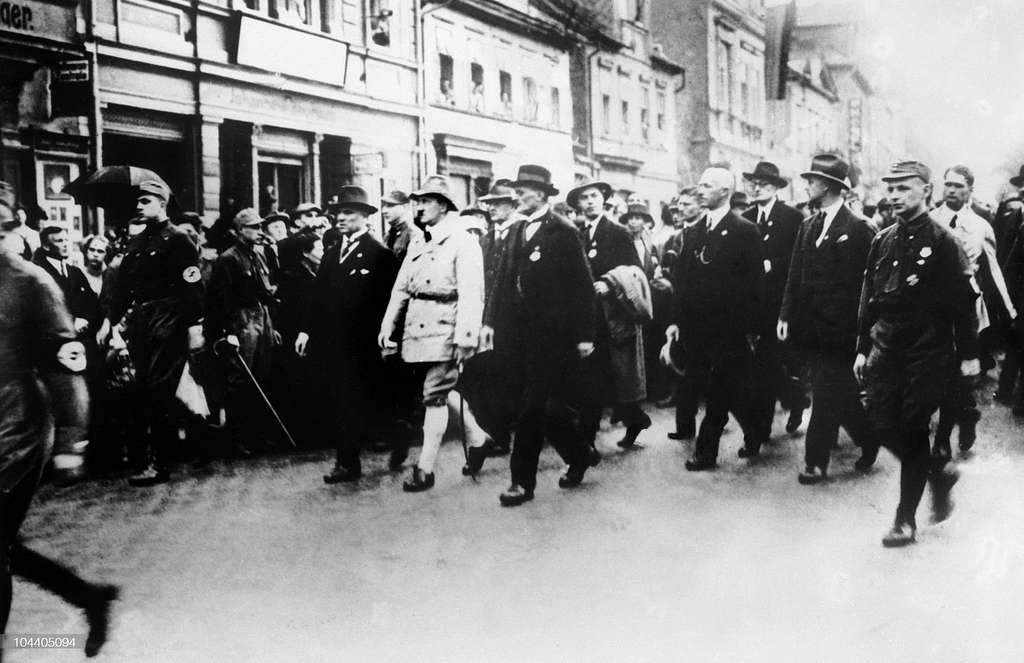
On 4 July 1926, Hitler’s National Socialist German Workers’ Party (Nazi Party) held its second party conference in Weimar. This was the party’s first major gathering since Hitler had been released from jail after being convicted of treason. The conference was intended to take place in Munich, the site of the first conference, but Hitler was banned from speaking in Bavaria at the time.
According to the Buchenwald Memorial, the primary aim of the 1926 rally was to “align the fragmented party unconditionally with Adolf Hitler and to present the NSDAP as a unified ‘movement’.” Weimar provided the ideal stage for this, largely because the party had the support of the state government in Thuringia at the time. It was at this rally that the Hitlergruß (Nazi salute) was showcased as a mass phenomenon for the first time, and two major decisions were made at the conference: the appointment of Joseph Goebbels as party leader in Berlin and the formation of the Hitler Youth.
The original party youth organisation, the Youth League of the Nazi Party, was founded in 1922 and then banned a year later, following the Nazis’ failed attempt to seize power in the Beer Hall Putsch. After the Hitler Youth was relaunched at the Weimar conference, it was quickly incorporated into the Sturmabteilung (SA, or storm troopers). Aimed at boys aged between 10 and 18, the Hitler Youth became the Nazi Party’s second paramilitary organisation to be founded, after the SA.
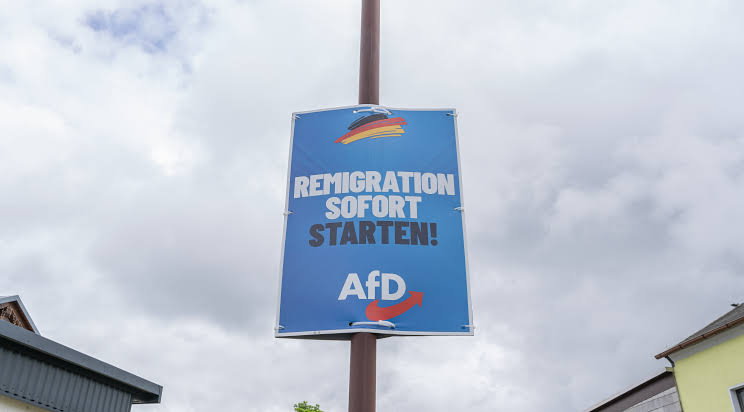
This weekend, on the 100th anniversary of the Weimar conference, the AfD is meeting in Erfurt, also in Thuringia. Historian Jörg Ganzenmüller has called this “a deliberate symbolic act that operates on several levels.” On the one hand, it acts as a dog whistle to the far-right scene. On the other, Ganzenmüller notes that “it maintains a facade of respectability in the public eye by feigning ignorance and downplaying the historical significance”, thereby preserving the party’s appeal to more moderate voters.
The parallels between 1926 and 2026 are clear. As in 1926, unemployment is rising alongside fears that another major crisis is just around the corner. A far-right party is again meeting in Thuringia, backed by strong local support. Its youth wing is radicalising into a street-fighting force. We must not let history repeat itself. The best way in which we can remember what happened 100 years ago is to join the blockades of the new Nazis in Erfurt this weekend.