“I will always be on the side of those who have nothing and who are not even allowed to enjoy the nothing they have in peace.”
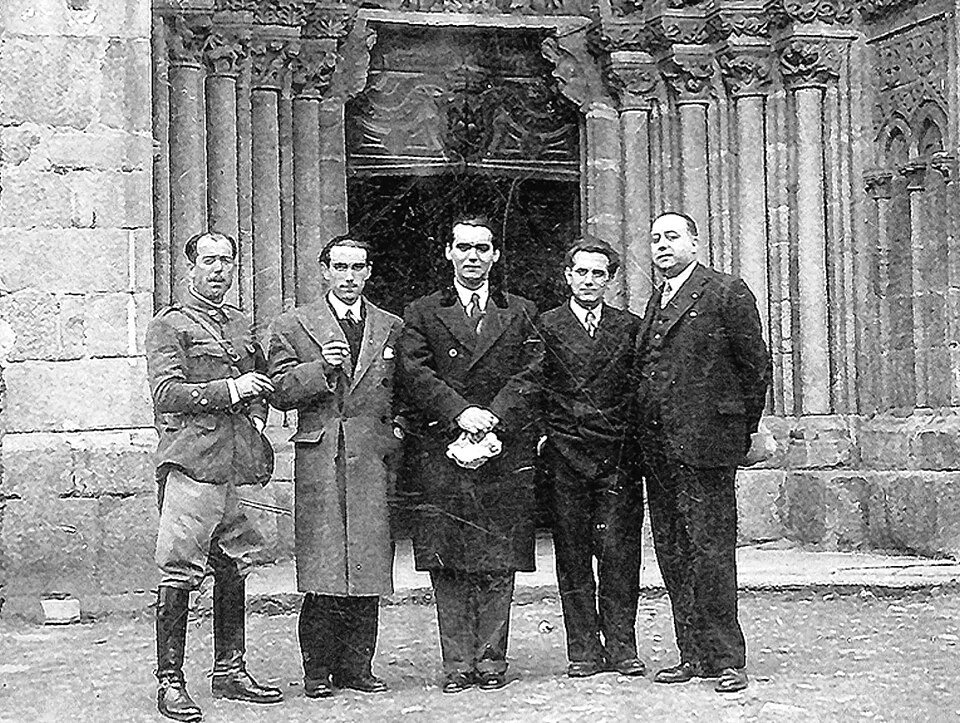
Federico García Lorca was born in 1898 in Fuente Vaqueros, Granada, and spent his childhood in the countryside, dedicated to his first passion—the piano. At 21, he moved to Madrid to study Philosophy and Law, and there he joined Generation of ‘27, a group of avant-garde Spanish poets and artists, becoming friends with prominent intellectuals and artists, such as the filmmaker Luis Buñuel and the painter Salvador Dalí.
His debut play, The Butterfly’s Evil Spell, presented in 1919, was a failure, but his subsequent works brought him increasing recognition—Mariana Pineda, which premiered in Barcelona in 1927, and included scenic designs by Dalí, was a major success. His most famous poetry collection, Romancero Gitano (Gypsy Ballads), from 1928, cemented him as an acclaimed author.
In 1929, he left the country for New York, where he studied at Columbia University and became more politicised, witnessing the Wall Street Crash and its effects. Lorca returned to Spain only a year later and became director of the student theatre, La Barraca, with the mission of bringing classical theatre to Spain’s rural communities and ensuring it was accessible to the working class. While working with La Barraca, between 1933 and 1936, he wrote his most famous plays—Blood Wedding, Yerma, and The House of Bernarda Alba. These became known as the “Rural Trilogy”, exploring topics of class divide and gender roles.
Despite the growing fascist movement in Spain, Lorca didn’t hide his leftist political views, nor did he censor what were at the time controversial themes of queer desire and his own sexuality—many of his works contain allegories of sexual repression and forbidden desire. According to his biographer, Ian Gibson, Lorca’s family denied access to his archives to researchers who wanted to explore his sexuality, and prevented a family friend from publishing letters that explored his relationships. After spending three months in Cuba in 1930, he wrote his most audacious play to that point, El Público—a romance between an older and a younger man. The play wouldn’t be performed publicly for decades, but it was met with success when it reached the stage in Madrid in 1987.
Lorca’s sexuality, alongside his support for the popular and working-class struggle, made him a target of the right-wing. In the summer of 1936, as Spain descended into civil war following a military uprising led by forces loyal to General Francisco Franco, Lorca moved from Madrid to Granada, seeking refuge there. His brother-in-law, who had recently been appointed mayor of Granada, was assassinated within a week of taking office. Lorca was arrested that same day and executed a few days later, at the age of 38. Lorca’s body was never found, but his death was believed to be carried out by nationalist militias.
In 2015, new documents were released that denounce that Lorca was killed on the order of Franco’s loyalists. A police report describes that he was killed for being a “freemason belonging to the Alhambra lodge” and someone who partook in “homosexual and abnormal practice.” An inscription on a memorial stone at the Barranco de Víznar, near Granada, reads “Lorca eran todos” (“Lorca was everyone”), since alongside him, there are tens of thousands of others—socialists, anarchists, trade unionists—who disappeared during the Spanish Civil War and have yet to be recovered from mass graves.