On 20 September, Berliners will be voting in two elections: one will decide the composition of Berlin’s state parliament, and the other will determine who represents residents in the district assemblies. The race has been close, with Die Linke and the CDU moving around the top of the polls in recent weeks, both polling between 20% and 23%. The AfD and the Greens follow close behind, whereas the SPD has consistently been in fifth place. Sahra Wagenknecht’s party, the BSW, is running for the Berlin state election for the first time, but it doesn’t look like it will make it past the 5% threshold.
The state and municipal elections are held concurrently every five years. The last one was held in February 2023, but only as a repeat of the September 2021 election due to irregularities during the vote. However, it did not reset the legislative term—elections are being held this year as originally planned.
What is the election for?
Berlin is one of Germany’s sixteen federal states—like the other states, it has its own parliament and government. Berlin’s parliament, the House of Representatives (Abgeordnetenhaus), is based in Mitte and has 130 seats—with parties needing at least 5% to enter. Elected representatives form different parliamentary groups and deal with issues that directly affect life in the city, such as schools, public transport, housing or urban development. There are 17 parties running.
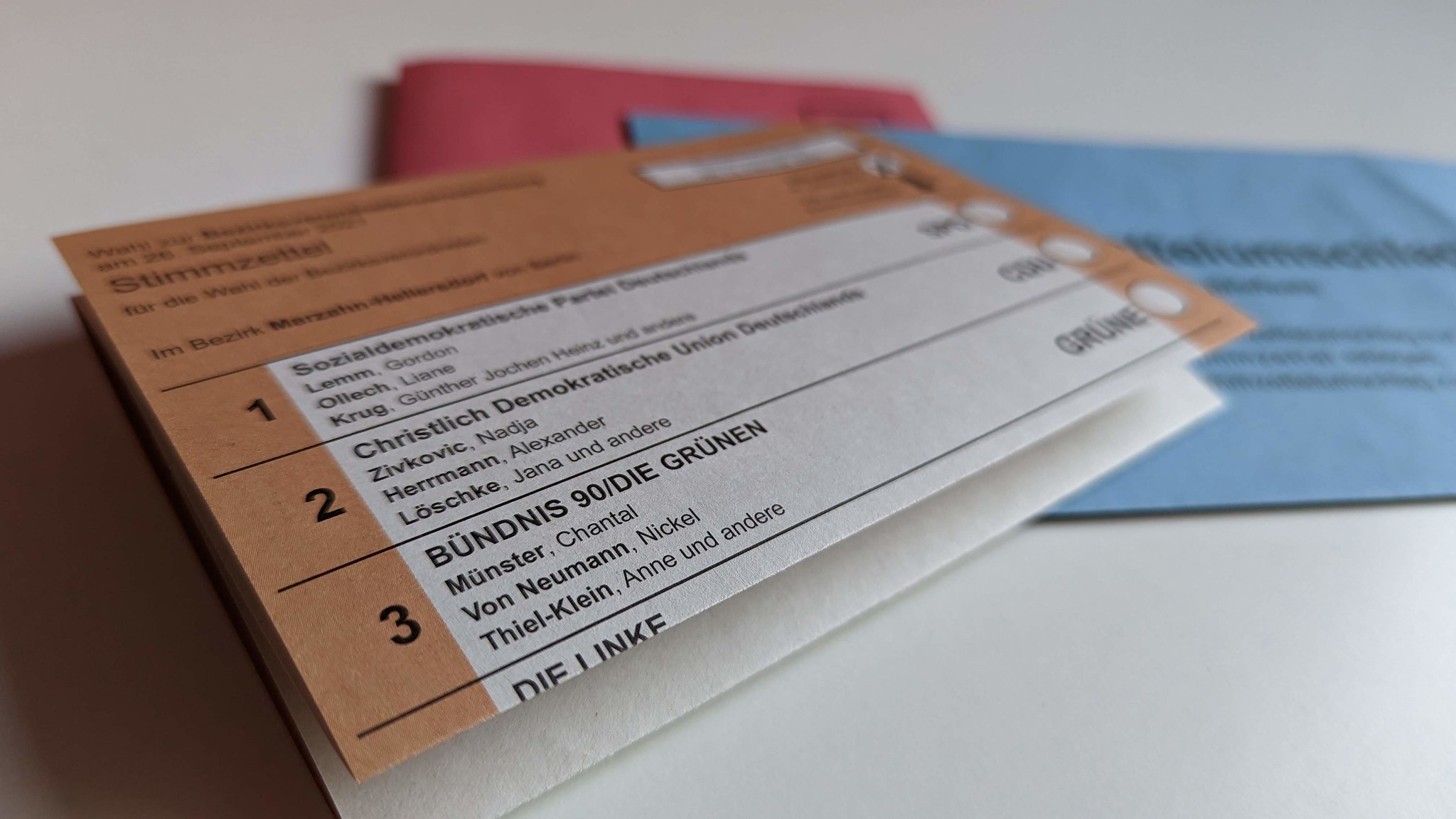
After the election, parties need to agree on possible coalitions—which might take several weeks—after which a mayor is elected. The mayor then appoints the senators who head the city’s various departments. Together, the mayor and senators form the Berlin Senate, responsible for implementing the parliament’s laws and decisions. When voting for the Abgeordnetenhaus, Berliners get two votes in one ballot: one for a candidate representing their local constituency and one for a party list, which determines the parliament’s seat distribution.
Beyond the state parliament, Berlin’s twelve districts (Bezirke) will also elect new district assemblies (Bezirksverordnetenversammlung/BVV). These are the political representatives of residents at the local level and deal with issues closer to everyday life, such as the renovation of local schools, street modifications, local parks, and other public spaces.
BVV assemblies cannot pass laws. Instead, they are responsible for implementing decisions that affect their district and adopt resolutions on local matters. Each BVV can have up to 55 elected representatives, and a party needs at least 3% of the vote to enter a district assembly. If a party does not put forward enough candidates to fill all of the seats it wins, those seats remain vacant. Each district assembly also elects its own district mayor by majority vote.
Both the Abgeordnetenhaus and the district assemblies are elected for five-year terms. All running parties’ programmes are linked here.
Who can vote?
German citizens aged 16 and over who have had their permanent residence in Berlin for at least three months are eligible to vote in both elections. This is the first time that 16- and 17-year-olds can vote, although they are not eligible to run for election.
Beyond German citizens, Berlin residents who have EU citizenship are also allowed to vote, but only for the district assemblies. In Berlin, that group includes approximately 250,000 people.
Although the voting population for this election will be the biggest one yet—due to the ability of people under 18 to vote—the number of Berliners who cannot vote for the Abgeordnetenhaus, either because they do not hold German citizenship (around 976,000 people) or because a court has deprived them of their voting rights, is very significant and has doubled since 2011.
How can you vote?
Between 10 and 30 August, eligible voters should have received their voter notification card (Wahlbenachrichtigung) by mail, which confirms that they are registered and the location where they should vote. If the letter didn’t arrive, voters can contact their local district election office (Bezirkswahlamt) and check whether they are listed on the electoral roll (Wahlverzeichnis).
Berliners can choose to participate in the election in person or by post. For in-person voting, voters can head to the polling stations (Wahllokal) with a valid form of identification between 08:00 and 18:00 on 20 September. Voting by post requires an application by 18 September, and the voting ballot needs to reach the electoral office by 18:00 on election day.
The assigned polling stations are identified in the voter notification letter, or online on the State Election Commissioner’s website, which also clarifies accessibility information for each voting location. More info on voting rights and a step-by-step guide are available here and here.
What is being discussed?
As Berliners prepare to vote, housing remains a central topic for all parties, which is unsurprising in a city with a housing shortage, rising rent costs, and with renters comprising almost 85% of the population. A September Berlin Trend poll found that 32% of respondents named housing as the most important issue faced in Berlin, followed by immigration at 10%, and internal security and crime at 9%.
A rent brake and a rent register for greater transparency are supported by almost all major parties (and opposed by the AfD). The debate started by the Deutsche Wohnen & Co enteignen referendum in 2021 regarding the socialisation of large housing companies remains heated, with Die Linke and the Greens supporting socialisation and the referendum’s result (Die Linke’s Elif Eralp promised on Wednesday to “work on socialisation from day one”), and CDU and AfD opposing it. SPD’s mayoral candidate, Steffen Krach, claims expropriation is off the table under his leadership (contradicting his own party’s stances).
Transport in Berlin is also a central issue—central topics are the old car-versus-bicycle debate, expanding public transport network and cycling infrastructure, or reducing public transport prices. The A100 city motorway—despite being a federal project—has also been a subject for discussion, with CDU supporting the planned extension, while the SPD, Greens and Die Linke oppose it.
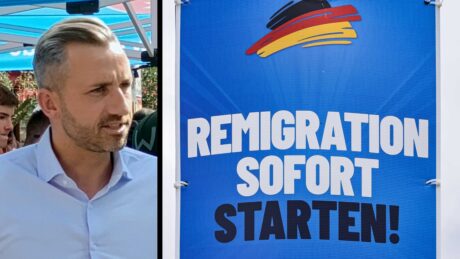
Policing and surveillance constitute another key topic, and a deeply polarising one. Unsurprisingly, CDU and AfD have “security” as a top priority, wanting increased police powers and enforcement, with proposals for the expansion of video surveillance, more police presence, and expedited trials and deportations—both greatly contributing to hate speech linking crime and migration. The SPD speaks of “community policing,” and more security personnel present in S-Bahn and U-Bahn stations. Die Linke and the Greens focus on social prevention, and reject the idea that better security means more police, with proposals such as abolishing the “crime hotspots” designations and decreasing surveillance powers.
Alongside this, culture has been part of the debate, with disagreement over how much public funding it should receive. Die Linke asks for a culture budget increase, 1000 additional spaces for artists and free Museum Sundays—proposals also supported by the Greens, alongside more transparent and independent cultural funding. The CDU talks about preserving Berlin’s major cultural institutions—even after their coalition government’s controversial cuts to the city’s cultural sector last year.
Education policy is yet another agenda item. Despite nationwide standards, each state decides independently on curricula, examination requirements or school structures. Berlin’s education system is faced with a shortage of teachers and professionals for after-school facilities, as well as financial constraints on universities. One of the structural disagreements is on the school system (Gymnasium vs. Gemeinschaftsschule): the CDU wants to preserve the differentiated system, whereas SPD, the Greens and Die Linke call for a more inclusive model. When it comes to the teacher shortage, most parties recognise this as an issue, but approaches differ: CDU wants faster recruitment, the Greens want quotas and incentives, the SPD targets distribution according to social need, and Die Linke wants increased training capacity and expanded free education. Other topics in the election discourse include the future of Tempelhofer Feld, the closing of Görlitzer Park, as well as candidates’ and parties’ positioning on topics broader than the Berlin state, such as corruption or foreign affairs.
More information on specific parties and their candidates is available on HEIST’s Berlin election guide, or HEIST and Refuge’s party-by-party article.