This week, Berlin welcomes the first edition of Untold Stories, a multilingual children’s literature festival initiated by the nonprofit lilipad. Running from 18–20 September 2026 across three community venues – Refugio (Neukölln), Amerika-Gedenkbibliothek (Kreuzberg) and Spore Initiative (Neukölln) – the festival treats multilingualism as a creative and social resource, placing children and families with migration experiences at the centre of its programme.
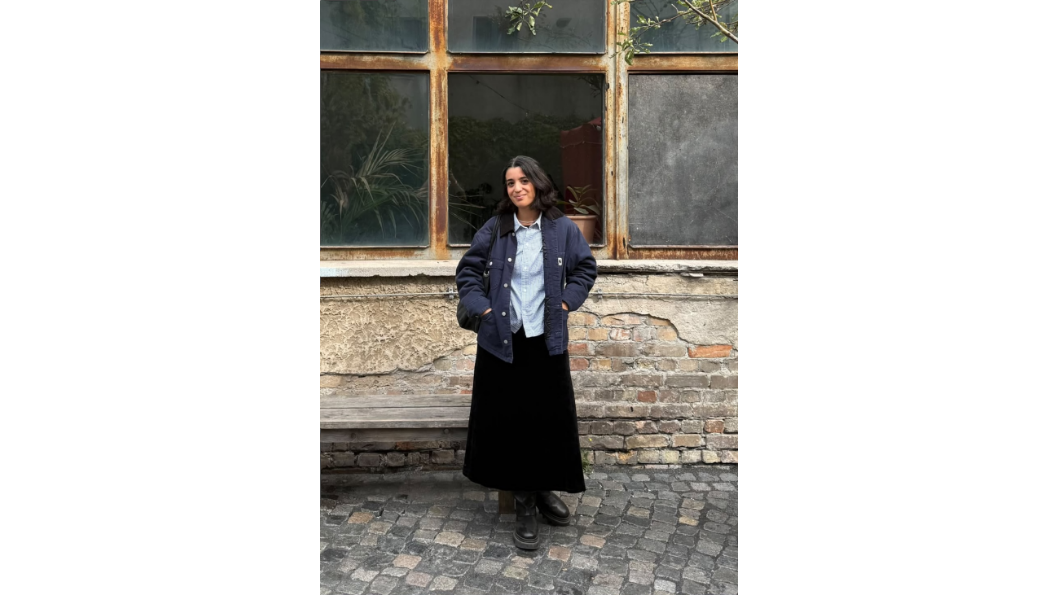
Rafael Sergi spoke with Sara Arsalane, founder of lilipad, about the organisation’s journey from grassroots library projects in refugee accommodations to launching Untold Stories: a free, three-day festival that brings multilingual readings, workshops, music, food and collective making into public cultural spaces. As Arsalane explains, the festival grew naturally out of lilipad’s long-standing work inside libraries behind closed doors; Untold Stories is both a celebration and an act of advocacy, making visible the artists, languages and stories that have shaped their community over the years.
You founded lilipad after working several years in tech. How did you find your way into children’s culture and literacy work, and what led you to do it?
I was working in tech and had been looking for a way to volunteer when I met Moses, a primary school teacher in Uganda. We started talking about his school and what they needed, and the first idea I suggested was to help open a small library. Moses approved of the library but I also quickly realised that the more immediate need was actually textbooks, so the project grew from there as I suddenly needed to do a bit of fundraising.
That was back in early 2017 in Berlin and with a group of friends, we raised money through cultural events: a live gig, an exhibition at a gallery where a friend was interning, a drag reading with a friend’s collective… These community events became quite characteristic of lilipad in those early days. From the beginning, it was built through friends, friends of friends and people we met along the way, many of us migrants ourselves and contributing whatever we could.
The work expanded to Morocco that same year (to Casablanca, where I grew up) and then to a community centre supporting refugee families in Berlin Friedrichshagen. For several years, lilipad remained entirely volunteer-run. We were all doing this alongside our full-time jobs, gradually opening more libraries and developing programmes around them as we went. I think with every new place, we understood a little more that the books were only part of the story and that we needed to put more emphasis on the adults that get to interact with the kids and the ways stories get told.
What effects of the deprivation of privacy, reading and creative activity did you see in the children, and what are you trying to achieve by dedicating yourself to this?
There is a UNICEF and German Institute for Human Rights study that we often come back to because we find its findings quite striking. Lack of privacy was the dominant issue raised by children across all four refugee accommodations they studied. Children talked about not having somewhere quiet to read or do homework, but also simply nowhere to be alone.
We recognise a lot of that from our work, but I also think we have to be careful not to reduce children living in refugee accommodation or any kind of shelter to a story of deprivation. What we see all the time is all the kids we work with are full of energy, motivation and that they showcase quite a lot of optimism. That was actually the starting point for one of our most recent projects called Narratives of Hope which was funded by the EU Commission and allowed us to grow our library network to Paris and Syracuse. We wanted to create space for children to imagine and make things without constantly asking them to return to what they have experienced or what they have lacked.
You’re working with children whose experiences are defined by disruption. What are the main challenges of building a model that runs on the opposite, namely repetition, permanence, a place they can return to and make their own?
This is probably one of the hardest things about our work because so much is outside our control. Families move, accommodation staff changes all the time, some of the shelters close after just a couple of years (we had instances where we had to move an entire library) and most of all, like all grassroots nonprofits we are subject to brutally short funding cycles – if there is funding at all…
Over the years, we’ve realised that the libraries that had a trusted and consistent adult presence were the ones that delivered the highest impact. You can put hundreds of beautiful books in a room, but without someone the children know and trust, it is much harder for that space to really become theirs. This is why our lilipad librarians have become such an important part of the model.
But of course, maintaining that continuity is difficult because we don’t have the means to hire librarians full-time or even part-time in Berlin. What we can do is invest much more seriously in those relationships and in having people who are rooted in the communities wherever possible, rather than building programmes around short-term interventions. The library is the physical space, but I think it’s the relationships that give it continuity.
Why did you choose reading, and the model of the library specifically, as the way to open children up and bring them together?
Reading changed my life. I didn’t grow up going to libraries in Morocco; they simply weren’t part of my childhood, and I didn’t have a school library. But my grandfather encouraged me to read, I found books quite young and never really stopped.
Books are also a cheap commodity compared to everything they can open up. And I like the informality of a library. We aren’t trying to recreate school. There are no grades, no reading levels you have to reach and no expectation that you have to read something considered particularly literary. You can love comics, spend your time drawing, listen to a story or just hang out and daydream on the beanbags.
You say that the library expects nothing and judges nothing, that offering something without condition is entirely new for some of these kids. How do you see the children’s approach when they realise nothing is expected of them?
What I find interesting is how differently children use that freedom. Some immediately want to be involved in everything. Others are a lot more shy and watch for a long time before joining. Some don’t care about the activity or workshop we’ve planned and want to do something completely different, and that’s also fine.
We deliberately try to create a space where there isn’t one correct way to participate. You don’t have to finish the book, make the thing, speak in front of the group or demonstrate that you’ve learned something. Migrant and refugee children already have a lot of adults and institutions telling them what they need to learn and what is expected of them. And that happens against a political backdrop where they and their families are increasingly talked about as a problem. We don’t want for the lilipad library to reproduce that. It should be one place where a child can just come in and decide for themselves what they want to do.
I think adults, even with the best intentions and particularly in education and nonprofit work, can be very quick to define what meaningful participation looks like. A child choosing not to participate, or choosing to participate completely on their own terms, is simply a matter of consent and something worth respecting.
This week marks the first edition of Untold Stories, a multilingual festival that treats multilingualism as a creative and social resource, placing children and families with migration experiences at the centre. What are the limits of a system that doesn’t take the multilingual factor into account?
I think language is also about power. When one language dominates cultural spaces, it doesn’t necessarily mean other languages are explicitly excluded, but there is still a message about which language (and by extension whose stories and cultural references) has the most value.
With Untold Stories, we wanted to play with that a little. There is no hierarchy between languages just as there is no hierarchy between a written story and one told through rap or theatre. And I think that’s an important distinction when we talk about participation. It shouldn’t only mean making it easier for migrant families to enter cultural spaces that have already been defined by somebody else. There should also be room for their languages, stories and cultural references to shape what happens inside those spaces.
How did you choose which activities go into the programme?
A lot of the programme actually grew out of the work we’ve been doing for years. Some of the artists at Untold Stories are people who have already been working with us inside our libraries, running workshops with children in refugee accommodations. Until now, much of that work has happened quite literally behind closed doors.
Untold Stories is an opportunity to bring that work out into the public, and there is an advocacy dimension to that for us too. That’s important to us because we want this work to be seen beyond the spaces where it usually happens, and to bring the artists and stories we’ve encountered over the years to a much wider audience. The programme grew quite naturally from there.
The festival includes stories about displacement, identity, and migrant experiences, diverse forms of masculinity and queer-inclusive family life. How do you approach difficult or politically sensitive subjects?
I think adults often decide that certain subjects are difficult or political before children do. Different kinds of families exist, people migrate, children encounter racism, and they have questions about identity and belonging. These things are already part of the world around them.
And particularly when it comes to migration, I don’t think we can pretend children are somehow outside the political climate around them. The political conversation has shifted significantly, including what is now considered acceptable to say about migration and about people seeking refuge. Children hear these conversations, see how their families are spoken about and experience the consequences of political decisions very directly. So for me, making space for stories about migration and belonging isn’t about bringing politics into children’s lives because politics is very much there.
The programme brings literature into dialogue with music, visual art, food, rap, calligraphy, dance and collective making. What can you tell us about the importance of going beyond the “conventional” format of an author reading or book fair?
I love books and author readings, but especially with children, I don’t think a reading has to mean an author sitting at the front of a room reading from a book. We actually have quite a few examples in the programme where we’re playing with the format. On Friday at Refugio, Regina Feldmann’s reading of Amma kann nicht einschlafen is accompanied by live illustration from Daniel Nikoi Djanie. And on Saturday morning at the Amerika-Gedenkbibliothek, Jane Mbeba is doing an interactive bilingual reading in Kiswahili and German.
I love that because it gives children different ways to connect with the same story. And then across the wider programme they can move even further away from the page, through puppetry, rap, calligraphy, music or food. It makes the whole experience much less rigid, which I think is especially important for a children’s literature festival.
The entire festival is free, and you are making particular efforts to welcome families with migration experiences, as well as BIPOC and queer families. What are the practical barriers that can prevent families from attending cultural events, and how are you trying to address them?
Making the festival free was obvious to us, but free doesn’t automatically mean accessible. For us, it was particularly important that children from some of the refugee accommodations where we have our libraries could actually be there. We’ll be organising transport and snacks for small groups to come to parts of the festival, rather than assuming that because an event is free, they will automatically be able to attend. We’re also providing translation support for key parts of the programme, food on site and an awareness team, and a lot of the outreach has happened directly through refugee accommodations, community organisations and families from our various Berlin neighbourhoods.
lilipad has grown from a small initiative into an organisation with employees, libraries and reading programmes across several countries. Do you have similar plans for Untold Stories?
Of course! I would love for Untold Stories to become a recurring part of Berlin’s cultural calendar. The ambition is there, but we’re less interested in making it bigger every year than in seeing what can build around it.
We’re already experimenting with that through the Untold Stories cookbook, our post-festival publication which uses food and the journeys of ingredients to explore children’s stories and memories, and which will keep growing through contributions at the festival. Ultimately, I’d like Untold Stories to become something people across Berlin recognise as theirs and look forward to returning to every year.