For most of the twentieth century, Iran did not control its own oil. In 1907, Britain and tsarist Russia carved the country into spheres of influence. The British-owned Anglo-Persian company, later renamed Anglo-Iranian, paid Iran a 16 percent share and kept its books closed to outside auditors, its 1950 profit alone topped everything it had paid in royalties over the previous fifty years. In 1941, Britain and the Soviet Union invaded, and Reza Shah’s son, Mohammad Reza, took the throne. When Iran nationalized its oil in 1951, Britain imposed an embargo, and in 1953 the CIA and MI6 helped overthrow the prime minister who had done it. The 1954 consortium gave Anglo-Iranian, soon renamed BP, and American oil firms 40 percent each. The US-backed Shah ruled through the secret police, SAVAK, and the West needed Iran as a stronghold for keeping oil cheap and worker demands down.
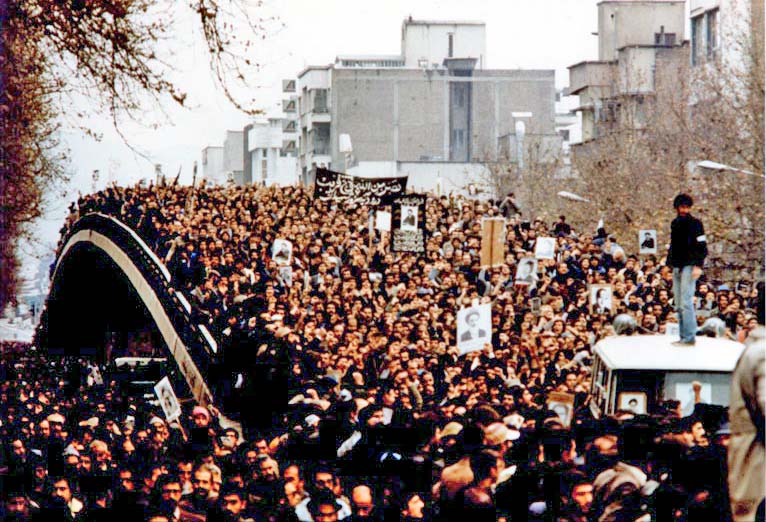
With intensifying economic difficulties and socio-political repression due to imperialist foreign intervention and puppet leadership, protests erupted in the oil industry workplaces. Eventually, the Shah declared martial law and troops fired on a demonstration in Tehran on 8 September, “Black Friday,” killing at least dozens of people. On 31 October, after the earlier strike waves in September and October, tens of thousands of oil workers walked out, and the strike had its own organization. Blue-collar workers at Abadan formed a 13-member strike committee, and white-collar workers in Ahwaz elected 60 delegates by open vote. Their demands shifted from economic grievances to political ones: an end to martial law, the release of political prisoners, an end to discrimination against women employees, the dissolution of SAVAK, and the Iranianisation of the industry, tapping into the same dispossession by foreign control that was challenged in 1951.
Iran produced about six million barrels a day, used less than a million at home, and sold the rest abroad, all with a workforce that made up only about 2.3 percent of the country’s workers, or 4.5 percent counting subcontracted labor. That small workforce held the one lever the state could not do without and leveraged it accordingly. Within two weeks, the AP reported, oil exports had fallen by 60 percent, and by late December they had stopped. On 26 December, the Shah told an adviser, “We are melting away.” By January, output was down nearly 90 percent.
The monarchy fell within seven weeks, but the workers had paralyzed the state without taking it. On 29 December, with strike committees already running production locally, the previously exiled Ayatollah Khomeini, ally of religious fundamentalist scholars, asked Mehdi Bazargan to lead an Oil Strikes Coordinating Committee, one of several parallel institutions that, historian Peyman Jafari argues, created a situation of dual power between workers and clerics. Jafari says it was built to curb the committees’ autonomy. By the end of January it was running most of the industry’s business, export licenses included. Delegates described as Marxists made up about 35 percent of the Ahwaz strike committee, but after the monarchy fell, Khomeini’s supporters organized new elections that cut the left’s share to 15 percent. With no national workers’ organization to hold the ground, the new state went on to repress and dissolve the workers’ councils, the shoras, within two years. Oil workers had helped topple a regime, and another ruling class took the state.
Iran’s oil workers are still striking, and Iran is still fending off a warmongering United States, as oil thirsty as ever. In 2021, contract workers’ strikes spread across eight provinces, in what RFE/RL described as probably the broadest wave in about four decades, though Jafari noted that the contractors mostly do construction and lack the permanent workforce’s power over production. According to the AP, contractors earn about a third of what the state oil company’s roughly 200,000 direct employees do. Independent unions have no legal standing, so strike committees run the walkouts, as they did in 1978. Today, the regime that took power has a record of answering strikers with force and prison, much the same as in 1978.