In front of the Humboldt Forum in Berlin stands a gate that was never meant to be there. The Sanchi Gate is a replica of the eastern gateway of the Great Stupa at Sanchi in central India, placed outside the rebuilt palace to stand for “the diversity of the world in Berlin”. For Elena Sinanina, it is the right place to start a conversation about who gets to show the world, and on whose terms.
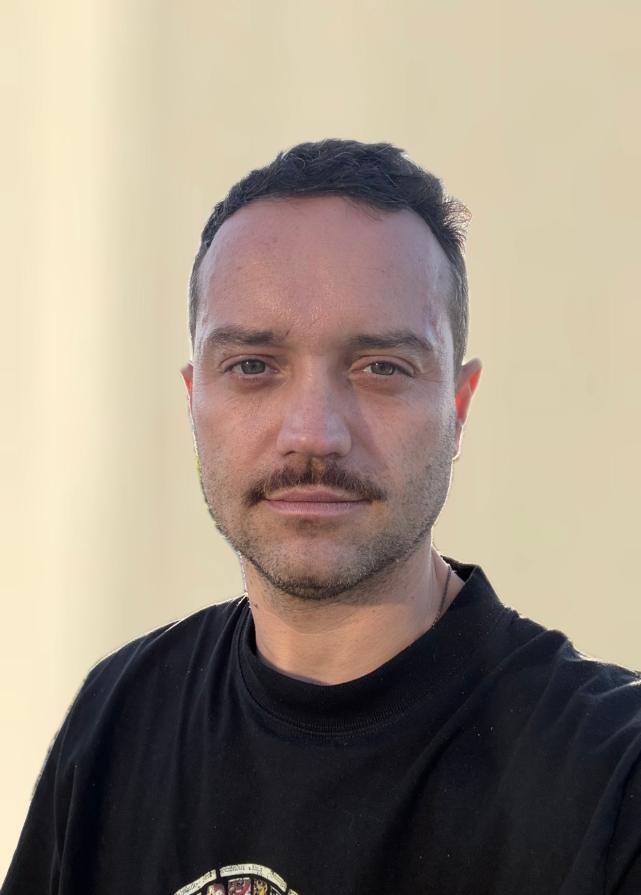
Sinanina is the curator of Worlds in Repair, a new programme by the Berlin initiative BLACK LAND that brings artists, Egyptologists, historians, provenance researchers and forensic investigators into the same room. Its subject is repair, though not the kind that promises to put things back the way they were. The works move from the temples of Hatshepsut to the German genocide of the Ovaherero and Nama, from Western Sahara to the disappeared in Sri Lanka and the rubble of postwar Berlin. Ahead of the opening, we talked about museums that criticise themselves without changing, why land matters as much as objects, and what it takes to do this work in Berlin today.
For readers who don’t know BLACK LAND yet, how did the initiative begin, and how did it grow into Worlds in Repair?
The core team of the BLACK LAND e.V. initiative consists of artists, curators, Egyptologists, and cultural producers; we met while working on the eponymous BLACK LAND project in Berlin in 2022. I curated the project and we carried it out with our team and a wide range of partners, including the Egyptian Museum and Papyrus Collection, which is part of the Prussian Cultural Heritage Foundation in Berlin. The project engaged with Ancient Egypt (“Kemet: Black Land”), its stories, and its legacy as it relates to both Egypt and the universalist museums of Europe. It was through this project that I also met the artist Yara Mekawei and the Egyptologist Kerylos Aziz. We have been working closely together ever since. As part of the project, we developed artworks and performances that we presented on-site at the Neues Museum. Based on a series of insights and experiences we gained through this work, as well as our exploration of what the institution of the museum is and how it operates, we founded our initiative in 2023. We wanted to create a space for our questions, research, and critiques, and to network with other actors engaged with art in the context of colonial-imperial expansion. In 2023, we organized the festival BLACK LAND, RED LAND – RESTITUTE, which addressed restitution in relation to Ancient Egypt and its artifacts, and the Worlds in Repair program is a continuation of this investigation, expanding the theme of repair and the restoration of justice to other times and other geographies.
The title speaks of repair, but explicitly not as a return to an intact past. What does repair mean to you, and why “worlds” in the plural?
In this program, we present various perspectives that call for reparations in the wake of experiences of violence, dispossession, and the erasure of personal histories and memories, or that highlight how past injustices remain unaddressed. For me, providing a space for these demands, discussing and sharing them publicly with the audience, constitutes a form of reparation in the sense of an honest encounter with what has happened, as a necessary acknowledgment of the injustices suffered and those that persist to this day. The next step is the question of accountability and the consequences that arise from it.
“Worlds” refers to a multitude of lifeworlds (as conditions, experiences, and social structures) that emerge in the various contributions addressing reparation. Also important is the process-oriented nature of the title, “in Repair,” and the emphasis that reparation is taking place despite the ongoing violence and the desolate state of our world and the planet.
The programme is described as “un-disciplinary,” with artists, historians, Egyptologists, provenance researchers and forensic investigators in the same room. What does that mean in practice, and where did these knowledge practices clash?
It was important to us to conceive the program in an un-disciplinary way to highlight the constructed nature of disciplines and to challenge and question any form of hegemonic positioning. Neither systems of knowledge nor institutions are given or neutral. Rather, we seek to bring together diverse forms of expertise, experiences, and contributions relating to the topic of repair, as far as possible without establishing hierarchies or imposing categorical judgments. In the run-up to the event, it took a significant amount of communication and outreach to spark the interest of the participants and partner institutions in the project and to convince them of its value. I am curious to see how the joint presentations and discussions with the audience will unfold.
The series doesn’t open in a museum or institution, but in public space, with Debasish Borah’s lecture performance Is this the Museum of European Civilisation? at the Sanchi Gate in front of the Humboldt Forum. Why start there?
This decision has to do with the institution of the museum itself, as well as with the way museums respond to criticism. The universal museum emerged at the height of European colonial and imperial expansion. Its model of collecting, researching, and preserving remains rooted in practices of dispossession, exploitation, and repression and is, of course, also implicated in broader global processes of commodification. Although museums, presumably in an effort to maintain their relevance as institutions, present themselves as superficially self-critical, open, and receptive, they nevertheless avoid, in my view, any genuinely profound openness or questioning of their hegemonic structures, decision-making powers, interpretive authority, and ownership arrangements. A consistent and effective critical gesture, or act of “democratization,” on the part of the museum would be its dissolution into a non-museum, or “anti-museum,” to borrow Achille Mbembe’s term. In this sense, we are shifting our activities into the public sphere and have also planned additional programme elements that take place outside institutional settings. Public space becomes a non-museum, in which we seek to address questions of institutional credibility. After all, Debasish Borah’s lecture deals precisely with this issue, as well as with the peculiar contradiction inherent in the Humboldt Forum’s claim to represent “the diversity of the world in Berlin” through a replica of the Sanchi Gate from India. Why not turn Europe itself into a museum, rather than exhibiting the “diversity of the Others”?
Your research traces artifacts from Hatshepsut’s reign between Egypt, Berlin and New York. Why does her story matter for the restitution debate today?
Hatshepsut ruled Egypt as a female pharaoh from 1479 to 1458 BCE and left behind a multitude of complexes, structures, and achievements, particularly in Karnak and Deir el-Bahari, near Luxor, Egypt. After lengthy conversations with the Egyptologist Kerylos Aziz in Luxor, I was deeply impressed by how site-specific and contextualized these structures are. Constellations, cardinal directions, the sun’s path: all of these played an important role in the planning and construction, and together these various elements tell the story of Hatshepsut, which in turn is part of ancient Egyptian mythology and the understanding of the world and time. You can see and feel all of this when you are on site in Egypt and walking through these temple complexes.
Against this backdrop, it is inconceivable to me to remove a single artifact of Hatshepsut from this context and declare it an “object” that is part of a museum collection in Berlin or New York, or to derive “expert” knowledge, and thereby self-legitimization, from this situation. Yet this is precisely what we have witnessed since the 19th century, following the Napoleonic “expedition” to Egypt, in the wake of which Egyptology developed into a modern academic discipline and European museums substantially expanded their Egyptian collections. The destruction of temple and tomb complexes occurred as far back as antiquity; we focus on Europe’s colonial expansion since the modern era. We have conducted extensive research on artifacts from Hatshepsut’s reign, tracing their paths between Egypt and museums in Berlin and New York, and have developed two works that we will present as part of Worlds in Repair. These works engage with dislocation, provenance, knowledges, value systems, and the contexts of institutional action, as well as the possibilities for reconnecting with ancient history.
The exhibition at Kunstquartier Bethanien spans very different geographies and timescales, ancient Egypt to the genocide in Namibia, the 1982 people’s tribunal in Oslo, Western Sahara, the disappeared in Sri Lanka, and the rubble of Berlin itself in Sonya Schönberger’s work. What connects these works for you?
The works address issues of alienation, loss, state violence, memory, survival, and the transgenerational, ongoing struggle for justice and recognition. For me, these aspects and their intertwining constitute the process of repair that we are engaged in as it unfolds. Despite the diversity of the contexts from which the works speak, they always refer to the ruins left behind, and still being left behind, by the imperial-capitalist drive for exploitation, and counter it with stories and narratives of resistance that we would like to share with the audience.
Several works deal with the German genocide of the Ovaherero and Nama. Why is it important to talk about land, and not only about objects?
It is important to draw attention to the lingering consequences of colonial violence and to the outstanding demands for reparations as a prerequisite for healing, and to take seriously the demands of the descendants of the Ovaherero and Nama for recognition of the injustices they suffered and for redress. Land ownership patterns established during colonial rule continue to shape Namibia today, with large areas of commercial farmland still owned by descendants of European settlers. The continuing impact of colonial violence on land and the environment is also examined in the work of Forensic Architecture and Forensis, among others. The ongoing consequences of colonial violence are also evident in the continued presence of human remains and cultural artifacts classified as so-called “objects” in European museum “collections.” Since our project is taking place in Berlin, I believe it is essential not only to talk to one another, but also to draw attention to these stories and backgrounds, to engage with them publicly, and to work together to bring about a change in the situation.
Mati Diop’s film Dahomey, which won the Golden Bear at the Berlinale in 2024, follows 26 royal treasures that France returned in 2021 to the Republic of Benin. The Benin Bronzes, which come from the Kingdom of Benin in present-day Nigeria, are a different case, and there it got complicated: after Germany transferred ownership of the bronzes to Nigeria in 2022, the late former President Buhari decreed in 2023 that they belong to the Oba of Benin rather than the Nigerian state. The Museum of West African Art in Benin City, once meant to house them, dropped that plan, and its opening in November 2025 was disrupted by protesters loyal to the Oba and postponed. Where does the discussion stand in Berlin today: real structural change, or mostly gestures and agreements on paper?
I view the public attention that the issues of reparations and restitution are receiving as a positive development, because the history and consequences of colonial violence, and the associated claims, are far from having been fully addressed; quite the contrary. At the moment, there is a tendency in Germany to treat this issue separately from other forms of violence within the federal government’s memorial policy, rather than addressing it in relation to and as a continuation of those other forms of violence, which is problematic.
I would take the commitments of Euro-American institutions (with their respective, often unspecified interests regarding restitution) seriously only if they are willing to relinquish all claims regarding the processes, their structure, decisions on ownership, and the future disposition of the artifacts. I have not yet encountered this level of commitment in reality, but perhaps one day, thanks to the collective efforts of civil society, the communities, the societies of origin, and critical scholarship, it will come to pass.
What were the main practical and political difficulties in putting the project together, from funding and partnerships to the current climate around these topics in Germany? Did you have to rethink or change anything along the way?
One of the biggest challenges is that a significant portion of our work is done on a volunteer basis and lacks structural support. We are, of course, very grateful for the funding we received for this specific project and for the support of our partners, without whom this work would not be possible. However, this does not do justice to the effort involved, and I know that many initiatives engaged in this critical foundational work face the same situation. Institutions such as museums are far better resourced than we are, and I would actually consider the work and research we conduct to be their responsibility, since we deal largely with their history, their function, and their impact. Why aren’t provenance histories comprehensively documented and made available transparently and digitally? Why is publicly accessible information about “collections,” for example on signage, outdated or inaccurate? Why do inquiries go unanswered? There is much more I could mention here.
As summarized in the recently presented concept Kolonialismus erinnern (Remembering colonialism), which was developed under the direction of Dr. Ibou Coulibaly Diop following a resolution by the Berlin House of Representatives in collaboration with initiatives such as Decolonize Berlin, Afrika-Rat, and others, there is a need, among other things, for sustainable, secure funding structures and support, as well as opportunities for the equal participation of civil society initiatives, in order to carry out the critical work of repair, reparations and coming to terms with the past from the perspective of those affected. If institutions are to be relevant in the future, they must undergo fundamental change.
Worlds in Repair runs from 11 to 22 December 2026 with an exhibition, a symposium and a public programme at Studio 1 in Kunstquartier Bethanien, at KINDL Centre for Contemporary Art and in public space. It opens with Debasish Borah’s lecture performance Is this the Museum of European Civilisation? at the Sanchi Gate in front of the Humboldt Forum. The programme is produced by Initiative BLACK LAND e. V.
For the full programme visit: https://www.blackland.berlin/worldsinrepair2026
Bio
Elena Sinanina is a curator and project manager based in Berlin. Born in Leningrad in 1981, she moved to Germany in 1992 and studied theatre studies, German literature and psychology. She worked at the Deutsches Theater and the Volksbühne Berlin with directors including Jürgen Gosch, Dimiter Gotscheff and Frank Castorf. Since 2016 she has been part of the team behind the Berliner Herbstsalon at the Maxim Gorki Theater, where she was also artistic assistant to Shermin Langhoff until 2021. She also works as a dramaturge and literary translator and develops projects between visual and performative art. In 2022 she curated the BLACK LAND project at the Neues Museum, and in 2023 she co-founded the initiative BLACK LAND e.V.
Venues
Studio 1 Kunstquartier Bethanien, Mariannenplatz 2, 10997 Berlin
KINDL – Centre for Contemporary Art (Maschinenhaus), Am Sudhaus 3, 12053 Berlin
Sanchi Gate in front of the Humboldt Forum Schloßplatz, 10178 Berlin