Thank you for taking the time to talk to us! Could you introduce yourselves?
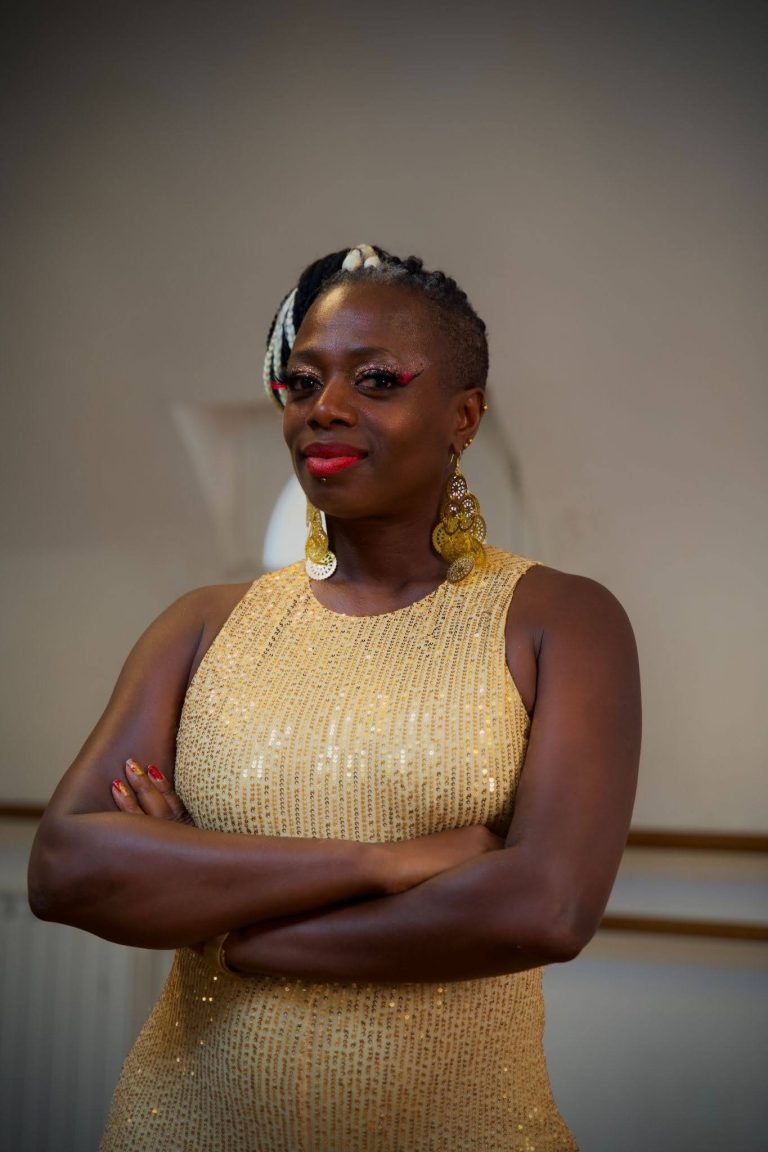
Leila Boukarim (LB): I’m a children’s book author and freelance editor by trade. At Coastal Lines, I’m the admin and “tier” of loose ends. I also work as a bridge between our authors and the rest of the collective, mostly for technical issues.
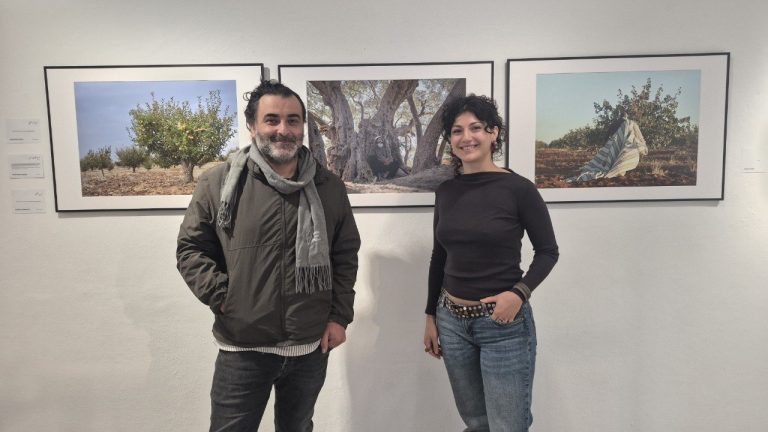
Christina Heuschen (CH): I coordinate communication between volunteers and authors to keep everyone connected and ensure a smooth exchange of information. Beyond this, I help promote Coastal Lines Press to a wider audience. For example, I create campaigns that highlight Palestinian literature, zines, and the work of our authors. In Berlin, I also help organize community events and gatherings.
Can you tell us a bit more about what Coastal Lines Press is and what it does?
CH: Coastal Lines Press is a grassroots publishing collective of writers in Gaza. It’s supported by volunteers from all over the world who help the authors publish their work. The volunteers working with us bring a range of skills to the collective, from illustration, design, layout, editing to many other areas. Together, we bring Palestinian literature and the authors’ voices to new audiences.
LB: All the money we raise from the sales of the zines goes to the authors. It’s a way to get their voices out into the world, but also a way for them to make money off of their writing, as any author should.
How did the press start?
LB: A couple of years ago, a literary acquaintance in Berlin put me in touch with an author in Gaza, a person I now consider family. Shahd Alnaami was introduced as an author and translator who was looking for work, like so many people in Gaza. I reached out to my network but got no replies; I was disheartened by this, but I understood. My network consists of people who are fighting the good fight and tend to be independents who are struggling and don’t have massive budgets and resources.
I didn’t want this to stop there. I looked into Shahd’s work and was deeply moved. I had been making zines as a way to get people’s attention, and thought this could be a great way to share Shahd’s work. I pitched her the idea, and though she had never heard of a zine before, she loved it!
So we got to work. I teamed up with a designer here in Berlin, Zeina Azouqa, and Shahd reached out to an illustrator in Beirut, Aude Abou Nasr. We put this zine together and, when it came out, it made a big splash!
People were very receptive. The zine was beautifully printed and hand-bound, beautiful to hold and to flip through. Others in Gaza heard about Shahd’s zine and started to reach out and to ask if we could do the same with their writing. I took on a couple more authors, but I reached a point in the summer of 2025 where I couldn’t do all this work on my own.
Shahd had created a whole workforce for her zine, made up of people from around the world, organized neatly in a WhatsApp group. She mobilized people to help her get her zine out in the world and I drew inspiration from Shahd and her energy.
By that point, Shahd and I had done quite a bit of work together, and we both felt the need to discuss how we could replicate the model she created to benefit more authors in and from Gaza. All we needed was a workforce. So I decided to put a post out.
I wasn’t in Berlin then. Two days later, I got back home to 200 emails in my inbox. I set up a Slack group and I invited people to join, and the rest, as they say, is history.
Since then, the project has only grown, and you’ve really sustained this organizing work at a very high level. As Christina said, there are volunteers from many different countries. You also managed to distribute the zines in different places and, of course, you work with more and more authors from Gaza.
Can you share a bit about how the volunteers and the authors are organized, and how you keep the momentum going in a way that gets things done?
CH: The most important thing is that it’s mostly driven by our writers in Gaza, and we support them in developing and realising all their ideas. It’s not like people coming from the West and deciding what we should do. We mostly communicate through Slack, where everyone can share their ideas and contribute their skills. Every person has his or her own talent. You can support in any way you want to, and as much time as you can. People just say, “I have an idea for a new project,” and then others join to make it happen.
Whenever we start working on a new zine project, we put out an open call for people to get involved. We just announce that we need a project manager, an illustrator, an editor, etc. for this project and people can decide if they want to join or not. We have different sub-teams, including teams for each zine, layout, design, translation, and they all work together, develop their own project ideas, and coordinate with each other.
We also have different calls. Our writers have a weekly call where they develop new ideas, campaigns, and panel series. Volunteers can join these calls, too. We also have a monthly community call where we can come together and discuss anything. We can talk about new ideas, problems we faced, or just chat; it’s a way for us to build a community.
In all these calls, we develop so many ideas that we can’t even find the time to do everything. We have lots of things in the pipeline. For now, we’re focusing on developing zines, and from there, we keep building.
LB: When we started, everyone just kind of dived in headfirst. We just worked in the ways we knew how to work, and we managed to do a whole lot. Once the group started to really grow, we had to bring in some structure so it was less confusing, and to ensure that, regardless of who stayed and who left, the work would continue. Christina developed a really great starting point for volunteers: a comprehensive FAQ that takes members through everything they need to know. We’re a lot more organized now and are better at making sure we catch ideas and execute them before they fall through the cracks.
How about the printing and distribution of the zines?
LB: That’s happening everywhere. We have a channel dedicated to distribution. Whoever wants to distribute wherever they are is free to do that. Everyone gets access to a shared folder online where they can find everything they need. There are always events around the world that volunteers either organize or take part in. Right now, there are events in Barcelona, in the Netherlands, in Toronto, and in Singapore. They pop up everywhere.
There’s a freedom in what paper volunteers use and how they bind. There are no strict guidelines in terms of what the zine is supposed to look like, because that goes against the idea of a zine.
We also get orders through our website, and whenever we get an order from somewhere around the world, we reach out to the network and find someone close to the person. They will then proceed to print, bind, and send the zines. There’s a lot of energy and focus on this, and it looks different in different places. Some people have printers at home; some go to copy shops; some people have access to nice paper; some print secretly at work. There are so many ways to do this, which I think is very much in the spirit and the whole point of a zine. This is what makes zines such a powerful way to spread literature.
Let’s talk about the Berlin community, which has also been growing and has been very active. Could you tell us a bit about how that is organized and what kind of in-person activities are happening?
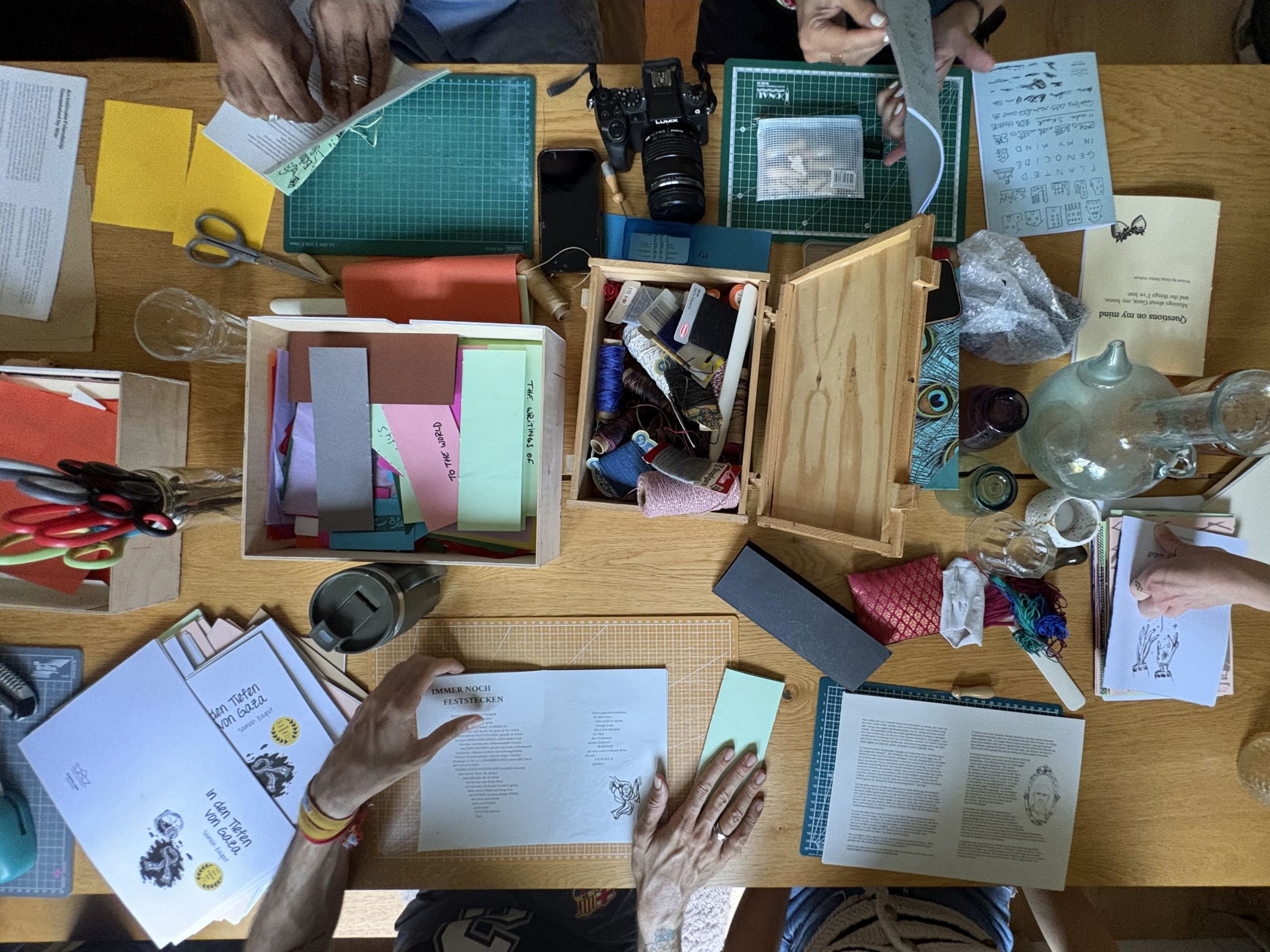
CH: Right from the beginning, we thought we should meet. We were discussing everything online and realized quite a few of us were already living in Berlin. So we thought, why not get together and bind zines? We met at Leila’s place and started binding, and since then, we’ve continued to meet regularly, usually for a big zine-binding session once a month or every other month. Every time a new member joins online, they’re also welcome to join our zine-binding sessions.
We also take part in different events in Berlin, and organize our own. This is where we meet new people and connect with potential volunteers, who often end up joining. Sometimes, we get together just as a community to talk with each other. We organize different events together, and everyone pitches in what they can.
What kind of events have you organized in Berlin?
CH: We’ve organized readings, panel discussions, fundraising events, and we’ve also taken part in similar events organised by others, mostly fundraisers.
LB: We have a thriving community here. I can’t really explain it, but I do get the sense that, because repression is so strong and absurd here, people have found ways to come together and organize. I mean, it’s strong everywhere, but it’s pretty violent here. It has a very distinct flavor to it.
We have come across people who felt disheartened with other activism strategies, and then found purpose in Coastal Lines. We are working directly with people in Gaza, and we’re hearing the stories straight from them, and it just adds a layer of such meaning and importance and urgency. Beautiful friendships are being formed across borders, and it’s really something to witness. Berlin has been a driving force for some reasons I understand, and others I don’t, but I’m very grateful for it.
Where can people find the zines in Berlin, and what do you have coming up in the next couple of months?
LB: The zines can be found in some bookshops, including She Said and Curious Fox, and one bookshop/art gallery in Schöneberg called ChertLüdde. Otherwise, we take part in many fundraisers focused on Palestine. Because the team is so big here, we split up and cover a lot of ground, so the zines are more widely available. Online orders are always possible, of course.
CH: And we have lots of upcoming events in November and December.
LB: Yeah, lots of exciting things are coming up. I mean, exciting, what a word. Important things that come with opportunities for more sales and for raising awareness. This is really what we want to do. We are always looking for opportunities for the authors to speak, and they are popping up like mushrooms without us even necessarily planning them. We are now doing this more regularly also through the panel series called “Sailing Beyond Hudood.”
Is there anything that you would like to add?
LB: I invite readers to check out Coastal Lines Press, to look up the authors who make up and drive the collective, and to find out and explore how they can contribute. Because this is a grassroots initiative that is purely voluntary, there is no performance pressure. People give as much as they can and can step away any time they need to. Our door is always open. It’s a very welcoming and caring community. There’s so much to learn from this model of mutual aid, care and community and world building.
We came together not really knowing where we were going with all of this. I couldn’t have possibly predicted this. We managed to bypass gatekeepers and institutions that are making every effort to keep Palestinian voices out, and I think that’s incredible. Because there was an urgent need to platform Palestinians in Gaza, folks who cared deeply about this cause, a bunch of strangers from around the world, got together online and managed to do this together. There was a need to do this, and somehow we found a way to do it. There’s a lot to be learned from this model. This applies specifically to publishing, but it can apply to different circles, different work to be done that is controlled by the dominant culture.
CH: What’s beautiful is that people are constantly learning from one another and sharing their knowledge and skills. We also organise community projects, where authors and volunteers teach each other new things. We’ve held workshops on collage, embroidery, gratitude and meditation, for example.
People are always there to support each other. It doesn’t have to be about Coastal Lines Press. It’s going beyond this. It’s a worldwide community.
This is a very wonderful message on which to end.
LB: I love this project so much.
In the next month, you can find Coastal Lines Press at the following events: