The week began so well that, for a moment, it felt like a different year in history. On Sunday, two elections went against expectations.
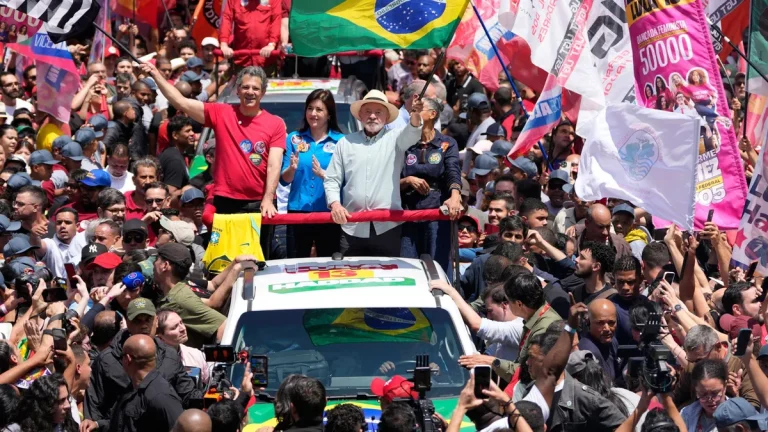
In Brazil, Luiz Inácio Lula da Silva, who had trailed after the first round, overturned the result against far-right candidate Flávio Bolsonaro, an ally of Donald Trump. Lula is the first Brazilian president to win a runoff after finishing second in the first round, since direct presidential elections returned in 1989.
In Serbia, a student-led movement that has protested for nearly two years against a corrupt, authoritarian government, ever since the 2024 Novi Sad station collapse killed 16 people, won more than 52% of the vote, according to preliminary results. Its list was headed by the cardiologist Ilija Srđanović and made up not of career politicians but of figures from civil society, such as the cardiologist Aleksandar Nešković; Marija Vulović, a professor; and the German teacher Nikola Vujičić; but also Dejan Šoškić, an economist and former governor of Serbia’s central bank from 2010 to 2012. Perhaps the key is precisely to get rid of the “professional” political class?
Analysts saw in Lula’s win a break in the regional shift to the right and in Serbia’s a spirit of optimism. The left-leaning press read both results as a glimmer of hope in a world drifting toward the far right. South America, in particular, has gone in a few years from mostly red on the map to mostly blue: Argentina, Chile, Bolivia, Ecuador, Peru, Paraguay and, this year, Colombia. Javier Milei celebrated Chile’s rightward turn by posting that exact map.
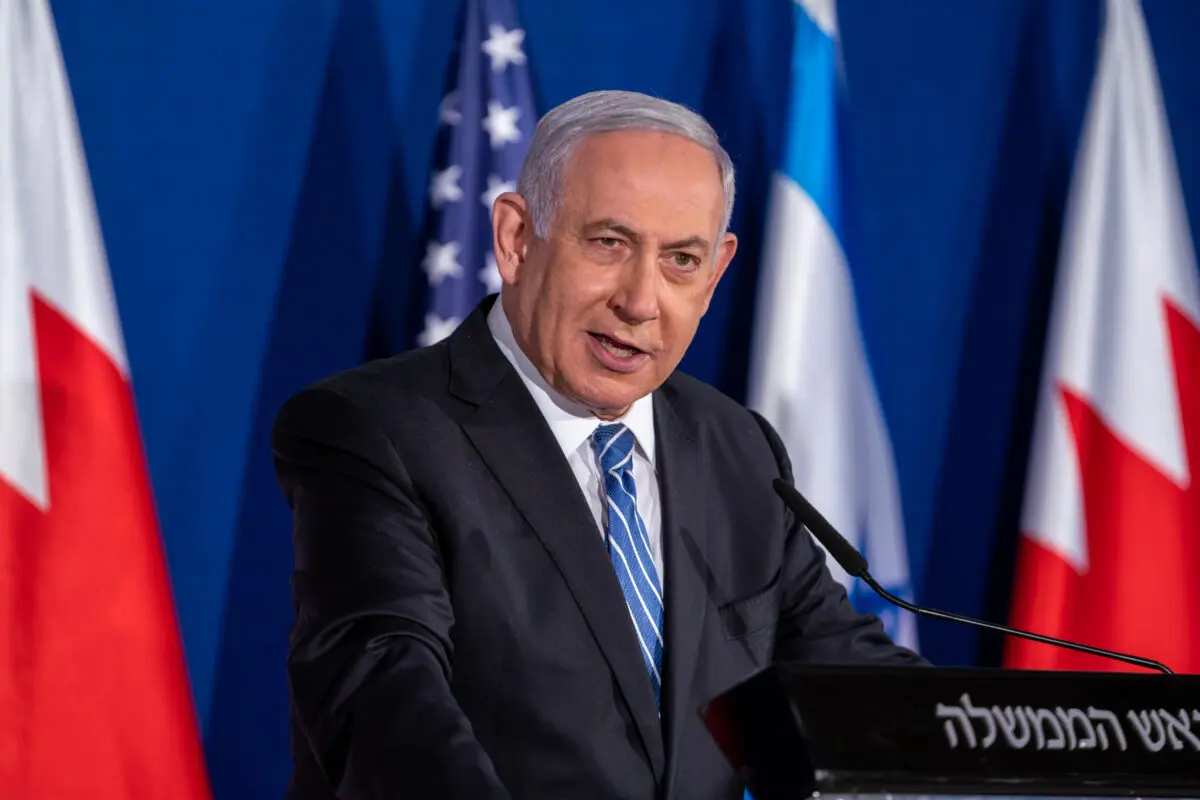
Then came a third vote—Israel’s—on Tuesday, and with it a comparison that was at best shortsighted. Memes began circulating with lists of authoritarian or right-wing leaders, where the ones just defeated in Brazil and Serbia were crossed out, with Netanyahu next in line, and Trump and a few others after him. Putting these elections on the same level amounts to either functional illiteracy or historical revisionism. In Brazil and Serbia, societies pushed back against the far right and authoritarianism. In Israel, polls and videos like this show a society moving further right, with the “left”—whatever it means in the Israeli context—reduced to Yair Golan’s Democrats, who won just eight of 120 seats.
Netanyahu’s challengers differ from him very little or not at all. Some even attack him from the right. Bennett and Lapid have criticised Netanyahu for not destroying Hamas completely. Lapid described the outcome in Gaza as the “worst possible outcome,” and Bennett wrote that the aid had helped Hamas regain control. Both have condemned settler violence, yet both vow to form a government made only of Zionist parties. As for Gadi Eisenkot, the opposition’s frontrunner, he is the former army chief who in 2008, as head of the IDF’s Northern Command, set out what became known as the Dahiya doctrine: the promise that what happened to Beirut’s Dahiya quarter in 2006 would be repeated, with disproportionate force, in any village which fires on Israel.
It is worth pausing on Eisenkot. In an interview with The Young Turks, Shaiel Ben-Ephraim, a geopolitical analyst and former diplomat at Israel’s Foreign Ministry, presents him as anything but an improvement. Not only because, according to Ben-Ephraim, his bloody doctrine of disproportionate violence against civilians has not worked, but also because, the analyst says, Netanyahu made the mistake of coexisting with Hamas, using divide and rule to keep Gaza and the occupied West Bank under two separate Palestinian authorities, instead of using overwhelming force against Hamas. Eisenkot has promised to do exactly that within 18 months of the election. And visibly, this is the pretext under which Gaza’s civilian population is being annihilated. Ben-Ephraim also stresses that Netanyahu thinks like a politician, while Eisenkot thinks like a general and could take all of Gaza, at an even greater cost in human lives. Finally, and this seems to be shared by several analysts, a government without Netanyahu, Ben-Gvir and Smotrich could ease Western pressure while maintaining the same policies.
Back to the elections, the count fits that picture. Final results show that Likud is the largest party with 27 seats, against 21 for Eisenkot’s Yashar. Netanyahu’s bloc has 53 seats, eight short of a majority and 15 fewer than the 68 it held in the outgoing Knesset. The opposition has 48, and the Arab parties 19, more than ever before. The opposition claims victory and reads the result as a desire for change. But the real novelty is turnout among Palestinian citizens of Israel, which Channel 12 put at around 80%, above the 1999 record. Netanyahu’s answer was to warn that Arab voters were trying to steal the election. Yet Bennett and Avigdor Liberman have ruled out governing with Arab parties, as has Netanyahu.
What follows? Some analysts see a unity government as a possible outcome of the deadlock. President Herzog has reportedly raised the prospect of one, bringing together Netanyahu and Eisenkot, although his office denies it, and Eisenkot has pledged not to serve under Netanyahu, even in a rotation, while not ruling out a government with Likud. The Arab parties have signalled they are willing to back an anti-Netanyahu government from outside, but the pervasive anti-Arab sentiment is so strong that nobody wants them.
If that happens, nothing changes for Palestinians (not that much would have changed otherwise): not for Palestinian citizens of Israel, who are treated as second-class citizens under dozens of discriminatory laws, not for those in the occupied West Bank, where the International Court of Justice found in 2024 that Israeli measures violate the ban on segregation and apartheid, and not for those in Gaza. There, what Amnesty International, the UN Commission of Inquiry, and the largest association of genocide scholars call genocide, and what Human Rights Watch calls acts of genocide, is still unfolding while the Court examines the case. There is a serious risk that the Israeli opposition would rather ally with Netanyahu himself than with Palestinian citizens of Israel.
If that scenario plays out, what will stop Western countries from sanctioning Israel as a whole? What will be the next Israeli monster to condemn and symbolically sanction, knowing nothing will change? And how will the West excuse itself for having let a genocide unfold, live-streamed, before the eyes of the world, blaming a couple of convenient “monsters” along the way, only to discover that behind them stand countless others?
That would be the slap in the face the West needs. For years we were sold the fairy tale that the problem was Netanyahu and his extremist ministers. Then, in 2025 five Western governments sanctioned two ministers for inciting violence. In reality, every policy in the Occupied Palestinian Territories and the destruction of Gaza are quietly backed by virtually all of Israel’s political spectrum and, even more concerningly, by the majority of its Jewish society. In July 2024, the Knesset voted 68 to 9 against a Palestinian state, backed by the coalition and part of the opposition. Polls show Jewish Israelis see little wrong with the force used in Gaza: in a Tel Aviv University survey, 51% said the army was using appropriate force and 43% too little; in an Israel Democracy Institute survey, 78% said Israel was making efforts to avoid causing suffering to Palestinians; and in one poll, 82% supported expelling Palestinians from Gaza. The writing has been on the wall for a long time. What else is needed for a substantial change to happen?