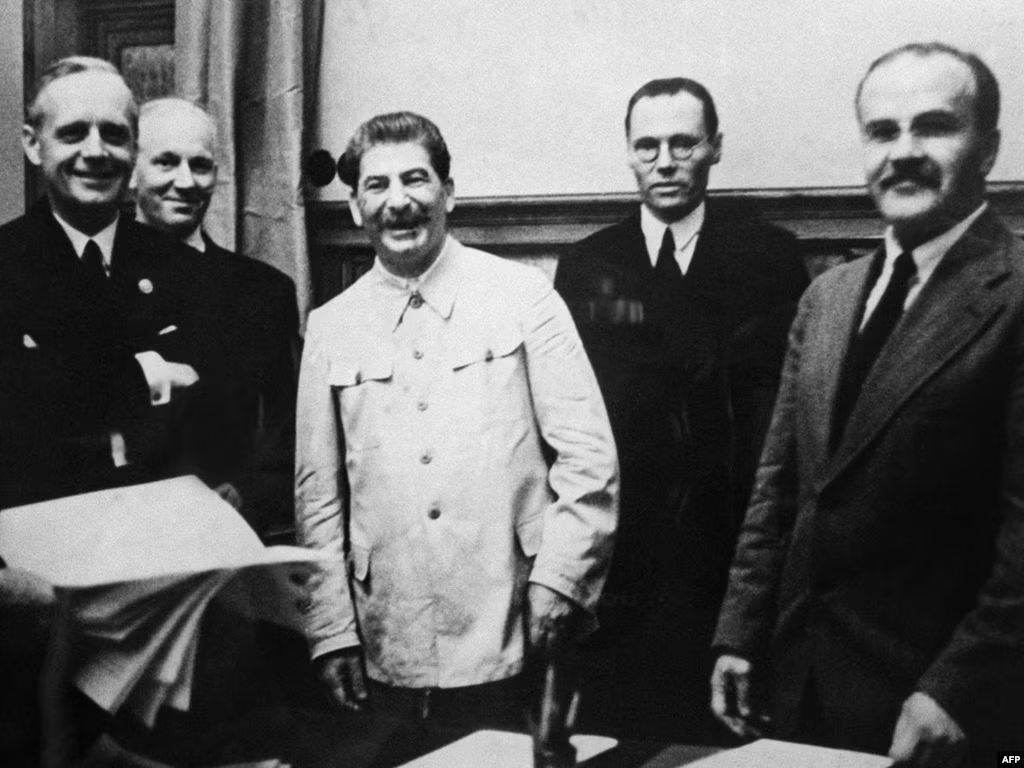
On September 28, 1939, Nazi Minister of Foreign Affairs Joachim von Ribbentrop and his Soviet equivalent, Vyacheslav Molotov, met in Moscow to sign the “German–Soviet Boundary and Friendship Treaty.” The treaty came as a complement to the much more famous “Treaty of Non-Aggression,” which had been signed on August 23. The non-aggression clauses were shadowed by a secret protocol, which divided Eastern Europe into spheres of influence. After Germany and the USSR invaded and split Poland, the September 28 treaty formalized the new border. A third part of the secret protocol, in which Germany renounced some of its claims to Lithuania, would be signed on January 10, 1941.
Much has been written and polemicized about the USSR’s collaboration with Nazi Germany. Some see it as a necessary realpolitik manoeuvre on behalf of an isolated communist state not yet ready for war. And they might be right: the USSR’s appeals to enter an alliance against Nazi Germany had been ignored by Western powers, with the Soviets even being excluded from the Munich Agreement. The time between the pact and the Nazi invasion of the USSR was critical for building up Soviet defense capacities.
On the other hand, some Soviet actions are not explainable by appeals to necessity. The USSR, for instance, started “repatriating” German prisoners from 1935. Some were fascist sympathisers, but many were antifascist, even communist fighters who had sought refuge in the Soviet Union. More than 200 German antifascists were given to the Nazis by the Soviet Union after the signing of the Treaty. The division of Poland brought about massive population transfers between the Soviet and Nazi zones, as well as mutual promises not to allow the fomenting of anti-Soviet or anti-Nazi sentiments on their respective territories. Antifascist literature, films, and plays disappeared from Soviet institutions.
On a more material level, the commercial provisions of the pacts did provide the Soviet Union with armament, but the Soviet raw materials and foodstuffs that the Nazis received literally fueled their 1941 invasion of the USSR. According to reports, Stalin rebuffed many reports that foresaw the invasion. Was he a naive believer in Nazi-Soviet friendship? Was he an astute strategist keeping his cards close to his chest? Regardless of the answer, one thing is clear: after the initial shock of the invasion, the USSR pushed back. Without the Soviet armies, the Nazis would simply not have been defeated.
Nevertheless, the Molotov-Ribbentrop Pact raises critical questions. Can anti-fascism be centralized? Can the invasion and repression of foreign populations be justified in the fight against fascist forces? Can ideology be sacrificed in the name of expediency? Can people? These are not only questions for Stalinists, but ones that we might have to face again soon.