
News from Berlin
The Left Party wins six districts, the CDU four, and the Greens and AfD one each in Berlin
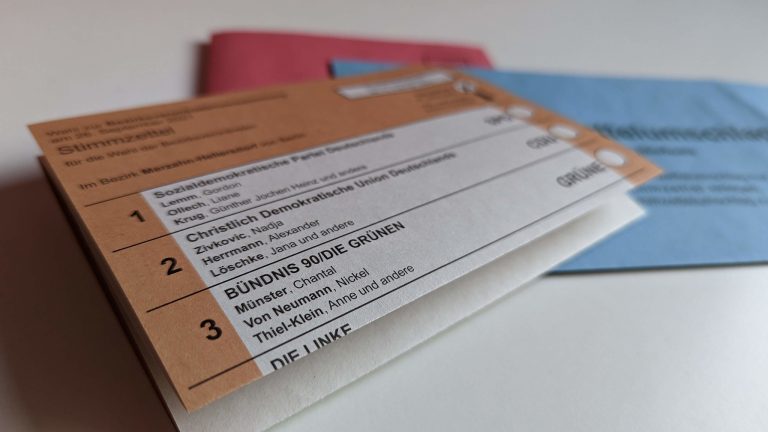
Following their triumph in the Berlin state election, The Left Party (“Die Linke”) is also gaining ground in the district assemblies. According to preliminary results, The Left Party secured a majority in six of Berlin’s twelve districts: Pankow, Mitte, Friedrichshain-Kreuzberg, Neukölln, Lichtenberg, and Treptow-Köpenick. They achieved their highest vote share—40.1%—in Friedrichshain-Kreuzberg. The CDU won the most seats in the four districts of Reinickendorf, Spandau, Charlottenburg-Wilmersdorf, and Steglitz-Zehlendorf. The AfD took Marzahn-Hellersdorf, while the Greens came out on top in Tempelhof-Schöneberg. The Left Party’s most decisive victory was in Neukölln. There, their lead over the CDU—the second-strongest force—was nearly 16.4%. Source: rbb
CDU State Secretary spreads fake Intifada sticker featuring Elif Eralp
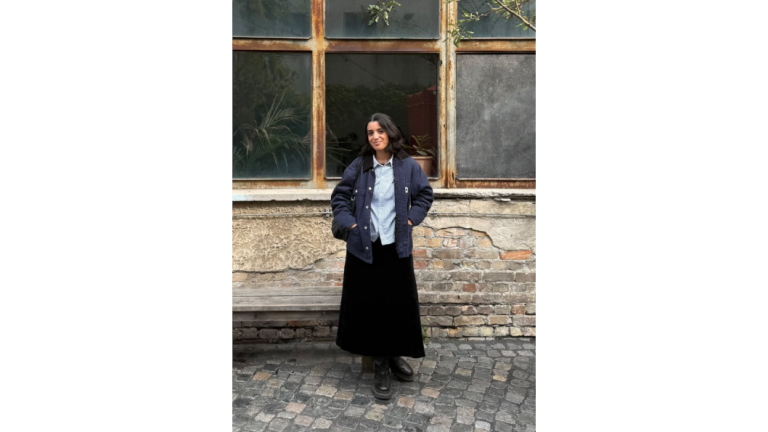
Stickers have come up in Berlin implying that Elif Eralp, the lead candidate for “Die Linke”, supports the Intifada. “Yallah Intifada with Elif Eralp,” reads the design, which is circulating on social media and has been shared by pro-Israel users, among others. The design is clearly a fake. “Die Linke” state manager Björn Tielebein confirmed he had seen the sticker in the Mitte district and subsequently filed a fraud complaint with the police. Elif Eralp faces pressure from two sides. The CDU, in particular, accuses her of tolerating antisemitism. Conversely, pro-Palestinian circles attack her as a “Zionist” and a friend of Israel. Source: morgenpost
Berlin gets €5 billion from the federal government: more for security, less for culture
Berlin and the federal government have signed a new “Hauptstadtfinanzierungsvertrag”, an agreement which determines how much money it is transferred to the city each year to fulfill its role as the capital. The new deal, which runs from 2028 to 2037, is worth around €5 billion in total. The biggest increase is for security: over the full 10 years, €2.1 billion. Culture also sees an increase. For instance, the “Opernstiftung”, which covers the Deutsche Oper, Staatsoper Unter den Linden, Komische Oper, Staatsballett Berlin, sees its annual subsidy rise from €10 million to €13 million. However, the “Hauptstadtkulturfonds”, which funds internationally significant artistic projects, sees its federal contribution reduced by €2 million. Source: heistberlin
News from Germany
AfD makes gains but has no government option
Despite making significant gains in both Berlin and Mecklenburg-Western Pomerania, the far-right AfD remains without options to form a state government. The party scored another election victory on September 20, becoming the strongest party in Mecklenburg-Western Pomerania with almost 38% of the vote. That put the far-right party just ahead of the Social Democrats (SPD), whose dramatic comeback in the last few weeks, led by incumbent State Premier Manuela Schwesig, fell just short, with 35.7%. The party’s rise has also been accompanied by growing protests. Source: dw
Wagenknecht announces deal with AfD Saxony-Anhalt
A deal emerged in Saxony-Anhalt between the election winner, the AfD, and the Sahra Wagenknecht Alliance (BSW). BSW co-leader Amira Mohamed Ali confirmed that, when asked about rumors that the AfD and BSW had agreed on the election of an AfD state parliament speaker and a BSW deputy speaker. However, there will be no joint government with the AfD; the BSW will not vote for the AfD’s lead candidate, Ulrich Siegmund, as state premier. Mohamed Ali said that, as the largest party in the state parliament, the AfD should be allowed to nominate the speaker, and that BSW would not oppose its candidate simply because they belonged to the AfD. Mohamed Ali could not yet name specific individuals for the posts. Source: t-online
German police read instant messaging apps without breaking encryption
German law enforcement agencies are using features built into application softwares (apps) such as WhatsApp, Telegram and Signal to monitor people’s messages without breaking their encryption or installing spyware on their phones. New documents published by German digital rights outlet “Netzpolitik” show the country’s Customs Office began testing the technique, known as “messenger monitoring,” already in late 2023. “Netzpoltik” says police can gain access through a phone, verification codes, phishing, or SMS interception. However, “Netzpolitik” questions the legality of this method, the extent of its usage, and its choice of targets. Source: cybernews
German police investigate arson attack on Wuppertal synagogue
Prosecutors in Wuppertal confirmed they are investigating an attempted arson attack at the local synagogue. They said a 37-year-old Afghan national was arrested near the scene soon after made “comments that indicated an antisemitic motive” to detaining officers. The attack took place midafternoon on September 17. The suspect allegedly threw three containers of flammable liquid to the synagogue and its eatery, Cafe Negev, and then set it alight. The attack did not cause much damage as the fire was quickly extinguished. The Central Council of Jews in Germany condemned the attack in the buildup to the Yom Kippur holiday on September 20 and 21. Source: dw