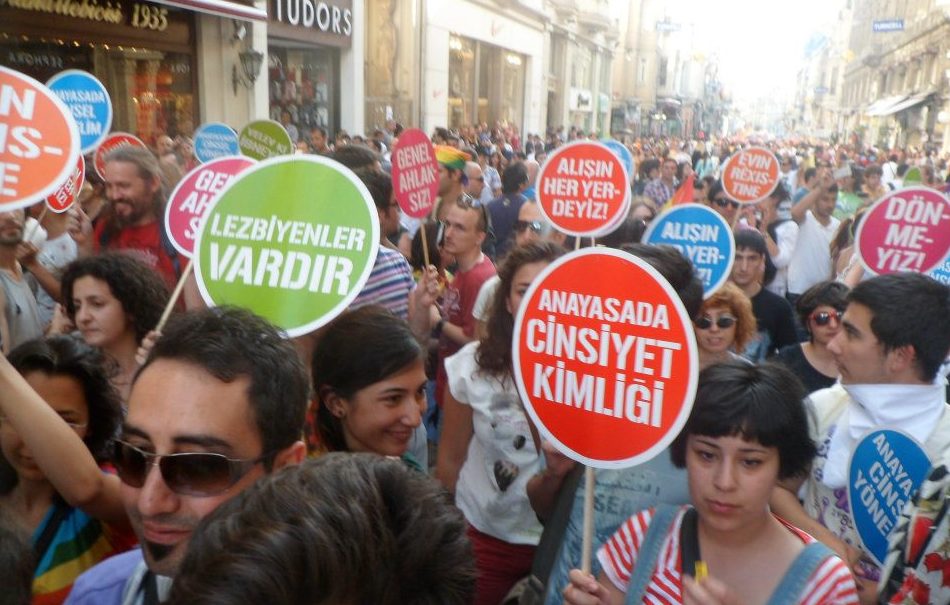
In mid-September 2026, Turkish authorities carried out a wave of raids targeting the offices of LGBTQIA+ organizations and HIV-advocacy groups in multiple cities, including Ankara and Istanbul. As a result, more than 100 people were detained and 150 protesters, including journalists, were arrested during protests against the raids. Additionally, numerous social media accounts were blocked in the past weeks; these include X accounts of Amnesty International Türkyie, the left-wing Evrensel newspaper, Academics for Peace, and the Media and Law Studies Association, as well as Kaos GL and women’s rights organization Mor Dayanışma websites.
The crackdown was carried out under an operation called “My Family is Safe”. According to the Turkish Minister of Justice, Akın Gürlek, authorities executed the raids to “protect our children, the institution of the family and the social order”. The prosecutors in Türkiye’s capital Ankara accused LGBTQIA+ rights groups of promoting “obscenity”, “assisting prostitution” and “financial links abroad”. Trans people especially face heightened scrutiny and risk in detention. According to TGEU (Trans Europe and Central Asia), there are at least 27 trans women in pre-trial detention, many of them charged with “prostitution” and/or “obscenity” offences. The detainees reported humiliation, strip searches, barriers in accessing medical care, including hormone replacement therapy (HRT), and difficulties accessing legal support.
The authorities are attempting to paint the LGBTQIA+ community as a threat to Turkish families, but as Kaos GL editor-in-chief Yıldız Tar explained: “The real threat to the family is poverty, lack of social policies, the threat is femicide, and they are trying to cover that lack of policies by demonizing LGBTQ people.”
The hostile script is not unique to Türkiye, as some of its variations were observed in Hungary, Poland, and now increasingly in Germany. Populist movements use the rhetoric of “protecting traditional families” to attack “gender ideology”, a made-up concept that conceals the actual target: the LGBTQIA+ community, those who do not subscribe to the patriarchal and cisheteronormative modes of living.
This rhetoric echoes the ultra-conservative values held by the former populist governments of Poland and Hungary. In 2020, Hungary amended its constitution to redefine family as “based on marriage and the parent-child relation. The mother is a woman, the father, a man.” The amended constitution emphasizes the importance of raising children in a conservative spirit. Hungary “defends the right of children to identify with their birth gender and ensures their upbringing based on our nation’s constitutional identity and values based on our Christian culture.” In 2020, the Hungarian parliament passed a law banning transgender and intersex citizens from legally adjusting their documents according to their gender. In 2023, the Constitutional Court issued a ruling that will further impede the right of trans persons to have their gender legally recognized. In 2021, Hungary adopted a law banning the depiction of LGBTQIA+ people in books and TV for children and youth under 18 to “protect” them from unwanted influence. While still in office, Viktor Orbán loudly called to “protect” children from what he described as “LGBTQ activists roaming the nation’s schools”.
Poland is an example of how campaign rhetoric can swiftly become local law. In June 2020, the former Polish president, Andrzej Duda, accused the LGBTQIA+ community of spreading “evil ideology” leading to children’s early sexualization and erosion of the traditional family model. Under the guise of protecting traditional families, Duda signed the “Family Charter’’, which mentions “protecting children against LGBT ideology’’ and “prohibiting the promotion of LGBT ideology in public institutions’’. Since 2019, municipalities and regions had already adopted resolutions against “LGBT ideology”, which became known as so-called “LGBT-free zones”. The intention behind LGBT-free zones is the creation of regions that are free from gender and sexual minorities and removing LGBTQIA+ people’s general recognition as equal citizens. These zones are underpinned by Catholic values expressing concern for the traditional family, and actually impact the freedom and equality of non-heteronormative families and children while pushing forward the ideology of a “pure nation”. Formally, they targeted an idea, not people; yet, as Rakusa-Suszczewski argues, they discriminated against non-heteronormative families and children, who carried the consequences of politicians’ ideological games. By 2025, the zones had formally ceased to exist, but the mentality behind them remains.
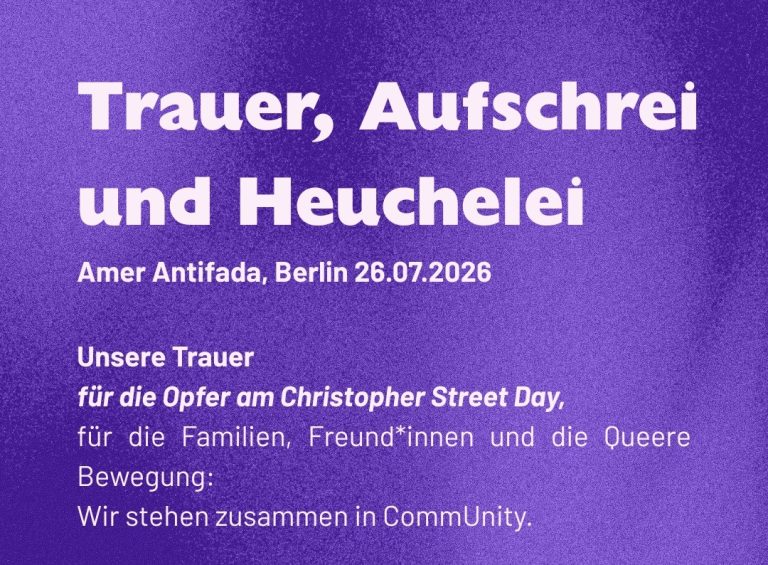
The LGBTQIA+ community in Germany is also facing increasing violence from different directions. In July, during the annual Christopher Street Day (CSD) celebrations in Berlin, a perpetrator drove a van into the crowd, killing one woman and injuring 29—an attack authorities classified as Islamist terrorism.
With AfD’s recent electoral wins in Saxony-Anhalt and Mecklenburg-Vorpommern, the targeting of the LGBTQIA+ community is likely to intensify also in Germany. Since 2024, a group called “Deutsche Patrioten Voran” (DPV) has been particularly active in the Eastern parts of the country. Its members are assigned to “violence-oriented subcultural neo-National Socialism” by the Brandenburg Office for the Protection of the Constitution Report and target young people with their anti-LGBTQIA+ rhetoric, aiming at creating fear among local CSD participants and organizers. Its motto: “Black, Red, and Gold [the German flag colors] are colorful enough.” In rural areas and small towns, like Müncheberg, local AfD politicians openly engage with neo-nazi rallies against CSD celebrations. Like other far-right parties, the AfD claims that LGBTQIA+ people endanger children and rally against CSD celebrations. For example, this year’s CSD Rathenow faced resistance from the Federal Minister for Family Affairs Karin Prien (CDU), who withdrew funding from Pride, and the demonstration had to be funded through donations.
Anti-LGBTQIA+ rhetoric is also becoming increasingly present in the Bundestag. During a debate in June 2026, multiple AfD MPs expressed their homo- and transphobic stances. First, Fabian Jacobi translated the term “queer” as “odd” (absonderlich) and subsequently used it in his speech. He pledged for a rejection of “intrusive behavior” and a rejection of “certain behaviors in public (…) such as interacting with small children”. Moreover, he stressed that regarding parental laws, there are mothers and fathers, and despite the existence of other “constellations”, AfD will firmly oppose “enshrining ideology in law” and distorting reality through legislation.
Another AfD MP, Birgit Bessin, stated that her party is not opposed to CSD events but against taxpayer money being invested in “these politically indoctrinated events” where groups “incite hatred against the state … [and] against families” and glorify drugs. Bessin also said that visual material from CSD events could be classified as child pornography.
According to AfD MP Tobias Ebenberger, the “rainbow cult” (Regenbogenkult) in its fight for equality is “reaching for language, for education, and for child-rearing”. A homosexual man himself, he stood up for the heterosexual majority, stating that it “does not want drag queen story hours in daycares”. Ebenberger strongly distanced himself from the queer community and stated that there are many people who do not want to be a part of it. Like Bessin, he pointed to protecting children attending Pride events—in this particular case Cologne Pride—where “small children are right there amidst naked buttocks and sex costumes.” The fact that openly gay politicians, like Ebenberger and the party’s co-leader Alice Weidel, do not contradict the party’s politics illustrates the “ideology, not people” frame, where “assimilated” individuals can be tolerated but queer visibility and rights claims are not.
In its electoral program, AfD clearly states it upholds the traditional family as its guiding ideal, where mother and father care for their children, centering their fundamental needs. The desirable goal for Germans should be getting married and raising children. On page 41 of the program, we read “The AfD seeks to initiate a societal discussion on values aimed at strengthening the role of parents and countering the stigmatization of traditional gender roles propagated by ‘gender mainstreaming’.”
On Sunday, October 18, Berlin police raided Casa Kuà, a trans health and community center during the weekly transfemme meeting. According to community accounts, the reason for the raid was the exchange of information on how to access hormones and distribution of “illegal” hormones, as cited by the police, although no evidence has been made public and there is no official police report available to the public. HRT is a legal, prescribed care, but many trans people are disadvantaged and face obstacles in accessing vital medical services.
This is not without precedent. In 1933, the Hirschfeld Institute (Institut für Sexualwissenschaft), a pioneering institute dealing with trans healthcare, was raided, books and documents were burned publicly, and the institute was deemed of un-German spirit (vom undeutschen Geist). The stated justification of the October 18th raid was legality and public safety rather than family, but the target is the same: the spaces where trans people access care and organize.
The common theme here is the alleged protection of traditional families. Social programs and policies are exploited to seemingly provide support to families but upon scrutiny they end up enshrining patriarchal values and targeting LGBTQIA+ people, who are portrayed as a distortion and demoralization threatening what conservative politicians consider “natural”.
These discussed cases invoke traditional families and the need for their protection as a guise to target queer people. Framing people as an “ideology” removes the human aspect and allows for a more abstract discussion in forums, parliaments, and campaigns. But ultimately it is real people who are impacted by such rhetoric and policies. In Türkiye this happens through prosecutors and prison cells, in Hungary through the constitution, in Poland through municipal resolutions, and in Germany the script no longer stays in speeches: it now reaches budget decisions and, reportedly, police operations, well before the AfD holds any real power. So far, the distinction lies in institutional power, not the script itself, and Poland and Hungary show how quickly rhetoric becomes law once there are enough votes. Right-wing populist politicians pick and choose who is worth protecting, and rainbow families and their children are not eligible. The community bears the cost while, as Yıldız Tar put it, the real threats to families, such as poverty, missing social policy and femicide, go unaddressed. For the left the task remains to refuse the language of family and social policy being taken over by those who use it as a weapon.