The Left Berlin News & Comment

This is the archive template

US attack on Venezuela prompt calls for respect for international law

Interview: with Patrick Bond by Oliver Dickson, South African Broadcasting Corporation


06/01/2026

Patrick Bond is Distinguished Professor at the University of Johannesburg Department of Sociology, where he directs the Centre for Social Change. We have asked him to share some thoughts on the US attack on Venezuela.

The US attack on Venezuela is not unprecedented but nonetheless extraordinary. What do you project the immediate implications of it to be? 

Well, it’s an indication that Donald Trump is starting 2026 as the maximum bully. And I think we’re going to see him gain confidence for his neoconservative militaristic side, and he will also threaten the governments of Cuba, Nicaragua, Colombia, Panama and maybe Denmark, in terms of control of Greenland. 

So we’re now in a very lawless, wild-west period in the Western Hemisphere that follows the national security report of Marco Rubio, which basically says, “the Western Hemisphere is ours”. The old 1823 Monroe Doctrine – claiming that the US will control that area – is now being called the Donroe (Donald Donroe Trump) Doctrine. And that is something I think the world must wake up to and say, “no you can’t do that”. 

America’s NATO partners were quiet when America did this in Iraq and once again in Syria. And of course we saw what they did in Libya with the regime change of Gaddafi. What does the world stand to lose this time around if they once again turn a blind eye?

Donald Trump will be empowered to continue with his regime change agenda. He will probably feel the need to do that in the period between now and November, when he will face tough elections for his members of Congress: the House of Representatives all turn over, plus a third of the Senate.  We can often see these sorts of interventions as a distraction, as a way of exerting power abroad when things are going badly at home. And I think that’s probably part of the calculation this year. 

The other aspect is the hypocrisy of the G7. There’s a G6 which is Europe, Canada and Japan, and Donald Trump has broken free. He did not come to the G20 here in Johannesburg, and he also dropped out of the United Nations Framework Convention on Climate Change – which means the US is violating the world’s responsibility to cut emissions. He also quit the World Health Organization, which throws pandemic preparedness into question. 

In the first sixth months of 2025, Elon Musk, our South African born-and-raised ally of Trump, cut USAID, which operated as the main agency for overseas development, healthcare, climate support, food and emergency aid.  A report in the Lancet says that means 14 million lives will be threatened by 2030.  

What more? Bombing Iran in June. Supporting the genocide in Gaza by giving Benjamin Netanyahu free reign, as he just did this last week. It is really time to ask what can be done now, to say this rogue activity must be stopped. On trade, we saw divisions, and only one country stood up to him on the tariffs. That was China, who said, “we’ll put sanctions on you with the rare earth minerals”.

I think that was a signal that, actually, Trump can be forced to back down. The Houthis forced his Navy out of the Red Sea in May by virtue of their drones, and being able to shoot down US drones. And I think there are moments where you see some resistance. We all have to remember what his own vice president JD Vance said: Donald Trump could be the next Adolf Hitler. When he said that, just before the 2016 election, we didn’t really know Trump. Well, now we do, and I think we do have to worry that there is an expansive, arrogant, and, as our foreign minister says, “white supremacist” point of view, that led him into this attack on Venezuela, which I think the world now must stand up against.

What we learn from Syria, Iraq and Libya to an extent is that often an invasion of a country leads to insurgencies on the ground. And regularly that leads to protracted wars, which forms the pretext of America’s continued “war on terror”. Do you anticipate that would happen in this instance as well?

Well, just add Afghanistan. That was the crucial insurgency, with the Taliban coming back and in 2021 Joe Biden – Trump’s predecessor – actually felt the need to pull out US troops. So it can be done. Iraq has not gone well. The US lost quite a few troops there when they invaded in 2003. 

The vice president, Delcy Rodriguez, is a loyalist and coming out of the Chavez tradition, the left. But according to Marco Rubio, he talked to her and said, “she’s willing to do business”. Interestingly, Trump said that the popular middle-class leadership, including the Nobel Prize winner María Corina Machado, isn’t ready to take over. Edmundo Gonzalez was the candidate against Maduro in 2024. 

At that point, Maduro didn’t really prove that he’d won the election. He just said he’d won. They never released the ballots and therefore he lost the support of, for example, Lula in Brazil, or Mexico’s president at the time Andrés Manuel López Obrador, or president Gustavo Petro in Colombia. The left didn’t hold together to support him. 

Cuba’s very weak. Nicaragua was extremely weak, and no longer really a left government. And I think the potential for resistance remains the biggest question, because Maduro was captured and is no longer in Venezuela, unlike in 2002 where Chavez – having been captured and taken away – was returned to power after the masses of the people came back during that coup attempt. 

About a decade ago I was a TeleSUR columnist, so I kept in touch, and I’ve been to Venezuela. But if the US invades again, I don’t think that that sort of mass popular support for Maduro can be counted on anymore. I think it’s going to be up to all the rest of us to protest at US embassies and consulates, and start sanctions. Those would be the ways forward if the Venezuelan people call on us, because they feel that the US will really clamp down on any dissent there.

I want to ask about Russia, China, and Iran as well, because they also have economic interests tied to the fortunes of Venezuela and its political stability, for which Nicolas Maduro was an important interlocutor. Do you anticipate that they would throw their support behind Delcy Rodriguez, as she assumes a head of state position?

Probably they’ll make continuing objections, and there may be a debate in the UN Security Council, and probably the US will just veto, and that’ll be that. We’ve seen once before, a coup within the BRICS countries – before Iran joined – that was an internal coup against the Brazilian president Dilma Rousseff. That was in 2016, and there was a lot of discussion then about the potential for the BRICS to say, “we won’t deal with the new president of Brazil”. But they never did. Nor did they react to Trump’s bombing of Iran last year.

That’s the biggest dilemma for the BRICS: they talk left, they walk right. They don’t really do very much to change the status quo. So I doubt we’ll see China, Russia, or Iran standing up. In fact, Iran is probably hunkering down because again, Trump has essentially said, Yeah, Israel, you can go and bomb them. We can take out the Iranians. The popular unrest there now is maybe giving them some sort of excuse.

The pretext that Donald Trump relied on to invade Venezuela seems to have shifted over time. The indictment that came out of the United States District Court’s Southern District of New York reads as follows: “Nicholas Maduro, the defendant, is at the forefront of that corruption and has partnered with his co-conspirators to use his illegally obtained authority and the institutions he corroded to transport thousands of tons of cocaine to the United States. Since his early days in the Venezuelan government, Maduro Moros has tarnished every public office he has held.” 

I want to pause there. He’s allegedly running a narco state and facilitating the transportation and distribution of cocaine in the US. Then he is presiding over an illegitimate government that he had rigged elections. How much truth is there to any of that?

The main thing is, you can’t trust the US. They claimed that Saddam Hussein had weapons of mass destruction and they arranged an invasion in 2003 and went looking for them. They never found them and never really came to grips with that.  

The New York Southern District Court began that indictment back in March 2000. So this is now nearly six years in which we’ve heard the allegation, but we haven’t seen any proof. We just saw a few dozen small speedboats being bombed, and 115 deaths on the same grounds. But no proof. We do know – and DEA statements confirm – that the fentanyl and cocaine isn’t coming from Venezuela. The cocaine is mostly from Colombia, fentanyl from China. 

Trump says that they’re killing 300,000 Americans a year and that’s the justification for self-defense, and therefore not needing to go to Congress to approve this attack. But I think when all’s said and done, these claims have no evidence and from what we’ve heard Maduro just hasn’t the history of such drug trafficking. 

The other big question: is Maduro’s 2024 electoral victory genuine? And if it’s not (and I would say it probably wasn’t) – he hasn’t released the votes properly – then do you just kidnap him? Obviously not. Even if you disagree with Maduro, I think that’s the position that most people take.

Is he a dictator?

I think so. He inherited the Chavista tradition, which was a genuine left popular tradition, maybe you could say a benign dictatorship. I witnessed him there, and met him, and found that this was a very popular effort. 

I think Maduro lost a lot of that popularity over time, and he then partly imposed neoliberal – that is more pro-corporate – policies over the period. So there became a left opposition to Maduro. But certainly all of the leftists that I’ve known, and I’ve tapped into their statements, are against this US invasion. I think that’s a crucial point. 

Sovereignty is absolutely critical here, no matter whether Maduro was someone who played all sorts of games with his own society, and stole that election. 

The other crucial thing is that Donald Trump is really doing this for the oil. I think that point can never be underestimated. That was the same for Iraq in 2003. It’s always the question, what does the US military-industrial complex – and now Trump’s very good friends in the oil companies – get out of it?

America will effectively now be selling oil to the rest of the world that it does not own. It will reap the economic benefit of selling this oil to the people that are already buying oil from Venezuela. This is a point of inflection in the moral question of the international order that Russia, China, Brazil and all these countries will have to face. Do we support an American imperialist industrial military complex system where they’re allowed to sell oil that they ultimately do not own? And if they answer that question in the positive, it means that they embolden and empower the US. But if they answer that question negatively, it means that they have to stand up to the US. Which way is that scale likely to tip?

It’s so vital to think about what you could do, as a backlash against US power. For example, Tesla and X, both owned by Elon Musk, have been subject to boycotts. And that means our homeboy Elon Musk lost a quarter of his net worth in the first few months of 2025 when he was deep in this administration. Could one do that more generally? Could one have boycotts against Trump and his full set of operations? Many of the countries we’ve seen are scared, and they’ve been divided and conquered over the past year.

But I think the basic question for oil is what happens if Trump says Okay, there’s about 800,000 barrels a day coming from Venezuela – and he wants to increase that. The Saudis are about 6 million barrels a day. The US has about 4 million. The Chinese have been buying much of that oil. Would they say, “no, we’re not going to be dealing with the stolen property”? This remains to be seen. 

I suspect that they may find that they can get their oil elsewhere in the world markets. Iran still has a very strong supply of oil also that goes to China, particularly because Russia still has big surpluses. So there might be some way in which we see a sort of configuration of the West maybe against the BRICS axis. Thus far, they’ve actually worked relatively well together: imperial power and subimperial connectivity. 

But that may change because of the extraordinary arrogance of Donald Trump. Especially if he goes further – Cuba, Nicaragua, Colombia, Panama, maybe Greenland – and he does consolidate a sort of western hemispheric power. That’s an invitation to China invading Taiwan, and Russia continuing to expand its borders.

There’s an interesting response from the French government, which says: “The military operation that led to the capture of Nicholas Maduro violates the principle of not resorting to force that underpins international law. France reiterates that no lasting political solution can be imposed from the outside and that only sovereign people can decide their future”. 

They are perhaps the first western nation to outrightly condemn the US here. But it’s also interesting to note France has oil interests in Mozambique, potentially South Africa if what’s happening in the Orange Basin goes ahead to an extent, and Angola. But very importantly, in Guyana, a neighbor of Venezuela. Is this the sort of response you would have expected from the French nation? And would they potentially be a lot more emboldened to support Venezuela?

There’s always a temptation, especially if you’re European, especially if you’re French, to condemn the Yankees. That’s easy. In fact, they did so in the Iraq invasion. Not only the French: the Germans as well. They were against Bush and Blair, at the time, invading Iraq in 2003. But they didn’t do anything. 

Indeed we’ve seen Trump demand that the NATO powers – especially Germany and Britain and France – increase their spending, to up to 5% of their GDP, on military. And the way things are going, unfortunately, these are fairly weak governments in Europe and they’re probably going to go along with it. They may, you know, bark a little bit. But Trump will pet them and they’ll do what he wants.

This is a shortened transcript of two interviews given to SABC News, lightly edited for clarity. You can view them hereand here.

Can Die Linke be saved from itself?

In 2025, tens of thousands of pro-Palestine activists joined Die Linke, hoping to change the party’s direction. What chance do they have of winning?

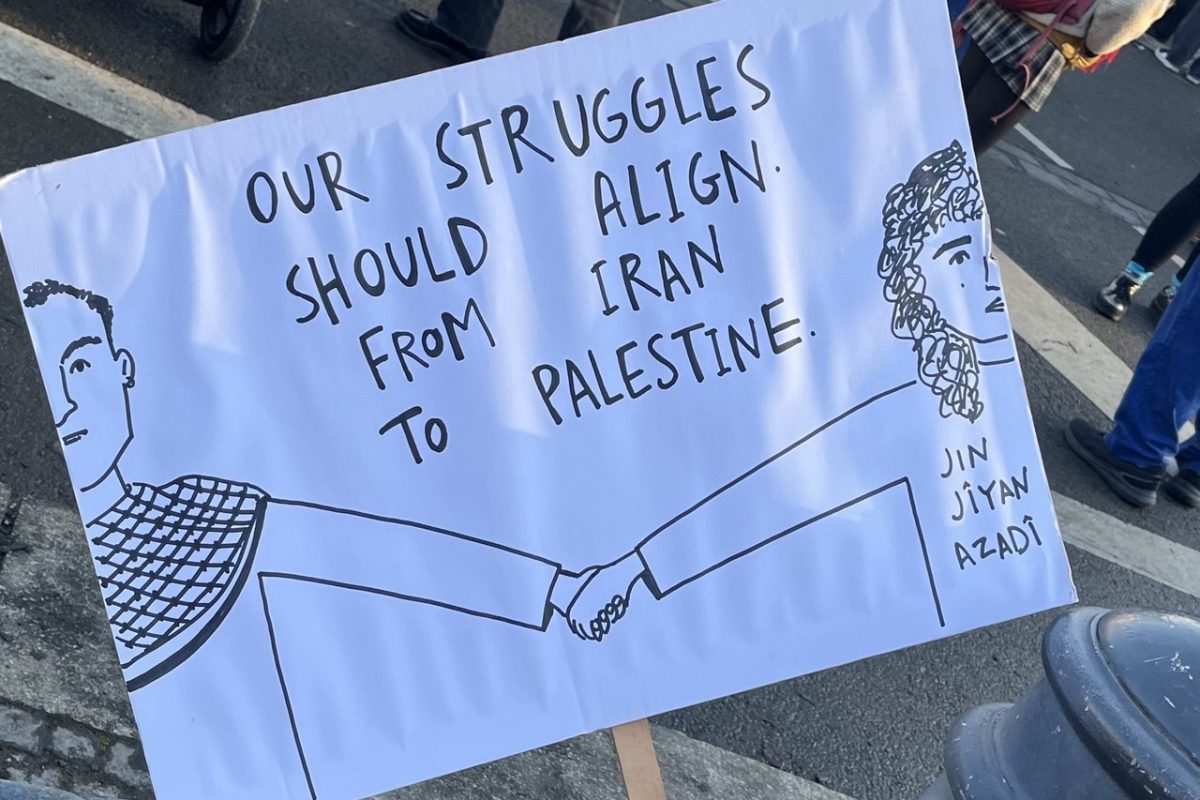
On 22nd November, Ramsis Kilani’s expulsion from Die Linke was confirmed following a kangaroo court in Karl Liebknecht Haus. The following weekend, in the same building, the party’s BAG Palästinasolidarität (national working group for Palestine solidarity) was formed. There are few better examples of a dissonance between party leadership and base.

This is not the first time that our website has covered Die Linke and Palestine. I have written several articles on the subject, and we published an important statement by The Left Berlin in November 2024. More recently, both Nathaniel Flakin and Pepe T. each provided a list of the party’s many crimes and betrayals around the subject of basic rights for Palestinians.

Show a list like this to the people now organising for Palestine within Die Linke, and they’ll agree with you. They know better than most how the party has time and again betrayed Palestinians. ‘That’s not the point,’ they say, ‘Others have just interpreted Die Linke. The point is to change it.’ This article aims to look at why Die Linke has taken the positions it has, and how much change is actually possible.

The betrayal is still going on

In order to recognise the scale of the problem, it is worth looking at some of the more recent betrayals. Ramsis’s was not an isolated case. Four days before his hearing, Berlin Insoumise (BI) was due to have a meeting in Karl Liebknecht Haus with Member of European Parliament Emma Fourreau, who had been on the Gaza Flotilla. The room booking was cancelled by Die Linke just a few hours before the event was due to start. The cancellation came directly from Matthias Höhn, who was once an MP and national party chair.

Raul Zelik reported a similar experience in November. He wanted to organise a book presentation of Donny Gluckstein and Janey Stone’s The Radical Jewish Tradition. He was told that the room, which is partly owned by Die Linke, would only be made available if Donny and Janey signed a statement that they ‘do not question Israel’s right to exist, nor oppose a Two State Solution’—something that they were not prepared to do. Not for the first time, the German Left was denying Jews a space to talk.

And then there’s the expulsion that didn’t happen. Andreas Büttner supports withdrawing finances for UNRWA, and posted that: ‘The recognition of a Palestinian state would be the worst step that one could take.’ While the Berlin police were repeatedly using excessive violence against pro-Palestine demonstrators, Büttner tweeted: ‘I wish I were a policeman @polizeiberlin. Thanks to all colleagues for your deployment today in Berlin and everywhere in Germany.’ 

The party ignored calls by some party members for Büttner’s expulsion. The message was clear—active support for genocide is perfectly compatible with being a member of Die Linke. Defending the rights of Palestinians is not.

The last gasp of the old guard?

Many Die Linke activists are appalled by Ramsis’s expulsion. But, they say, things are changing. Encouraged by insurgent electoral campaigns, like that of Ferat Kocak in Neukölln, Die Linke doubled its membership in 2025. Many of the tens of thousands of new members are actively pro-Palestine and insist on their voice being heard.

On 10th May, Die Linke’s national conference voted for a motion that rejected the notorious IHRA definition of antisemitism, which falsely equates criticism of Israel with antisemitism, and replaced it with the Jerusalem Declaration. On 21st June, when 30,000 demonstrated for Gaza in Berlin, there was the biggest Die Linke bloc I’d seen, not just on a Palestine demo but on pretty much any demo in the past few years.

In September, four Die Linke MPs were thrown out of the Bundestag for holding up a Palestine flag. Later that month, the party co-organised the largest demonstration for Palestine in German history. On that demo, party co-chair Ines Schwerdtner said: ‘We are standing here for the whole party when we say: we have been silent for too long. I have been silent for too long. It is a genocide! We must stop the delivery of weapons.’

Schwerdtner’s change of heart was the result of pressure from new members, who are serious about fighting for Palestine. They argue that party decisions are currently being made by older, more conservative members. This will change after the next set of internal elections. I fully support the newly formed BAG Palästinasolidarität, but here I believe that they are being naive. Forgive me for saying that I’ve heard it all before.

What is the point of Die Linke?

Much of Die Linke’s cowardice has been ascribed to its role as a reformist party—its raison d’être is to chase votes. Rather than try to convince people through principled arguments, it says what it thinks people want to hear. There is something in this, but vote chasing alone does not explain Ramsis’s expulsion. With a clear majority of Germans opposing weapon deliveries to Israel, expelling a well-known Palestinian activist could cost the party both votes and activists.

But Die Linke is not just chasing votes. It is also chasing respectability. Unless there is a major shift in election results, Die Linke will only get into government as the junior partner of a government led by the SPD or the Greens. And each of these neoliberal warmongering parties places clear conditions on who they deem to be an ‘acceptable’ coalition partner.

The main sticking block used to be NATO. Programmatically, Die Linke has always been against NATO, but whenever elections come closer, pragmatism takes over. I remember a rally shortly before the 2021 national elections, when party leader Janine Wissler—a former revolutionary socialist—insisted that NATO would be no barrier to the party joining a coalition. This was just one more principle that could be ditched for the right price.

German Staatsräson is the latest principle that the party leadership is prepared to throw overboard. For the last 3½ years, a majority of Die Linke leadership has been on the left wing of the party. Most of these leaders have been fairly good on Palestine, but they have been almost unanimous in their silence as the party has supported pro-Israel demos and expelled members like Ramsis.

Unity at all costs?

The new insurgents are clearly not the same as the old leadership, which loyally supports Israel. In contrast, the party’s left talks about a dual strategy of combining elections and social movements. Yet it has always ended up tolerating right-wing attacks in the name of party unity. Good activists who support Palestinian rights end up providing cover for those who don’t.

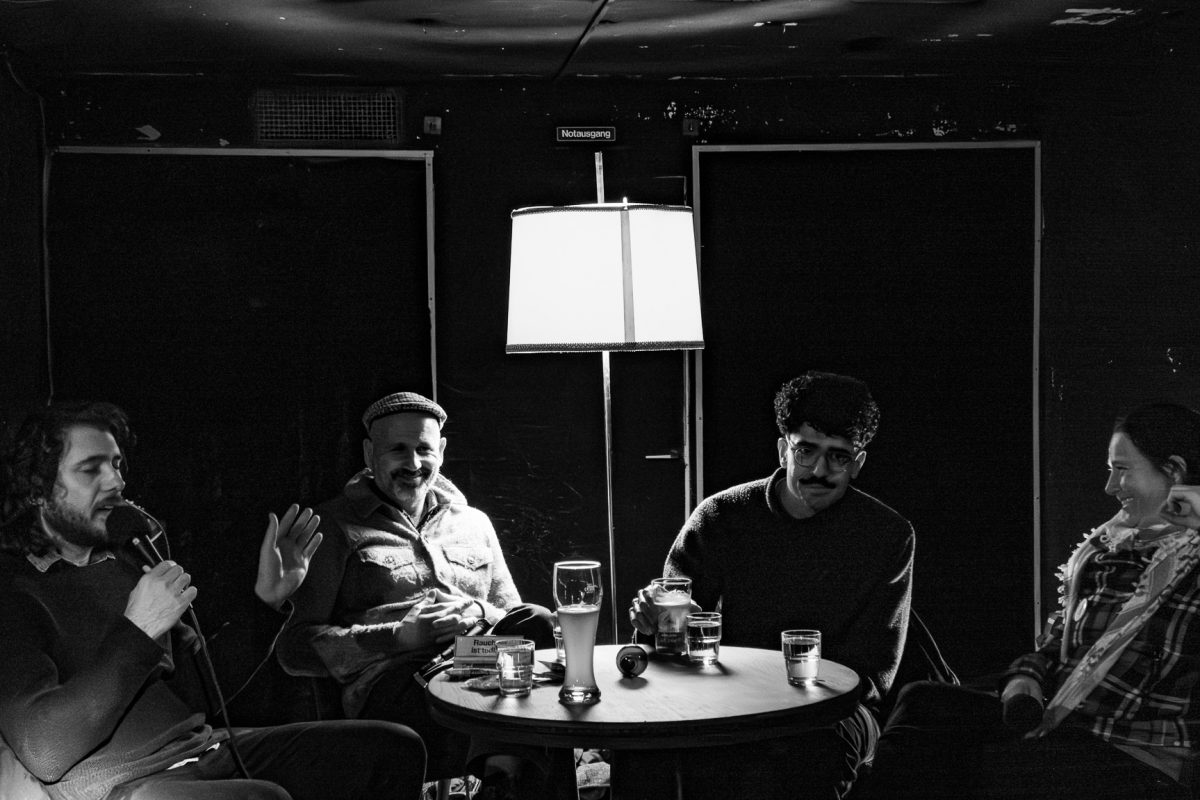
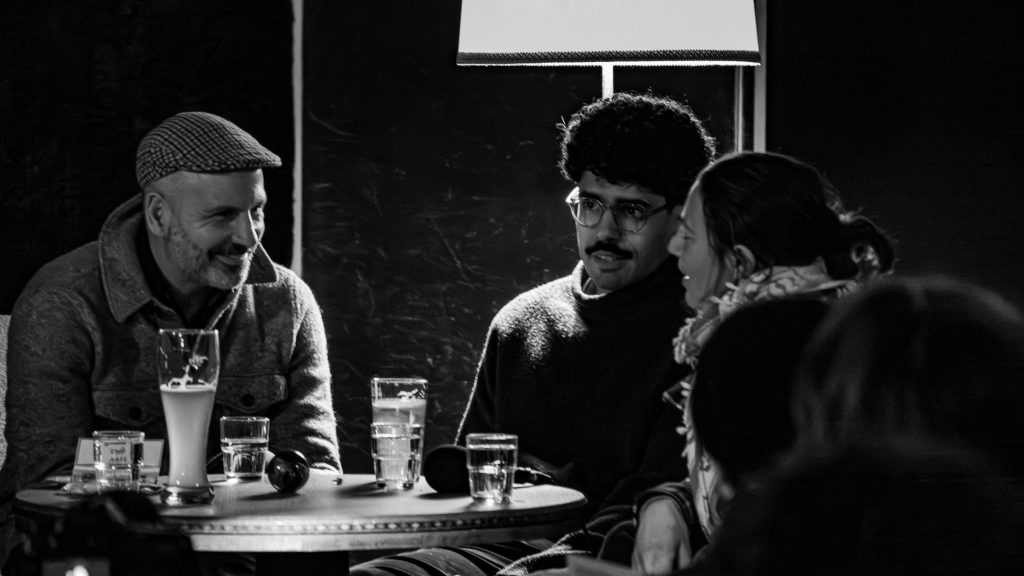
Around the time of Ramsis’s expulsion, I interviewed Kostis from Die Linke Berlin working group for Palestine solidarity. The group had approached The Left Berlin and asked to explain why they had withdrawn two motions at a party conference. One motion named what was happening in Gaza as a genocide, and the other supported the Boycott, Divestment, Sanctions (BDS) movement. 

Kostis explained that withdrawing the motions in the name of party unity was ‘a strategic compromise … if we had not participated in these negotiations, the discussion would have been between the leadership and the right-wing factions of the party, meaning the document would have been even worse.’ In other words, by avoiding a difficult discussion, left-wing activists preserved party unity.

I recently spoke to Martha Kleedörfer, chair of Die Linke Berlin-Mitte and an old friend. I know that Martha is serious about supporting Palestinians. She too defended withdrawing the motions in order to reach people who are not yet convinced. It is not clear to me how avoiding a debate is able to convince anyone.

How do ideas change?

We can see a strategy here, which has elsewhere been described as the resolutionary road to socialism. It sees political argument as being an incremental fight. First you win over the people nearest you, without saying anything that might scare the horses. This strategy also sees the main place for such discussions as being in respectable political organisations like Die Linke.

But what can change Die Linke leadership is not reasoned argument, but pressure from below. In an interview that was supposed to promote the demo on the 27th September, Die Linke Party Secretary Janis Ehling explained why the party had finally come out in support for Palestinian rights: ‘What has changed is the mood in society. Public opinion about this war has massively shifted.’ In other words, Die Linke sees their job as not to form public opinion, but to follow it.

This explains Ines Schwerdtner’s mea culpa. She recognised a growing movement that she couldn’t control, and so tried to rush to its head. Under pressure from party activists to deliver something, she produced the minimum possible. 

We saw this one month after her speech, when the party’s youth wing passed a resolution, ‘Never again be silent about a genocide’, which attacked ‘the colonial and racist character of the Israeli state project.’ Schwerdtner, and co-leader Jan van Aken issued their own statement, saying ‘a one-sided perspective of Israel and Palestine brings no-one in the region anything’, and: ‘in the party leadership, there is a very broad unity that the contents of the adopted resolution are not compatible with the positions of Die Linke.’ The only lessons that they had learned about Palestine were entirely opportunistic.

In September 2026, there will be elections in Berlin. Die Linke has a serious chance of providing Berlin’s mayor. Not just that, for the first time ever, the candidate, Elif Eralp, comes from the left of the party. Like all sensible people, I hope that Elif succeeds. But her campaign will be accompanied by a massive crackdown on talking about Palestine for the ‘sake of party unity’.

An International phenomenon

The German ruling class has invested money, armaments and its reputation on uncritical support for Israel. Breaking from this requires challenging this consensus, not accommodating to it. And yet recent history has shown an international Left that is more suited to trying to do a deal with capitalism.

Following the 2008 crisis, the Left enjoyed brief victories followed by ‘necessary compromises’. In 2015, Coalition of the Radical Left – Progressive Alliance (SYRIZA) won the Greek elections on the back of a mass movement. SYRIZA leader Alexis Tsipras ignored that movement and imposed the European Central Bank’s bailout programme. More radical SYRIZA members, like Stathis Kouvelakis proposed a strategy of ‘seizing power by elections, but combining this with social mobilisations,’ but following the elections, these mobilisations were limited. 

A few years later, Podemos emerged from the radical 15M movement in Spain, promising a new type of politics. As 15M lost influence, Podemos brought in two social democrats to draft an economic programme based on ‘short-term pragmatic proposals’. By 2016, party leader Pablo Iglesias could say: ‘things are changed from within institutions… That idiocy that we used to say when we were on the extreme left, that things are changed in the street and not in the institutions, is a lie.’

And then there is the recent victory of Zohran Mamdani’s campaign to become New York mayor—a victory that was every bit as impressive as those of SYRIZA and Podemos, not least because Mamdani has held the line on Palestine. And yet, like Tsipras and Iglesias before him, Mamdani has seen the need to compromise—appointing Jessica Tisch, who the Wall Street Journal describes as a ‘law and order police chief’. It is true that Tisch must now report to the deputy mayor rather than the mayor, but Mamdani was under no obligation to keep her at all.

Faced with genuinely progressive party-based movements, the radical Left can make two mistakes. The first mistake would be to pretend that these movements are irrelevant. It is profoundly important that members of Die Linke are finally mobilising for Palestine and holding their leaders to account. I would urge all party members to get involved in the BAG Palästinasolidarität.

But the other mistake would be to expect a struggle to come from organisations that are institutionally committed to German Staatsräson. I agree with my comrades in Die Linke that we must organise to effect change, but unlike them, I believe that any fundamental change in their party first requires a change in German society, and that this change will come from outside. 

It is great that Die Linke co-organised the demonstration on 27th September, but this was the result of pressure from below. As the Berlin elections come closer, party leaders will inevitably dismiss opposition to genocide as a luxury and a distraction. Together with comrades both inside and outside Die Linke, I look forward to fighting to ensure that we never stop speaking about Palestine.

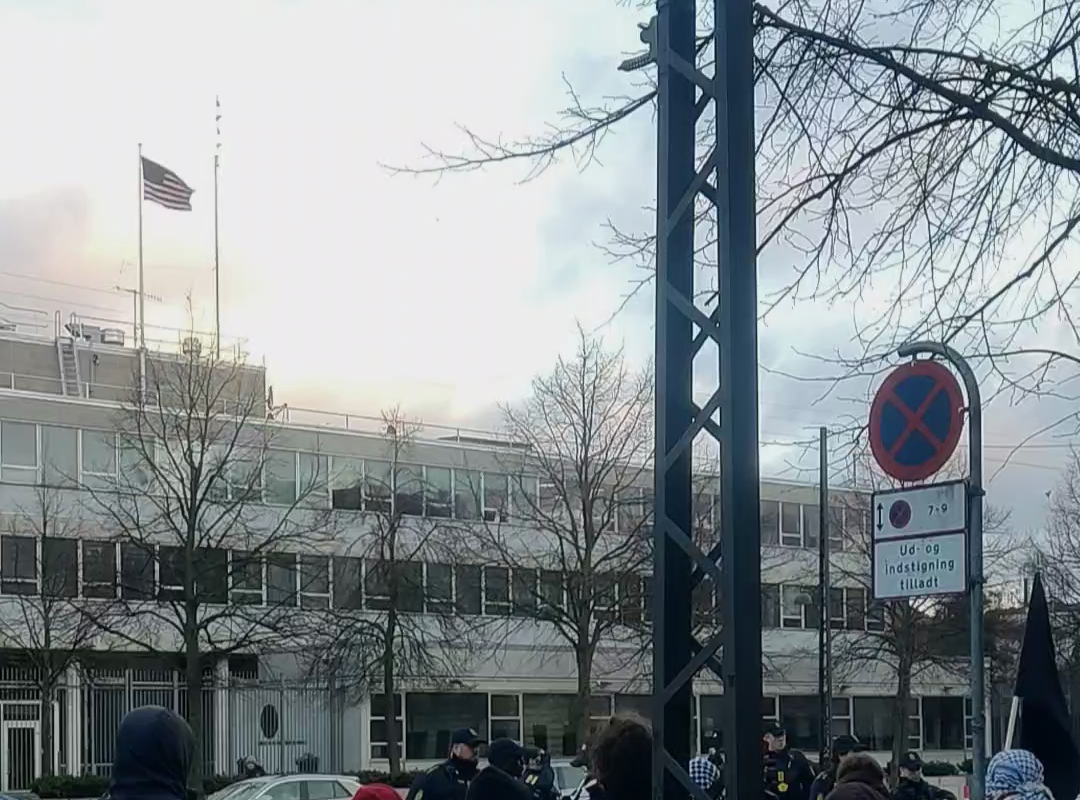
Photo Gallery: Hands Off Venezuela – 3 January 2026

Outside the US Embassy, Brandenburger Tor


04/01/2026

All photos: Dave Gilchrist

New Year’s gift from the capital: EU law for corporate accountability dismantled—with help of the far right

How EU supply chain protections were gutted by conservatives, corporations, and far-right alliances


03/01/2026

The EU Supply Chain Law—already passed in 2024—was intended to oblige companies to respect human rights, the environment and climate protection in their global supply chains. However, in early December 2025, negotiators from the European Parliament and the Council of the 27 EU member states agreed on a version that effectively continues to exempt companies from any meangingful due diligence obligations. This followed a vote in November, when European conservatives, together with the far right, forced a new vote in Parliament with 382 votes to 249.

‘Despite the accusations, EPP group leader Manfred Weber expressed satisfaction with the outcome of the vote and spoke of a “good day for Europe’s competitiveness”,’ reported Tagesschau on 13 November.

The fight against windmills for more human rights and environmental protection

Dhaka, Bangladesh April 2013: 1,134 workers—most of them women—lost their lives and almost 2,500 were injured when the Rana Plaza garment factory collapsed. This disaster forced the media, trade unions, and political parties around the world to finally take a closer look at production conditions in international corporate supply chains. Workers of Rana Plaza, some of them minors, produced clothing for brands such as Benetton, C&A, KiK, and Zara for salaries of around €30–80 per month. Despite dangerous cracks being discovered in the building, factory owners coerced them into continuing work. Under pressure and without union organisation, the garment workers were compelled to enter the factory, only to be buried under the rubble a few hours later.

Capitalists typically relocate production further and further to so-called ‘poorer’ countries in order to exploit people and the environment through low wages and unhealthy—or even deadly—working conditions in the name of competitiveness. Violations of human rights, including modern slavery and child labour, are repeatedly justified by claims that global production chains are too complex and opaque to regulate. Local suppliers, in turn, argue that they cannot improve working conditions—particularly in the textile industry—because international corporations refuse to pay fair prices.

Workers and activists have always fought against this exploitation alongside demands for greater environment and climate protection. Eventually, the then German Federal Minister for Economic Cooperation and Development, Gerd Müller (CSU), attempted to draw concrete consequences for German corporations from the Rana Plaza disaster. He initially pursued voluntary due diligence commitments in supply chains—without success. He then drafted the mandatory German Supply Chain Due Diligence Act (LkSG) together with his SPD colleague Hubertus Heil. The attempt faced strong opposition from business associations such as BDI, BDA, DIHK, Gesamtmetal,l and Textil & Mode, as reported by taz. Despite obvious shortcomings—and criticism from civil society—the law was finally passed by the Bundestag in June 2021.

In May 2024, after a tough battle—including resistance from corporations such as France’s TotalEnergies, as Junge Welt reports—the EU Council, as the final authority, passed the EU Supply Chain Directive (Corporate Sustainability Due Diligence Directive – CSDDD). Although significantly watered down by compromise, it was intended to have a deeper impact on value chains than its German counterpart. Global Witness strongly critisised the law as too weak, but nevertheless considered it a milestone towards more binding corporate responsibility, moving away from hollow voluntary Corporate Social Responsibility (CSR) measures.

While other EU countries still have plenty of time to incorporate the new directive into their national laws, European Center for Constitutional and Human Rights (ECCHR) has been able to assess its German variant for two years. The study addresses vast shortcomings as well as violations, yet the law has enabled Ecuadorian and Costa Rican farmers to file complaints against German supermarket chains such as Aldi and Lidl.

Against slavery, child labour, exploitation, and environmental pollution—and with civil liability and clear sanctions—things appeared, after years of civil society pressure, to finally be moving in the right direction for global protection of workers, the environment, and the climate:

“This law is a historic breakthrough. Companies are now responsible for potential abuses in their value chain, ten years after the Rana Plaza tragedy. Let this deal be a tribute to the victims of that disaster, and a starting point for shaping the economy of the future – one that puts the well-being of people and the planet before profits and short-termism,” EU Parliament quoted lead MEP Lara Wolters (S&D, NL) in their press release 2023.

If only there were no crisis of capitalism, no powerful industry lobby, no energy dependency, and no rightward shift across Europe.

Together with the far right for more ‘competitiveness’: the thorn in capitalism’s side must be removed

Having only come into force in January 2023—and even having been drafted by party colleagues—the new black-red government is now abolishing the German LkSG, derided as a “great bureaucratic monster”, in its coalition agreement. In May 2025, the newly elected Chancellor Merz traveled to Brussels and, under the guise of “bureaucracy reduction”, called for the complete abolition of the new EU supply chain directive as well. This move surprised even his coalition partners and drew criticism from both the EU and the SPD, which had considered the German law one of its major achievements under Chancellor Angela Merkel. The SPD had agreed to a compromise: the German version would be replaced with the EU directive. Prior to this, business associations had already complained to then chancellor Olaf Scholz about the stagnating German economy, further undermining the LkSG.

Meanwhile, conservatives and liberals worked hard to significantly weaken the EU supply chain law, with Germany in particular opposing it. Resistance to the original version of the directive also came from abroad: Qatar threatened to cancel LNG exports for 2026 due to the “excessive requirements” of the planned due diligence obligations as Reuters reported. Moreover, according to new revelations available to SOMO, US energy companies such as ExxonMobil and Chevron also lobbied heavily, participating in a so-called “Competitiveness Roundtable” on the Omnibus I package to weaken the rules.

Human Rights Watch criticised the flawed and opaque process, in which no civil society actors were involved: “The process began on November 8, 2024, when EU Commission President Ursula von der Leyen announced a fleet of so-called Omnibus laws to simplify the European Green Deal. The proposed changes, made public only in February 2025, weakened key provisions of the corporate accountability law, making it harder for victims of rights abuses to sue companies.”

All political groups in the European Parliament had until November 2025 to submit amendments. The conservative European People’s Party (EPP), Social Democrats (S&D), and Liberals generally work together in an informal coalition within the EU. This time, however, some Social Democrat MEPs voted against the plan to significantly weaken the law in a secret ballot. Nonetheless, the conservatives still had an ace up their sleeve for a majority in Parliament: the right-wing and far-right parties, which are now well represented in the EU. In the end, with the votes of the right wing, the conservatives succeeded in watering down the EU Supply Chain Directive beyond recognition. According to estimates, the new law will only affect 15% of the companies originally planned: only 1,500 of the largest corporations with an annual turnover of €1.5 billion, down from millions initially envisaged. TCivil liability for human rights violations and the obligation to comply with the Paris Climate Agreement were also dropped.

“It repeats at European level what we experienced in Germany earlier this year: Contrary to repeated affirmations and without necessity, the CDU and CSU have entered into an alliance with the right-wing extremists and have finally brought down the firewall to the far right. Driven by the far-right, the Union is sacrificing key achievements for the global protection of human rights,” FEMNET states in their press release in November.

Only the workers rising up against global exploitation is the real solution!

This case shows how even well-intentioned reforms are systematically fought, diluted, and reversed by capital and those in power. Reforms can easily be undone by subsequent governments, especially during the ongoing crisis of capitalism that has persisted since at least the 2008 financial crash. Conservative forces no longer shy away from cooperation with the far right and fascists to impose corporate interests against workers, the environment, and the climate.

Although Bangladesh has now ratified all International Labour Organization (ILO) conventions and the number of trade unions has increased since the Rana Plaza catastrophe, worker organisation remains weak. In 2024, around 70% of the country’s 4,000 textile factories still had no registered trade unions, as reported by the Business and Human Rights Centre. Wages have risen only marginally, while workers in unsafe factories continue to fear for their lives. Survivors and relatives of Rana Plaza victims are still waiting in vain for accountability and adequate compensation.

Only when workers organise and rise up together internationally against capitalist corporations and factory owners—taking democratic control over how production is organised—will people, the environment, and the climate be genuinely and sustainably protected.

2025 in Film

The best (and some of the less good) films of last year

Leonardo DiCaprio in one of his scenes in One Battle After Another.

I’ve been writing reviews of the films of the year for several years now (you can read my reviews for 2018, 2019, 2020, 2021, 2022, 2023, and 2024 on my film blog). Here are my 20 favourite films of the past year (normal rules apply—all were released recently and I first saw them in the year 2025).

Good

  1. Favourite film of the year: Soundtrack to a Coup d’État

Remarkable documentary about the decolonisation of Africa, militant music, and the Black Power movement in the USA. Soundtrack to a Coup d’Ètat tells us what happened when, and why the half-hearted departure of Western powers led to their ongoing dominance of the Global South. It manages all this in a mood which is neither sombre nor hectoring. The film takes on the syncopated rhythms of the jazz music which features prominently. A revolutionary film in both form and content.

  1. Sinners

The year’s best ghost-music-romance-history-gangster-race-vampire film. Sinners tells many stories simultaneously, but it’s at its strongest when telling the Black experience in early Twentieth Century US America. One of those rare films in which the soundtrack is not just a set of cool songs which the director got the rights for, but an intrinsic part of the plot. I didn’t get on with director Ryan Coogler’s Black Panther, which makes it all the more reassuring that Sinners is both artistically and politically sensational.

  1. One Battle After Another

Many of his best fans will acknowledge, firstly, that Paul Thomas Anderson’s films are of differing quality, and secondly, that he has tended to stay away from politics. So the idea of him as director of a counter-cultural, anti-capitalist fable did not inspire. But what can I say? Anderson is sensational, Leonardo di Caprio is sensational (but not as sensational as any number of the superlative supporting actors). Funny, politically astute, with a highly memorable car chase towards the end. And it all ends on a note of optimism.

  1. The Ugly Stepsister

There have been a heap of female-directed, socially conscious horror films lately, of which this is one of the best. Ostensibly a retelling of the Cinderella story from the point of view of her stepsisters, this takes on beauty myths and the extent to which women, and their mothers, will go in order to remain within accepted norms. And just in case that sounds too worthy, it is also hilarious. By the end, the film has also subverted the myth that any normal young woman’s ambition would seriously be to marry a prince, charming or otherwise.

  1. Danke für Nichts

My favourite German film of the year, is a low-budget film about troubled young women in care. Which (we’re seeing a trend here for the films I really liked this year) is also very funny. There are more laughs than in any other film you’ve seen which contains suicide attempts, trauma, and existential angst. This is a female-led film about the joy and pain of being young and irresponsible. Look out for first-time director Stella Marie Markert, and all the actors, but especially Zoe Stein, who plays the largely mute Malou.

  1. Heldin

A simple enough concept—a day in the life of an overworked nurse, where missing staff members is part of the usual routine. Leonie Benesch, who’s in everything nowadays, is typically efficient, but here she’s even better than usual in a film which shows the struggles of an individual nurse at the same time as making it clear that the problem is systemic. Relatives are (justifiably) frustrated and the private patient is typically entitled, but Heldin never descends into cliché. Instead, it’s an effective intervention in an ongoing debate. 

  1. Sentimental Value

There is one look from Stellan Skarsgård in the trailer which assures you that this is going to be good. Skarsgård plays an arrogant film maker who is aware of his greatness even though no-one goes to see his films any more. But one word from his daughter Nora criticising his parenting provokes a look of absolute disdain. Skarsgård is only the second best actor in this film about absent fathers and broken families. Renate Reinsve who plays Nora is even better. This is a grown-up film which is never too pompous.

  1. Im Schatten des Orangenbaums

Epic film which is officially from 9 different countries, but that’s only because of the ongoing occupation of Palestine. Cherien Dabis, who also plays the mother, tells the story of one Palestinian family from the Nakba till the present day. Several good documentaries about Palestine have been released in recent years, but few dramas, particularly one as comprehensive as this one (and for once, comprehensive here is not a synonym for “too long”). Tragic and highly informative about why Palestinians resist.

  1. Hundreds of Beavers

From the sublime to the supremely silly. Hundreds of Beavers is basically a cartoon starring real life actors, some of whom are in animal costumes. Trapper John Kayak is trapped in a cycle of killing beavers to trade for produce, in particular a gun with which he can kill beavers. The scale of the story gets larger and increasingly ridiculous. Anyone who goes to see Hundreds of Beavers and hates it has my full understanding, but if you’re prepared to go with it and accept the silliness, it can be uproarious fun. 

  1. Kneecap

Who’d have predicted that 2025 would be Kneecap’s year? (before they got slightly overtaken by Bob Vylan). This film, released at the beginning of the year, helped to bring many of us on-message. Ostensibly an “origins” film, whose biggest draw was a cameo by Michael Fassbender, this turned out to be a heap of fun with a decent soundtrack. The politics are a bit splattergun, if generally on the right side. It’s everything you’d expect from a band, two-thirds of whom were in their twenties (and looked even younger).

  1. Universal Language

What is it about Winnipeg which produces such weird films? (I give you everything which Guy Maddin produced, especially My Winnipeg). This film is very much in Maddin’s tradition. Some reviewers tried to read too much into Universal Language, and in doing so removed most of its fun. This is a simple story about a search for some glasses, the retrieval of a 500 Rial note, and the tourist guide who has the least to show, all told in English, French, and Farsi. Don’t try and understand it, just sit back and enjoy the fun.

  1. The Girl with the Needle

Post-First World War Poland was grim, if this story of evictions, disfigurement, and attempted abortion is anything to go by. There are few jokes and the film is shot in a menacing monochrome but it is a captivating story about the desperate lives of working class women. Seen in the wrong mood, this could be seen as arduous misery porn, but we do feel for the main characters and share their pain. Behind all the degradation, it’s a compelling story of surviving the worst misfortunes. May not be a great date movie.

  1. Sorry, Baby

A quirky story about a young woman who has not quite got the hang of adulting, especially after her best friend leaves for New York. All while she is struggling to cope with a Bad Thing. Extremely well-orchestrated mixture of youthful silliness and Serious Issues, this film could have quite easily been too exploitative, the camera could have lingered too long, or the tone could have just been too trivial to match the serious content. Instead it manages to be both fun and make very important points about women’s oppression.

  1. The Teacher Who Promised the Sea

50 years after Franco’s death, thousands of the people whose deaths he ordered still lie in unmarked graves. This film shows the opportunities opened up by Spain’s 1936 Popular Front government, but also the repression which followed. The history lesson is mixed with a contemporary story of one of the many families trying to locate its forebears. This is a film which could have very easily been worthy but dull, but the fighting spirit and thirst for more engages the audience. It’s a story which is still very relevant.

  1. 28 Years Later

After Trainspotting became a phenomenon, and Danny Boyle was given increasingly large budgets, he didn’t always use them well. 28 Years Later combines Boyle’s Indie sensibility with some astounding set pieces. Throughout the film, we are unsettled by a sense of eerie unease, built on the wreckage of post-Brexit England. This is all leading up to a final 5 minutes in a quite different tone which ruined everything for some viewers. Then there are others, like me, who just can’t wait for the coming sequel. 

  1. Frankenstein

Guillermo del Toro was never going to make an understated Ken Loach-like Frankenstein. This film stays largely to the book, much to the disappointment of fans of neck bolts. We are shown a tale of hubris, told from the perspective of both an enlightenment scientist and his creation. There are plenty of metaphors hanging down for anyone who chooses to make something of them—about loneliness, the dangers of unfettered science, and of men being men. But the film also works as a spectacular action-packed yarn.

  1. A Real Pain

What initially looks like a superficial comedy about a neurotic Jew from New York, actually contains more depth than you’d first think. The withdrawn David and his brash cousin Benji are on a heritage tour of Poland, trying to find out what happened to their dead relatives who died in the Holocaust. The film manages to address the immensity of what happened without falling into trite sentimentality. And, however superficial Benji first appears to be, it is he who possesses the film’s heart and soul.

  1. Companion

If you read a description of Companion, it feels like it’s going to be one of those single-concept Science Fiction Issue Movies, which is worth a single viewing but has little new to tell us. And yes, it is about consumerism, gender role expectations, and the commodification of love. But then it gets batshit crazy and a load more fun. Come for the comfortable feeling that the film is on the right side politically. Stay for some astute political analysis, over-the-top mayhem, and jokes which are way too funny for this sort of film.

  1. Bird

A new Andrea Arnold film is always to be welcomed, even the ones which are not an easy watch. You can be sure from the start that this is not going to be set in some Gosford Park / Friends, alternative yuppie universe. Bird is a story with parallel plots, some of which are more effective than others. It stars Franz Rogowski and Barry Keoghan, neither of  whom is ever uninteresting. They are more than matched by  Nykiya Adams as the mixed-race hero Bailey, trying to negotiate a difficult world despite her irresponsible father.

  1. Springsteen: Deliver Me from Nowhere

Bruce Springsteen’s mental breakdown: the movie. A film about the making of Nebraska—one of Springsteen’s least successful (and best) albums, was always going to be polarising, but I never expected it to be so introspective. This is the anti-Bohemian Rhapsody / Rocket Man (which is meant in a good way). None of the bombast of most recent biopics, and an honest account of the artistic process when things are not going well. Not at all what I was expecting—a very nuanced film which has something to say.

Less Good

And here are my 5 least favourite films of the year:

5. The End

The End found its way onto some critics’ Best-Of lists, and to be fair, it is not an offensive film, just very, very boring. It’s a post-apocalyptic world, and a couple is living with their servants and son in a bunker full of paintings which were once extremely expensive (some Important Points are obviously being made). And then, for no obvious reason, everyone starts singing. This is an overlong musical whose characters show no emotion, and even the songs are uninspiring. Tilda Swinton, you are so much better than this.

4. Parthenope

Parthenope is beautiful and intelligent. Of course she is. This is not the sort of film which is interested in the ugly, little people. She spends most of her time hanging around the beach in a bikini and doing her best to hide the intelligence which other characters assure us that she has. Everybody but a hammy Gary Oldman is in awe of Parthenope’s captivating beauty. The film, made in collaboration with Yves Saint Laurent, is little more than an extended advert. Like Parthenope, it is very pretty but has nothing to say.

3. The Helsinki Effect

The Helsinki Effect is not a bad film as such. It presents a case, which it backs up with documentary footage. But its main argument is based on such flimsy logic that it just does not work. Apparently, a 1975 meeting in FInland between Western and Soviet Bloc countries indirectly led to the downfall of the USSR. Except that there is no convincing argument that this is what happened. The real time coverage of boring meetings, the adulation of “Western democracy,” and Henry Kissinger. Nothing in this film is remotely credible.

2. Loyal Friend

Never work with animals or late period Bill Murray. Loyal Friend is a sentimental mush fest about a woman inheriting her late friend’s dog. She hates the dog at first (but still accepts it for no obvious reason), but can you guess if she gets to love it by the end of the film? This is a film about the obnoxiously wealthy whose arrogant behaviour we are expected to admire. It states that its characters are intelligent without any of them saying anything of any intelligence. It is not just predictable. It is dull.

1. After the Hunt

I saw a number of films in 2025 which were a waste of my time. After the Hunt was the only one which truly offended me. It is Luca Guadagnino’s take on #MeToo. And guess what? Guadagnino has nothing of interest to say of the systematic exclusion of women from academia. At best he’s saying “it’s complicated,” at worst it’s the women’s fault. This is the sort of film which some critics will laud for being daring, when it has an implausible and clichéd plot which just parrots the prejudices of the right wing media.