We must remember Ukraine even as we struggle against so many other outrages that rightly demand our attention: the US-backed genocide in Gaza, US military strikes on Venezuela, Iran, Iraq, Syria, Yemen, Somalia, Nigeria, and small civilian boats in the Caribbean Sea and Pacific Ocean, and the Trump administration’s assault on immigrants, health, the environment, and social and democratic rights.
Massive Casualties
Russia’s war of aggression has been as deadly as any war in the world over the last four years. Since Russia’s full-scale invasion began on February 24, 2022, battlefield casualties (killed, wounded, missing) reached an estimated 1.8 million by the end of 2025, including 1.2 million Russians and 600,000 Ukrainians. The battlefield death toll alone is estimated at around 460,000 combatants – 325,000 Russians and 140,000 Ukrainians.
In addition to battlefield casualties, civilian casualties in Ukraine have reached over 53,000, including over 14,500 killed. The civilian death rate in Ukraine rose 31% in 2025 as Russia escalated its terrorist tactics of targeting civilian homes and energy infrastructure far from frontline battlefields with missile and drone strikes.
Russia’s constant offensives on the frontlines have been sending Russian soldiers to their deaths at a rate of 1,000 or more a day for the last two years. At around 30,000 per month, twice as many Russian soldiers are dying in Ukraine every month as the nearly 15,000 who died in all of Russia’s 10-year war in Afghanistan in the 1980s.
The horrors in Ukraine join the horrors of other wars and associated hunger and disease ravaging our planet over the last four years in Palestine, Sudan, Myanmar, and the Democratic Republic of the Congo. People struggling for peace and democracy in all of these countries deserve our active solidarity.
A Stalemated War
Contrary to the Kremlin narrative of inevitable Russian victory, Ukraine has fought Russia to a standstill. In the first year of the war in 2022, Ukraine recovered nearly half of the land that Russia occupied in its initial offensive, pushing Russia out of the northern regions of Kyiv, Chernihiv, Sumy, and most of Kharkiv and much of Kherson in the south. Since then, the frontlines have been largely frozen. Despite enormous losses of personnel and materiel, Russia has gained only 1.5% of Ukrainian territory in the last three years.
Russia’s rulers are afflicting their people with an endless war not of their own choosing. Russia has now been attacking Ukraine longer than it took the Soviet Union to push the Hitler’s Nazi army back to Berlin in World War II.
Russia’s war finances are in trouble. Oil and gas revenues, 30% to 50% of Russian state revenues over the last decade, dropped by nearly 50% in 2025 to a five-year low. Ukrainian “kinetic sanctions” have hit Russian oil refineries, ports, and tankers, and have combined with declining global oil prices and western sanctions to begin to defund Russia’s war machine. Russia’s 2025 military budget was 40% of its national budget, which means that stronger sanctions might cripple Russia’s military.
Unspeakable War Crimes
The war crimes committed by Russia are unspeakable. In March 2023, the International Criminal Court (ICC) issued arrest warrants for Russian President Vladimir Putin and his Commissioner for Children’s Rights, Maria Llova-Belova, for the war crime of abducting tens of thousands of Ukrainian children to Russia for Russified and militarized education. The ICC has issued further arrest warrants for four top Russian military commanders for the war crime of bombing civilians. Russian air strike terrorism on civilian homes and energy infrastructure in Ukraine has increased since these ICC arrest warrants were issued.
In an ominous escalation, Russian has been striking substations that feed power into the cooling systems of nuclear power stations since November and most recently earlier this February, risking a deadly Chornobyl-scale meltdown and radiation release.
Russia is training its drone operators on “human safaris” that target Ukrainian civilians in Kherson. One in twenty people remaining in the city of Kherson were a casualty of Russian drones in 2025.
In the occupied territories, Ukrainians are subjected to political repression and forced Russification. If they refuse to take Russian passports, they are denied access to public services and banking. Children are often taken from parents who want to remain Ukrainian and their homes and property are being confiscated. Many are subject to detention and interrogation, forced conscription into Russia’s army, torture, sexual violence, and/or summary execution.
The Trump-Putin Alliance
The Trump administration policy has allied with Russia against Ukraine in its actions and negotiation posture. Since the Trump administration came into office, military aid to Ukraine has been cut by 99%. It cut all humanitarian aid to Ukraine shortly after taking office for education, healthcare, shelter, heat and power, war-displaced persons, HIV drugs, mental health services for war-distressed children, families, and veterans, and other services. In December, the US restored a token $2 billion of the former $63 billion USAID budget for humanitarian aid programs that is now being spent through UN programs trying to aid Ukraine and other war-torn countries like Palestine, Syria, Yemen, Myanmar, Ethiopia, and the Democratic Republic of the Congo.
Also immediately upon taking office, the Trump administration closed US Justice Department programs to monitor and enforce sanctions against Russian frozen assets, influence operations in the US, and other sanctions against Russia for its invasion of Ukraine. Trump defunded US programs to document Russian war crimes, including cooperation with the International Center for the Prosecution of the Crime of Aggression Against Ukraine and the Yale Humanitarian Research Lab, which had identified and documented some 35,000 Ukrainian children forcibly abducted by Russia.
After repeatedly voting for UN General Assembly resolutions since Russia’s full-scale invasion began on February 24, 2022 that affirmed Ukraine’s sovereignty and demanded that Russia halt its military operations and withdraw back to Russia, in February 2025, the US reversed course under the Trump administration on the third anniversary of Russia’s full-scale war on Ukraine. The US, and its satellites including Israel, voted with Russia against a similar resolution condemning Russia’s invasion and demanding that Russian troops withdraw.
While Trump still allows Europeans to buy weapons they can send on to Ukraine, US shipment delays have left crucial Ukrainian air defense missile launchers without missiles to fire against incoming Russian missiles in recent weeks.
Trump’s alliance with Putin is rooted in their far-right ideological affinity for a world of imperial spheres of influence, authoritarian rule, and racist, misogynistic, and homophobic “traditional values.” Grifters on both sides have been bargaining to partition Ukraine between them like a piece of real estate. The Russian side has been led by Kirill Dmitriev, a Stanford and Harvard trained veteran of McKinsey and Goldman Sachs who runs Russia’s sovereign wealth fund and 15 years ago scammed purchasers of apartments in a building development in Kyiv out of their investments. On the US side are Steve Witkoff, Jared Kushner, and Donald Trump, all long engaged in money laundering the real estate investments of Russian oligarchs and other Russia business ties.
Russia is now pitching Trump’s team on a $14 trillion business deal that is contingent on the US forcing Ukraine to accept Russia’s negotiation demands. It would involve lifting Western sanctions on Russia, joint arctic oil and gas exploitation, Russia returning to the dollar-based payments system, preferential US access to the Russian market, compensation for US corporate assets lost in Russia during the war, US aid for Russian aircraft modernization, joint mining of lithium, copper, nickel, and platinum, and cooperation on nuclear power plants to power AI data centers. All of this scheming is being conducted behind the backs of the Ukrainians.
Negotiations on the DimWit Plan
In the Trump-sponsored negotiations, the US has pressured Ukraine to capitulate to Russia under what has been dubbed the DimWit Plan (after Russian negotiator Dmitriev and US negotiator Witkoff). Russia demands that Ukraine cede occupied land in Crimea, plus land Russia does not control in partially-occupied Luhansk, Donetsk, Zaporizhzhia, and Kherson provinces. Furthermore, Russia demands deep cuts in Ukraine’s military, no international security guarantees for Ukraine, and snap elections in hopes of seating a new Ukrainian government that will become a Russian vassal.
President Zelensky has indicated a reluctant willingness to compromise on a ceasefire and freeze at the current frontlines and forgo joining NATO – but if and only if Ukraine receives credible international security guarantees against further Russian aggression. The Ukrainian public seems to agree.
Despite Ukraine’s openness to compromise and Russia’s intransigence, President Trump repeatedly says Putin wants peace and Zelensky is the obstacle. Trump’s year of negotiations has been the deadliest year yet in the war for both Ukrainian civilians and Russia’s predominantly poor and ethnic minority soldiers.
Campist Contradictions
The Trump-Putin alliance puts to rest the false proxy war narrative of those campist geopoliticians and privileged pacifists on the Western left who are far away from the Russian assault troops, missiles, and drones raining down terror on Ukraine.
The campists have claimed that Ukraine is merely a proxy force fighting Russia on behalf of Western imperialism as if the Ukrainians do not have their own reasons to fight for their right to exist. The proxy war claim was always a canard. With Trump now aligning the US with Putin, the narrative collapses on its own contractions. It is more absurd than ever.
As Artem Chapeye, the Ukrainian writer, progressive activist, and now soldier explained to an American audience last August, “If this is a proxy war between Russia and US, why are the Ukrainians still fighting after the Trump-Putin alliance?”
Ukrainian Self-Determination
The Ukraine Solidarity Network totally supports the Ukrainian struggle for self-defense, security, and self-determination – as do most American people by a strong two to one margin in recent polling. It is up to the Ukrainians to democratically decide what is an acceptable peace. We will not stand by while Russian and American oligarchs try to sell out Ukraine and divide it between them for their own profits and far-right ideological objectives.
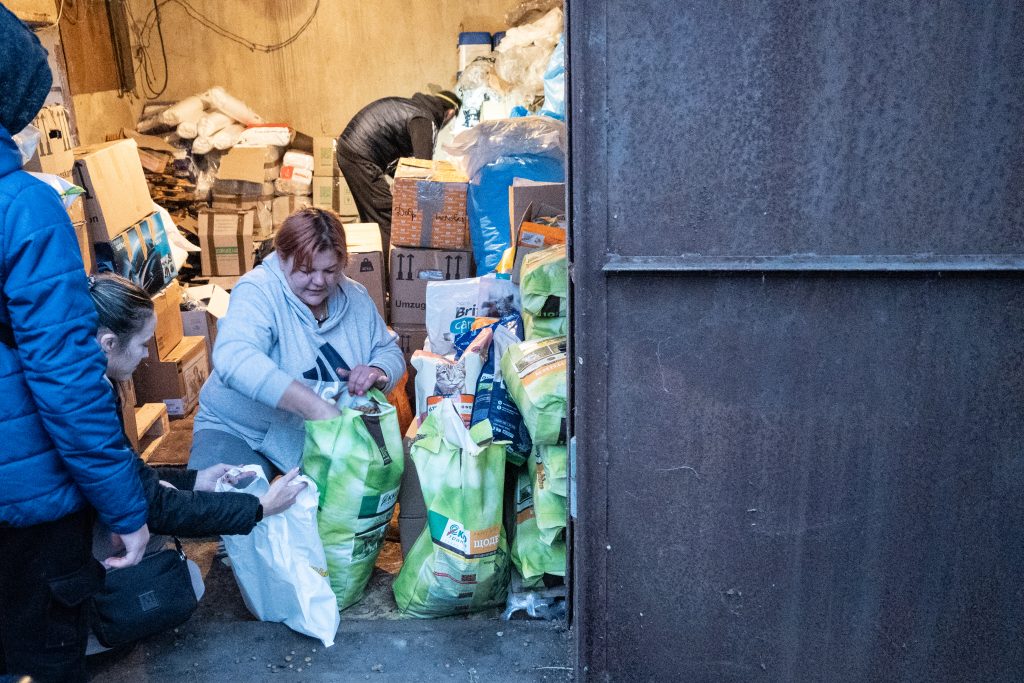
We will continue our material aid and public education in coordination with trade unions and progressive organizations in Ukraine.
We will continue to work with progressive Ukrainians and Russians and support their demands:
- Full and complete withdrawal of Russian troops from all of Ukraine..
- International support for the armed and unarmed resistance of Ukrainians against the Russian invasion.
- International economic sanctions against Russia’s war machinery, including its political, military, and economic elite, its access to the international financial system, its imports of weapons-related technology, and its exports of fossil fuels that fund and fuel Russia’s war machine.*
- Return to Ukraine of tens of thousands of Ukrainian children forcibly transferred to Russia and Belarus.
- Freedom for the tens of thousands of Ukrainian civilians in Russian-occupied territories incarcerated for opposition to the occupation and resistance to genocidal Russification.
- Freedom for all Russians incarcerated for war resistance and political dissent.
- Asylum in countries abroad for Ukrainians, Russians, Belorussians, Palestinians, Sudanese, Haitians, Venezuelans, Afghans, and all people seeking refuge from political repression and war.
- No amnesty for Russian war criminals.
- Cancellation of Ukraine’s foreign debts.
- Confiscation of Russian assets abroad to be used to support Ukraine’s military self-defense, social services, and post-war reconstruction.
- Reparations from Russia to help fund a full post-war reconstruction of Ukraine.
- An end to the Western imperialist policy of imposing a neoliberal program of privatization, deregulation, debt dependence, exploitative mineral extraction, and cuts to public services and labor rights on Ukraine today and for its post-war reconstruction.
* The question of sanctions is complicated and controversial among activists committed to Ukraine’s struggle. It’s especially important in the US that we do not accept the predatory politics of the imperialist US state. The Ukraine Solidarity Network will be discussing these issues with our Ukrainian comrades whose lives and national freedom are on the line.