The Left Berlin News & Comment

This is the archive template

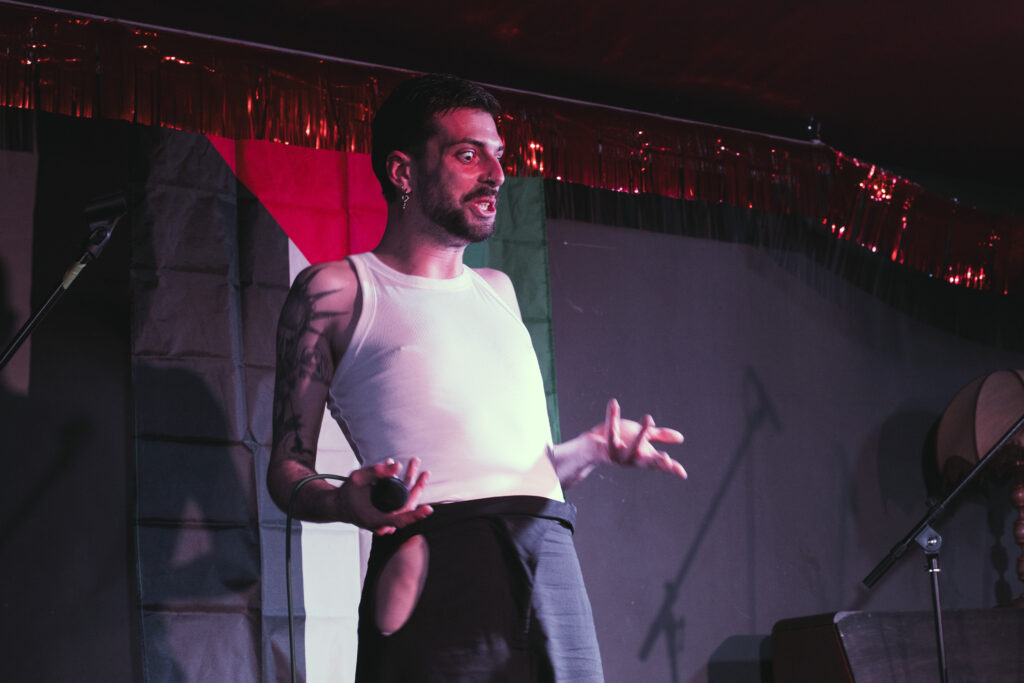
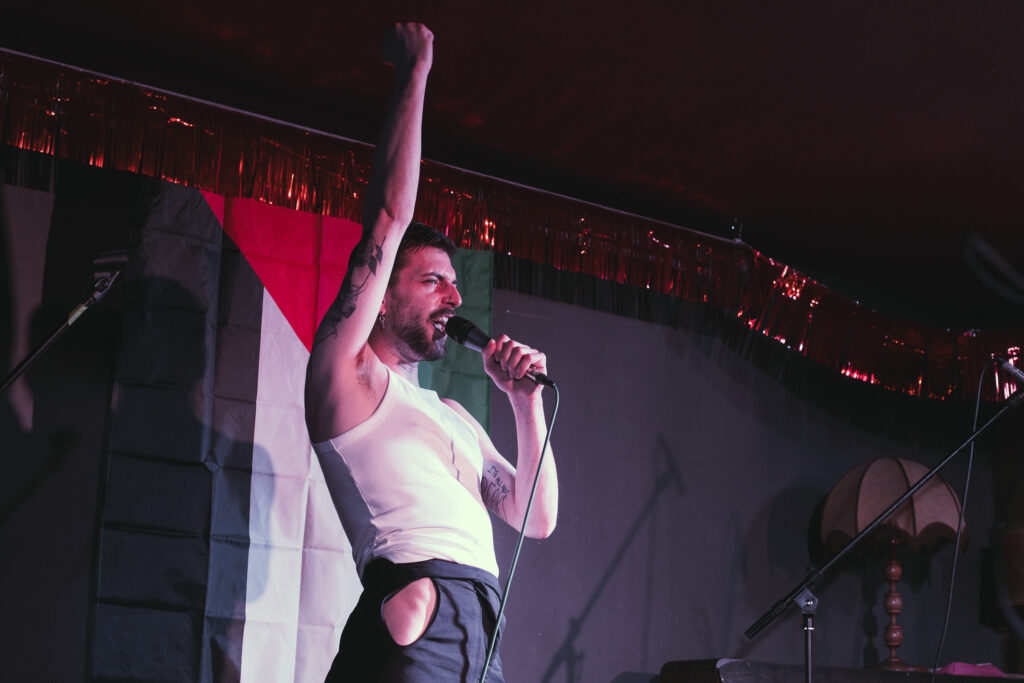
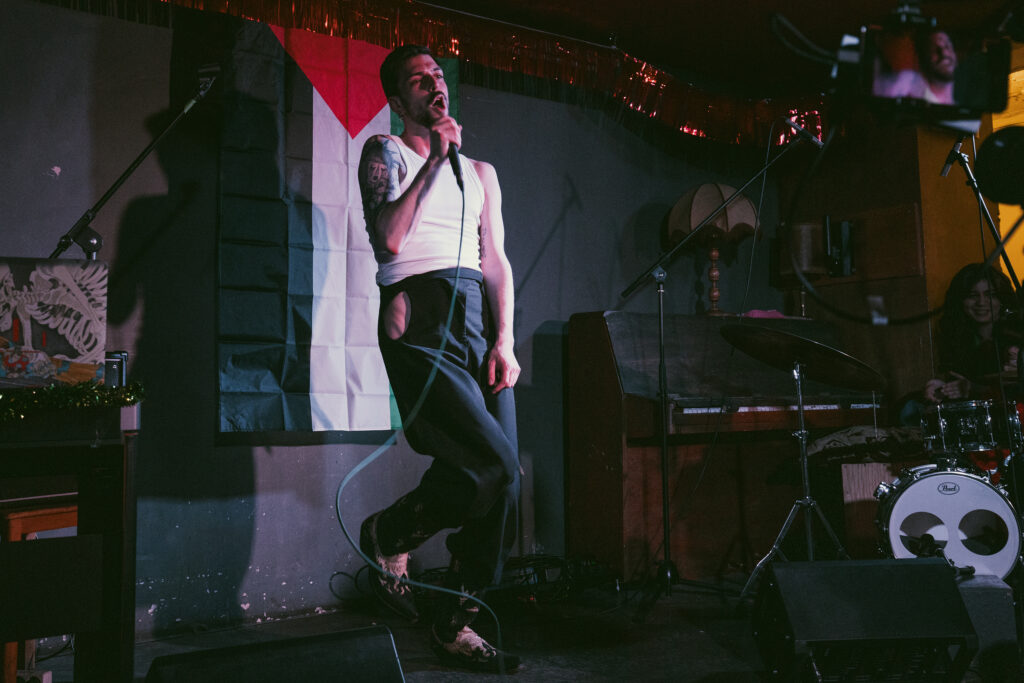
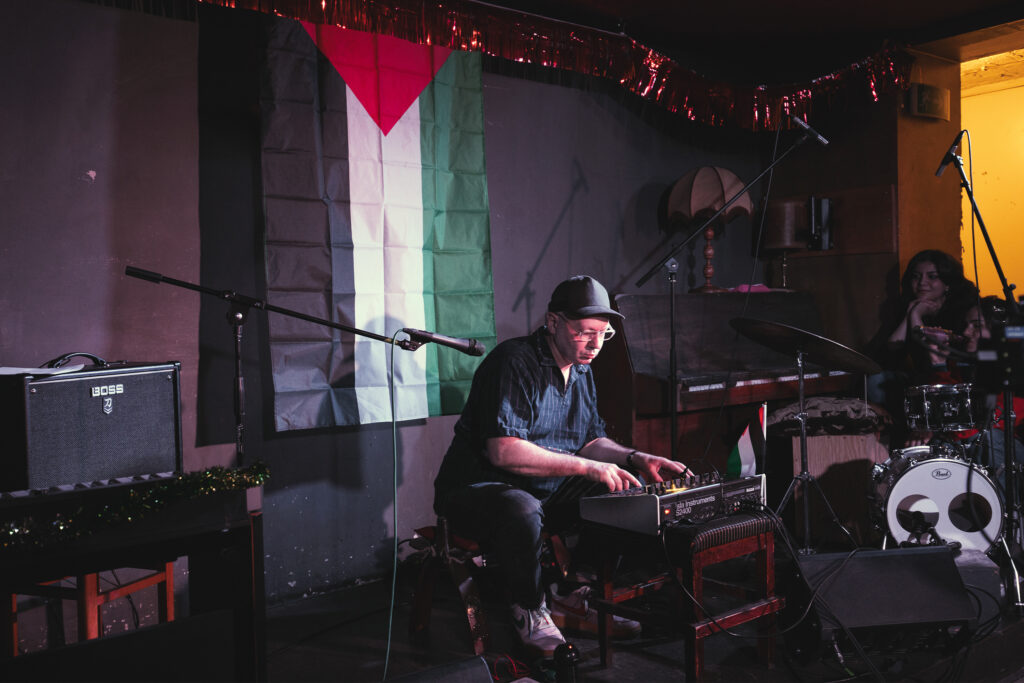
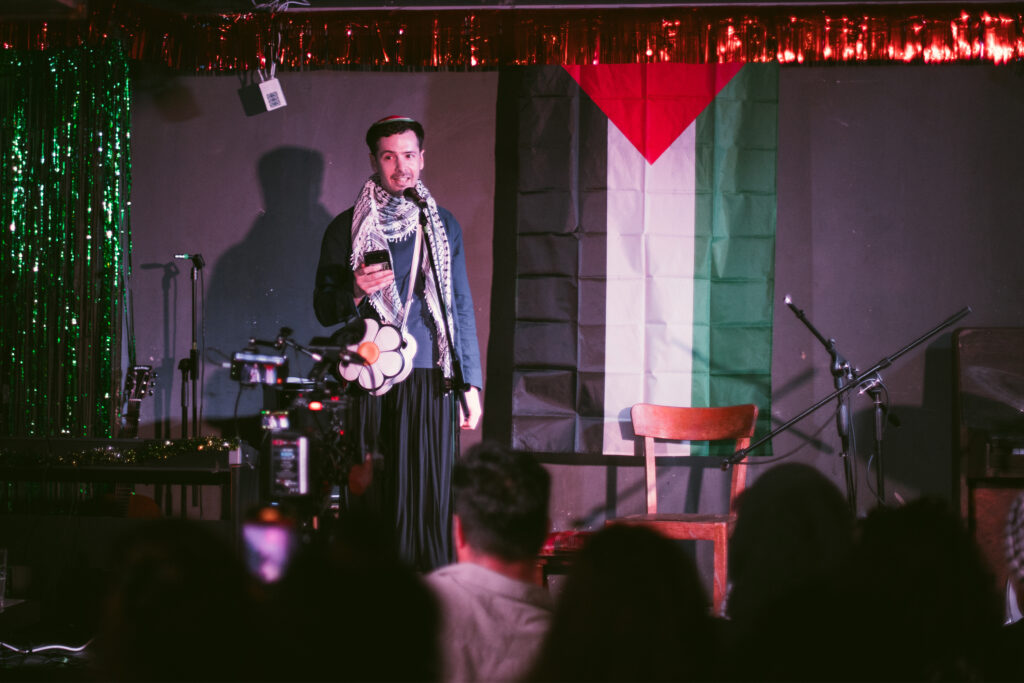
Philharmonie Banner Drop

Statement on the banner drop and flyer-dispersal performed by activists at the lunchtime concert at the Berlin Philharmonie on 17/04/24


17/04/2024

The Philharmonie’s website boasts that “worldwide, there is no comparable relationship between an orchestra and a private business [as that between the Philharmonie and Deutsche Bank]”. Sadly, the use of the arts to launder the reputations of businesses and individuals who profit from war and genocide is nothing special, and Deutsche Bank’s use of the Philharmonie to do so cheapens the institution immeasurably.

It bears reminding that the West Bank settlements are a violation of international law, have been leveraged to separate the Palestinian communities of the West Bank from Jerusalem, and involve an application of apartheid law to that region. To finance, both directly and indirectly, human rights violations and breaches of international law, constitutes a sordid endorsement of these violations.

Despite claiming to be concerned about all civilian casualties in the conflict, Deutsche Bank continues to urge customers to invest in stock from Rheinmetall, an arms manufacturer that has provided components and systems demonstrably used in human rights violations and the collective punishment of civilians in the past six months.

We commend the Philharmonie for their statement, released in December in advance of a benefit concert, decrying the danger faced by civilians in the middle east. We also note that these words are, sadly, meaningless, and the money raised at this concert a drop in the ocean, when seen in the context of the politely-ignored weapons trade that financed this same concert and many more in the Philharmonie. Every time that a concertgoer sees the Deutsche Bank logo on a Philharmonie brochure, yet fails to think of brutal ethnic cleansing and arms dealing, the Philharmonie further cements its role as a decorative distraction from that brutality.

We recognise that the artists who played today do not necessarily represent the ideals of Deutsche Bank and that their identity and contribution to the arts extends far beyond the interests of Deutsche Bank. We call on the Philharmonie to straightforwardly divest from a company that profits from human rights violations. When seen alongside a willingness to launder the reputation of an institution mired in corruption and the death and repression of millions, the hypocrisy emanating from statements of empathy and wishes of peace is shameful.

How We Can Stop The AfD

The AfD intends to hold their party conference in Essen at the end of June. The anti-racist movement, which has gained traction in many areas, must also come together there

The AfD intends to hold their party conference in Essen at the end of June. The anti-racist movement, which has gained traction in many areas, must also come together there.

The time in which the AfD has been able to spread their inhumane propaganda unhindered in the open appears to be over. In every corner of Germany, resistance to the Right stirs. People are standing up en masse against racism and even more want to engage beyond assembly and protest. An important occasion thereto will be the AfD national party conference at the end of June in Essen.

The AfDfounded in 2013 as a Euroskeptical, national-conservative party, was no later than 2015 a far-right, partly-fascist partyhas since primarily worked on building a party founded in racism (especially Islamophobia). This has been fairly successful. After its establishment, the party fell just below the threshold for inclusion in the Bundestag at 4.7%. In the following European elections, that number was already above 7% and during state elections the party gained admission to all federal state parliaments.

Since the 2017 federal elections, the party has also been represented in the Bundestag. After many directional disputes, several more ‘moderate’, national-conservatives have left the party, leaving a party made up of fascists such as Björn Höcke, wrought with racism and fascist at its core.

An Anti-AfD Wake-up Call

Despite increasing mass anti-racist, pro-refugee protests in recent years, the AfD was not one of the movement’s central interests. By and large, the party could grow undisturbed.

That changed in January of this year after the agency Correctiv exposed—along with other racists and fascists—a group of high-ranking AfD officials’ plans. The meeting in question concerned, among other things, the party’s recent demands for deportation (‘remigration’) of all migrants living in Germany, further including any ‘non-assimilated’ German citizens. When met with public pressure the party attempted to downplay and distance themselves from the affair.

Member statements, however, get to the point. ‘We will send foreigners back home. By the millions. That is no secret. That is a promise,’ Bundestag member René Springer made clear after the findings became public. When asked, Björn Höcke claimed, ‘We will be able to live with 20 to 30% fewer people in Germany without issue, in fact, I find this ecological and even rational.’

The published findings had the working of a wake-up call on the population. Since then, hundreds of thousands of people in Germany have taken and continue to take to the streets to stand against the demands of the AfD. All over, participation exceeded estimated numbers. Rallies were ended prematurely over security concerns, entire city centres were brought to a standstill. Many individuals who had never been to such a demonstration took part.

Bringing Countermovement to the Streets

Many at these demonstrations hope that the problem can be solved by banning the AfD from government. There are arguments for doing so, but there are just as many against. Among other things, such a process takes years. Years, over which Nazis could reorganise. A past with the neofascist NPD shows that the ban process can fail to overcome many judicial hurdles, or simply because the state is made up in part of these groups’ informants.

The danger of a ban process is that protests could lose traction in favour of relying on state action. The protests are made of precisely what we need: a broad, antifascist movement on the streets.

Hitler himself said, ‘One thing alone could have stopped our movement—if our adversaries had understood their own principles and had from day one struck with all ruthlessness the core of our new movement.’

How the NPD Was Stopped

History shows being branded as Nazis means trouble for fascists. Confronted publicly with their own identity, they lose their temper and expose themselves.
The best example is the NPD, founded in the 1960s. At that time, many former DRP (Deutsche Reichspartei) Nazis assembled in the NPD, but remained hopelessly isolated. The NPD was to give them a respectable, national-conservative camouflage, that the German public fell for. Kiesinger, Chancellor at the time and former NSDAP member, certified the NPD as not fascist. Liberal paper Die Zeit warned against ‘denigrating the NPD as neonazis’. After its founding in 1964, the party recorded strong successes. Membership doubled. Following early success in 1966, the party acquired seats in seven federal state parliaments within 18 months. But come 1969, the NPD found itself in crisis. Contrary to expectations, they fell short of inclusion in the Bundestag and over the following years, membership shrunk to 6,000. What happened?
Adolf von Thadden, NPD party chairman at the time, later admitted that the 1968 loss of support could be traced back to, ‘cries for a ban, oppression of party assembly and increasing terrorisation’ from the Left. Wherever he went, he was greeted with the chant, ‘one Adolf was enough’; eggs, tomatoes, etc. were thrown at him. Nearly all public NPD events were disrupted in this manner. Conflicts at NPD rallies intensified. The party deployed its security service more frequently, which conducted itself like a paramilitary unit, in white helmets and armed with nightsticks. Attacks by these SS-like troops were included in the agenda. In Kassel a Nazi marshal fired shots at counter protesters. Images of the NPD security circulated the national and international press. The NPD was exposed. The national-conservative facade chipped away revealing the ugly grimace of fascism.

Direct Confrontation with Nazis

At every public appearance, Nazis must be shown that many not only reject their content but are also prepared to stand directly in their path to be demoralised. If Nazis cannot march, young members impressed by the feelings of power that come with rallying in particular grow discouraged. Even Goebbels recognised the threat of decisive confrontation by antifascists when he said, ‘If you allow even one single meeting to be broken up, people will stay away from you.’

Experiences in the 1970s, as the NPD again gained traction, showed anew that they could be weakened by a determined countermovement in the streets. Their 1977 ‘Deutschland-Treffen’ in Frankfurt gave the NPD cause for celebration as 5,000 members and only 1,000 counter protesters were in attendance. Those who wanted to stand in their way, however, grew quickly in number despite police bans. By 1978, the NPD was forced to divert to Frankfurt suburbs because thousands were prepared to hinder their rallies in the city centre. In 1970, 50,000 gathered in a counterprotest banned by police.

In 1997 up to 20,000 Munich residents occupied the city centre and prevented the largest Nazi march since the 1970s. The rally was interrupted and police escorted the Nazis back to their buses. As a result, numerous members withdrew from the NPD. Europe’s largest annual Nazi march in Dresden could also be stopped by mass antifascist blockades. A broad antifascist union called upon the nation to stand in Nazis’ way using this tactic. In 2010, 12,000 determined antifascists succeeded in blocking 6,000 Nazis. In 2011 it was 20,000 against 2,500. In 2013, only around 800 Nazis showed up.

Mass Mobilisation Against the AfD

These wins can be linked to broad alliances that confront fascists and racists head-on.

In the fight against fascism, it is necessary to form the largest possible union of workers and those who wish proactively stand in the path of fascists. This is true of the fight against the AfD. In light of the upcoming European elections we must disrupt each and every AfD info-booth, campaign event and rally with creative action and with as many people as possible. To do so, we need broad alliances that make it clear that racism and fascism have no place in our society.

In a capitalist economy, in which a minority exploits a large majority, the minority relies on racism to divert majority unrest toward scapegoats. New fascist organisations will always arise from environments of frustration with prevailing conditions and omnipresent racism. Antifascists can always fight back, but a prerequisite to a world without Nazis is a world without oppression and exploitation. As such, it is necessary to prioritise the establishment of socialist organisations today.

Save the Date: AfD Party Conference in Essen

The coalition, Essen Stellt Sich Quer, has already declared that they will not let the AfD national party conference on June 29th and 30th go by unchallenged. The nationally operating group, Aufstehen Gegen Rassismus, will also partake in disrupting the event. Further information in brief can be found here: Aufstehen gegen Rassismus

This article first appeared in German on the Sozialismus von Unten website. Translation: Shav McKay. Reproduced with permission

Germany speeds down one-way street, unable to change course

The repression against last weekends Palestine Congress has shown Germany’s true face.


16/04/2024

The Palestine congress that was to take place in Berlin on the weekend of April 12-14 was banned by the police. The “reason”: they may be showing antisemitic content, may call for violence against Jews, or may deny the Holocaust. The real reason: Israel and its defense are above all else, including freedoms in this country. Citizens and associations are now rejoicing at the fact that the congress, during which it was planned to discuss the situation in Gaza and Germany’s complicity in the genocide, has finally been banned. However, these same groups will also be silenced by the repressive state apparatus and its propagandistic press in the not too distant future when they step out of the line of thought set by the authorities, as the history of this very country has taught us.

The German state is overstepping too many democratic boundaries in repressing solidarity with Palestine and crossing over into authoritarianism. The right to assembly, demonstration, freedom of speech and press are being attacked and diminished in its frantic and erratic fight against antisemitism. In this desperate struggle to make amends for its genocidal past, Jewish activists and associations are being cancelled, arrested and criminalized, while far-right anti-Semitic politicians like Björn Höcke of Alternative for Germany are invited to TV debates, where he claims that antisemitism is imported and that borders must be closed. His discourse is resonating with a large part of German society, which has decided to make amends for the Holocaust by shedding Palestinian blood.

This repression and antisemitic mass hysteria has the German government and a good part of society in its grip – a part that ignores and/or whitewashes the horrors and atrocities that Israel has been committing in Palestine for 76 years. The hysteria culminated yesterday with the boycott of the Palestinian congress in Berlin on Friday, April 12th, the day it was supposed to begin. Dr. Ghassan Abu Sitta, rector at the University of Glasgow and a surgeon in Gaza who was invited as a speaker at the conference, was barred from entering Germany and after the police raided the conference hall. Three people were arrested, two of them Jewish. The disproportionality of the action borders on the comical, as the police entered the room, cut the electricity and banned the attendees from live streaming their actions, just a couple of hours after forcing the organizers to allow the Zionist press to enter in the name of freedom of speech.

On Saturday, after Friday’s events, far from backing down, the German government has banned all political activity in Germany in person and by zoom to the former Greek Minister of Economy and member of Mera25, Varoufakis. Minister of the Interior Nancy Faeser declared about the congress that never happened, “Anyone who spreads Islamist propaganda and hatred against Jews must know that he will be prosecuted quickly and consistently.” In the same vein, the police today in Germany are thought police, criminalizing ideas that are uncomfortable to them before they are even expressed. Germany does not seem to realize how ridiculous it is making itself on a world level, becoming the parody of the authoritarian regime of the last century that the world has in mind when this country is mentioned.

The police presence in the capital during the weekend of the congress, with troops brought from the rest of the country makes clear the position of the authorities: any criticism of Israel, its policies or German complicity with the genocide will be criminalized and silenced at all costs. But the costs are not only the rights and freedoms in this country, it is the international image of Germany that is showing the world its true racist, white supremacist and genocidal face. Germany’s position as the cradle of humanism and defender of human rights is being tainted not only by its Nazi past, but also by its authoritarian and repressive present.

No, This is Not the Same

We don’t feel sorry for Hunter Thompson, so why would we feel sorry for a guy we don’t know?


15/04/2024

This is a story about how another guy in Ukraine took his own life because of forced mobilization. But first, let’s talk about how the texts that bear such news come to be.

Depending on the font, one book page equals approximately 300 words. As a writer, I can write 6-7 pages of quality fiction in a day.

But it’s not that simple. Despite being from Ukraine, my native language is Russian. Since in both Russia and Ukraine I face imprisonment, I am forced to translate all my texts into English. Quality translation takes no less and sometimes even more time than writing the text itself.

After I’ve translated the text, I need to send it to the editor. The next step is collaborative work on the structure of what’s been written.

Only after that does a native speaker proofread the text and correct sentences that don’t sound natural. Then it’s necessary to reread the written text again to make sure that the improvements haven’t accidentally distorted the meaning of what was written.

So, the process looks like this: writing + translation + working with the editor + error correction + double-checking. This means that in order to write 6 pages of fiction, I will have to work with at least 30 pages.

Over the past one and a half years – approximately the time since I miraculously escaped from Ukraine – I have written 3 books. Damn it, 3 books! I’ve completed 3 translations. I’ve written a set of anti-war essays. On average, the length of one of my books is 80,000 words.

Now you can calculate how much time it would take on average to write 3 such books. But when calculating, don’t forget to add at least another half of the total time for interruptions in inspiration, which is crucial to writing.

Why did I decide to let you in on these calculations? The fact is that today, March 28, 2024, my friend sent me news – in Ukraine, a guy took a gun from a policeman and shot himself in the head. First, he was taken to the military registration and enlistment office. He was 32 years old. For the past year and a half I have been trying to convey to society that forced mobilization is a crime. It turns out that I do this extremely ineffectively.

Book business moves slow. I hope that by the end of 2024 or early 2025 the novel THE MINING BOYS, which I wrote at the end of 2022, will be published. This is according to the most optimistic forecasts. All the while, men who don’t want to take part in the war continue commit suicide in Ukraine. They are dying today. Right now, while you are reading this. This is a sacrifice that society, however, looks to have made peace with. A guy dies in Ukraine – is this what we call collateral damage?

Initially, my position was that any country should only have a contract army. The military is a profession like any other. Therefore, I believed that everyone should do what is in his power and, not least important, in his competence, to end the war. That’s why, as a writer, I sat down to write anti-war books and essays.

But the reality is that war takes lives faster than the book market publishes books. I concede the death of the guy who shot himself with a police officer’s gun as a personal failure. You need to understand that news about suicides in Ukraine due to forced mobilization is hidden. That’s why we can’t even imagine the scale of conscription-related suicide in both Russia and Ukraine.

While citizens of both countries prove to each other that their relations are no longer fraternal, their governments are quietly and methodically killing them. In context, 80,000 unpublished words look pathetic. Even if you multiply by 3 manuscripts and 3 translations. That’s the death math.

It is important not only to understand the problem, but also to be able to spread news about it. When war is on the table, it is important to understand that supporting a country and supporting its people are not always the same thing.


This piece is a part of  a series, The Mining Boy Notes, published on Mondays and authored by Ilya Kharkow, a writer from Ukraine. For more information about Ilya, see his website. You can support his work by buying him a coffee.

“I think we’re at a very dangerous tipping point”

Interview with Zoë Claire Miller from the Visual Artists’ Union Berlin


14/04/2024

Hi Zoë. Thanks for talking to us. Could you briefly introduce yourself?

My name is Zoë Claire Miller, I am an artist and organizer. I’m also one of the two spokespersons of the bbk berlin [berufsverband bildender künstler*innen berlin], which is Berlin’s visual artists’ union. I’m part of the board, which is composed of artists. It’s a honorary, elected position as opposed to a job.

The bbk berlin is one of the oldest and one of the largest artists’ organisations in Germany. We represent artists’ interests and work to improve their labour conditions in the city. We are also active in infrastructural terms, for instance bbk berlin’s subsidiary, the Kulturwerk des bbk berlin, runs printing and sculpture workshops. But a lot of our day-to-day work is around reacting to cultural policy in Berlin.

How many people do you represent? And how do you defend artists?

We have 3000 members. We do classic advocacy work – engaging with politicians and the cultural administration, trying to ensure that artists have a say at the table when decisions are made that affect them. Over the last decades a pretty good culture of dialogue was developed on the state level in Berlin. We ran successful campaigns for an increase in the amount of grants for artists, and the Berlin model of artist fees, which was a fore-runner to obligatory artist fees being introduced in many cities and states in Germany and Austria. The federal government is now finally making it an obligation that artists get paid in programs that they fund as well.

Berlin is an international city, especially in the art scene. How many of your 3,000 members are German and how many are international?

You know, I actually recently tried to find this out. But it’s not something that we ask when people join us, so we don’t actually have an overview. But I would say that our younger members are increasingly international, we can tell by the number of requests for information in English. Earlier, our membership was more homogenous.

There’s been a number of cases in Berlin, and in Germany, of artists getting into trouble because of their views on Palestine. How has this been discussed in the bbk berlin?

Within our membership and board, there are different perspectives on the issue. In general, we share a great concern for threats to artistic freedom and freedom of speech – and we are particularly concerned about the ongoing demonization of arts and culture and the atmosphere of fear it creates within our community. Discrimination over artists’ views on Palestine is a major issue, but discrimination directly or indirectly linked to the situation in Israel/Palestine and Germany’s involvement in it takes other forms as well. We have seen Muslim artists deplatformed over artwork featuring Muslim themes, Jewish artists being tokenized, and instances of discrimination running from racist microaggressions, deplatforming, silencing and censorship. This is not just coming from the right wing press and politicians, but also from some organisations that purportedly represent the interests of culture, notably the Deutsche Kulturrat [German Cultural Council].

The Deutsche Kulturrat was among the first organizations to push the narrative of a supposed “unbearable silence” within art and culture after the terrorist attacks of Hamas on October 7th. This unsubstantiated claim was effectively instrumentalized as “proof” that arts and culture are more antisemitic than the rest of German society. In reaction to carpet allegations of antisemitism, we looked into what kind of work is already being done within arts and culture to counter discrimination and specifically antisemitism, and where statements were released after 7th October. Many cultural institutions did in fact publish statements empathizing with the Hamas attack victims.

Beyond discussing and researching these questions, we provide legal consultation for our members with a lawyer, and we are planning workshops that help artists understand their rights when faced with discrimination. We recently joined forces with many other cultural organisations in concern over the legality and potentially discriminatory effects of the Berlin “antidiscrimination clause.” The clause was withdrawn – at least for now.

Could you expand on this? The last time we covered it on theleftberlin was in an interview on the day that the clause was withdrawn. What has happened since?

The clause was retracted quickly after it was introduced, after facing massive criticism. What was dangerous about the clause wasn’t just that it forced everyone receiving funding to adhere to the IHRA definition of antisemitism. This aspect was the most widely criticised, as IHRA is controversial on several levels, for instance how it is often weaponized, and is unsuitable as a regulatory tool. But the clause also placed anyone receiving funding under suspicion of funding terrorism and extremism. This amounted to the demonization of a whole professional sector, and seemed especially bizarre since a parliamentary inquiry to the Senate on whether Berlin cultural funding had ever been funneled to terrorism/extremism received a negative reply.

Another critical aspect was that the clause also contained a section requiring a sort of pledge of allegiance to Israel, thus endangering artists from many countries with authoritarian governments who do not recognize Israel, or excluding them from funding.

There are a few interesting updates on the clause. A Freedom of Information Act enquiry on www.Fragdenstaat.de produced files that evidence strong legal advice against the introduction of the clause. In-house legal counsel basically showed it was unconstitutional and unenforceable. A newer external legal opinion concurred, while exploring the possibility for the Senate to change Berlin law to enact a clause which wouldn’t just apply to culture, but to every type of public funding. This is currently the topic of controversial debate in the Senate.

We’ve talked mainly about the artists who you represent. There are other artists like Candice Breitz or Laurie Anderson who are not necessarily represented by you but still face repression because of their views on Palestine. Are you able to do anything with these cases?

We’re following the instances of censorship, the atmosphere of mistrust towards artists and fear among artists with great concern. Germany seems to be damaging its reputation as a liberal, open-minded and welcoming locus of cultural exchange. But as the bbk berlin, our main focus is Berlin.

Do you think there’s a connection between what’s happening in Berlin and what’s happening in the Arts in Germany as a whole?

I’m shocked and sad that some of the same provincial attitudes are displayed towards the arts in Berlin as in places in which culture is more marginal or sparse. You would think that in Berlin, culture wold be highly valued, because the city is so dependent on it, literally. It is one of the most important economic motors of the city. One would assume that politicians here would be attuned to the fact that freedom of expression is particularly important for Berlin, that our city is very international, and thus a diversity of opinions exists and is a blessing, rather than something to be repressed.

So I’m quite shocked, actually, that there have been statements made by powerful politicians here, that have an almost authoritarian, divisive and repressive ring to them than in small towns without an art scene. It’s also not just a governmental problem. The effects of the current atmosphere of fear of retribution and defunding are causing institutions to implement pre-emptive censorship, blacklisting those deemed or suspected to hold “risky” opinions.

You see the same pattern again and again of artists set to win a prize, take on a job, have an exhibition, or hold a lecture in Germany. Then right wing blogs, media or social media users comb the accounts of the artists, trying to find something that can be scandalized. They then fabricate a shitstorm, which applies pressure on institutions and politicians to denounce and drop the artist. I have also heard of cases where the second step is skipped – those with the power to create online outrage just go straight to institutions and threaten a shitshow, unless the institution cancels the artist. It seems just as challenging as it is urgently necessary to break this toxic cycle.

We just had the Berlinale, maybe the main cultural event in Berlin, where there were at the very least two shitstorms. First there was the invitation and uninvitation of AfD politicians. How did the BBK react?

We didn’t take an official stance on it, because film isn’t our our field. My personal opinion is that it was the right decision to disinvite the politicians, at least one of whom was a participant in a secret meeting plotting the mass expulsion of foreigners and German citizens. I don’t see how it is appropriate for those plotting the destruction of democratic principles to smile on the red carpets next to those they hope to deport.

Then, hot on the heels of the AfD shitstorm there was No Other Land. Did you get to see the film?

No, the tickets were hard to get, they sold out so fast. I am looking forward to seeing it soon.

Let’s try and recap what happened. No Other Land won the public documentary prize. Both directors – one Israeli, one Palestinian – made a speech. The German Cultural Minister Claudia Roth was caught on camera clapping, and she said she was only clapping for the Israeli director.

Both she and the Berlin mayor were sitting next to each other, smiling and clapping.

And then all of a sudden, the media and politicians are criticising the antisemitic directors who the public have falsely awarded a prize. Can we understand all this in the context of everything else which is happening in the Arts in Berlin?

Yeah. I assume they would have happily clapped, maybe taken the words of the filmmakers to heart, and nothing would have happened if the lobbyist Volker Beck hadn’t scandalized it. Then the right wing press amplified his framing, and then many mainstream media outlets did the same thing without questioning whether what was said was in fact antisemitic. It’s hard to understand. When someone Jewish with expertise on antisemitism, like Prof. Meron Mendel, head of the Anne Frank Institute, says the Berlinale speakers were not antisemitic. When a non-Jewish ex-politician with an extremely colorful history, to put it kindly, says they were, the second voice becomes the official narrative. I really think this could have been a learning experience. But unfortunately, it seems none of the German media or politicians who defamed the Israeli filmmaker Yuval Abraham as an antisemite, thus endangering him and his family, have seen grounds for an apology. I hope so much that this might make German politicians reconsider attacking artists in the future – the fact that doing so not only puts their careers but their lives in grave danger.

Israel is a country with a right-wing extremist government which is at war. So, not a dissent-friendly climate! And yet the one Israeli media platform that called Abraham an antisemite withdrew the statement. In Germany, no-one has said they’re sorry, no-one has retracted their allegations. This should raise concerns about whether Israeli, Palestinian, and other foreign artists are going to want to come here in the future, or whether they will feel it is too dangerous.

My experience from talking to artists outside Germany is a sense of shock about the level of discussion here. More and more people are talking about the Strike Germany campaign. Do you as an organization have a position towards Strike Germany?

We don’t have an unified position on it. In general, we support every artist, every worker’s right to strike, it has always been an important tool of political pressure, and protest, and it will always be a tool that for artists – freelancers by definition – to use, means risking a lot. Whether there was an organized strike or not, there are increasing gestures of protest aimed at Germany, for instance the return of Goethe medals.

What do you think the balance forces in the art world is? It seems that the repression is increasing, but the reaction to the repression is also growing. Are we going in a positive or negative direction at the moment?

I don’t know, it’s really hard to say. This situation is extremely polarizing, a lot of beliefs are being tested, a lot of trust is damaged, and more and more international cultural workers are considering or planning to leave the country.

I think a lot of Israelis and Palestinians, Jews and Muslims are acutely aware that they are serving as a projection surface, and that they are being portrayed as monolithic homogenous groups in a relationship of enmity. And that this serves political interests that are not their own, and this portrayal makes life harder and more dangerous for members of all of these groups.

Do you see a special role for international artists?

Choosing a career in art generally means prioritizing freedom over security, perhaps this makes artists more likely to voice their convictions publicly. International artists, like all migrants, bring different perspectives into a national discourse, different histories, cultural values, experiences of otherness. Reading media in other languages, from other countries than the place one lives in, means noticing when a national discourse or consensus starts to shift away from international standards. So many migrants, whether they work in the arts or not, tend to notice this is happening now here. For example, recently a journalist criticizing foreign artists in Germany on a publicly funded radio station stated that “Germans are the new Jews”. A pretty shocking and shockingly inaccurate opinion, but unfortunately indicative of extremist tendencies taking hold within the German media mainstream. Paying attention when foreigners living here say that they are troubled by what is happening could help Germany to avoid increasing international isolation.

Where do you see the Arts in Germany or Berlin going now?

I think we’re at a very dangerous tipping point. Legislation is being proposed on many levels that is purported to protect Jewish life in Germany, but that could also be easily used to suppress critical voices, say, resistance against fascist movements within Germany. This was another concern regarding the clause, how it set a precedent for governmental interference into freedom of speech that could easily be misused for very different purposes down the line. The election prognoses are terrifying. How Germany as a country and how the German government decides to move forward in terms of respecting freedom of speech and freedom of expression is crucial to protecting democracy in Germany.