The Left Berlin News & Comment

This is the archive template

Denmark’s Atlanticist chickens

Danish politics amidst the wane of the world order


25/01/2026

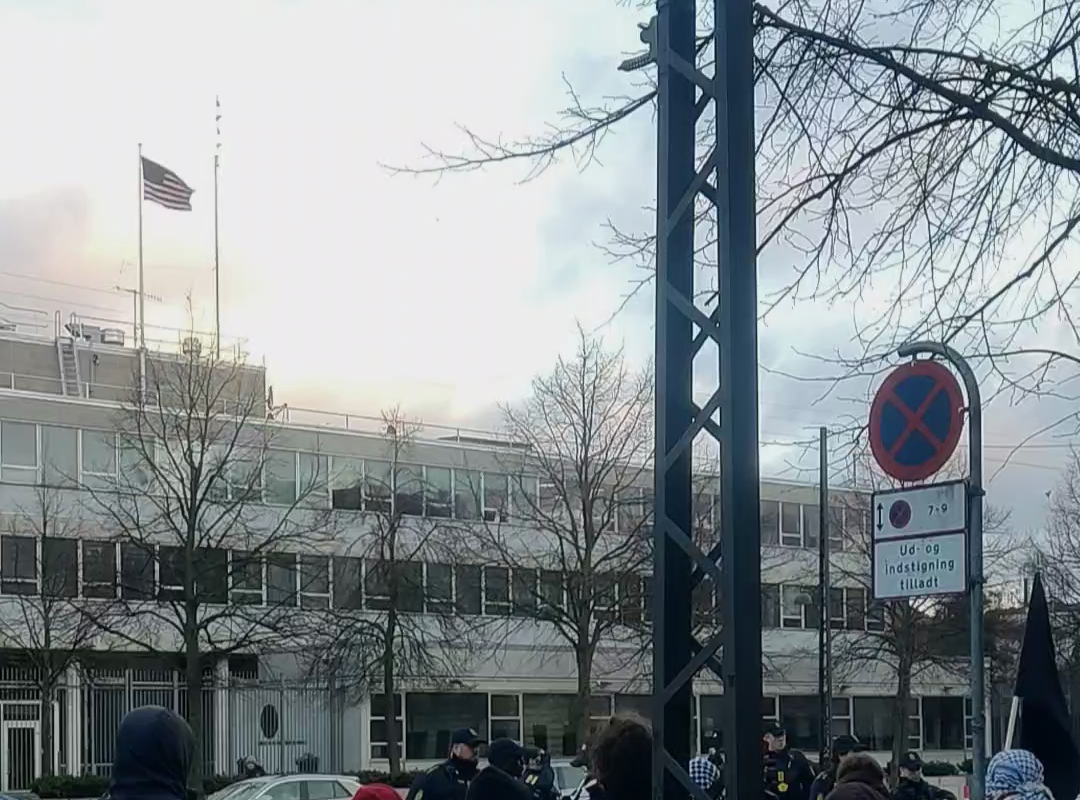
On the 13th of December, 2025, a small group of antifascist demonstrators met at the Triangeln metro station in Copenhagen’s chic Østerbro district. Winding their way down Dag Hammarskjölds Allé—named after the Swedish Peace Prize laureate, who was likely assassinated by a Belgian breakaway colonial state in the Congo—the protestors, bearing ACAB banners and Palestinian flags, ended up at the American embassy in short order.

Shortly thereafter, the police escort informed demonstrators that they were to stop chanting into megaphones, and to move off the cordoned-off section of the street, and onto the pavement. Some demonstrators refused. In response, the boys in blue—upstanding, professional representatives of the state’s monopoly on violence—readied their batons, bruised and bloodied several protestors, and forced the demonstration to a close. 

High above this well-rehearsed choreography, catching the last of the afternoon sun, proudly bearing witness to the brutality of Copenhagen’s constabulary on this wintry afternoon, fluttered a single, lonely star-spangled banner.

***

It is difficult to overstate the Ameriphilia that suffuses daily Danish urban life. Most (white) Danes speak English with the comfort and fluency of an Englishman in New York. Affluent hipsters, dressed in Carhartt hoodies and baseball caps, spend their evenings frequenting the diners (“The Midwestern”) and hamburger chains (“Gasoline Grill”) dotted all over the city, ending their nights discussing the latest season of Pluribus at one of the city’s many microbreweries that serve endless insipid iterations of New England IPAs. 

This superstructure goes hand-in-hand with the base: with pragmatic, material reality. Denmark goes above and beyond the “standard” Atlanticist rhetoric in Europe that rambles on about support for NATO and free trade at annual conferences, and modern Danish history has been characterised by full-throated, unquestioning support for American foreign policy as a core tenet. Thus did Denmark distinguish itself among nations, by being one of the earliest and most vocal members of the coalition of the willing that led the invasion of Iraq. The (centre-left) Danish government has also stood out from its counterparts in Norway and Sweden, through its consistent economic and rhetorical support for Israel’s genocide in Gaza, prompting rare critique from Norwegian political parties. Closer to home, Danish intelligence, supremely unconcerned with such petty issues as neighbourly ties, spent a solid two years wiretapping politicians in Sweden, Norway, France and Germany—including Angela Merkel and Frank-Walter Steinmeier—together with the NSA. And in Greenland itself, Denmark signed away the right to construct and maintain military bases to the United States back in 1951.

This uncritical “super-Atlanticism” goes hand-in-hand with some of the most unsavoury aspects of Danish domestic policy. The Euro-American love story—built upon a legacy of racism, colonialism, and genocide—has long relied upon the reification and constant reinforcement of the idea of a white, Western, Christian civilisation, constantly threatened by the barbarians at the gates; a motley crew of conniving Chinamen, scheming Russians, and the miscellaneous racialised migrant hordes looking to plunder and pillage this veritable garden of Eden. These sweeping civilisational narratives see shocking legitimacy in liberal Danish circles, well eclipsing how acceptable they would be in the United States or Britain.

Indeed, Denmark has been rather ahead of the curve as far as racism goes. The Danish state has been rather successful in its efforts to legally entrench and reify the statistical categories of “Western” and “non-Western” as stand-ins for racial markers; and as if this racial binary were insufficient, it has spent years attempting to create a separate category for Muslims, the prime victims of Danish foreign policy. The related “ghetto laws” passed by a recent Danish centre-left coalition were recently ruled potentially illegal by the European Court of Justice; these laws would also, in principle, explicitly infringe upon the Civil Rights Act in the United States. And the extreme precarity that Danish citizenship laws subject migrants to makes it far riskier to organise than nearly anywhere else in Western Europe.

All of this makes the events of the past few weeks particularly tragic for the diverse assortment of bien pensant academics, journalists, tech workers, policy wonks, and miscellaneous experts that collectively shape Danish discourse. Few amongst this class possess the intellectual honesty to own up to the fact that the events of the past year are Denmark’s chickens coming home to roost; discourse has rather remained every bit as delusional and chauvinistic as it has ever been.

To curb America’s worst impulses, Danish politicians have spent the past year pulling a number of tricks out of their hat. They have attempted to use international law as a shield, only a year after the Prime Minister declined to answer whether she would respect the ICC’s arrest warrant against Benjamin Netanyahu. They have attempted to display their unwavering commitment to Atlanticism by granting the American military access to its airbases. They have attempted to appeal to America’s moral fibre, pointing to how many Danish soldiers were killed fighting America’s wars (of lesser import, no doubt, are the lives of the Iraqis and Afghans that the Danish military helped slaughter). They have claimed that comparisons to Venezuela could never be drawn, since Denmark is a plucky Gryffindor, and not some Latin American Hezbollah-adjacent communist shithole. And finally, unable to temper their cartoonish worldview, they have defaulted to informing Trump that these petty squabbles between white countries are beneath him, and that they ought to join hands and focus on the Russians and the immigrants instead. 

***

Rapid developments have taken place over the past few days at Davos. A compromise has been reached, between NATO’s General Secretary Mark Rutte, and the man that he once called daddy. Trump is as capricious as a politician can get, and changes his mind based on the last person that he talks to; Rutte is as bland and ineffectual a politician as ever set foot into European politics. From what we know of it, their agreement appears to grant Americans sovereignty over “some parts” of Greenland. Discourse has settled, with remarkable alacrity, upon two framings of this. Europeans concerned about ceding ever-larger chunks of sovereignty to the United States frame this as a cheap surrender on part of NATO; while market liberals, immersed in their warm, comfortable, nostalgic Atlanticist baths exchange knowing smiles, reassuring one another that Trump always chickens out

Both these framings—not to mention all the “poor Denmark” consolations—miss the real detail here. For the people of Greenland, this backroom deal between the United States and an assortment of middling European powers to carve up their home is a gigantic step backwards. Greenland’s journey from being a formal Danish colony, to today’s partial sovereignty has been arduous. This deal marks a reversion to a darker era of unbridled imperialism.

There is no doubt that we live in a time of crisis, which brings with it certain opportunities. Indeed, the waning of Pax Americana appears to be a near certainty. As Mark Carney—the last realistic liberal—pointed out at Davos, the capitalist compromise at the end of history was a fiction, which worked because everyone played along. Describing with uncharacteristic honesty the one-sided nature of this system, Carney admitted that Canada bought into this fiction because American hegemony “helped provide public goods, open sea lanes, a stable financial system, collective security and a framework for resolving disputes”. His speech, now viral all over the internet, featured very little by way of acknowledgement—let alone sympathy—for the victims of American hegemony.

Europe today faces three choices. The first is to continue to cede the last dregs of national sovereignty to the United States, to continue to cling onto the material benefits of the U.S. military’s dominance over the planet. The second (Carney’s vision, no doubt) is to come to terms with reality, and to tighten the screws and re-enter the race to the bottom that is global capitalism; to keep European economies “competitive” by shredding what is left of labour movements, dismantling the welfare state, and subjecting Europeans to increasingly harsh austerity measures. 

The final path is to acknowledge that Europe no longer possesses the unilateral ability to force the entire planet into subjugation to stop domestic capitalism from running out of steam; and that perhaps this may not be such a terrible thing after all. Perhaps we once again find ourselves confronted with the same binary choice that we were a century ago, on the eve of Europe going up in flames: socialism or barbarism?
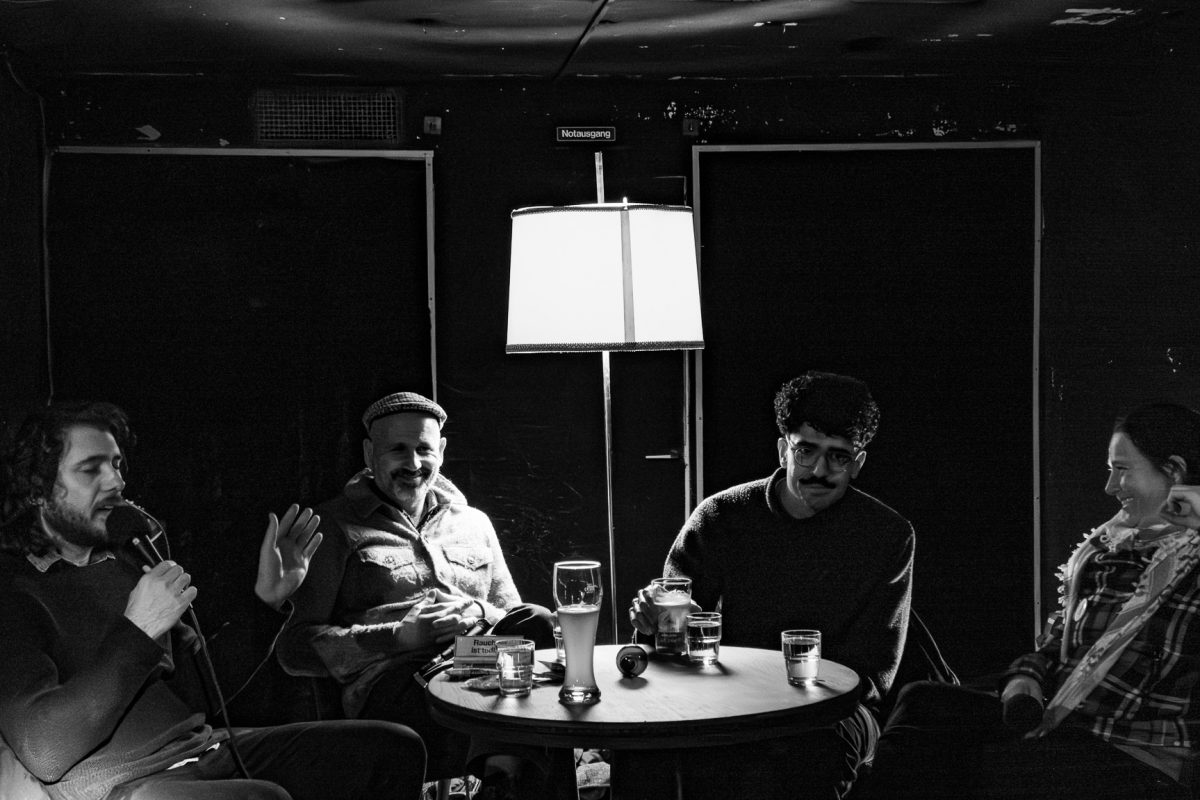
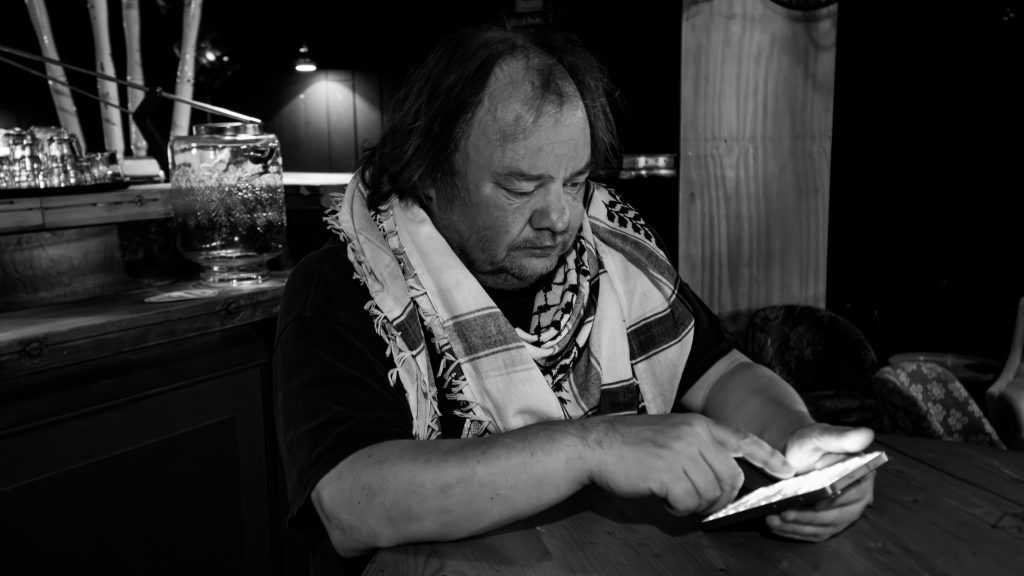
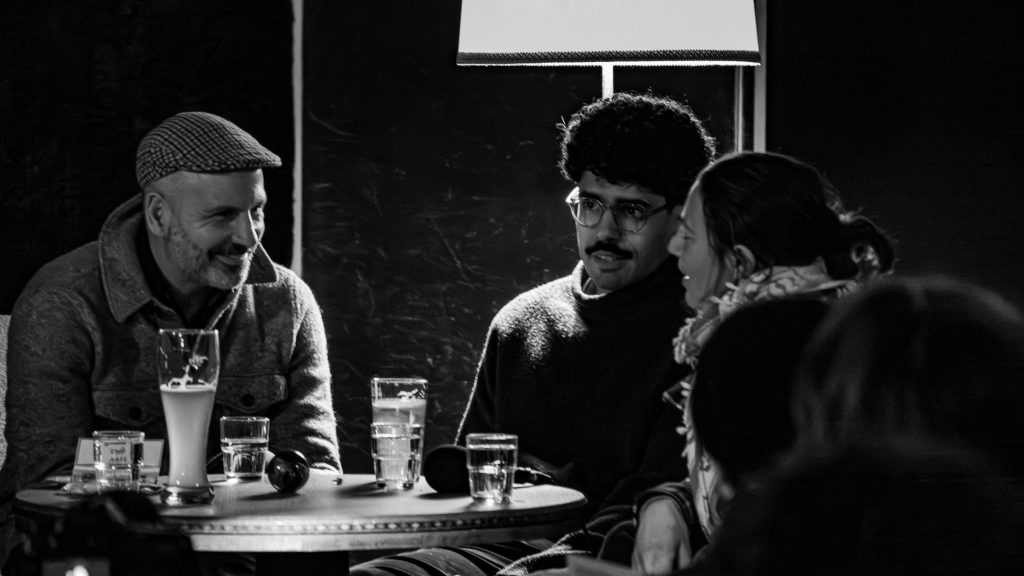
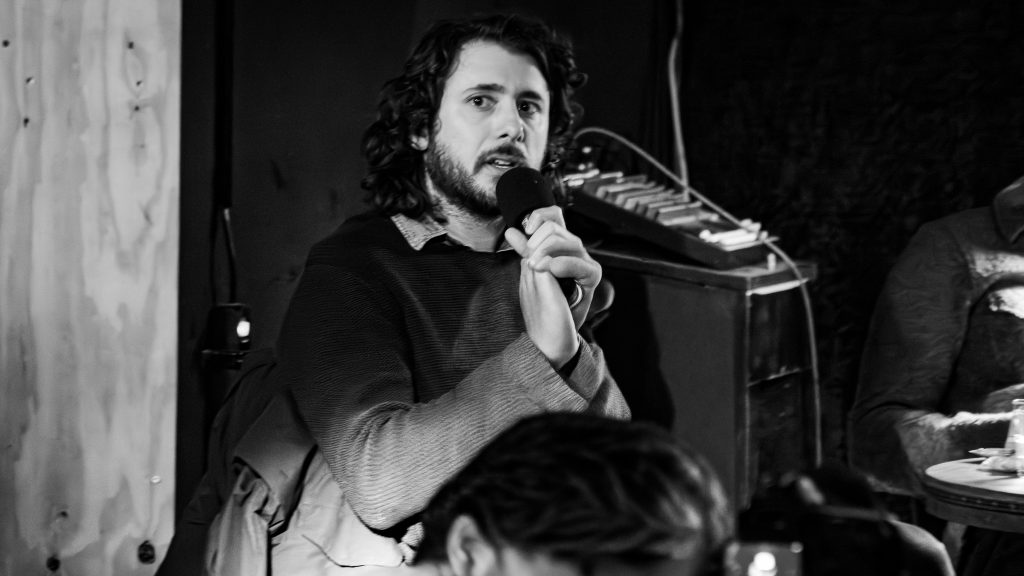
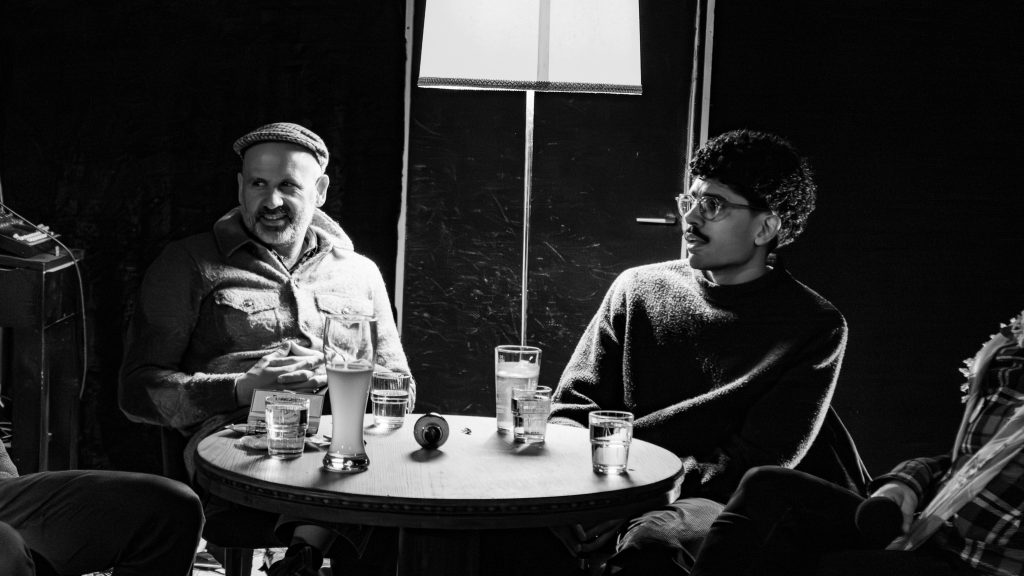
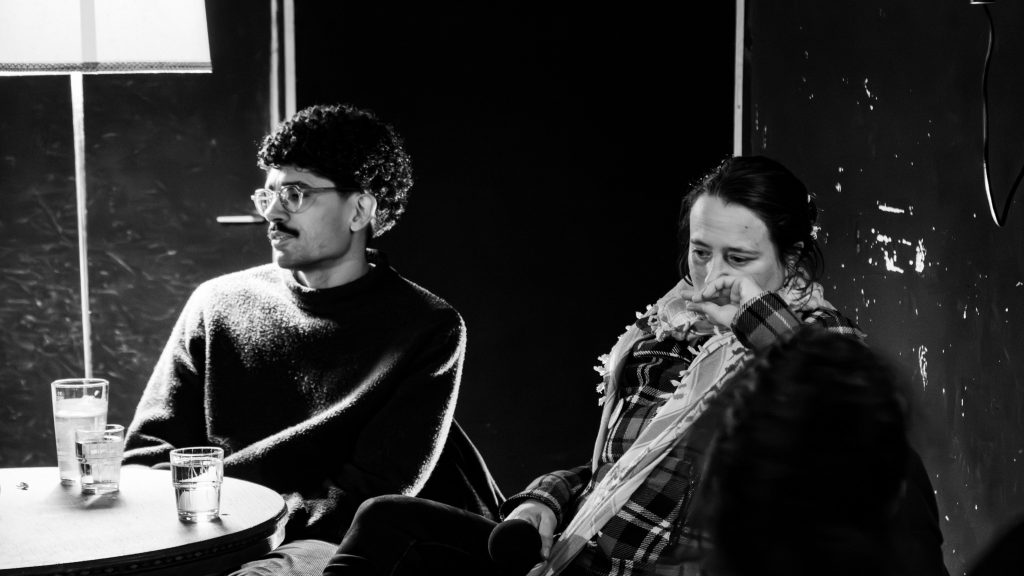
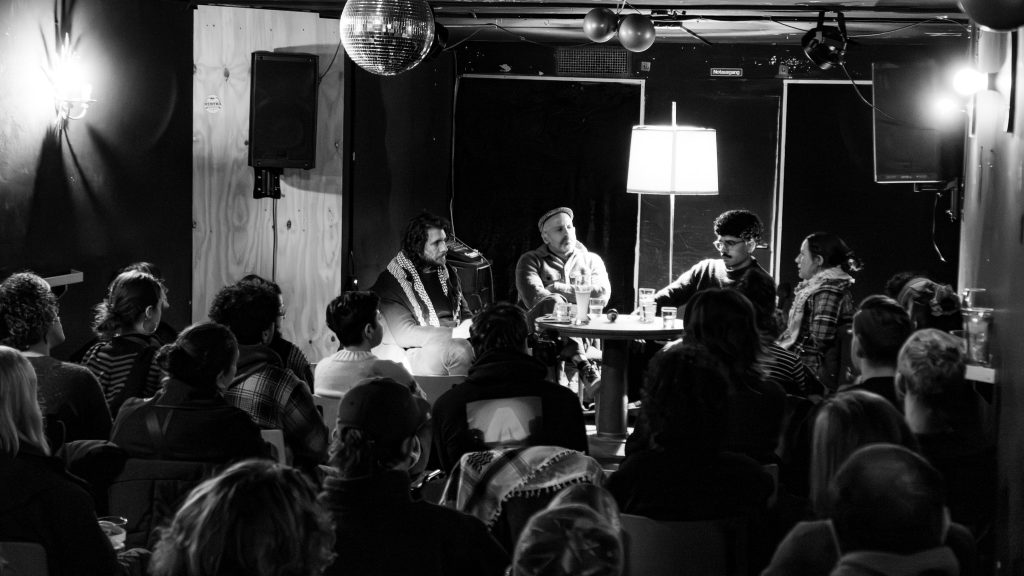
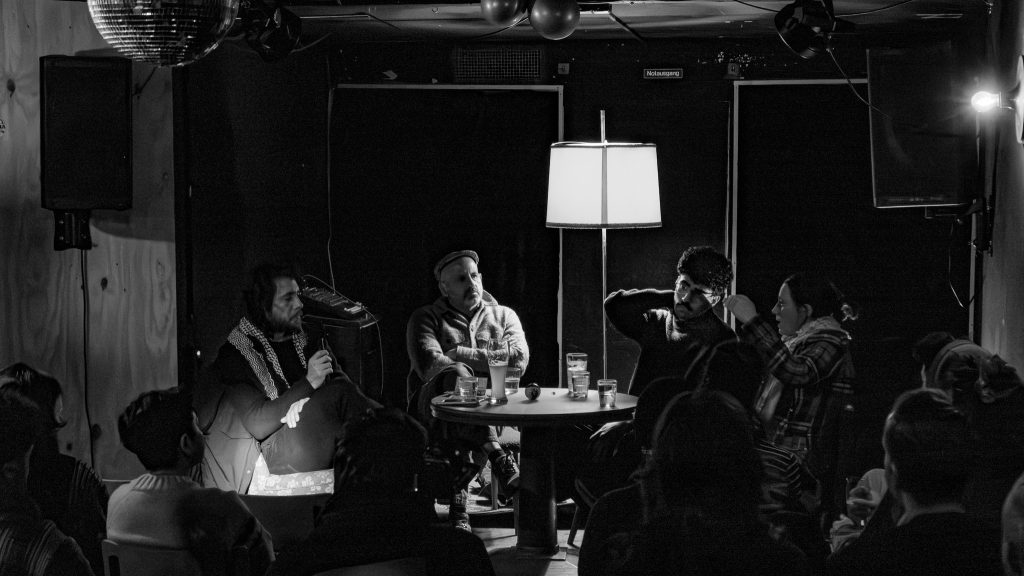
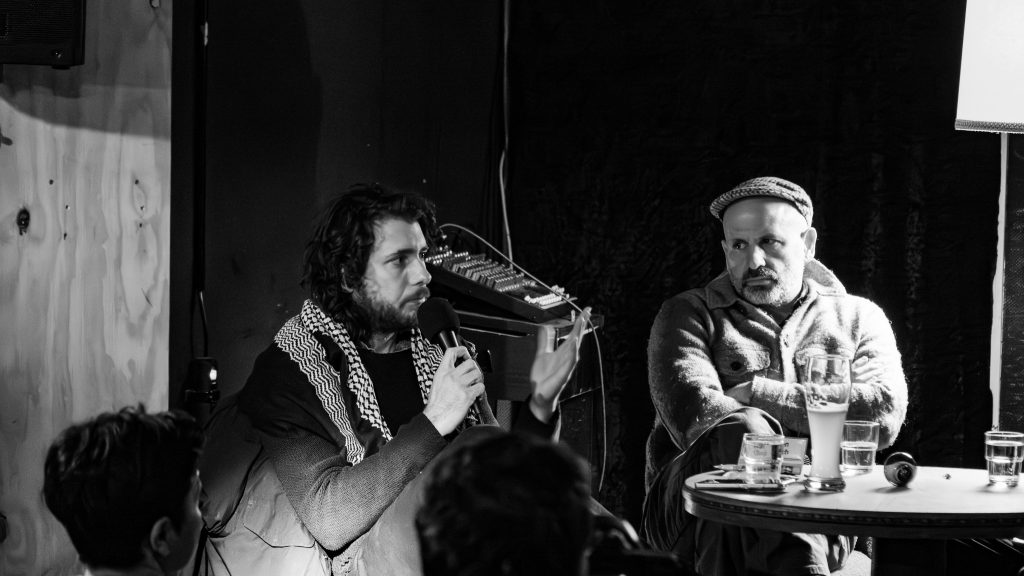
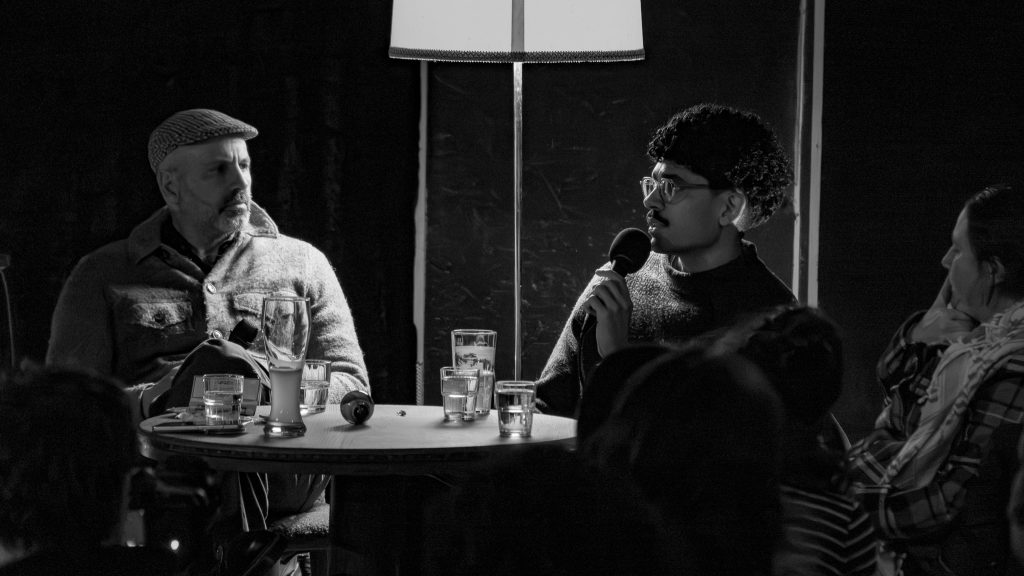
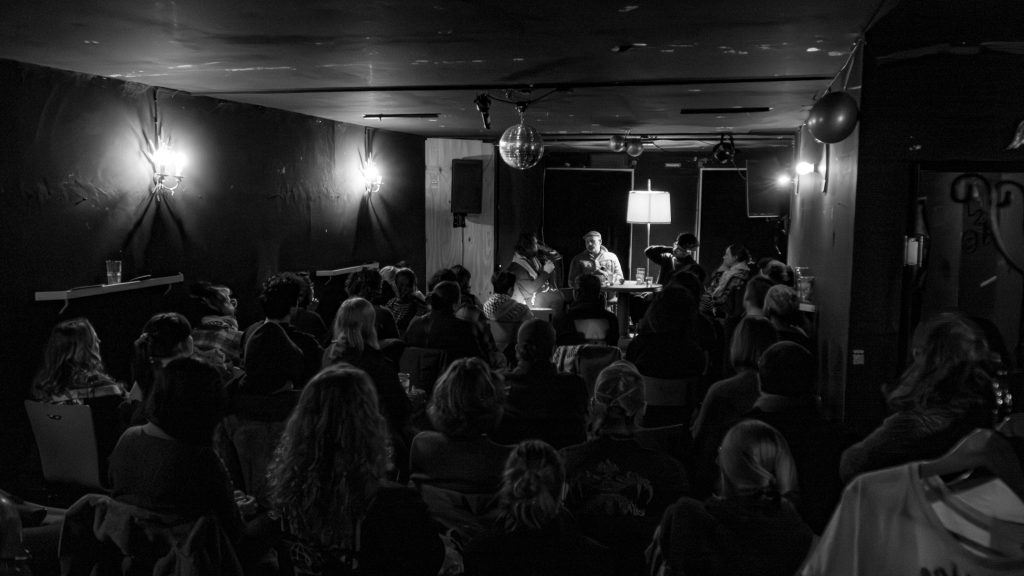
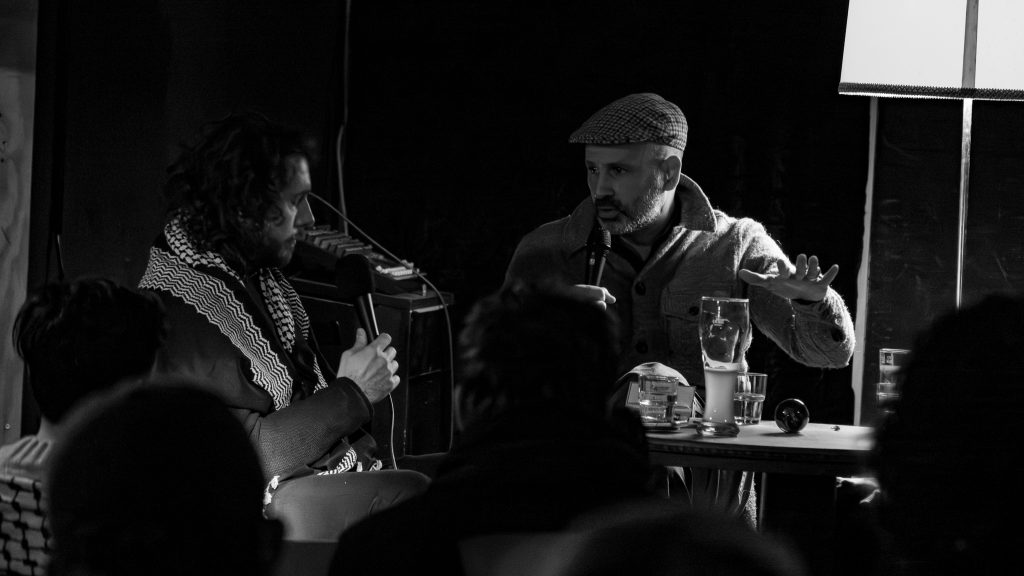
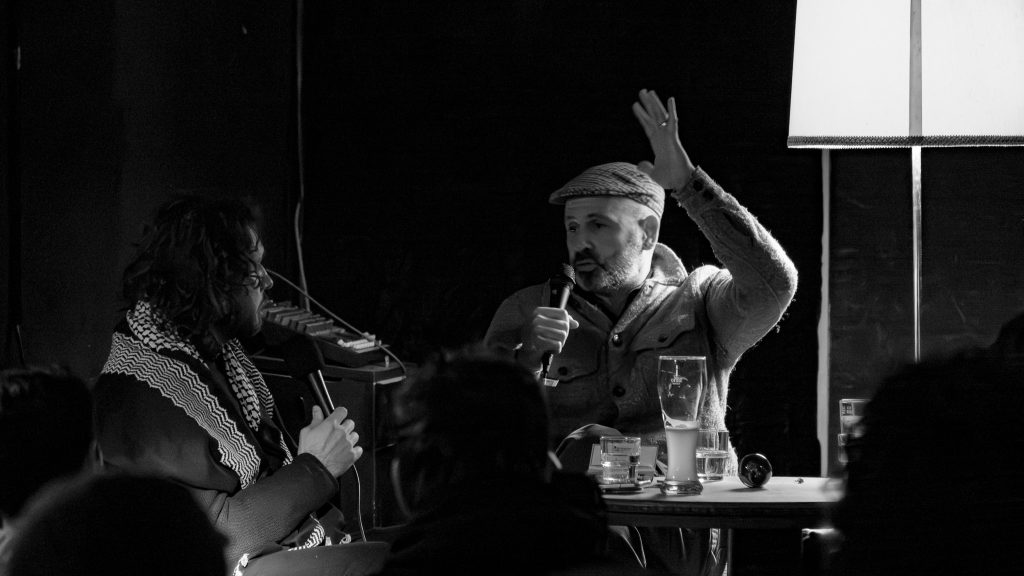
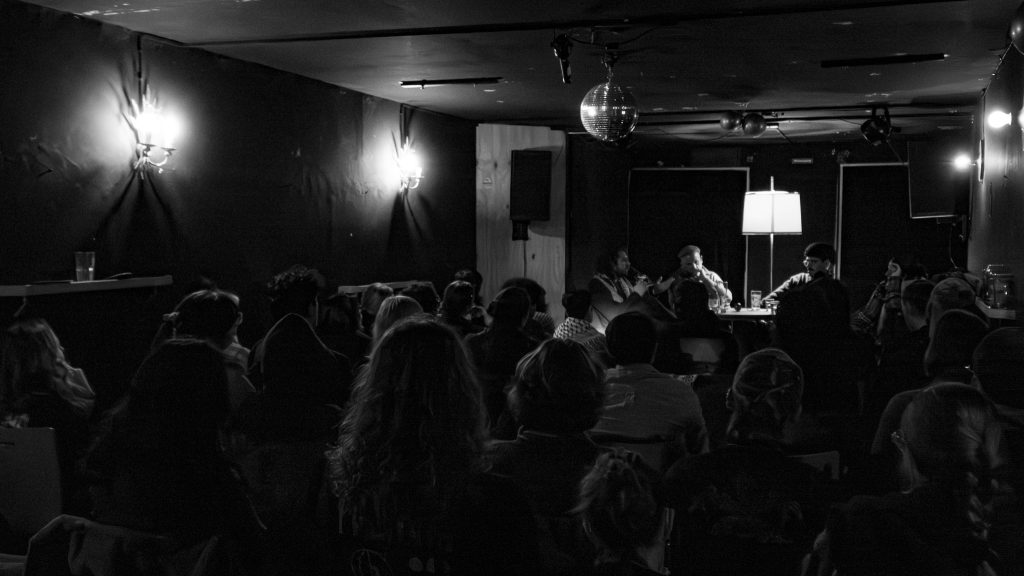
Photo Gallery – Palestine and Germany: Where do we stand now?

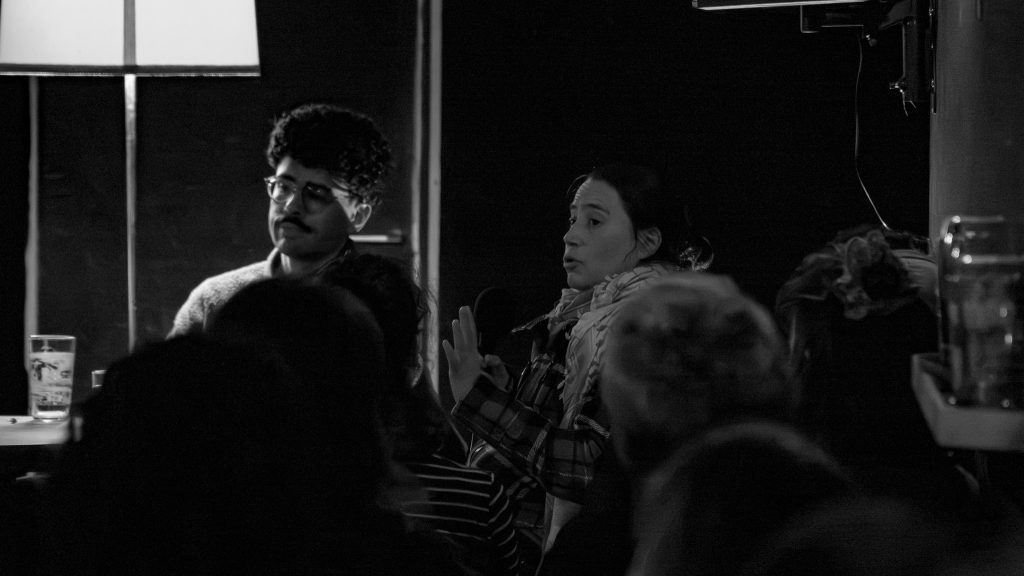
Collaboration between The Left Berlin and Corner Späti in Cafe Engles, 22 January 2026


23/01/2026

All photos: Cherry Adam

Palestine Kurdistan, Intifada Serhildan!

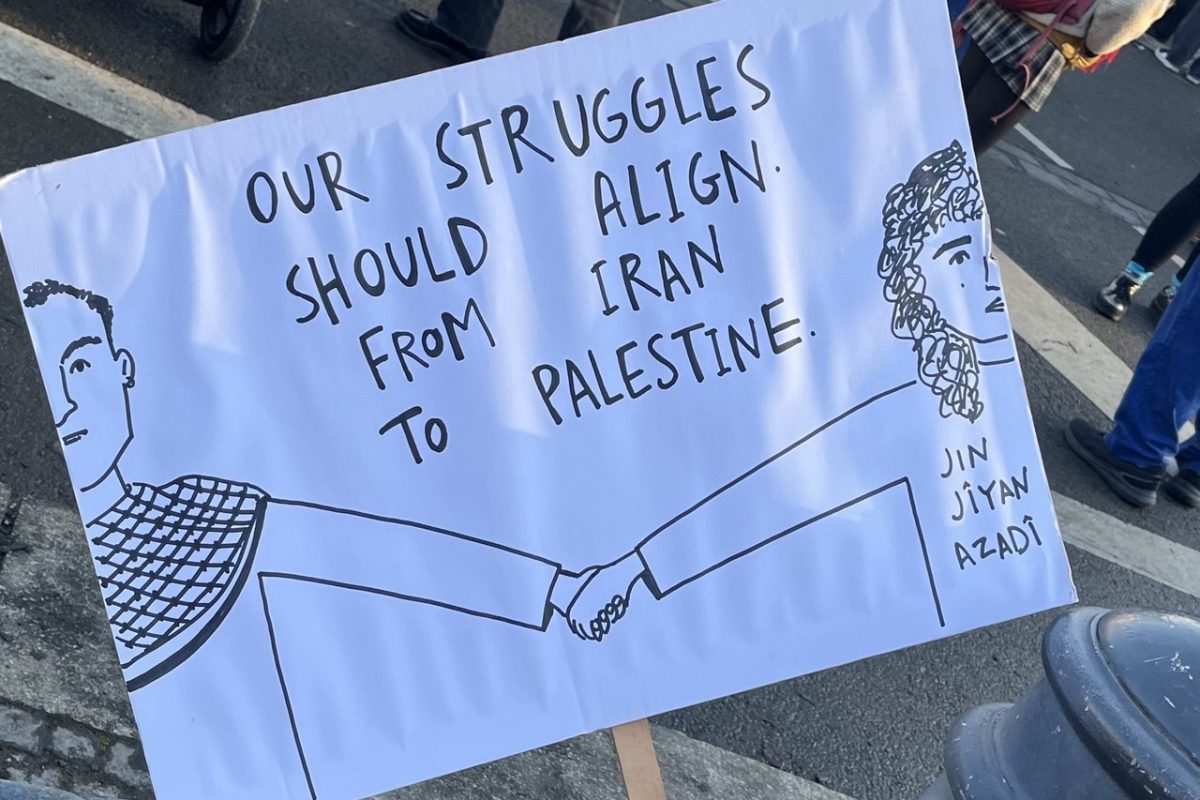
Speech from the demonstration: “In Solidarity with the People of Iran”, Sunday 18th February, Berlin


21/01/2026

In Solidarity with the People of Iran

My friends, 

I stand here as the daughter of an Iranian communist. My mother, a revolutionary, fought to bring down the Shah in 1979. She was one of the first, along with my aunt, to take to the streets in the historic mass demonstration against the new regime on March 8th 1979. My mother has fought relentlessly against the bloody regime for 46 years, and she has paid a heavy price for it: life underground, imprisonment, having to flee, and the trauma of these experiences. In 1988 she survived Saddam Hussein’s mustard gas attack on the Kurdish city of Halabja, which was made possible by German weapons. Her then husband, the love of her life, did not survive the armed resistance in the mountains. I’ve never even been able to visit my parent’s homeland. Our lives, our stories, are defined by this socialist fight against the regime and for a better world.

In the last 3 weeks we have seen, once again, how people take to the streets to protest the regime–millions of people are out there! It is the biggest revolution in the history of the Islamic Republic! These protestors have our full solidarity! We recognise ourselves in their struggle for freedom and equality, for a life of self-determination and dignity. We see that the struggles in Iran, Kurdistan, and Palestine, and the struggles here in Germany against war, rearmament, welfare cuts, racism, and genocide are one and the same fight!

A worker in Iran who can no longer afford potatoes has more in common with a worker here, who has to choose between paying for heating or food in the winter. We can’t sit idly by, watching our siblings in Iran, in Gaza, in Kurdistan, being massacred. It’s also not enough to simply commend the bravery of Iranians who risk their lives to fight the system: we must be ready to take up this struggle against our ruling classes! For this, we need revolutionary leadership, a socialism from below!

We say clearly: no to regime change! No to Pahlavi, a billionaire’s son who has never had to work a day in his life. They are not our allies, they are our class enemies! They promise freedom, but what they really mean is freedom for the rich to exploit the people of Iran as THEY see fit–the turban will be replaced by the crown and by the tie. We reject that completely! We don’t trust Pahlavi, Trump, or Netanyahu–we see their so-called democracy in Palestine! We explicitly reject Zionist “dirty work” in Iran–we say no to bombs, no to sanctions, liberation comes from below, not outside!

We fight for a free Iran, for an Iran controlled by the working classes themselves! The people whose labour power keeps society going should be able to freely and autonomously make decisions about their collective lives. The rich who profit from their labour shouldn’t be making these decisions! In Iran, there is a long tradition of workers’ councils. Time and again we see the power of the working people: in 1979 it was the workers in the oil industry who brought the Shah down. Therefore we also fully back the Tehran bus drivers’ statement, which clearly calls for an anti-capitalist alternative and stands against foreign intervention, and the Haft Tapeh workers, who demanded workers’ councils and the confiscation of state property back in 2017. Down with capitalist barbarism, long live socialism!

The workers united will never be defeated! Jin Jiyan Azadi! Marg bar dictator! Palestine Kurdistan, Intifada Serhildan!

Translated by Ciara Bowen

25 January 2011: Revolution in Egypt

This week in working class history

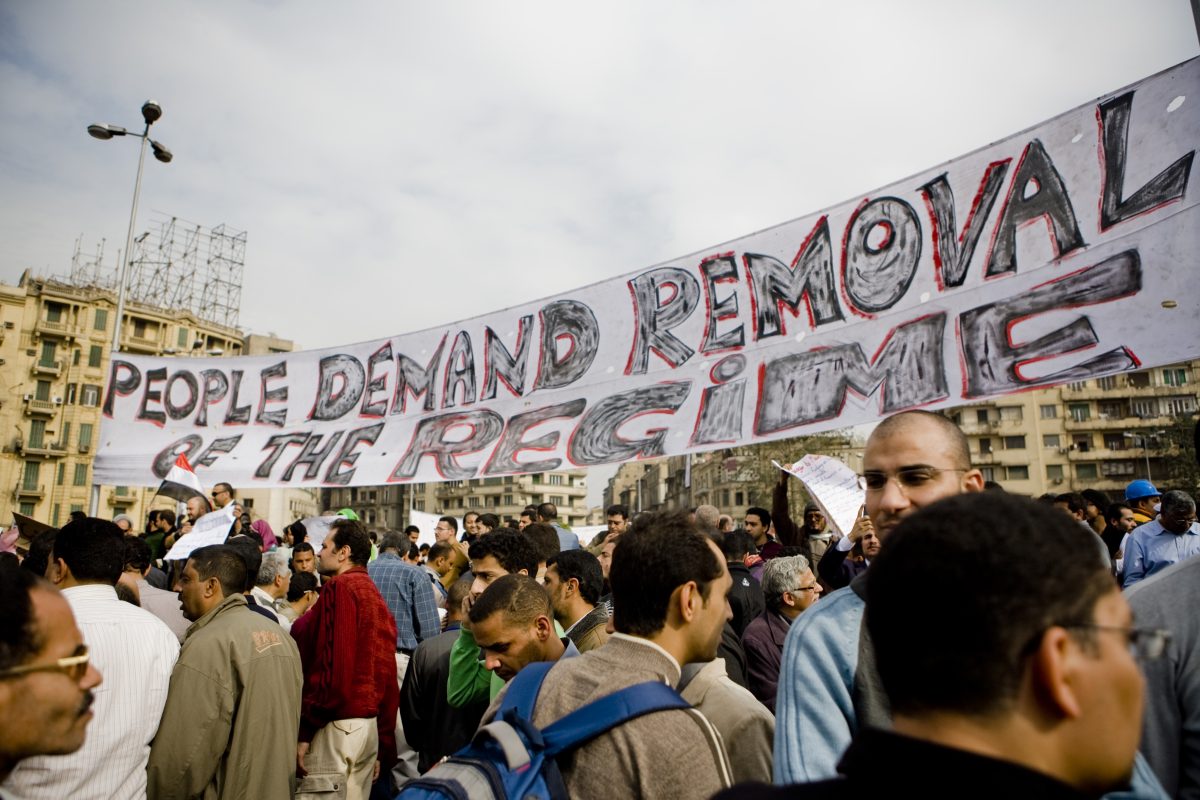
On 25th January 2011, National Police Day, mass protests erupted following the brutal torture and murder of young activist Khaled Mohamed Said. Under the slogan, “We are all Khaled Said,” demonstrators gathered to voice their outrage. One month earlier, the US-backed Tunisian leader Zine El Abidine Ben Ali had been overthrown by a popular mass movement, igniting a similar momentum in Egypt. A central demand during these protests was the insistence that President Mubarak should not be allowed to appoint his son as his successor.

By 28th January, the protests had convened at Tahrir Square, with demonstrators adamant about not leaving until their demands were fulfilled. Just two days later, workers from various sectors struck in solidarity with the youth of Tahrir. This escalation culminated in the infamous “Battle of the Camels,” during which government forces deployed armed thugs armed with live ammunition to attempt to quell the protests. However, these efforts were met with fierce resistance. By early February, approximately 300,000 workers were on strike, and on 12th February, after 18 days of relentless protest, Mubarak was ousted from power.

The Egyptian revolution did not arise overnight; it was the culmination of gradual socio-political changes that collectively spurred a movement against Mubarak’s regime. Notably, significant protests began in support of the Palestinian Intifada in Autumn 2000. In 2003, solidarity networks formed against the Iraq War, leading to the first major occupation of Tahrir Square. A wave of privatization in 2004 further fueled resistance and gave birth to the Kefaya (“enough”) movement against Mubarak.

By 2006, trade unions had joined the growing struggle. In December of that year, thousands of women textile workers in the Nile Delta town of Mahalla took to the streets, demanding that male workers join their strikes. This resulted in 24,000 workers striking in Mahalla, marking the onset of the largest strike wave in Egypt’s history. By 2007, strikes spread to the service sector and public health, and following the 2008 economic crisis, yet another surge of resistance emerged.

The Egyptian revolution faced defeat, first due to the Muslim Brotherhood’s accommodation with the state and later through the rise of counter-revolutionary General el-Sisi as Egypt’s president in 2013. Nonetheless, the spirit of the revolution endures. As revolutionary journalist Hossam el-Hamalawy, who documented the events, remarked in a recent interview with theleftberlin.com, “There are people who have seen this revolution, and they are still alive.”

Call for Solidarity

Threat of Greek prison for the “crime” of fleeing Gaza

Palestinian refugees among the victims of criminalization of asylum seekers in Greece

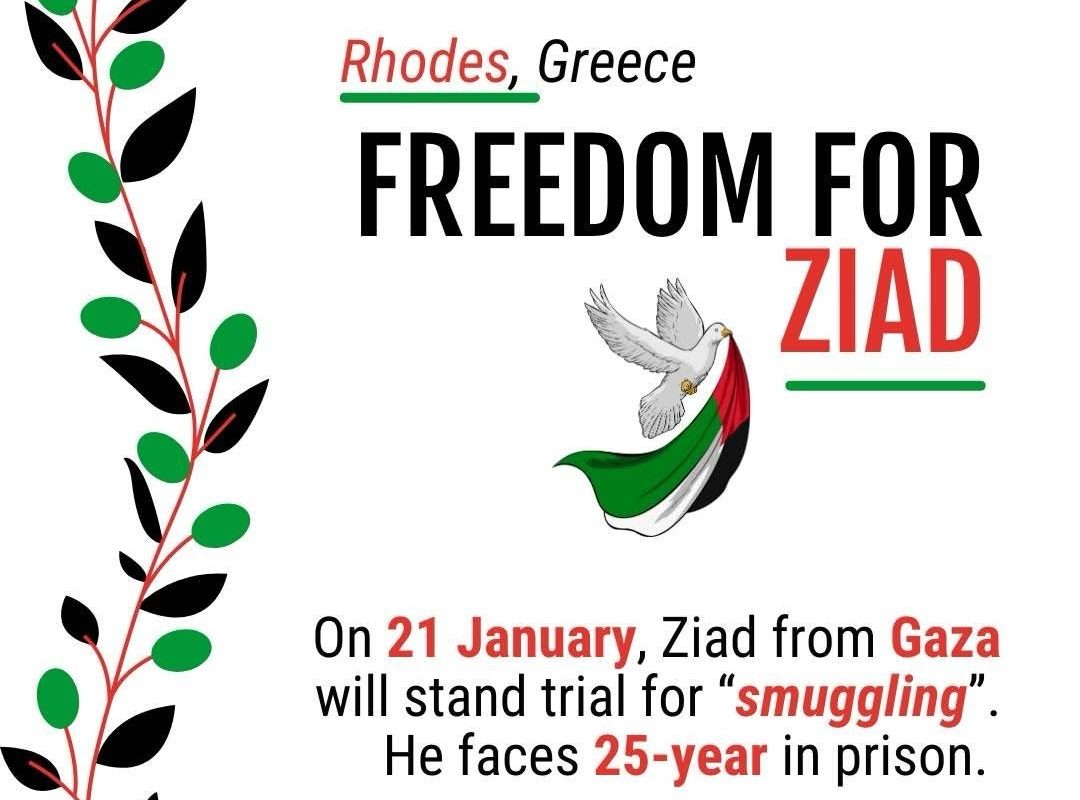
On Wednesday, 21st January, Ziad from Gaza will face a 25-years-long sentence in a court on Rhodes, Greece. He is one of the many asylum seekers criminalised by the Greek state – with EU’s full complicity – as a “smuggler”.

“I managed to leave Gaza for Egypt, and then to Turkey. I did my best there to obtain residency and family reunification, but I was unsuccessful. So, I continued my journey towards Europe, searching for safety for my family.” – writes Ziad in his statement.

In August 2024, he managed to reach Rhodes Island on a rubber boat together with other desperate people seeking safety. Once apprehended by Greek coast guard, he was accused of having held the rudder and put in pre-trial detention in a criminal prison in Athens. He has spent the last 17 months there. The day after tomorrow, he will face trial back on Rhodes, in which he can be sentenced to 25 years of prison for “smuggling”.

The government in Athens – as part of its migration deterrence policy – has been practicing criminalization of those fleeing wars, conflicts, the genocide, as well as extreme poverty and lack of any future at home. Upon their arrival “to safety”, a few random persons from every boat reaching Greek shores are arrested – usually without any evidence, access to translation or legal counsel – and put in prison.

Months and years pass. When a trial finally takes place, people are often offered a plea bargain (a plea deal) – an arrangement between prosecutor and defendant, in which the defendant pleads guilty in exchange for a more lenient sentence. Some of the criminalised in Greece accept it in fear that the “evidence” produced against them will condemn to the maximum punishment – 25 years of prison. Ziad has decided not to go down this way and face his destiny instead.

“From the moment I arrived in Europe, instead of finding justice, I was subjected to the greatest injustice. I was accused of a crime I did not commit and imprisoned. Every day in prison feels like a year, and I live in constant fear and anxiety for my family, whom I left behind under bombardment and suffering in Gaza.” – writes Ziad.

Ziad’s story is heart-breaking from its start. Back in Gaza, his eldest daughter fell sick and needed medical treatment not available there. Ziad was fighting to get her out of Gaza, but the Israeli regime did not allow it. She passed away in pain. He buried her and decided to leave to secure a better future for his remaining two daughters and his wife. He succeeded after months of trying – just days before the outbreak of the genocide.

“I visited Ziad in the prison in Athens. I have never met him before. He is a short, solid man in his 30s. He looks older than his age. A very gentle and calm person, a kind heart. He was smiling sadly in integrity and dignity as we exchanged about his upcoming trial” – says Eirini, an activist who has been supporting criminalised asylum seekers as part of Alma Community and ’50 out of many’ Initiative.

Greece’s law makes facilitating unauthorised entry a felony resulting in a ten-year prison sentence, with up to an additional 15 years for each person transported whose life was allegedly endangered. These measures “against” smuggling are in fact targeting those they claim to protect as great majority of the accused are people on the move.

Some of them steered or navigated a boat – for a short while or a whole journey – because they were coerced to it or simply to get themselves and others out of danger. In the absence of legal pathways of arriving and seeking asylum in the EU, driving a boat to Europe is an act of despair and an act of solidarity: no driver, no survivor.

“Ziad has been locked for 17 months. It is enough time to understand the reality. He is not in denial of the risk he will face on Wednesday” – continues Eirini. “Ziad is an asylum seeker from Gaza who wanted to find safety for his family. He should have never been criminalised”.

Ziad’s wife and two daughters remain in Gaza – they live in a tent in harsh winter conditions. Only a few days ago their tent collapsed on them.

To attend the trial or to support otherwise please contact: 50outofmany@gmail.com

Supporting groups: