The Left Berlin News & Comment

This is the archive template

Photography Can Amplify Stories, Voices and Empower People

Interview with Margarita valdivieso Beltran about her anti-racism activism, photography, and work with refugees in Thuringen


17/01/2025

Hi, Margarita. Thanks for talking about us. Could we start by saying a little about who you are and what you do?

Hi Phil, thank you for having me. I am a Colombian visual artist. I lived in Germany for five years, I did a masters in media art & design and worked as a teacher and researcher for the faculty of visual communication at the Bauhaus University. During my time in Germany I was involved in various migrant movements and grass root organisations that work with civic education and human rights. My work delves into topics of political violence, aesthetics of power, anti-racism and migrant communities both in Colombia and Germany.

You have a long-term project about political violence called “Arder la casa“. Could you explain a little more about this?

Arder la casa explores the contingencies of violence in Colombia through my family history and my father’s exile. In 2015, years after finishing his term as mayor of a small town bordering Venezuela, my father crossed the Colombian border fleeing the political persecution he had been subjected to for decades. I remember that he disappeared on different occasions when I was still a child, but the fairy tales my parents told me justified his absence. In 2015, for the first time, I understood the fragmentation of my nuclear family as a consequence of the political conflict in Colombia. My father’s exile marked a turning point from which this project develops. With the images, I try to travel between the past, the present and the future, unveiling our history to reveal traces of violence, mythologies, family relationships and wounds. The project uses archives such as photos or newspaper clippings, paintings, analog photography, video and sculpture.

You have moved on to depicting racist violence in Thuringen. Why did you choose this subject? Is there a connection between violence in Thüringen and your earlier work in Colombia?

The topic has always been personal, I always had an uneasy feeling while living in Germany. At first it was something that I couldn’t name properly, some sort of inadequacy that I understood as part of my character; as if something was wrong with me, perhaps my culture or my personality. It quickly developed into discomfort. Talking to friends and sharing our experiences, I understood it had more to do with how white Germans and German society perceive me than with something wrong inside me. At some point, I felt that in Germany I couldn’t concentrate on making art, not with all the noise itching around my body. I got involved with different anti-racist initiatives that were amplified during the Black Lives Matter movement in 2020. I went to marches, did speeches, got connected with people having the same struggles.

At some point though I wanted to get back to photography, I had stopped taking pictures for two years. It was a sort of creative vacuum, highly connected with the place. I did an exercise, I wanted to portrait my friends in medium format. It was an excuse to make pictures again and it quickly transformed into a project that I thought could be interesting, to photograph and interview my friends to ask them about their experiences with racism in the city. While doing this I won a grant and it became a bigger project, a traveling exhibition that showed stories and pictures in different cities of Thuringia, anti-racism workshops and lots of conversations. From then on I have worked with such topics. 

What are the day-to-day experiences for refugees in Eastern Germany? How much support is available?

I guess this could be better answered by someone who has had the experience of living as a refugee and is active within the community. But in my opinion and having learned from my work, I think the experiences vary depending on where the person is living, wheter that person has family in the country, if they speak the language, whether they are BIPoc or white, where they come from, etc. In my experience working with refugees, I saw that refugees in Thuringen are isolated in facilities located in rural areas or small towns, where access to education, culture, language classes and society is difficult. Refugees living in the camps face lots of discrimination, the staff in the camps have faced countless legal complaints of discrimination, violence, racism and the facilities are often under scrutiny due to overpopulation, damages, improper living conditions… it is not an easy place to live and sometimes one could think such camps have certain traces of the camps in 1942.

How has Eastern Germany changed since the recent election results?

I left Germany at the end of 2023 after finishing this project on white supremacy in Thuringen. One of the reasons leading to my decision was noticing that the rise of the AFD wasn’t particular to one region or town in the East, but rather an expanding reality that gained power and fuel with time. It made me feel that there was no place for me to really feel at home, and it also made me feel drained and exhausted. I didn’t want to face such structures anymore.

Racism does not just come from the AfD. How are refugees and BIPoc people in Eastern Germany affected by structural racism?

Racism is a structural matter in Germany. Structural means that it is a logic embedded in society through policies, bureaucracy, ideology, education, etc. In the educational system, for example, discrimination occurs based on assumptions about the capacity and ability that children have to attend university.  According to research by the Open Society Justice Initiative: “Based on the testimonies of teachers, including majority German teachers, German language skills and religious instruction in school are often used as a proxy to segregate migrant children into separate classes and enable school officials to lure native German parents with ‘German language Guarantee classes.’ A recommendation for higher education in the case of students from ‘migration background’ will often be put in doubt against the premise: ‘The child comes from a family not invested in education’—a peculiar observation in a meritocracy”.

In my experience as a masters student and teacher for the Bauhaus University, I faced structural racism that had to do with language access and methodologies for my work. I did a program for media art and design that was offered in English; nonetheless, only a few of the classes for my program were taught in English, and when we demanded solutions, the administration decided to close the program without giving any answer to the students that were already taking classes. As a teacher I was confronted with administrators that were reluctant to help me as I did not speak German with them, and even when I was offered a contract for a teaching position, my visa took three months to be issued, while the staff from the migration office were extremely unhelpful and misleading. I felt that I had to beg for help, the whole process wore me out. Experiences like the ones described above lived by children in the school or by me in university have in common access to language, our migration background and the general sense of discrimination. Nonetheless, this is only the tip of the iceberg and one of the faces of structural racism.

You document not just anti-Black racism in Eastern Germany but also antisemitism. What antisemitism is being experienced and where is it coming from?

Although I haven’t worked with the jewish community as much as I would like, I documented the story of a refugee a Moroccan Jewish refugee. He has repeatedly been a target of antisemitic attacks by institutional workers in Thuringen. He came to Germany seeking the status of political refugee and was transferred from Hamburg to Suhl for a short period of time. While in Suhl, he experienced discriminatory treatment from the staff at the camp that, as he describes, began only when the staff learned that he spoke Hebrew and was Jew. On one occasion the staff member told him “Your place is the Holocaust, damn Jew.”  He filed a criminal complaint accompanied by Ezra, the organisation counselling the case. Ezra’s representative said that “The subsequent process was characterized by the reversal of roles between the perpetrator and the victim. A counter-complaint was filed for defamation and false accusation. The complaint against the facility manager was dismissed by the public prosecutor’s office due to insufficient suspicion. A summary penalty order and a fine were issued against the person seeking advice”. As with this complaint, many others have been dismissed by judges that don’t take them seriously. It shows you how structural racism suffuses the legal system in Germany. 

Many recent anti-racist activities, such as the attempt to block the AfD party conference in Essen, have been attended largely by White activists. What are the barriers to BIPoc people – who are the main victims of racist violence – getting involved in these campaigns? Do you think that the German anti-racist movement is inclusive enough? If not, what needs to be done?

I mean, inclusive of White people? The anti-racist movement in Germany was organised by Black Germans, migrants and other diaspora groups, and the allyship of white Germans has happened with time. There are many organisations and groups led by BIPocs that work with an anti-racist agenda. From civic education, art initiatives, to legal counselling and support, BIPoc led initiatives are present and have long-standing paths working with communities all over Germany. I don’t know the organising group against the AFD conference, but I believe that we all need to become anti-racist to be able to support anti-racist causes and have inclusivity within our circles.  Only knowing that racism happens is not enough to be an ally. White people need to get trained and have a lot of self-reflection time, attend workshops, listen to other voices and give space. One reading that I recommend to start this anti-racist path is How to be an Anti-Racist by Ibram X Kendi.

You are not a politician, you are a photographer. What do you think the role of photography is in countering the far right?

I think photography can amplify stories, voices and empower people. Photography shapes representation, and representation matters! Through visual stories we can put out more diverse and intersectional narratives, giving the public and the viewer alternatives to look at the world. We can challenge mainstream perspectives through visuality and counter narratives that are segregational or blind-sided; but it all depends on the photographer and their knowledge and awareness of the world. It takes some time to decolonize the gaze and a long training to learn to look in different ways.  It also is so incredibly important to learn to work with communities, collaborators or subjects. Being a photographer means having a great deal of responsibility, but also power. We hold power over the subjects and it is our duty to learn to navigate that power to create more balanced relationships in our work and to honour the subjects and their stories. 

Where can people view your photography and/or support your work?

People can follow my work at @margarita.v.beltran and www.margaritavbeltran.net, I am going to take this opportunity to say that I am currently selling some of my photographs from different projects to finance a trip to the VOGUE Festival in March 2025 where I will be showing my pictures as one of the selected artists. Write to me at: margarita.valdivieso@posteo.net to get more details. <3<3

Red Flag: Why Do You Never See German Politicians on the Bus?

White-collar corruption in the Bundestag makes a mockery of representative democracy that rewards Germany’s most venal individuals.


15/01/2025

I mostly get around Berlin on public transport, and I run into all kinds of people. But you know who you absolutely never meet on the train, bus, tram, or ferry? Members of the Bundestag. There is a simple explanation: politicians are, without exception, wealthy.

A member of the Bundestag (MdB) gets €11,227.20 per month. For comparison, the median income of full-time workers in Berlin is €3,806 — a parliamentarian gets three times as much. But that number is distorted, since over a third of Berlin workers have part-time positions, and almost 10% are unemployed. This means politicians are earning more like 4-5 times as much as a normal worker.

They get an additional €5,349,58 to set up an office in their district. But no one checks how this is spent — it can pay for rent or also crystal meth. They get to spend up to €25,874 per month hiring assistants. They get unlimited free travel on Deutsche Bahn (a €500 value), and flights are reimbursed. They get chauffeured around Berlin in big black limousines — which is why you never run into them on the bus.

Counting this stuff together, every MdB is getting closer to €20,000 per month. These are the “representatives of the people,” but every single one of them is among the top 1% of earners. That’s why the parliament costs around a billion euros. But we’re just getting started…

Legal Corruption

Besides representing the people — apparently not a very demanding job — MdBs are explicitly allowed to have second jobs as long as the parliament is “at the center” of their activity. They only have to make vague declarations about such income, but at least 37 MdBs earn over €100.000 per yearone even declared an extra income of €3.4 million!

Jens Spahn is a racist agitator and former health minister. Back in 2018, he said that the €416 from Bürgergeld (citizen’s benefit) are enough to live off. But how could he possibly know? At the time, he was earning €15,311 — 37 times as much. But he didn’t have to survive off his official salary. Spahn worked as a lobbyist for Big Pharma while he was on the Bundestag’s healthcare committee, and he acquired a villa worth €4-5 million in Berlin-Dahlem with the help of a mysterious loan.

In other words, elected representatives are cashing in while in office. Isn’t this the very definition of corruption? Yet this is all completely legal.

Illegal Corruption

Germans see their country as ninth least corrupt country in the world, with a score of 78 out of 100 on the Corruption Perceptions Index. Open any newspaper, and corruption is widespread and barely hidden. For a prominent example, take that of, fortunately deceased, imperialist gremlin Wolfgang Schäuble, who was caught taking an envelope with 100,000 German marks in cash from a weapons dealer. This barely made a dent in Schäuble’s career; he went on to be a minister and Bundestag president, and when he died, he was lauded as a great statesman.

Or look at current chancellor Scholz, who helped banks steal billions from public coffers and get away scot-free. Scholz has been stonewalling investigations, yet hasn’t faced any consequences.

This goes across the political spectrum — it’s why parties mostly don’t scandalize each other’s corruption. The far-right AfD, which rails against a corrupt establishment, probably has the biggest corruptions scandals, with illegal donations from far-right billionaires. 

Even More Legal Corruption

Occasionally, an MdB will get in trouble for collecting millions. Yet most corruption in Germany is legal. The social democrat Sigmar Gabriel, a former vice chancellor, was collecting €10,000 a month from Tönnies, a company running meat-packing plants with hyperexploited immigrant labor. Gabriel defended himself by reminding people he was no longer a politician — €10,000 might seem like a lot of money to most people, but “in this industry, that’s not a particularly high amount”

Indeed, Gabriel had numerous such contracts going. And this is how money gets funneled to politicians: they get huge payouts, but only after they’ve left the Bundestag. I doubt such deals are ever put in writing, but everyone understands how they work, it’s bribery with delayed gratification.

A retired politician can get millions every year serving as a “consultant” or a member of a company board, which means going to a resort for a couple of weekends a year and signing some papers. It’s a payout. Lenin wrote that in the democratic republic, corruption is “developed into an exceptional art.” And the Federal Republic of Germany is indeed quite a “developed” country.

This is one of many mechanisms that ensures that bourgeois democracy is not actually democratic. The people are allowed to vote for their representatives but whoever they elect automatically becomes a member of the 1%. Is it any wonder they tend to sympathize with landlords, with people who own apartment buildings, more than with those of us who rent apartments?

Workers’ Candidates

In this election, there are workers running for the Bundestag who reject this systematic corruption. The social worker Inés Heider and her comrades have promised that if elected, they will only take a nurse’s salary — which is close to the median, around €3,800. They would donate the difference — over €7,000 — to a strike fund to support other workers’ struggles.

This is one of many ways they are challenging the “common sense” of capitalist politics. A socialist election campaign is not about getting votes. Rather, it’s about helping working people understand that this system is designed to serve the capitalists, not for us. Demands against ingrained corruption are part of an anticapitalist program

Nathaniel has been publishing the column Red Flag about Berlin politics since 2020. It has a new home at The Left Berlin, where it will be published every Wednesday.

The Rise and Rise of the Anti-Migrant Left 

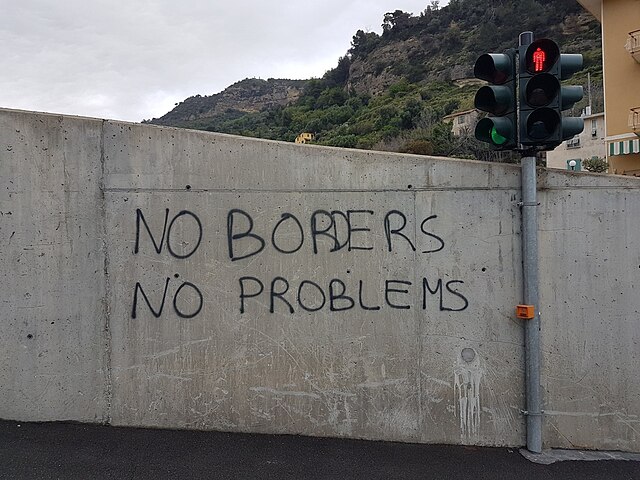
Reject parochialism, embrace migration.


13/01/2025

From Mette Fredriksen to Sahra Wagenknecht to (now) Bernie Sanders, the broad consensus parts of the Western ‘Left’ appears to have converged at leftist praxis that protects domestic labour through controlling migration. In Europe, Denmark’s Mette Fredriksen’s explicit pro-labour, anti-migrant positioning has been a source of inspiration across the continent, not least to Germany’s own Sahra Wagenknecht. In America, Bernie Sanders’ political opinions appear to have shifted back to an anti-migrant baseline, now that the broader Democratic establishment has grown less attached to signalling anti-racism.

At its core, this consensus frames migration as a phenomenon encouraged by cynical neoliberals trying to bring down wages by relying on an infinite reserve army of labour in the global South. These neolib demons, by leveraging visa precarity and threats of deportation, ensure that migrants cannot participate in wage struggles or switch jobs as easily as citizens can, proliferating immiseration. The only solution to this, these ‘leftists’ claim, is border controls—both to maintain domestic labour’s capacity for wage negotiation, and to quell the surge of the far-right. The specificities of what these controls imply differ, in particular given the refugee/migrant distinction—featuring a spectrum of desirability, from refugees at the bottom to well-compensated, ‘highly skilled’ workers at the top.

While the recent escalation in anti-migrant discourse can in large part be explained by the far-right’s obsession with anti-migrant ‘culture wars’, it is also rooted in history. Both European and American workers’ movements have always involved a strong xenophobic component. Calls for migration bans on East Asians was a cornerstone of what Lenin called jingo-socialist labour organising in 20th century America. In post-War Britain, the predominantly white labour movement colluded with their employers to shut off employment for black and Asian migrant workers from the Empire. In Germany, trade unions and works councils were closed off to representation from the Gastarbeiter that drove the Wirtschaftswunder. The xenophobia that we see today should be seen in this light —as a modern resurgence of an undercurrent that has always existed, once more on the rise—the aftermath of numerous migration crises that Western interventionism has contributed to, all against a backdrop of two decades of near-global capitalist stagnation.

***

Let’s steelman the anti-migrant-left position, giving it as charitable an interpretation as possible. This position would hold that migrant workers are brutally exploited (in a moral sense), and that the best way to transcend global capitalism is to build worker solidarity across countries. Through building strong unions at home, Northern workers could help their southern counterparts; eventually, a global labour movement would eliminate the necessity for migration. Keeping migrant workers at bay in the meantime makes this dream easier to achieve, since a smaller reserve army of labour would lead to less reaction and less division within domestic workers’ movements. To their credit, the left end of this position tends to be sympathetic to refugees fleeing war.

This framing appears reasonable on the surface; yet one need not dig deep to demystify this rhetoric and unearth the jingo-socialism that lies beneath.

Critics of neoliberalism (or of capitalism writ large) aren’t incorrect about migration’s utility to the accumulation of capital. Through maintaining visa precarity, neolib demons are indeed able to control, filter and utilise streams of migration that best suit accumulation, all the while ensuring that labour has minimal capacity to negotiate for better conditions. But the reason that the ‘acceptable’ response to this on the left has been to adopt the right’s clearly anti-universalist and supremacist rhetoric—rather than to unwaveringly maintain commitments to open borders—lies in the extent to which nation-states have been reified in the public consciousness. The result of this reification has been that exclusion along the lines of nationality appears far more acceptable (natural, even) than other forms of discrimination. Thus, nation-states are seen as inevitable; as a “reasonable” and “correct” way of dividing the world, unlike other divisions like race or religion or caste or gender. It may be easier to imagine the end of the world than the end of capitalism; but to many, it appears the end of the nation-state is even harder to imagine.

Along with casting these nation-states as ‘natural’, this reification involves framing them as independent units, as subdivisions of the map, all unrelated to one another. Each nation-state features its own domestic relations of production, its own independent path towards a post-capitalist future. This framing goes back to the origins of nation-states, deeply co-constituted with the inception of capitalism, and to the alienation of producers from the means of production. Nation-states and nationalism played the role of a sentimental veil, obscuring this alienation and the exploitation of labour, through the artificial construction of a shared solidarity across class lines. Yet capitalism today, as Chris Harman reminds us, finds even the biggest existing states too small for its operations. Nation-states must follow the imperatives of the world market, and must engage in constant cycles of trade. To start from the assumption that they are independent producers is only marginally less naive than the market-fundamentalist assumption that individuals are independent producers. It is a rejection of the idea of the socialisation of labour under capitalism — of the transformation of production and distribution into an increasingly social activity, all over the world market. 

The existence of global trade serves to explain the particular framing around migration that exists in the global North. None of this is to say that the rest of the world does not have anti-migration movements; it does, and features both border regimes and armed mobs that do not hesitate to kill. But there is a reason the precise framing of ‘defending labour’ is so effective in the North. The postcolonial period has been characterised by immense mobility for Northern capital, allowing the bourgeoisie to obtain resource and labour inputs from the South, driving up the domestic rate of profit. Unprecedented restrictions on the mobility of labour, on the other hand, make it next to impossible for labour to move to regions with higher concentrations of capital and higher wages. These dynamics effectively cement increasing divergence between Northern and Southern growth into place, fuelling both Northern growth and consumption, and creating the possibility for a compromise between labour and capital in the North. This is not (just) out of malice, or racism; it is simply how capital functions given the vast spatial inequalities that characterise modernity.

Perhaps this is the reason that so many workers in the Western world are driven to reaction. Perhaps they recognise that borders work in their interests: foreigners out, profits in, and hopefully compromise somewhere down the line. This is undoubtedly a massive impediment to building international solidarity and class struggle. But if class struggle today has been superseded by national struggle, perhaps open borders are precisely the antidote that is needed — to force the workers that today hide behind modernity’s strongest sentimental veil to develop genuine class consciousness, and to recognise themselves as workers.

***

When Bernie Sanders calls for migration curbs on ‘dog trainers and English teachers’, or Mette Fredriksen takes issue with ‘welders from India or Bangladesh‘, they are talking about low-wage workers (even though Sanders is slightly detached from reality when he conflates this with H1Bs, who span the entire spectrum of wage labour). High-wage migrants continue to play a slightly different role in migration discourse, and politicians—neoliberal or otherwise—tend to be a lot quieter about their continued migration. Once again, this is so the processes of the accumulation of capital continue unabated; the ‘right sort’ of migrant, educated and well-compensated, can help produce the technical know-how and the intangible commodities that drive so much Western capitalism today. The same states that resort to ‘Fortress Europe’ rhetoric for refugees and ‘economic migrants’ silently compete to attract high-wage labour—the Nordic countries and Germany relax permanent residence requirements on the basis of wage; the UK has special visas for ‘high potential individuals’; the US retains its EB1 category for precisely this sort of labour. 

Today, it is clear to those with eyes to see that capitalism has entered a period of deep malaise; perhaps it has entirely run out of steam. Migration policies, in prioritising tax revenue (and therefore wage), end up prioritising the non-productive fields of finance and marketing, or the tech sector—a field that has grown increasingly parasitic, centred around building data enclosures, or platforms that serve little purpose other than to act as profit-absorbing middlemen. As a consequence of this, not only has the gap between labour and capital widened, but also that between labour and labour. Small wonder, then, that we see clashes between odious capitalists like Elon Musk and his former henchmen when it comes to precisely this high-wage migration. Nationalism’s sentimental veil does not discriminate between ‘good’ and ‘bad’ migrants, as much as capitalists (and many migrants) would wish for it to do so. And in periods of crisis, crisis itself becomes personified along the lines of migration status and ethnicity. The violence required to maintain the comfort of the veil resurges—precisely as we are witnessing today.

Migrant workers are, at the end of the day, human beings that have agency. When they choose to move to the west to be exploited by Western capitalists, they are doing so because it is often because it is their only viable shot at an improved standard of living. We must recognise this, and commit to building genuine workers’ internationalism, rather than wallowing in parochialism and the nation-state fetish. A left that abandons labour, wherever it may be, is no left at all. We must maintain our commitment to the emancipation of the workers of the world, and not just those of the wealthiest and most developed nation-states. This commitment may well mean an entire generation of complete electoral defeat for the left—but it is far better to accept this defeat, work on educating the masses and build hegemony than it is to renege on the freedom of movement and throw the workers of the global South under the bus. The most that this will ever achieve is a deeply chauvinistic state-capitalism at home, inextricably intertwined with the militarised borders that enclose the National Bolshevist fantasies of large chunks of the Western left.

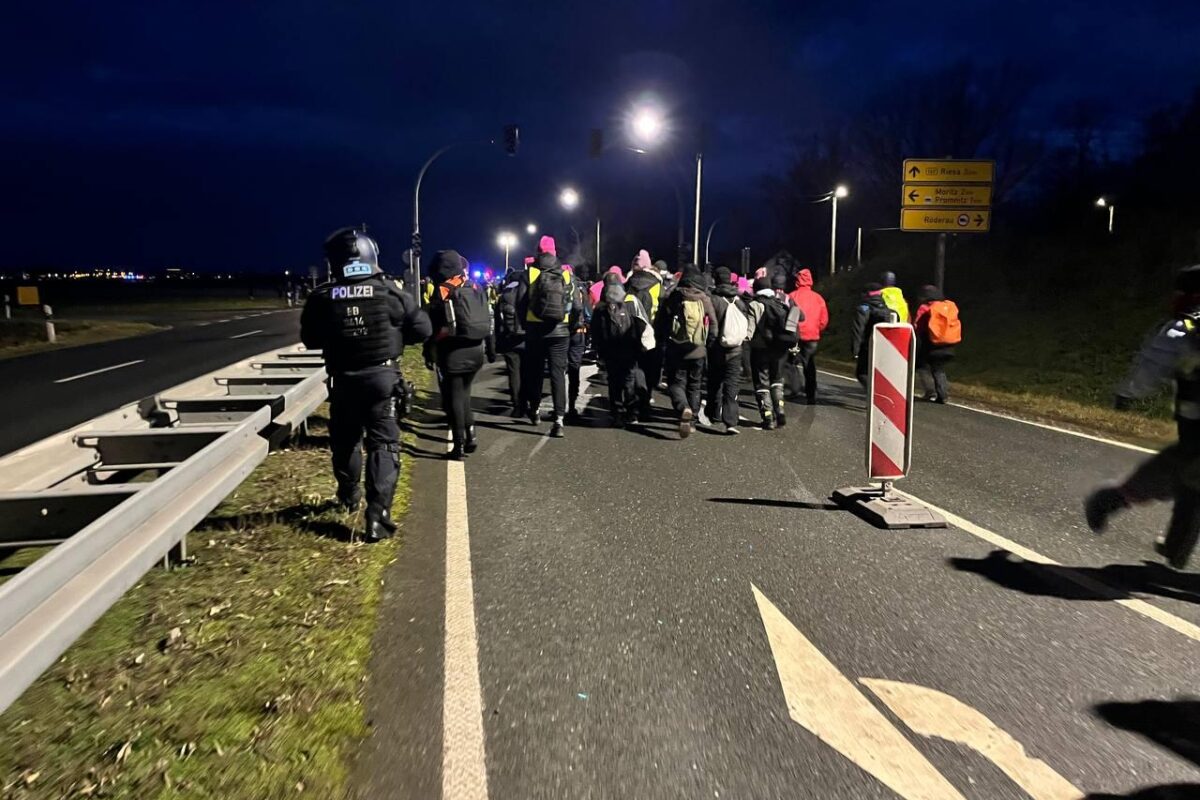
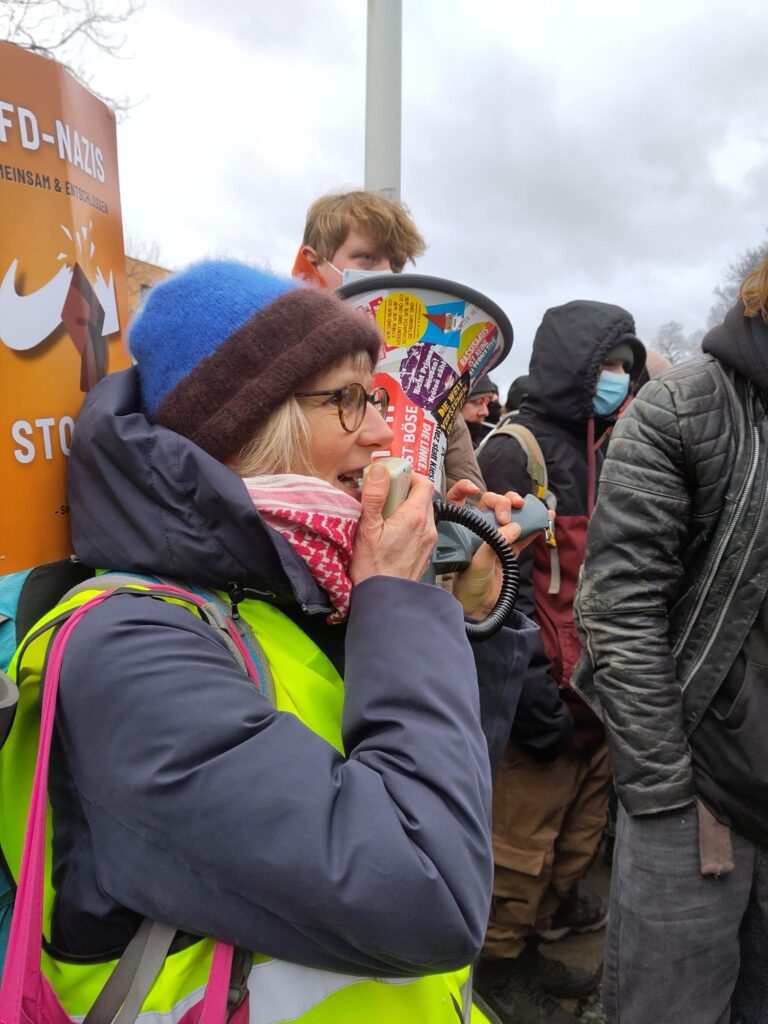
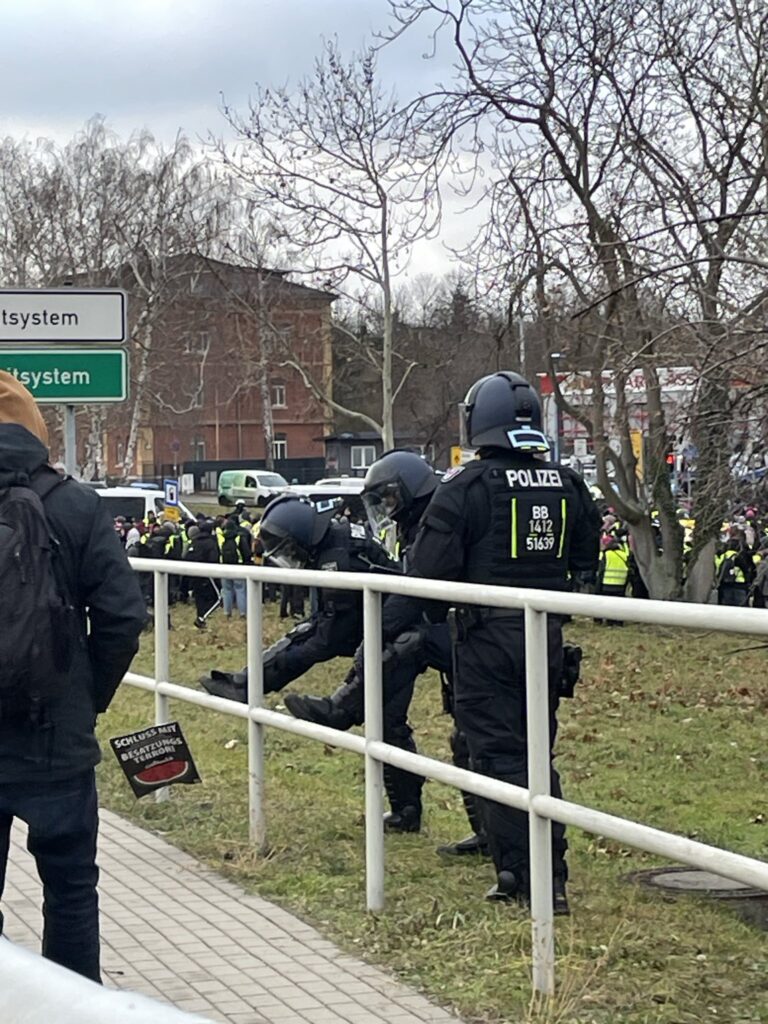
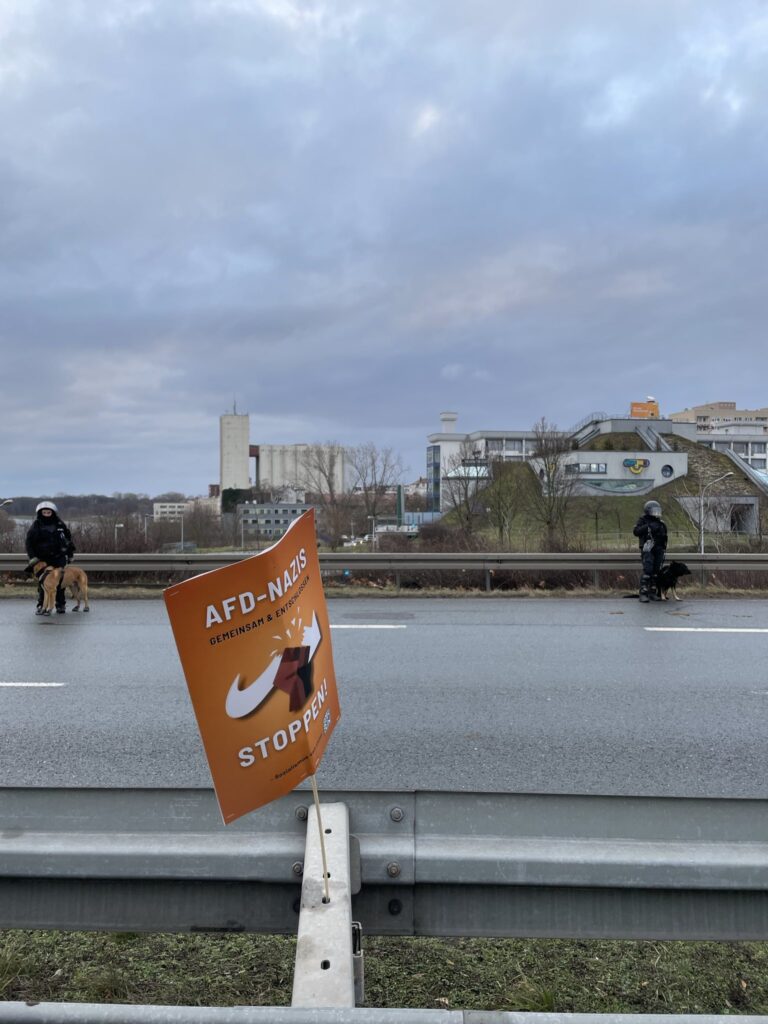
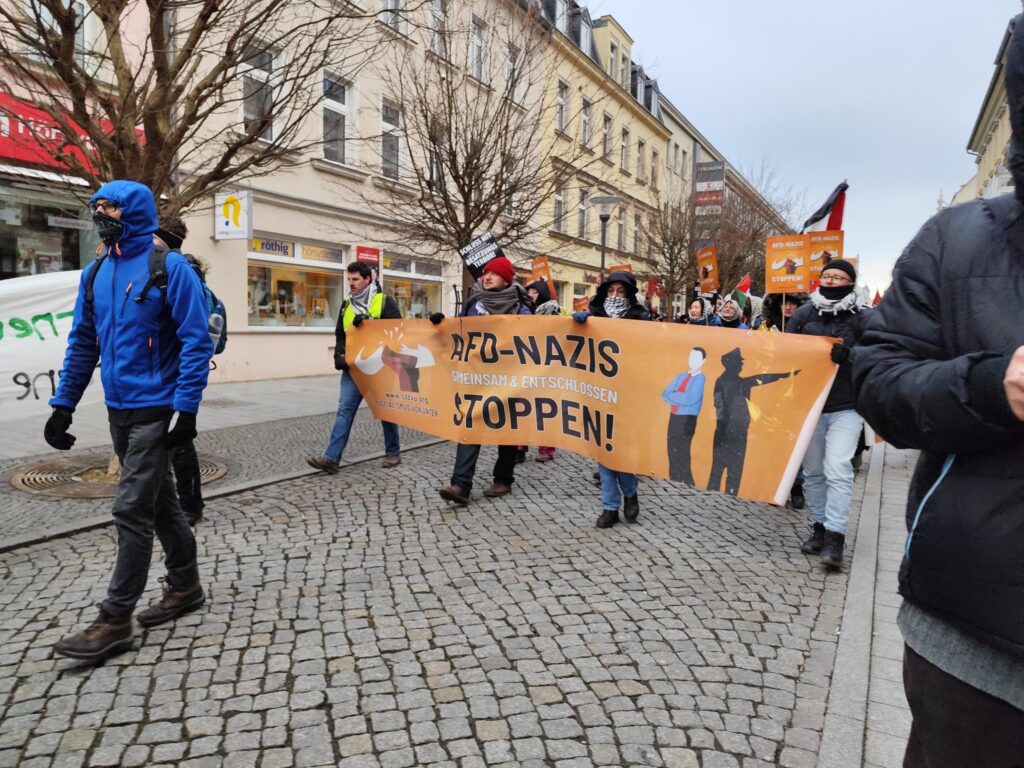
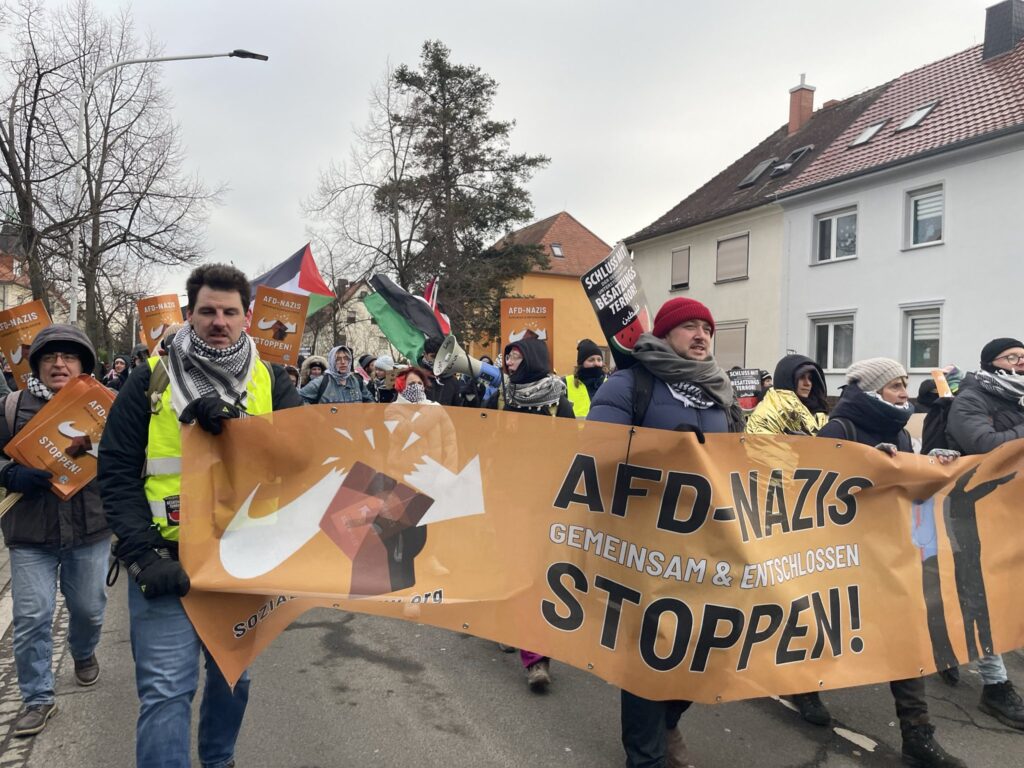
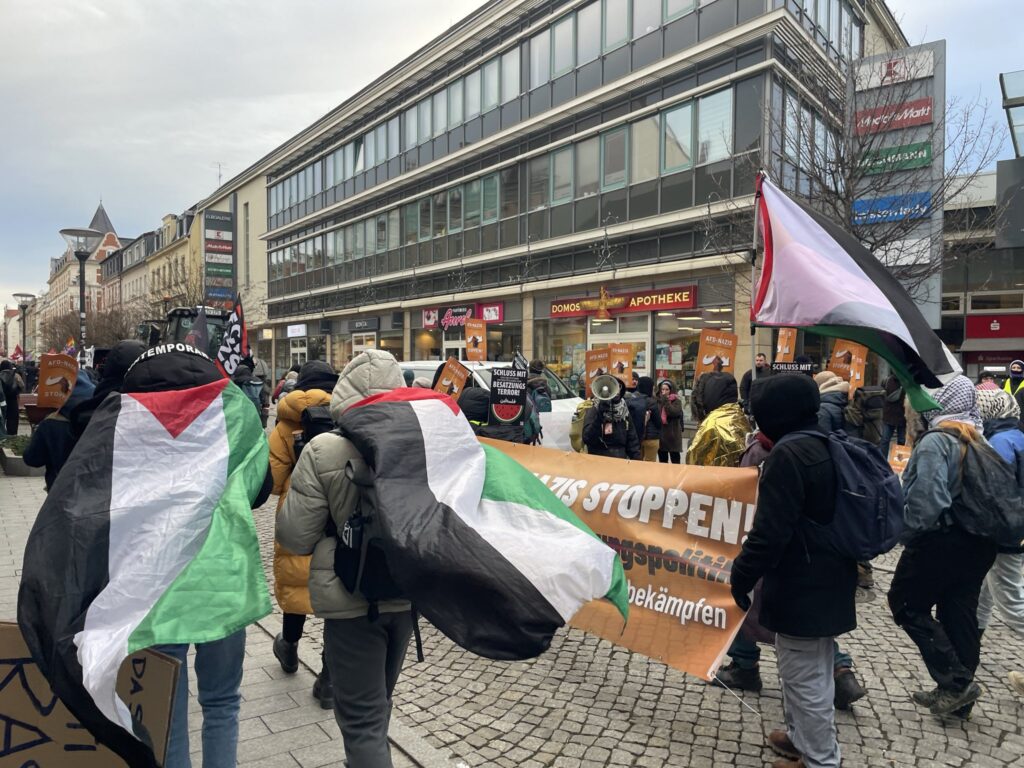
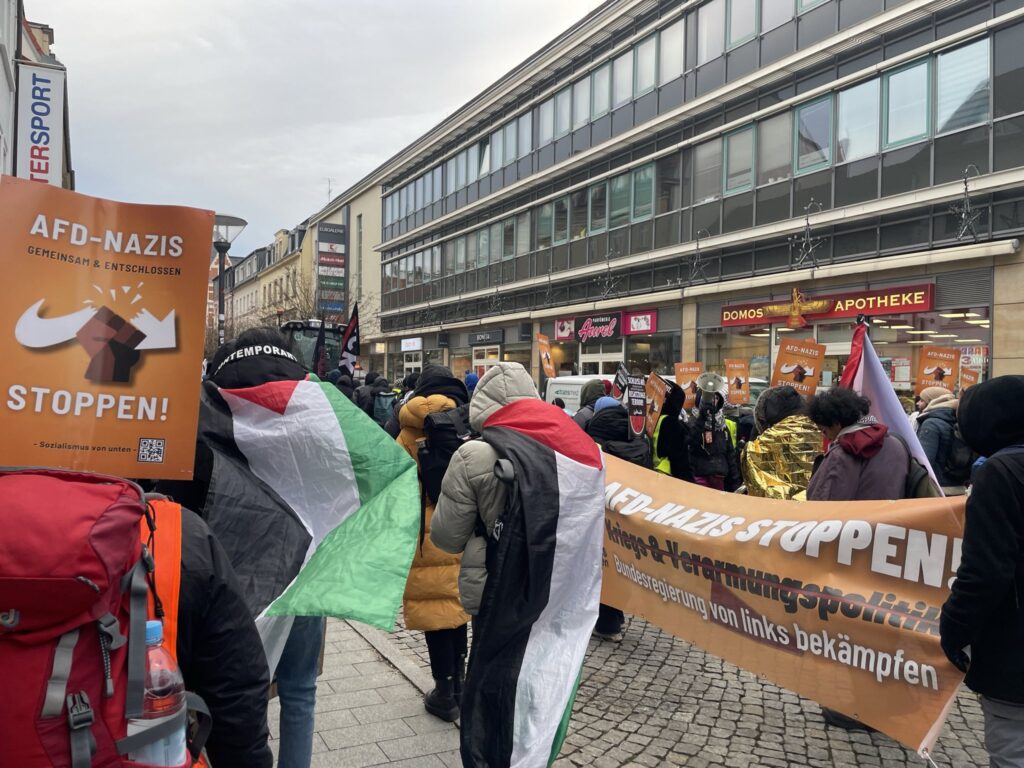
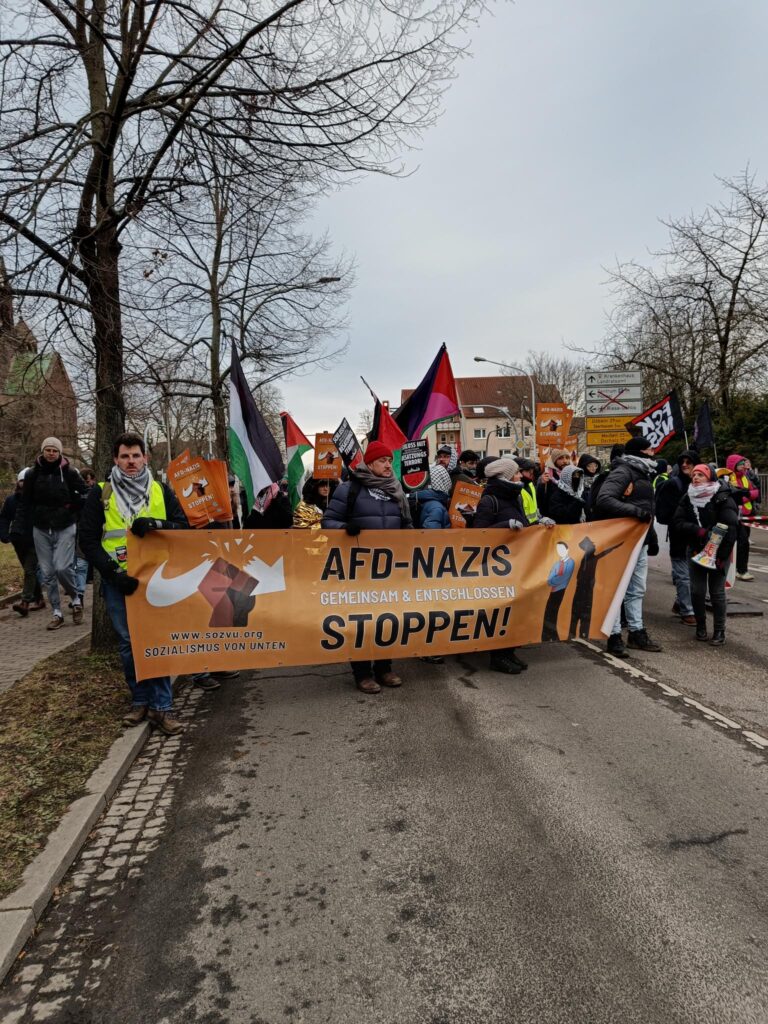
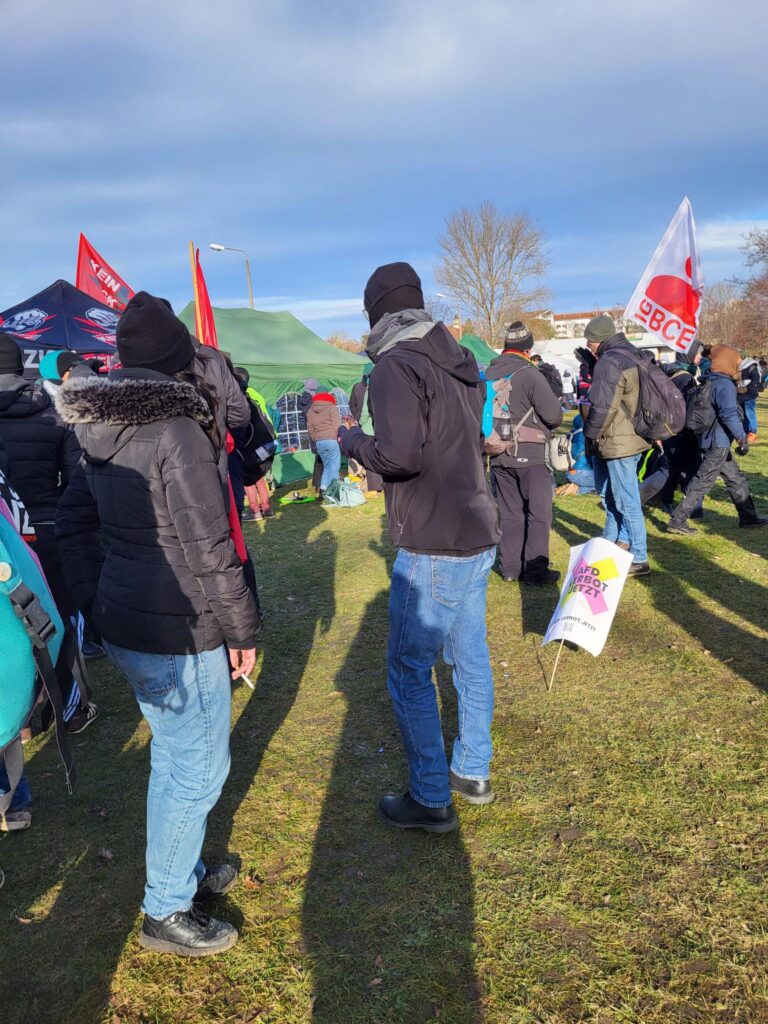
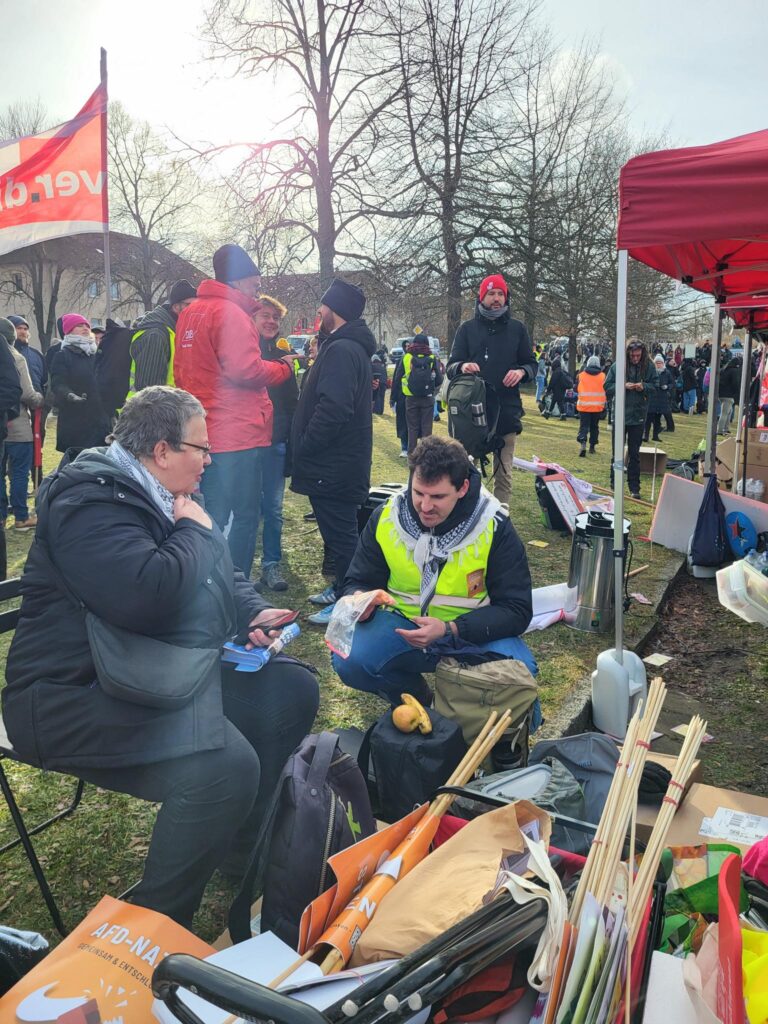
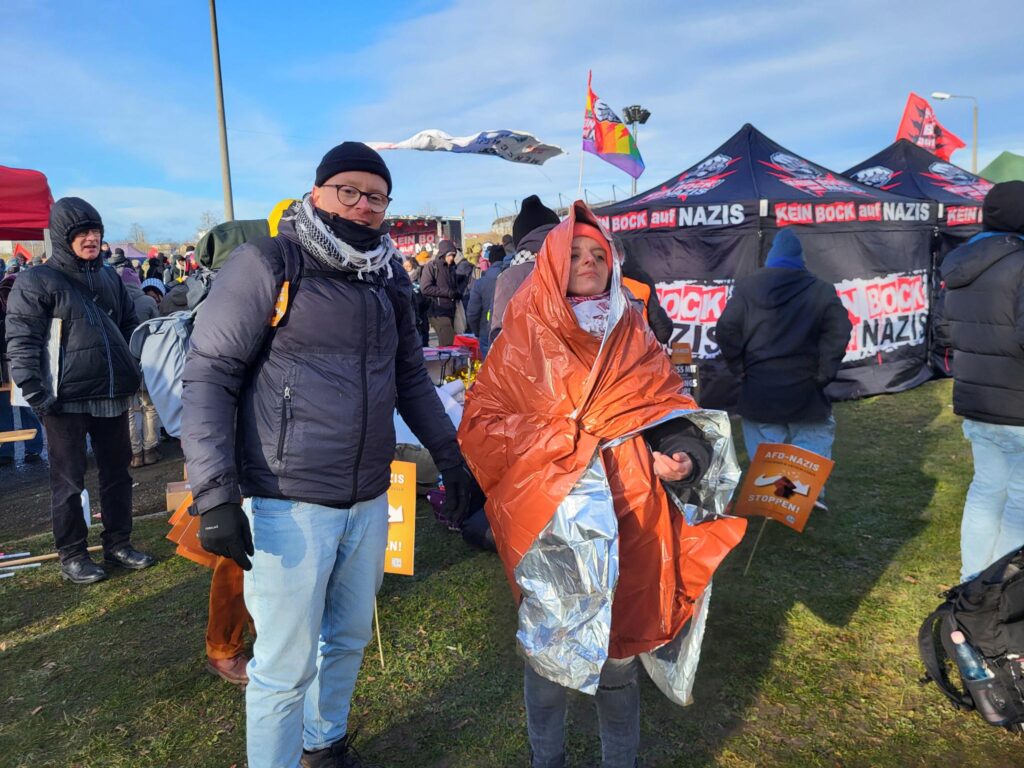
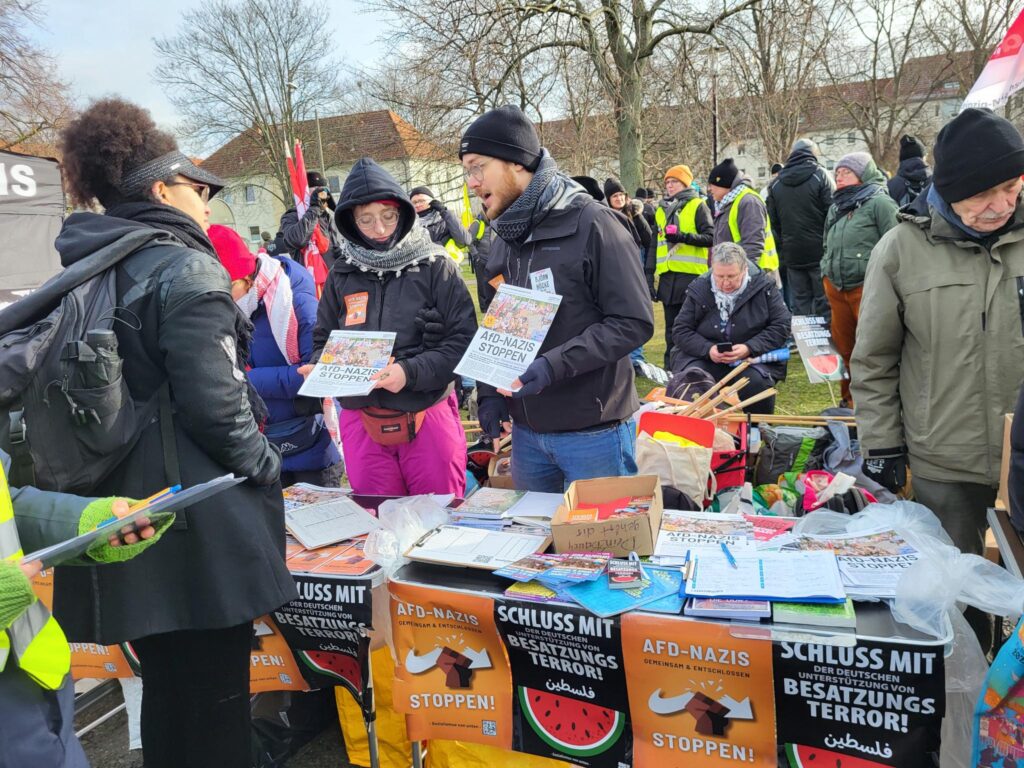
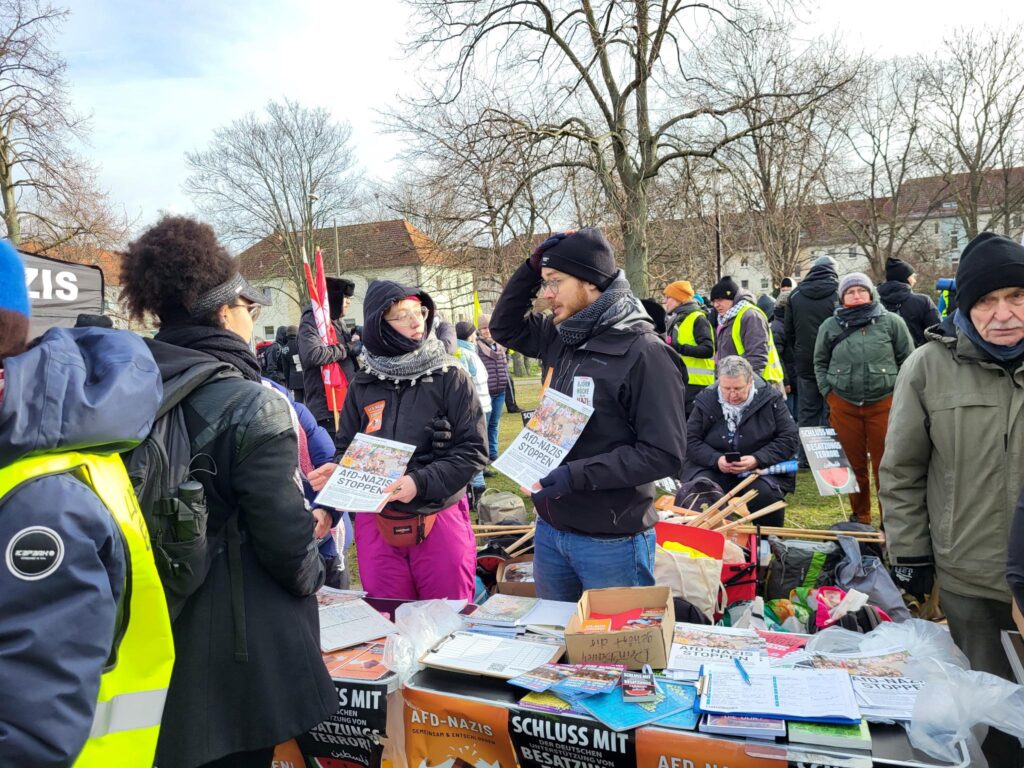
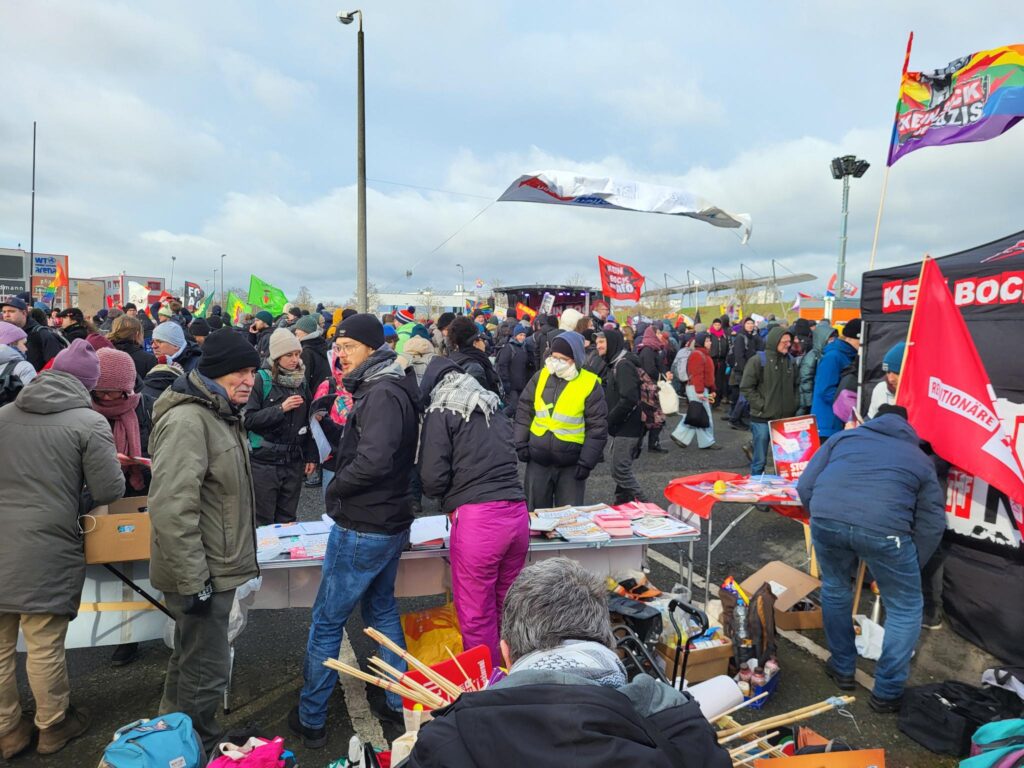
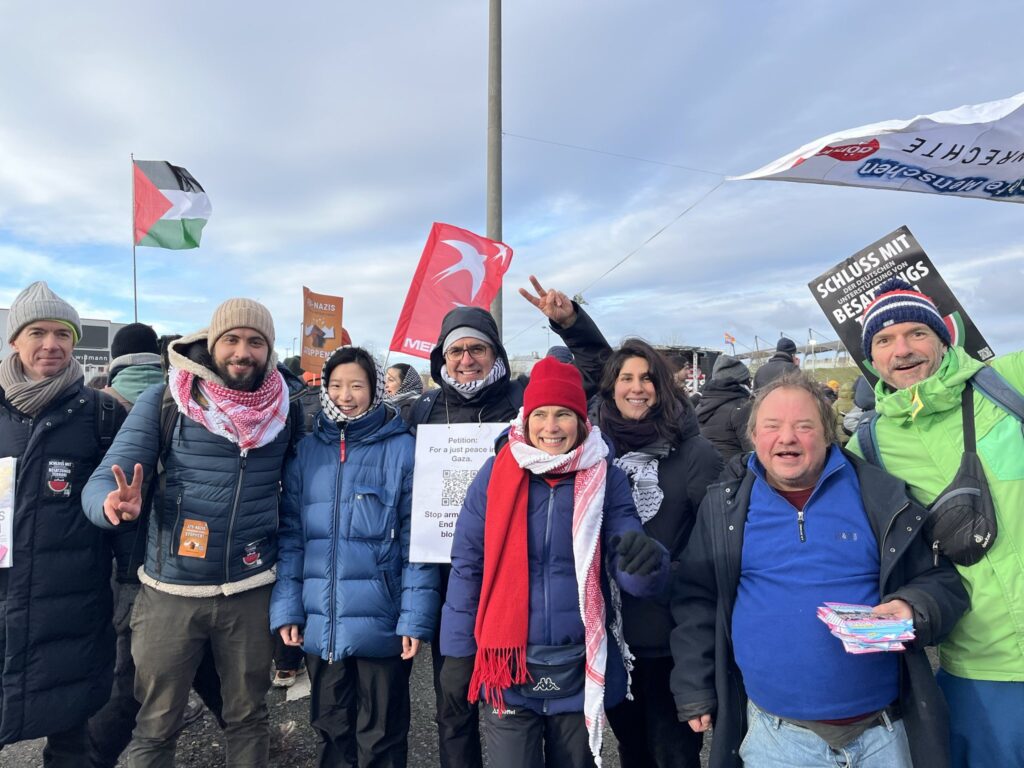
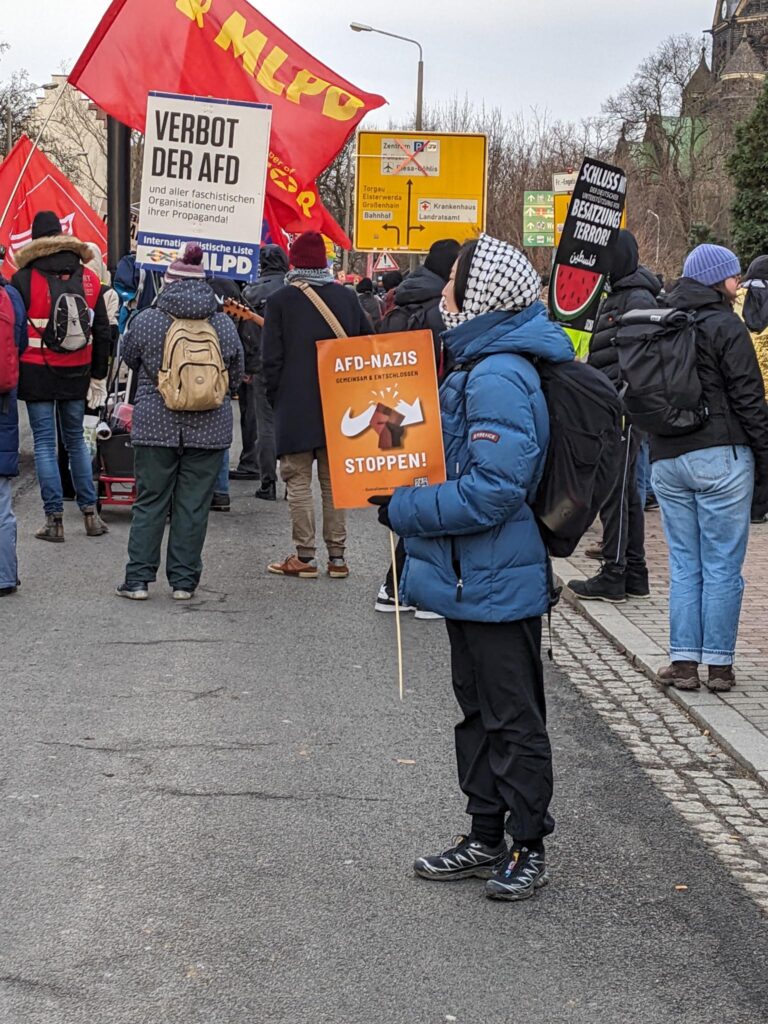
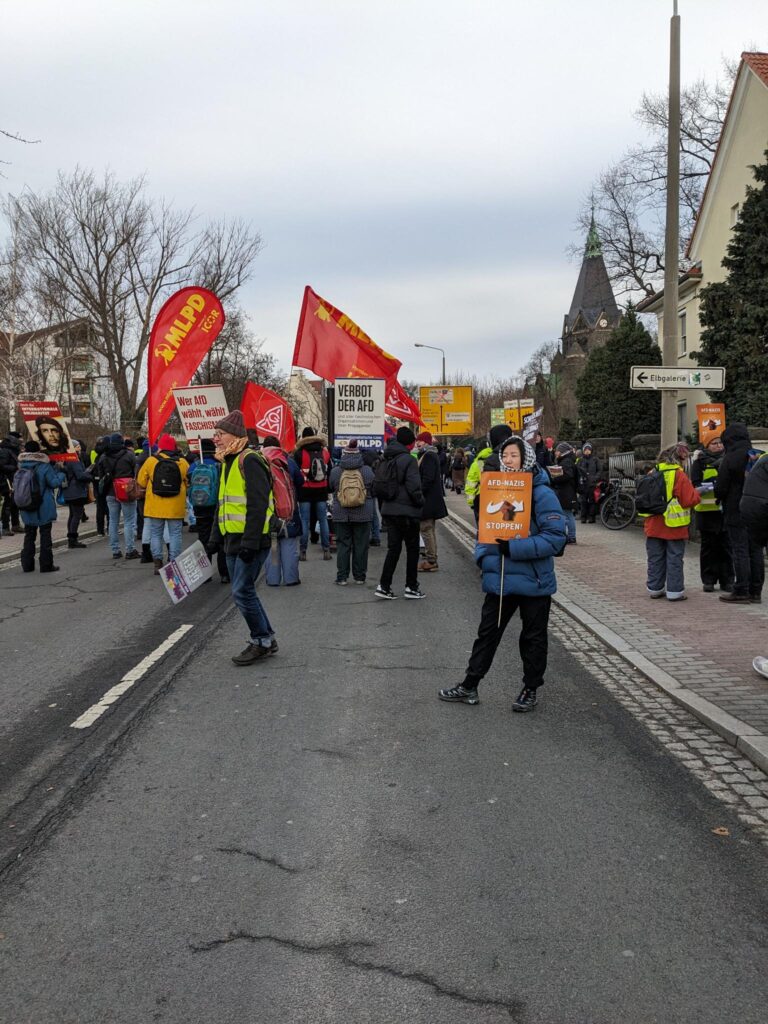
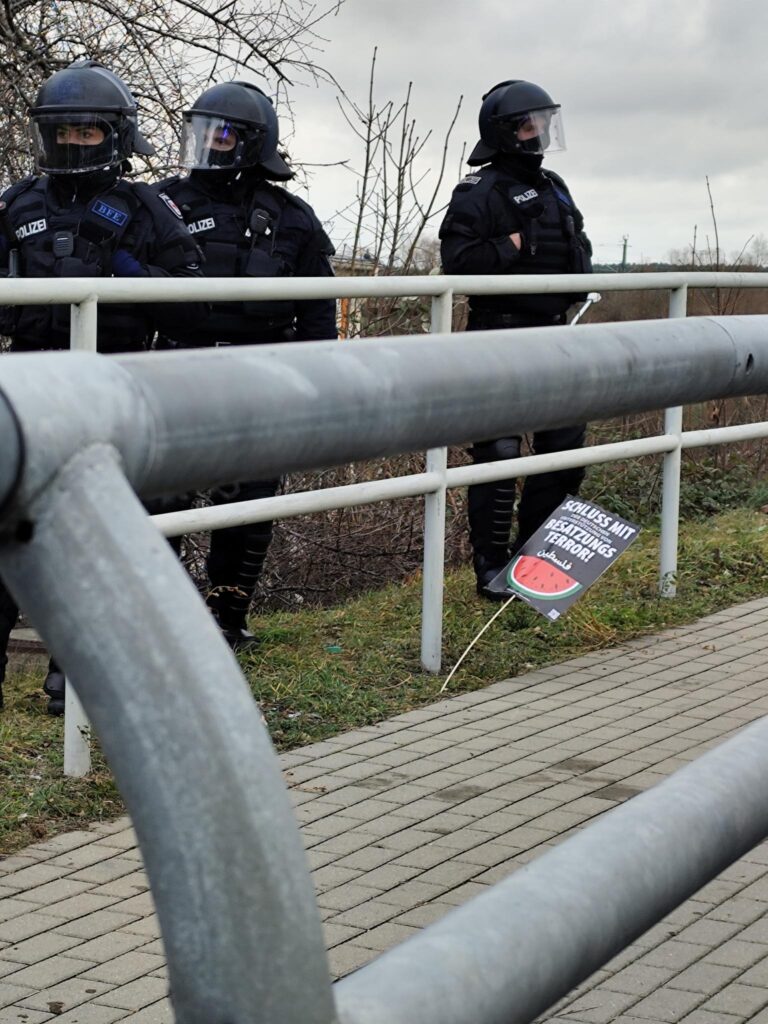
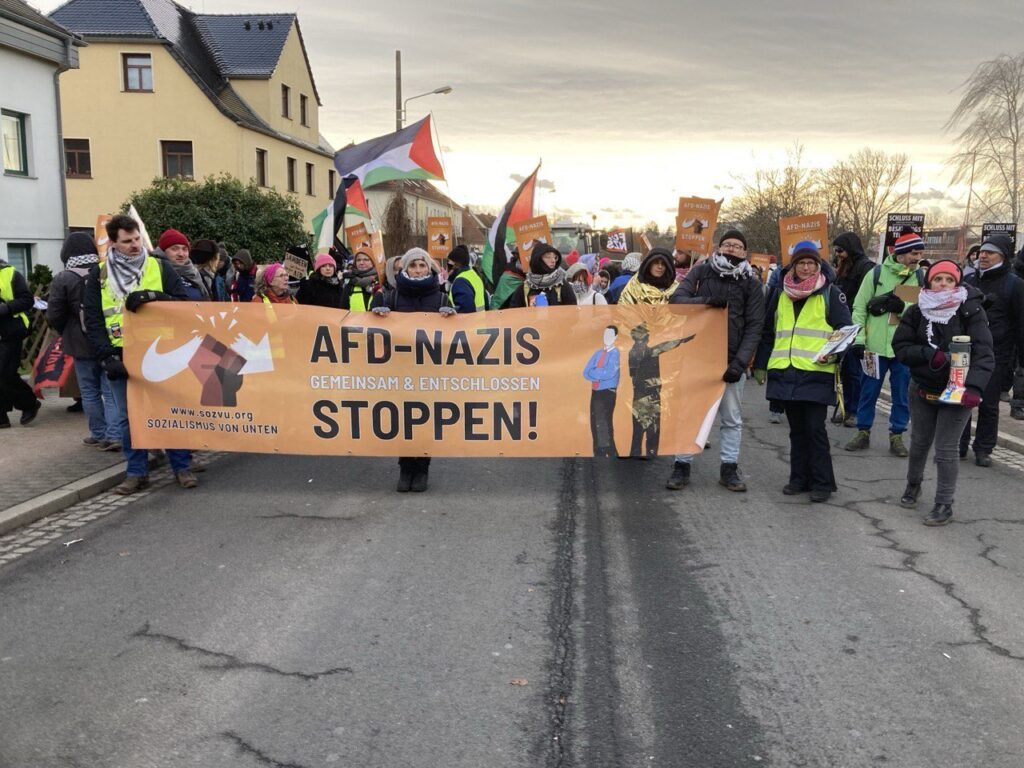
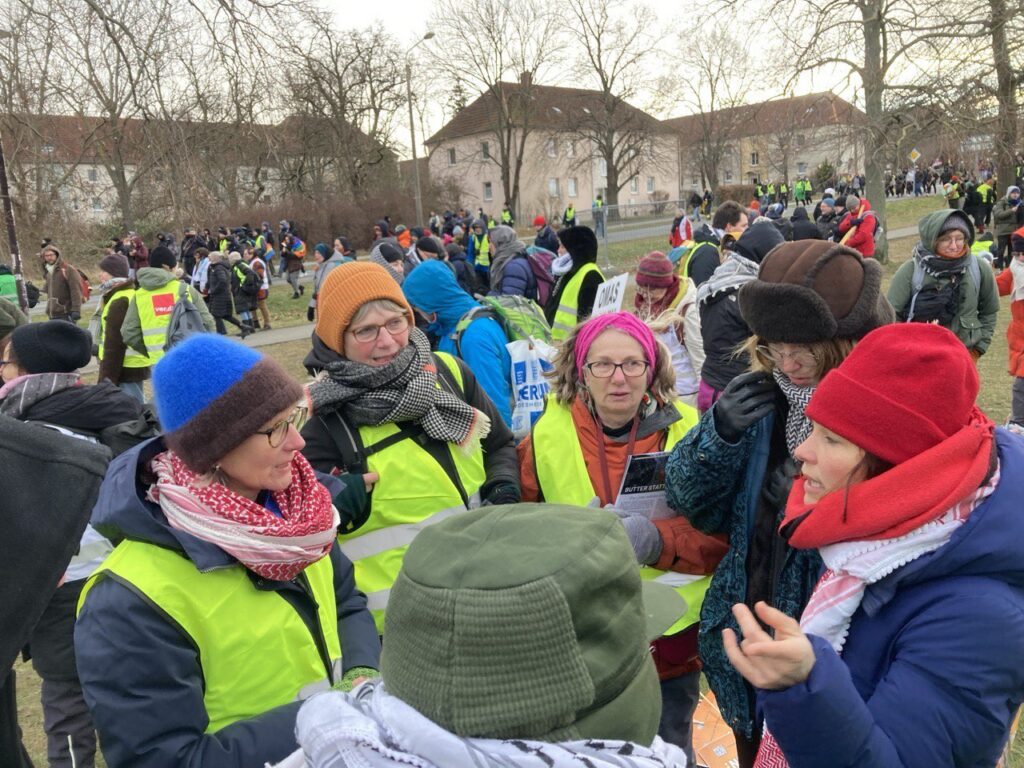
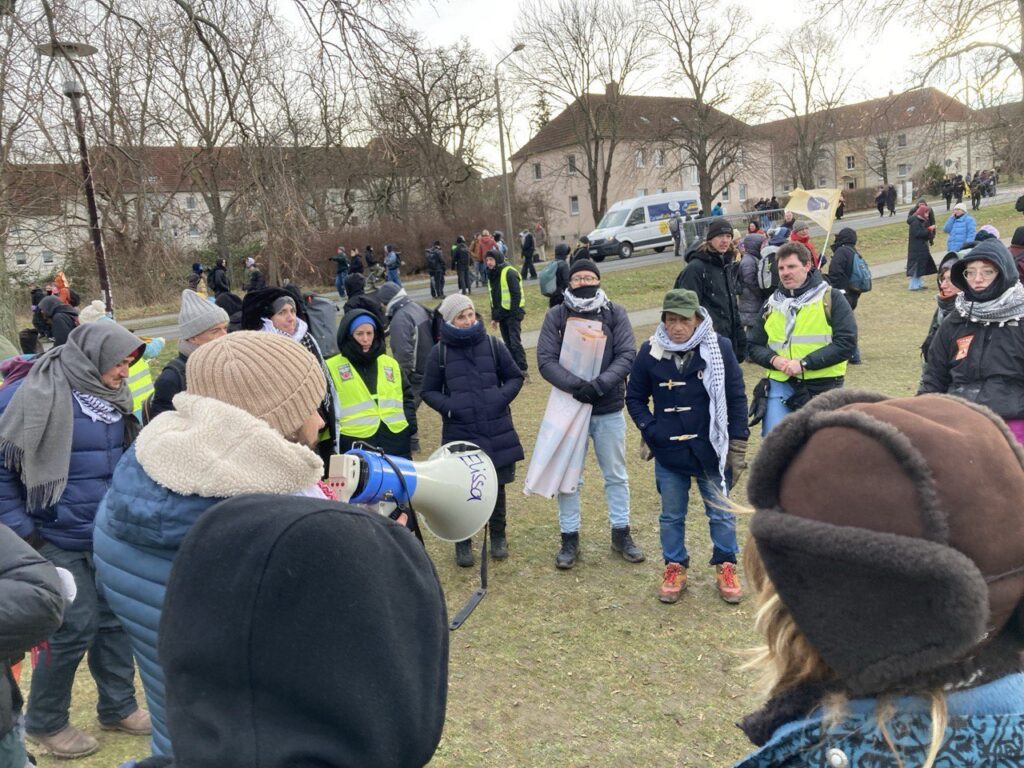
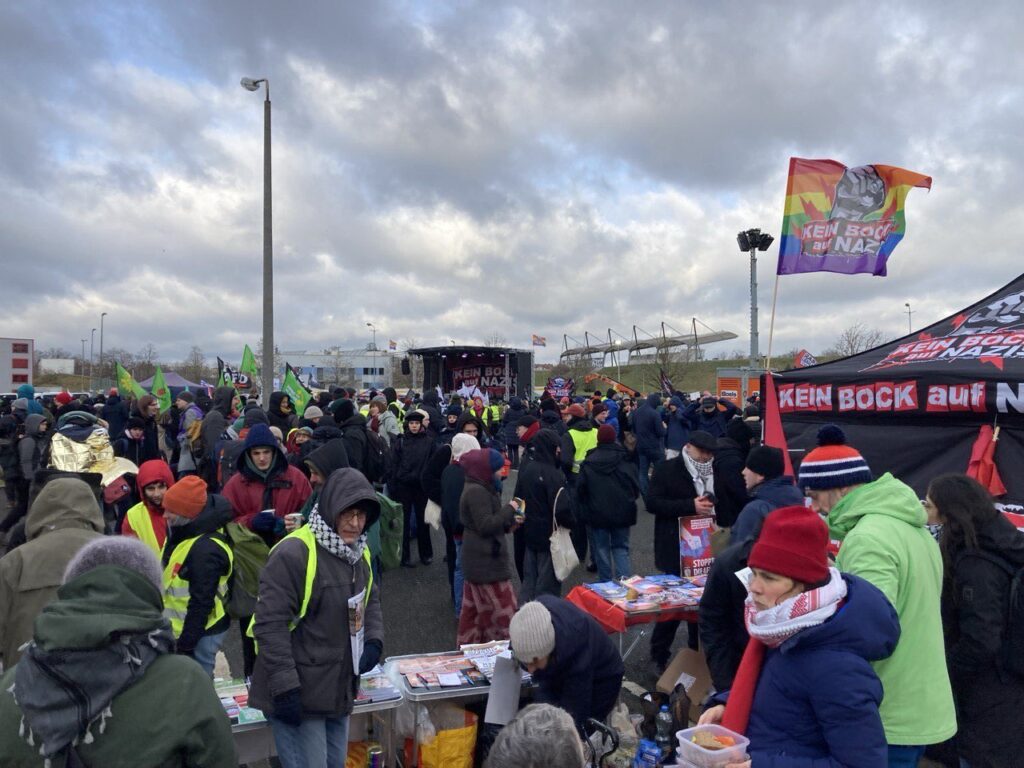
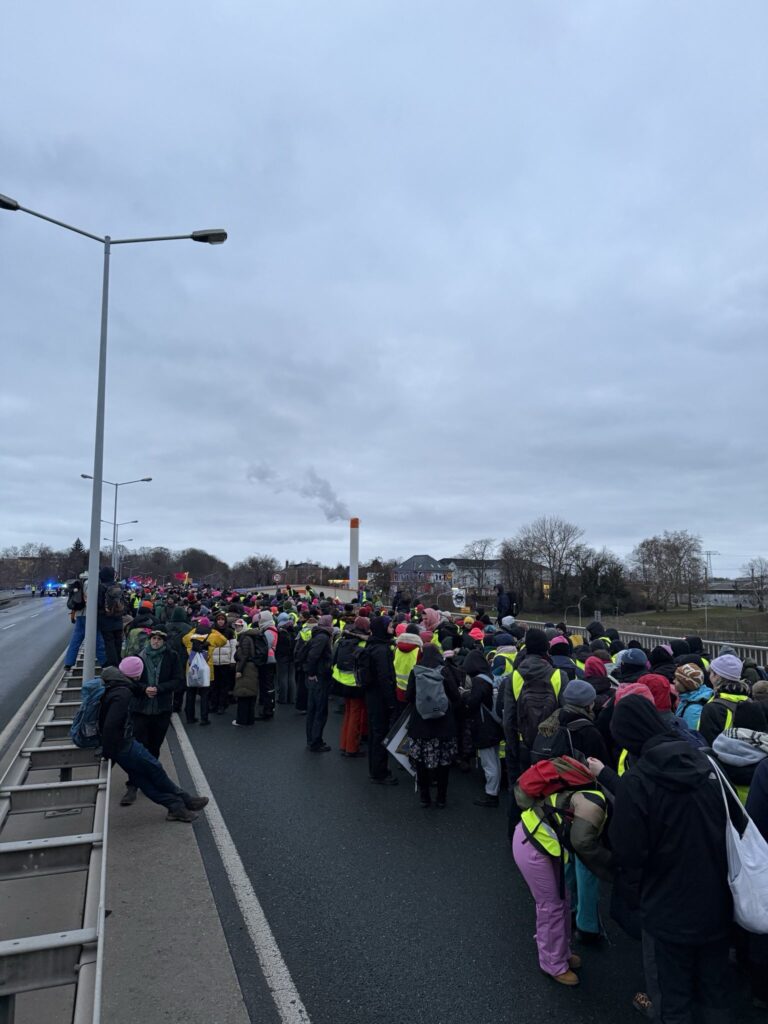
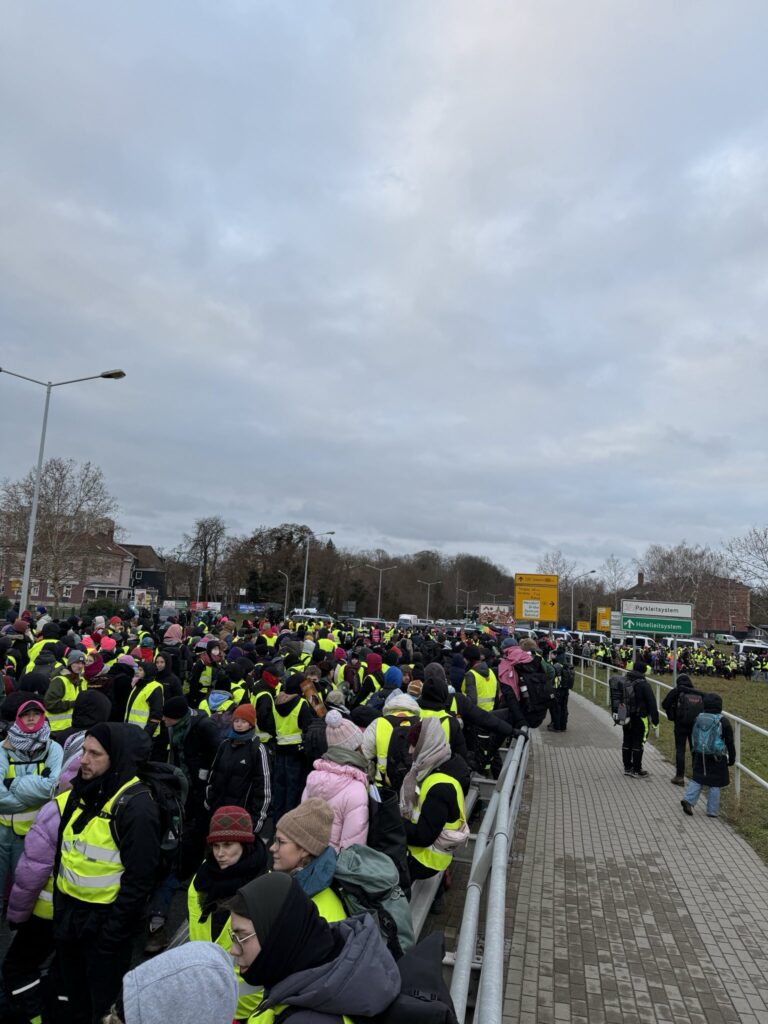
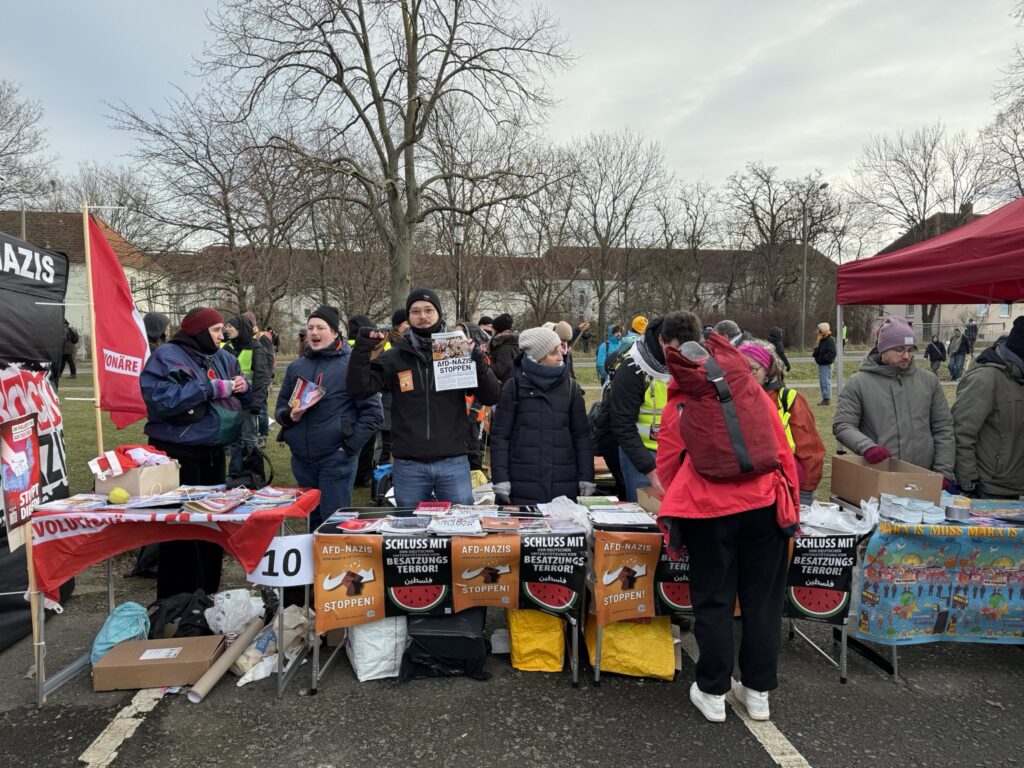
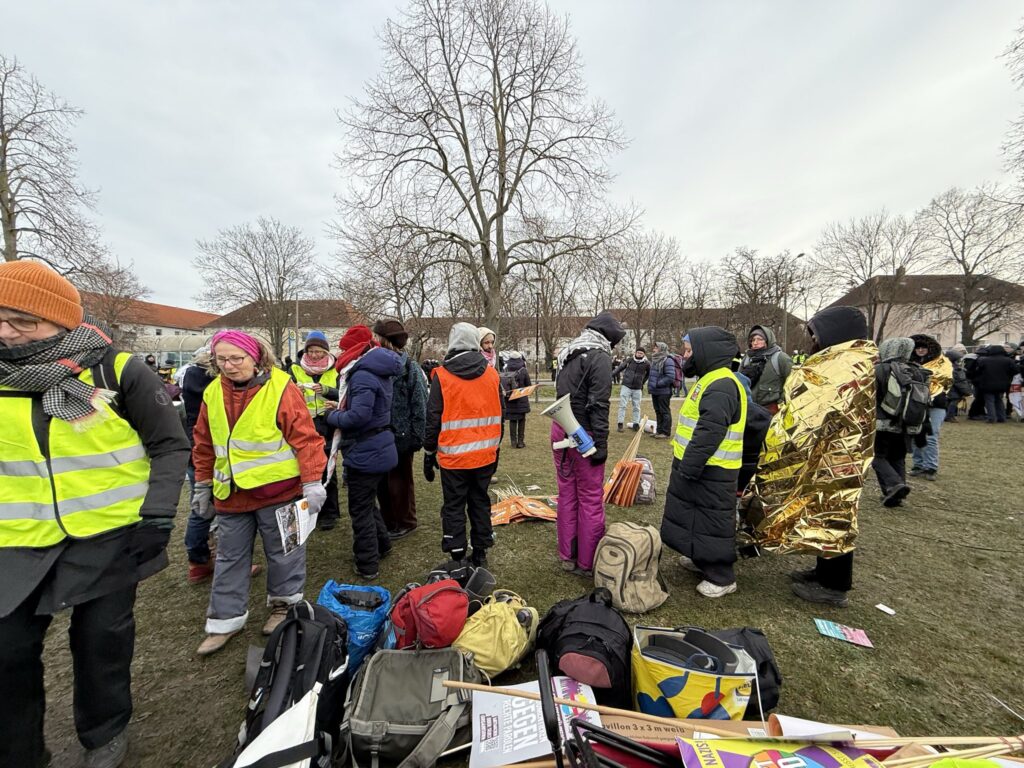
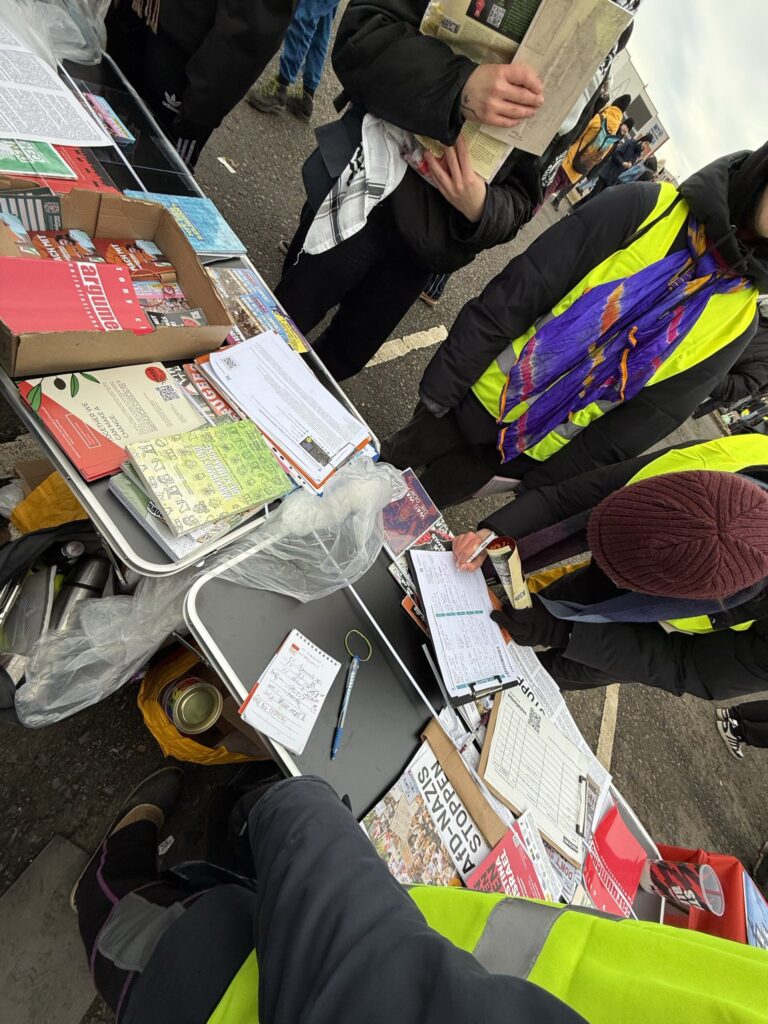
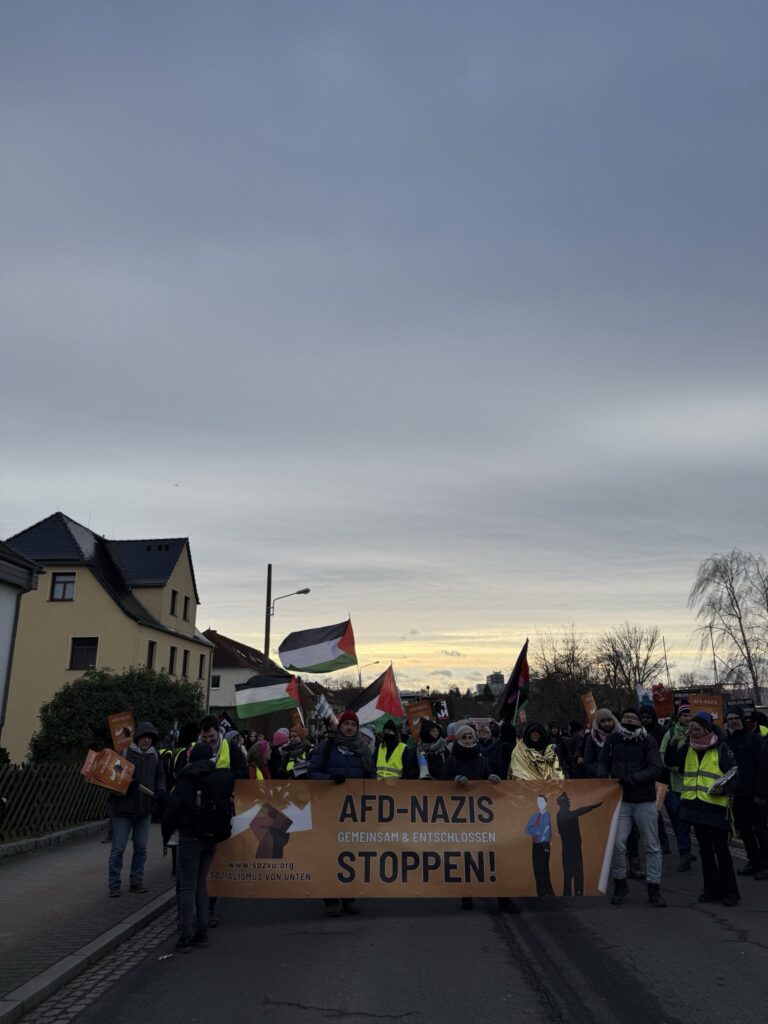
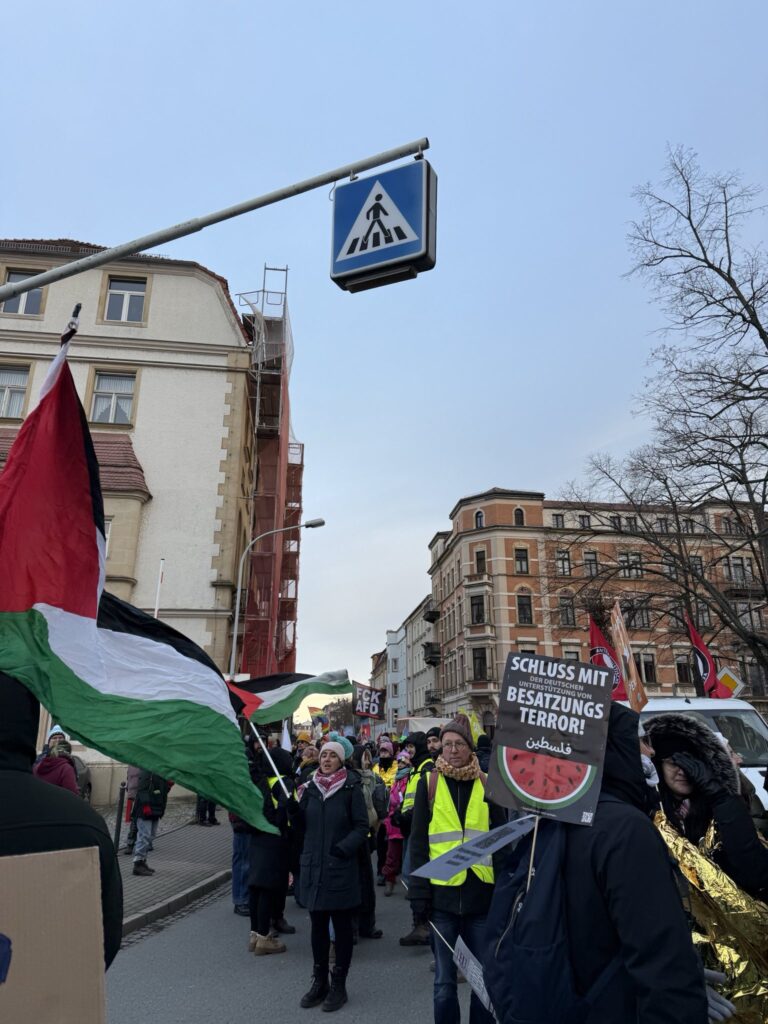
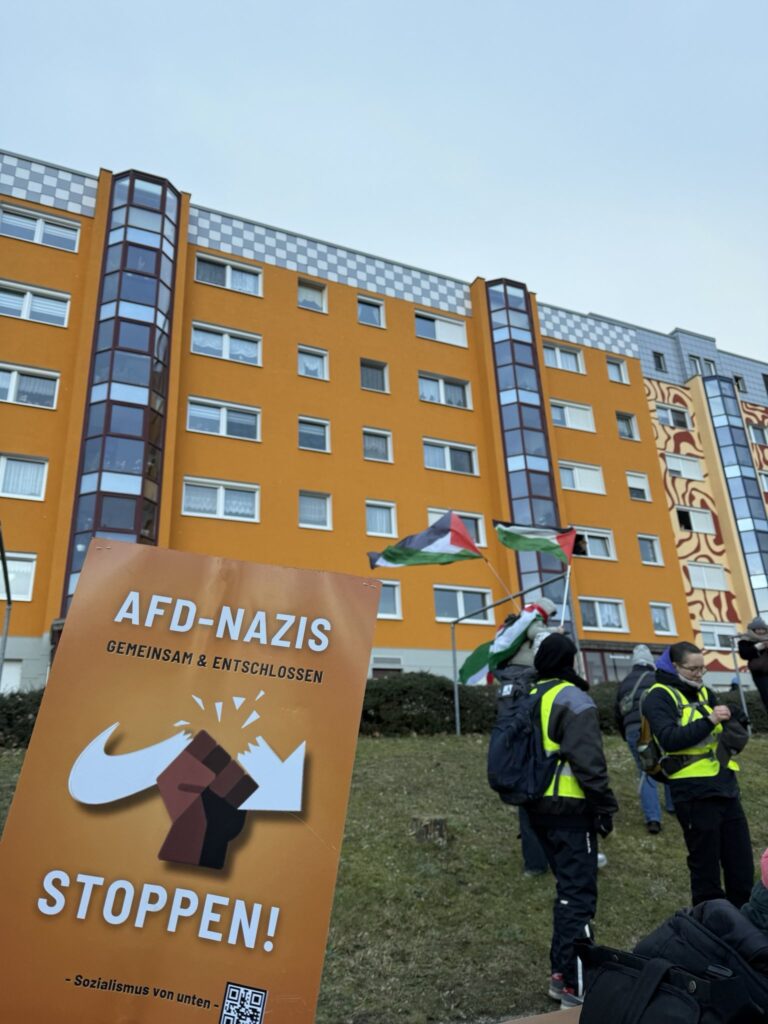
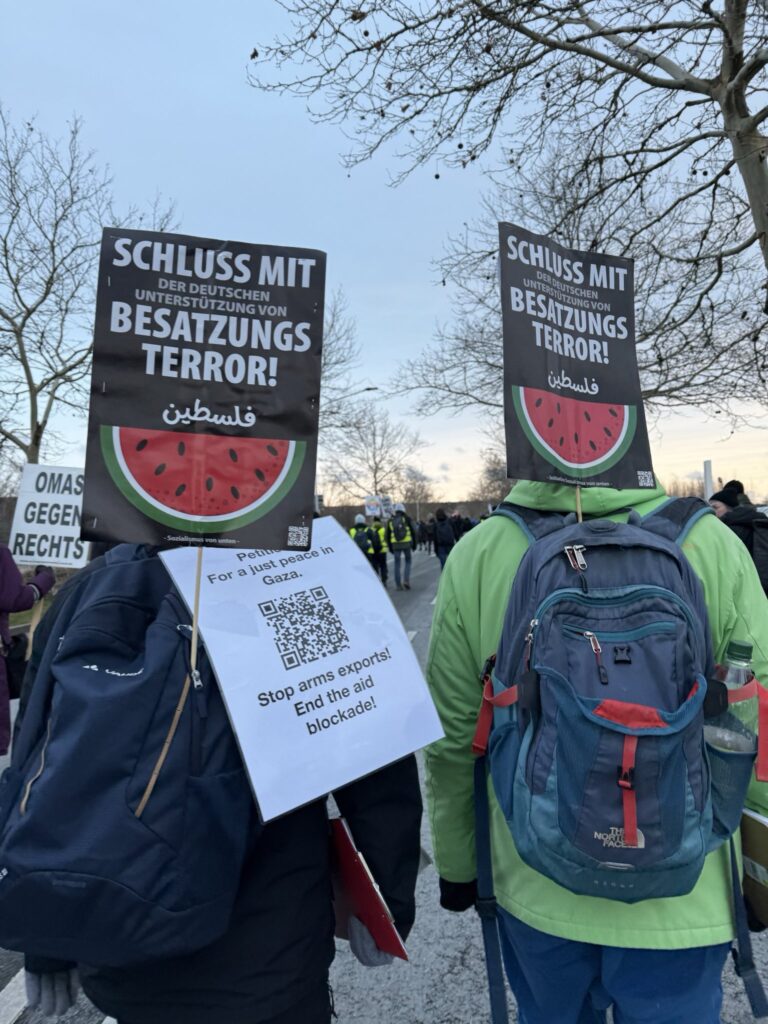
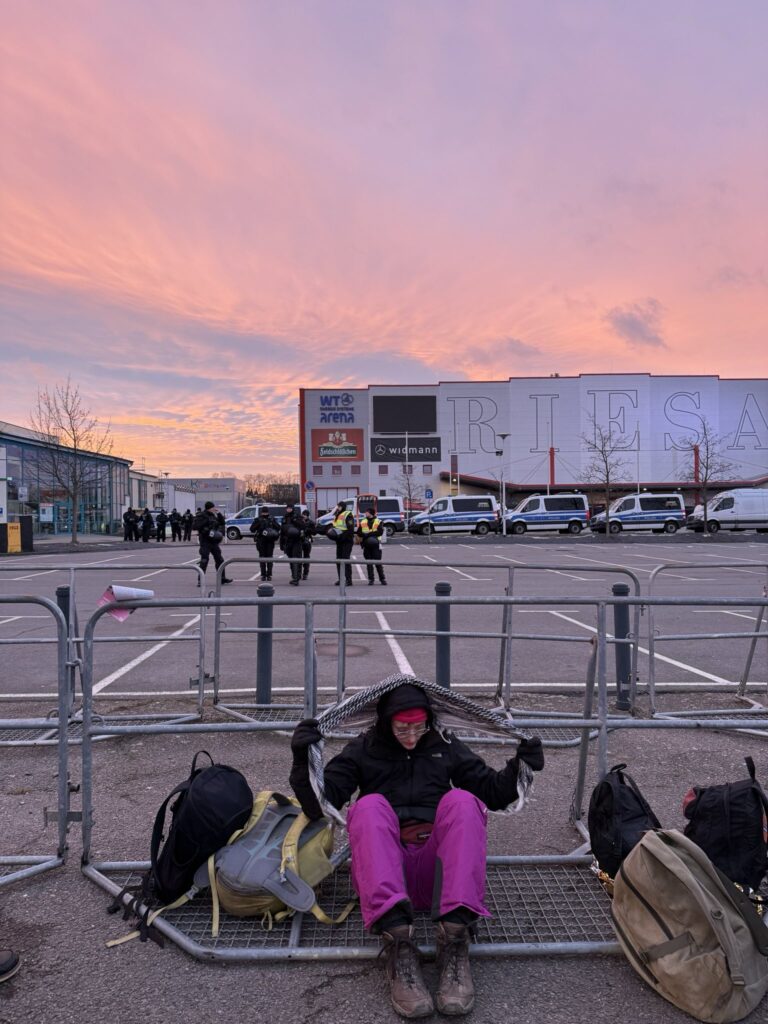
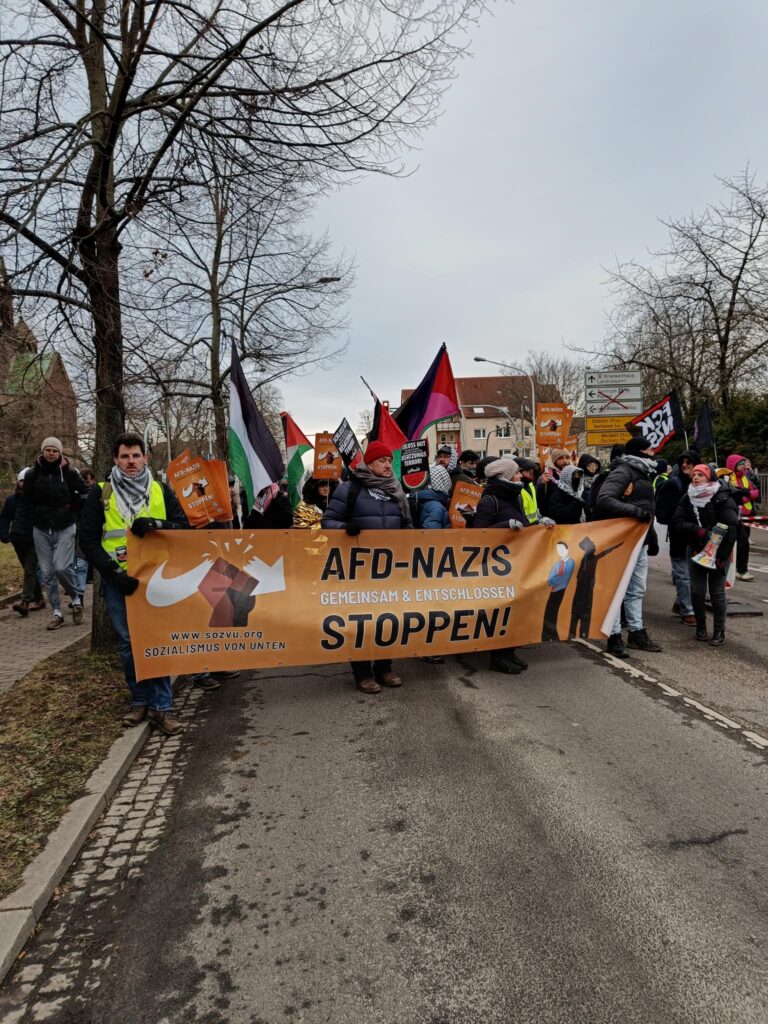
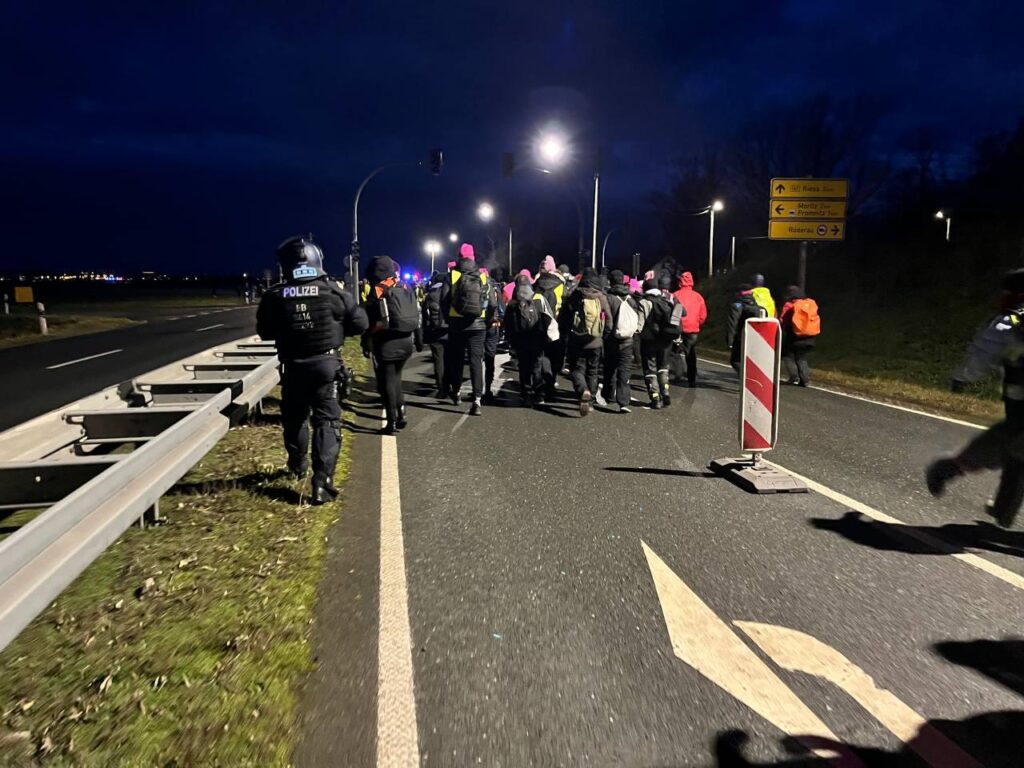
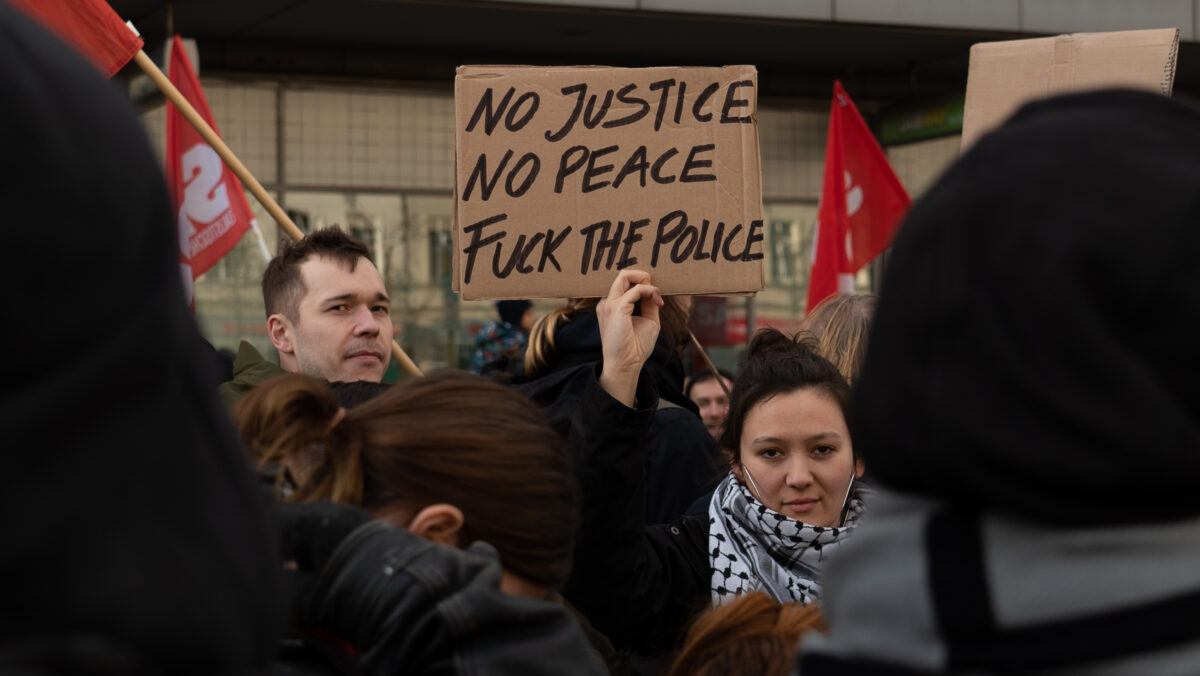
Photo and Video Gallery – Demonstration Against the AfD National Conference

Riesa, 11th January 2025


12/01/2025

Photos and Videos: Mitchie B, Bastian, Zoe Blumberg, Nilda Cebiroglu, @Gewerkschafter4Gaza, Ina, Kerstin, Christian Limber, Regina Sternal, Leon Whitehead, and others.

A Social Worker Running for the Bundestag

With the German elections coming up on February 23, the parties are trying to outdo each other with ever more extreme racism and militarism. Inés Heider is running in Friedrichshain-Kreuzberg on a platform of fundamental opposition to capitalism


10/01/2025

As the German elections approach, each news cycle breaks new taboos. The far-right AfD is predicted to come in second with around 20% of the vote. The conservative CDU, meanwhile, is continuously plagiarizing from the AfD’s program: Friedrich Merz wants to revoke German citizenship from “criminals.” Not to be outdone, the Social Democrats and the Greens are talking about deporting people to Syria and doubling military spending, respectively. Sahra Wagenknecht is calling for more deportations, and even Die Linke is moving to the right, with the Left Party placing its hopes on three old reformist politicians who declare their unlimited solidarity with Israel’s genocide in Gaza.

This is the Rechtsruck, the German shift to the right. Slogans used by the fascist NPD (National democratic Party of Germany) just a decade ago are now points of agreement across the political spectrum.

Bucking the Trend

Revolutionary socialists are trying to stand up to the Rechtsruck. Inés Heider is a social worker. Or to be precise: After she was illegally fired from her job as a social workerwork for informing her colleagues about an anti-cuts rally, she started working as a teacher. Heider is running for the Bundestag in Friedrichshain-Kreuzberg as part of an independent socialist alliance. Franziska Thomas, another social worker, is running in Tempelhof-Schöneberg, while Leonie Lieb, a midwife at a hospital, is the candidate for Munich-West.

Defying the common sense of the German bourgeoisie and its political servants, these worker-candidates are calling for a world without borders, war, or exploitation. A 14-point program includes demands for the expropriation of companies that threaten to layoff workers; for blockades of weapons shipments to Israel; and for opening the borders. 

While Germany’s bourgeois parties don’t care about people who have no right to vote — about a quarter of Berlin’s adult population! — a socialist campaign is not about maximizing votes. Instead, the point is to: educate, agitate, and organize. No passport is required to join this work. At open campaign meetings, held in German and also in English, people discuss collecting signatures and handing out fliers, but also mobilizing against the AfD party conference in Riesa this weekend.

The campaigns are getting a lot of positive feedback: people are relieved to hear there are candidates who don’t support Germany’s pro-genocide Staatsräson. These candidates are workers who don’t think politicians should earn more than nurses. If they get into the Bundestag, they don’t want the obscene salaries paid to the so-called “representatives of the people” (currently over €11,000 per month!). Instead, they would take a workers’ wage and donate the rest, about €9,000, to a strike fund. 

This alliance was launched by two Trotskyist groups, the Revolutionary Internationalist Organization, publisher of Klasse Gegen Klasse, and the Revolutionary Socialist Organization. But this campaign is a proposal to the broader radical Left: During elections, when there is heightened interest in politics, we can agree on an anticapitalist platform based on class independence and class struggle, and throw ourselves into the debates. 

Who Should Leftists Vote for?

In the last year, Die Linke has slowly collapsed, and we’ve seen an exodus of revolutionary socialist groups like Sozialismus von unten and Revolutionäre Linke from their ranks. The party bureaucracy has helped this process along, expelling the German-Palestinian activist Ramsis Kilani for his opposition to genocide. This is the context for The Left Berlin splitting away from Die Linke as well.

These splits actually present an opportunity for sincere leftists. For the last 15 years, many revolutionary socialists were embedded in Die Linke, forced to electioneer for “government socialists” who went on to take ministerial posts and carry out privatizations, deportations, and evictions. Leaving Die Linke is a first step — but we need to try to present ourselves to the masses as a political alternative to reformism. 

With elections just six weeks away, who should socialists vote for? Some will hold their nose and vote for Die Linke anyway. But this won’t strengthen the Left — Die Linke’s support for neoliberal and pro-imperialist policies actually help the Far Right present itself as an “alternative.” Some will focus on a few actually left-wing candidates of Die Linke, such as Ferat Koçak in Neukölln. Ferat is an exemplary activist — but there is no overlooking the fact that he’s running for a party led by genocide supporters like Dietmar Bartsch and Bodo Ramelow.

There is also the new party Mera25, which is very popular among Palestine solidarity activists. For standing up to German support for genocide, that party has been subject to terrible defamation campaigns by the BILD newspaper, and they have our complete solidarity. Mera25 is not a socialist party, however. It is a party founded by a former finance minister of Greece, with a program of making Europe more social and more democratic via parliamentary reforms. This is, as Yanis Varoufakis’ time in office proved dramatically, a utopian and completely unrealistic program. Only an anticapitalist program offers a realistic chance of stopping the shift to the right.

This is I think why I think readers of The Left Berlin should support the socialist candidacies of Inés Heider, Franziska Thomas, and Leonie Lieb. These campaigns can be a contribution to making the anticapitalist and socialist Left visible in a time when all German parties are rapidly shifting to the right. 

Inés’s Campaign Flyer in English