The Left Berlin News & Comment

This is the archive template

Antisemitism is a Form of Racism

An insistence that antisemitism is not a form of racism has led part of the German Left to Islamophobic conclusions


16/10/2021

It may seem logical to an international audience that antisemitism is a form of racism, but in Germany this fact is contested. For decades there has been an attempt here to establish a “non-racist” concept of antisemitism. In this article, I will argue why we can only understand antisemitism by seeing it as analagous to other forms of racism.

As with other forms of racism, antisemitism expresses itself in the form of hostility against a socially constructed group of people, who are ascribed certain fixed and ahistoric characteristics. As with other forms of racism, not all these characteristics are necessarily negative.

For example, compare the ideas “all Black people are good dancers / good in bed!”, or “all Asians are smart and hard working!” with the idea that “all Jews are clever / rich / powerful!”

Cultural racism

As with other forms of racism, a heterogeneous group of people is racialized – defined according to unspecific vague characteristics – and homogenized. As with other forms of racism, “race” here is and was an unscientific construct. As with other forms of racism, it is of no importance whether people are racialized according to biological features like the colour of their skin or are homogonized because of cultural features like religion.

People who are racialized as Black are not all part of the same “racial group”, nor even the same ethnicity. They are diverse people and groups of people who are spread across the world and grew up in quite different cultures and contexts. The colour of their skin is imprecise. What pigmentation or concentration of melanin do you need to qualify as “Black”?

“The vague biological definition of a Jewish “race” started to be replaced by the development of a cultural definition of Jewishness in the course of the 20th Century.” Are Jewish people “a nation” or an ethnicity (with many different cultures, languages, needs, traditions, nations etc.)? Are Jewish people a religious group? What about non-religious people with a Jewish background, who were also persecuted by the Nazi régime?

As with other forms of racism, antisemitism is an ideology of inequality. As with other forms of racism, antisemitism is based on the devaluation of a group of people. For example, Jewish people are primarily racialized as being “obsessed with power”, “greedy”, “cunning” and “without virtue”. They are constructed as a group with mainly negative characteristics.

Antisemitism and conspiracy theories

As with other forms of racism, it would be wrong to depoliticise antisemitism. As with other forms of racism, antisemitism is accompanied by real power relations, and not by those imagined in the heads of racists.

As with other forms of racism, antisemitism can be accompanied by conspiracy theories in society. But not all conspiracy theories are antisemitic. Not all conspiracy theories are somehow racist. But such connections exist because both conspiracy theories and racist ideologies project real social problems onto an abstract, poorly defined group.

As with other forms of racism, with antisemitism the racified can be construed as the “secret ruling elite”.

Look at anti-Chinese conspiracy theories of the “yellow peril”. [Leaning on] this theory, secret Covid-19 viruses were cultivated in laboratories. In addition, Chinese “collectivism” was developed for Chinese world domination. This means that Chinese people are obedient and without individualism and think and act like a one-dimensional ant hill, allowing them to threaten “the West” with the world wide subjugation to the Chinese.

Similarly, Barrack “HUSSEIN” Obama is portrayed as a secret Muslim who was destroying the USA from the inside, Angela Merkel in a headscarf is secretly planning the abolition of Christian holidays, strengthening Islam and carrying out a population exchange with Muslims. According to these theories, Muslims are carrying out a “Jihad in three phases”, in which – thanks to their skullduggery (“Taqiya!”) they can gradually infiltrate and subjugate Western society, etc.

Sometimes these anti-Chinese and anti-Muslim conspiracy theories are also accompanied by antisemitic theories. The population exchange is being planned by Jews, in order to “racially mix” and “stupify” Germans.

For many fascist groups, antisemitism has long served as a binding ideological element. “Anti-Muslim racism is slowly growing into a tendency of becoming the main object of the new right in Europe. This manifests itself in myths growing equivalent to the Jewish-Bolshevik world conspiracy theory, for example the French myth of Islamo-Gauchisme (Islamo-Leftism).

Jewish essentialism

Even if they aren’t a unique selling point, conspiracy theories and world-explanation ideologies have been nowhere more part of a comprehensive and persistent racist world vision as with antisemitism. But this is not because antisemitism is not a form of racism.

This conceptual framework of antisemitism is a product of a material and world-historic development in Europe. As with other forms of racism, Jewish victims of racialization are not to blame for this. As with other forms of racism, a racist ideology that can be convincing and popular requires a material fixed point in the real world.

Racist ideologies require a grain of truth, even if this is tiny. In the case of the Jewish-Bolshevist world conspiracy theory, this grain of truth was the large number of Jewish people were active in revolutionary socialist organisations and movements. This was not because of any conspiracy, but a result of the structural oppression of Jewish people and their fight for liberation. Many Jewish people saw their liberation in a movement that was committed to liberating all people.

Jews as a “trading class”

Natural living conditions forced historical groups of people like the Jews in and around Palestine to trade and to have relative regional autonomy. At other times the same factors also affected Armenians, Scots and many other groups pf people.

The corresponding historically determined special position of a Jewish trading class in European feudalism helps us understand the origins of antisemitism more closely. The relatively impenetrable feudal society and the ban on Jewish people acquiring land consolidated their existence as a trading class.

Jews in antique Palestine or those in feudal Europe who wanted to become or continue to be farmers, were only allowed to enter the production process if they received a Christian baptism, or later if they converted to Islam.

Jews in antique Palestine, or those in feudal Europe who wanted to become or continue to be peasants, received a Christian baptism eventually, or later converted to Islam in this position in the production process.

The remaining Jewish trading class now served the ruling feudal class in Europe as a sort of intermediary. The Jewish trading class thus appeared to the farming class to be a concrete class, which appeared to be materially above them and that in certain phases actually was.

The ruling class of the feudal nobility used the Jewish trading class as a scapegoat whenever farmers showed hatred of the unfair conditions. The economic basis was affirmed and consolidated on the level of ideological superstructure by the feudal nobility and church.

Post-feudal antisemitism

The anti-Jewish prejudices that developed here survived feudalism. Although Jewish people had already lost their economic special role during feudalism, prejudices were shaped by capitalist crisis, continued to vegetate and were radicalised.

In Marx’s words

“people make their own history, but they do not make it as they please; they do not make it under self-selected circumstances, but under circumstances existing already, given and transmitted from the past. The tradition of all dead generations weighs like a nightmare on the brains of the living. And just as they seem to be occupied with revolutionizing themselves and things, creating something that did not exist before, precisely in such epochs of revolutionary crisis they anxiously conjure up the spirits of the past to their service, borrowing from them names, battle slogans, and costumes in order to present this new scene in world history in time-honoured disguise and borrowed language.”

In dying feudalism in and crisis-ridden capitalism in its already developed imperialist stage, additional material developments played a role in the strengthening of antisemitism. Jewish people were pried put of the last pores of the dying trading class and streamed into the capitalism labour market. They began to enter the working class, the capitalist class and the intermediary classes.

For example, in trade, they came into competition with the rest of the petit bourgeoisie. As economic crisis hit, the accompanying impoverishment and danger of social relegation of a large part of the petit bourgeoisie exacerbated this competitive struggle to a struggle to the death.

Many counter-revolutionary fascist petit bourgeois movements, above all in Germany, thus shaped antisemitism. The ideology of the NSDAP emerged from a contradictory patchwork, in which the petit bourgeoisie was also pervaded by the countless contradictions of being a disappearing class between the classes.

Antisemitism offered a unifying element which was seeped in tradition. As part of their full fascist ideology, some fascist mass movements tried to extend antisemitism before and after taking power. The fascist dual state of the Nazis offered a particularly effective instrument for this.

Antisemitism today

These world-historic developments led to the shaping of the antisemitic ideology that we still experience today. This has modified its form through later developments, but the strategic thrust has not substantially changed.

Like other forms of racism, antisemitism can radicalise itself into an ideology of extermination. Anti-gypsy racism under the NS regime also led to the planned industrial mass extermination of Roma and Sinti. German colonialism also employed exterminatory racism against the Herero. General Lothar von Trotha issued unambiguous orders to exterminate in 1904. The German were able to obliterate 80% of the Herero by direct killings and concentration camps.

We must also recognise that specific forms of antisemitism can be historically explained, as can specific forms of all other types of racism. We do not have to settle for mystifying, idealist and religious sounding answers from the established bourgeois antisemitism research in Germany.

With antisemitism there are particular ideological characteristics of phenomena which also appear or can appear in other forms of racism. Constructed “unique selling points” and “fundamental differences” of antisemitism which can be used to separate it from other forms of racism do not exist.

Dogmatic reference to such differences does not come from an ingenious German-national analysis of antisemitism. On the contrary, this is based on a fully reduced and stunted understanding of racism as a whole.

Why does this matter?

Why is this question so important for the Left in German? This sort of misdirected analysis and definitions of antisemitism hinders a joint struggle of Jewish people, and other racified people on a practical level and isolates the German Left internationally. It can also lead to a moralistic super- and subordination of antisemitism on a theoretical level. It also practically depoliticises antisemitism and gets in the way of the fight against real antisemitism.

Antisemitism remains a complex phenomenon. But those in Germany who take up the cause of the “fight against all antisemitism” are unfortunately in most cases also those who have understood antisemitism the least. If we are unable to fundamentally analyse what antisemitism is and how it can emerge, we must also fail in the fight against antisemitism.

It is not the case that these German ideologies misunderstand racism, while understanding antisemitism brilliantly. They don’t understand all forms of racism – including antisemitism. This is a big problem.


A slightly longer version of this article first appeared in German on the freiheitsliebe website. Translation: Phil Butland. Reproduced with permission

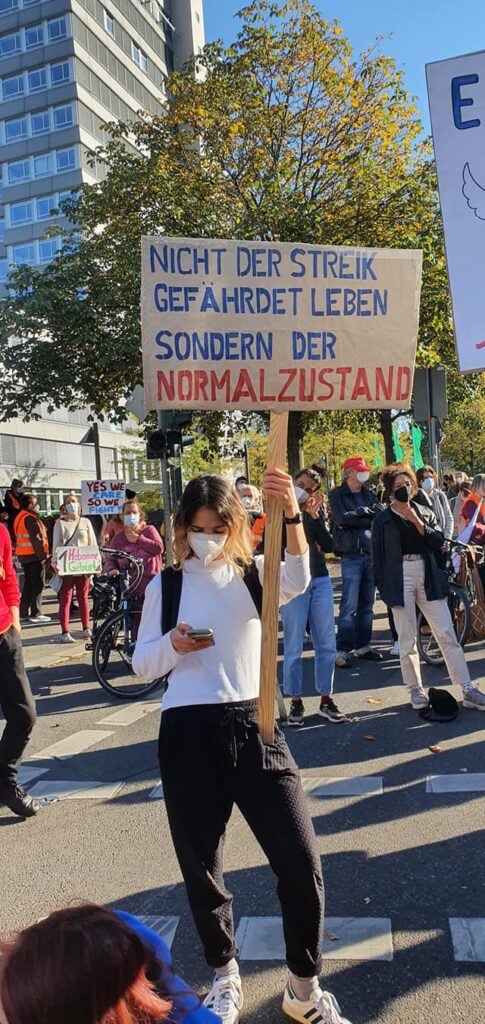
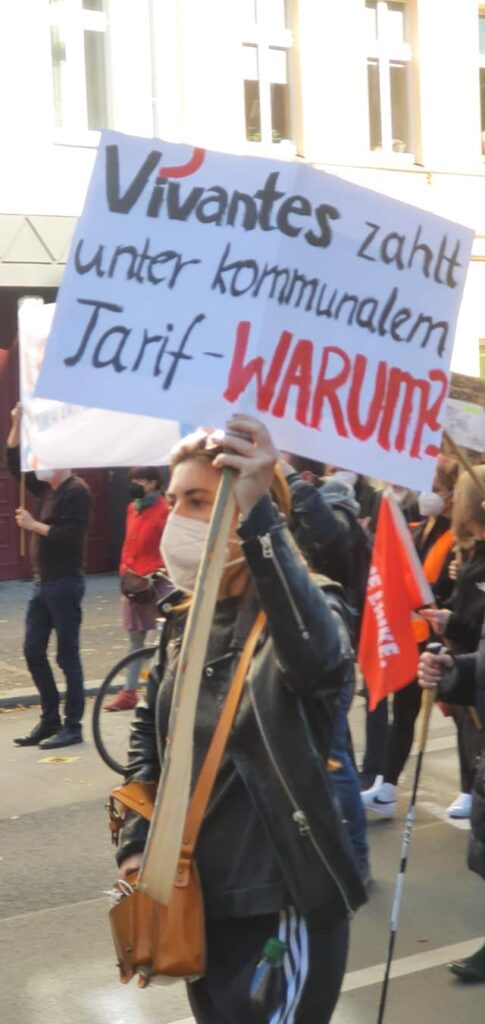
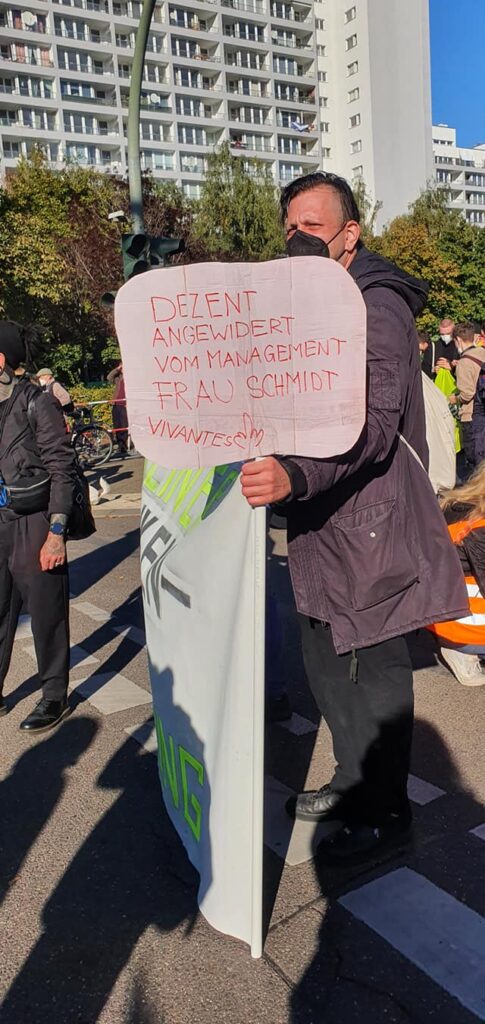
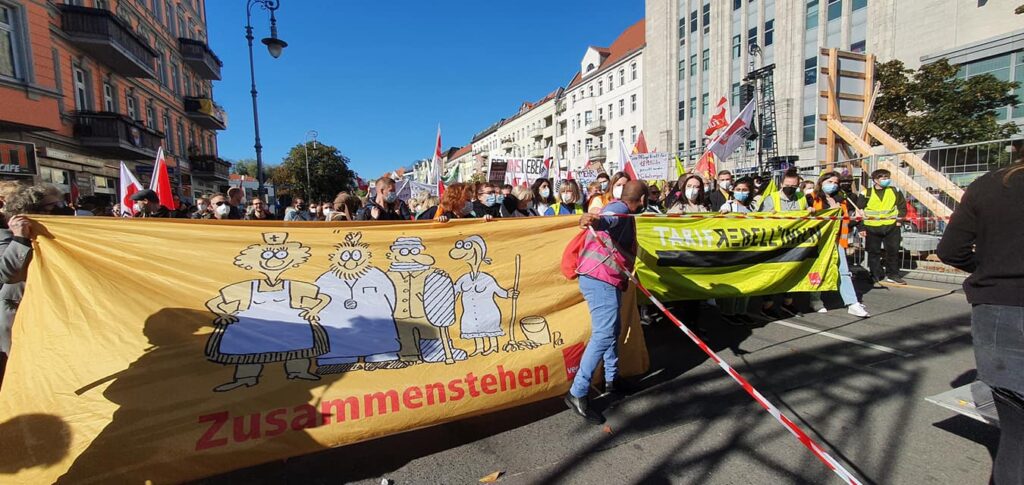
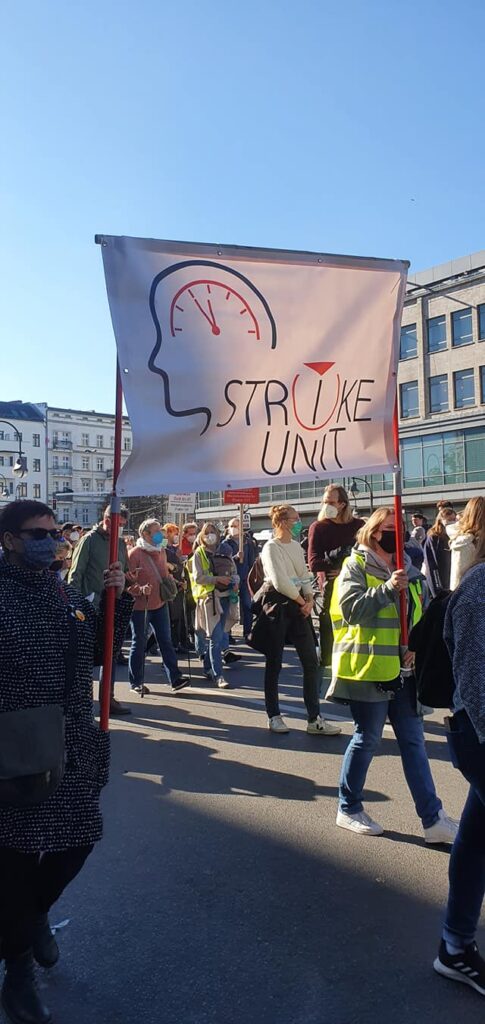
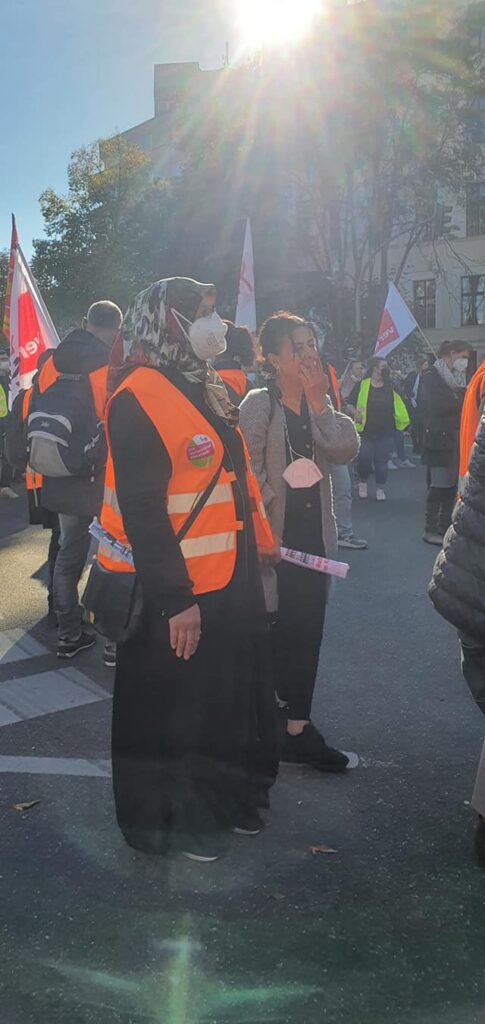
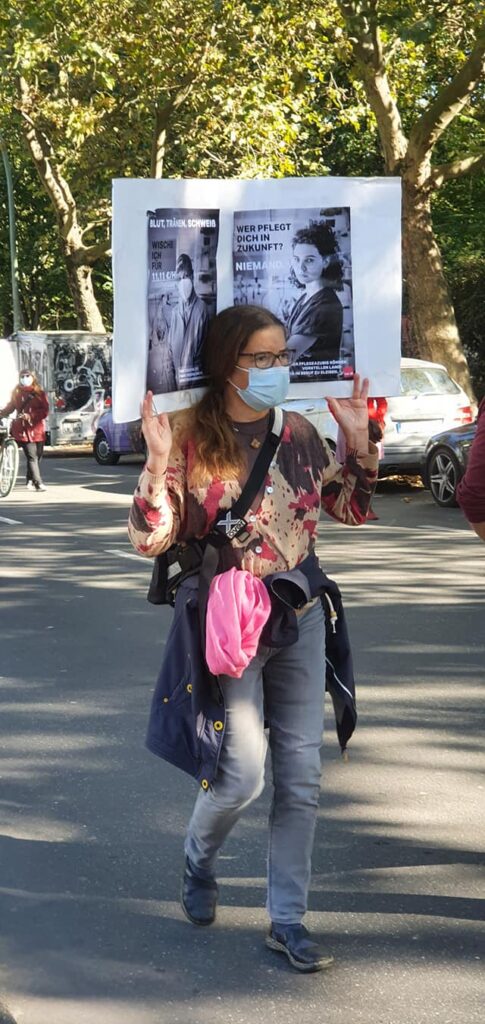
Vivantes Hospital Strike: Workers Victorious After Month-Long Walkout

An outline agreement will see nurses compensated for understaffed shifts with cash payouts and time off


14/10/2021

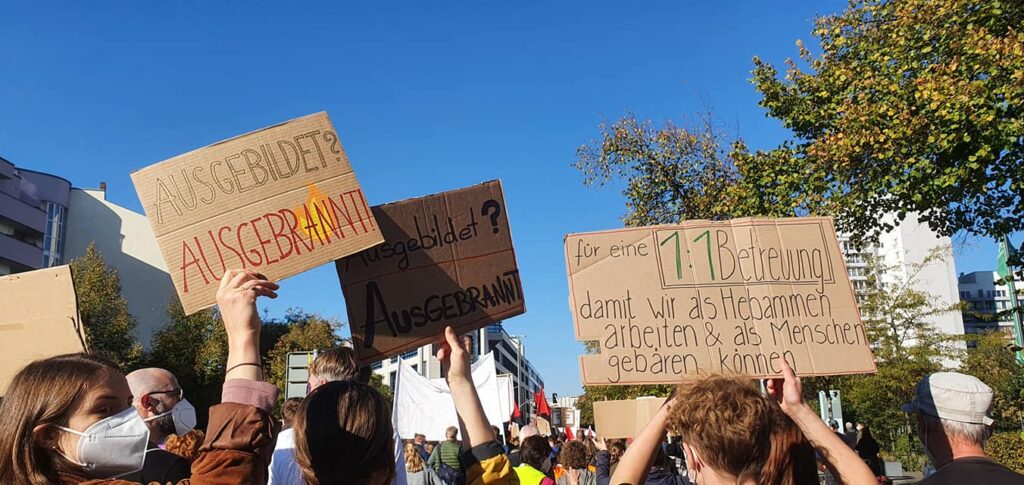
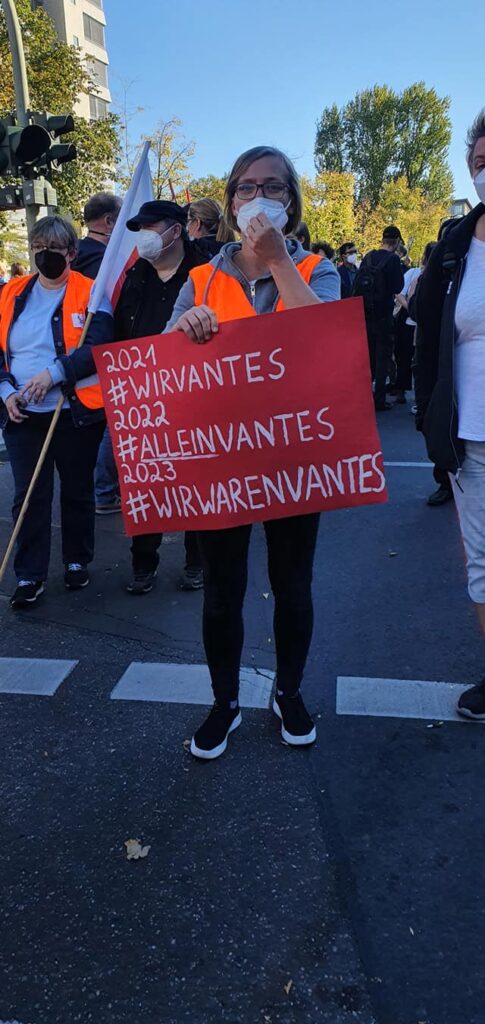
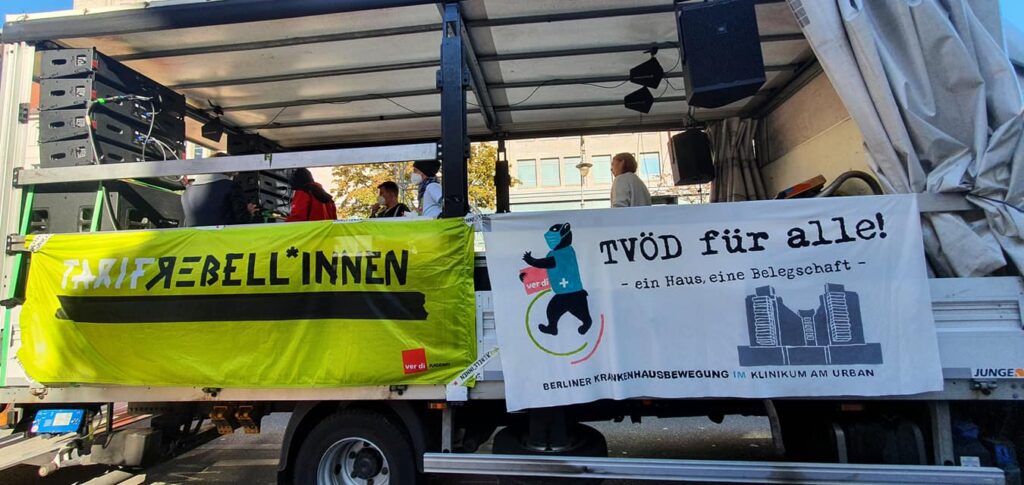
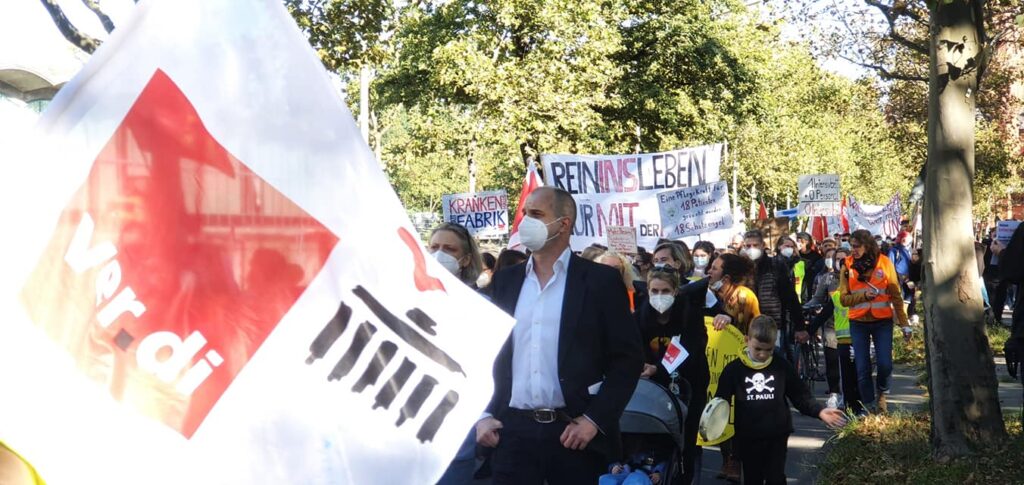
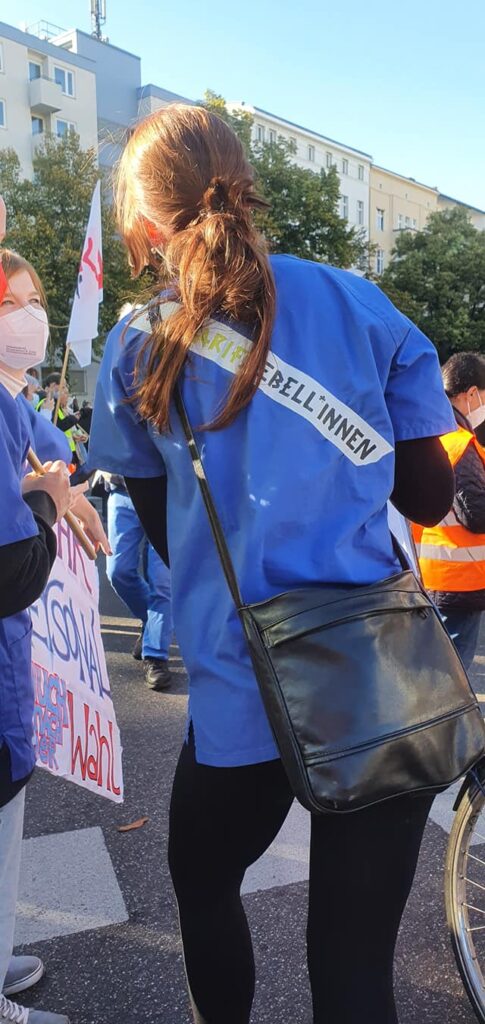
The healthcare strike in Berlin is over. After one month, the state-owned hospital owner Vivantes on Tuesday said it was ready to lighten the load on its nursing staff. Vivantes was following the lead of the university hospital Charité, which had agreed an outline deal with the service union Verdi last week. Both sides now aim to hammer out a “Relief Pay Agreement” (Entlastungstarifvertrag) for nursing staff by the end of November.

Heike von Gradolewski-Ballin, lead negotiator from Verdi, said on Tuesday: “With the agreement on key points, we are a big step closer to our goal of achieving lasting workload relief for workers at Vivantes.” She said it had been possible to reach this goal “because the workforce had stood up firmly for its interests: with protests, with determination, and with stamina.” She said the agreement had not only made the healthcare profession more attractive, but also made patient care significantly safer.
Movement successful

Sylvia Bühler, member of Verdi’s national committee, also welcomed the agreement. “Today’s agreement with Vivantes is another important success for our movement for more staff and workload relief in German hospitals,” she was quoted as saying in a press release on Tuesday. She said there were now similar agreements in place for 18 major hospitals in Germany. “Once again workers in the healthcare system have shown that they will no longer be fobbed off by politicians and bosses, but will push through their demands for more staff through workplace struggle.”

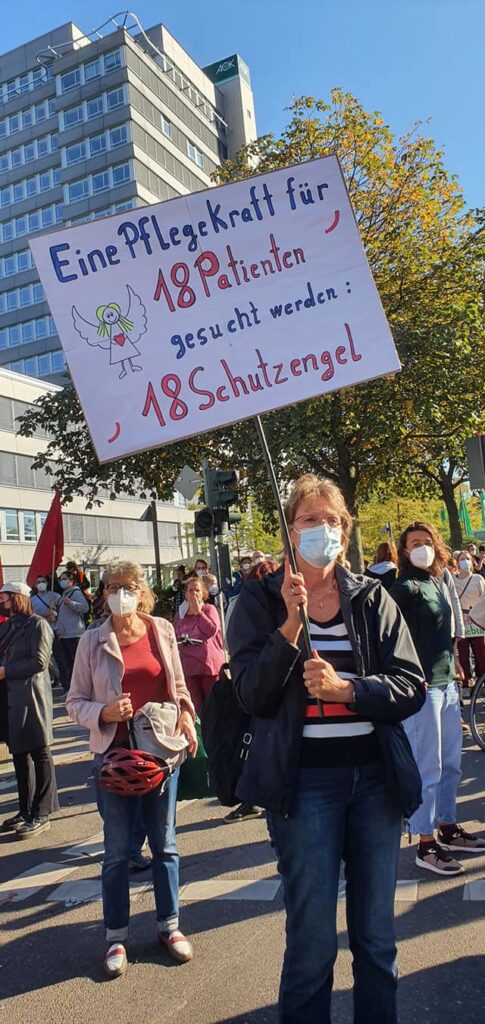
The stated aim of the pay agreement is to reduce the workload of workers in nursing above all – clearly, measurably and for the long term. Among other things, the agreement sets out how many patients will be looked after by how many staff in each shift. Should this guideline later not be adhered to, workers will receive clearly defined time off in lieu.

For this purpose, so-called “Vivantes-Freizeitpunkte” (time-off points) will be given out. For example, a nurse will get a point if they have to work on an understaffed ward for one shift. From 2022, for each 9 accumulated points nurses will get one shift off or a payout of €150. A year later, this compensation will be given for just 7 points; in the year 2024, for 5 points.

There won’t, however, be an unlimited number of days off. In 2022, the number will be capped at 6, in 2023 at 10 and in 2024 at 15 days off. After that any further points will be compensated by payouts.

There should also be more support for those who want to train in nursing. Among other things the minimum duration of on-the-job training will be set out. As well as that, trainees will be given a laptop computer, for both work and personal use. At the end of the training it will then become the property of the trainee. Furthermore, trainees will get a job offer by the end of their second year of training.

Strikes as self-defence

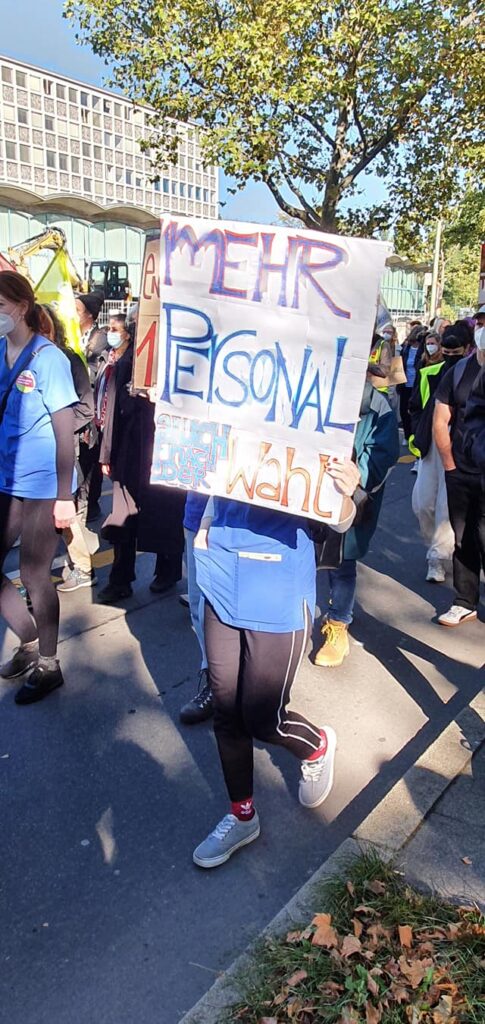
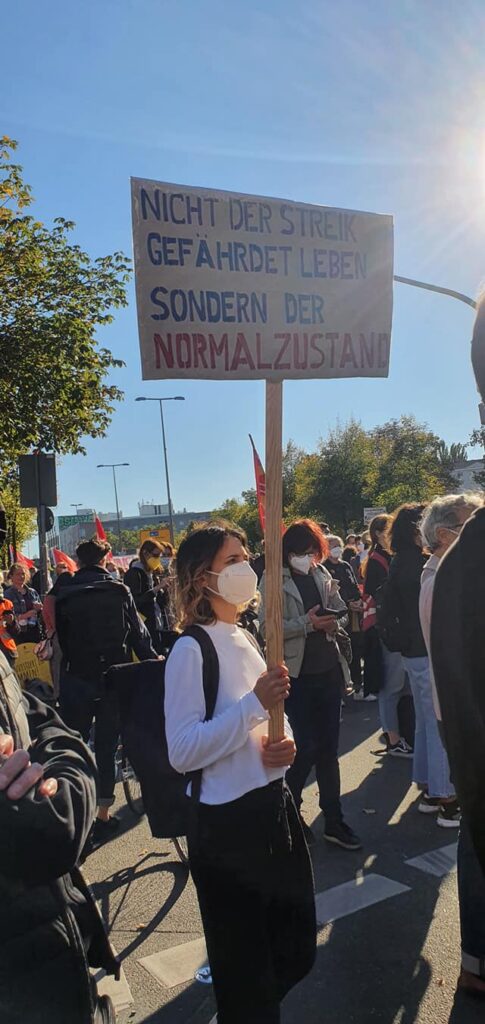
In the end Bühler held federal health minister Jens Spahn (CDU) responsible for the strike. She said it was shameful that he had made it necessary for workers in the health system to strike for weeks on end for better staffing levels. “The strikes of hospital workers for workload relief were self-defence, because Mr Spahn has failed to set adequate staffing for hospitals into law,” said Bühler. She said the new federal government must quickly make binding arrangements for adequate staffing. A first step would be to implement the “PPR 2.0” staffing level measurement system – which was put forward by the German Hospitals Association, the German Nursing Council and Verdi at the start of 2020 – in the governing coalition agreement, she said.

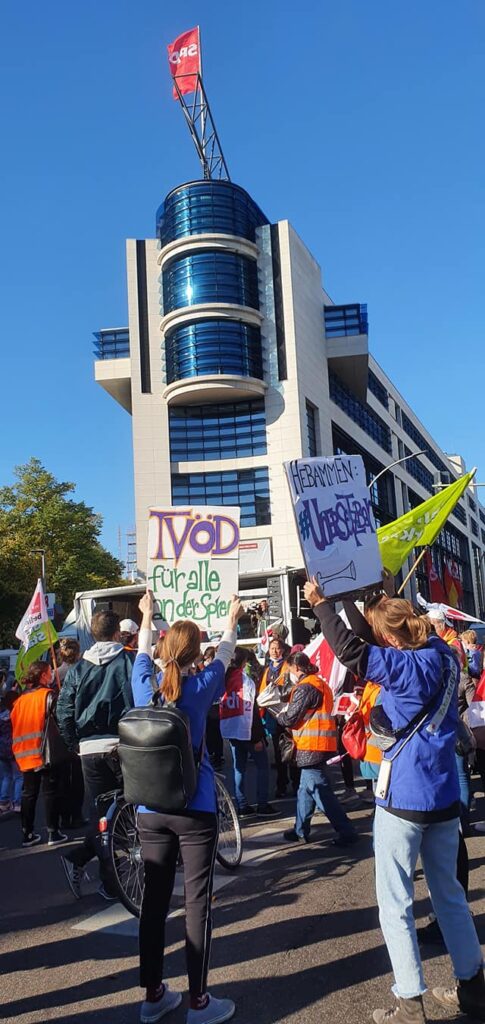
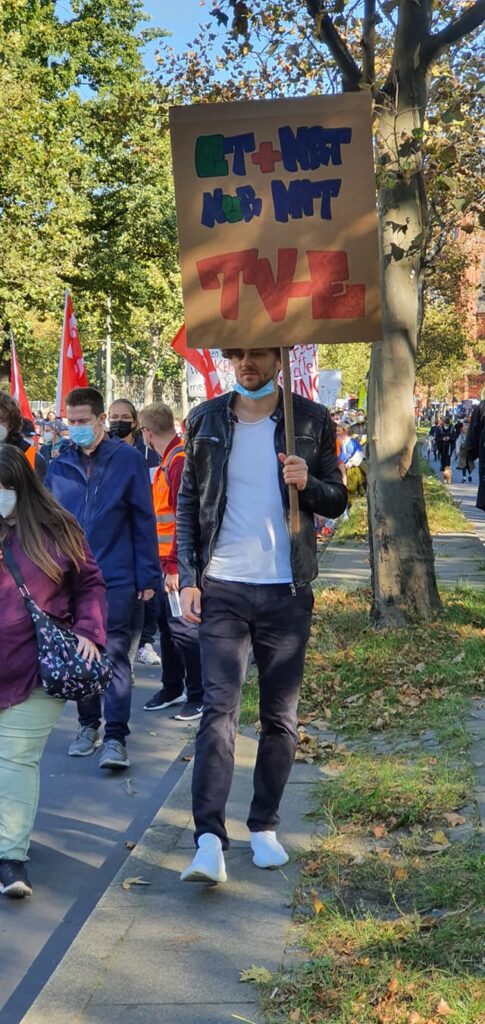
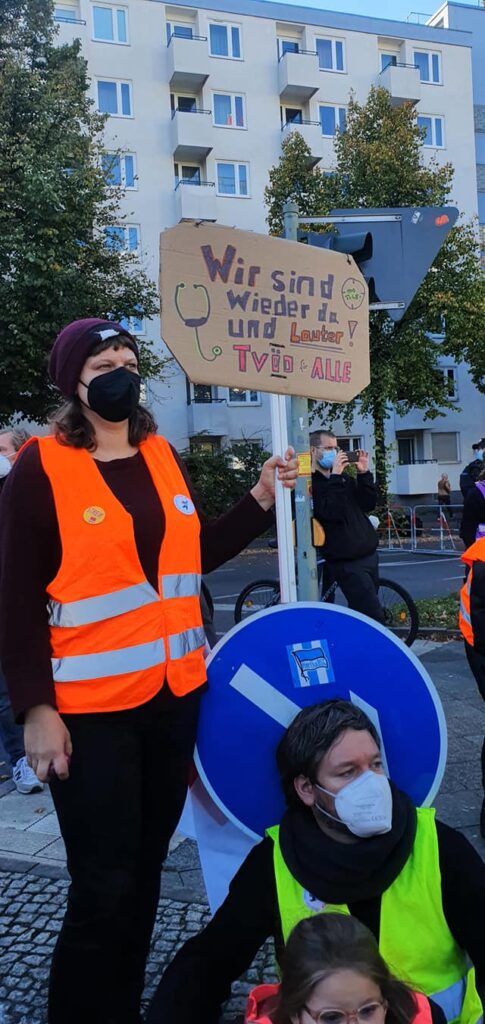
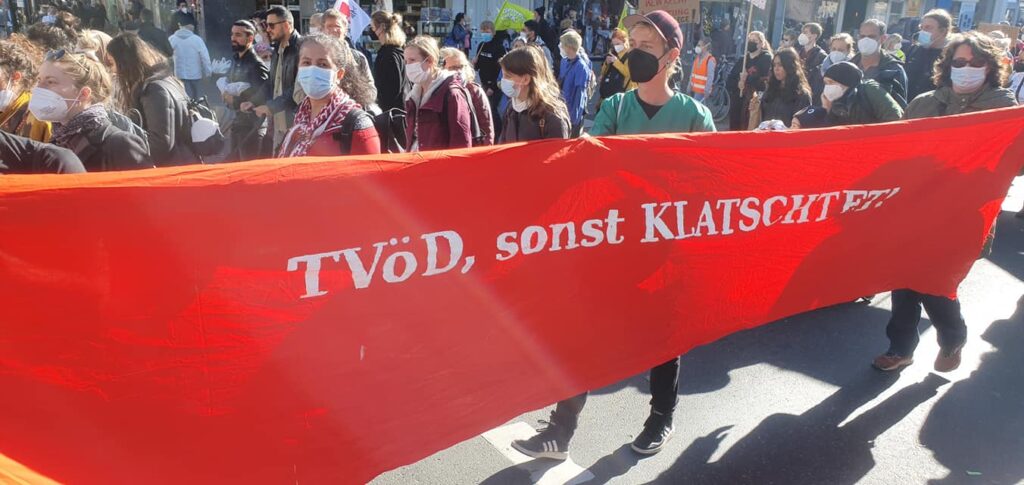
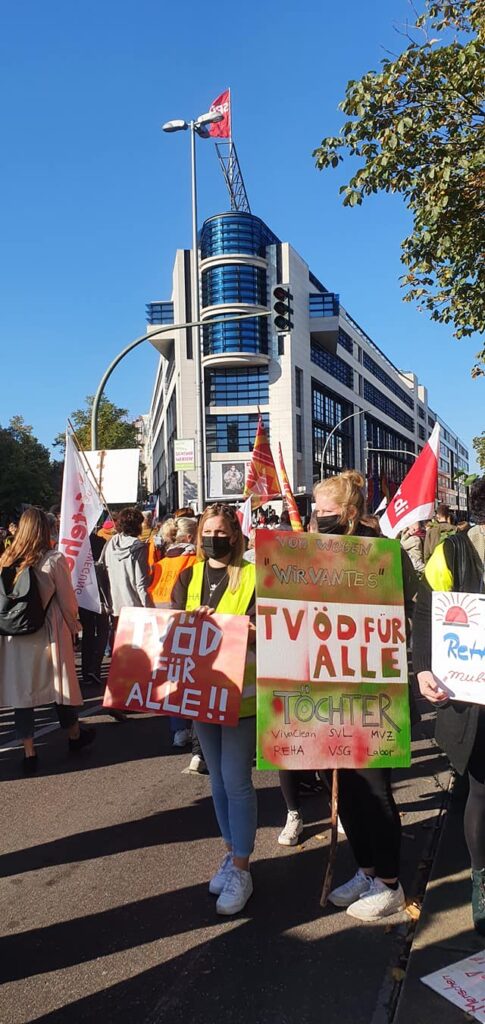
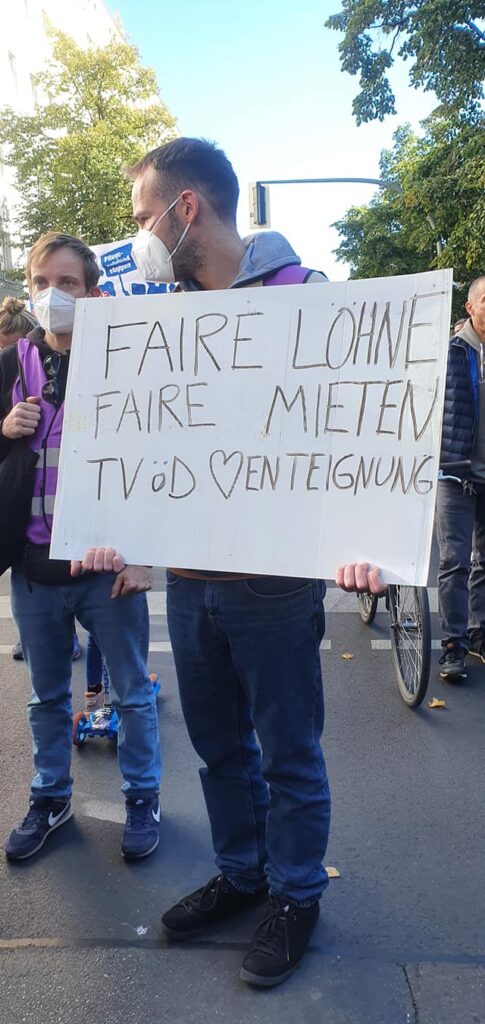
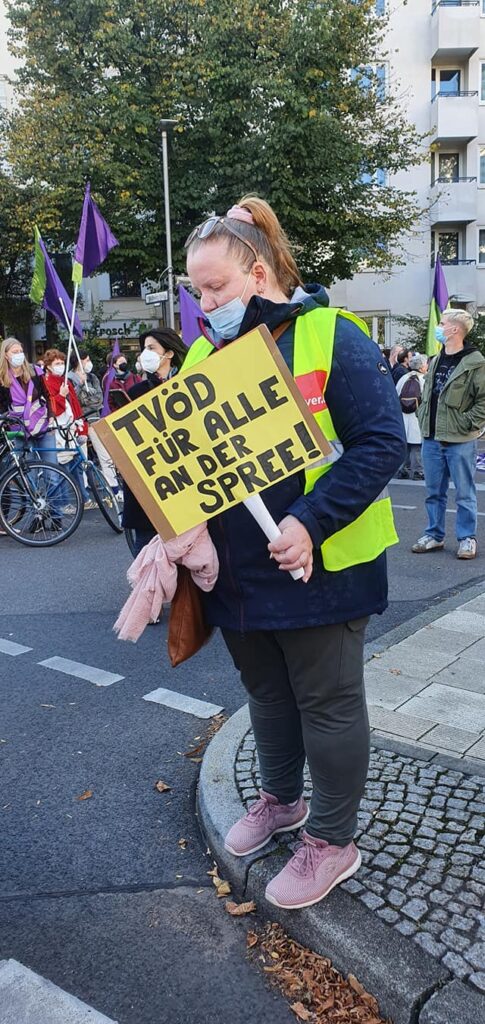
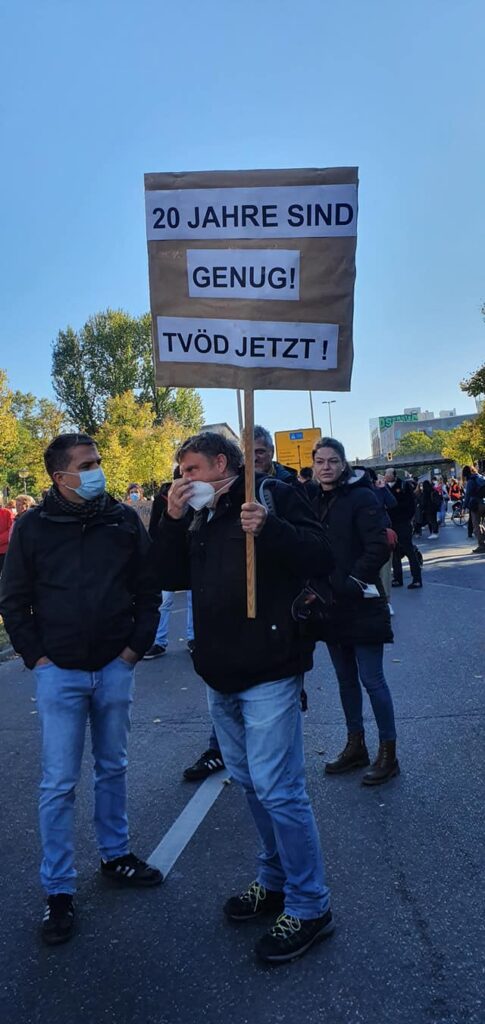
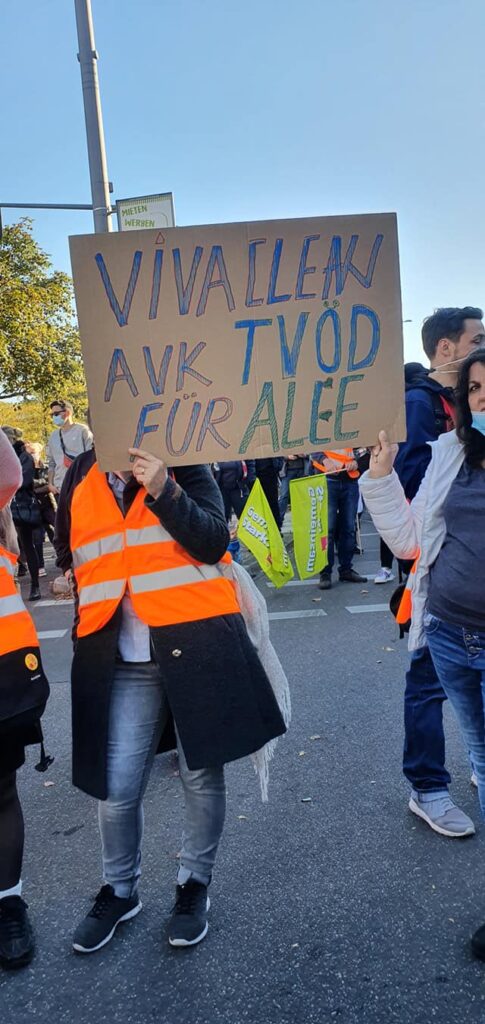
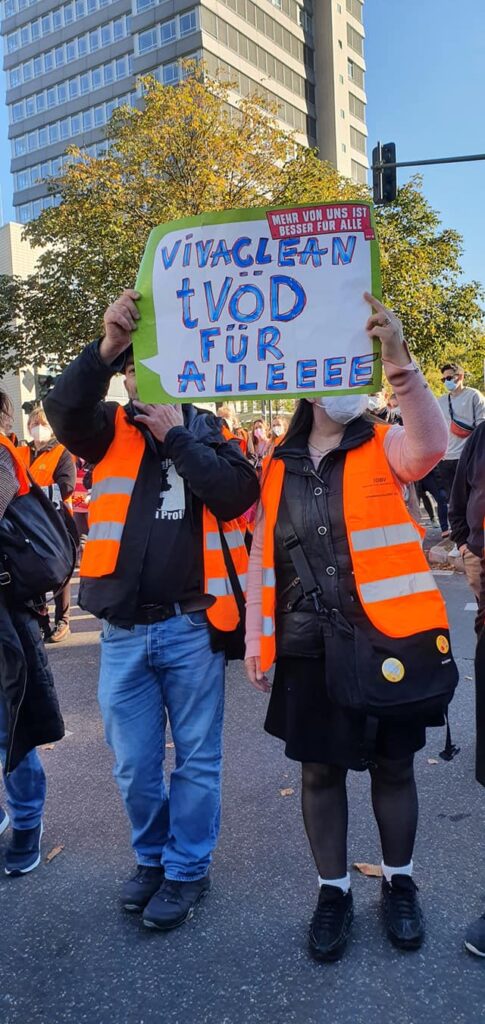
Although the basic agreement has been reached with the nursing staff, the workplace struggle is not yet over. Verdi is still aiming for the public sector pay scale (TvÖD) to be applied to all employees of Vivantes subsidiaries. The negotiations will continue today, moderated by the former mayor of Brandenburg Matthias Platzeck (SPD).

The Berlin Hospitals’ Association (BKG) had already warned against this last Friday. If workers of the service companies of the state-owned hospitals were paid according to the public sector pay scale, it argued, competition might be distorted at the expense of other Berlin hospitals. It said service workers in cleaning, logistics and catering, for example, are paid according to pay scales that are typical for the respective sectors. If they were instead paid according to the public sector pay scale, workers at other hospitals might move to the state-owned ones, or make similar pay demands. The other hospitals would not be able to afford that, because their costs are not underwritten by the state.

This article appeared in German in Junge Welt. Translation by Tom Wills.

Greece. One Year After the Conviction of Golden Dawn, the Struggle Continues

The continuing crisis in Greece and the failures of the New Democracy government have caused Nazi violence to rise. But anti-Nazis are still vigilant.


11/10/2021

October 7th marked one year since the historic verdict which sent the leadership and cadres of Nazi Golden Dawn (GD) to jail, and ruled that the entire party is but a criminal organization disguised as a legitimate political party. As written on this webpage, it was “a clear victory for the anti-fascist and anti-racist movement, but the struggle still goes on”. This seems to be correct, as approaching the anniversary it became clear that Greek society is deeply polarized, socially and politically.

The events in Thessaloniki…

Let’s take the facts: September 17th, 8 years after the murder of anti-Nazi rapper Pavlos Fyssas by GD thugs, saw a powerful demonstration in his neighborhood, Keratsini, commemorating Pavlos and all the victims of fascist and racist violence and supporting refugees and immigrants. Anti-racist organizations had already announced various mobilizations to take place between October 7th and 10th in order to celebrate the victory over GD. At the same time, the remnants of the criminal organization, tiny (but armed and dangerous) fractions made an effort to take the streets.

On September 22nd, students leafleting outside the Technical Secondary School in Stavroupoli, a suburb at the west of Thessaloniki ,were brutally attacked by a group of Nazis calling themselves “The Sacred Band”, armed with knives and sticks. An anti-fascist protest called outside the school, one week after this attack, by university associations was met with unprecedented violence by the Nazis, who escalated with Molotov cocktails, sticks and stones. Two students were hurt.

This sparked an anti-fascist outburst across Thessaloniki, as trade unions (including teachers, and food delivery workers), anti-racist organizations and political parties of the left condemned Nazi violence and called for resistance to the menace, both in the schools and in the streets. On the 29th of September, a massive protest was organized at the central square of Stavroupoli, where 4000 protesters denounced the Nazis and defended the students.

This was a critical moment. The Golden Dawn webpage rushed to declare support “to the school students who resist Marxists and communists”. At the same time the Ministry of Education issued a shameful statement, claiming that there is an issue of “extremes” in the schools, which has to be managed and criticizing the teachers as incapable of imposing law and order!

The answer came from the local teachers union (ELME), which denounced the ministry during a press-conference they gave outside the school on October 1st, and announced that the 7th of October would be a day dedicated to anti-Nazi activity in all schools.

The following days saw an effort of the “Sacred Band” to re-locate their focus to the near-by neighborhood of Evosmos, only to find themselves isolated by new anti-fascist demonstrations. Losing the battle of the streets, what they finally did, was to corner a group of Communist Party (KKE) members, who were leafleting in another area (Ilioupoli) the following day and attack them, injuring one of them, before some passers-by noticed and chased them out of the place.

…and in Athens

The same day, Sunday, another tiny group of Nazi thugs, namely “Pro-Patria” attacked KEERFA members (Movement United against Fascism and the Fascist Threat), this time in Athens at the neighborhood of Neo Iraklio, while the latter were preparing a local open meeting on the GD defeat anniversary. The attack was of a military type as well: A gang of fifteen thugs beat 4 KEERFA members, sending 2 of them to hospital, then tried to open a banner with the slogan “Anti-Antifa”(!) and grab the microphone, without success.

Calling for solidarity to the anti-fascists, the neighborhood rushed to show solidarity and stopped them. Police forces showed up 20 minutes later, confessing that they had orders “not to get involved in any fights”. Nevertheless, because of the immediate mobilization, the leader of the gang was arrested a few hours later and brought to court for assault! The meeting finally took place.

Following all these provocations, one can figure that the mobilizations planned on October 7th outside the court and on October 9th in the center of Athens and in several other cities were massive and successful, despite repression by the police. This time it was the riot police who did the dirty work. I was at Saturday’s demo, organized by KEERFA in central Athens and I witnessed unexpected assaults with teargas against activists and refugees who had come with their little children to the demonstration! But they could not stop us from holding the speeches and then marching to Parliament.
Are the Nazis back?

Following the events, it is reasonable to consider that there is a comeback of the Nazis on the Greek political stage. The threat is obvious, as all conditions are still here: Greece is deeply indebted since the austerity (aka stabilization) programs of 2010-15 and, despite payment extensions because of the COVID crisis, it is hard to conceal that the economy is in trouble. Stagflation is here, prices are soaring and the bosses demand more sacrifices.
The government of New Democracy has given everything to the capitalists. For the first time since being elected prime minister, Kyriakos Mitsotakis and his cabinet, which includes three (not so) redeemed far-right ministers, do not enjoy acceptance in the polls. On the contrary there is open discontent and resistance all over the country; here lies the cause of polarization.

Salaries are stagnating and the unemployment rate is one of the highest in Europe, but Greece is buying “Rafale” airplanes and frigate battleships and playing the racist card against immigrants and refugees. Greek border police, in collaboration with the notorious Frontex, have faced confirmed accusations of kidnapping and pushing refugees back to drown in the Aegean Sea. The government is building new camp-prisons, exclusively for refugees! This is the perfect racist fuel, it has assisted the Nazis in coming out of their isolation and demanding space in the streets and neighborhoods. They want to profit from political crises, nevertheless this is not 2013.
It is vital to see that since the convictions of the leaders of Golden Dawn, and despite the juridical system being soft on them (some have already been out of jail on parole), Nazi groups have been fractured and marginalized. It’s the nationalist and racist policies of the government of New Democracy that help them find supporters in the right wing audience.

Narratives like the “theory of the two extremes” (implying far-right VS far-left) have been engaged by the mainstream media against the anti-fascist movement. So far it has not worked. Trade unions, anti-fascist organizations, left parties, despite their differences have managed to stand in solidarity with each other, defend democracy and stop the menace.

This is no time for complacency, but for intensifying the political struggle against racist politics, prison camps and the policies of the government of New Democracy which pave the way for the Nazis.

The people of Berlin have spoken: it’s time for expropriation!

The referendum on the expropriation of large real estate companies exceeds expectations and achieves a large majority with a historic turnout.

It was a long election night in Berlin on the 26th of September. There were four simultaneous elections: to the Bundestag, to the Abgeordnetenhaus (Berlin Chamber of Deputies), to the district councils and also the referendum Deutsche Wohnen & Co. enteignen (DWE). The latter aims to expropriate and socialise the homes of those real estate companies that own more than 3,000 units, meaning the socialisation of some 240,000 homes across Berlin into public hands. During the count, the last data to be published were those of the referendum. The first results and the first estimates made the activists jump out of their chairs: the referendum obtained broad support, which was confirmed as the hours went by, while a historic turnout (75%) gave the referendum a strong legitimacy.

The final result was 59.1% support for the referendum on the valid vote (56.4% counting the invalid vote) and 40.9% against (39% with the invalid vote). The message of more than one million Berliners was clear. It is time to expropriate the big real estate companies, socialise housing and return it to public hands, stopping the real estate and financial capital that has plundered Berlin in the last decades.

This result does not take into account that almost a quarter of Berlin’s adult population, could not vote. That is those without German nationality, but who are particularly unprotected from a predatory market due to their precarious situation, and are especially discriminated against in the housing market with xenophobic and racist practices. In this sense, within DWE, the group ‘Right to the City’ for all has managed to involve and mobilise a part of the population that was on the margins of the campaign. This was the migrant communities who often do not feel they are appealed to. They now demanded both the right to housing for all and the right to vote for all. Because fair socialisation cannot happen without the support of a quarter of the population.

What next?

However, the referendum is non-binding and therefore depends on the will of the deputies sitting in the Abgeordnetenhaus and the new Berlin government. That will emerge from the negotiations to implement and enforce the referendum. The Berlin elections resulted in a Social Democratic victory for the SPD (21.4%), several points ahead of the Greens (18.9%) and the Christian Democrats of the CDU (18.1%). Behind – Die Linke, the left, with 14% and far behind, the far-right AfD (8%) and the liberals of the FDP (7.2%). The political chessboard forces a tripartite government, or at least a three-way negotiation to form a government (even if one of the actors in the negotiation later decides not to enter the government).

In this context, the SPD is piloting these negotiations with a candidate for mayor, Franziska Giffey. who had already in the campaign refused to expropriate the real estate companies regardless of the result. But who after the DWE’s resounding victory and internal pressure in her party, she has had to moderate her words and speaks of respecting the referendum, albeit in a vague way. The Greens will be a certain travelling companion in this new government. During the campaign, they showed reserved support for DWE, arguing that expropriation should be a last resort to control the housing market. It is worth remembering that we are at a last resort today, in a highly stressed market. Recall the Constitutional Court in Karlsruhe overturned the “Mietendeckel” law of the previous left-wing coalition government where Die Linke housing senator Katrin Lompscher, had frozen price rises for five years and lowered rental contracts above €/m2 price limits. The housing situation in Berlin, a favourite city of finance and real estate capital for rapacity, is now at a point where only radical measures such as expropriation can be applied.

The SPD and the Greens are in a three-way negotiation, where the third partner is unclear. That could be Die Linke, the only party that has supported the referendum from the outset and without “buts”. But it could also be the liberals of the FDP, a party that strongly rejects the implementation of the referendum. In this context, in which the SPD sometimes seems more inclined to govern with the FDP, the pressure to re-establish a left-wing government is growing. The youth organisations of the parties, JUSOS (SPD), Grüne Jugend (Die Grüne) and Linksjugend (Die Linke), have issued a statement in favour of a left-wing coalition. This is the government formula that is considered to be the only one that can implement the referendum. Die Linke is considered to be the only guarantee of pressure to push through the law on the expropriation and socialisation of the large real estate companies.

That is why the DWE campaign is also increasing pressure on the SPD to ensure that, on the one hand, the will of the people as expressed at the referendum is fulfilled and, on the other hand, that the SPD does not throw itself into the arms of the FDP, because that would be a very bad message. However, even if a left-wing government is formed, expropriation and socialisation are not guaranteed. The SPD or even the Greens can empty a law of its content which then does not really express the will of the people and the DWE movement. At this point, the compensation that the real estate companies should receive for the expropriated houses comes into play, and here, Die Linke. is the only party that is prepared to support the sums proposed by DWE, i.e. those that guarantee that the expropriation will be below market price. DWE and Die Linke simply want Article 14.3 of the German Constitution to be complied with regarding compensation for expropriation, which has to be aimed at the common good and be a balancing of the interests of the parties involved. Any compensation based on market value would only and exclusively defend the interests of the real estate companies and their shareholders, not those of the tenants and public administrations.

In short, an uncertain scenario is now opening up. The referendum, even if it is technically non-binding, does bind with its result the entire policy that will be developed in Berlin in the coming years. It determines the political and social agenda of the city, forces the parties to take a stand and take off their disguises. This keeps the city in a state of tense calm. A city that will not accept that the referendum is not implemented or that it is emptied of its content. Failure to implement the referendum opens up an uncertain future with unimaginable consequences. The mobilisation and the strength that DWE has generated will not be lost overnight, and betraying the will of the people could have an effect that multiplies both the strength and the scale of the struggle for decent housing.

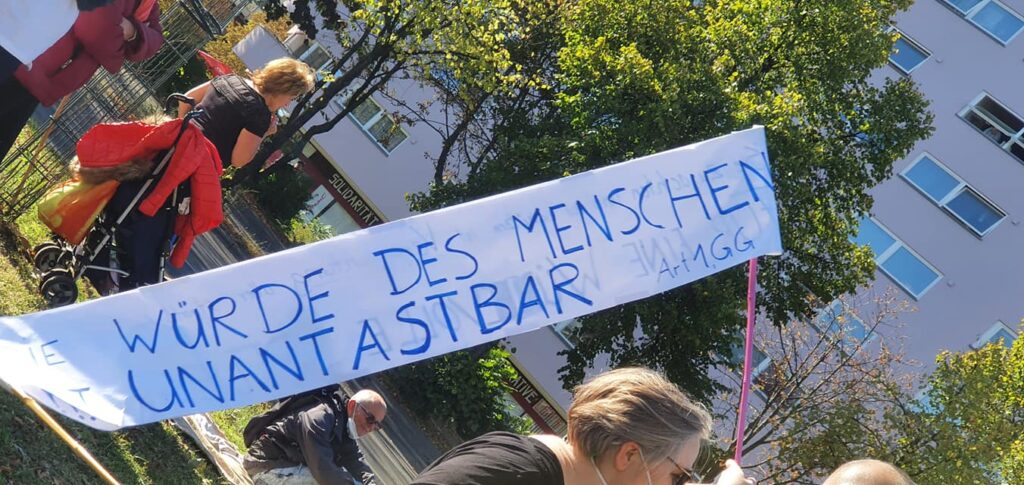
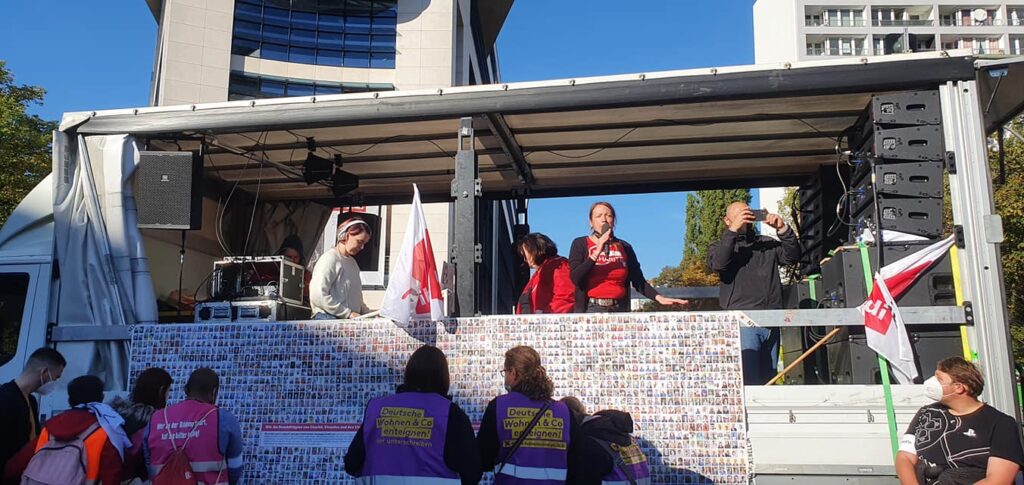
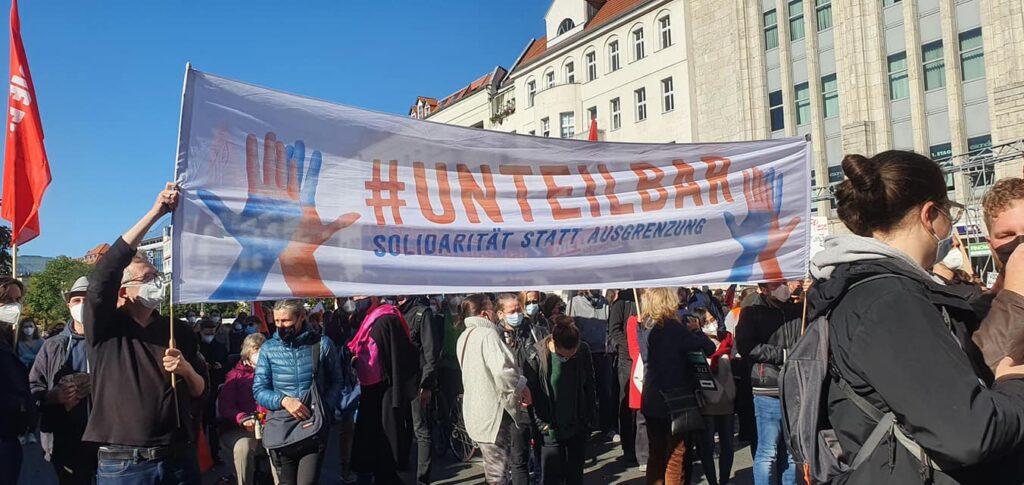
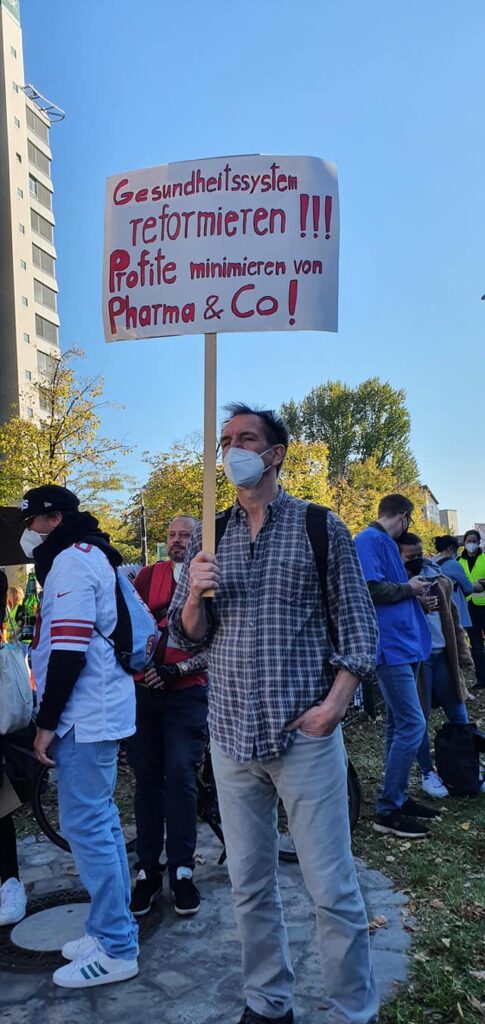
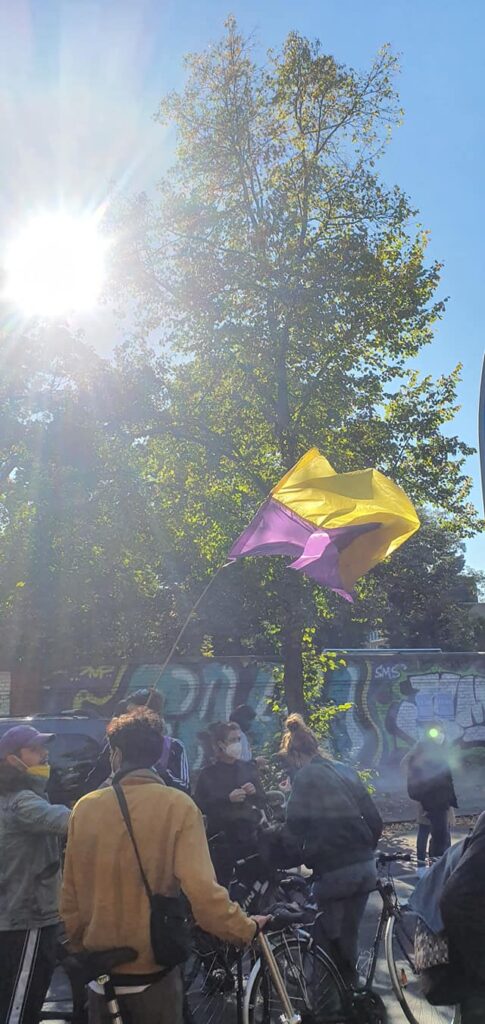
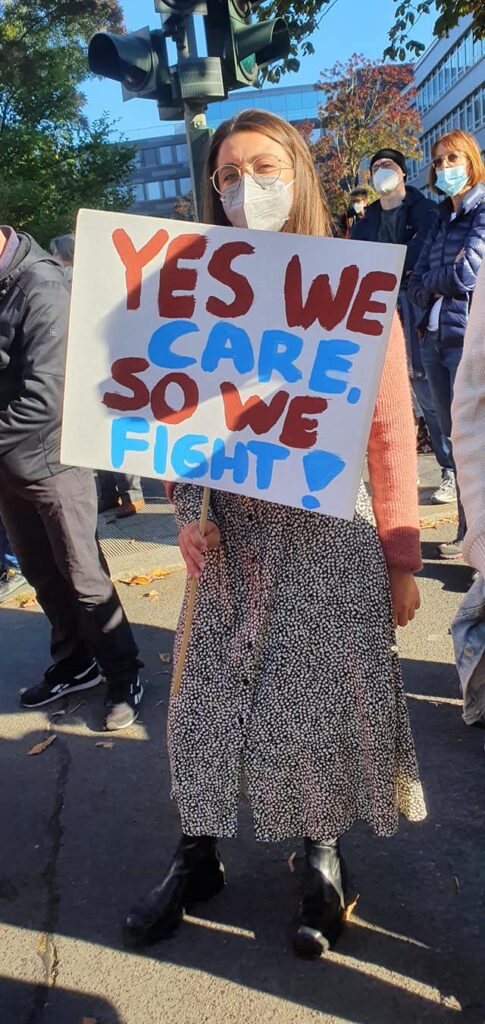
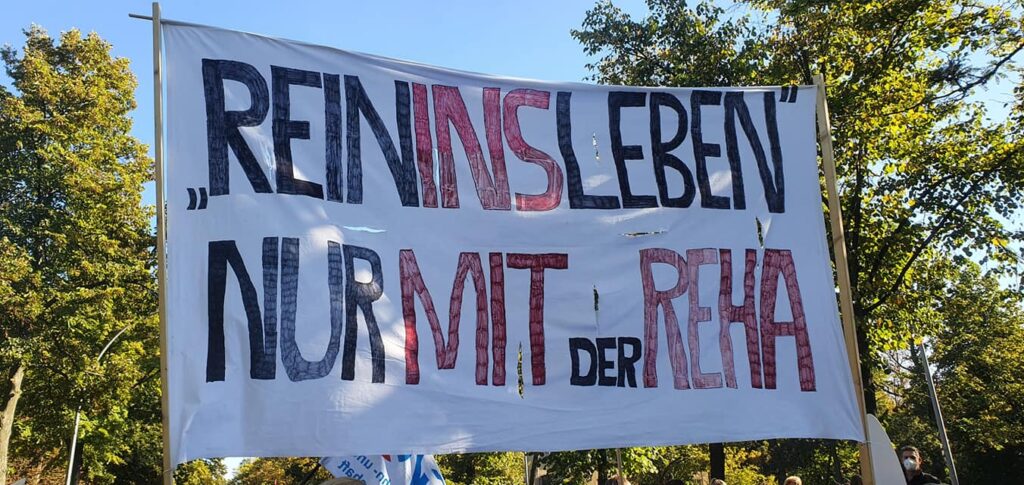
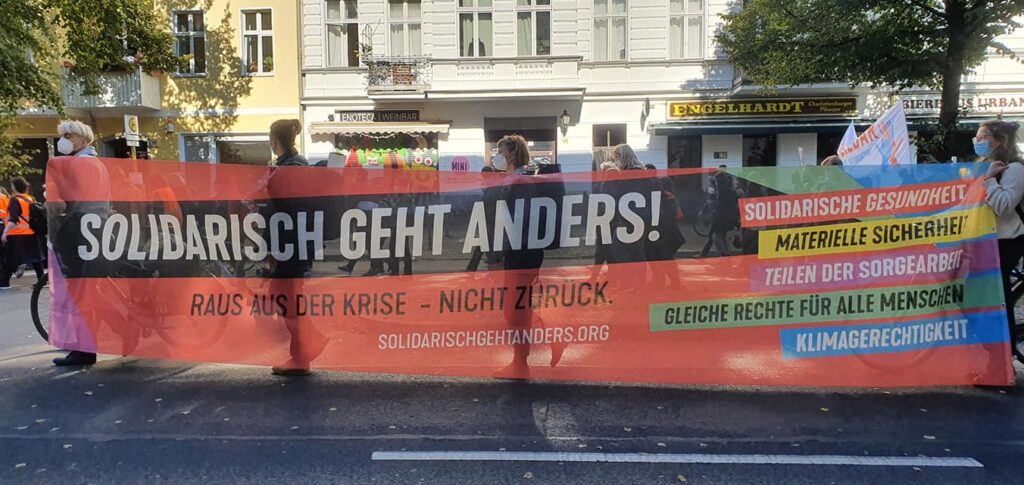
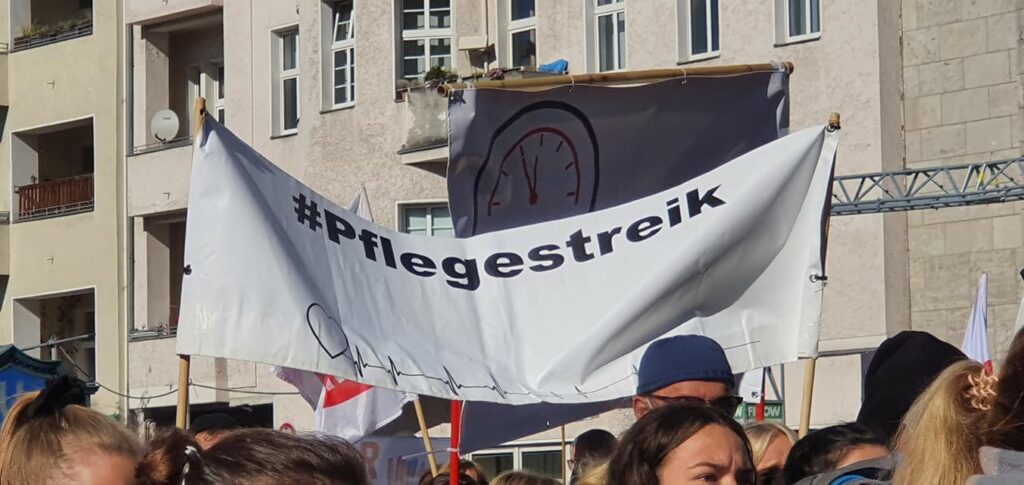
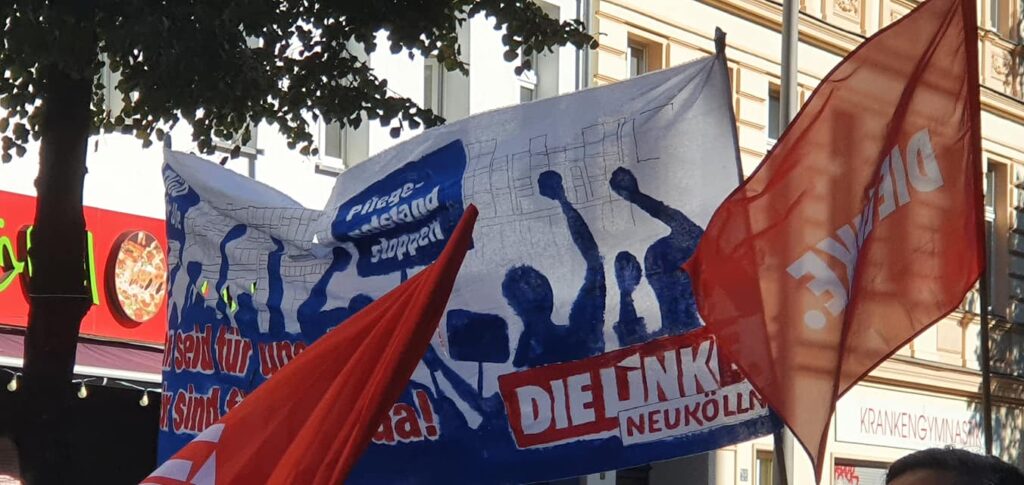
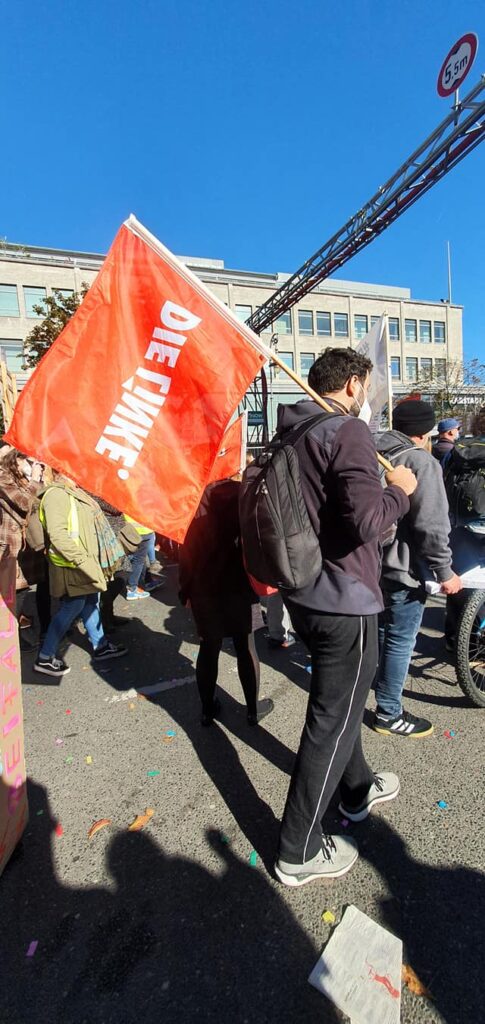
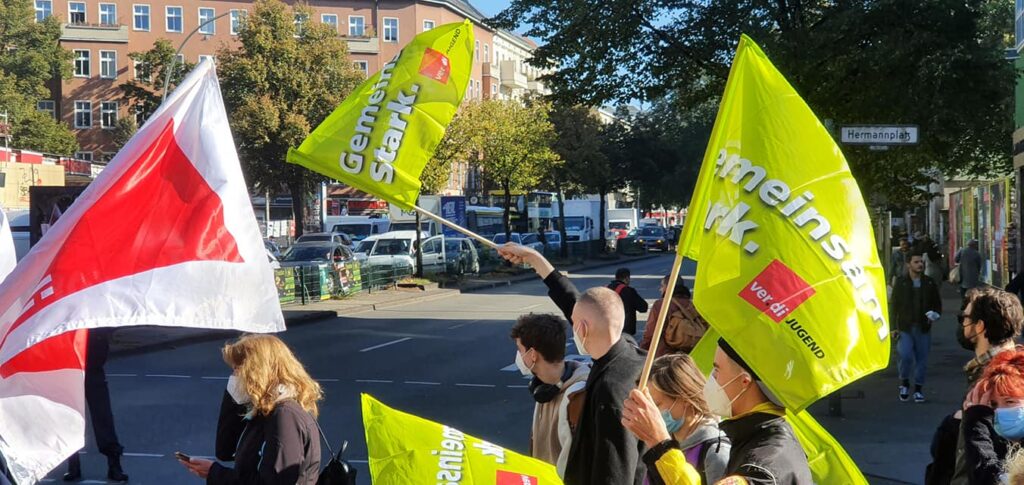
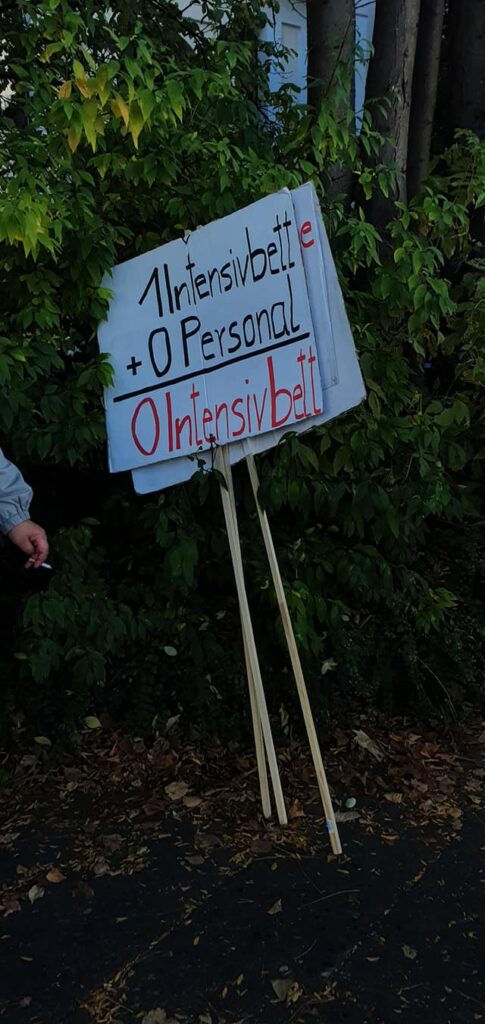
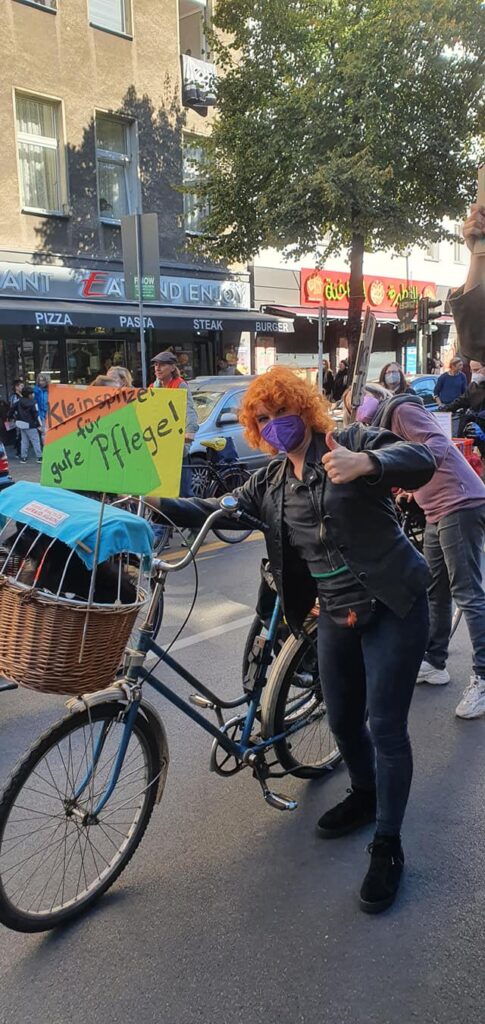
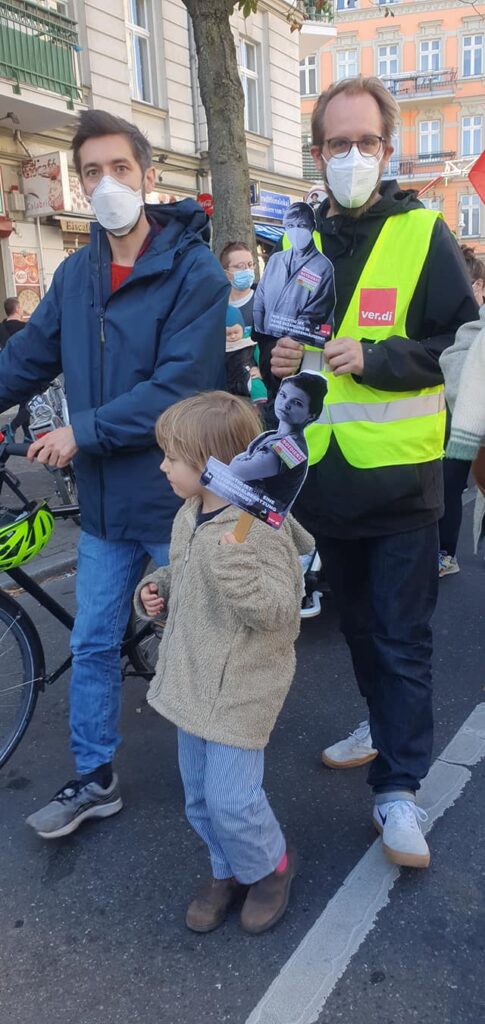
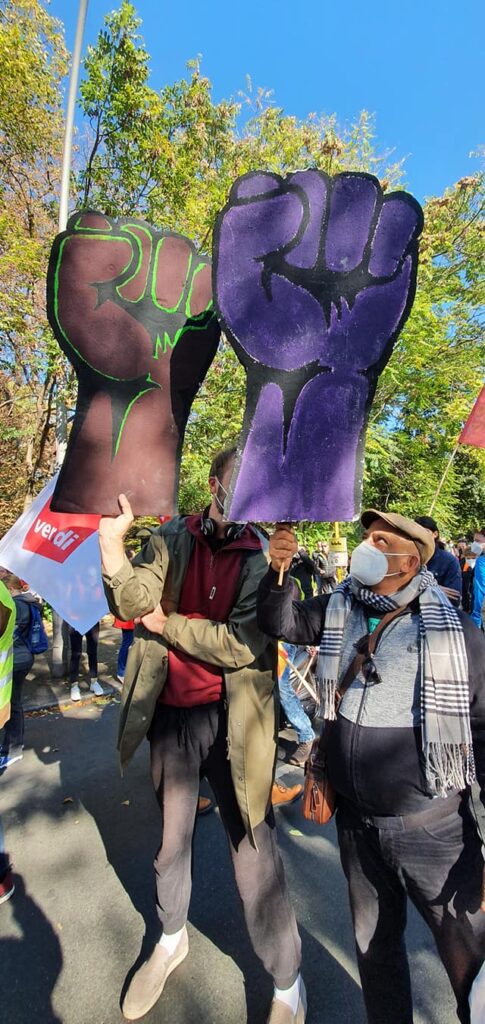
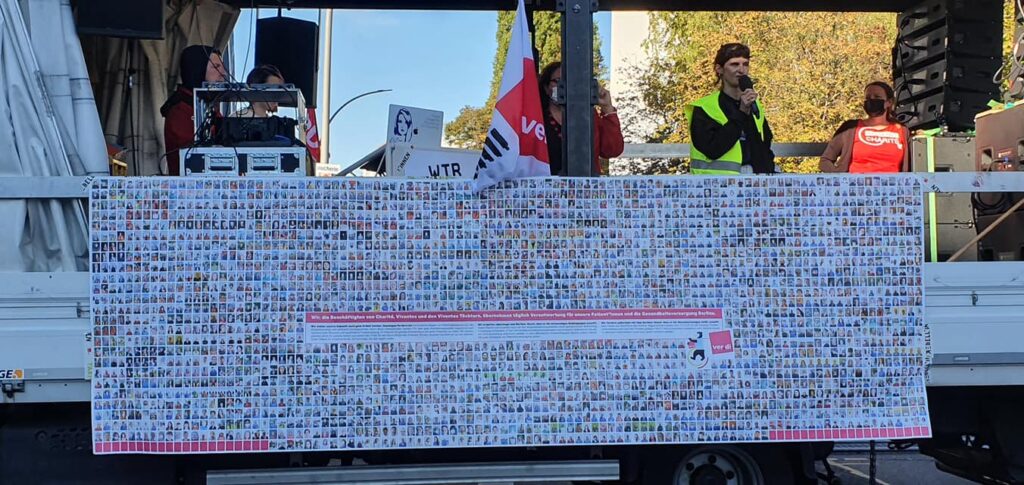
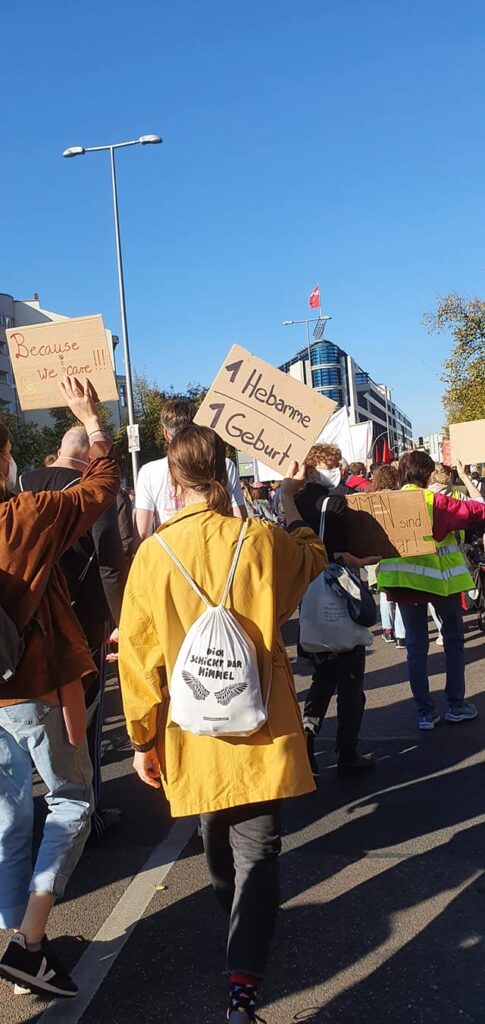
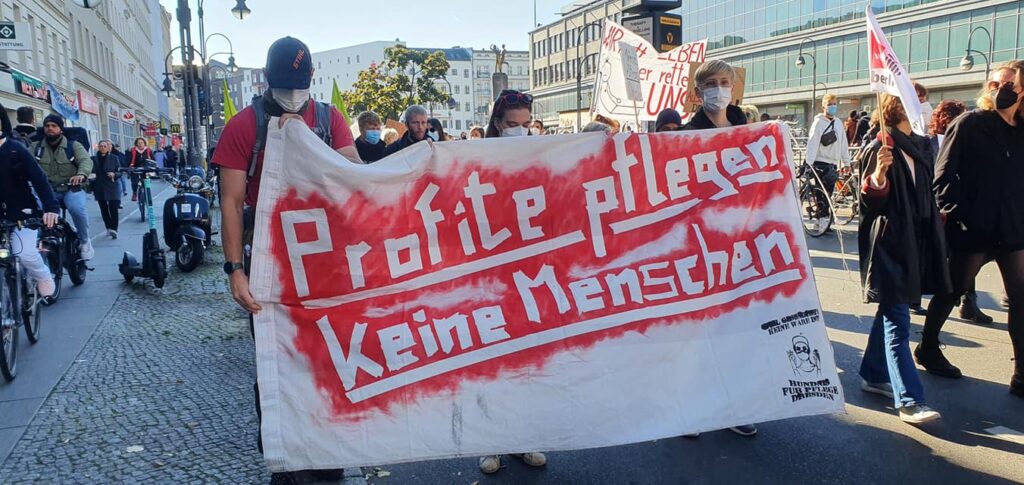
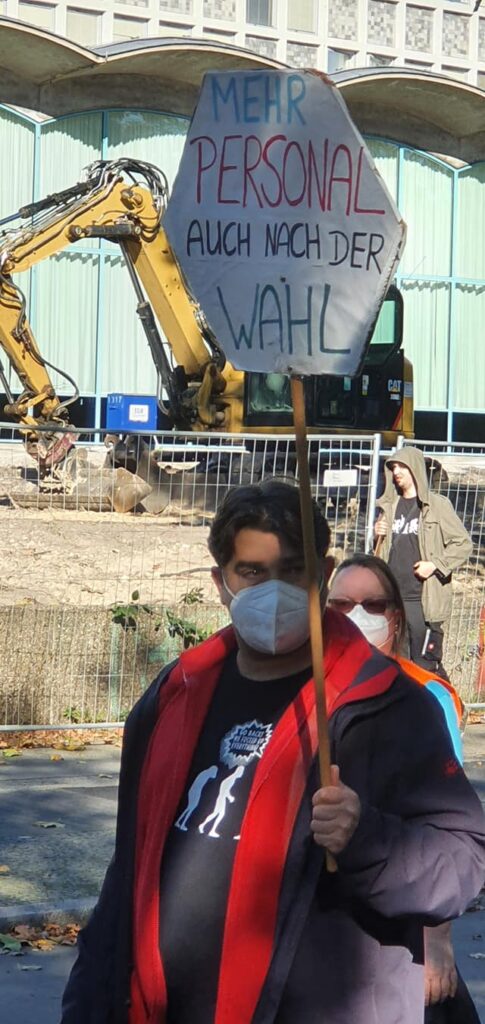
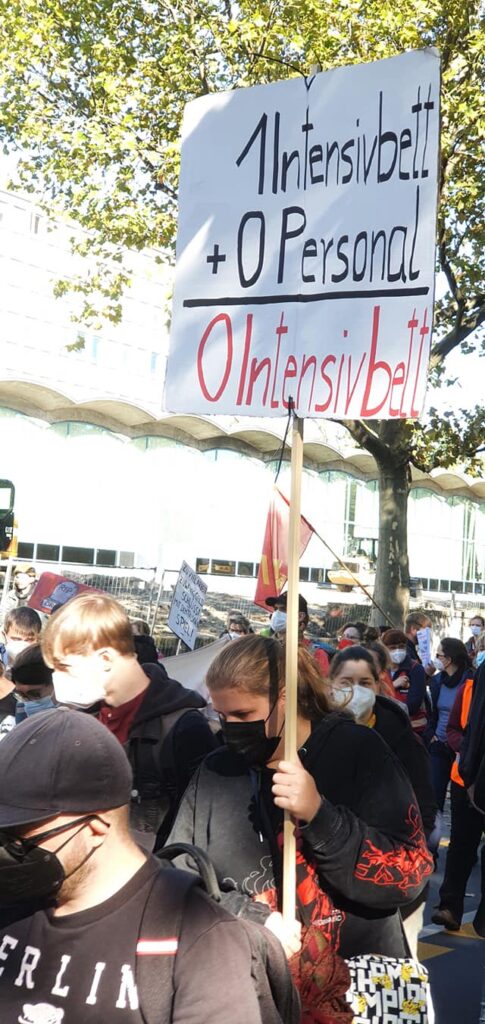
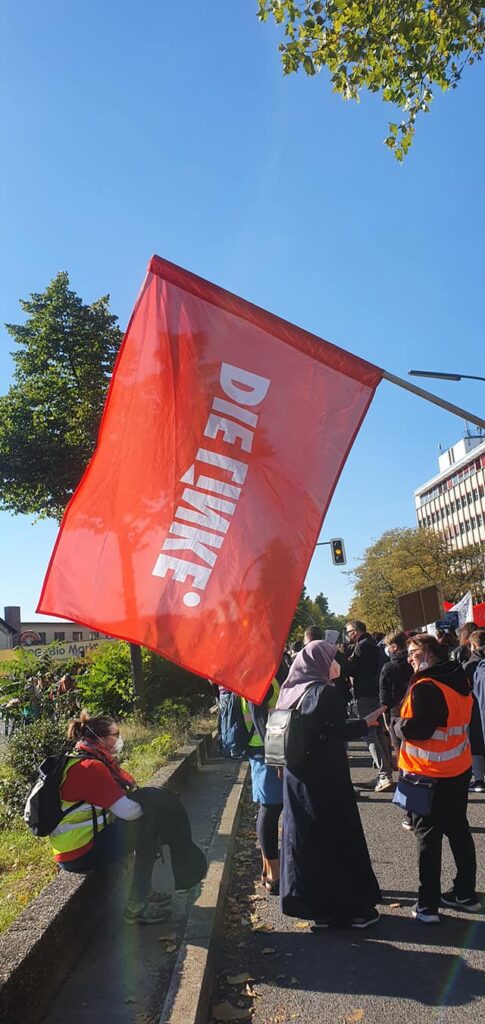
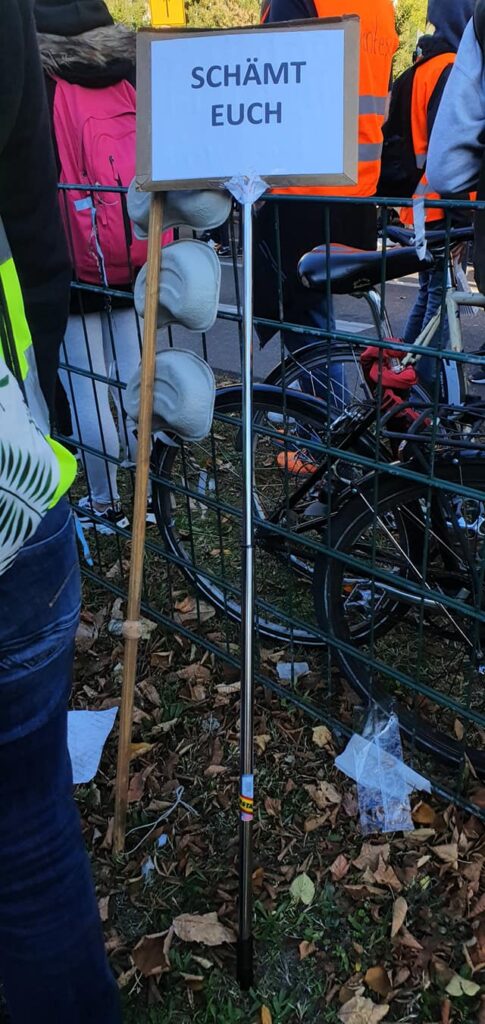
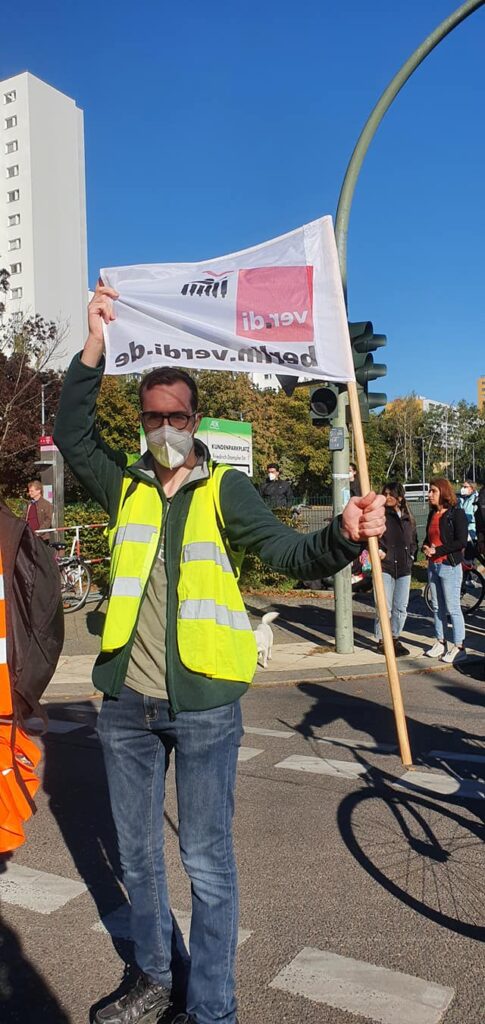
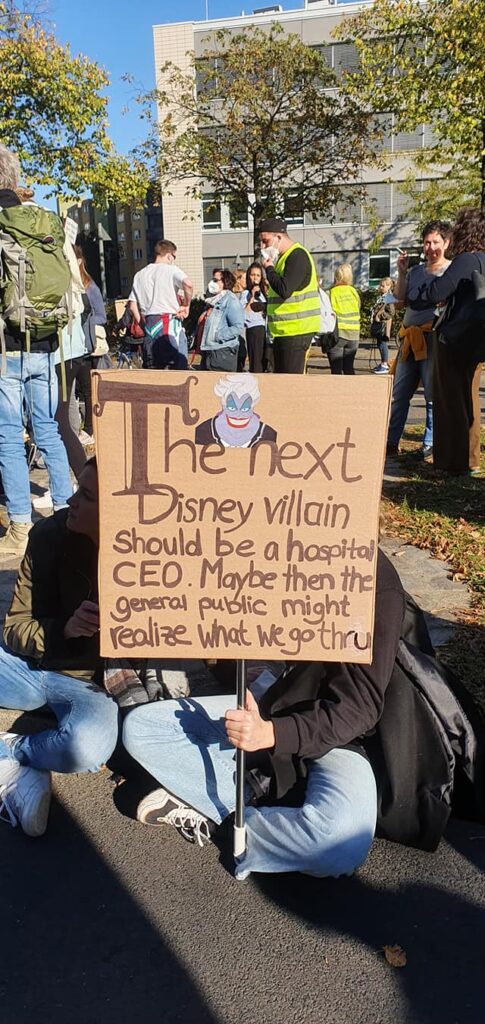
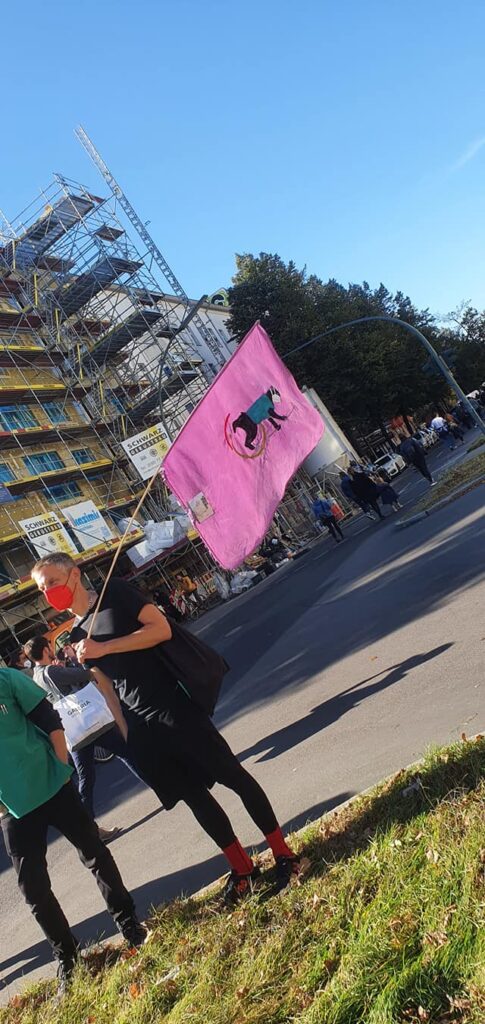
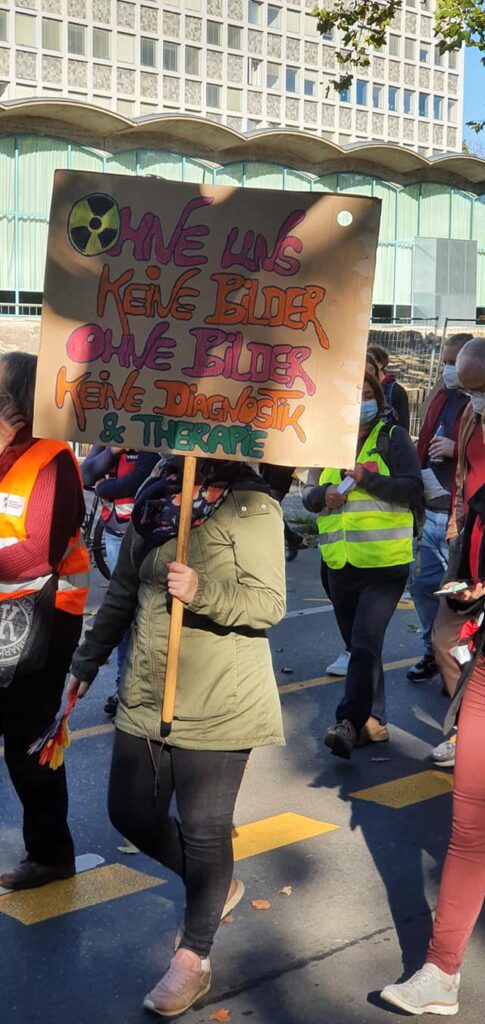
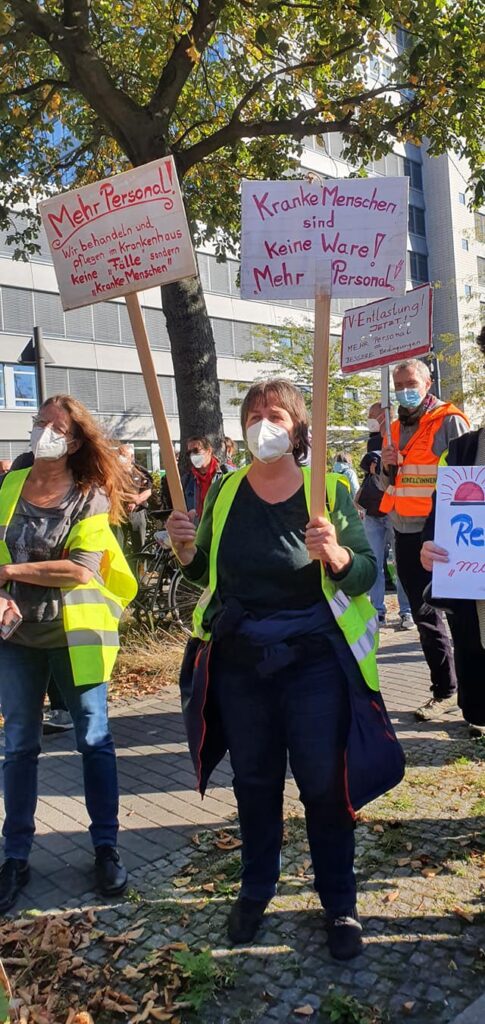
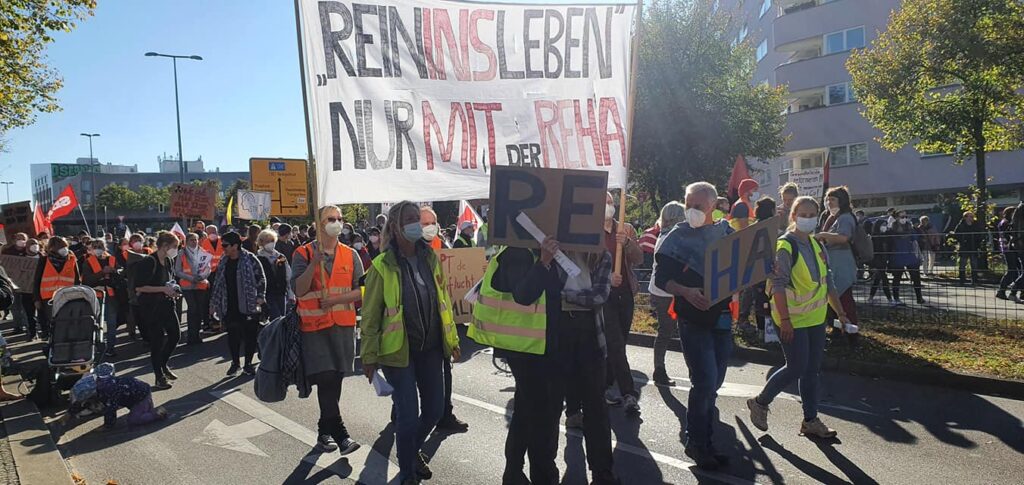
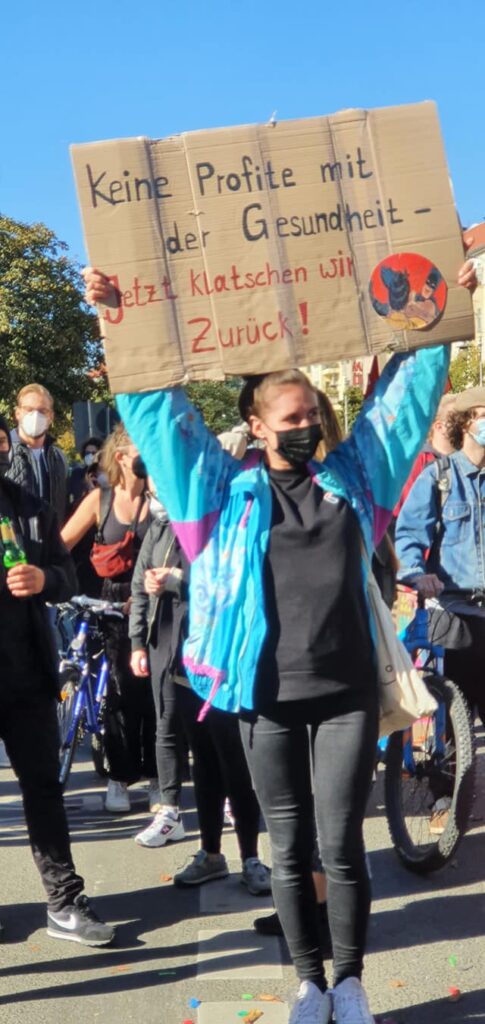
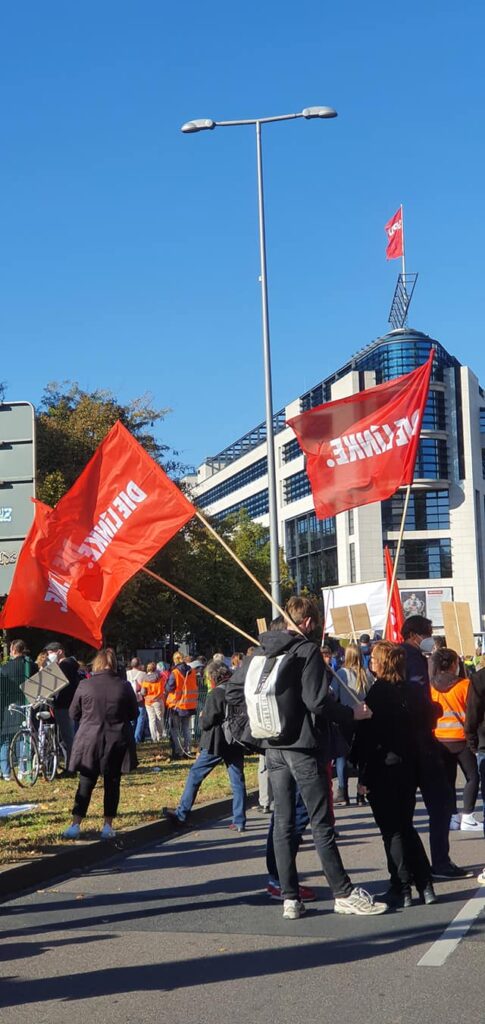
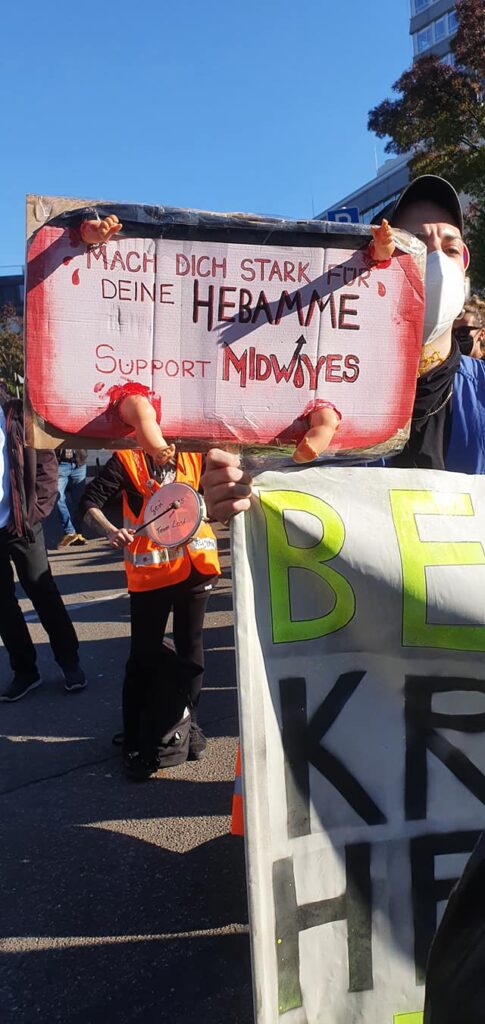
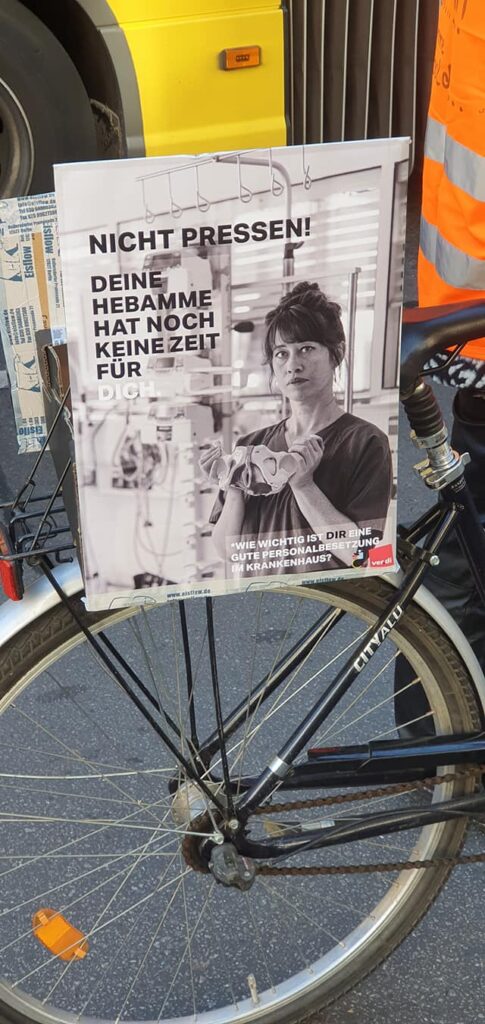
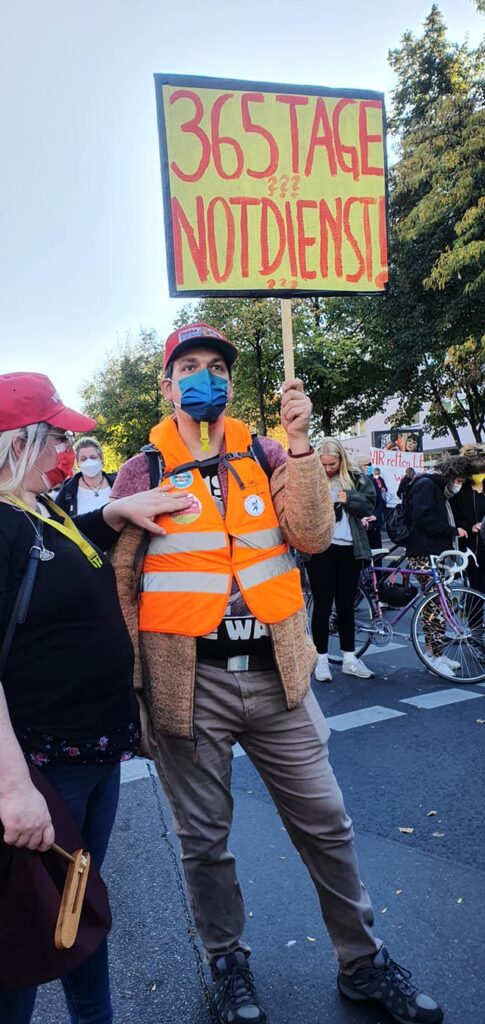
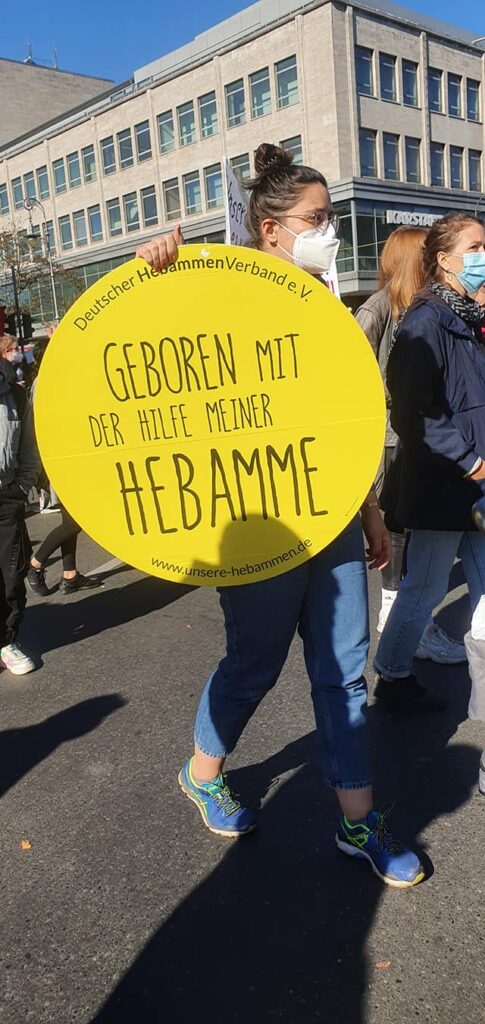
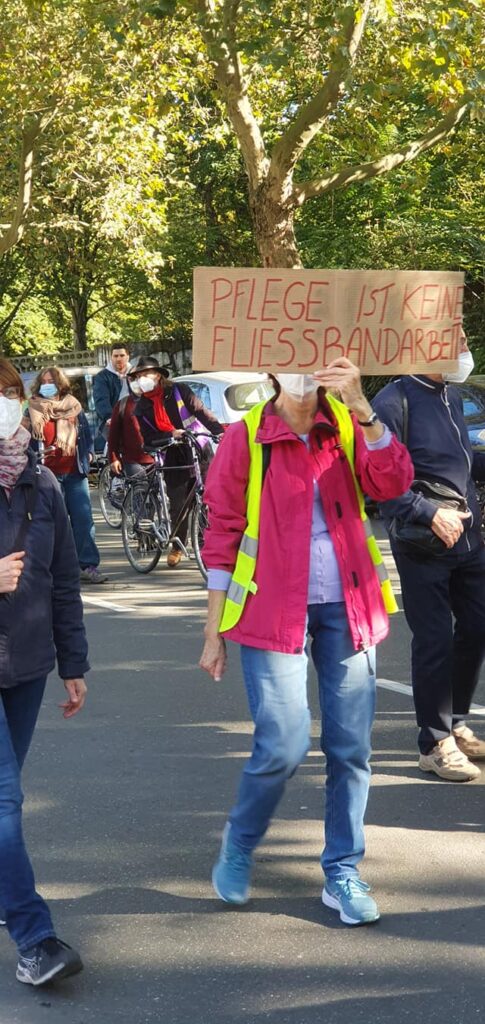
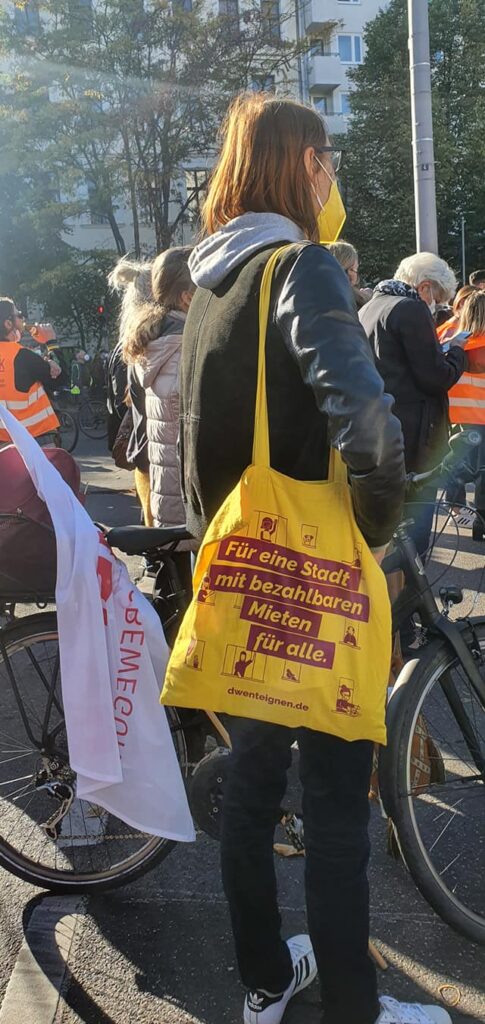
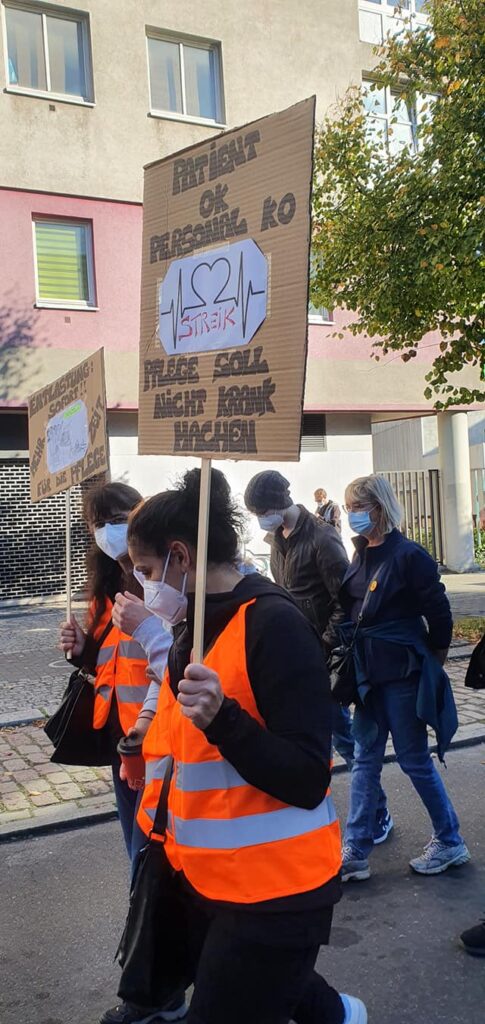
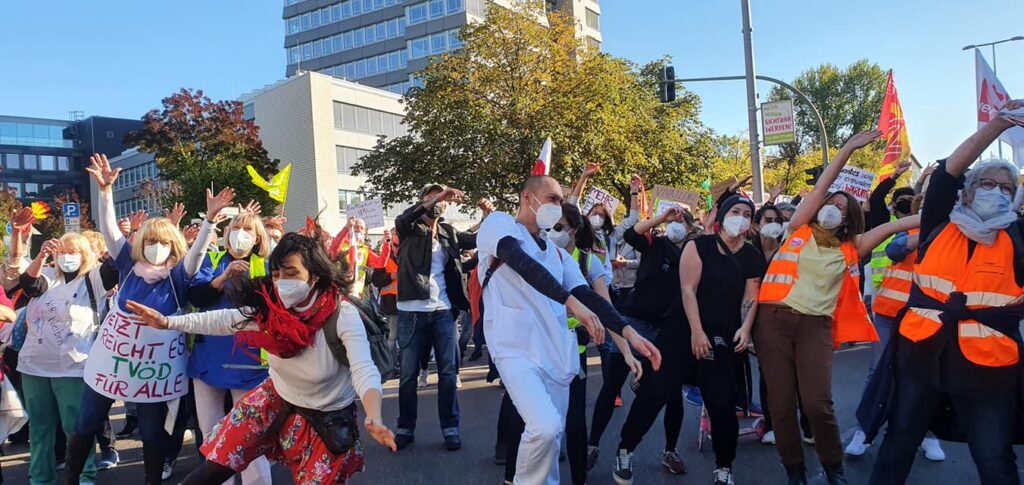
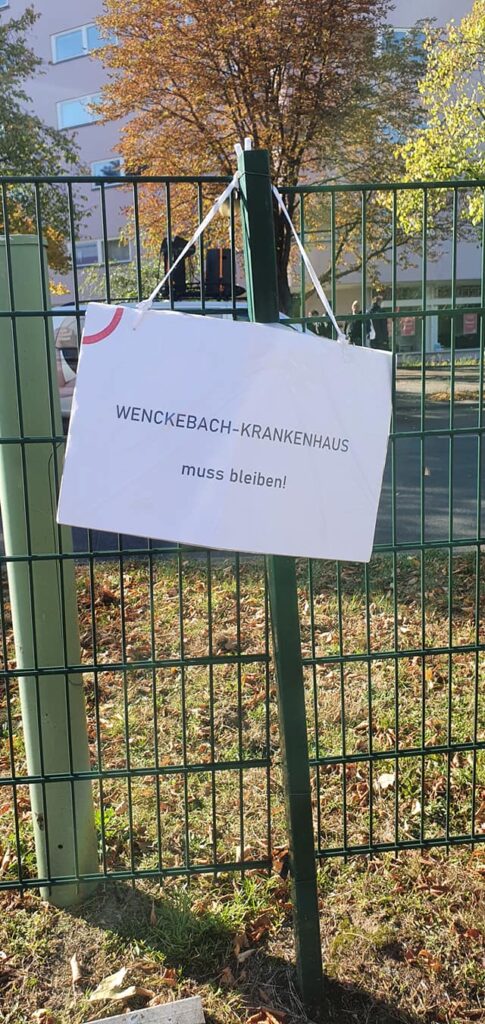
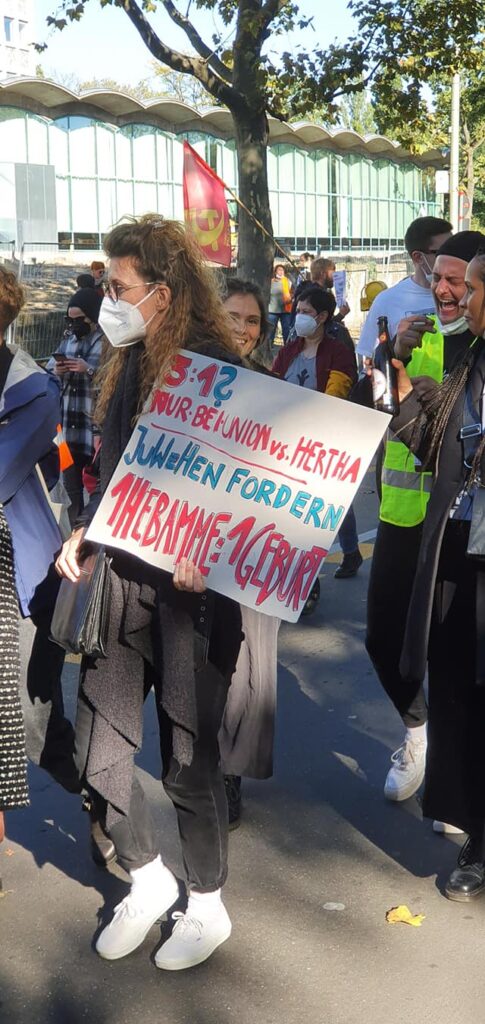
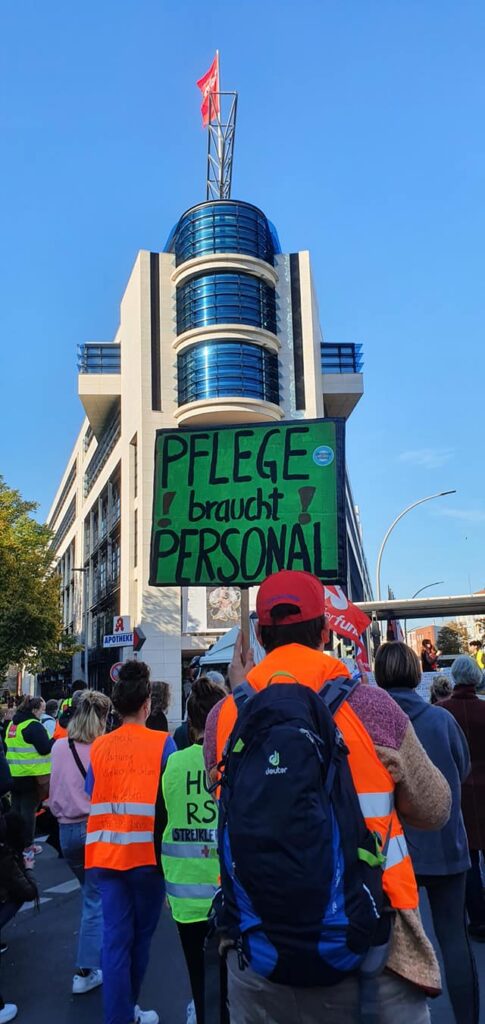
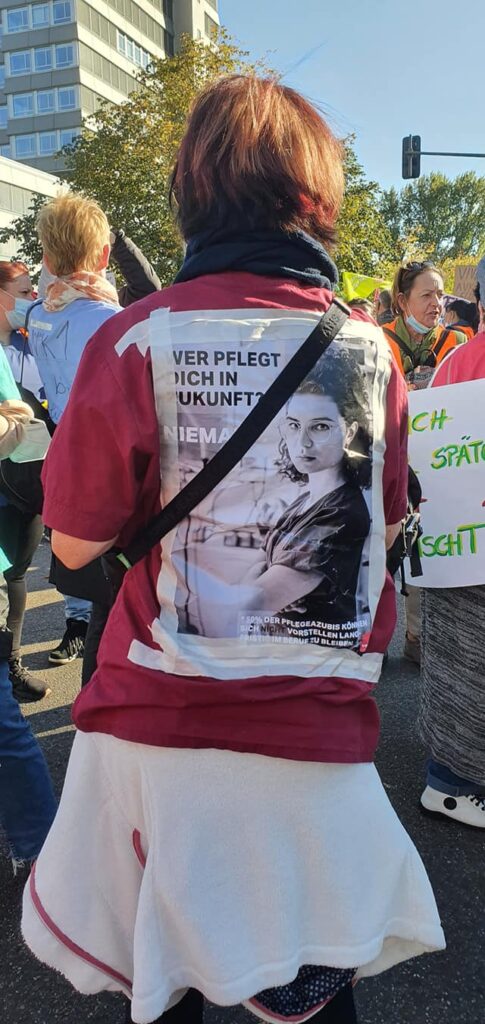
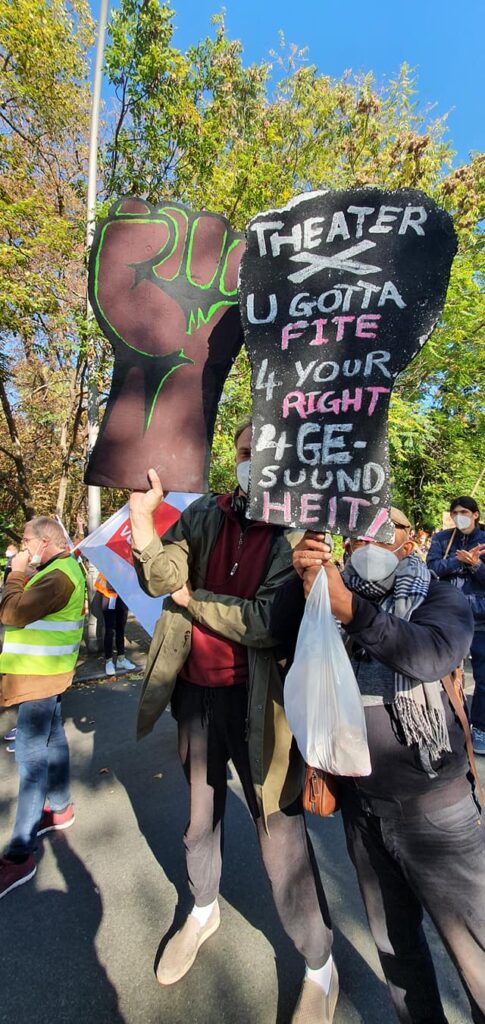
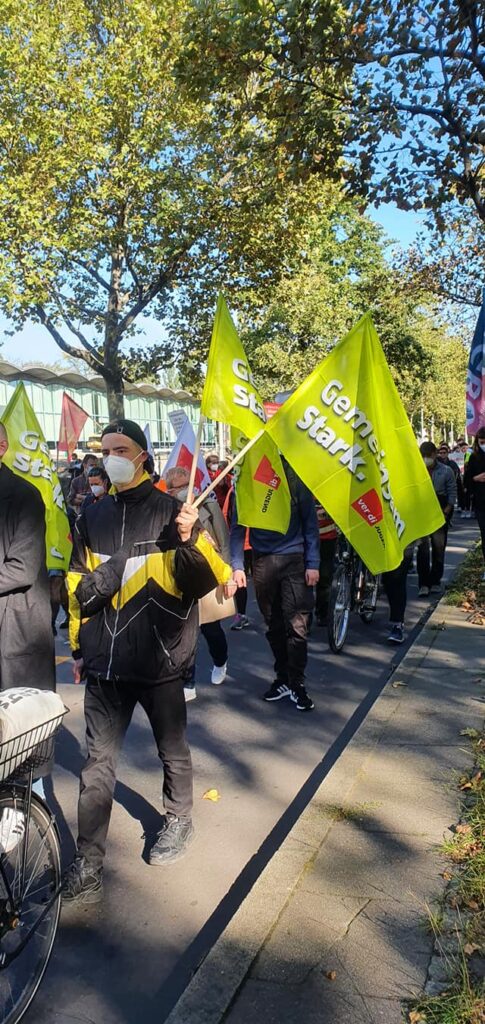
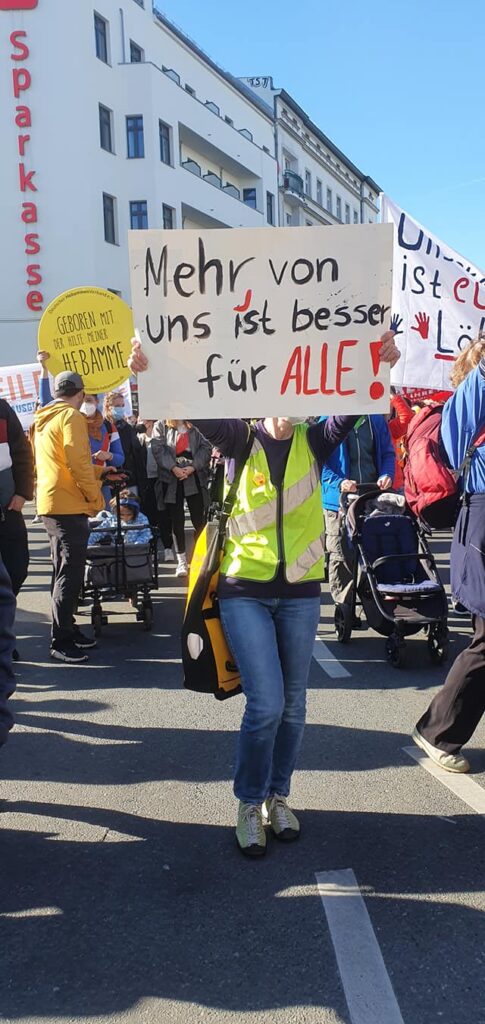
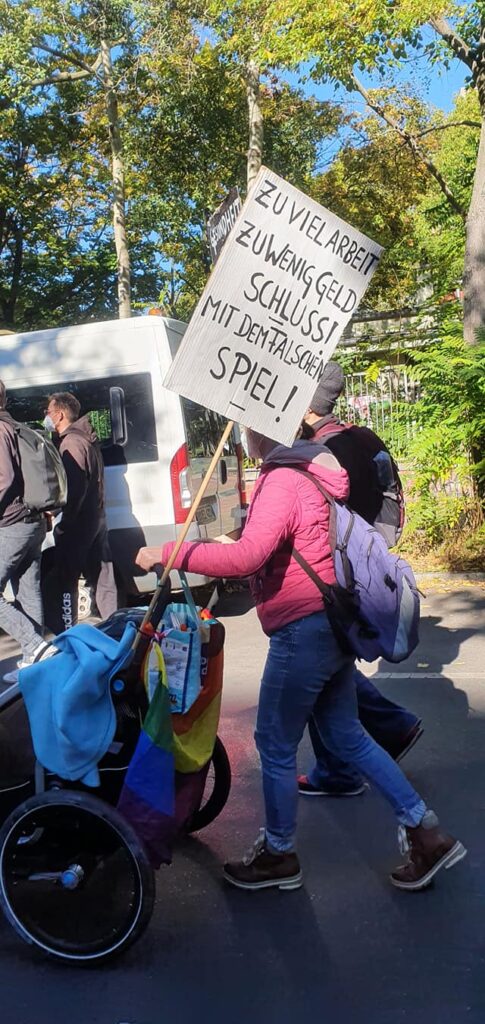
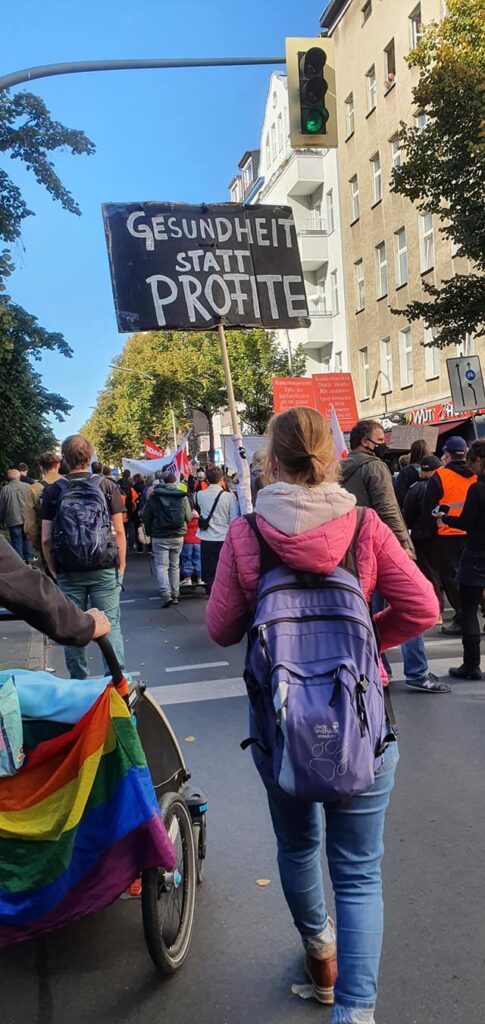
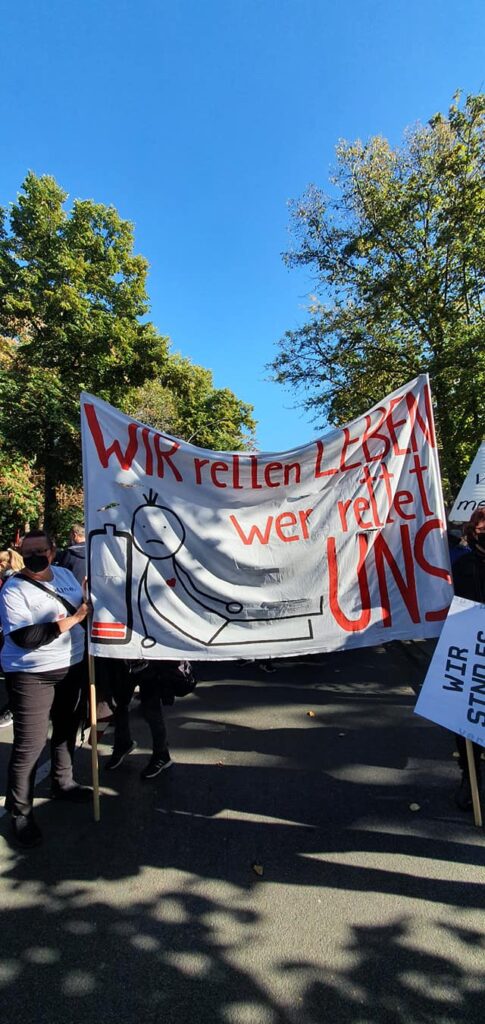
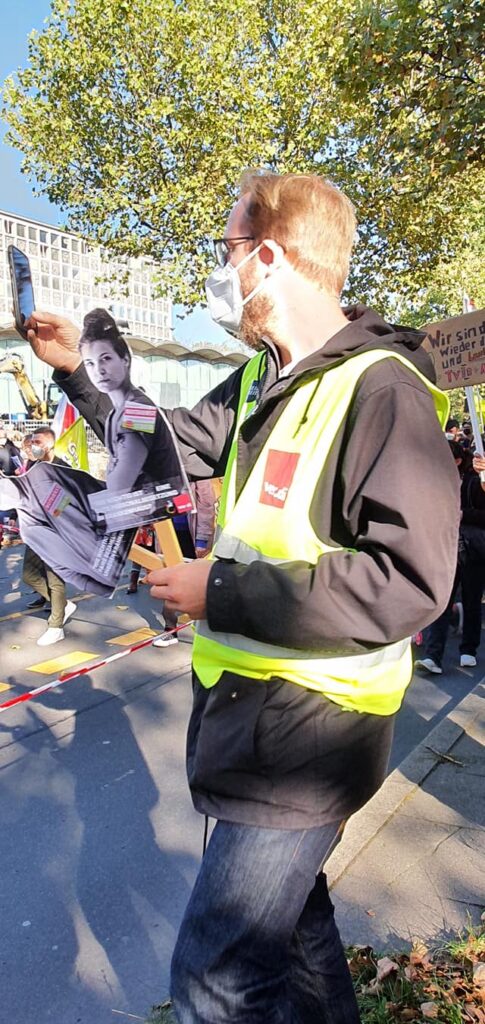
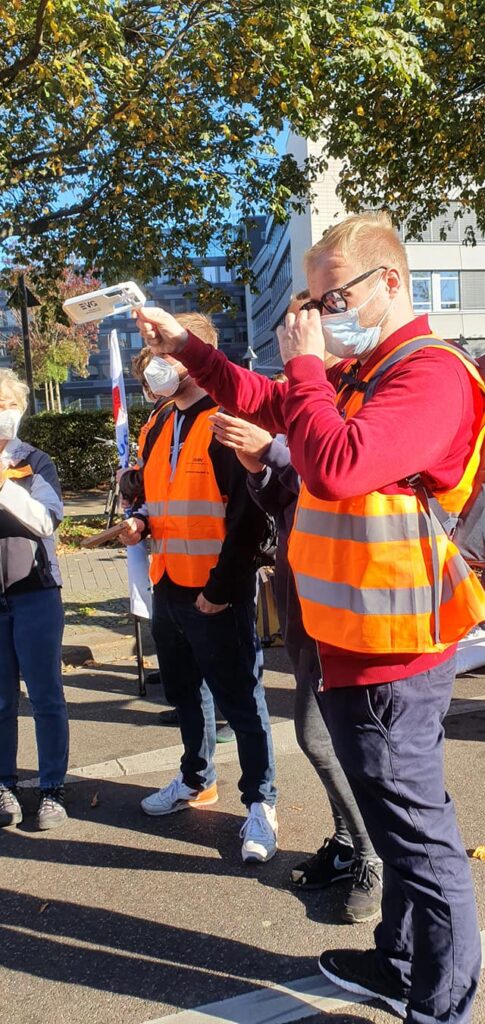
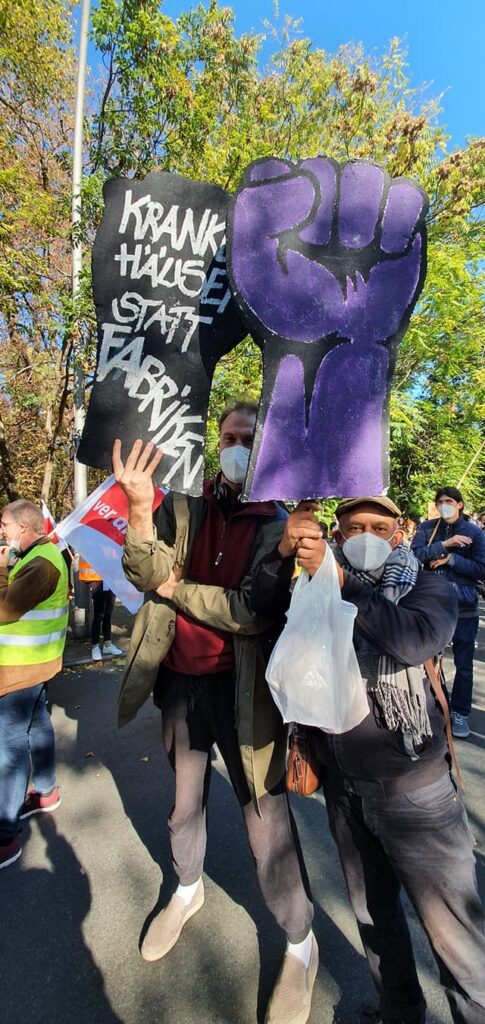
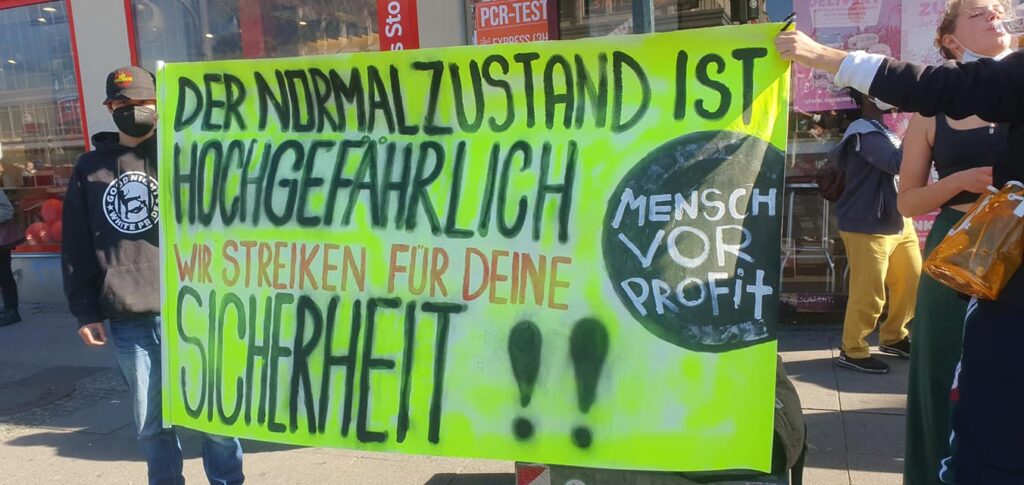
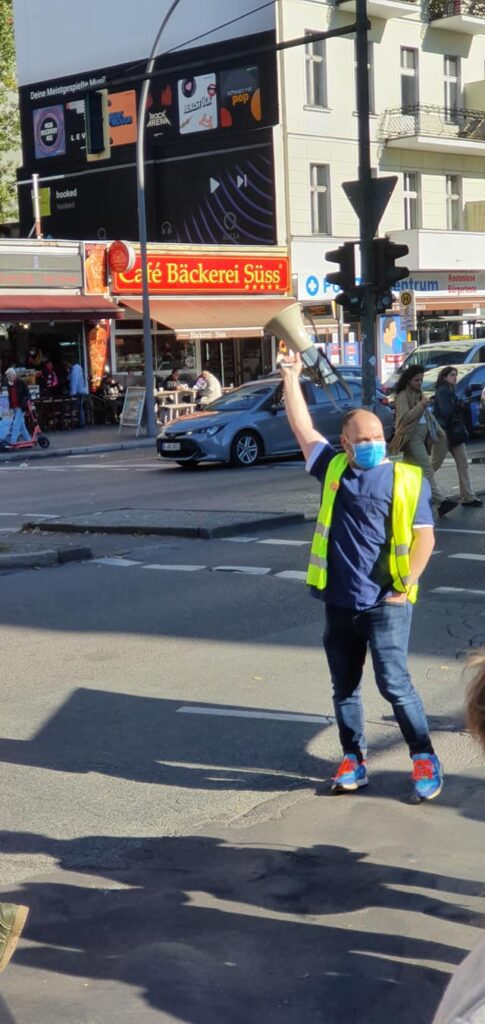
Photo Gallery: Demonstrating to Support Striking Health Workers, 9th October 2021