The Left Berlin News & Comment

This is the archive template

Why Should Expropriation Be a Utopian Dream?

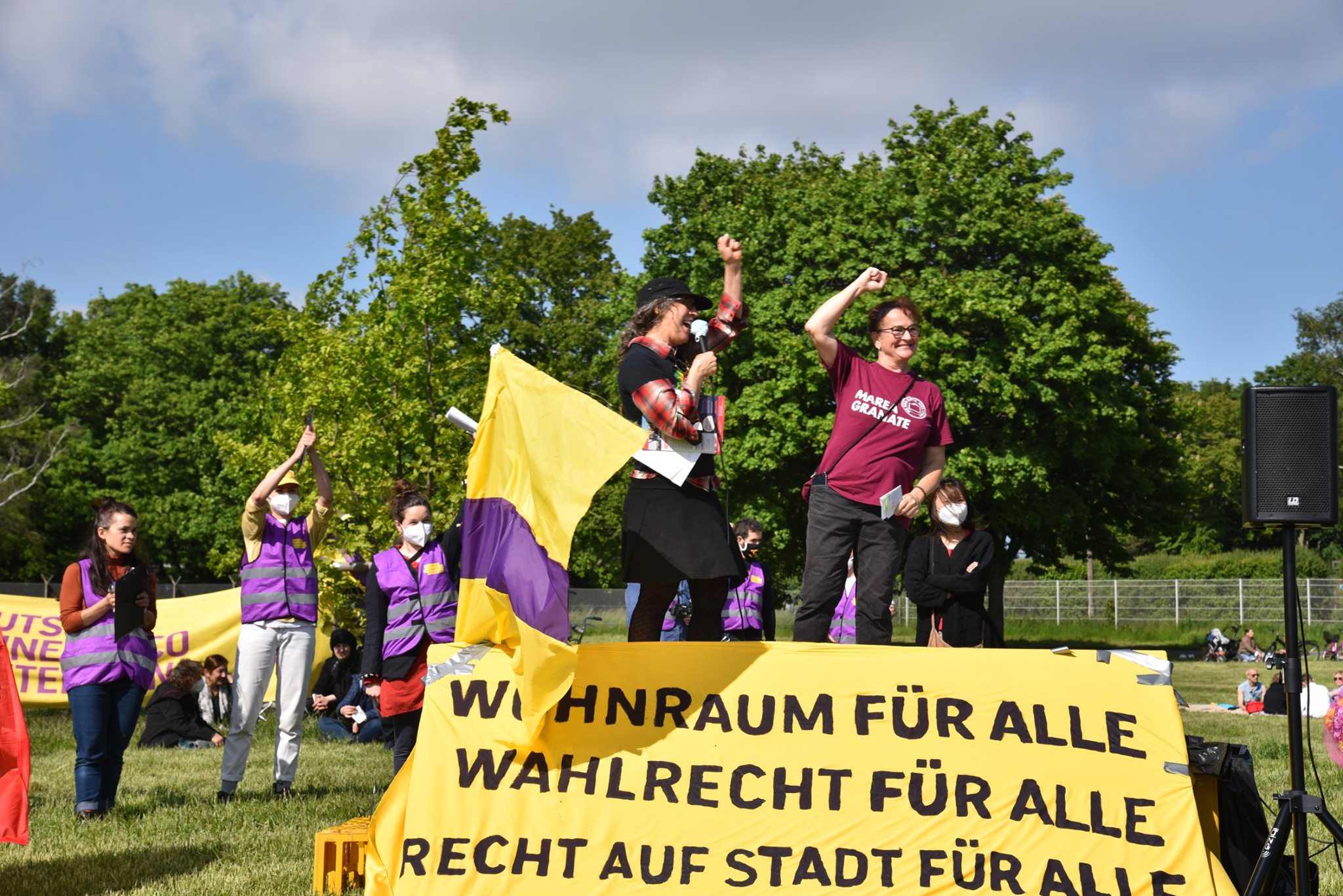
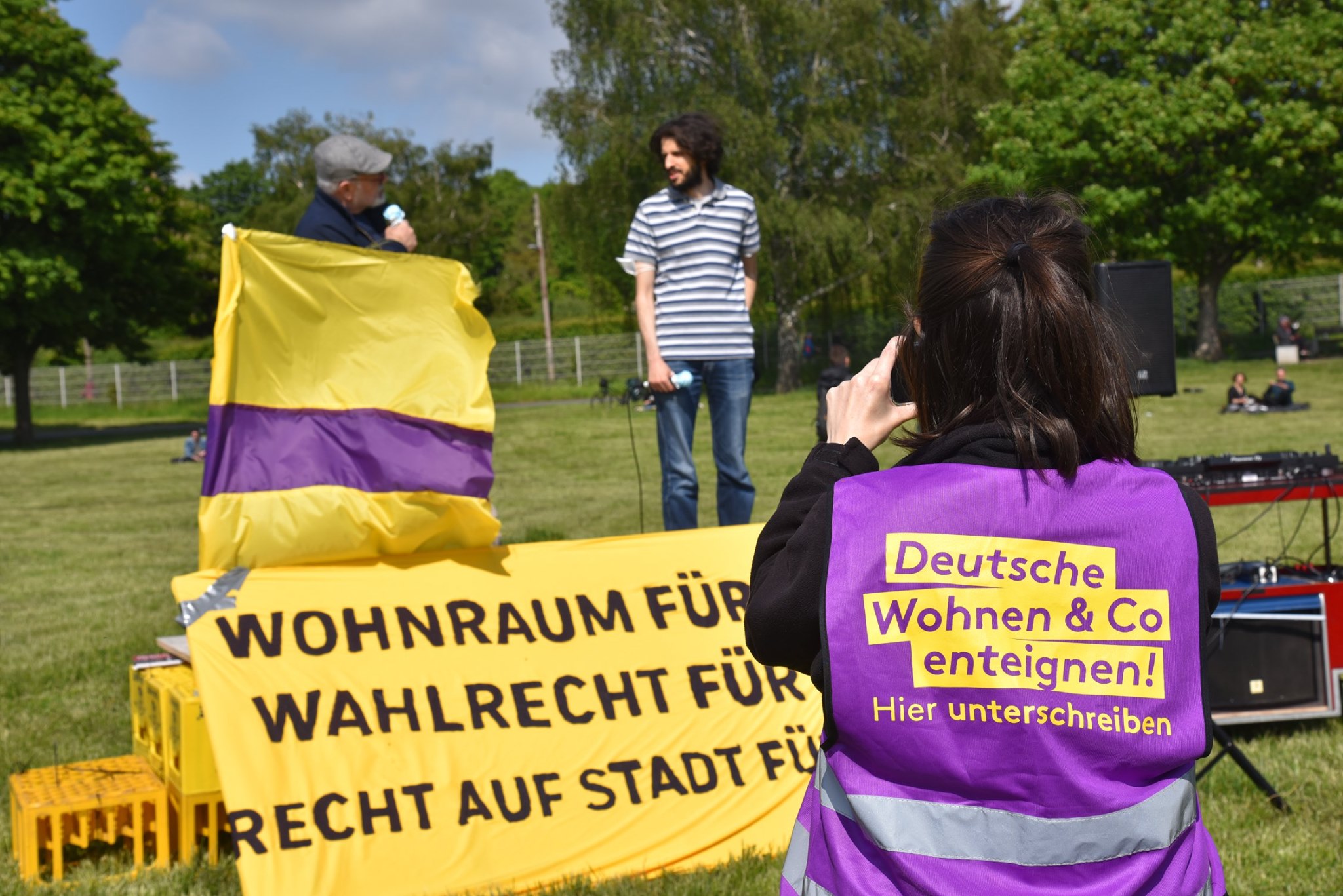
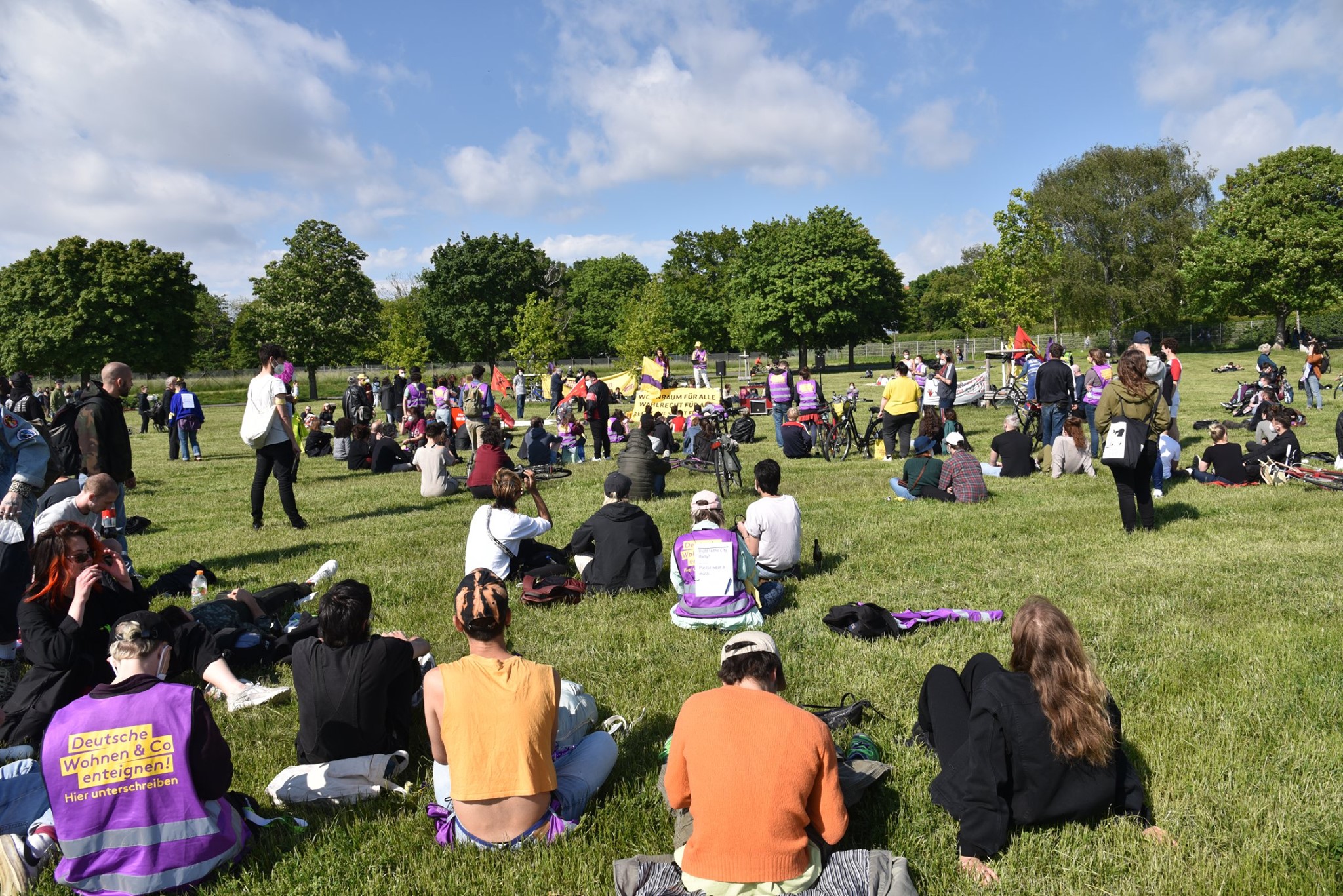
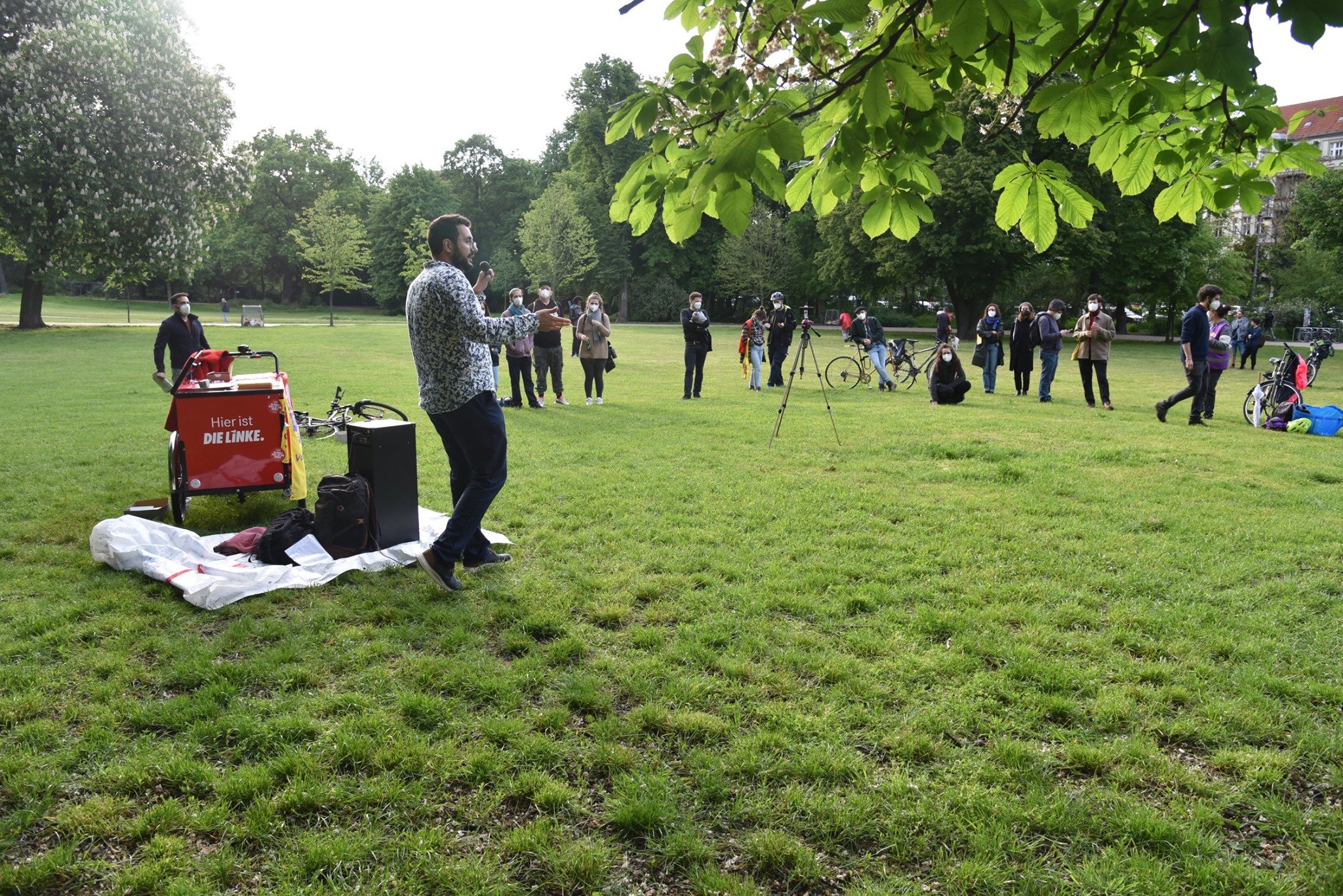
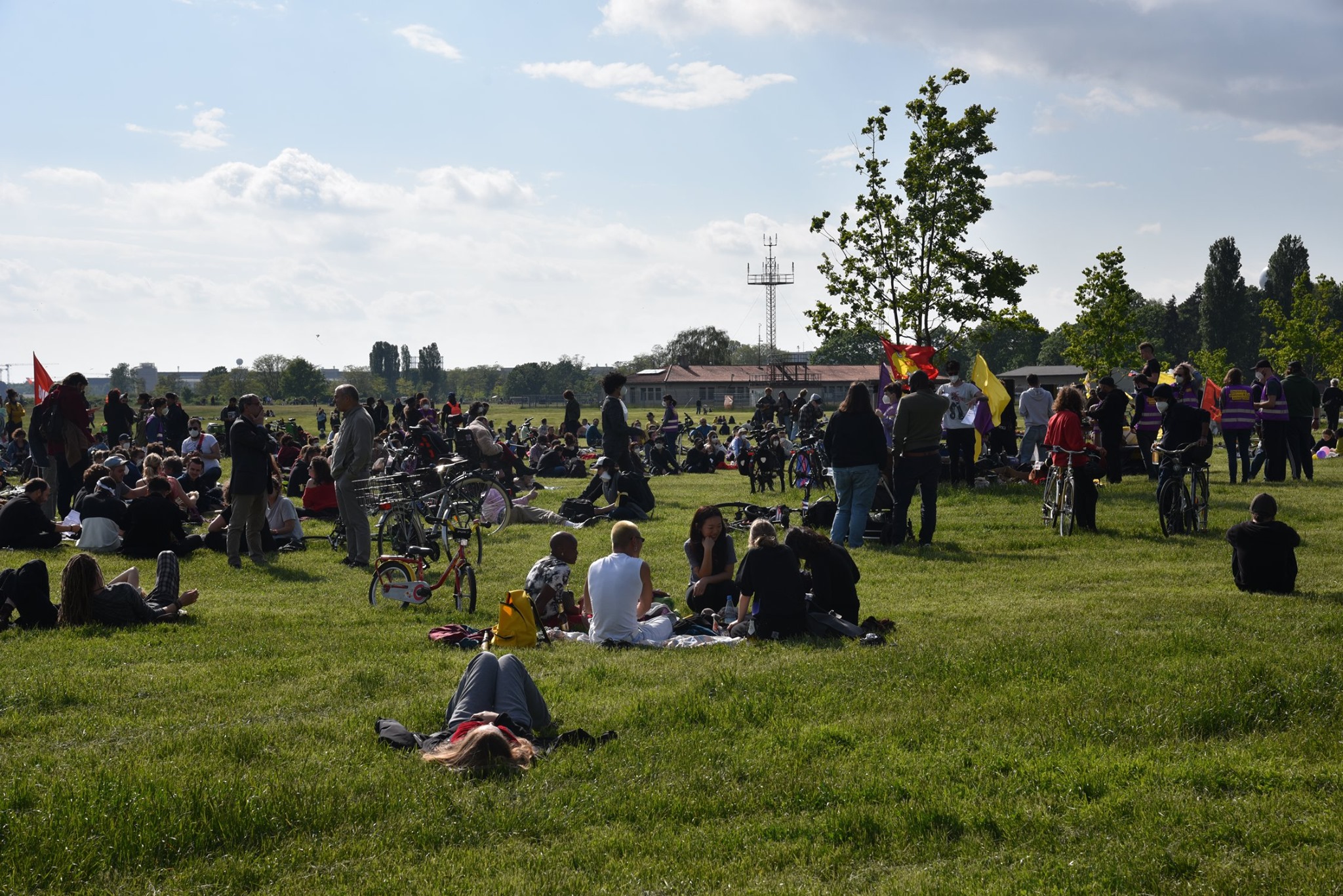
Speech at the Right2TheCity Rally, Tempelhofer Feld, 29 May 2021


31/05/2021

It somehow feels like a utopian vision when you wish for everyone in this city to have a roof over their head. But why should it be?

So many speakers today have already talked about how housing is a fundamental human right. How migrants are disproportionately affected by rising rents and are consequently pushed out of their communities, out of their homes, out of the housing market completely. And how the capitalists use every opportunity they get to make more and more money, lining their pockets with an ever higher proportion of our wages.

We, as DIE LINKE Berlin’s international working group stand behind the demands of the Right to the City For All group, many of us are also part of it, and we support the entire DWE campaign to make this city a better place for everyone to live in.

Because how absurd is it that something that’s a necessity has been turned into a commodity? And how absurd is it that we, as a society, have not only turned being a landlord into a job but also one that’s immensely profitable?

How absurd is it that it is a daily concern for many of us that someone who owns the flat or building we live in might one day decide that they want us to leave, and once they do, we know they will do everything in their power to kick us out?

And we can only be thankful that we are not living under occupation, like those across Palestine, who are being forcibly dragged out of their homes by the police and the army, or whose homes were destroyed in the last attack on Gaza. With us this is not as direct, or obvious, or genocidal. Although it’s part of the same capitalist system that oppresses us all across the world.

I’ve experienced many frankly ridiculous situations related to the Wohnungsmarkt while living in this city. Among other things which show that you, as a newcomer, as a migrant, are always on the back foot, always having to compromise on something, accept conditions which are not ideal and never feel a sense of stability.

I’m far from being the only one, or even one that can claim to be especially marginalised. This is just reality. And what I know is that this shouldn’t be something that I am constantly thinking about — no one should. And it shouldn’t be something that pushes me to act selfishly, individualistically, against my politics, because I’m scared that otherwise I’ll end up moving from place to place again every few months. It’s exhausting.

This campaign has given me hope that we can live and be with solidarity with one another again when it comes to the housing market. I have been inspired by the cross section of people involved in collecting signatures and being actively in the many possible ways.

We, DIE LINKE Berlin’s international working group are a group active within a party for which most of us cannot vote in elections. Therefore we stand strongly behind the demand for full voting rights for all those living in this city, and many of us have been involved with the group. Because how can we expect migrant-friendly policies to be made if migrants are not allowed to have their say?

We believe that all those who live in the city should have a say in what happens in it. Should have an equal right to be here, and equal access to what the city has to offer. The fact that this isn’t the case even in a city where almost a quarter of its population doesn’t have citizenship is laughable. And this is on top of those with citizenship who get discriminated against for other reasons when it comes to housing.

So we believe in the right to the city for all, and fully stand behind the group’s demands. But first — enteignen!

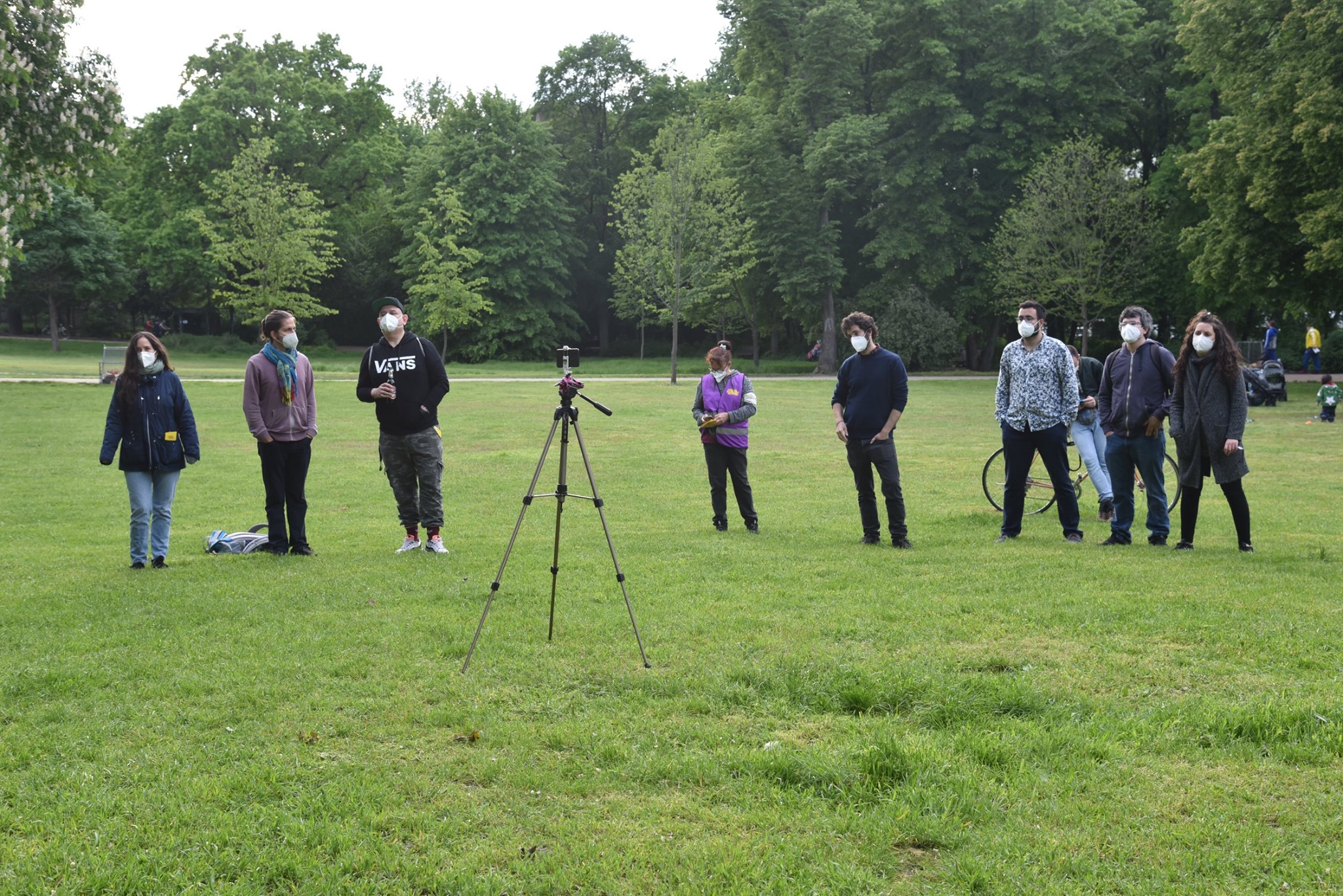
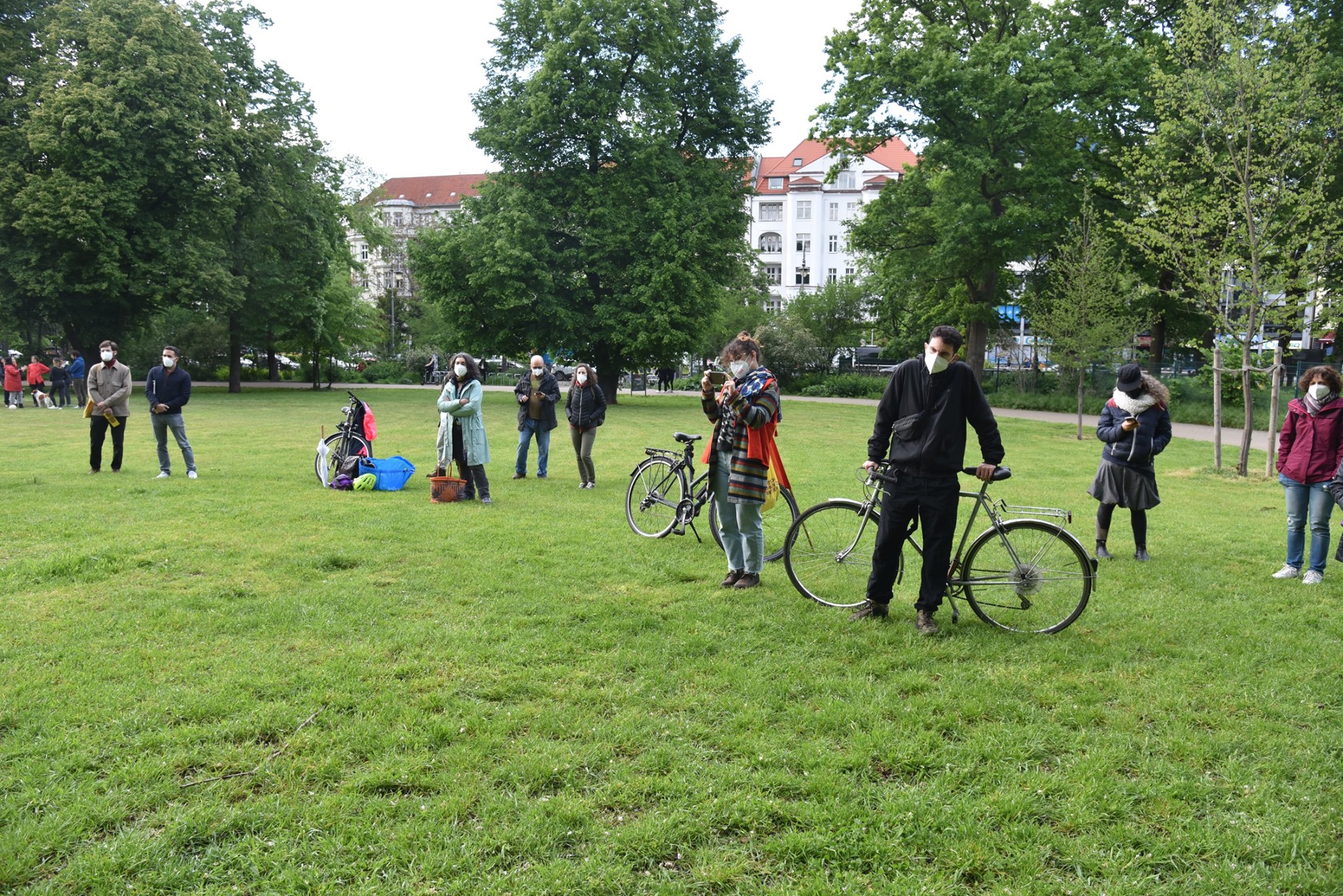
Pictures from the Right2TheCity Rally, 29 May 2021 by Noemi Argerich, Phil Butland, Jaime Martinez Porro and Jorge A. Trujillo

End ‘vaccine apartheid’ – no one Is safe until everyone is safe

Keep our NHS Public supports the call for a ‘People’s Vaccine’

by Dr John Puntis from the UK ‘People’s Covid Inquiry’, on the international inequity in COVID vaccine distribution


30/05/2021

Carried away by the ‘vaccine bounce’ (undoubtedly a major factor in their recent electoral success) the government is myopically preoccupied with focusing on the pandemic only within our borders. This means the international dimension is being neglected with potentially disastrous consequences for us all. This is not just to do with a failure to secure our borders. It is also a failure to grasp the even more pressing need to advance the rollout of vaccination on an international scale.

We are beginning to take great sighs of relief thanks to our ability to secure a significant proportion of the globally available vaccine. But in other parts of our ‘one world’, including countries that vaccines will not reach for a year or more, the virus is still raging. Uppermost in our minds just now is the developing catastrophe in India – paradoxically the largest manufacturer of vaccines in the world. As highlighted in the British Medical Journal recently: ‘India’s crisis is everyone’s crisis’.

Charitable initiatives are not enough

Worldwide over the last three months the number of coronavirus cases has been steadily rising to its highest ever level. International organisations have been set up to try and ensure vaccine gets to those most in need. But these efforts rely on the largesse of rich nations and seem doomed to failure. The Vaccine Alliance, Gavi, for example, is:

. . . bringing together public and private sectors with the shared goal of creating equal access to new and underused vaccines for children living in the world’s poorest countries .

. . . Gavi is co-leading COVAX, the vaccines pillar of the Access to COVID-19 Tools (ACT) Accelerator. This involves coordinating the COVAX Facility, a global risk-sharing mechanism for pooled procurement and equitable distribution of COVID-19 vaccine”’

The Access to Covid-19 Tools (ACT) Accelerator was launched by the World Health Organisation (WHO) to facilitate the development of tests, treatments, and vaccines and to ensure their equitable distribution. Covax is supported by the WHO as well as the Coalition for Epidemic Preparedness Innovations (CEPI). Reliant on funds from charities and wealthier countries and struggling to obtain supplies, its aim is to vaccinate health workers and high risk people in all countries by the end of 2021 – about 20% of the world’s population. This is a laudable but unambitious aspiration. The failure in equity of global distribution and adequate ramping up of vaccine manufacturing capacity will only ensure this pandemic will run and run, with risks of new variants emerging and driving further waves of infection. National leaders must recognise not only their own national but also wider global responsibilities in responding to the pandemic. Their tragic failure on this international front is illustrated in the graph that shows the miniscule amount of vaccine that Covax has in fact been able to secure. (A clue: Look at the *bottom of the graph*.)

The difficulty arising from the constraints on the WHO in having to work within the limits of international consensus was captured in a ‘Hardtalk’ interview with David Nabarro in April 2020. Stephen Sackur introduced his guest with the daunting assertion:

There has never been a greater need for an internationally co-ordinated response; that is where the WHO should come in…but right now the WHO itself is at the centre of a political storm; Trump has withdrawn the [major] American funding accusing the WHO of being China-centric”.

Nabarro preceded his robust and forensic defence of the WHO’s handling of the evolving pandemic with a stark warning – that as lockdowns are released if they are not fully defended, the outbreaks will build up again – poor countries being particularly at risk:

The pandemic will be a threat to every country and every population in the world; the only way we will get on top of it and ahead of it is if every society everywhere is knowing about it and is able to interrupt transmission for themselves … the capacity to defend against it and learn how to live with the constant threat of the virus is going to be the key for the future of humanity”’.

At the recent Global Health Summit on the 21st May 2021, leaders from the G20 nations reaffirmed their support for the Access to Covid-19 Tools (ACT) Accelerator. However, a year on – and as the global death toll from the virus surpasses three million – there is still a funding gap of $18.5bn (£13.1bn; €15.1bn) for the accelerator. Covax still has precious little stocks of vaccines. The policy lead for the People’s Vaccine Alliance commented:

“ . . while world leaders spoke eloquently about the ‘gross inequalities of global vaccination’ their solutions were still the same tired ones that have failed billions of people who remain unvaccinated and vulnerable to infection. Nine people are dying every minute [of covid-19] while the vaccine stores of Covax—a multilateral initiative to get vaccines to developing countries—lie empty”

also remarking that G20 leaders had:

. . once again ceded control of this pandemic to a handful of pharmaceutical corporations which have had more than a year to voluntarily share their intellectual property and know-how but have instead put profits before people at every turn.”

An end to vaccine hoarding is urgently needed

We now have a situation where only 0.3% of total vaccine doses have gone to Low and Middle Income Countries (LMICs), a state of affairs some characterise as ‘vaccine apartheid’. Only 1% of the 1.3 billion vaccines injected around the world have been administered in Africa, and only enough vaccine delivered to protect 2% of the population. Meanwhile, rich nations are currently vaccinating their low risk citizens, ahead of health workers and high risk people in LMICs. Wealthy countries have even bought more vaccine supplies than they can use and are sitting on them. Canada has enough to vaccinate everyone ten times and the UK eight times over (see graph). An ending to vaccine hoarding by rich countries is urgently needed.

Those advocating a ‘people’s vaccine’ say the charitable model of Covax is wholly inadequate to meet need and that what is required is for a way LMICs can manufacturer their own vaccines. There is also the Indian paradox of the world’s largest vaccine manufacturer experiencing one of the world’s worst outcomes from the pandemic. That is the tip of an alarming global iceberg. Problems of disease suppression are compounded by leaders who: are not fit to lead; who have knowingly run-down public health services over decades; who fly in the face of scientific evidence, are unwilling to learn from their mistakes; and who will do anything to hide their failures from those they are there to serve.

The People’s Vaccine Alliance – a new way forward

The People’s Vaccine Alliance is a global coalition of organisations and activists including UNAIDS, Amnesty International, Medact and Global Justice Now, leading the call for a people’s vaccine. It argues that pharmaceutical corporations must allow the covid-19 vaccines to be produced as widely as possible by sharing their knowledge, free from patents. The first requirement is for a waiver of intellectual property protections on covid-19 vaccines including on their raw materials and components. This call has now been supported by President Biden in the US, and by the Gates Foundation. The next two conditions are transfer of technical knowledge from vaccine makers in the global north to regional hubs or direct to manufacturers in the global south, together with subsidies for manufacturing in LMICs.

The UK – precariously balanced in a global pandemic

Our ‘People’s Covid Inquiry’ has highlighted together with many other voices the decades of running down of our public services including public health and the NHS. That compounded the delay in taking the pandemic seriously; delay in implementing lockdown; using the pandemic as an opportunity for cronyism; outsourcing ‘test and trace’ resulting in a hugely expensive failure; failing to protect those in society who are most vulnerable. All of these have contributed to a staggering 150,000 deaths.

We now have seen our UK overseas aid budget cut by £4bn even though the Conservative’s manifesto pledge promised it would be maintained, just at a time when aid has become even more important to help LMICs survive the pandemic. In March this year, when asked about donating vaccines to poorer countries, Culture Secretary Oliver Dowden claimed the UK did not have a surplus. The Prime Minister stated lamely that:

“ . . all our international goals rest upon keeping our people safe at home

If diplomatic sensitivity effectively silences the WHO in calling out individual government’s response to the pandemic, that role must then fall to citizens, as in our People’s Covid Inquiry. ‘No one is safe until everyone is safe’ cannot be allowed to be a mere slogan.

It is a sentiment that must dictate what we do as a nation, a nation that recognises and embraces the reality that we all share one world and that nationalism plays no part in fighting a pandemic. Clearly there is much more to be done on an international scale to protect us from both the present and the next pandemic, but little sign that the current government will be the one to deliver the vision and change we urgently need.

“I Wanted to Show the Beauty of Gaza, Not Only the Destruction.” Review – “Eyes of Gaza”

An Exhibition of Photographs by Children from Gaza Is More Relevant Than Ever Because of the Recent Bomb Attacks


28/05/2021

The opening of the Eyes of Gaza photo exhibition on 18th May was supposed to be broadcast live from the Forum Factory in Berlin. But, in solidarity with the Palestinian general strike on the same day, the event was recorded and broadcast the following day.

Preparation of the exhibition has been beset by setbacks. It was postponed from February because of the Coronavirus pandemic. Now only a small number of socially distanced showings can be organised in Berlin, before the exhibition moves to Gütersloh, Freiburg and Brühl.

Meanwhile, photographs and film by Amjad Al Fayoumi, which were supposed to accompany the exhibition, could not be seen after his office in Gaza was bombed by Israeli planes. Fortunately, Amjad’s office was not flattened, unlike the 33 press offices which were destroyed during the 11 days of bombing, as reported by the Palestinian Journalists Syndicate.

So, what’s it all about? It’s a simple concept, really. A group of kids in Gaza, aged between 13 and 17, were asked to take photographs of themselves, their families and of their lives. The results are remarkably powerful.

It was strange attending the exhibition while bombs were raining down on Gaza, knowing that the landscapes we were looking at may no longer exist. These photos were taken in 2020, during a time of relative peace when the greatest fear was of the early days of Covid. This means that we see plenty of photos of families cooking and playing together, not sure whether they can go outside.

When we do leave people’s homes, the images that we see of Gaza stand in great contrast to the recent destruction. Here is the olive harvest, here fishermen are going out to sea, there is a crab being held above the beach. Next to the photo of the crab, there is the following quote from Jan Khaled who took the picture:

I am the only girl in the family and the eldest. My hobbies are painting, music and acting. I like music a lot. I play guitar and the qanoon. I want to be an influencer on social media; I like to be in front of the camera. The sea is the place where I like to be the most. I wanted to show the beauty of Gaza, not only the destruction. Gaza and Gazan people are beautiful in my eyes.

These quotes from the photographers help contextualise what we are seeing. Many of the pictures remind us that Gaza looks out on a sea which is both tempestuousness and quite beautiful. Samar Sharaf, who photographed fishermen and sea shells explain what this means to her.

I go to the sea almost every day. I was born in Ukraine and I lived my early years of childhood there. In Ukraine there is no sea; when I came to Gaza I fell in love with the sea. I started collecting seashells, and I decided to celebrate what I had collected over the years in professional photos. I will send this photo to my family and friends in Ukraine, so they can see the sea of Gaza.

And yet for all the beauty and apparent normality, we are occasionally reminded that Gaza is anything but a normal place to live. The kids have all grown up during the debilitating blockade. The recent Israeli bombs were also nothing new to any of them.

Baraa Faraj chose to photograph his young cousin holding a teddy bear. He explains:

When I was 9 years old, our house was destroyed during the war on Gaza in 2014. I was very sad because I lost everything, my house and my room where I had my toys and all my things. Days after the destruction, I was able to save my teddy bear from underneath the rubble, and I was so happy to find it; I keep it with me in my room until this day. My little cousin is one of the few kids who are allowed to play with it.

In a similar vein, Dania Hamad took evocative monochrome pictures of tiles saved from her father’s uncle’s house which was destroyed in the 2014 bombing. Thinking of her father’s death that year and of Mahmoud Darwish’s poem ‘Forgotten As If You Never Were’, she says “I sometimes think the world forgot about us in Gaza.”

Because of the ongoing situation in Gaza, the exhibition opening was addressed by Fidaa Zaanin, a Gazan who is currently living in Berlin. After the opening Fidaa told me how the exhibition affected her:

The past 11 days were not easy, I barely ate or slept thinking of what is going on in the Gaza Strip, documenting names, and pictures of martyrs, seeing bombs fall like rain on my beloved Gaza, and massive destruction everywhere. All the time I felt I’m physically in Berlin but mentally in Gaza, with my people, but when I visited the “Eyes of Gaza” exhibition, seeing the faces of young Gazan photographers, looking at their work, their memories, their favorite spot in the house and their hobbies and how they view life in Gaza. All the amazing pictures they took tell us a lot about their lives and dreams, but also about Gaza, I could relate to their work, the sea is also my favorite spot in Gaza, the pictures they took became very personal to me too and at that moment I felt like I’m physically in Gaza.

I also had mixed feelings, of pride and heartbreak, knowing that the places in the pictures are being bombed by Israel at the moment, those memories might have been wiped out, I prayed that all those photographers are alive and safe, and will get the chance to be in Berlin one day and organize the exhibition themselves.

It would be easy to patronise the photographers and say that they are good for their age. In truth, they are good for any age. Eyes of Gaza gives us a view of Gaza which is rarely visible to Western eyes. Chances to view it are limited. If you do get a chance, don’t waste it.

The Eyes of Gaza exhibition can be seen in the following cities:

  • Berlin from 12 June: in Ulme 35, Ulmenallee 35, 14050 Berlin
  • Gütersloh from 18 June
  • Freiburg 9-16 July: in ArtRaum Gallery, Hildastraße 17
  • Brühl (near Cologne) in September

Hopefully, more dates will be announced soon. If you would like to host the exhibition in your town, write to contact@zaitwaza3tar.berlin

Read our interview with exhibition curators Nahed Awwad and Cora Josting here.

Christine Buchholz MdB on discussing Palestine in Germany

My contribution to the discussion with Haneen Zoabi and Susan Neiman organized by The Left Berlin – Internationals working group


27/05/2021

Question: How is the bombing of Gaza being discussed in Germany

My sympathy goes out to all those who have lost loved ones and friends in Israel and Palestine. In the current escalation, but also as a result of occupation and blockade over the last years.

At the same time, I know that grief and compassion are not enough to understand the recent escalation.

After the crimes of German fascism and the Holocaust, a left position can only be one that vehemently fights every form of discrimination, exclusion and racism. A position that consistently opposes antisemitism – in general (mostly antisemitic crimes come from the right) and also against attacks like those on Synagogues like in Gelsenkrichen- , anti-Roma Racism, anti-Muslim racism and every other form of racism.

A left position can only be a universalist one. That is, a position that defends human rights for all people – regardless of where they live.

A left position must be internationalist and emancipatory. It starts from the self-activity of people as the decisive means for social change.

A left position must always take as its starting point the critique of the actions of its own ruling class.

A left position has to be consistently against war.

The German government and media

The German government stands firmly by the Israeli government.

Heiko Maas tweeted on Thursday: “Hamas has caused the latest escalation by firing over 1000 rockets at Israeli cities. Those who act so recklessly also bear responsibility for the appalling humanitarian consequences. Israel defends itself because it has to.”

An Israeli friend wrote to me: “This is incitement to violence! Israeli media and politics openly quoting foreign politicians saying‚ ‘Israel’s right to self defence‘, is a carte blanche to bomb Gaza and refuse ceasefire talks.”

This is also the main position in mainstream media in Germany.

Positions in Die LINKE

There are different reactions in DIE LINKE.

There is a minority taking a similar position to Heiko Maas.

The main position is to take a balance between both sides and be against the violence of all sides.

This can lead to speechlessness in the face of the asymmetry of war.

I was positively surprised by the statement of the student association SDS, which took as its starting point the current escalation of forced evictions in Sheikh Jarrah and thus the structural violence that characterises the situation in Israel and Palestine. They wrote:

“As leftists, we are always on the side of the oppressed. We fight against all forms of racism, no matter who it affects. We want a good life for all in justice and peace. That is why we demand an immediate stop to the evictions as well as to the construction of further settlements. We demand a ceasefire. Because those who suffer from escalation are the populations in the whole region. We call for an end to discriminatory and racist laws. And we call for strengthening those who fight for peace and justice in Israel and Palestine. By not remaining silent, but by taking a stand.”

This is the right position to take. From here we have to criticize the support our government gives to the war.

Question: 2 years ago today (15th May), the German Bundestag passed a resolution against the Boycott, Divestment and Sanctions (BDS) campaign. What are the various responses of Die LINKE to the Bundestag resolution?

The aim of this resolution is to silence criticism of the right-wing Israeli Government, to silence Palestinian voices and to silence critical jewish-Israeli voices.

It aims to silence criticism of the federal government supporting the right wing Israeli Government.

This is not forced upon the German government by something like a ‘Zionist lobby’. This is done in full consciousness by the German ruling class and it has to do with their own interest as an imperialist actor.

The debate about BDS was preceded by a resolution in the Bundestag against antisemitism.

In January 2018, the CDU/CSU, SPD, Greens and FDP introduced a joint motion on anti-Semitism in the Bundestag, which – in addition to positions that could be approved – blames Muslim migrants in particular for strengthening antisemitism in Germany. The motion also condemns the BDS campaign.

The AfD, which wants to hide its fascist wing and its antisemitism, was not attacked in the motion and could easily agree to it, since the motion assigned the main responsibility for antisemitism in Germany to Muslim migrants in particular.

For that reason, DIE LINKE did not vote in favour, but abstained, because it supported the other positions in the fight against antisemitism.

The initiative for the BDS motion clearly came from the right-wing spectrum of parliament. In April 2019 the FDP wrote a motion to condemn BDS, then the AfD put up a motion to ban BDS.

In May an inter-factional motion by the CDU/CSU, SPD, FDP and Greens under the title “Resolutely confronting the BDS movement – combating anti-Semitism” was passed by the Bundestag.

It claims that the BDS call “in its radicalism leads to the branding of Israeli citizens of the Jewish faith as a whole”. It says: “the patterns of argumentation and methods of the BDS movement are antisemitic”.

It adopts the IHRA’s working definition, which I have no time to go in to.

Position of Die LINKE

My position – and that of the majority of the left parliamentary group – was that this motion should be rejected.

My arguments:

  • It is inadmissible to denounce BDS per se as ‘anti-Semitic’.
  • DIE LINKE does not support the BDS campaign as other sister organisations do, but we respect it when people, out of criticism of the Israeli occupation policy, which has been condemned in numerous UN resolutions, support the BDS campaign.
  • Here, criticism and protest is directed against the policies of the Israeli government, and not against Jews. This is legitimate and must not be slandered in a blanket way.
  • Who benefits from equating criticism of the Israeli government with antisemitism?
  • First of all, the right-wing government in Israel.
  • The space for open debate has been narrowed far more dramatically in Israel itself. But also in Germany.
  • Conversely, this also makes it more difficult for criticism of PA and Hamas corruption and policies to be articulated within the Palestinian population.

DIE LINKE voted NO, but it was a weak NO.

This is, because our own motion shared many of the false claims of the government’s motion.

I was against it, but this was a minority position.

It had a weaker formulation than the government motion, relating the criticism to Germany and not the international campaign, but continues to place BDS in the context of antisemitism.

I criticised this motion:

  • Because it promotes the thesis that the call for a boycott would “brand Israeli citizens of the Jewish faith as a whole“ and thus promotes antisemitism.
  • Because it did not express any criticism of the German government’s policy towards the Israeli occupation and settlement policy and human rights violation.
  • It had no reference to the policies of the right-wing Nethanyahu government other than a general call for a peaceful solution to the conflict and the two-state solution.
  • It did not have the intention of counteracting the desolidarisation with the Palestinians.
  • It was not an offensive but a defensive reaction to the attacks from the right.
  • And it was a fearful reaction, because it believed that one can thus evade the attacks from the right.

But far from it:

Effects of the BDS resolution

In the time surrounding the decision, there were several decisions that made the fatal effect clear:

  • Cancellation of the account at the Bank for Social Economy for “Jewish Voice for Just Peace in the Middle East”.
  • Peter Schäfer had to resign as director of the Jewish Museum.
  • The Rosa Luxemburg Foundation was forced to cancel an event at the Kirchentag Dortmund with liberation theologian Ulrich Duchrow, Kairos Europe and Farid Esack, South African Muslim liberation theologian, activist of the anti-apartheid movement and representative of the BDS movement in South Africa.
  • The event moved to a lawn outside the Kirchentag. Later the Kirchentag president apologized to Ulrich Duchrow.

But also:

  • The Scientific service of the Bundestag took the Resolution apart.
  • Excluding BDS-affiliated persons or groups from using the event solely because of expected undesirable expressions of opinion is therefore incompatible with Art.5 para.1 GG.28
  • In particular, the resolution of the German Bundestag of 17 May 2019 – as outlined above – also does not constitute a basis that could justify such a restriction”.
  • This position is even taken by the lawyer of the Bundestag in a court case against the Resolution as a reason not to deal with the lawsuit against it.

If this is the case, it proves my point from the beginning:

  • The aim of this resolution is to silence criticism of the right wing Israeli Government
  • To silence Palestinian voices and to silence critical jewish-Israeli voices.
  • It aims to silence criticism of the federal government supporting the right wing Israeli Government.

Answers to Questions:

The Party committee of DIE LINKE decided on a declaration that is not perfect, but better than the statement of Susanne Hennig-Welsow and Janine Wissler the day before.

The one-sided and unambiguous positioning of the political establishment on the side of the right-wing Israeli government is not the position, as I perceive it, among the broad population. Certainly there is a minority that criticizes Israel on antisemitic grounds. That needs to be countered. But my experience is that people are empathetic against war and oppression.

One clear change is the emergence of a new Palestinian left, anchored in the migrant movements of recent years – such as Palestine Speaks – and linking up with Jewish leftists organized in the Jewish Voice or the Jewish Federation. These organize together to protest war and occupation, anti-Muslim racism and antisemitism. These organizations have managed to build connections with other, especially migrant, organizations and thus are able to better discuss the question of Palestine. Already before the event, ‘Palestine Speaks’ had declared: “Just as we do not need the solidarity of those who abuse Palestine for their antisemitism, we do not need the solidarity of Turkish fascists who want to poison our struggle. We are absolutely in solidarity with the Kurdish liberation struggle.” Only the German left, with a few exceptions, stands apart from this new leftist movement.

The debate of the Jerusalem Declaration is very helpful. I also want to recommend the study by Peter Ullrich on the IHRA Definition that was published by the Rosa Luxemburg Foundation.

What should we do now?

My suggestion is that the German Left takes these positions on the following points:

  • Supports the goals of Palestinian civil society – an end to the occupation and construction of settlements in the Palestinian territories, the removal of the separation wall, the recognition of equal rights for Arab-Palestinian citizens of Israel and the right of return for Palestinian refugees supported by resolutions of the UN General Assembly and the UN Security Council.
  • In Germany, die LINKE does not support the Boycott, Divestment, Sanctions campaign, but rejects the characterisation of the BDS campaign as antisemitic and clearly opposes space bans and other forms of repression against the campaign, as this massively restricts freedom of expression in human rights discourse.
  • takes a firm stand against antisemitism, anti-Muslim racism, anti-Roma racism and any other form of racism and exclusion. It also does so in the case, when it identifies antisemitism in individuals acting within the BDS spectrum. The German Left bases its arguments on these statements or facts, not on their support for BDS.
  • openly and clearly says no to war

Finally I want to stress, that it is important to create spaces for common debate and action. And I invite you to join DIE LINKE, take part in our debates and make DIE LINKE better.

Appeal to the German Left – Solidarity with Palestine

Saying “the Middle East is too complicated” is no longer an option. It’s time to take a stand


26/05/2021

Open Letter with 220 first signatories, mainly non-Germans living in Germany

As people of diverse ethnic and national identities living in Germany, we are appalled by the reluctance of many people to criticise the Israeli state, despite its manifold crimes. We call on our counterparts in the German Left to join us in our unambiguous support for Palestinians against Israeli aggression.

Residential houses in Gaza have been bombed by Israeli jets with a large number of fatalities, many of them children. The Al Jazeera and AP offices have also been destroyed in a targeted strike. And yet the German media – and much of the German Left – chose to focus on missiles aimed at Israel by Hamas.

The Israeli assault on Gaza was generally reported as retaliation, or as counter-strikes. There was barely any mention of what came before – the invasion of the al-Aqsa mosque at the height of Ramadan with stun-grenades, tear gas, and “skunk-water”, the armed settlers attempting to expel the Palestinian inhabitants of Sheikh Jarrahfrom their homes in East Jerusalem, and the Israeli lynch mobs teerrorising Palestinians first in Jerusalem, later in many other cities. These dangerous provocations have been encouraged by Benjamin Netanyahu in an attempt to save his leadership – and to evade a prison sentence.

Twelve people died from rockets fired from Gaza, including two children. Meanwhile in crowded Gaza, with its extremely limited or unavailable clean water, electricity, and medical services, at least 248 Palestinians, including 66 children, were killed.

In Berlin, peaceful demonstrations for Palestine were brutally attacked by the police. The internationalist block of the Revolutionary Mayday demonstration was similarly attacked. These attacks on racially othered people speak to a pattern of targeted repression. Yet the extent to which the police will be able to criminalise solidarity depends in part on our ability to mobilise people who don’t fit their racist stereotypes.

The Left knows about media bias, about police violence, and about racial profiling. Yet when it comes to Palestine, too often too many people state that the Middle East is “too complicated” an issue. While most people do not support the Israeli government, many are reluctant to speak out against Israeli violence or to express clear solidarity with the Palestinian people. Many choose instead to focus on the distorting narrative that equates criticising Israel with being antisemitic, even though this has been exposed as false and manipulative again and again by many Jewish people and organisations; including the recent Jerusalem declaration.

Nonetheless, we are witnessing an international movement of solidarity with Palestinians mobilising in huge demonstrations. Even in Germany, we have seen unprecedented mobilisations, with an estimated 15,000 people demonstrating in Berlin on 15 May – 10 times as many as attended the most recent significant Palestine demo seven years ago.

It is true that there have been attempts by Turkish nationalists and Islamic fundamentalists to hijack some demonstrations and chant anti-Jewish slogans. We condemn such language wholeheartedly. Yet the overwhelming majority of demonstrations – many supported or organised by Jewish groups – have clearly opposed antisemitism, as did a statement by Palästina Spricht which organised most of the biggest demos. This has not stopped the media from demonising all demonstrations as being antisemitic.

Any serious movement for social change is a movement that fights colonialism, But for too long, while the international movement has taken to the streets to defend Palestine, Germany has stayed at home, It is finally time to seize this moment to get on the right side of anti-colonialist history. Fight to ensure that Palestinians can be free, equal, live in peace, and thrive, in Palestine, in Germany, everywhere.

You can sign the original appeal and view the names of the signatories here.

Deutsche Version

Appell an die deutsche Linke – Solidarität mit Palästina

Als Personen verschiedener ethnischer und nationaler Identitäten, die in Deutschland leben, sind wir entsetzt über die Zurückhaltung vieler Menschen, den israelischen Staat zu kritisieren, trotz seiner vielfältigen Verbrechen. Wir rufen unsere Mitstreiter:innen in der deutschen Linken auf, sich uns in unserer eindeutigen Unterstützung für die Palästinenser:innen gegen die israelische Aggression anzuschließen.

Wohnhäuser in Gaza wurden von israelischen Kampfflugzeugen bombardiert, wobei eine große Anzahl von Menschen getötet wurde, darunter viele Kinder. Auch die Büros von Al Jazeera und AP sind durch einen gezielten Angriff zerstört worden. Und doch konzentrierten sich die deutschen Medien – und ein Großteil der deutschen Linken – auf die Raketen, die die Hamas auf Israel abschießt.

Der israelische Angriff auf Gaza wurde im Allgemeinen als Vergeltungsmaßnahme oder Gegenschlag dargestellt. Es wurde kaum erwähnt, was davor kam – die Invasion der al-Aqsa-Moschee auf dem Höhepunkt des Ramadan mit Blendgranaten, Tränengas und “Stinkwasser”, der Versuch bewaffneter Siedler, die palästinensischen Bewohner:innen von Sheikh Jarrah aus ihren Häusern in Ost-Jerusalem zu vertreiben, und die israelischen Lynchmobs, die Palästinenser:innen erst in Jerusalem, später in vielen anderen Städten terrorisierten. Diese gefährlichen Provokationen wurden von Benjamin Netanjahu gefördert, um seine Macht zu retten – und um einer Gefängnisstrafe zu entgehen.

Zwölf Menschen durch Raketen aus dem Gazastreifen ums Leben gekommen, darunter auch zwei Kinder. Einstweilen sind im überfüllten Gazastreifen, in dem sauberes Wasser, Elektrizität und medizinische Versorgung extrem begrenzt oder nicht verfügbar sind, mindestens 248 Palästinenser:innen, darunter 66 Kinder, getötet worden.

In Berlin sind friedliche Demonstrationen für Palästina brutal von der Polizei angegriffen worden. Der internationalistische Block der Revolutionären 1. Mai-Demonstration wurde in ähnlicher Weise attackiert. Diese Angriffe auf rassistisch ausgegrenzte Menschen sprechen für ein Muster der gezielten Repression. Doch inwieweit die Polizei in der Lage sein wird, Solidarität zu kriminalisieren, hängt zum Teil von unserer Fähigkeit ab, Menschen zu mobilisieren, die nicht in ihre rassistischen Stereotypen passen.

Die Linke ist vertraut mit der Voreingenommenheit der Medien, mit Polizeigewalt und mit Racial Profiling. Doch wenn es um Palästina geht, behaupten zu viele Menschen, dass der Nahe Osten ein “zu kompliziertes” Thema sei. Während die meisten Menschen die israelische Regierung nicht unterstützen, zögern viele, sich gegen israelische Gewalt auszusprechen oder klare Solidarität mit den Palästinenser:innen zu bekunden. Viele konzentrieren sich stattdessen auf die verfälschende Darstellung, die Kritik an Israel mit Antisemitismus gleichsetzt, obwohl dies von vielen jüdischen Menschen und Organisationen immer wieder als falsch und manipulativ angeprangert wurde; so auch in der jüngst veröffentlichten Jerusalemer Erklärung.

Nichtsdestotrotz erleben wir eine internationale Bewegung der Solidarität mit den Palästinenser:innen, die sich in großen Demonstrationen ausdrückt. Selbst in Deutschland haben wir beispiellose Mobilisierungen gesehen, mit geschätzten 15.000 Menschen, die am 15. Mai in Berlin demonstrierten – zehnmal so viele wie bei der letzten bedeutenden Palästina-Demo vor sieben Jahren.

Dabei hat es Versuche von türkischen Nationalisten und islamischen Fundamentalisten gegeben, Demonstrationen zu unterwandern und antijüdische Slogans zu skandieren. Wir verurteilen das entschieden. Doch die überwältigende Mehrheit der Demonstrationen – viele von jüdischen Gruppen unterstützt oder mitorganisiert – hat sich klar gegen Antisemitismus ausgesprochen, wie auch eine Erklärung der Initiative “Palästina spricht”, welche die meisten der größeren Demos organisiert hat. Das hat die Medien nicht davon abgehalten, alle Demonstrationen als antisemitisch zu verteufeln.

Jede ernsthafte Bewegung für sozialen Wandel ist eine Bewegung, die Kolonialismus bekämpft. Deutschland ist allzu lange zu Hause geblieben, derweil die internationale Bewegung auf die Straße gegangen ist, um Palästina zu verteidigen. Jetzt ist die Zeit gekommen, diesen Moment zu nutzen, um sich auf die richtige Seite der antikolonialistischen Geschichte zu stellen. Kämpft dafür, dass die Palästinenser:innen frei und gleichsein, in Frieden leben und sich entfalten können – in Palästina, in Deutschland, überall.

Du kannst den Appell hier unterzeichnen, sowie die Namen der UnterzeichnerInnen sehen.