The Left Berlin News & Comment

This is the archive template

The Ulm 5

Arrested and imprisoned for fighting Elbit Systems’ support for genocide


18/03/2026

As reported by The Left Berlin here, here, and here, the Ulm5 continue to be held in pre-trial detention for their action against Elbit Systems, the weapons manufacturer complicit in the Gaza genocide. The five friends are being charged as a criminal organization under Section 129, which amounts to sentencing before their case is heard in court.

Crow, Daniel, Leandra, Vi and Zo have variously been facing repressive conditions for over six months, including visits restricted to only one hour per month, mail withheld for weeks or months, and solitary confinement for 23 hours per day.

On Sunday, March 22, you can learn the latest on the five Berliners being preemptively persecuted for their pro-Palestine activism.

📍 Germany v. The Ulm5: Presentation & Panel, 6 pm at Jockel (Ratiborstr. 14C, 10999 Berlin-Kreuzberg)

In advance of the Ulm5 trial in Stuttgart starting in late April, family members from the UK and Ireland, an Ulm 5 attorney, an expert from Amnesty Deutschland and a representative from Palestine on Trial will give insights and updates on the case. You can look forward to an overview from legal and everyday perspectives, ways to show solidarity, and a forecast of the coming months as the trial unfolds.

Free the Ulm5! Free all prisoners! Free Palestine!

News from Berlin and Germany, 18th March 2026

Weekly news round-up from Berlin and Germany

News from Berlin

Naidoo at the Victory Column, Neo-Nazis in Mitte and Marzahn

Three right-wing demonstrations kept Berlin’s anti-fascists busy on March 14. Xavier Naidoo, who, in addition to his musical comeback, is once again publicly spreading conspiracy theories, was among those who mobilized for the demonstration at the Victory Column. 10,000 participants were registered, but an estimated 500 attended. There was no sign of any counter-protests at the Victory Column. In contrast, an estimated 200 Antifa activists gathered at Potsdamer Platz to demonstrate against a neo-Nazi march. Around 160 staunch neo-Nazis also marched in Marzahn this Saturday, mobilized by the far right and nationalist micro-party Der Dritte Weg (The Third Way). Antifascist counter-protesters also gathered there. Source: taz

Public prosecutor’s office investigates initial suspicion against Wedl-Wilson

For weeks, Culture Senator Sarah Wedl-Wilson has been under fire for awarding Senate Chancellery funding to projects by CDU colleagues. As reported by the Tagesspiegel, the public prosecutor’s office is now investigating the case, examining whether there is initial suspicion of a crime, such as breach of trust. The background to the controversy is the awarding of funds for projects against antisemitism. According to reports, CDU politician Christian Goiny allegedly pressured Wedl-Wilson to quickly release €2.6 million in funding. The CDU budget expert has repeatedly rejected accusations of undue influence on the allocation of funding for antisemitism projects. Source: bz

News from Germany

Die Linke in Baden-WĂĽrttemberg: a brief performance analysis

Disappointment was written all over the faces of Die Linke members when the results of the Baden-WĂĽrttemberg election were announced: 4.4%. That was below expectations, especially since Die Linke had been consistently polling at six to seven percent until shortly before the election. Accordingly, Die Linke had been quite confident of entering the state parliament in the southwest for the first time. Despite failing, the party sees itself as strengthened after the elections. Source: nd

Germany’s automotive industry: suppliers reorient themselves

Electric cars and declining sales—the automotive industry’s suppliers also feel the effects of the upheaval. Since 2019, suppliers alone have cut around 55,000 jobs. Tight margins, common for companies which manufacture parts and components for combustion engines, mean many lack the funds for investment. Those who can seek new business areas. An example is EBM-Papst, which now focuses on fans and ventilators for data centers and hospitals. Despite such challenges, Germany has become the world’s second-largest producer of electric vehicles. According to IW Consult, around 182,000 people are now employed nationwide in the three “opportunity areas” of electrification, automation, and connectivity. Source: dw

Antisemitism Commissioner BĂĽttner leaves Die Linke

The antisemitism commissioner for the state of Brandenburg, Andreas BĂĽttner, has ended his membership in Die Linke. He doesn’t like his decision, but he considers it a “necessary step.” The JĂĽdische Allgemeine was the first to report on his departure. The reason for his resignation was a resolution which passed at the Lower Saxony Die Linke state convention over the weekend, “Rejection of Zionism.” BĂĽttner writes he can no longer remain a member of this party without betraying his own convictions, claiming that anyone who deprecates Israel as a “genocidal state” is adopting narratives which are part of modern antisemitic ideology. Source: spiegel

Söder calls for mini nuclear power plants in Germany

Given the debate about energy security in Germany, Bavarian Minister-President Markus Söder (CSU) has advocated for a test run of a so-called mini nuclear power plant. Chancellor Friedrich Merz (CDU) called the nuclear phase-out “irreversible,” but also expressed his regret about it. The SPD’s energy expert in the Bundestag, Nina Scheer, described Söder’s proposal as “absurd.” Julia Verlinden (Greens) told the AFP news agency that mini nuclear power plants are “a particularly expensive and risky technology.” Recently, EU Commission President Ursula von der Leyen (CDU) has announced new EU funding for research and investment in nuclear energy at a nuclear energy summit in France. Source: tagesschau

Union ver.di calls for public transport warning strike

The union ver.di is currently conducting collective bargaining negotiations for public transport employees in almost all German states. Agreements have already been reached in Baden-WĂĽrttemberg and Schleswig-Holstein. “In many states, we are unfortunately still at the very beginning,” ver.di Vice Chair Christine Behle stated on March 16. In Bavaria, Brandenburg, Saarland, Thuringia, and at the Hamburg public transport company (Hochbahn), negotiations are also taking place regarding higher wages and salaries. However, Brandenburg (and Berlin) will not participate in the announced warning strike in public transport on March 18 and 19. Source: rbb

Germany will meet its 2025 climate targets—but only just

Greenhouse gas emissions in Germany fell by only 0.1% in 2025 compared to 2024. Federal Environment Minister Carsten Schneider (SPD) spoke of “stagnation in many areas” and urged significantly greater efforts. According to the German Environment Agency (UBA), emissions in 2025 amounted to around 649 million tons of COâ‚‚ equivalents. While this means Germany fell below the total amount permitted for the year under the Climate Protection Act, the reduction was significantly smaller than in previous years. Overall, emissions are now 48% below 1990 levels—the legal target stipulates a 65% reduction by 2030. Schneider announced that the cabinet is to adopt a new climate protection program on March 25. Source: dw

MĂĽller Milk billionaire proposes CDU-AfD alliance

Entrepreneur Theo MĂĽller, known among other things for the MĂĽller Milk brand, has proposed that the CDU in Baden-WĂĽrttemberg form a coalition with the AfD. Speaking to the Bild, MĂĽller said: “The CDU doesn’t have to shrink itself and become Cem Ă–zdemir’s junior partner.” MĂĽller’s relationship with the AfD has been the subject of speculation and controversy for some time: last February, he lost a lawsuit against Campact; the point of contention was the statement “Theo MĂĽller supports the AfD.” Campact is allowed to continue making this claim. In the southern German state a Green-Black coalition has been governing since 2021, and this is likely to continue. Source: bz

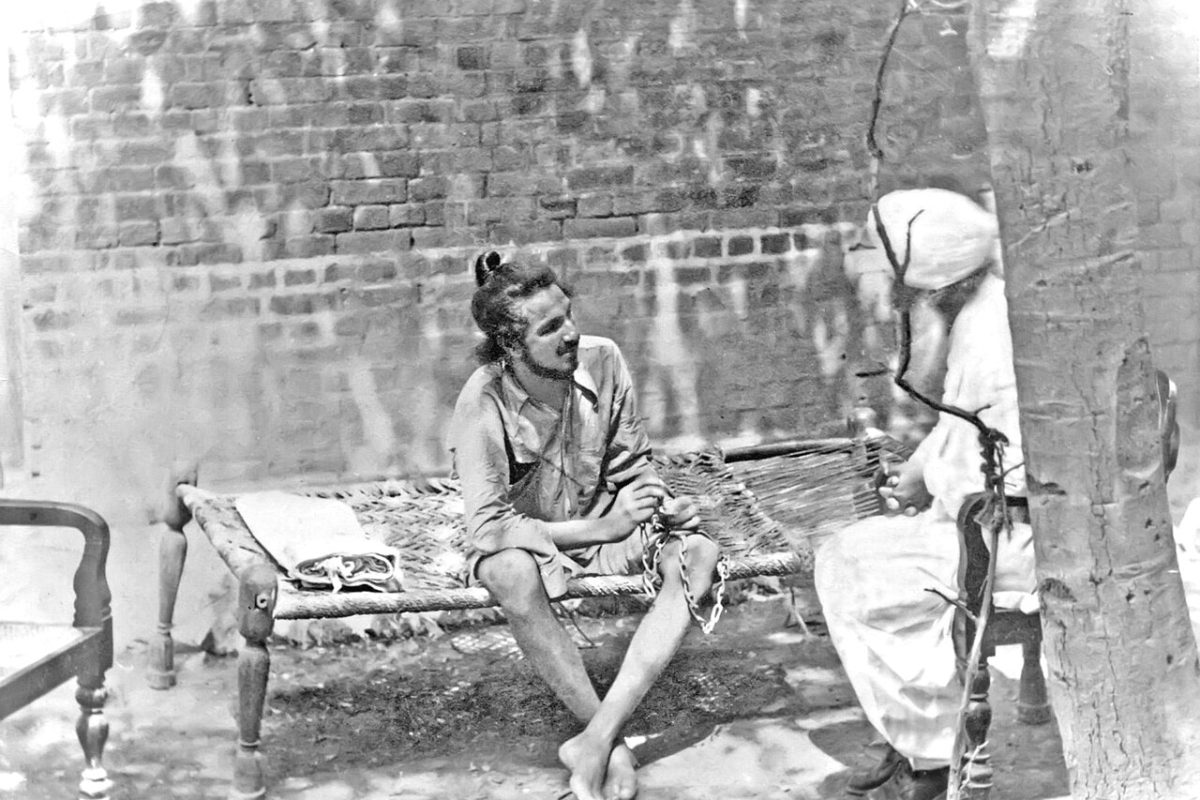
23 March 1931 – Revolutionaries hanged in connection to the Lahore conspiracy case

This week in working class history

“…on behalf of the helpless Indian masses, we want to emphasize the lesson often repeated by history, that it is easy to kill individuals but you cannot kill the ideas.”

On 23 March 1931, the death penalty was meted out rapidly to the south Asian revolutionaries Bhagat Singh, Rajguru and Sukhdev Thapar of the Hindustan Socialist Republican Association (HSRA) by the British following the judgement passed coincidentally on October 7, 1930 for the murder of a British police officer in 1928. They were all 23 years old.

Reemerging from hiding, Bhagat Singh–arguably the most famous revolutionary of his time–and another fellow member Batukeshwar Dutt gave themselves up to the police following a strategic public action in the Lahore Assembly in 1929. They set off two low-intensity bombs in an empty area of the assembly in session and threw flyers intended to attract public attention to their cause. Their arrest and Singh’s eventual execution were among the final blows to the revolutionary cause in British India, leaving the hegemonical Indian National Congress and the Muslim League to fight it out till independence in 1947. 

HSRA, like many revolutionary youth organisations of its time, was founded in diametric opposition to Gandhian non-violence following the debacle of the Gandhi-led Non-Cooperation movement (1919-1922). A violent incident in Chauri Chaura led Gandhi to call off the successful popular mobilisation against the British which he intended to be “non-violent”. Bhagat Singh, who closely followed the developments in Russia and espoused anarchist and communist ideas, had several family members involved in the anti-imperialist struggle. Singh dived head first into the revolutionary movement, which was spreading across the north of India and Bengal. HSRA was involved in the Kakori conspiracy to steal arms from a British train and in the bombing of the Viceroy Lord Irwin’s train. Responding to Gandhi’s “Cult of the Bomb”, HSRA wrote a brilliant piece called the “Philosophy of the Bomb”, stressing on violence as the answer to imperialist oppression. HSRA members were young poets, scientists and university students across different faiths. 

In a peaceful protest in October-November 1928, the radical Congress leader Lala Lajpat Rai was killed following a lathi (baton) charge in front of Bhagat Singh. As a prominent member of HSRA at the time, Singh conspired to kill James Scott, the superintendent who called for the lathi charge. In December 1928 he acted, along with Rajguru, Sukhdev and Chandrasekhar Azad but mistakenly killed a young police officer John Saunders instead, forcing them into hiding. As HSRA members were picked off one by one, Singh knew his time was near, and decided to exploit the power of the court to publicise their cause. The Lahore Assembly bombing was thus carried out, inspired by the French Auguste Valliant. Bhagat Singh defended himself in court, the published proceedings in newspapers made him a household name in India. He was initially given a life sentence in connection with the bombing. 

While in prison, Bhagat Singh witnessed discrimination between Indian and other European prisoners, and demanded to be treated as a political prisoner which meant better access to food and reading material. Thus began a 116-day hunger strike along with fellow revolutionaries, that also included the death of Jatin Das on day 63. British force-feeding and Congress lobbying did not deter him and his comrades. By this time, the British managed to tie up the ends regarding Saunders’ murder and sentenced the trio including him to death by hanging. The British were afraid that their eventual murder would set off nationwide clashes, and secretly killed them on March 23, 1931.

It is said that the three went to the gallows laughing, singing “Inquilab Zindabad” (Long live the revolution). The site where their bodies were disposed of in Husseiniwala ironically stands on a heavily fenced border area between India and Pakistan. Bhagat Singh remains a popular figure in the subcontinent, co-opted by all parts of the political spectrum.

Bhagat Singh famously read Clara Zetkin’s reminiscences of Lenin as the police came to take him to the gallows. For his last wish, he wished he could finish that book. He was an excellent writer and his writings are all over the internet. The reader is advised to start here.

Inquilab Zindabad!

12-Hour workdays, crushed rights: Argentina under Milei’s labor law 

The new labor reform in Argentina drastically reduces the rights of employees.

President of Argentina Javier Milei speaking at the 2025 Conservative Political Action Conference

On Friday, March 6, 2026, in Argentina, the labor reform came into force. One of the cornerstones of Milei’s administration is now law. The reform affects the relationship between workers and employers. Voted in the Senate on February 11 and in the Congreso Nacional on February 27, it left behind a wave of controversy, mobilization, and, above all, repression. Strongly criticized by the opposition, this reform changes the regulation of labor relations, favoring employers and drastically reducing the rights of employees. According to Deputy Myriam Bregman, the law was supported and backed only by “entrepreneurs and law firm lawyers”, maintaining a strongly anti-popular character. Composed of 25 chapters, it introduces radical changes on issues such as compensation, dismissals, vacations, and overtime. Crucial and dangerous is the freedom granted by the new rules to employers. These create a relationship between employer and employee that is extremely unbalanced in favor of the former. It is because of this imbalance that the reform has been defined as “slavish”. According to Bregman, “the only freedom Javier Milei defends is the freedom to enslave.” 

The first major change concerns the length of the workday. The maximum limit of 8 hours per day is eliminated, introducing the possibility of working up to 12 hours a day, provided that 48 hours per week are not exceeded and 12 hours of rest are available between shifts. Another problematic point concerns the possibility for employers to pay wages with food, housing, or goods instead of money. Another ambiguity concerns the creation of a bank of hours. Under this mechanism, overtime may not be remunerated. The alternative to payment consists of compensation through additional days off. On paper, these options must result from an agreement between the two parties. In practice, the employer always holds the upper hand, especially considering the increasingly weak role of unions. 

Also worrying is the attack on workers’ right to strike, particularly in sectors such as commerce, education, port services, and telecommunications. For these categories, it is mandatory to guarantee at least 75% of services during strike days. 

The approval of the law has been, and continues to be, at the center of struggles by Argentine social movements. Strikes and demonstrations have highlighted the strong unpopularity of the reform. Bregman herself was present at the mass mobilization on February 11 that took to the streets of Buenos Aires and the country’s main cities. Her testimony is a crucial denunciation of the brutality used by the police to suppress the protest. “They approached (the police) to the sidewalk on motorcycles and started shooting from two or three meters away.” Saved only, according to her, by “the enormous solidarity of the people.” According to the deputy, the repression had the declared aim of concealing the massive rejection of the labor reform. The far-right responds once again to general discontent with its most representative weapon: repression, at any cost. 

The struggle, however, does not stop. The main Argentine unions and opposition politicians have called for a large popular demonstration on March 24. Not a random date, since that day marks 50 years since the coup that led to the dictatorship of the military juntas initiated by Videla, lasting until 1983 and stained with crimes such as murders, repression, and forced disappearances. Beyond the demand for a trial and adequate punishment for the remaining unpunished perpetrators, the organizers call for the repeal of the labor reform itself. 

The measure represents a huge blow to workers’ rights. The government continues with a hardline approach, saying that the situation in Argentina will improve. Improvements that come at a high cost for workers, stripped of their rights. The number of informal or precarious workers is extremely high. Reforms like this risk widening the gap between wages and the cost of living, effectively increasing this phenomenon. Once again, Milei’s ultraliberal policies end up favoring large companies and foreign investors, placed first, ahead of the needs of the people he had promised to uplift. 

Charges are dropped against Palestinian couple raided by the police

Repression in Berlin – report #5

In February 2025, after a five-minute court hearing, the case against a young Palestinian-American student was dropped: a case that had entangled her, as well as her Palestinian-German partner in a month-long campaign of targeted state violence and persecution.

Ten months earlier, the home of the couple was stormed at 6am by a the State Criminal Police Office (LKA), as well as forces from the Special Operations Unit (SEK). While the official pretext for the raid and subsequent court case was a Facebook post that read “From the River to the Sea, Palestine Will Be Free”, the case illustrates that rather than merely criminalising a slogan, the German state attempts to terrorise and intimidate those who publicly express dissent to the genocidal “Staatsräson” paradigm.

The investigation was triggered when a person, likely a neighbour, scanned the student’s facebook profile and reported her to the anti-discrimination office in Hesse called “Hessen gegen Hetze” (Hesse Against Agitation). This office escalated the case to the Frankfurt Public Prosecutor’s Office, who then forwarded it to Berlin.

After the raid the couple learned that then a three-month long investigation followed, in which they were never addressed to respond to accusations, which they first heard off when charges were read to them during the raid.

Moreover, files accessed by their lawyer showed that enquiries were made about both to all kinds of authorities: from regular police, the state resident’s registration, to enquiries to the Office for the Protection of the Constitution (Verfassungsschutz).

The student described the raid, which left her in utter disbelief of the disproportionate measures taken by the cops:

On 16 May 2024, at around 6 am, my husband and I were woken by a knock at the door. My husband quickly got up to see what the commotion was about. When he opened the door, police officers stormed in. I got up quickly and tried to shut the door. As I did so, two female officers burst in – I was half-naked! I was ordered to get dressed so they could take me to the living room.

Her partner, who was later also charged for the same slogan, as well as the alleged use of banned organisations and trespassing, relayed:

While two female police officers were in the room with my wife, supervising her as she got dressed, my details were being checked and I was made to wait in my own living room. When my wife was ready, she was sat down next to me, and we were finally told what was happening.

As it turned out in hindsight, the raid itself had also been thoroughly prepared, in a bizarre display of state power. Two days prior to it, the police came to the building, photographed the outside, the nameplate on the doorbell, the front door, letterbox, and wrote a report on how many entrances and exits the building had, the window facade, and other details. The Palestinian-German engineer described the absurdity:

Later, we found out that the police had frantically rung all the neighbours’ doorbells to get into the building. While they were knocking at our door, they had covered our peephole with black tape. It’s all pretty excessive for such an allegation.

The actual reason a judge signed this search warrant was that the police couldn’t definitively identify my wife from the profile pictures on Facebook. So nowadays, the police can conduct house searches just to establish someone’s identity.

The case, which culminated in the suspension of proceedings illustrates that state repression does not always aim for eventual conviction in court, as cops are well aware of the frequent insubstantiality of accusations. Instead, raids and the terror and intimidation they are supposed to inflict appear to be a goal in themselves.

However, in this case, as in many others, the accused continued their activism for Palestine unafraid, as reflected in the students’ statement:

Anyone else facing repression needs to speak out about it! And make sure you get good lawyers. Most of these allegations have no legal basis that would hold up in court. Keep fighting, and Free Palestine, forever and ever!