The Left Berlin News & Comment

This is the archive template

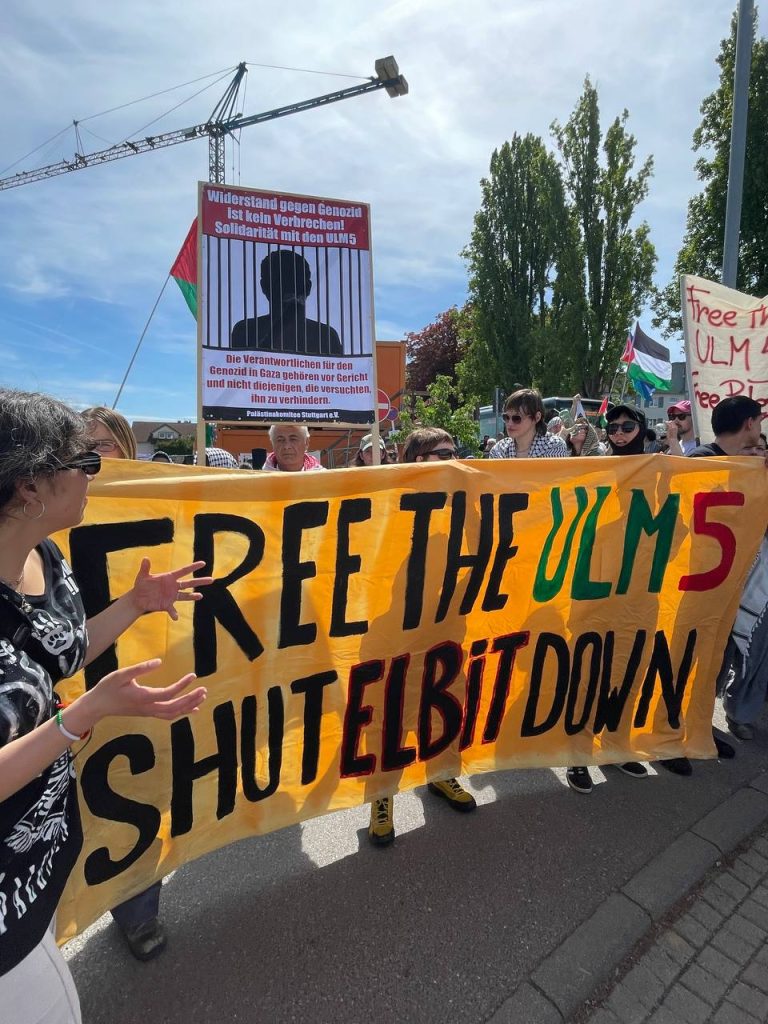
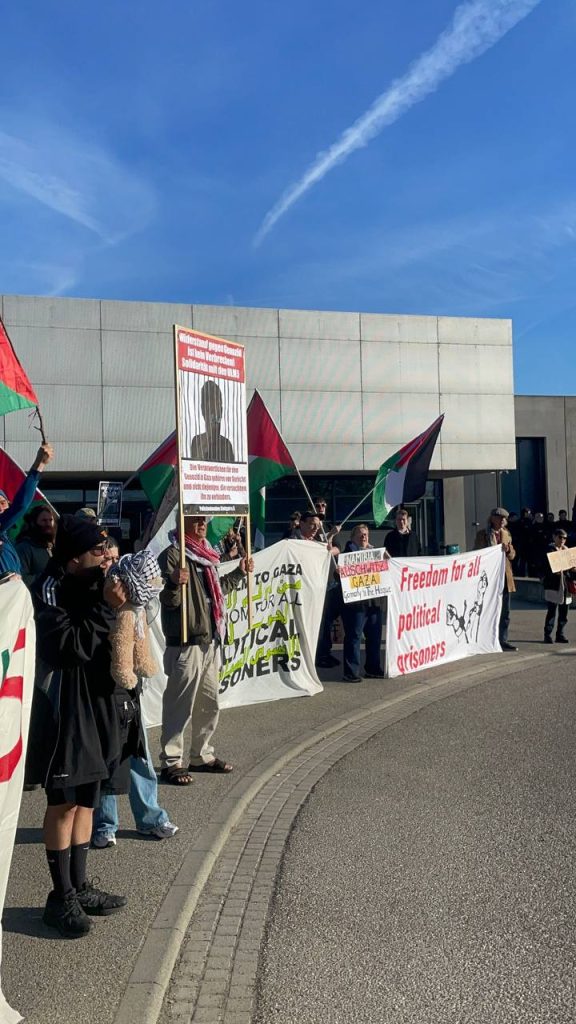
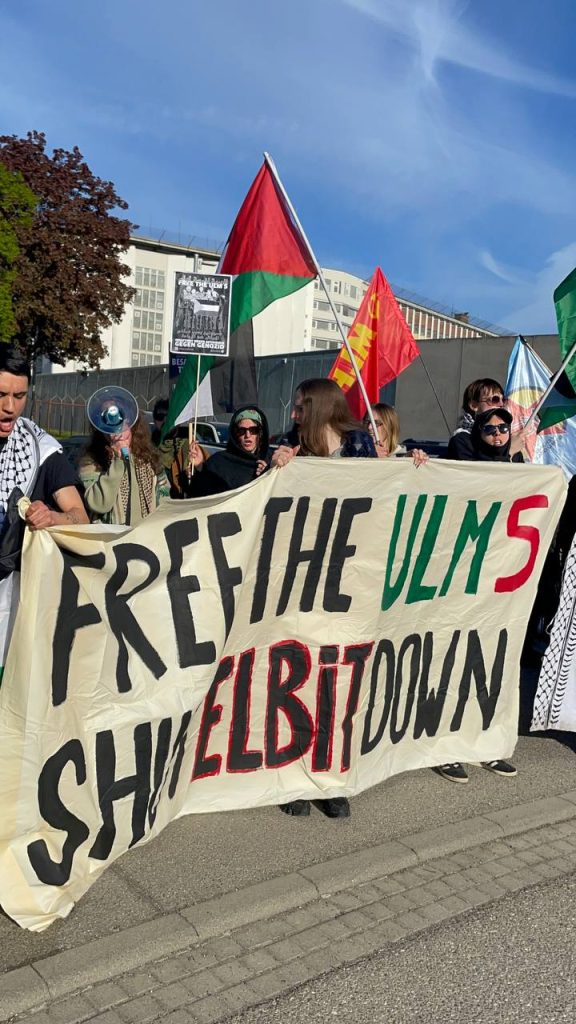
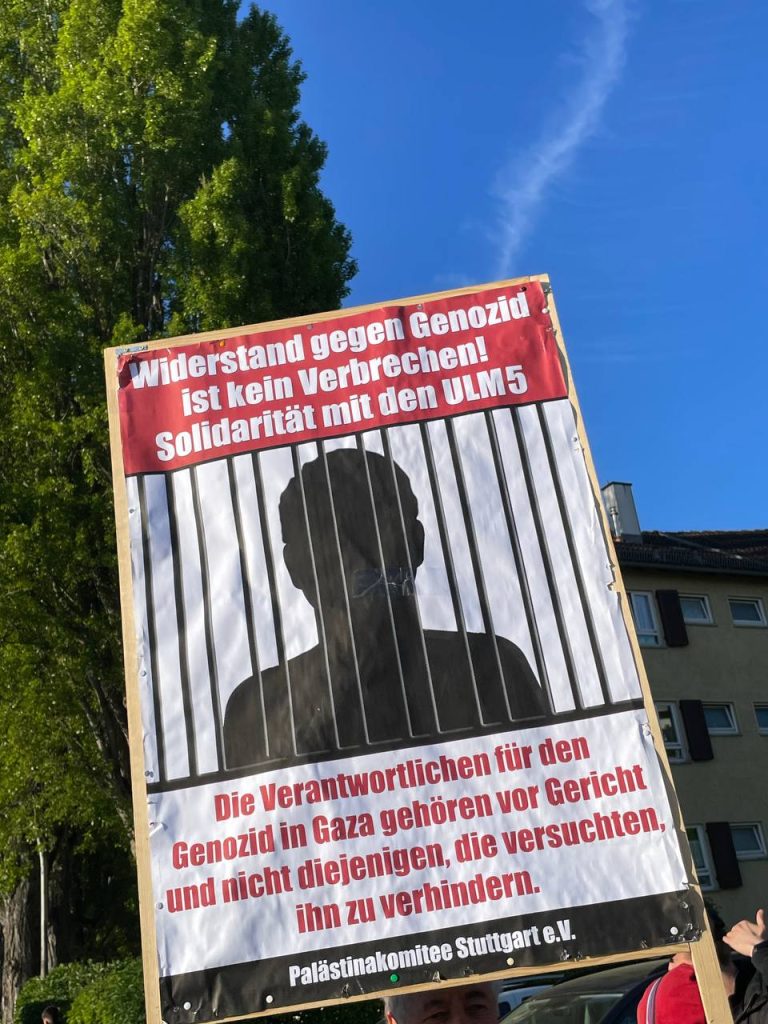
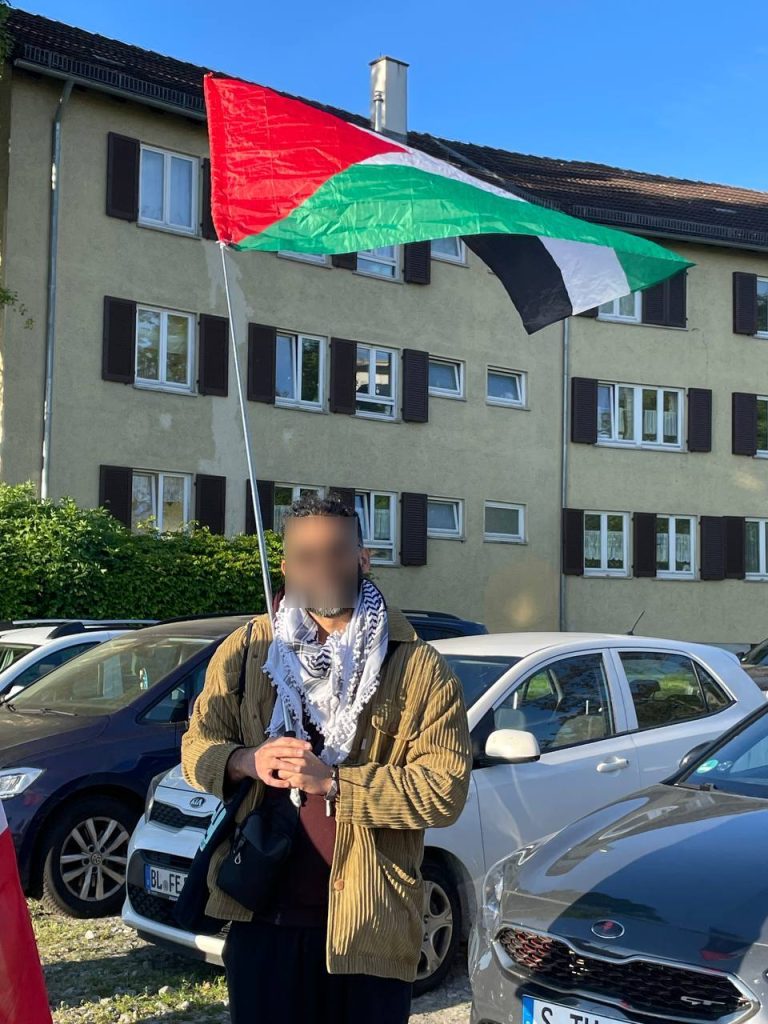
What can I do to support the Ulm 5?

The trial starts next Monday. Here’s what you can do to help

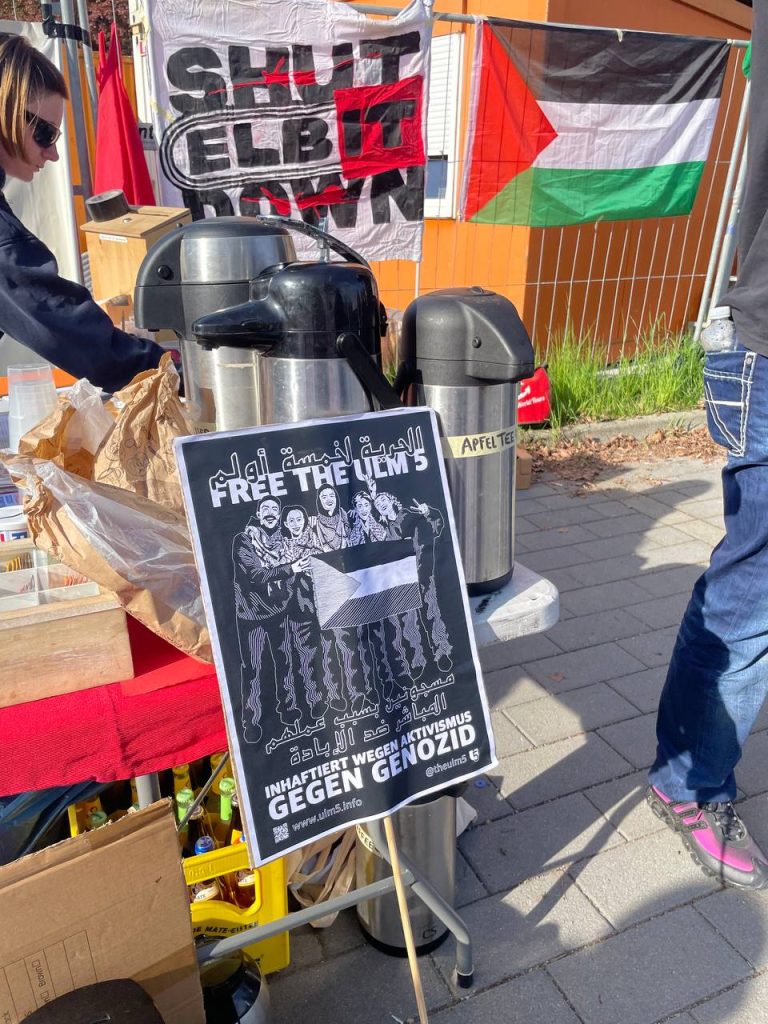
The Ulm 5

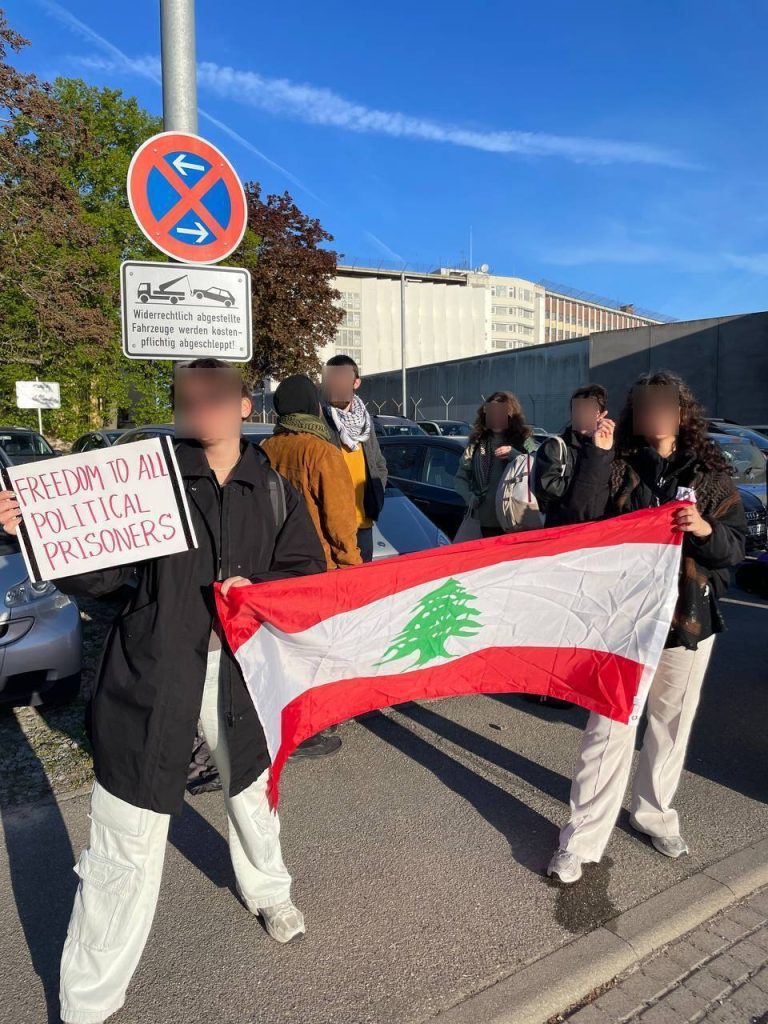
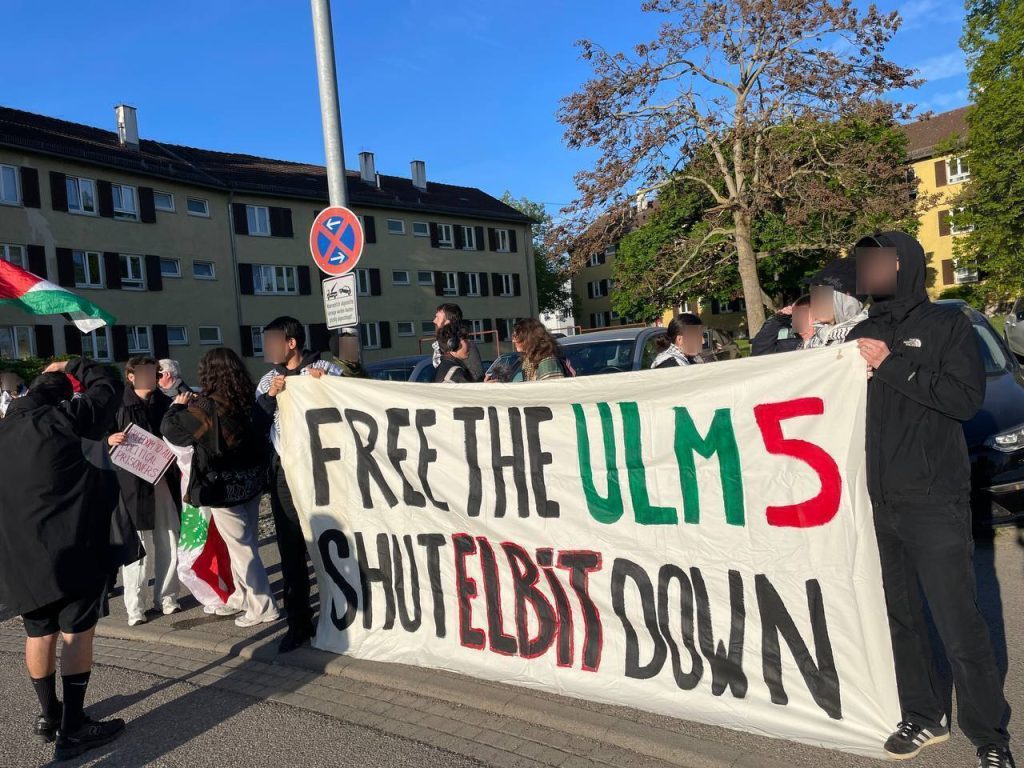
Five activists with various nationalities have spent the last 7 months in different prisons around South Germany. Their crime? Taking non-violent direct action against Elbit Systems. Elbit Systems is Israel’s largest weapons manufacturer (famous for their killer drones), and is deeply complicit in the Gaza genocide. 

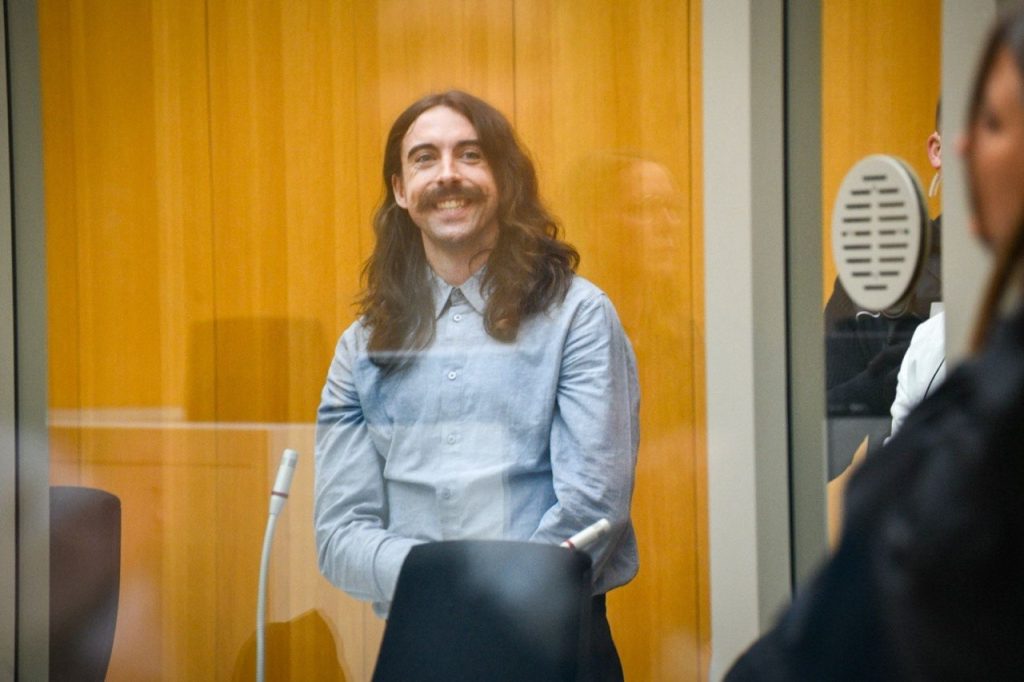
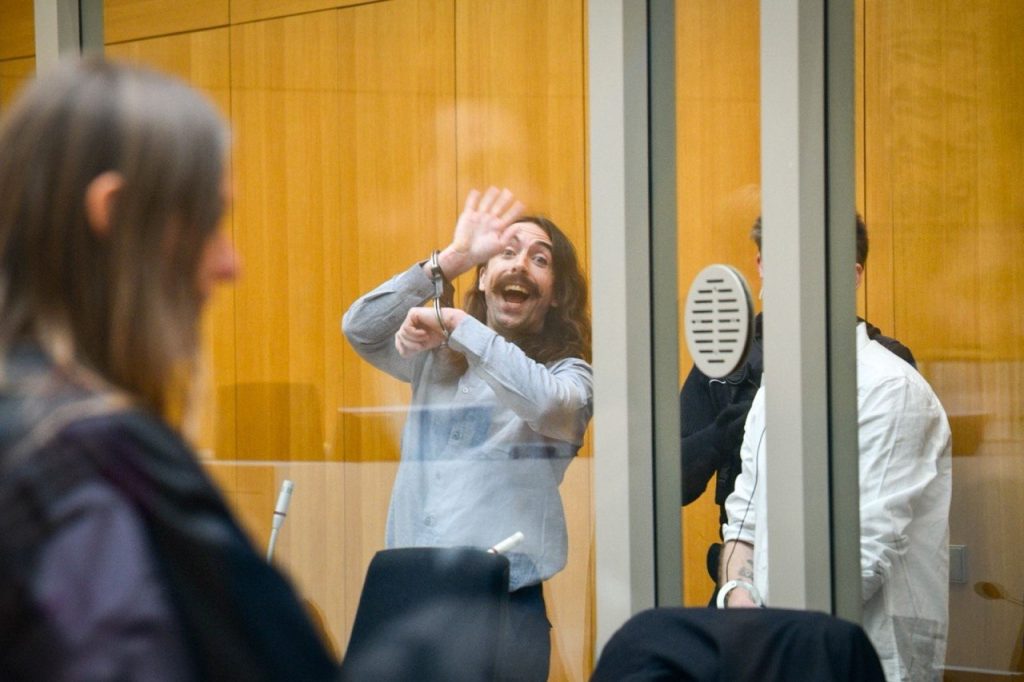
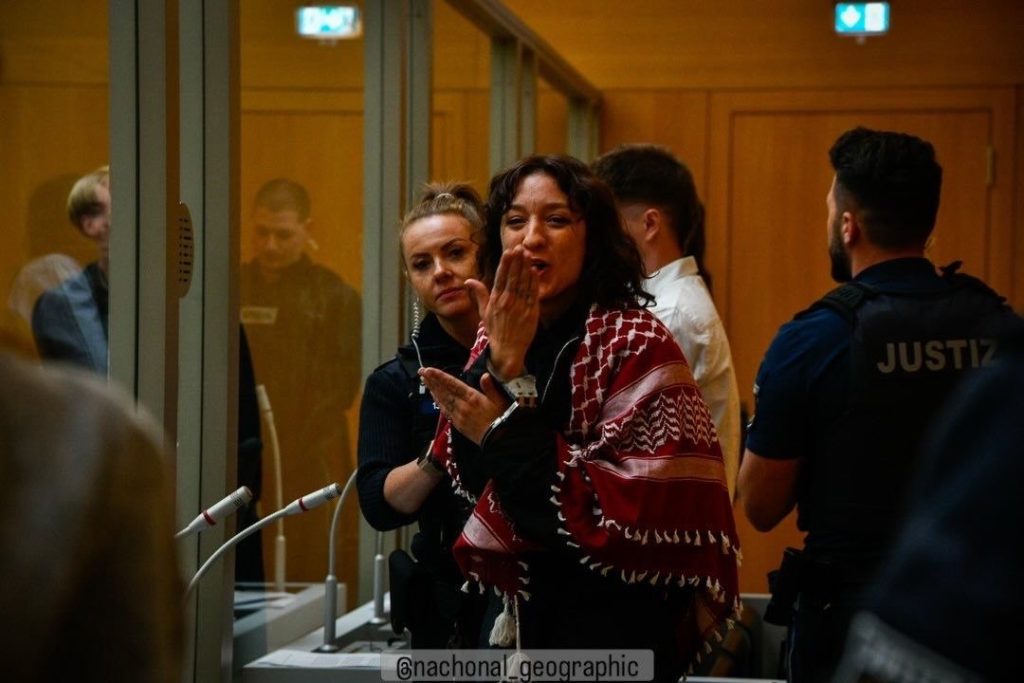
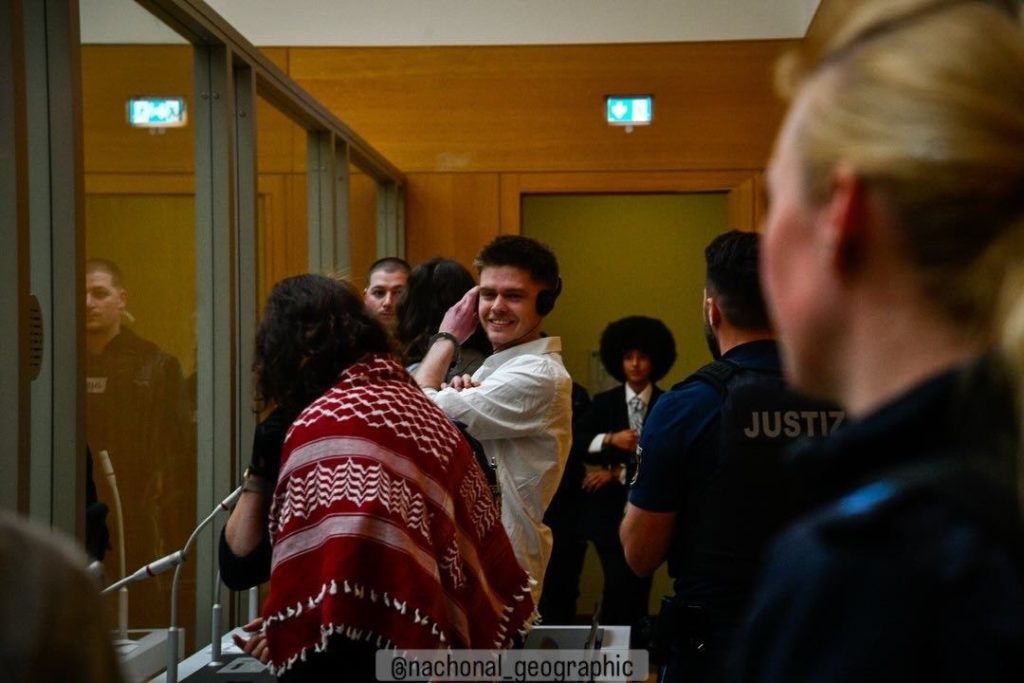
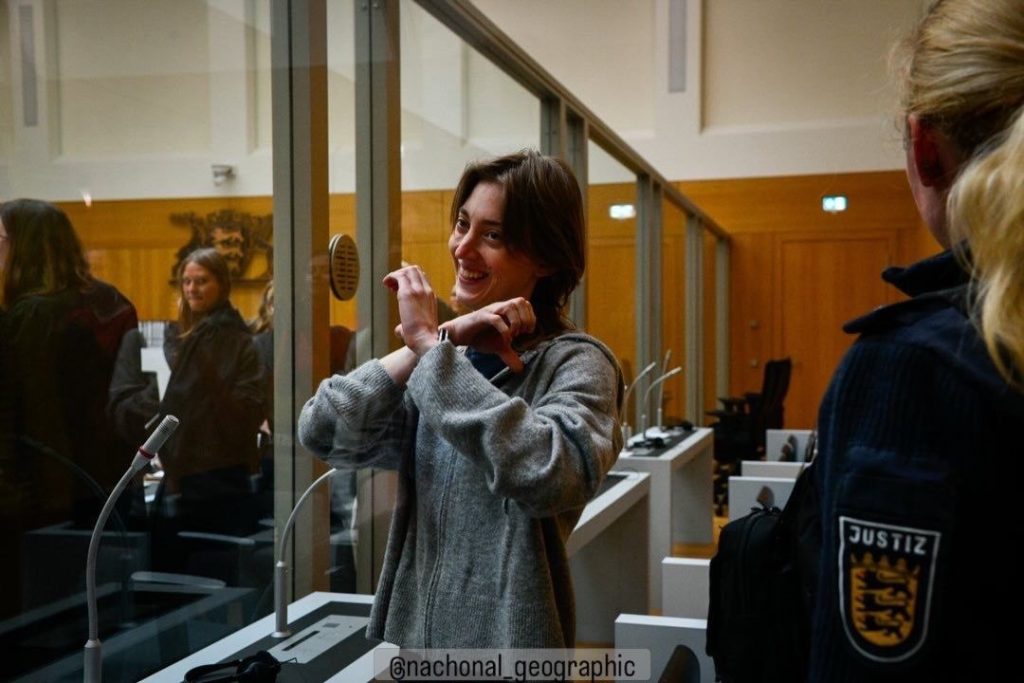
Crow, Daniel, Leandra, Vi, and Zo are facing harsh pre-trial conditions, ranging from long hours spent in isolation to being deprived of ways to keep themselves entertained and even being stripped of their clothing for an unnecessary amount of time.

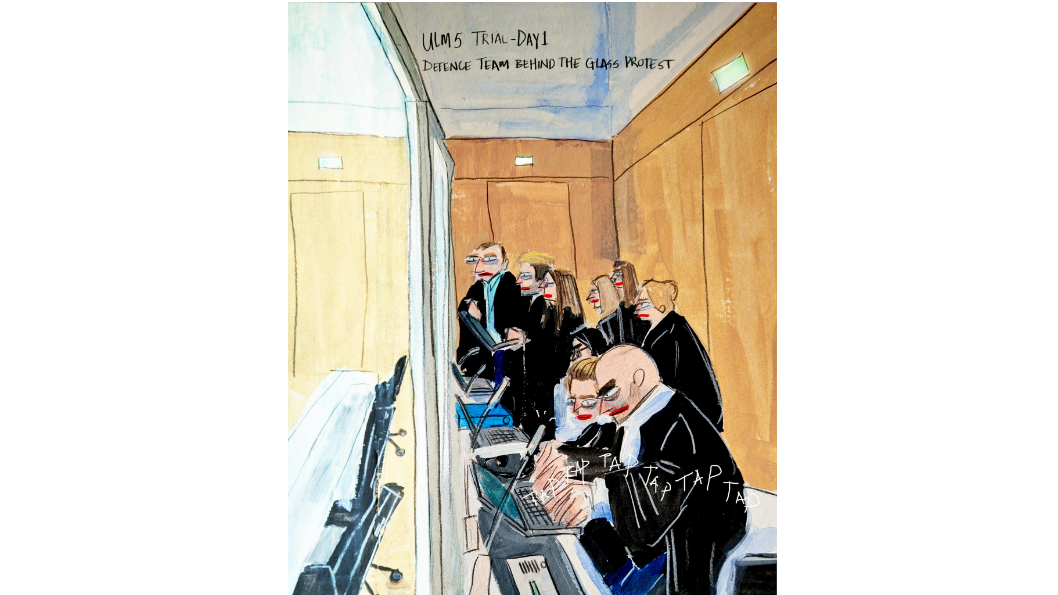
Their court hearings are set to begin on Monday, 27th April. 16 hearings have been planned over 3 months. Although all that they did was damage property, the German state is collectively charging the defendants with being part of a “criminal organisation.” This carries a possible jail sentence of 5 years for each of them.

In a crucial time of escalating Zionist and imperialist aggression, it is imperative to stand by activists who have taken courageous action while the state has refused to give up its support for Israel, and corporations are not held accountable for their material support. This article will detail some ways in which you can support them.

Go to the court cases

The Ulm 5 have been held for 8 months in de facto solitary confinement. The best way of showing how much we care about them is by showing up to their court hearings. We encourage everyone to self-organize and visit one or more of their trials. Bring your friends and comrades! For the first court hearing on the 27th of April, Berliners can make use of collectively organized transport and accommodation.

The trials will be held in the Stammheim Court in Stuttgart, Asperger Straße 47. Court hearings are planned for 27th April, 4th, 6th, 11th 20th 22nd, and 29th May, 15th, 19th and 29th June, and 1st, 3rd, 22nd, 24th, 27th, and 29th July. All court hearings will start at 9am. It is possible that some hearings will be canceled or rescheduled on short notice, so please stay informed here.

Filling the court with supporters helps strengthen the morale of the 5 and their lawyers, but please be aware that there is a limited number of seats available inside the court. 68 places are available in the court, of which 30 have been reserved for the press, leaving only 38 places free for family and supporters. 

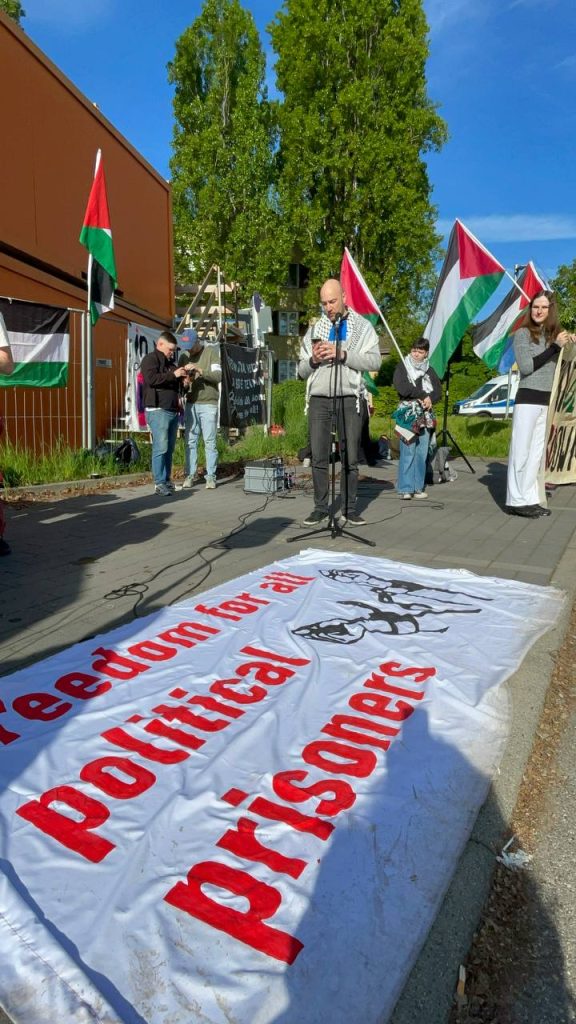
Even if you cannot enter the court, the Five would like there to be as large a presence as possible. A rally will be held in front of the court from 8am onwards. Sometimes, judges are influenced positively by hearing the people outside. If the defendants are to enter the court before 8am, a rally may be organised earlier to greet them.

Get your solibus tickets at L5 Spati (Lenaustr. 5 daily 12-24 o’ clock) or by emailing common_journey_court_watch@systemli.org. The solibus will depart on Sunday April 26th at 10am from Südkreuz. That same bus will bring us to the court early in the morning on the 27th and back to Berlin after the court hearing ends.

Accommodation is arranged in Karlsruhe – just bring your sleeping mat and bag. The trial could last until 4 or 5pm. After that, people may stay for 30-60 minutes to wait for the defendants to leave the court. 

If you want to be in court, make sure you bring an ID or passport. It is likely that you will have to leave mobile phones, laptops, and other personal belongings in security lockers outside the court. Do not bring any items which could be interpreted as weapons (this includes metal water bottles), or any sensitive documents which could be confiscated by security.

Become a Trial Observer

German court cases are not recorded, and no transcript is made. This is why Trial Observers write down everything that is said in court and how it is said. Watch out for sarcasm and demeaning language. Written reports can help defence lawyers. They are particularly useful in the case of the defendants being convicted, as evidence based on the reports can be used to appeal the sentence. 

Try and write down everything you hear and see. If you get tired, note the time from which you are unable to pay full attention.

After the day is over, trial observers compare notes to produce a written report. You will only be allowed to take handwritten notes – transfer these to a computer as soon as you can. Try to distinguish between facts and subjective impressions. It is important that you do not publish your notes until checking with others, as this could jeopardize the case.

It is quite possible that the judge and security will try to deny entry to the court to some of us, so if you intend to take notes, do not wear clothes with slogans which may get you excluded. At present, it also appears possible that court observers might not be permitted to bring any writing materials into the court.

If you are interested in becoming a trial observer, there will be people on the buses to Stuttgart who you can talk to. Alternatively, send a message to us at team@theleftberlin.com, and we will help you make contact.

Support funding campaigns for parents to travel

Four of the Ulm 5 are not from Germany, which means that their families face exorbitant costs if they are to attend the trial. On top of this, the court cases have been staggered, so that 16 days in court will take place over 3 months. Attending each court case requires 16 potential journeys to their countries and back.

To help the families cover these costs, a number of crowdfunding campaigns have been set up. Please give generously:

Send letters to the prisoners

Many of the prisoners are being held in prison 23 hours a day. Letter writing is therefore a huge boost to their morale and helps keep them connected with the outside world and the campaign that supports them. At present, it takes 2 to 4 weeks for letters to arrive. Some letters have taken 5 months, and 2 that arrived only recently were sent in October.

When writing letters to prisoners, there are a few important things to consider.

  • Write a date on the letter so the prisoner will know when you sent it. 
  • Take a photo of the letter before you send it for your own records. 
  • Include a return address on the letter itself.
  • If you include anything in the envelope, write that you did so that the prisoner will know if any items were confiscated.
  • Letters with only a picture or drawing are not allowed, but you can send pictures as long as the envelope also contains a written letter.
  • It is forbidden for you to write about the Ulm 5’s action, the case, or related matters.

Please note that letters will be surveilled, and their contents might be used against the prisoners or even yourself. Do not write about the actions that the prisoner is detained for, the prisoner’s relation to the action, or how you feel about them, as this could put both them and you at risk. 

You can send an online letter to any or all of the prisoners here.

You can also write to Leandra in English or Spanish at the following address:
Leandra Daniela Rollo Valenzuela
JVA Memmingen
Gaswerkstr. 23
87700 Memmingen
Germany 

You can write to Vi at:
Vivien Sonja Kovarbasic
701 561/2025
JVA Schwäbisch Gmünd
Herlikofer Str. 19
73527 Schwäbisch Gmünd 
NOTE: Vi is only allowed to receive letters which are written in German.

You can write to Daniel at:
Daniel Tatlow-Devally
JVA Ulm
Frauengraben 4
89072 Ulm

Zo and Crow’s addresses are not public, but you can send them an online letter (see link above). You can also send letters to any prisoner (including Zo and Crow) via this post box:
C/O <prisoner name>
Postfach 91 01 07
12413 Berlin
Germany

You can find more tips about sending letters here.

Let people know

One of the biggest problems facing the Ulm 5 is that, despite the severity of their potential sentences, very few people know about their case. In contrast, say, to Palestine Action in the UK, where thousands of pensioners have let themselves be arrested in solidarity, very few people in Germany, including many activists, know about the Ulm 5. This makes it easier for the German state to isolate them and prevent a mass campaign from developing.

One of the simplest ways of showing solidarity is to ensure that as many people as possible know who the Ulm 5 are, what they did, and what they are being threatened with. We have the potential to build a campaign which is both broad and international.

Here are a few ways you could do this.

Inform yourself

The German state will benefit if the public at large is not paying attention to the court hearings. Public scrutiny matters. It is becoming increasingly clear that the state aims to threaten, repress and ultimately end anti-Zionist activism. The Ulm 5 could easily become a precedent for future repression. 

What further exacerbates their situation is that mainstream German media are not reporting about the Ulm 5. This is a problem for democracy. Staying informed and informing people you know about what happens to the Ulm 5 during their court hearings is a good place to start.

People in solidarity with the Ulm 5 have created this website and Instagram page to keep people informed and rally support. The Left Berlin website will also continue to keep the spotlight on the Ulm 5 during their trials.

Tell your friends and workmates

We can fight state oppression, media silence and the escalating criminalization of Palestine solidarity by building a shared consciousness with people we spend time with in our daily life. If we do not converse about the unfolding events, we miss the opportunity to see the current political climate for what it is. Let’s build educated networks that can meaningfully resist. 

No one wants to or should be made to live in a world where “might is right”, nor should we be forced to remain sidelined when the bombs drop on innocent people in Gaza, Lebanon, and Iran. Take this opportunity to stand by the people who risked so much to put a cog in the wheel of our genocidal economy, a risk not many are willing to take. Risk is only ever reduced by carrying it collectively. We can learn from British society’s remarkable solidarity with imprisoned Palestine Action activists.

Contact the media

If you are a journalist, write about what is happening to the Ulm 5. If you are not a journalist, you can still use social media to share stories and write your own opinions. Remember that this is not just a German story. The more coverage we get in the international media, the better.

Leaflets and petitions

We encourage every activist group or individuals to print out and distribute flyers and posters to promote the cause of the Ulm 5. 

  • The Gaza Komitee has weekly information stalls at various locations in Berlin where flyers about the Ulm 5 are distributed. Their stories will keep you posted on the time, location and whereabouts.
  • Download a leaflet about the Ulm 5 here available in English or Arabic and German.
  • Download a poster of the Ulm 5 here – print and hang in spaces of solidarity.

Organise local actions

There will be a rally Free the Ulm 5 at Oranienplatz on Thursday, April 23rd at 6.30pm. As the trial will last several months, there will be further opportunities for actions in Berlin – for example at Universities, or at embassies (between them, the Ulm 5 have nationalities of Irish, British, German, and Spanish-Argentinian). If you want to organise something, please let us know and The Left Berlin will help to publicise. 

Send a video message in your language

One way of keeping the story in the public eye, and to build international attention, is to share videos in social media. Make your own short message explaining what is happening to the Ulm 5 and why you support them. If you release the video on Instagram, tag the Ulm 5 and Left Berlin accounts and we will help share it.

Further Information

News from Berlin and Germany, 22nd April 2026

Weekly news round-up from Berlin and Germany

News from Berlin

Thousands of people demand faster energy transition in Berlin

Several thousand people gathered in the district of Berlin-Mitte on April 18 to demonstrate for a faster energy transition. According to the police, approximately 9,000 participants marched through the government district. Organisers spoke of up to 24,000 people. Under the motto “Defend Renewable Energies!”, an alliance of environmental organizations called for protests in Berlin, Munich, Hamburg, and Cologne. Among the organisations are Greenpeace, WWF, Fridays for Future, and the Campact network. The call to action stated: “Escalating energy prices, geopolitical crises, and authoritarian regimes show us how risky fossil fuels are.” Source: rbb

News from Germany

Germany’s most modern Courthouse

The historic Stuttgart Higher Regional Court (OLG) building in Stammheim, where trials against the leaders of the Red Army Faction (RAF) were held in the 1970s, is now history. Starting next week, trials against suspected terrorists and other criminals will take place in the OLG’s new high-security building, located right next to Stammheim Prison. Before the official handover of the keys, the Stuttgart Higher Regional Court offered a glimpse into what Presiding Judge Katrin Dobler described as “Germany’s most modern courthouse.” Construction began in 2015 and cost €29 million. There, two courtrooms will be available, with completely separate entrances and security checkpoints. The defendants can communicate with their lawyers via a wireless system. Source: stuttgarter-nachrichten

Electricity prices remain stable

Electricity became cheaper in Germany in March, and prices are expected to continue falling in April. While the war in Iran is driving up gas and oil prices, prices on the electricity exchange remain stable, according to the Fraunhofer Institute for Solar Energy Systems. The reason for this is the expansion of renewable energy and the beginning of spring, when both wind and solar power plants produce a lot of electricity. This effect is likely to increase much further in the summer: In June 2025, a good 77% of electricity came from renewable sources, and this figure will probably be even higher in 2026. Source: taz

He was not an isolated case

A year ago, Lorenz A., a Black man, was shot and killed by the police in Oldenburg. To this day, there has been no trial. According to the public prosecutor’s office, A. showed a knife to people persuing him. However, contrary to several media reports, he did not use the knife while interacting with the police, nor did he attack anyone with it. During his escape, A. ran past a police patrol and is said to have used pepper spray again. Then, without warning, a police officer shot him. On April 19, several hundred people commemorated Lorenz and demonstrated against racist police violence. The speakers repeatedly emphasized one point: he was not an isolated case. Source: taz

CDU defeats AfD in Uckermark district council election

Karina Dörk (CDU) was first elected district administrator of the Uckermark region in 2018. On April 19, she defended her position and defeated state parliament member Felix Teichner (AfD) with 60%. Voter turnout was 55.3%. Therefore, the Brandenburg Action Alliance against Violence, Right-Wing Extremism, and Racism reacted with relief. Initiatives such as the “Livable Uckermark” association worked tirelessly to raise awareness and send a clear message of diversity and solidarity, as the Action Alliance stated. Its chairman, Thomas Wisch, nevertheless notes that the election result should not obscure the fact that “right-wing extremist attitudes remain a challenge.” Source: nd-aktuell

German crime statistics: false blaming on migrants?

Is it true that the crime rate in Germany is higher among immigrants? For instance, more than a third of all suspects are not German citizens. The statistics may suggest this, but they can also be misleading. Ahead of the presentation of the 2025 figures for crime in Germany by the Federal Criminal Police Office (BKA), Susann Prätor has shared her thoughts on the issue of nationality and statistics. For instance, she believes that “studies show that people perceived as foreign are more likely to be reported to police.” According to a 2024 study by the Criminological Institute of Lower Saxony, non-Germans were reported nearly three times as often as Germans. Source: dw

“Excessive use of force”

“Disproportionate restrictions” on assemblies, “excessive use of force” by the police, “increasing pressure on democratic freedoms”—What sounds like conditions in an authoritarian state are in fact the findings of a Council of Europe study on the situation in Germany, published on April 15. Its Commissioner for Human Rights, Michael O’Flaherty, notes there is a “worrying increase in both antisemitism and anti-Muslim hatred.” Restrictions on freedom of expression are also “clearly evident” at universities. In a statement obtained by “taz”, the government rejects such accusations, pointing out that critical or controversial views on Judaism or the State of Israel are protected by freedom of expression, but subject to the limitations stipulated by national laws. Source: taz

Court sentences student to over 2.5 years in prison without probation

Repression in Berlin – report #8

On Monday, April 13th, the Berlin Regional Court ruled on the attack on Lahav Shapia – a student known for his staunch support of Israel and campaigns against pro-Palestinian activists. No antisemitic motive could be established in the assault Shapira had suffered by a fellow student on the campus of the Free University. This ruling overruled an earlier decision by the local court.

Notwithstanding this decision, the Regional Court again sentenced A. to a prison term for aggravated assault. The sentence of two years and six months is more lenient than the original sentence of three years, but it rejected the accused’ lawyers appeal for probation.

In February 2024, a few months into Israel’s ongoing genocide in Gaza, Shapira and A. happened to meet in a bar in Berlin-Mitte. Both were studying to become teachers at the Freie Universität (FU) Berlin. The initial conflict between the students became physical and A., with a background in martial arts, happened to injure Shapira. In court A. state that he was not seeking to cause severe or even lasting damage.

The attack had been preceded by a dispute at FU Berlin. Shapira had removed posters against the Israeli genocide at the FU, which had been hung as part of a pro-Palestinian occupation of a lecture hall. The two men did not know each other personally, but were active in the same chat groups, where students had debated the genocide and anti-Palestinian climate at the university. In these groups, Shapira and others advocated a pro-Israeli stance.

At the court in April, the question of the actual physical attack was never put up for debate. A. confessed early on that he had beaten Shapira. According to the public prosecutor, the “detective work” in the first trial tried to prove a specifically antisemitic motive for A. While the local court last year had spoken of an “antisemitic outburst of violence,” the appeal chamber of the Regional Court now saw things differently.

According to the presiding judge, there was no evidence that the defendant had an antisemitic attitude. Since the exact content of the act could not be reliably reconstructed, the court did not consider the motive proven beyond doubt. A., who lost his place at the FU and suffered from month of racist campaigning against him, had always denied an antisemitic motivation.

His defense lawyer emphasized, for example, that the exchange between the two men in the chats had been respectful for a long time, even though they argued over Israel-critical positions. A. had merely argued that it was wrong of Shapira to tear down the posters. Even in the first instance, no antisemitic statements by A. had been found during the taking of evidence.

The Berlin Regional Court’s decision to sentence A. to two and a half years in prison for aggravated assault, despite explicitly rejecting any antisemitic motive, exposes a deeply troubling logic.

The court admits that there is no evidence of antisemitic intent, no hate-driven ideology, no proven link between the defendant’s political views and the attack. Yet he is sent to prison. Meanwhile, Lahav Shapira — a person who actively removes pro-Palestinian posters, participates in creating a hostile online environment, and has now taken legal action to suppress campus solidarity with Palestine — is framed as a pure victim. His own political stance in support of a state that commits a life-streamed genocide is rendered invisible.

This case is not an outlier. It is a textbook example of how Germany’s judiciary systematically criminalises Palestinians and their supporters, in particular People of Colour, while sanitizing those who defend and advocate the inconceivable violence of the Israeli state.

25 April 1974: Carnation Revolution

This week in working class history

April 1974 marks the end of Portugal’s 42-year fascist dictatorship. On that day, after months of clandestine organising since September 1973, the Armed Forces Movement (Movimento das Forças Armadas, MFA) launched a military coup that overthrew the Estado Novo (“New State”) regime. 

Many of the military involved had grown disillusioned with the colonial wars in Guinea-Bissau, Angola and Mozambique, which they saw as unjust and unwinnable. In previous years, the country’s isolated position grew as the regime’s military spending rose in response to the independence movements in the “ultramarine territories”. Internally, many people were either resisting despite the repression, or fleeing the country to France and the United States. 

On 25 April, within hours, the MFA seized control of the national radio broadcaster and of key military centres across the country, forcing Prime Minister Marcelo Caetano (successor to António de Oliveira Salazar) to surrender. Despite the MFA’s warnings to stay home, the people took to the streets in support of the coup, and, in a whimsical act, flowers were distributed amongst the soldiers’ gun barrels – baptising it as the Carnation Revolution. 

The regime’s political police, PIDE, infamous for imprisonment, torture, and killings of dissidents, was dismantled shortly after. However, the revolution was not a day; but rather a process that lasted 19 months: 25 April kickstarted PREC – Ongoing Revolutionary Process, a period of intense political transformation, marked by popular mobilisation through strikes and demonstrations, the occupation and takeover of workplaces by the workers for weeks or sometimes months, especially in the southern and central parts of Portugal; initiatives for popular education, and the nationalisation of banking and other sectors. After months of political tension between the liberal and leftist-communist forces, the revolutionary wave came to an end in November 1975, with a right-wing, liberal, US-backed counter-coup. 

25 April is both a history of resistance and of working class consciousness; As Sérgio Godinho sang in 1974 – and the Portuguese people, to this day: “There is only true freedom when there is peace, bread, housing, health, education; there is only true freedom when what the people produce belongs to the people”. Read more here.

“The mainstream narrative is broken”

An interview with the editors of HEIST, a new worker-owned magazine in Berlin


21/04/2026

Could you introduce yourselves?

Ruthie Weissmann: My name is Ruthie, I was an editor at The Berliner and now I’m a founding editor at HEIST.

Peter Matthews: I’m Peter Matthews, I’m also a founding editor at HEIST.

What is the story behind founding HEIST?

PM: Both Ruthie and I were editors at The Berliner for many years and had for a long time wanted to start something of our own, for a few different reasons. We thought that there were conversations happening in the English-speaking world that weren’t really being reflected in its media, for one. And then more explicitly because for a few years we had felt a kind of censorship coming down on the sort of stories we were allowed to report. So at the beginning of this year we decided that enough was enough and that we would break free and put together this new project.

Did the scandal about the Nova Festival exhibition ads in The Berliner have anything to do with it?

RW: It didn’t have anything directly to do with our desire to found HEIST. But it definitely was a final straw for how we had been feeling and a moment when we realized that this was not going to materially get any better without changing something.

PM: That was the last straw, as Ruthie said, but we had been feeling censorship for more than a year at The Berliner. There had been an explicit order: don’t write about Palestine. That applied in one area of the magazine, specifically the daily news reporting. And then it seemed to spread more and more across the different areas, to culture, to interviews, to books you could review, to editors’ columns, to almost everywhere. It spread more and more, with the justification behind this being that they wanted to be neutral on the issue of Israel-Palestine.

RW: And just generally politically neutral.

PM: And generally apolitical, I would say. Impossible to do and be. And so when the Nova Festival ads were taken out, we saw that as a clear breach of this supposed neutrality that they had been maintaining for a long time. We were very upset about it. The freelance staff all went on strike over it. We were very sympathetic, and that ultimately led us to leave our jobs and start HEIST.

From your perspectives as journalists, how has the issue of Palestine affected the media landscape in Berlin since October 7?

RW: If you are familiar with the German news, you know that there are certain things they don’t cover. The ways that they write are already coming from what I would consider a biased place. I think there are a lot of people who don’t feel spoken to by that angle, which is coming from ownership a lot of the time. I have friends who work in German media who are frustrated by the tone of the outlets that they work for, and that’s part of why we wanted to make this thing. What independent media means and what worker ownership means is that this outlet is going to reflect the views of the people who work on it, and not just the views of rich people who happen to own media platforms.

PM: We don’t want journalism just to be the mouthpiece for the money behind it. I was talking to someone yesterday who was saying that German media on the whole often see their role as to reinforce the state line, even in investigative reporting. For example, you do a big investigation into Russian meddling or something. Of course there is Russian meddling and it should be investigated. But a lot of the ways that journalism is organized here is to agree with the state narrative and reinforce its theories and projects, rather than think a bit about the ways that our own system might be meddled, tampered with and distorted.

So it’s not only a matter of censorship, but also of funding, of who owns the press. The fact that HEIST is worker-owned is very important to you. Could you say more about what that means in practice? How do you function as a worker-owned outlet?

PM: Very simply, there are four of us in the team and we’re all owners of the thing. Our goal is to be overwhelmingly subscriber-funded and support the project by and large like that. But we also drafted our articles of association when we founded the business to say that any donations we get are completely separate from the editorial line.

RW: If people come on as larger donors, or investors, or shareholders, or just anyone who comes into the business, they have a legal duty to support the independent mission of the media. Their aim cannot be only to extract profit. This protects us from bad-faith investment. 

PM: Not to mention that whenever we bring on staff, we want to make sure that they have a stake in the project.

Let’s talk more about the project’s mission. On your website, you speak about the duty of the media to serve the community. A natural worry that one might have is that HEIST is an English-language magazine. What kind of Berliner community do you have in mind? Do you feel like HEIST represents and addresses a particular type of migrant?

PM: I think that we just want to speak to everybody who doesn’t have German as their first language. Now, that isn’t to say that Germans don’t read the magazine either. At The Berliner, I think, the largest audience was in fact Germans reading English. What we really have seen in the last years is that there are just different conversations happening in this city in English than there are happening in German. Perhaps it’s because of ownership and media consensus and so on. We want to be reflective of those conversations and make sure that there is a place where you can find all of that.

At the same time, we are keen to commission people from all different types of backgrounds and represent those experiences too. We ran a piece recently from Hebh Jamal, a Palestinian-American writer, about how that community was affected by October 7th, or from Ben Miller about the AfD weaponising LGBT identity for its own ends. We definitely want to make sure that there is a broad consensus of different types of communities and people having a platform on our site.

RW: That’s something that we’re always having to think about and wanting to think about. Especially as we’re starting out, we want to make sure that we are reflective of the conversations happening in as many Berlin communities as possible, and not just in our own communities. It’s an ongoing challenge, which is fun.

Do you see HEIST as having a political line?

PM: We don’t see politics as something that’s separate from culture or from the city. We definitely come out in reaction to the idea that was famously expressed by Wim Wenders at the Berlinale, in an embarrassing speech where he said that art has nothing to do with politics, it’s the opposite of politics. We are the opposite of that. We see the two things as completely in dialogue. We want to look at politics in the ways that it affects culture and the ways that it interacts with the city. We have our own politics, but it’s not like we adhere to a specific line, or we follow a party, or we’re a mouthpiece for a position.

RW: We would never write something and come out and say, “this person has bad politics.” Unless maybe someone’s writing an opinion column. It’s more about which stories we choose to cover and the evidence that we choose to include, which maybe German media wouldn’t choose. And about who we’re willing to give a voice to.

Another statement on your website refers to the “struggle” for the “future of the city.” What role do you see yourselves, and independent media in general, as having in shaping the future of Berlin?

RW: It’s a bit of an abstract concept, I guess. We want more people to be given information that allows them to think about how they live in Berlinand what’s really going on here. A lot of the time when people resonate with a story, it’s because it’s something that they’ve already been thinking about but kind of didn’t know the context or didn’t have the data or evidence to really talk about it from an informed place. So I see our role as being able to give context and narrative to stuff that people may already be thinking or worrying about. Hopefully, over time, this pushes the direction of the city toward more people being engaged and figuring out how they want to actively interact with the issues going on here rather than worrying about them in the background.

PM: Not just in Berlin, but in lots of different cities across the world, you can see that the problem of a bought-up media and a completely privileged and interested media class has meant that people are going more to work on their own models. There’s Hell Gate in New York, Defector, Equator in London, which are explicitly positioned in reaction to the fact that the mainstream narrative is so broken. As everything gets bought up and closed off, the space emerges for people to find worker-owned, authentic outlets that are able to say things as they really see them rather than relying on those old structures. And I think that that does make a difference in the future of the city, if you have a place for those kinds of projects.

What do you think are the chances that worker-owned, small outlets have of surviving? The Berliner started as independent and local until it was bought out. What is your plan to survive without giving in to the same pressures?

PM: Well, Exberliner made it 20 years before it was bought out. It was a great shame that it was sold off, but, when we worked there, we saw how things could be done better, not just from an editorial stance, but in various ways. We were hands-on building a lot of the structures that made it grow and expand. But we weren’t able to access some things, like speaking directly to subscribers, or using new media in different ways and building different channels. I think that we really want to try and develop as many ways as possible to ensure that this platform exists for the future. Obviously, we really need support for that, but we are hoping to be in it for the long haul.

What can readers expect from HEIST in the near future?

RW: We’ve been doing daily news, so you can get a good news hit every day from us. Then we have a newsletter once a week that has one big, really strong story from the city, and usually it expands on something that’s going on right now or gives a wider perspective. We’re going to be ramping up food and culture content pretty soon, and shortly after that there will be a weekly podcast.

Broadly, they can expect perspective and on-the-ground reporting, which I think isn’t offered enough in English media here. They can expect writing from people who are going out into the city, talking to people and bringing that back.

PM: We’ve been paying attention quite closely to Berlin for a long time, and there are lots of areas that we have on our list to investigate and explore. We have stories that we’re interested in doing and writers that we’re looking forward to commissioning. There’s a lot coming up that we’re really eager to share with everyone.

RW: Also we’re just hoping to have some fun with it. To bring people both serious, political stories, but also just some silly stuff and some fun stuff, things that are going unnoticed in the city.

How can people support you?

PM: Definitely sign up for our newsletter. Come and put in your email, it doesn’t cost anything. If you want to donate, that’s great, we welcome reader support.

RW: And tell us what you want to hear. Tell us what stories you want covered, what conversations you’re hearing in the city. Anything that you’re not seeing in other media, you can write to us at hello@heistberlin.com.